Cease and Desist for Defamation
What this document covers
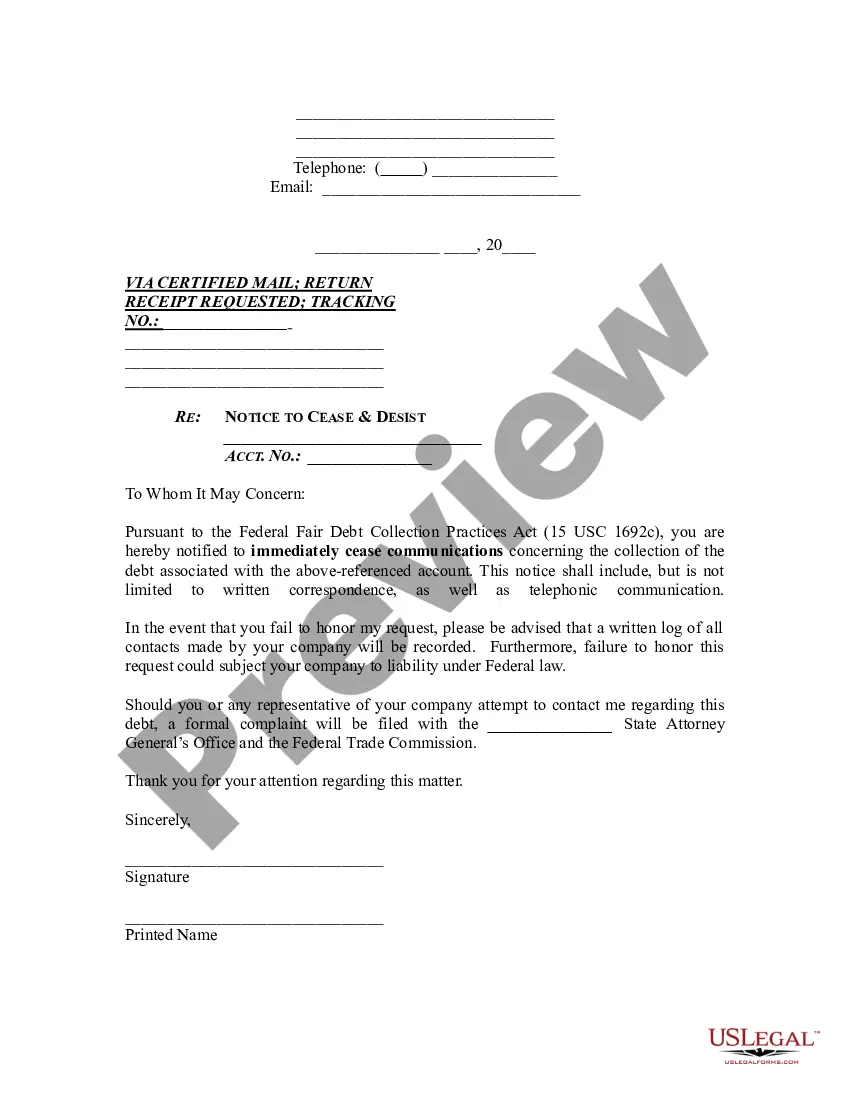
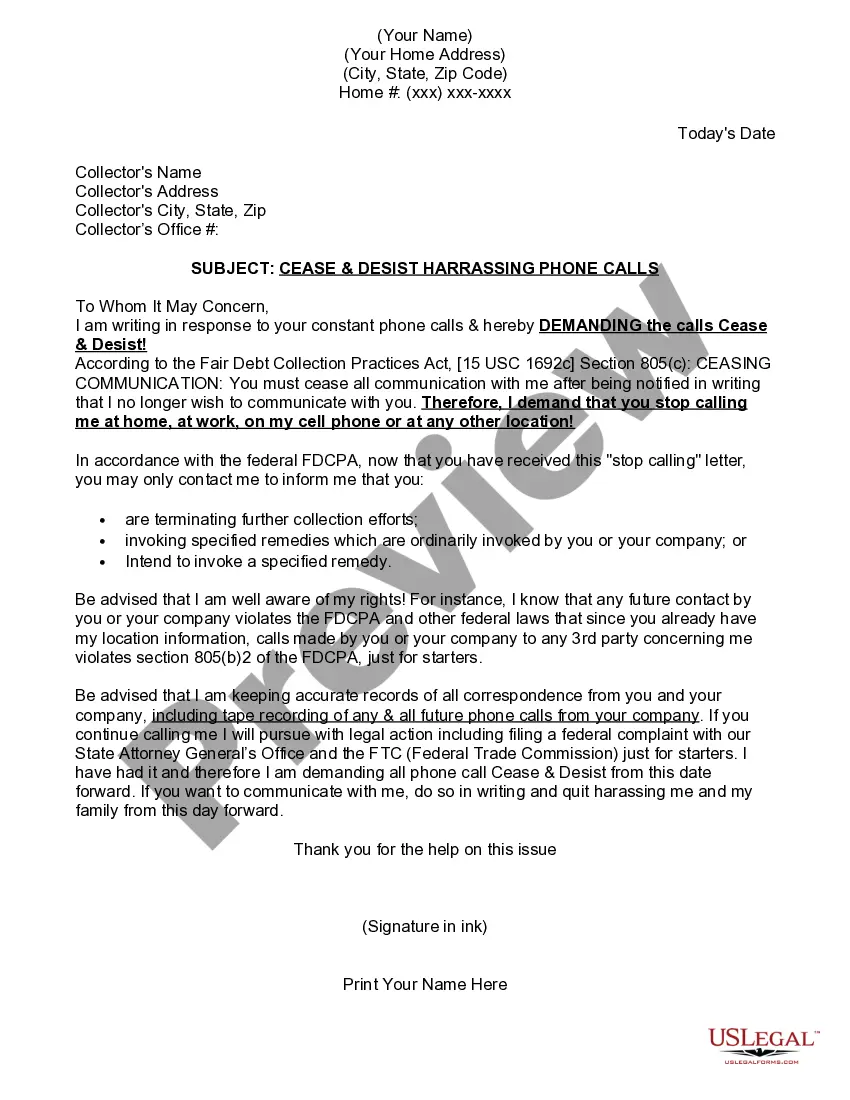
The Cease and Desist for Defamation form is a legal document used by individuals to formally request the cessation of defamatory actions or comments made by another party. This form is crucial when someone is facing harmful and false statements that damage their reputation. It serves as a written notice that outlines the legal implications of continued defamation and asserts the individual's rights under defamation laws. Unlike standard cease and desist letters, this form specifically addresses defamation, which involves false statements that can significantly harm a person's personal and professional life.
What’s included in this form
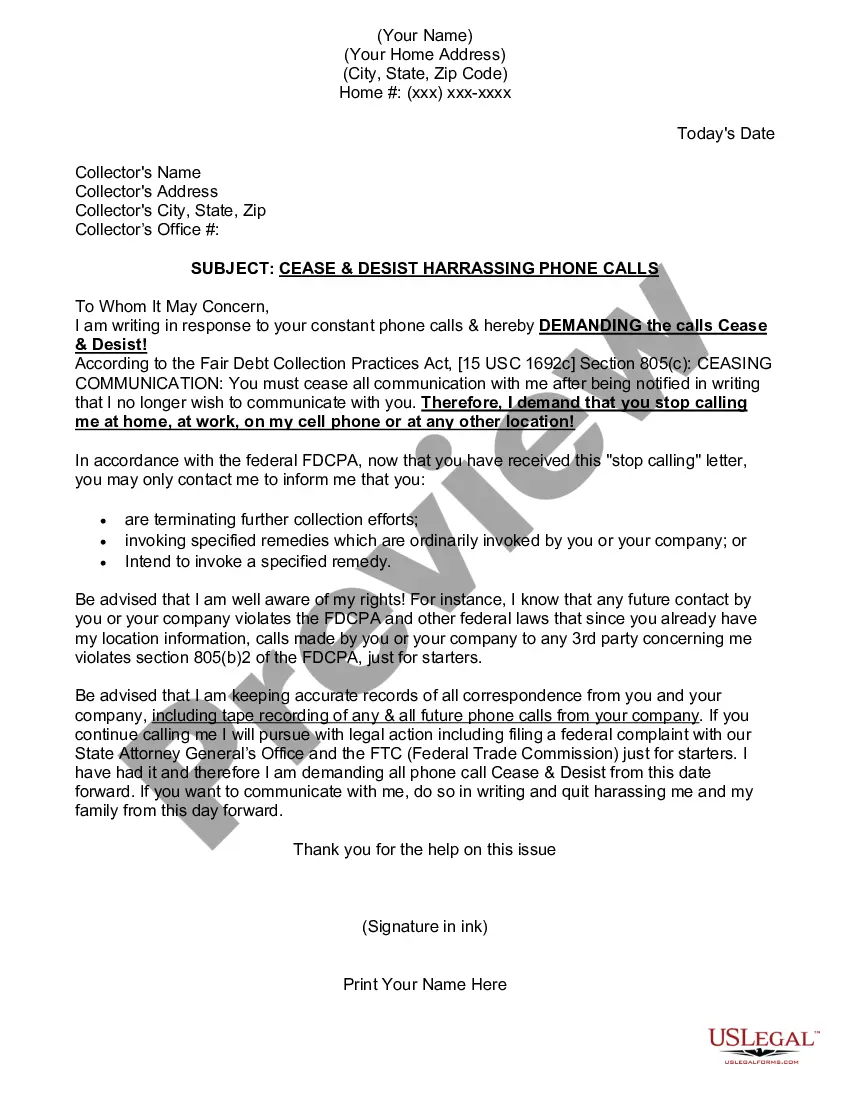
- Collector's name and address
- Statement of the harassment and demand to stop
- Reference to relevant laws, including the Fair Debt Collection Practices Act
- A declaration of rights concerning communication cessation
- Notice of potential legal consequences for non-compliance
- Signature and personal information of the sender
When to use this form
This form is typically used in situations where an individual is a victim of defamation. You should consider using the Cease and Desist for Defamation if you are receiving false allegations about your character, professional integrity, or personal life from another person or entity. Instances may include social media posts, public statements, or any written documentation that falsely portrays you in a negative light, potentially impacting your relationships, employment, or community standing.
Intended users of this form
This form is intended for individuals who believe they are victims of defamation. Eligible users include:
- Individuals who have made a claim against another party for spreading false information
- Someone being targeted by defamatory comments online or offline
- People seeking to protect their personal or business reputation from reputational harm
Steps to complete this form
- Enter the name and address of the individual or entity you are addressing.
- Clearly state your demand for them to cease and desist their defamatory behavior.
- Cite relevant laws that protect you against defamation, such as the Fair Debt Collection Practices Act.
- Provide your personal details, including your name and contact information.
- Sign the letter to formally affirm your request and intentions.
Does this form need to be notarized?
This form does not typically require notarization unless specified by local law. It is important to check local requirements to ensure compliance with state-specific regulations.
Get your form ready online
Our built-in tools help you complete, sign, share, and store your documents in one place.
Make edits, fill in missing information, and update formatting in US Legal Forms—just like you would in MS Word.
Download a copy, print it, send it by email, or mail it via USPS—whatever works best for your next step.
Sign and collect signatures with our SignNow integration. Send to multiple recipients, set reminders, and more. Go Premium to unlock E-Sign.
If this form requires notarization, complete it online through a secure video call—no need to meet a notary in person or wait for an appointment.
We protect your documents and personal data by following strict security and privacy standards.

Make edits, fill in missing information, and update formatting in US Legal Forms—just like you would in MS Word.

Download a copy, print it, send it by email, or mail it via USPS—whatever works best for your next step.

Sign and collect signatures with our SignNow integration. Send to multiple recipients, set reminders, and more. Go Premium to unlock E-Sign.

If this form requires notarization, complete it online through a secure video call—no need to meet a notary in person or wait for an appointment.

We protect your documents and personal data by following strict security and privacy standards.
Mistakes to watch out for
- Failing to provide specific examples of the defamatory statements.
- Not citing relevant laws or legal precedents.
- Sending the letter without proper documentation of the defamation.
- Using vague language that does not clearly outline the demands.
- Neglecting to keep copies of all correspondence.
Advantages of online completion
- Convenient access to legal templates at any time.
- Editable forms allow you to customize the letter to suit your specific needs.
- Reliable legal language drafted by licensed attorneys ensures professionalism.
- Downloadable format for easy submission.
Legal use & context
- This form serves as evidence of your demand to cease defamatory actions.
- It helps in establishing a timeline of your efforts to resolve the issue amicably.
- Sending this letter can strengthen your position if you decide to pursue legal action later.
Quick recap
- The Cease and Desist for Defamation form is essential for combating false statements.
- Clearly articulate your demands and cite relevant laws to strengthen your position.
- Keep accurate records of all communication regarding the defamation.
Looking for another form?
Form popularity
FAQ
The answer is, yes, it is worth it. When a true case of defamation exists, there are damages that are caused as a result. Those damages are compensable through a civil lawsuit, in California and beyond.General Damages: This includes loss of reputation, shame, hurt feelings, embarrassment, and more.
No specified method of delivery is required for a cease-and-desist letter. Because it is not a legal document, you can write and send the letter yourself without the help of a legal professional, or you can hire an attorney to write and serve the letter for you.
In order to have them considered libel and slander, it must be proved that the things said or written had a detrimental effect on your business or personal reputation. If this is occurring to you, you can write a cease-and-desist letter that orders an individual or larger entity to stop these actions.
Simply put, your defamation case is worth what you can prove you lost, plus what you had to spend as a result of the defendant's false statement.
Collection agency harassment. Trademark or patent infringement. Harassment (e.g. slander, libel, and defamation) Copyright infringement (of original web content, music, video or audio, etc.)
Step 1 Gather the False Statements. Collect any and all evidence of the false statements made. Step 2 Show the Statement is Inaccurate. Step 3 Write the Cease and Desist Letter. Step 4 Claiming Damages. Step 5 Prepare and File the Lawsuit.
How Difficult Is It to Sue for Slander? Unlike libel, which is a written form of defamation, slander is spoken defamation, making it harder to prove. In addition, you must also show the person defaming you was at least negligent with the truth or falsity of the statement.
A judge or jury can award a victorious defamation plaintiff millions for really bad cases, or $1 in compensatory damages if they find that the injury was nominal. However, usually, nominal damages will not be awarded unless the plaintiff's case is incredibly petty, or punitive damages can also be awarded.
When it comes to lawsuits, a defamation case can be very challenging. For example, unless you hire an attorney who works on a pro bono basis, this type of lawsuit can be costly. The reason for this is that to win, there is a lot of fact-finding involved, which often requires the assistance of an expert.