Cease and Desist for Harassment
Understanding this form
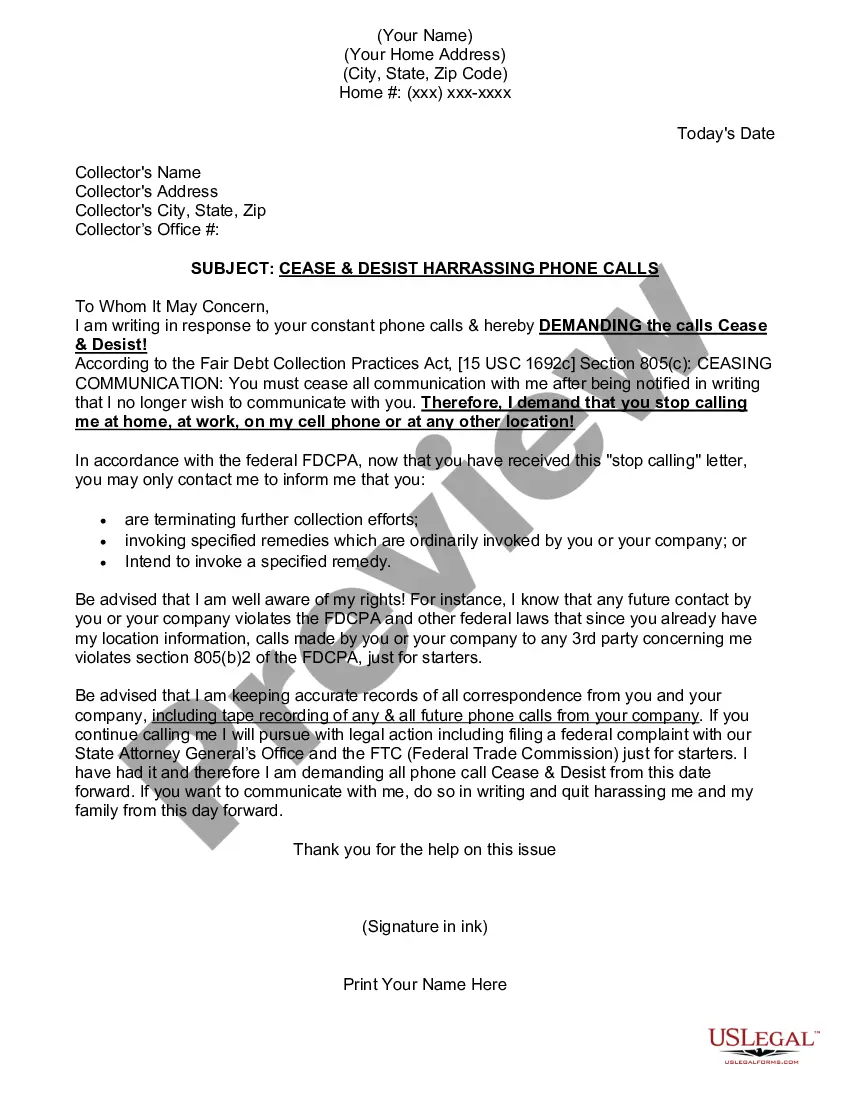
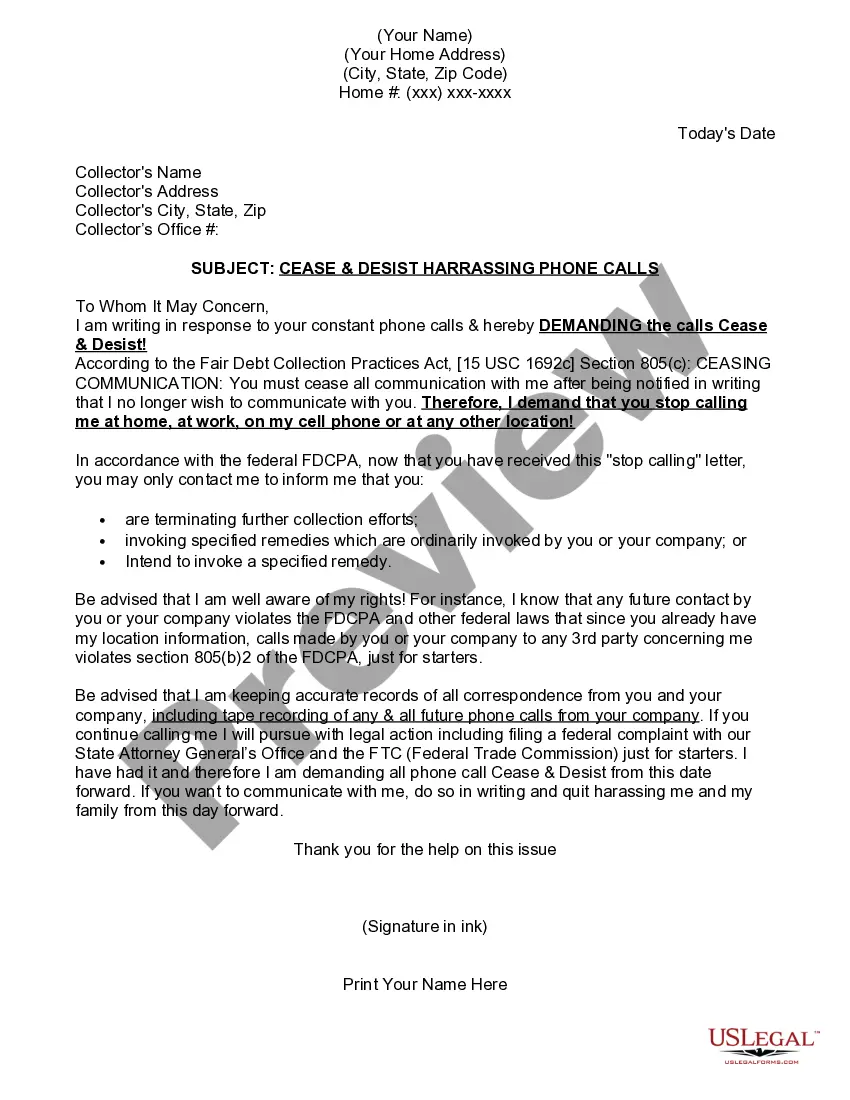
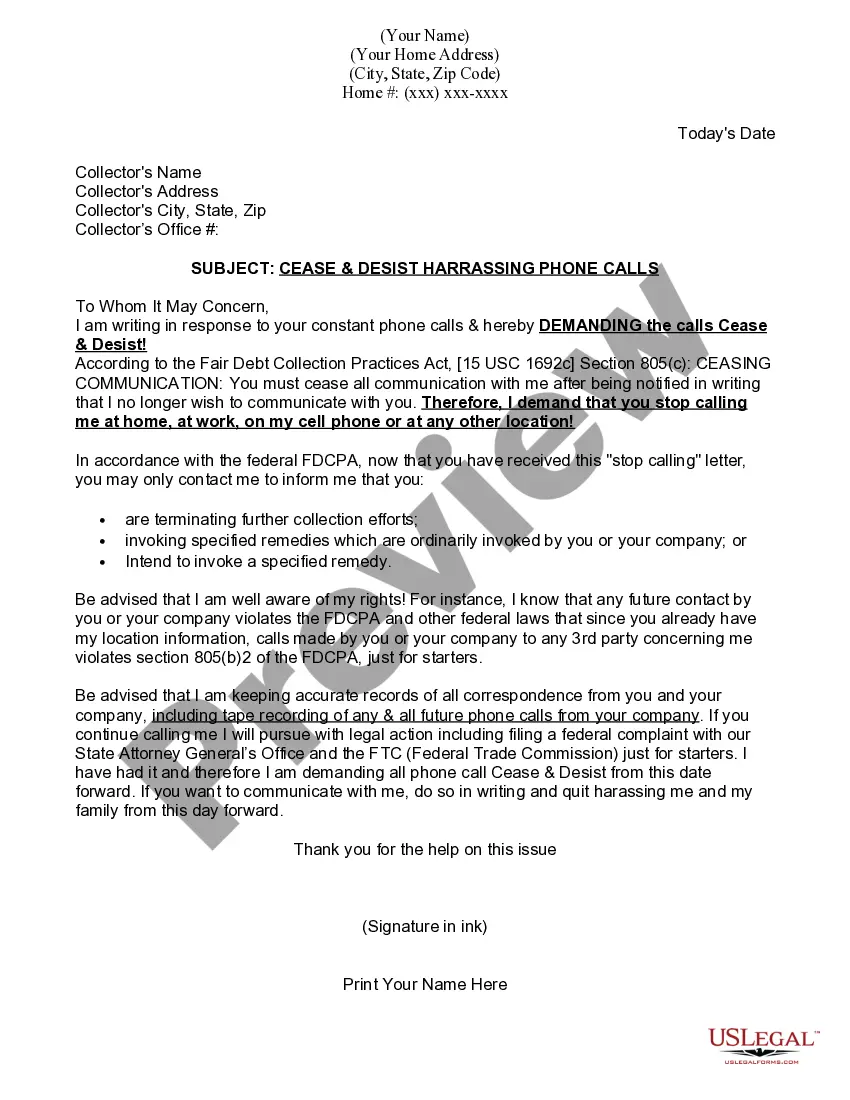
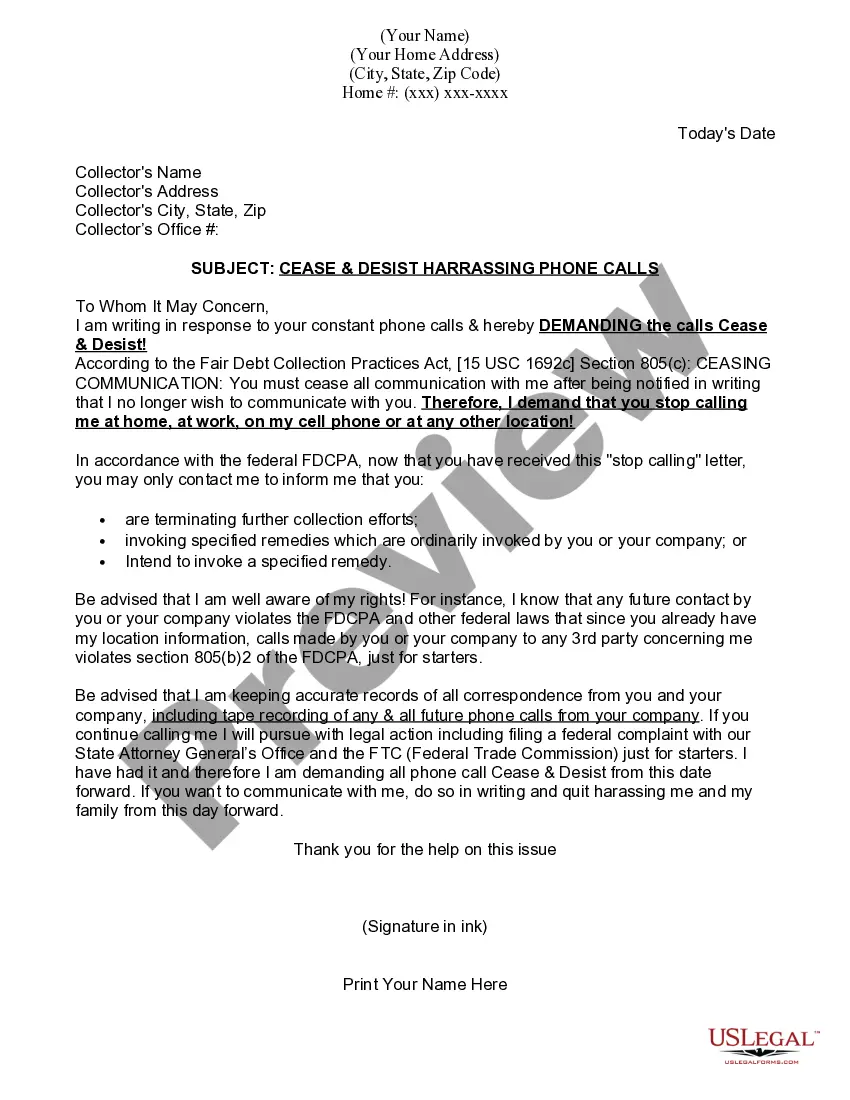
The Cease and Desist for Harassment form is a legal document that allows individuals to formally request that harassment, particularly in the form of unwanted phone calls from collection agencies or creditors, be stopped. This document is grounded in the Fair Debt Collection Practices Act, which protects consumers from abusive practices by debt collectors. Unlike other forms of communication or complaints, this letter specifically serves as a clear and documented demand for an end to harassment, ensuring that the consumer's rights are upheld.
What’s included in this form
- Collector's name and address: Identify the person or company contacting you.
- Subject line: Clearly states the intention to stop harassment.
- Statement of demands: An explicit request that all communication cease immediately.
- Reference to legal rights: Citations from the Fair Debt Collection Practices Act that support your demand.
- Consequences of continued harassment: Outlines potential legal actions you may take if the harassment continues.
- Signature line: Space for your signature and contact information to validate the letter.

Common use cases
This form is particularly useful in scenarios where you have received repeated unsolicited phone calls from debt collectors or creditors. If these calls have become harassing or intrusive, the Cease and Desist for Harassment letter serves as a formal notice to the collector, making it clear that you no longer wish to be contacted.
Who this form is for
- Individuals who are experiencing persistent and unwanted phone calls from debt collectors.
- Consumers aware of their rights under the Fair Debt Collection Practices Act.
- Anyone seeking to document their request for cessation of communication with a creditor or collection agency.
How to complete this form
- Enter the collector's name and address at the top of the letter.
- Clearly state the subject as "Cease Harassing Phone Calls."
- Draft a statement demanding that all communication cease immediately.
- Include references to your rights under the Fair Debt Collection Practices Act.
- Sign the letter and print your name, including your home address and phone number.
Is notarization required?
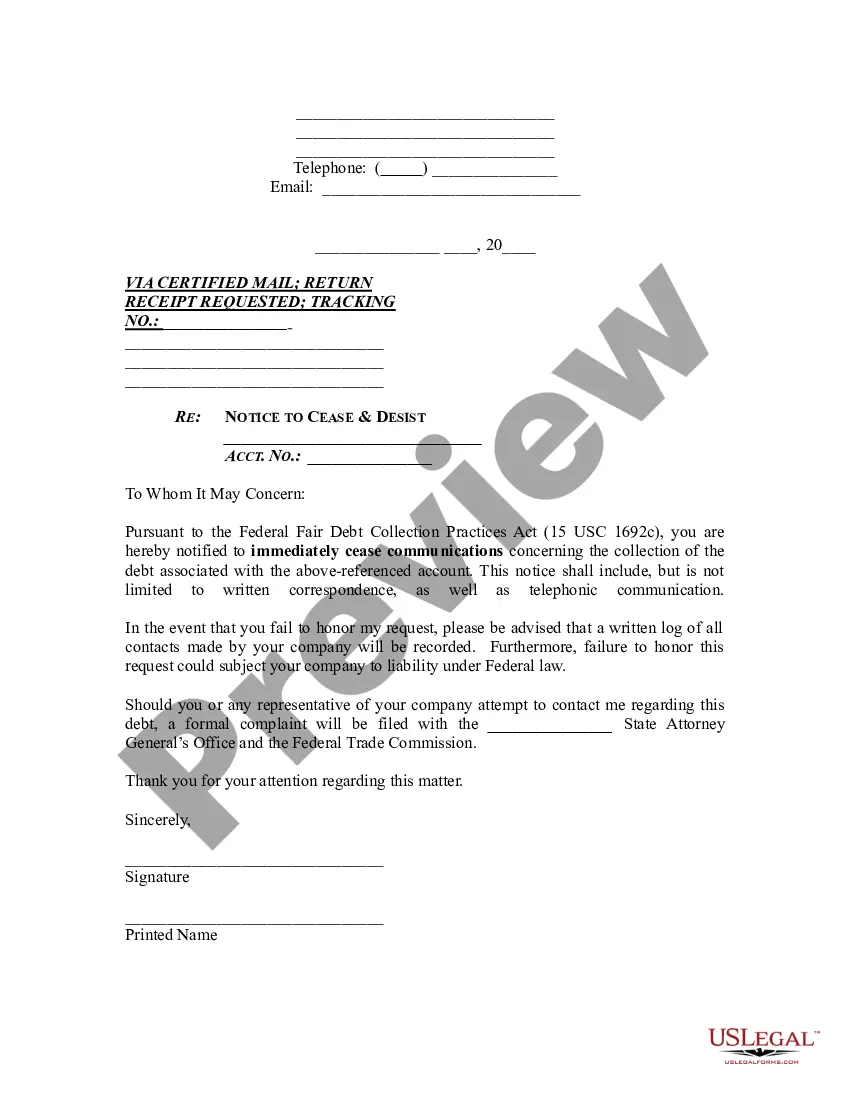
This form does not typically require notarization unless specified by local law. However, it is advisable to send it via a method that confirms receipt to the collector, such as certified mail.
Get your form ready online
Our built-in tools help you complete, sign, share, and store your documents in one place.
Make edits, fill in missing information, and update formatting in US Legal Forms—just like you would in MS Word.
Download a copy, print it, send it by email, or mail it via USPS—whatever works best for your next step.
Sign and collect signatures with our SignNow integration. Send to multiple recipients, set reminders, and more. Go Premium to unlock E-Sign.
If this form requires notarization, complete it online through a secure video call—no need to meet a notary in person or wait for an appointment.
We protect your documents and personal data by following strict security and privacy standards.

Make edits, fill in missing information, and update formatting in US Legal Forms—just like you would in MS Word.

Download a copy, print it, send it by email, or mail it via USPS—whatever works best for your next step.

Sign and collect signatures with our SignNow integration. Send to multiple recipients, set reminders, and more. Go Premium to unlock E-Sign.

If this form requires notarization, complete it online through a secure video call—no need to meet a notary in person or wait for an appointment.

We protect your documents and personal data by following strict security and privacy standards.
Common mistakes to avoid
- Failing to address the letter to a specific collector.
- Not including relevant legal references that support your demands.
- Providing incomplete contact information, which can hinder follow-up.
- Not keeping a copy of the letter for your records.
- Overlooking the importance of sending the letter via certified mail to ensure it is received.
Why complete this form online
- Immediate access to a legally compliant template that saves time.
- Easy customization to fit personal details and specific situations.
- Ability to download and print the form for proper documentation.
- Guidance provided ensures adherence to legal requirements.
Legal use & context
- The Cease and Desist for Harassment form acts as a formal notification to the collector of your intention to cease communication.
- Failure to adhere to this demand can result in legal action against the collector, as outlined in the Fair Debt Collection Practices Act.
- Documenting your demand protects your rights and provides evidence should further actions be necessary.
Looking for another form?
Form popularity
FAQ
Include your name and address. Include the recipient's name and address. Demand the recipient to stop the harassment. Send it via certified mail, return receipt requested.
Can I Write a Cease and Desist Letter, or Must I Hire an Attorney?Anyone (whether the complaint is well-founded or not) can send out a cease and desist letter. However, there are reasons why you may want an attorney who specializes in copyright laws at least review your letter before sending it out.
Collection agency harassment. Trademark or patent infringement. Harassment (e.g. slander, libel, and defamation) Copyright infringement (of original web content, music, video or audio, etc.)
Once you receive a cease and desist letter, you have a few options to consider. Some of these may include: Agreeing to the letter's stipulations ceasing any illegal behavior as outlined in the letter. It's within your rights to respond with a refusal or request for more detailed information.
If you ignore it, the attorney who sent the letter will eventually file a lawsuit in federal court against you for trademark infringement and/or copyright infringement. This action may not happen right away. You might even think you are out of danger.
A cease and desist harassment letter is a written document that demands the recipient stop a certain behavior immediately. This behavior is constituted as harassment in some way.The sender should keep a copy of this letter and, if possible, mail the original using certified mail with a return receipt requested.
Even if action is demanded or required by the sender, cease and desist letters are not summons and complaints. The sender may threaten to file litigation if a response is not received, but the letter does not mean a lawsuit has been filed. Instead, the letter is a warning of sorts.
Yes, anyone can send a Cease and Desist Letter. You do not need to hire an attorney to write one for you. An attorney, however, can help you determine whether your rights have been violated and if you have enough grounds to pursue legal action.
Start by telling the person that you don't like the behavior and asking them to stop. If the harassment doesn't let up, take measures such as involving the police and increasing your security. In some circumstances, you might need to file for a restraining order to keep your harasser away.