Cease and Desist for Debt Collectors
What is this form?
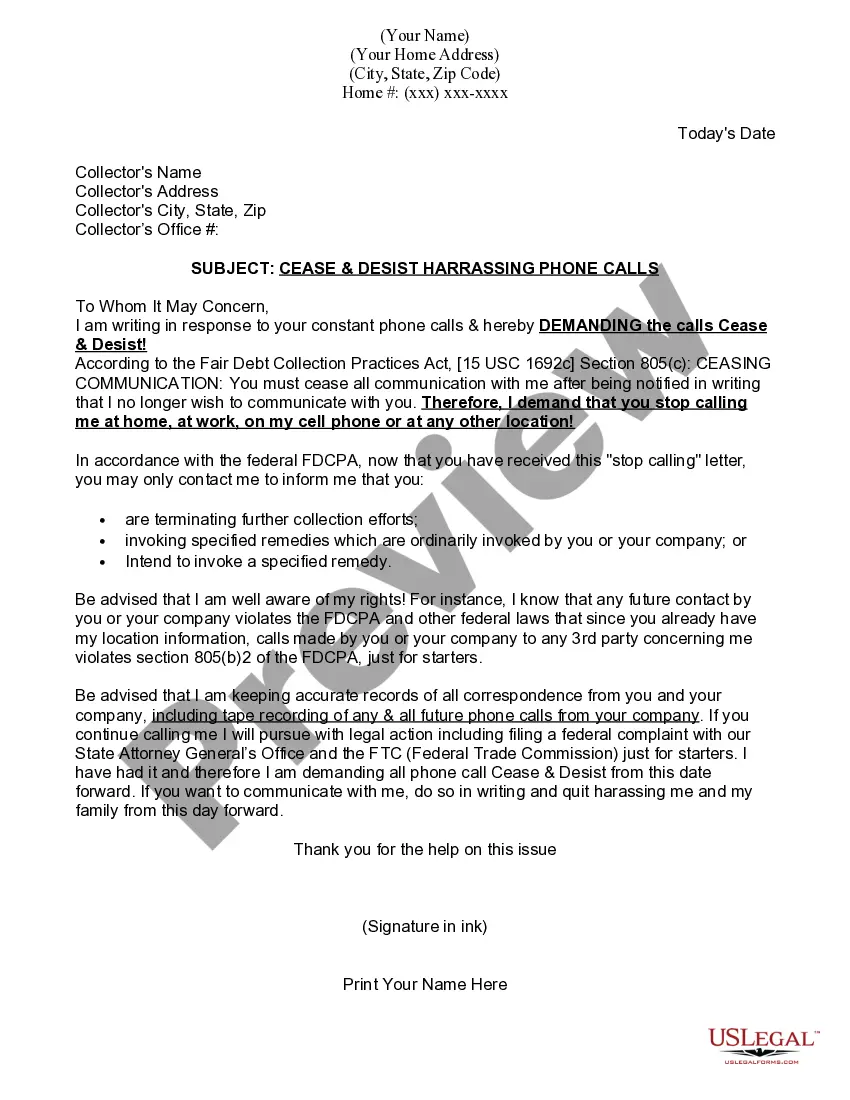
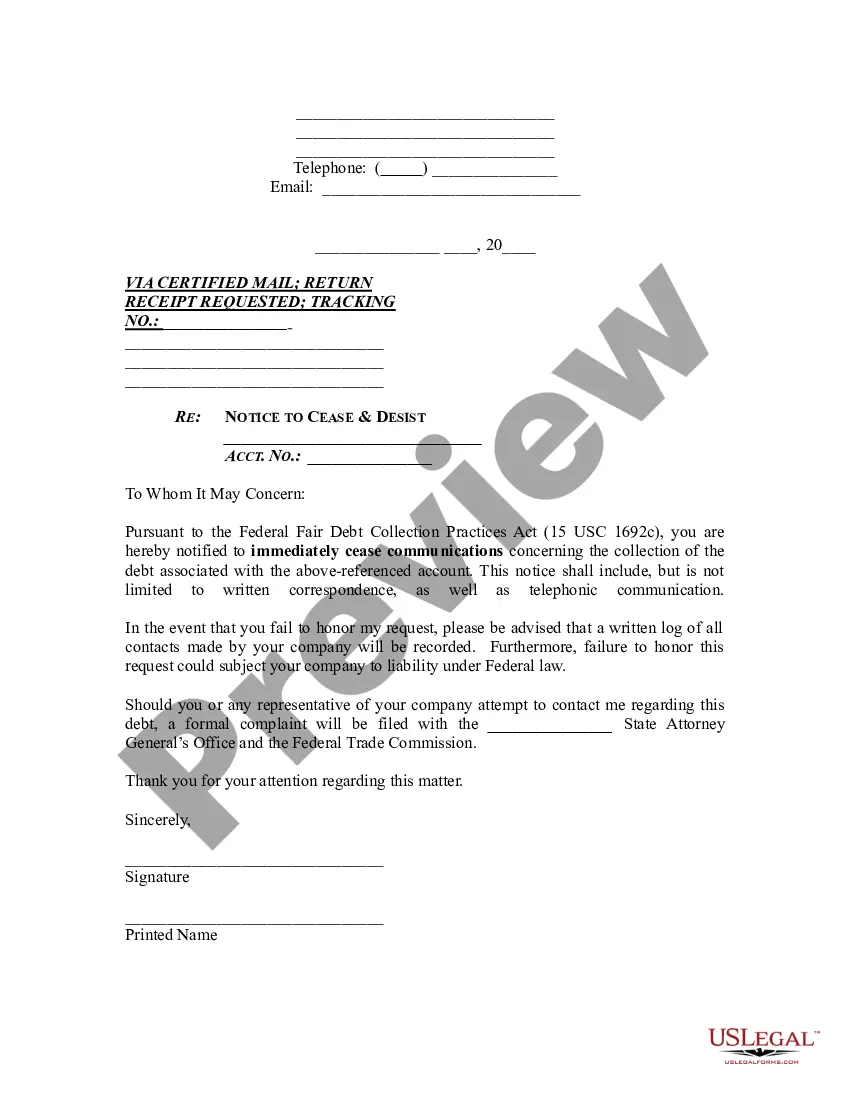
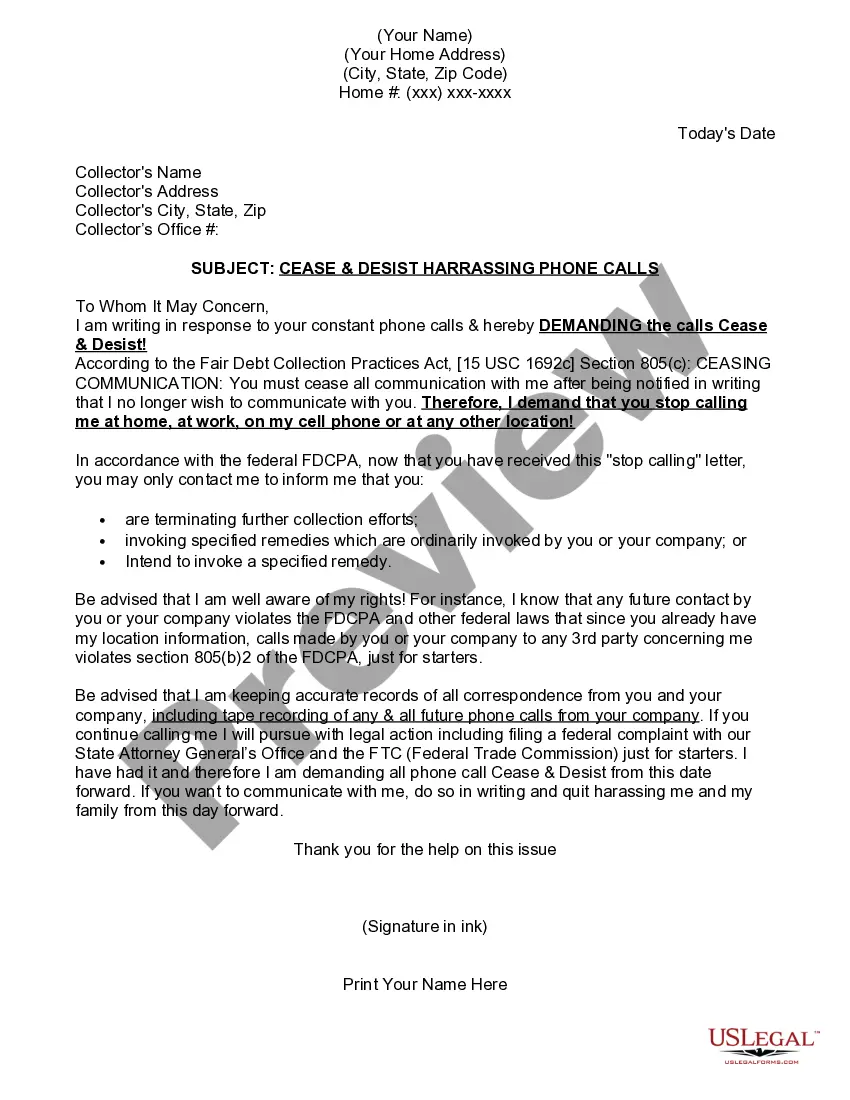
The Cease and Desist for Debt Collectors is a formal letter used by consumers to demand that debt collectors stop harassing them with repeated phone calls. This letter is essential for individuals wishing to assert their rights under the Fair Debt Collection Practices Act (FDCPA), which protects consumers from abusive debt collection practices. Unlike other complaints or forms of communication, this letter provides a clear, legal request for the cessation of communication while outlining the sender's rights.
Form components explained
- Collectors Name and Address: Identify the entity or individual you are directing the request to.
- Subject Line: Clearly states the purpose of the letterâceasing harassing phone calls.
- Demand Clause: A formal demand that all communication cease immediately.
- Legal References: Cites relevant laws under the FDCPA to reinforce the demand.
- Records Clause: States the intention to keep a record of all communications for legal purposes.
- Signature Section: Provides the space for your signature and printed name for authenticity.

When to use this document
This form should be used when you are receiving persistent and unwanted phone calls from a debt collector or creditor. Common situations include repeated calls at home, work, or on your personal cell phone, particularly when the methods used by the collector are deemed harassing or stressful. It is advisable to use this form when you want to formally document your request for an end to these communications.
Who should use this form
- Consumers experiencing harassment from debt collectors.
- Individuals aware of their rights under the Fair Debt Collection Practices Act.
- People seeking to formally request a cessation of all debt collection communications.
How to complete this form
- Identify the debt collector by filling in their name and address at the top of the letter.
- Clearly state the subject of your letter as a demand to cease all harassing phone calls.
- List the legal references that support your demand for cessation of communication.
- Include a statement expressing your intent to document all further communications.
- Sign the letter and print your name beneath your signature.
- Consider sending the letter via certified mail to ensure it is received and documented.
Is notarization required?
This form does not typically require notarization unless specified by local law. It is advisable to keep a copy for your records and consider sending the letter via certified mail to verify delivery.
Get your form ready online
Our built-in tools help you complete, sign, share, and store your documents in one place.
Make edits, fill in missing information, and update formatting in US Legal Forms—just like you would in MS Word.
Download a copy, print it, send it by email, or mail it via USPS—whatever works best for your next step.
Sign and collect signatures with our SignNow integration. Send to multiple recipients, set reminders, and more. Go Premium to unlock E-Sign.
If this form requires notarization, complete it online through a secure video call—no need to meet a notary in person or wait for an appointment.
We protect your documents and personal data by following strict security and privacy standards.

Make edits, fill in missing information, and update formatting in US Legal Forms—just like you would in MS Word.

Download a copy, print it, send it by email, or mail it via USPS—whatever works best for your next step.

Sign and collect signatures with our SignNow integration. Send to multiple recipients, set reminders, and more. Go Premium to unlock E-Sign.

If this form requires notarization, complete it online through a secure video call—no need to meet a notary in person or wait for an appointment.

We protect your documents and personal data by following strict security and privacy standards.
Common mistakes
- Failing to provide accurate contact information for the debt collector.
- Not referencing the specific legal protections available under the FDCPA.
- Omitting a signature or failing to print your name.
- Not keeping a copy for your records.
- Sending the letter without proof of delivery, such as certified mail.
Benefits of using this form online
- Immediate access to a professionally drafted letter template.
- Convenience of downloading and printing the form from home.
- Editability allows you to customize the form for your specific situation.
- Reliable resource developed by licensed attorneys to ensure legal compliance.
Looking for another form?
Form popularity
FAQ
If debt collectors keep contacting you via letters even after you have told them that the debt is not yours, then you can report them to the Financial Conduct Authority. Again, to reiterate, in the case of a legitimate debt, the best way to stop letters arriving at your home is to simply pay it.
RIGHT TO DISPUTE THE DEBT: Within 30 DAYS of receiving notice of the debt from the debt collector, you can send a letter to the debt collector disputing the debt and requesting the name and contact information of the original creditor.
If you want to negotiate directly with the creditor, ask the collection agency for the phone number of the collections department of the original creditor. Then call the creditor and ask if you can negotiate on the debt directly with the creditor.
Because the FDCPA is designed to protect debtors against third-party debt collectors, it doesn't apply to your original creditor or its employees.
A cease and desist letter is a way to formally request that a debt collector stop contacting you about a debt. The Fair Debt Collection Practices Act (FDCPA) states that if you formally request that you no longer wish to be contacted by a collector, they must cease all further contact.
Refused Offers A creditor isn't required to negotiate a settlement offer with a debtor, according to the Federal Trade Commission, but does so at its own discretion. This applies to a collection agency as well.The agency can choose to refuse your settlement offer and instead request payment of the debt in full.
If you pay the collection agency directly, the debt is removed from your credit report in six years from the date of payment. If you don't pay, it purges six years from the last activity date, but you may be at risk for wage garnishment.
Cease and desist letters increase your chances of being sued The reaction is quite simple: when you send a cease and desist letter to a collection agency, collection attorney, or to your original creditor, you leave them only one way to effectively collect from you: filing a lawsuit.