Sample Letter for Request for IRS not to Off Set against Tax Refund
Understanding this form
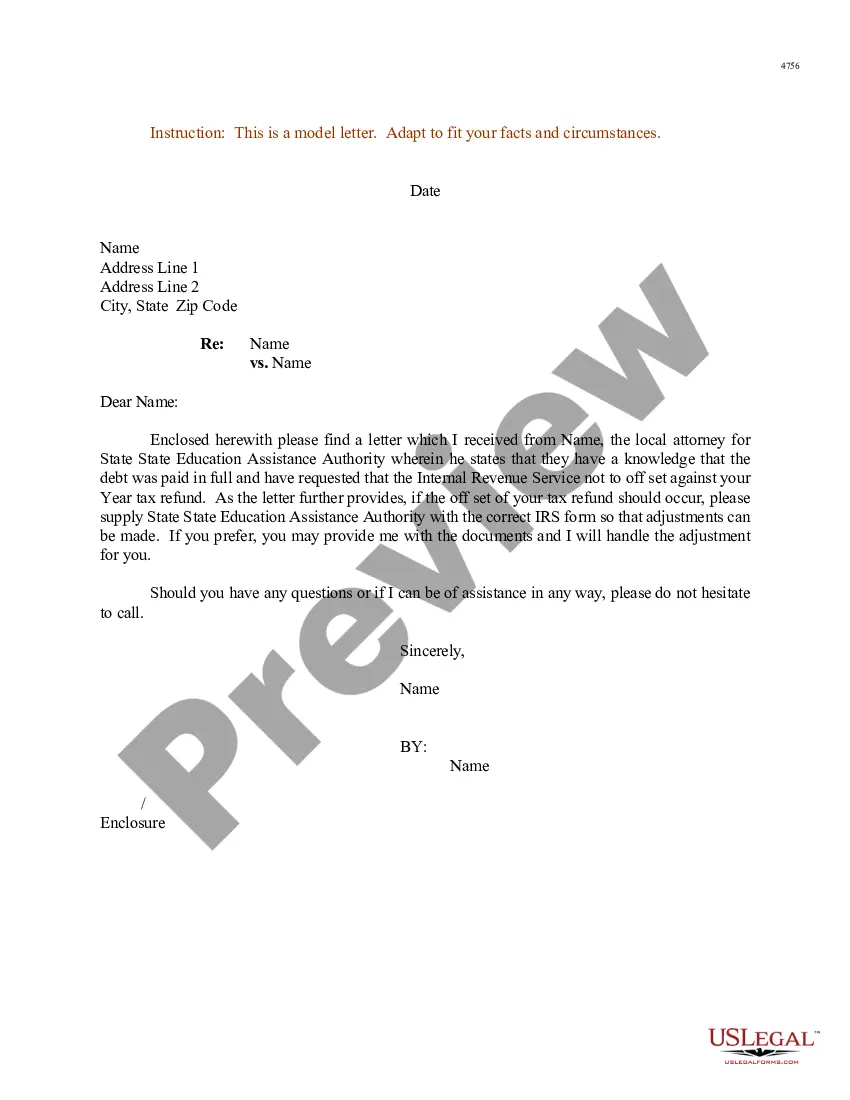
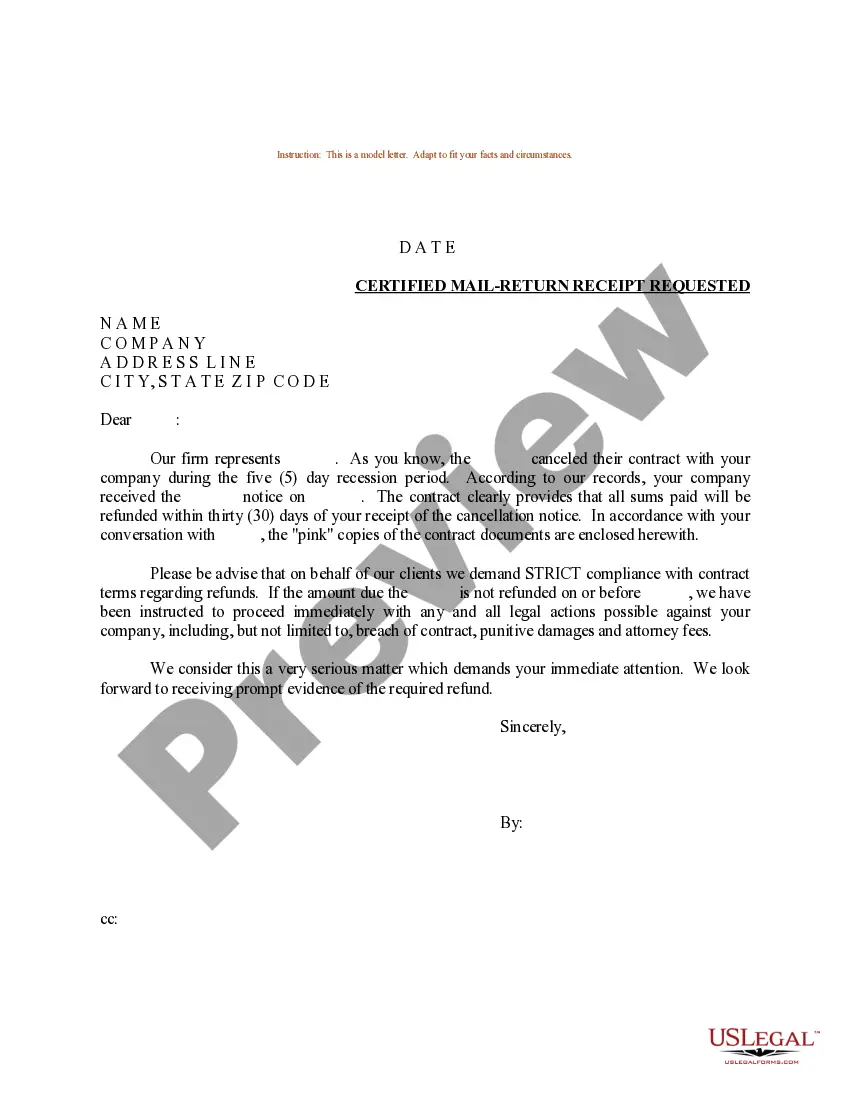
This form is a Sample Letter for Request for IRS Not to Offset Against Tax Refund. It serves as a template to communicate with the Internal Revenue Service regarding a tax refund that may be affected by a debt. The letter outlines a situation in which you have paid off a debt but are at risk of having your refund offset. This form differs from general tax forms as it specifically focuses on addressing potential offsets of tax refunds due to debts.
What’s included in this form
- Date: The date the letter is prepared.
- Sender's Information: Your name and address details are included at the top.
- Recipient Information: The name and relevant details of the IRS or relevant authority.
- Subject Line: The context of the letter, usually stating the parties involved and the tax year.
- Body: The main message explaining that the debt was paid in full and requesting the IRS not to offset your refund.
- Signature: A space for your signature to formally close the letter.
When to use this document
You should use this form if you have received notification that your tax refund may be offset due to a debt that you have already paid off. It is particularly useful when you wish to inform the IRS and request that they refrain from taking your refund to settle the debt. This form is appropriate for individuals who have documentation or letters affirming that the debt is resolved and are taking proactive steps to protect their tax refund.
Who should use this form
- Individuals who have received a debt collection notice related to their tax refund.
- Taxpayers who have resolved their outstanding debts but are still at risk of having their refunds offset.
- Anyone who wishes to communicate formally with the IRS about their tax refund status.
Steps to complete this form
- Start by entering the date at the top of the letter.
- Fill in your name and address in the appropriate sections.
- Specify the name and address of the IRS or relevant authority as the recipient.
- Clearly state the subject of the letter, including the parties involved and the tax year.
- Write a brief message outlining that the debt has been paid and request that your tax refund not be offset.
- Sign the letter to make it official and complete the document.
Does this document require notarization?
Notarization is not commonly needed for this form. However, certain documents or local rules may make it necessary. Our notarization service, powered by Notarize, allows you to finalize it securely online anytime, day or night.
Get your form ready online
Our built-in tools help you complete, sign, share, and store your documents in one place.
Make edits, fill in missing information, and update formatting in US Legal Forms—just like you would in MS Word.
Download a copy, print it, send it by email, or mail it via USPS—whatever works best for your next step.
Sign and collect signatures with our SignNow integration. Send to multiple recipients, set reminders, and more. Go Premium to unlock E-Sign.
If this form requires notarization, complete it online through a secure video call—no need to meet a notary in person or wait for an appointment.
We protect your documents and personal data by following strict security and privacy standards.

Make edits, fill in missing information, and update formatting in US Legal Forms—just like you would in MS Word.

Download a copy, print it, send it by email, or mail it via USPS—whatever works best for your next step.

Sign and collect signatures with our SignNow integration. Send to multiple recipients, set reminders, and more. Go Premium to unlock E-Sign.

If this form requires notarization, complete it online through a secure video call—no need to meet a notary in person or wait for an appointment.

We protect your documents and personal data by following strict security and privacy standards.
Common mistakes to avoid
- Not including the correct date can lead to confusion about the timeline.
- Failing to provide complete addresses for both sender and recipient may result in the letter not being delivered properly.
- Forgetting to sign the letter can render it ineffective.
- Not including necessary documentation or proof of debt payment may weaken your request.
Why complete this form online
- Convenience: Download and complete the form at your convenience without needing to visit a lawyer.
- Editability: Easily customize the sample letter to fit your specific situation.
- Reliability: Access professionally drafted templates that are compliant with legal standards.
Key takeaways
- This form is essential for communicating with the IRS about a debt that has already been resolved.
- Ensure all recipient and sender details are accurate.
- Documentation proving debt resolution should be attached when appropriate.
Looking for another form?
Form popularity
FAQ
You can contact the Treasury Offset Program at 800-304-3107 for more information. Avoiding or reversing a tax offset after you've been put on notice may not be an easy process, and there is no guarantee you will be successful in your efforts. But if you believe you have a good case, you should try.
Your name, address and a daytime telephone number. A statement that you want to appeal the IRS findings to the Office of Appeals. A copy of the letter you received that shows the proposed change(s) The tax period(s) or year(s) involved. A list of each proposed item with which you disagree.
Call the IRS toll-free at (800) 829-1040, any weekday between 7 a.m. and 7 p.m. In the case that the IRS already sent the payment, you will need to contact the financial institution. If the institution can get the funds, it will return the refund to the IRS.
IRS live phone assistance is extremely limited at this time. For Economic Impact Payment questions, call 800-919-9835.
IRS.gov Where's My Refund? The IRS2Go mobile app. IRS Refund Hotline 800-829-1954. Wait at least 21 days after electronically filing and six weeks after mailing your return to contact the IRS by phone.
IRS Hardship is for taxpayers not able to pay their back taxes. IRS Hardship will not remove the back taxes.You will still owe back taxes. Every year the IRS will mail you a reminder letter regarding taxes owed.
Find your contact to submit the request. Your refund was most likely offset by a guaranty agency or the U.S. Department of Education. Locate the form and check the requirements. Collect your documents and proof. Submit copies of the documents.
In order to qualify for a student loan tax offset hardship refund, you'll need to provide proof of serious financial hardship. Qualifying circumstances might include: You're currently homeless or without residence. You're permanently disabled.
If the IRS fails to make the properly requested OBR before assessment, the IRS can reverse the offset and pay the taxpayer the amount it would have paid based on the taxpayer's demonstrated hardship.