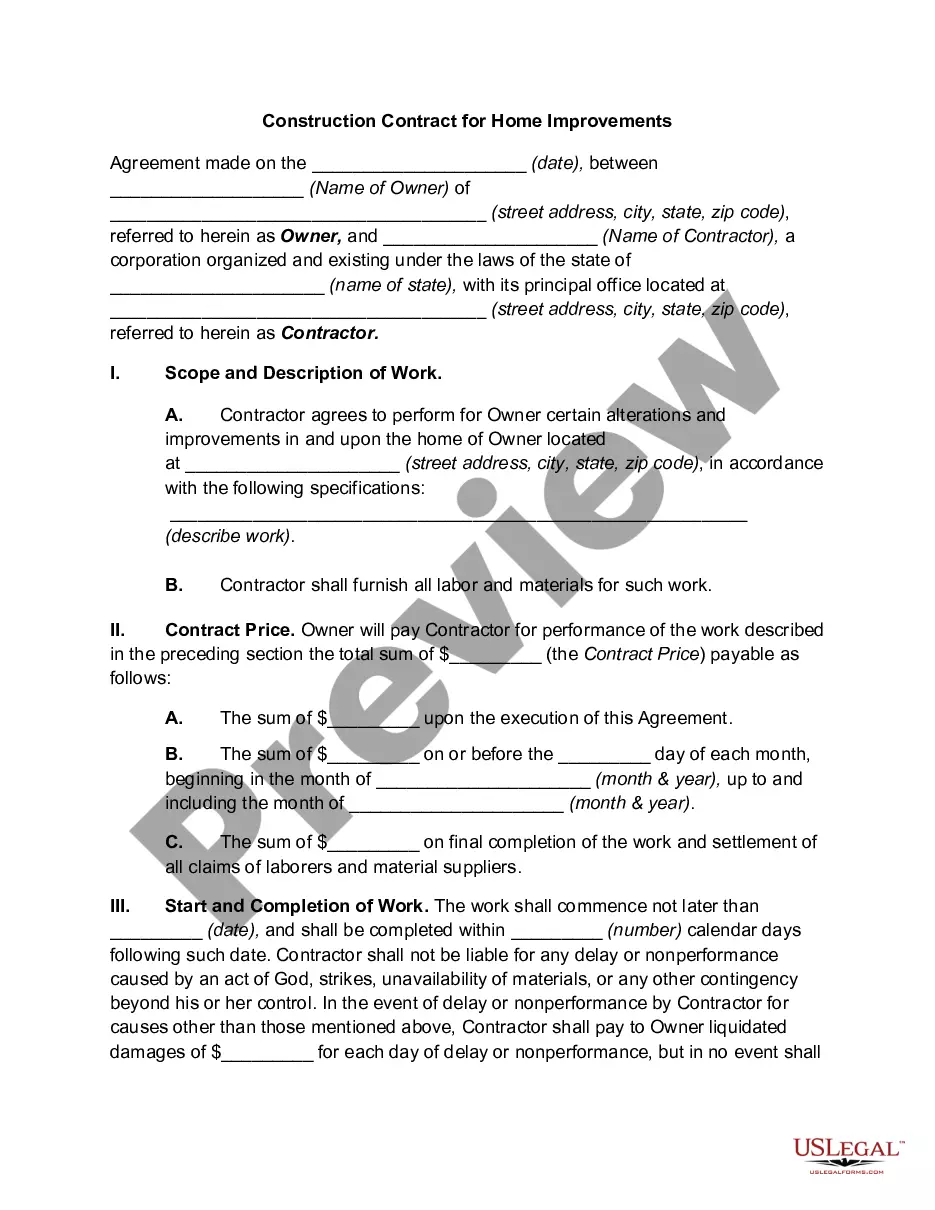
Construction Contract for Home Improvements
What is this form?
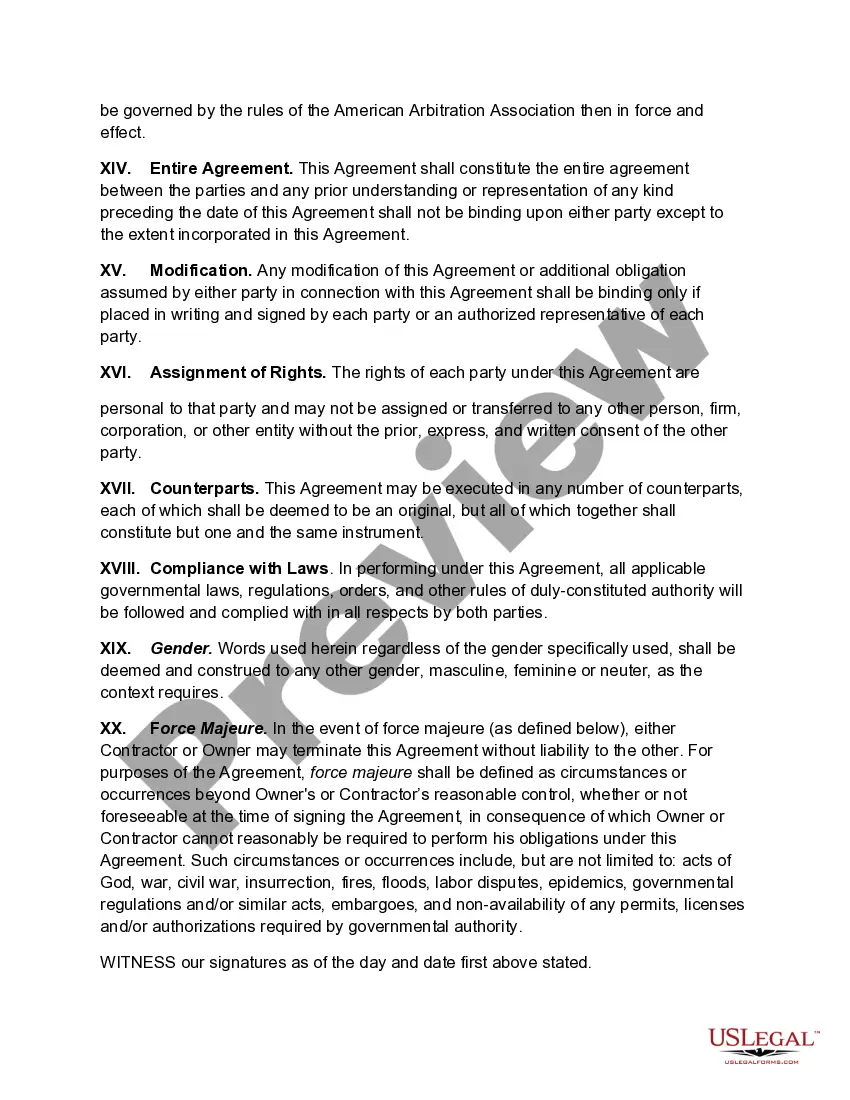
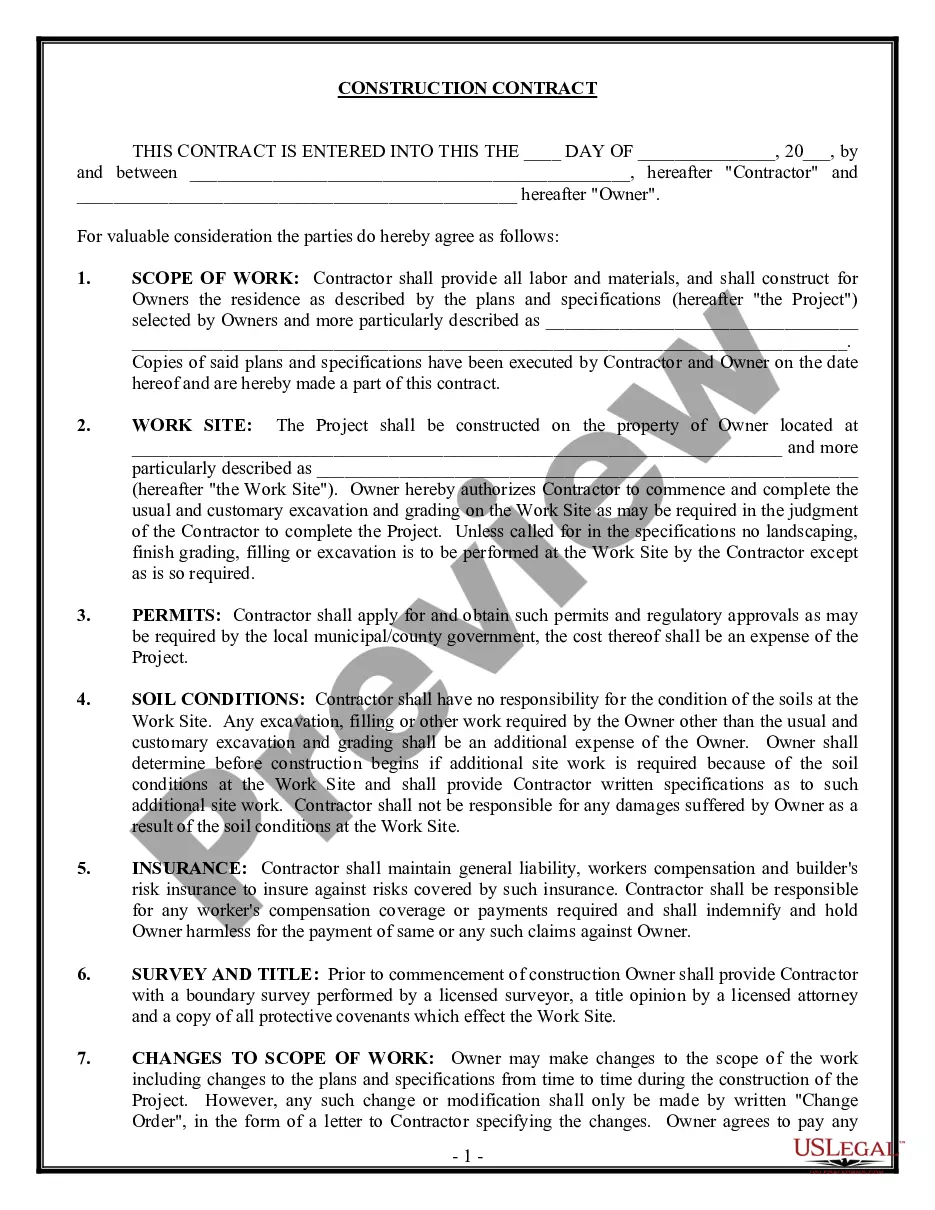
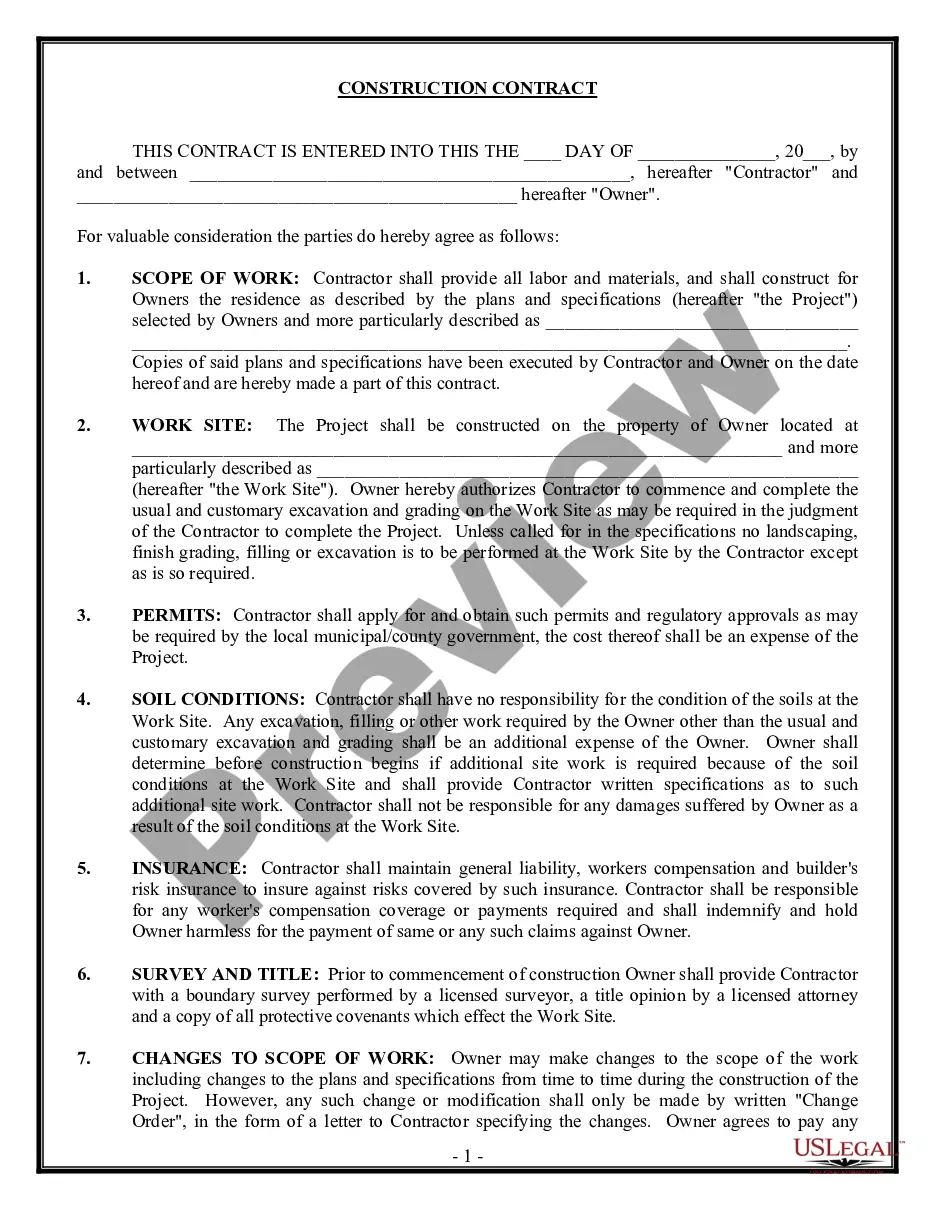
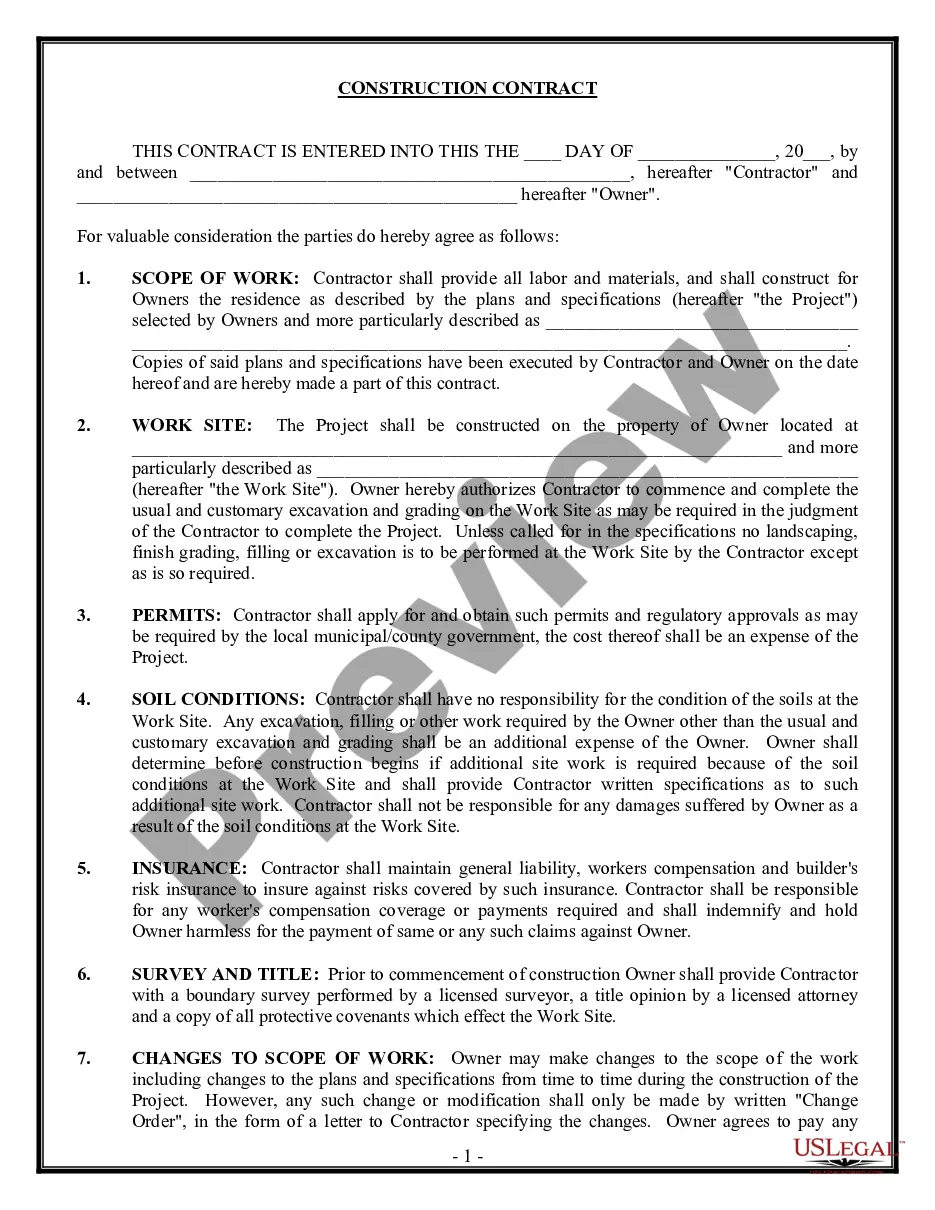
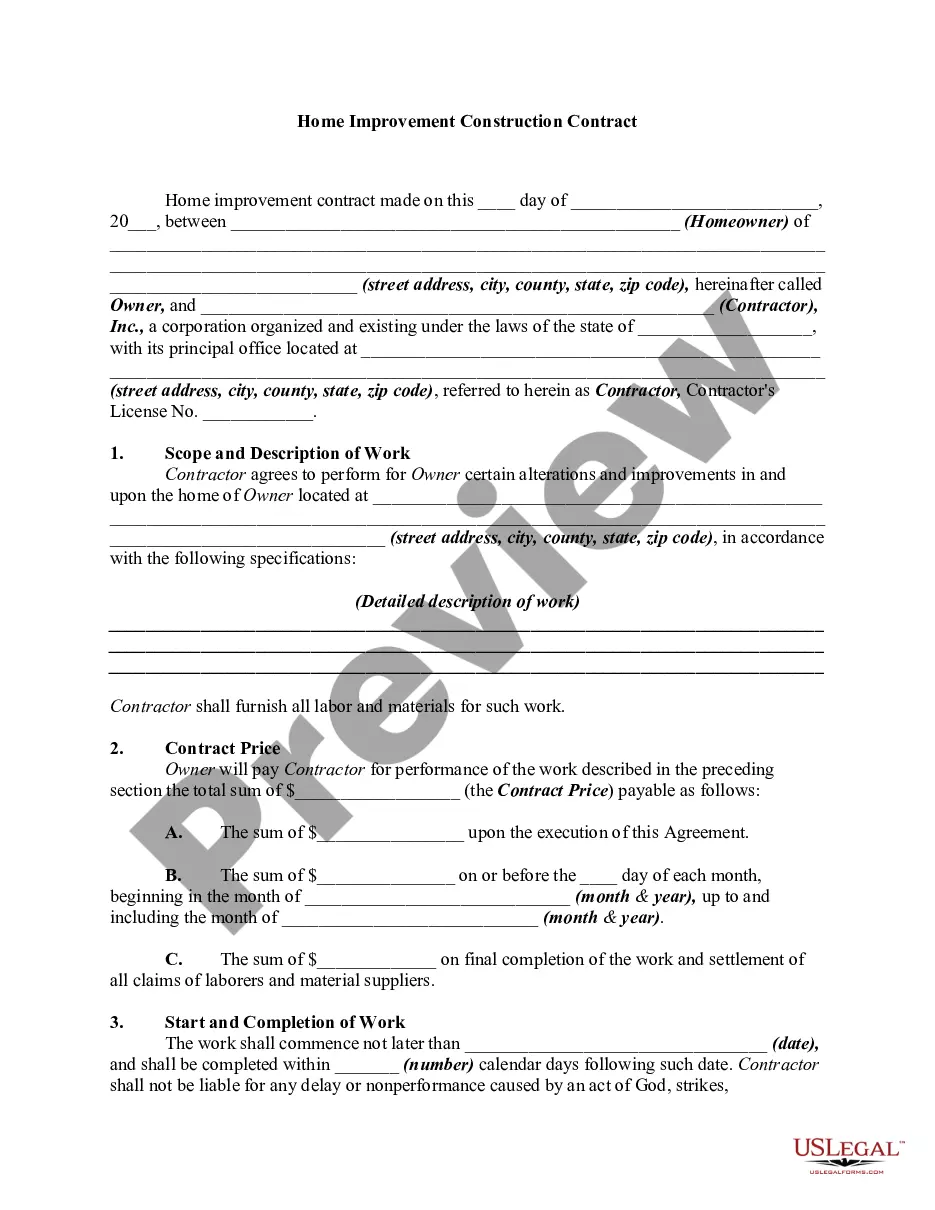
The Construction Contract for Home Improvements is a legal document that outlines the agreement between a homeowner and a contractor for various home improvement projects. This contract ensures clarity regarding the scope of work, timelines, and payment terms, differentiating it from other types of construction contracts that may be less specific. It is essential for projects exceeding a certain cost, as many states require a written agreement in those cases.
Key parts of this document
- Parties involved: Identifies the Owner and Contractor with their contact information.
- Scope of work: Details the specific improvements or alterations to be made.
- Contract price: Specifies the total cost and payment schedule.
- Start and completion dates: Sets timelines for when the work will begin and end.
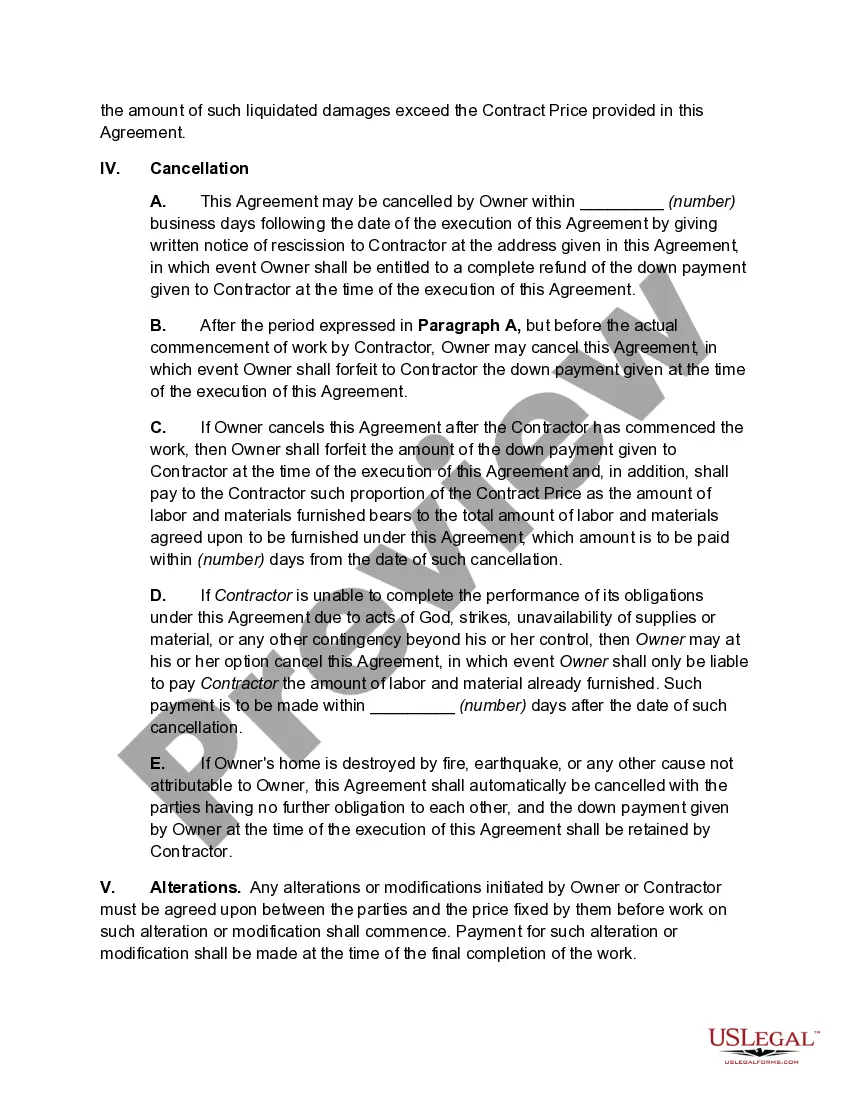
- Cancellation terms: Outlines conditions under which the contract may be canceled.
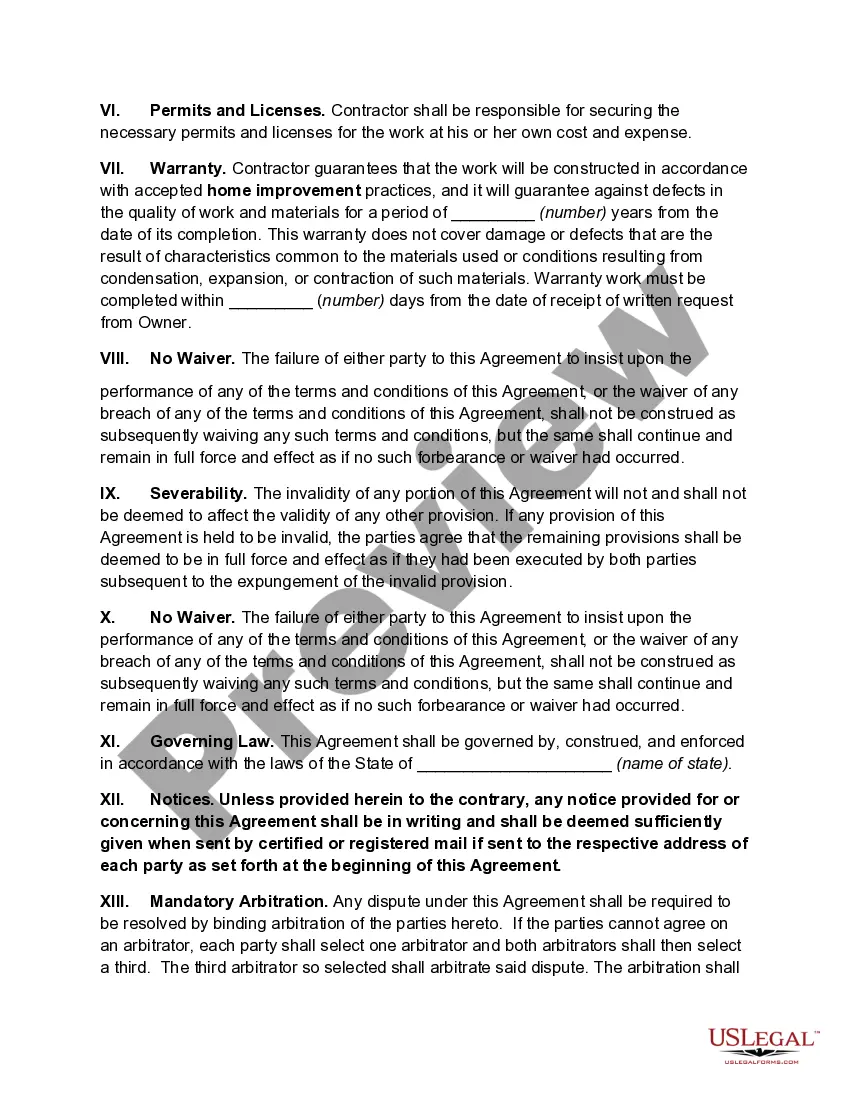
- Warranty and liability: Addresses quality guarantees and responsibilities of the Contractor.

When to use this document
This Construction Contract is necessary when a homeowner plans to undertake significant renovations or improvements, such as remodeling a kitchen, adding rooms, or making structural changes. If the project exceeds $500, having a written agreement is often legally required in many states to protect both parties involved.
Who can use this document
- Homeowners looking to have renovation or improvement work done on their property.
- Contractors seeking to formalize agreements with clients regarding home projects.
- Tenants who are responsible for improvements and require permission from the property owner.
Completing this form step by step
- Identify and enter the date of the agreement.
- Fill in the names and contact details for both the Owner and Contractor.
- Clearly describe the scope of work to be performed.
- Specify the contract price and payment schedule.
- Insert the anticipated start date and estimated completion timeline.
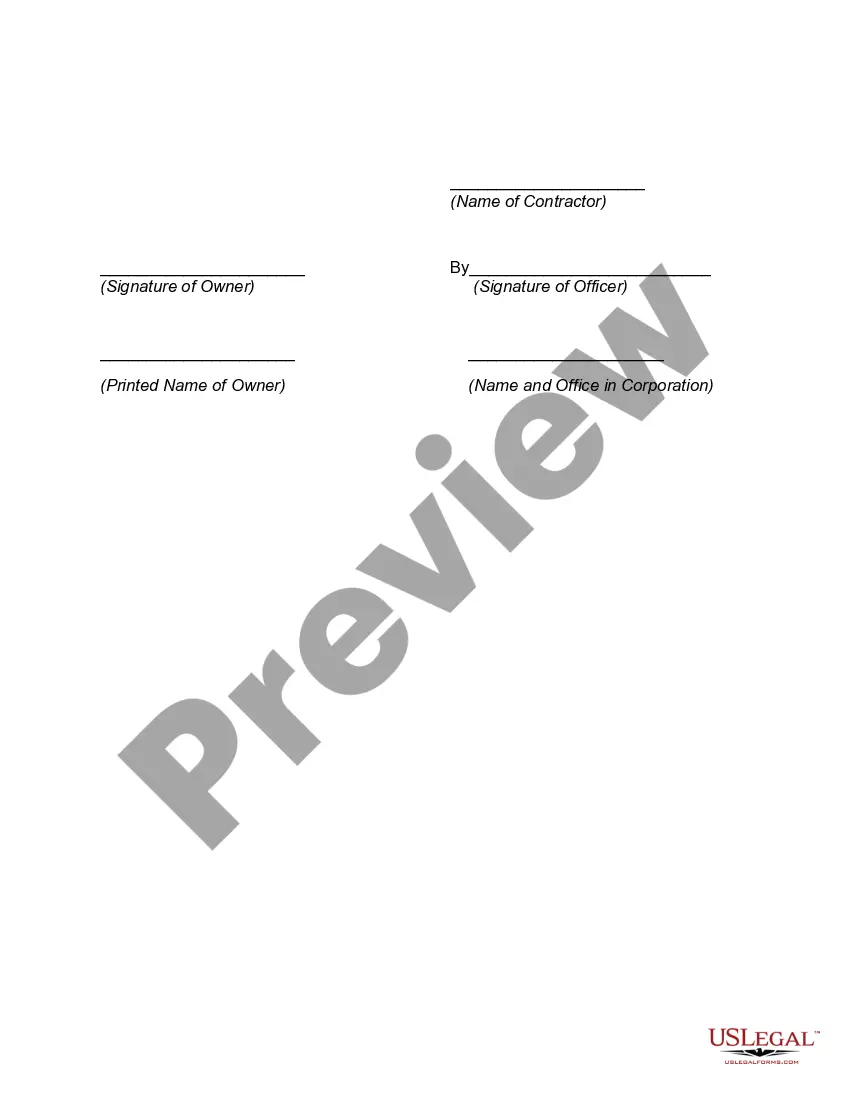
- Review all terms, finalized by signatures from both parties.
Notarization requirements for this form
This form does not typically require notarization unless specified by local law. It is important to review your state's regulations regarding the notarization of contracts to ensure compliance.
Get your form ready online
Our built-in tools help you complete, sign, share, and store your documents in one place.
Make edits, fill in missing information, and update formatting in US Legal Forms—just like you would in MS Word.
Download a copy, print it, send it by email, or mail it via USPS—whatever works best for your next step.
Sign and collect signatures with our SignNow integration. Send to multiple recipients, set reminders, and more. Go Premium to unlock E-Sign.
If this form requires notarization, complete it online through a secure video call—no need to meet a notary in person or wait for an appointment.
We protect your documents and personal data by following strict security and privacy standards.

Make edits, fill in missing information, and update formatting in US Legal Forms—just like you would in MS Word.

Download a copy, print it, send it by email, or mail it via USPS—whatever works best for your next step.

Sign and collect signatures with our SignNow integration. Send to multiple recipients, set reminders, and more. Go Premium to unlock E-Sign.

If this form requires notarization, complete it online through a secure video call—no need to meet a notary in person or wait for an appointment.

We protect your documents and personal data by following strict security and privacy standards.
Avoid these common issues
- Not providing a detailed scope of work, leading to misunderstandings.
- Failing to specify payment terms can result in disputes.
- Neglecting to document start and completion dates may cause delays without accountability.
Benefits of using this form online
- Convenience: Download and fill out the form at your own pace.
- Editability: Customize the contract to fit your specific needs.
- Reliability: Use a template that has been reviewed by licensed attorneys.
Legal use & context
- This contract serves as a binding agreement, ensuring protection for both the homeowner and contractor.
- Clearly defined terms help reduce disputes and clarify obligations.
- Legally enforceable in court if properly executed and maintained.
Summary of main points
- Use the Construction Contract for Home Improvements to protect your interests in renovation projects.
- Clearly outline all aspects of the project to avoid future disputes.
- Ensure compliance with local laws by consulting legal resources as needed.
Looking for another form?



Form popularity
FAQ
It is a written agreement between a property owner and a contractor that sets the scope, timeline, and cost for home renovation work. It should be used for projects that involve a contractor, especially when costs exceed $500, to provide clarity and legal protection. The form covers date, parties, scope, price, timeline, cancellation policy, and warranties.
To fill out this form, enter the date of agreement, the names and addresses of the owner and contractor, a detailed description of the work, the contract price and payment schedule, the start date and completion timeline, and the cancellation policy with any liquidated damages; also include warranty terms.
Include a detailed scope of work and a start date plus a completion timeline to set clear expectations. The form also provides warranty terms for workmanship and materials, helping protect both owner and contractor across multi-state projects, and clarifies how payment obligations align with progress.
The owner and the contractor should sign the agreement. The form requires the names and addresses of both parties, plus the date of the agreement, to identify who is legally bound by the contract. This helps ensure enforceability across multi-state projects.
The form includes a cancellation policy and liquidated damages to address termination or delays. It also sets a start date and completion timeline to manage expectations, and provides warranty terms for workmanship and materials to protect both owner and contractor.
It is a standard, multi-state contract specifically designed for home improvements, listing the exact components included: date, owners’ and contractors’ names and addresses, a detailed scope of work, the contract price and payment schedule, the start date and completion timeline, the cancellation policy with liquidated damages, and warranties for workmanship and materials, making it more complete than a generic template.