Complaint to Confirm Title
About this form
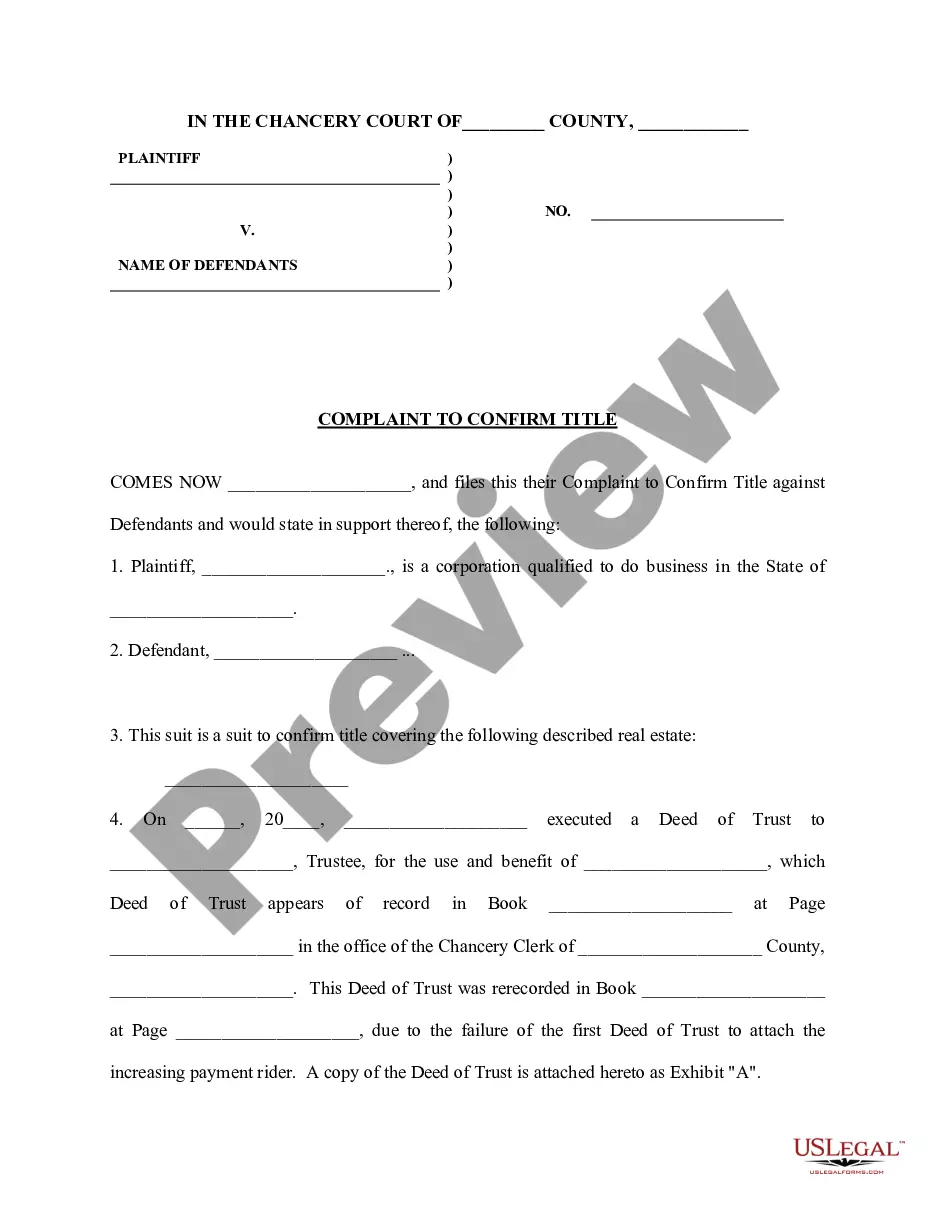
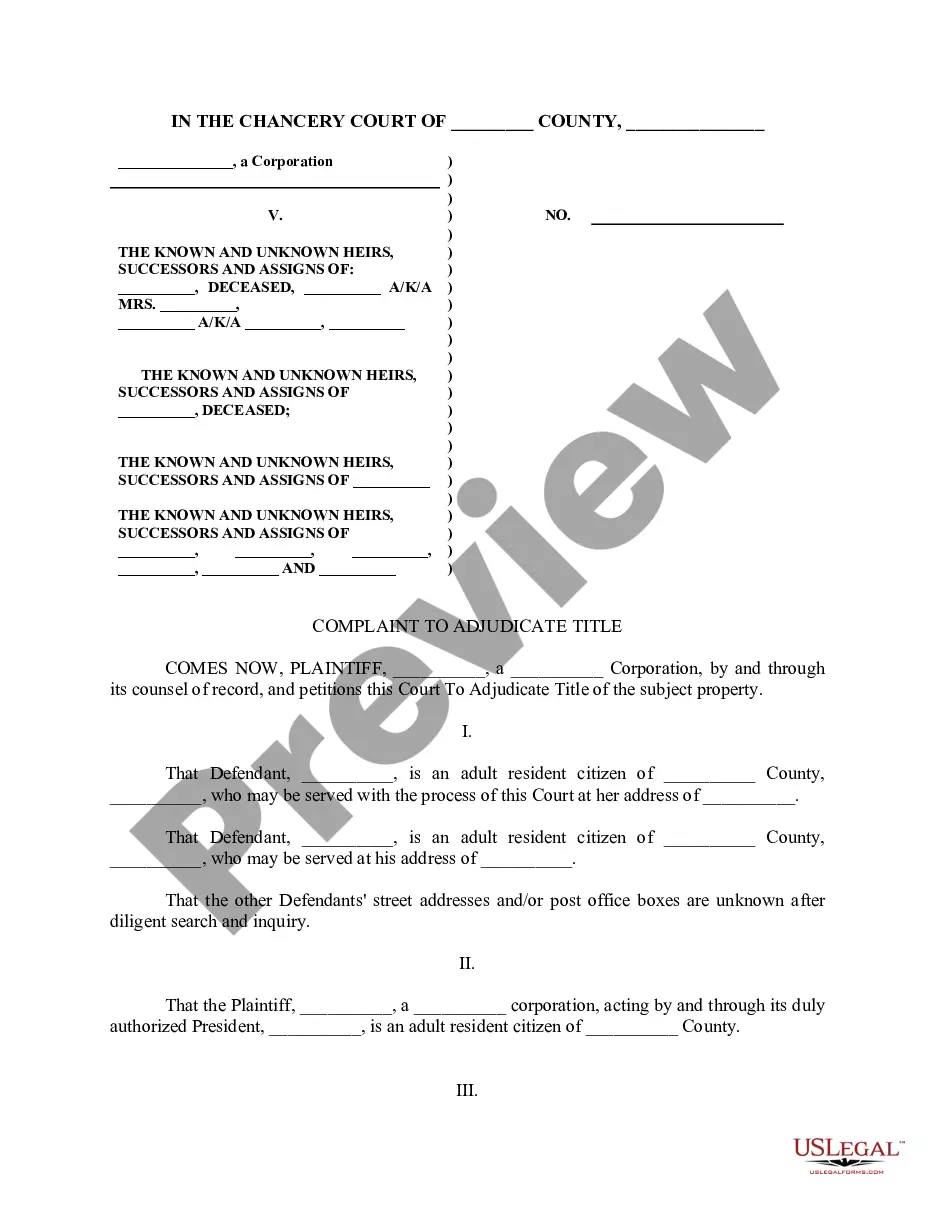
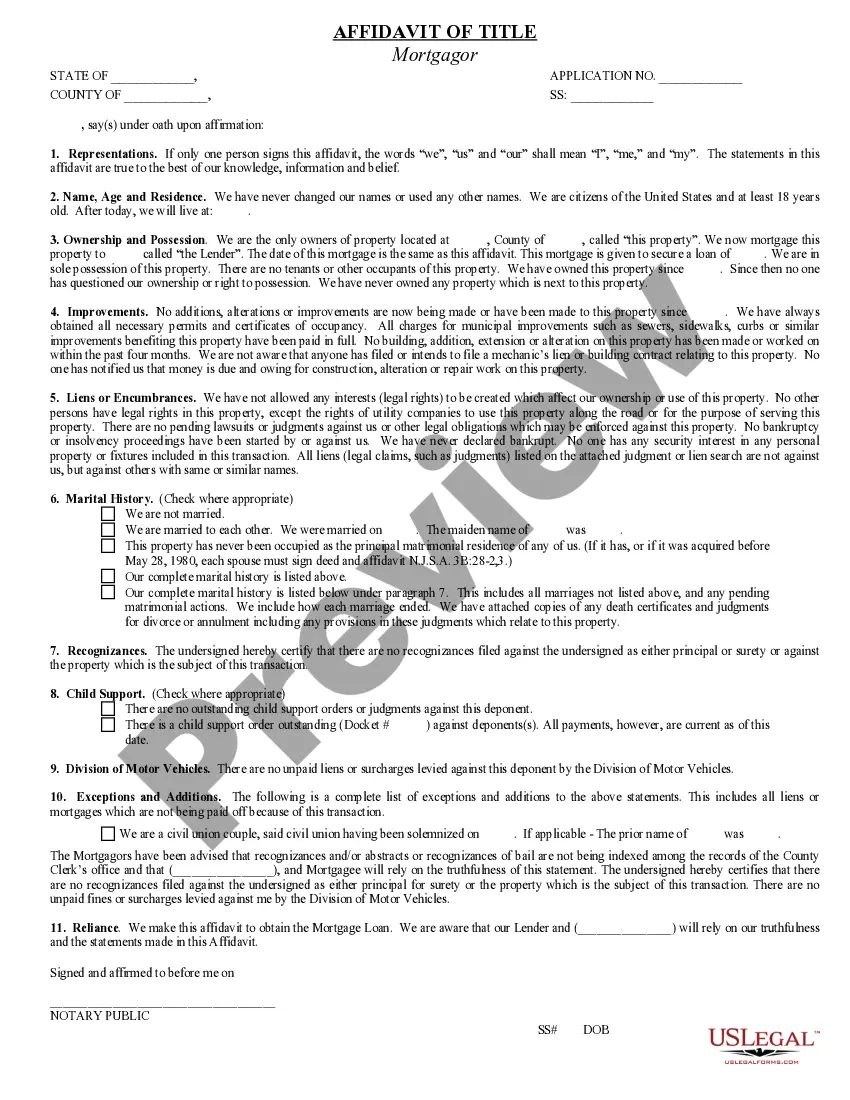
The Complaint to Confirm Title is a legal document used to establish ownership of real estate. This form is particularly important when there are disputes or uncertainties regarding property titles. Unlike other property-related forms, this complaint focuses specifically on confirming a party's legal title to the property in question, ensuring that the court recognizes the rightful owner based on the facts presented.
Form components explained
- Identification of the plaintiff and defendants.
- Description of the property in question.
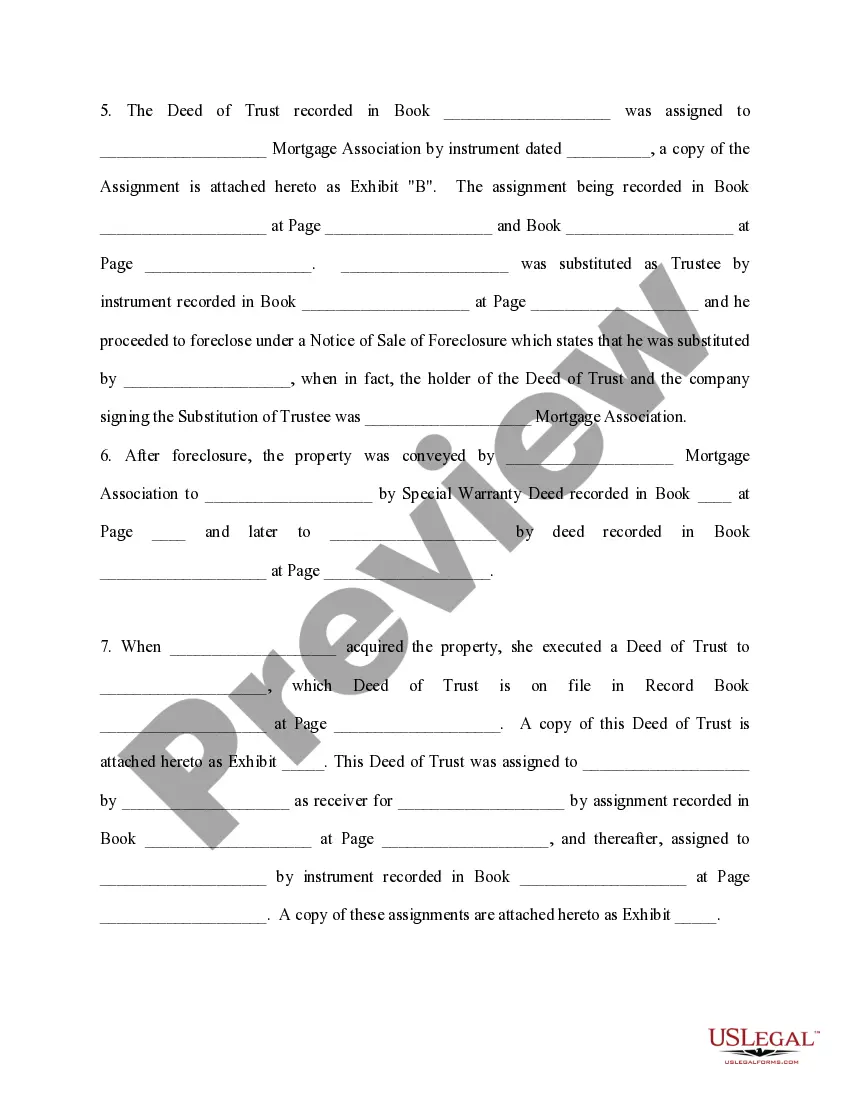
- Details regarding previous deeds and trusts related to the property.
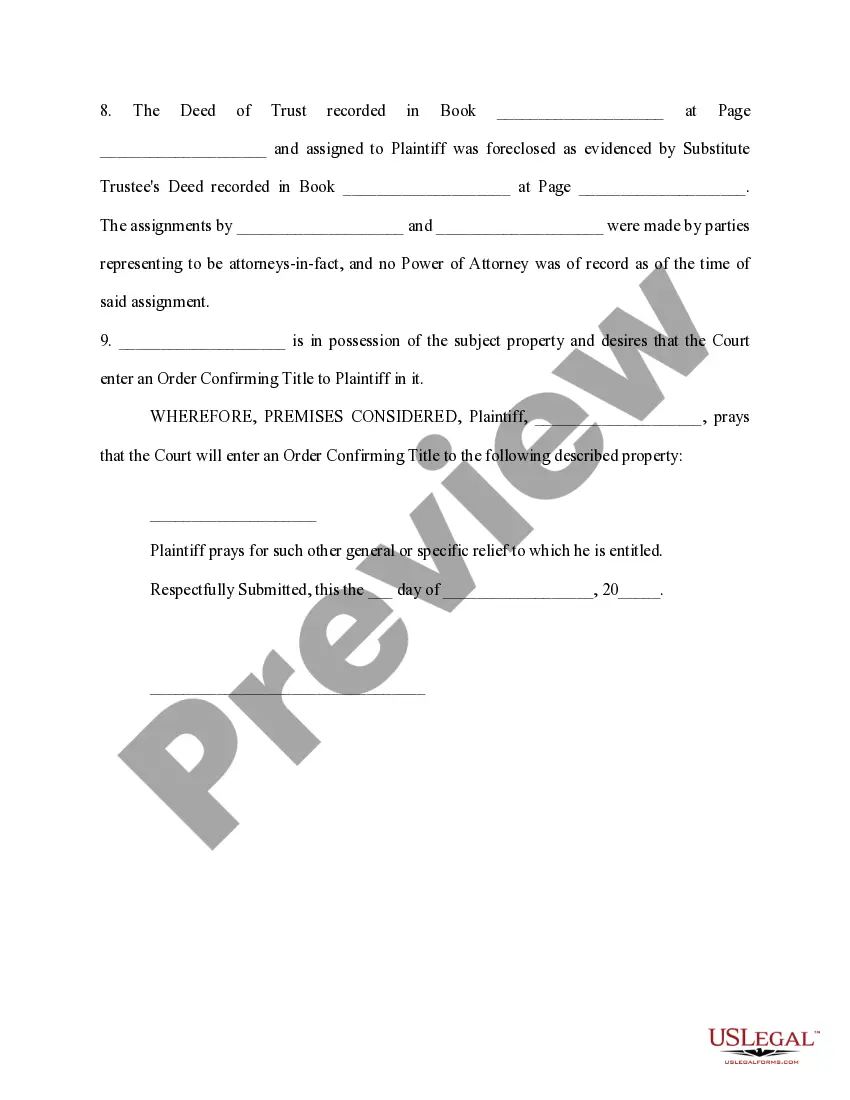
- Information about foreclosures, assignments, and any additional pertinent documents.
- Request for the court to confirm the title of the property to the plaintiff.
When to use this document
This form is necessary in situations where there is a need to clarify or confirm the ownership of a property, particularly after complex transactions such as foreclosures or when there are competing claims to title. It is useful for buyers who have concerns about the legitimacy of their property title or for parties involved in litigation regarding real estate disputes.
Intended users of this form
- Property owners seeking to confirm their title in court.
- Buyers of real estate who need to establish proof of ownership.
- Attorneys representing clients with title disputes.
- Real estate investors ensuring clear ownership before proceeding with transactions.
Instructions for completing this form
- Identify the parties involved, including plaintiff and defendants.
- Clearly specify the property being referred to in the complaint.
- Provide details of any previous deeds, trusts, and related documents.
- Include dates and relevant legal references for all transactions mentioned.
- Enter the date of filing and sign the complaint before submission.
Does this form need to be notarized?
This form does not typically require notarization unless specified by local law. It is advisable to check with your local jurisdiction to confirm any notarization requirements that may apply.
Get your form ready online
Our built-in tools help you complete, sign, share, and store your documents in one place.
Make edits, fill in missing information, and update formatting in US Legal Forms—just like you would in MS Word.
Download a copy, print it, send it by email, or mail it via USPS—whatever works best for your next step.
Sign and collect signatures with our SignNow integration. Send to multiple recipients, set reminders, and more. Go Premium to unlock E-Sign.
If this form requires notarization, complete it online through a secure video call—no need to meet a notary in person or wait for an appointment.
We protect your documents and personal data by following strict security and privacy standards.

Make edits, fill in missing information, and update formatting in US Legal Forms—just like you would in MS Word.

Download a copy, print it, send it by email, or mail it via USPS—whatever works best for your next step.

Sign and collect signatures with our SignNow integration. Send to multiple recipients, set reminders, and more. Go Premium to unlock E-Sign.

If this form requires notarization, complete it online through a secure video call—no need to meet a notary in person or wait for an appointment.

We protect your documents and personal data by following strict security and privacy standards.
Common mistakes
- Failing to include accurate property descriptions.
- Not providing all necessary supporting documents as exhibits.
- Omitting key dates related to property transactions.
- Using incorrect names for parties involved, leading to confusion.
Benefits of using this form online
- Easy access and immediate download for quick initiation of the process.
- Editability allows for customization based on unique circumstances.
- Reliability, as forms are drafted by licensed attorneys to ensure legal compliance.
Quick recap
- The Complaint to Confirm Title is essential for establishing property ownership in court.
- Properly detailing the property and its ownership history is critical.
- Always verify state-specific requirements to ensure compliance during submission.
- Utilizing this form can help resolve title disputes and clarify ownership rights.
Looking for another form?
Form popularity
FAQ
There could have been forgeries, claims from the use of an alias or fictitious name, a deed given under duress or fraud, deeds affecting property of a deceased person, a deed following administration of an estate of a missing person who later appears, an undisclosed but recorded federal or state tax lien, errors in
Cal. Civ. Code § 760.020. Accordingly, a quiet title action is a legal proceeding where a person or entity (Plaintiff) claims title to all or a portion of specific real property and asks the Court for a ruling that Plaintiff's title is superior to any interest that is claimed by the Defendant(s).
A cloud on title is any document, claim, unreleased lien, or encumbrance that might invalidate or impair a title to real property or make the title doubtful. Clouds on the title are usually discovered during a title search.
The purpose of the quiet title action is to eliminate an adverse claim to a legal interest in the property and to establish, perfect, or quiet the title in the property in one or more of the claimants.
A lawsuit for quiet title must be brought in local Superior Court. To begin the lawsuit, the plaintiff (the lender or homeowner) files a complaint with the court followed by a Notice of Pendency of Action (a Lis Pendens) that is recorded with the county recorder and filed with the court.
A special legal proceeding to determine ownership of real property. A party with a claim of ownership to land can file an action to quiet title, which serves as a sort of lawsuit against anyone and everyone else who has a claim to the land.
Why would a property owner file a quiet title suit?the owner against liabilities and losses resulting from title defects. A lender's title insurance policy generally protects. the lender against the possibility that the lender's lien cannot be enforced.
When two or more persons have adverse claims to the same property, any of them may file a quiet title action. The purpose of the quiet title action is to eliminate an adverse claim to a legal interest in the property and to establish, perfect, or quiet the title in the property in one or more of the claimants.
How Long Does a Quiet Title Action Take? A quiet title action usually takes 8-10 weeks to complete. The process may take longer or may be shorter depending on certain factors surrounding the dispute such as the Court rulings on certain matters.