Virginia Codicil to Will Form for Amending Your Will - Will Changes or Amendments
Understanding this form
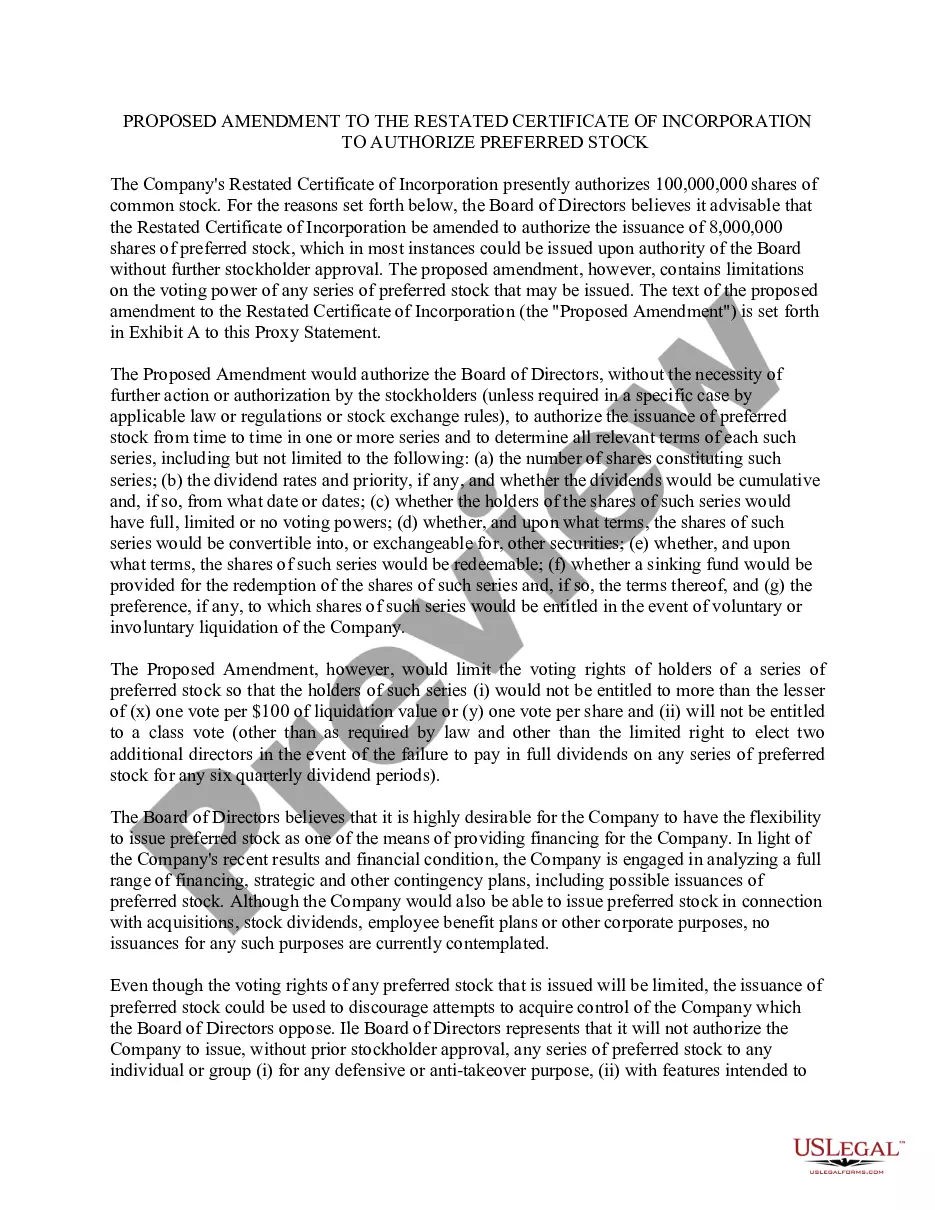
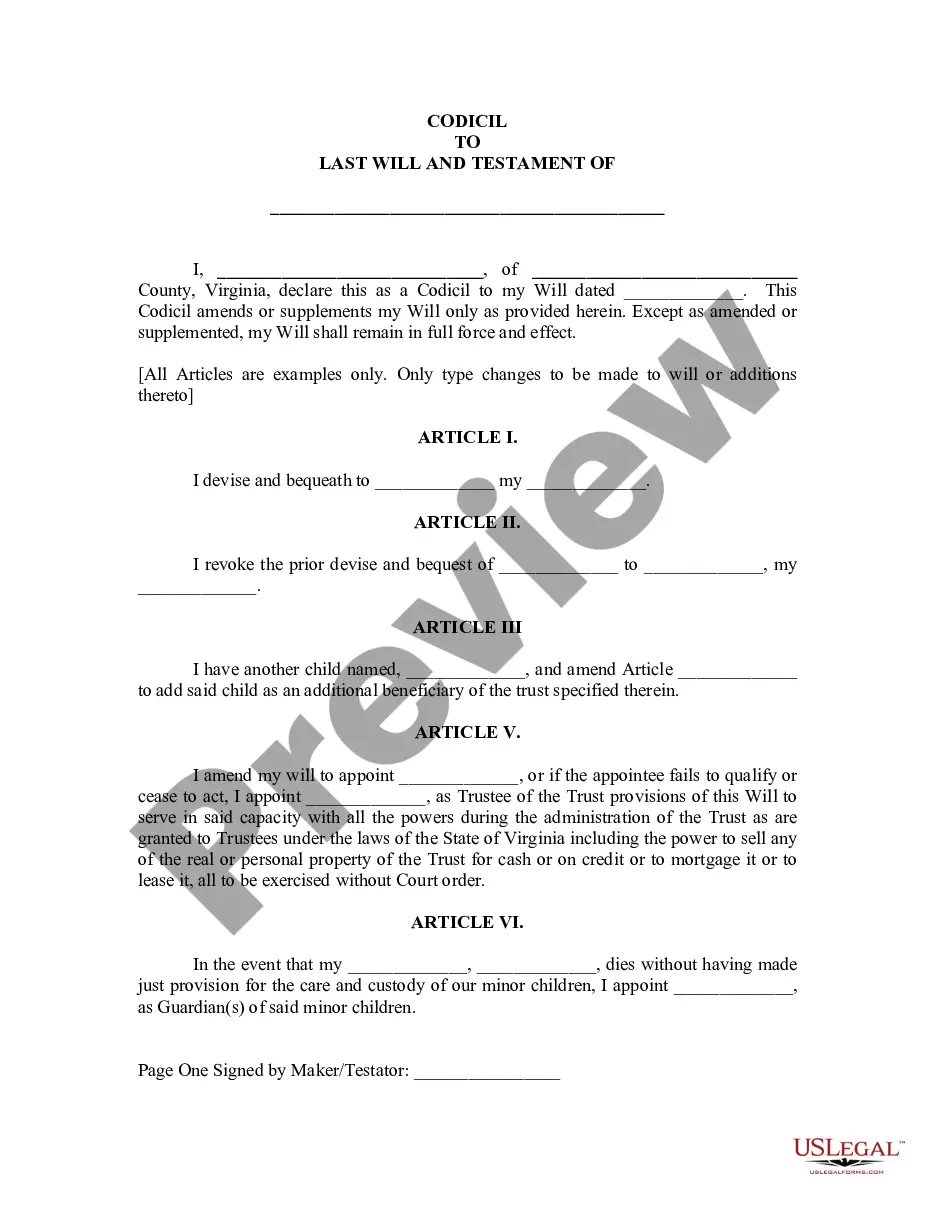
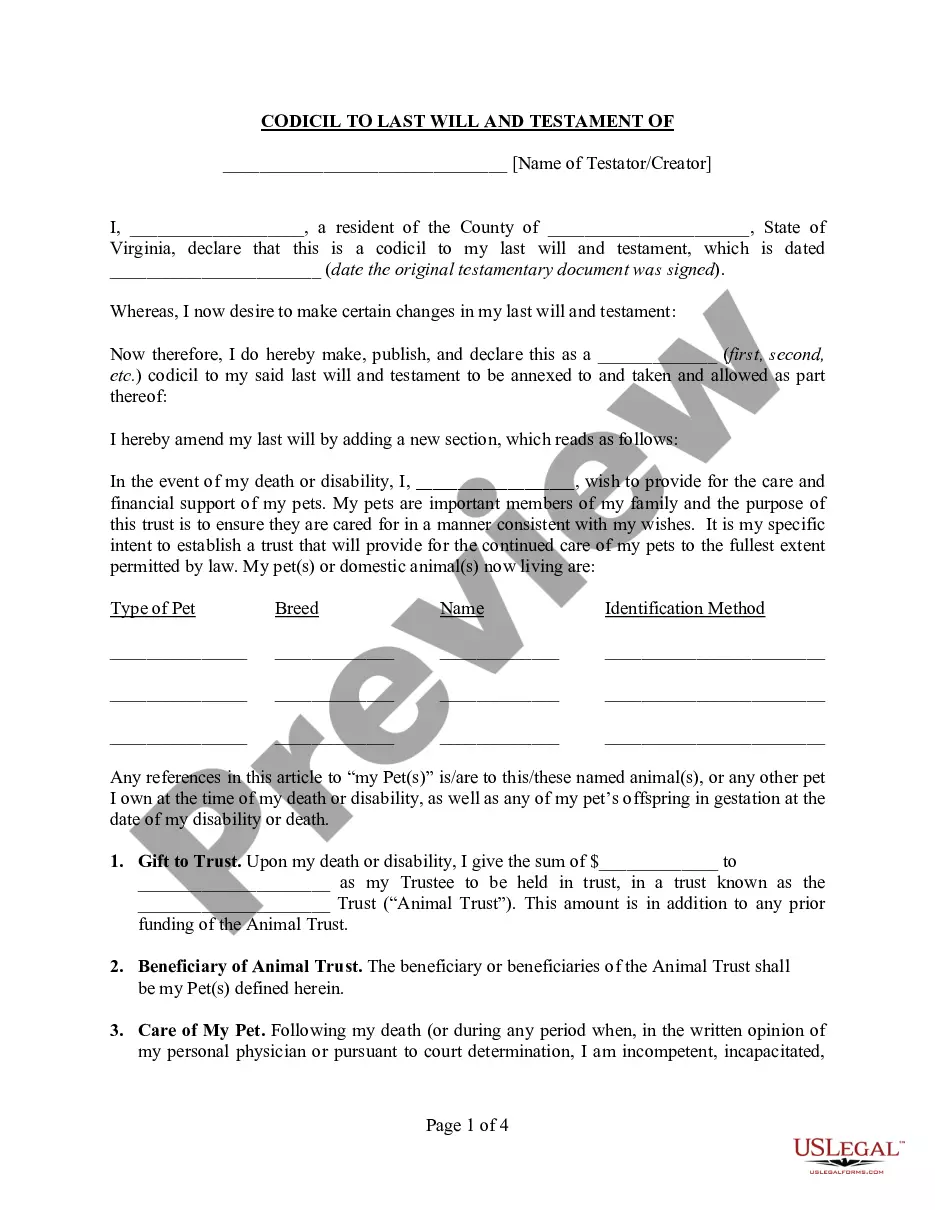
The Codicil to Will Form allows you to amend your existing will without the need to create an entirely new document. This form specifies that your previous will remains valid, except for the amendments made within the codicil. It includes the necessary format and attestation clause as required by Virginia law, ensuring that your changes are legally recognized.
Main sections of this form
- Declaration of the intent to amend the existing will
- Identification of the testator, including name and county
- Specific articles detailing the changes or additions to the will
- Provisions related to guardianship of minor children, if applicable
- Designations for executors and trustees
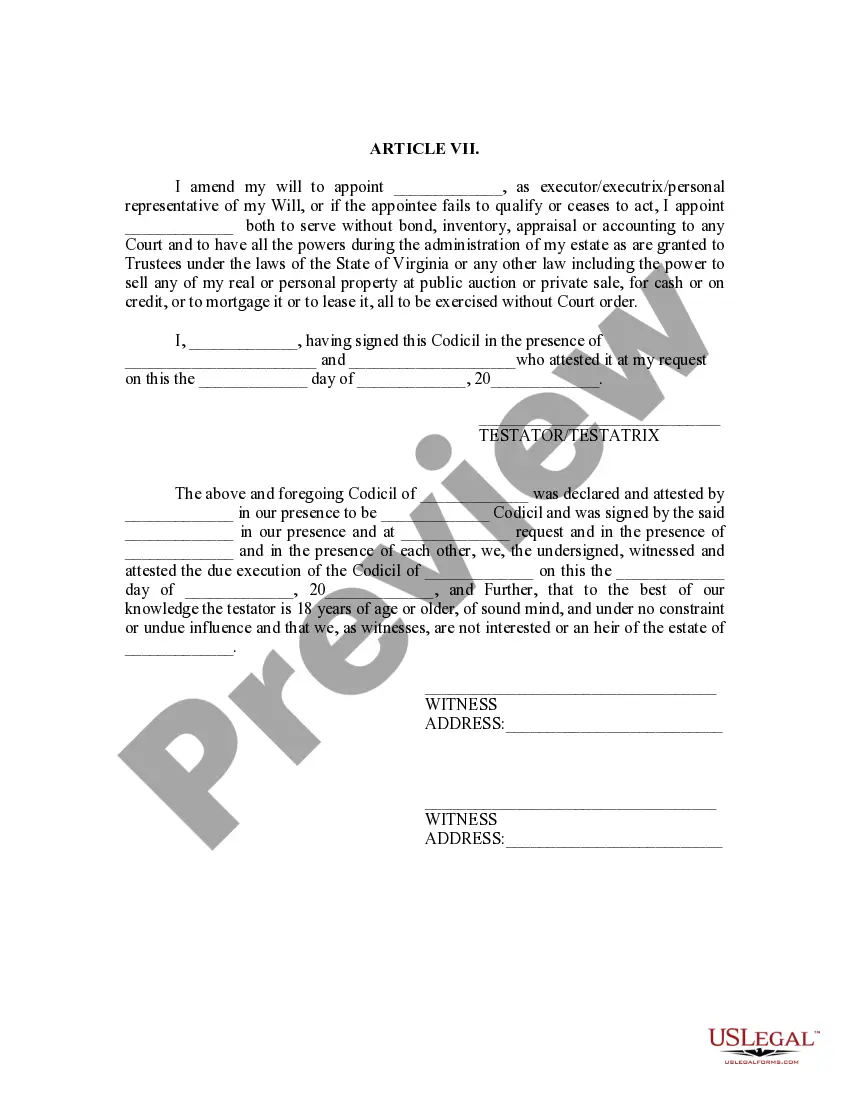
- Signature and witness requirements necessary for validation


Common use cases
You should use the Codicil to Will Form when you need to make changes to your existing will, such as adding or removing beneficiaries, altering bequests, or updating the appointment of an executor or trustee. This form is especially useful when minor adjustments are needed, allowing you to maintain the validity of your original will while ensuring your wishes are accurately reflected.
Who should use this form
This form is suitable for:
- Individuals with an existing will who need to make changes
- Those who want to add or remove beneficiaries or adjust inheritances
- People who wish to appoint or change their executor or trustee
- Residents of Virginia looking to ensure their will complies with state laws
Steps to complete this form
- Enter your name and county at the top of the form.
- Specify the date of your original will.
- Clearly outline each amendment in the designated articles of the codicil.
- Sign the codicil in the presence of at least two witnesses.
- Ensure witnesses also sign, confirming they observed the signing.
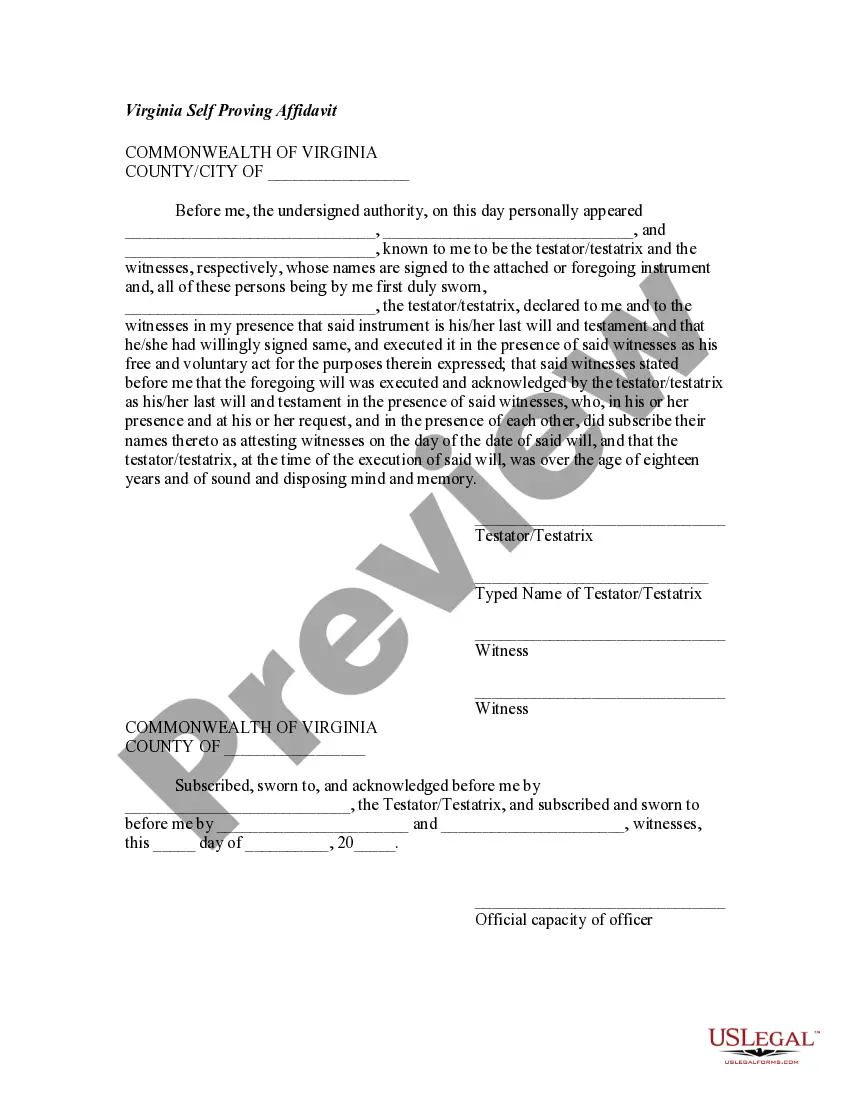
- Consider having the form notarized for added legal validity, if necessary.
Does this form need to be notarized?
Notarization is required for this form to take effect. Our online notarization service, powered by Notarize, lets you verify and sign documents remotely through an encrypted video session, available 24/7.
Get your form ready online
Our built-in tools help you complete, sign, share, and store your documents in one place.
Make edits, fill in missing information, and update formatting in US Legal Forms—just like you would in MS Word.
Download a copy, print it, send it by email, or mail it via USPS—whatever works best for your next step.
Sign and collect signatures with our SignNow integration. Send to multiple recipients, set reminders, and more. Go Premium to unlock E-Sign.
If this form requires notarization, complete it online through a secure video call—no need to meet a notary in person or wait for an appointment.
We protect your documents and personal data by following strict security and privacy standards.

Make edits, fill in missing information, and update formatting in US Legal Forms—just like you would in MS Word.

Download a copy, print it, send it by email, or mail it via USPS—whatever works best for your next step.

Sign and collect signatures with our SignNow integration. Send to multiple recipients, set reminders, and more. Go Premium to unlock E-Sign.

If this form requires notarization, complete it online through a secure video call—no need to meet a notary in person or wait for an appointment.

We protect your documents and personal data by following strict security and privacy standards.
Typical mistakes to avoid
- Failing to have the codicil signed by witnesses as required.
- Not specifying the articles clearly, leading to ambiguity.
- Forgetting to indicate the date of the original will.
- Omitting the legal language regarding the validity of the original will.
Why complete this form online
- Convenient access to legal documents from anywhere, 24/7.
- Edit the document easily to ensure it meets your specific needs.
- Receive instant downloads for immediate use.
- Forms are prepared by licensed attorneys, ensuring legal accuracy.
Legal use & context
- The codicil serves as a legally binding amendment to your will.
- It is necessary to follow the specific witnessing requirements of your state to prevent future disputes.
- All amendments should be clear and explicit to avoid confusion regarding your intentions.
Key takeaways
- A codicil allows you to make changes to your will without rewriting it.
- Proper execution and witnessing are critical for enforceability.
- This form is essential for managing changes in personal circumstances, ensuring your estate plan reflects your current wishes.
Looking for another form?


Form popularity
FAQ
What is a codicil to a will? A codicil is a short, additional document typically one or two pages used to make minor changes, amendments or alterations to an existing will. To be legally valid the codicil document must be signed and executed in front of witnesses in the same way as for a will.
A codicil is legally valid in Virginia if it is in writing signed by the testator or by a person in the testator's presence at his or her direction. It could also be generally required that it is signed by two disinterested witnesses in the testator's presence (see Virginia Code Section 64.2-403).
In short, no a codicil to a Will does not have to be notarized. However, laws and requirements vary from state to state. A codicil does have to be signed in front of at least two witnesses who are not listed as beneficiaries, guardians, or executors in your Will.
You can either make a codicil to your existing will or make a new will. Both require your signature and the signatures of two witnesses.You can have a lawyer write your codicil for you, or you can make one yourself. However, in most cases it makes more sense just to make a new will.
You cannot amend your will after it's been signed and witnessed. The only way you can change a will is by making an official alteration called a codicil. You must sign a codicil and get it witnessed in the same way as witnessing a will. There's no limit on how many codicils you can add to a will.
The Codicil cross-refers to the original Will and gives details of the amendments or additions you want to make to it. The Codicil must then be executed in the same way as for the Will i.e. signed with two witnesses (although the witnesses do not need to be the same people as the witnesses on the Will).