Pricing Agreement
Understanding this form
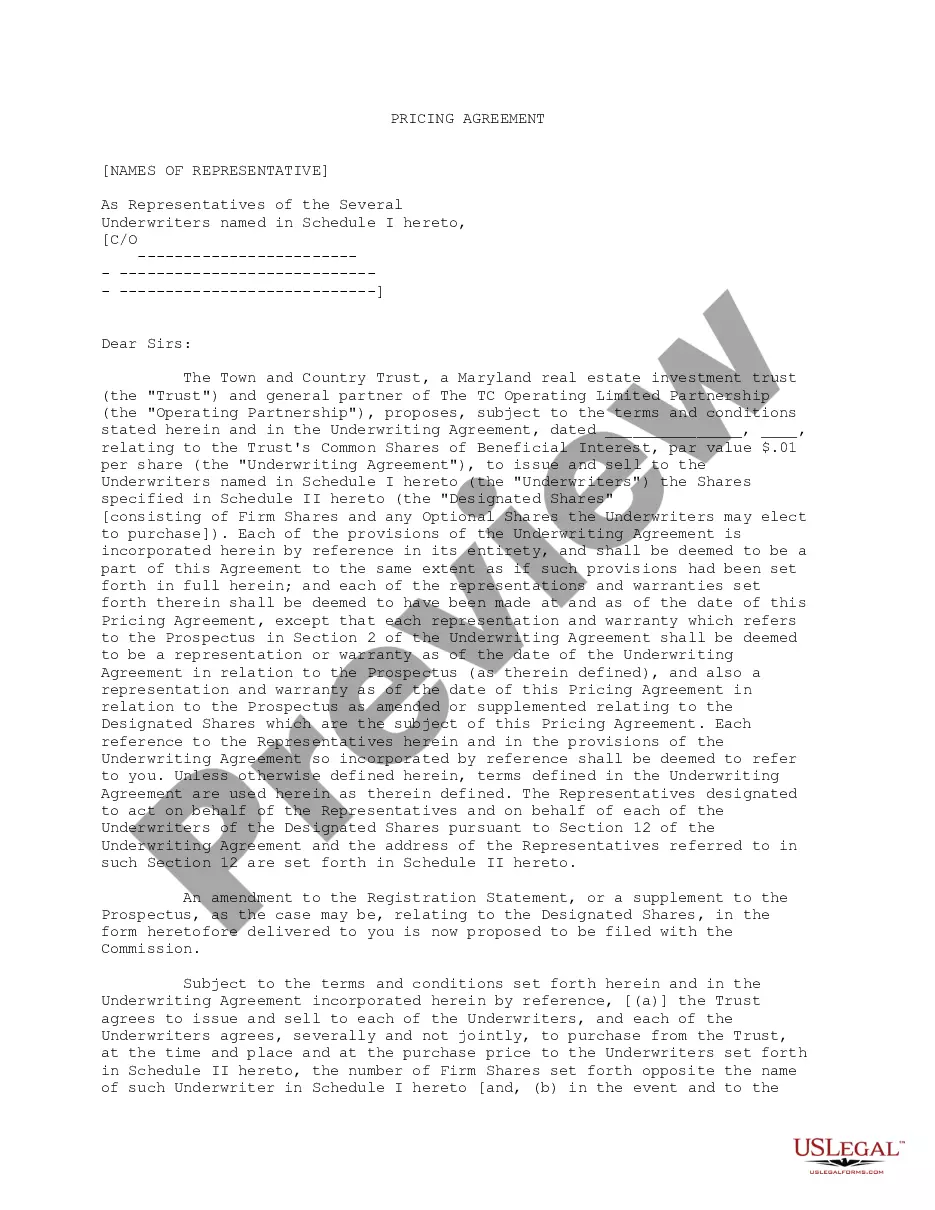
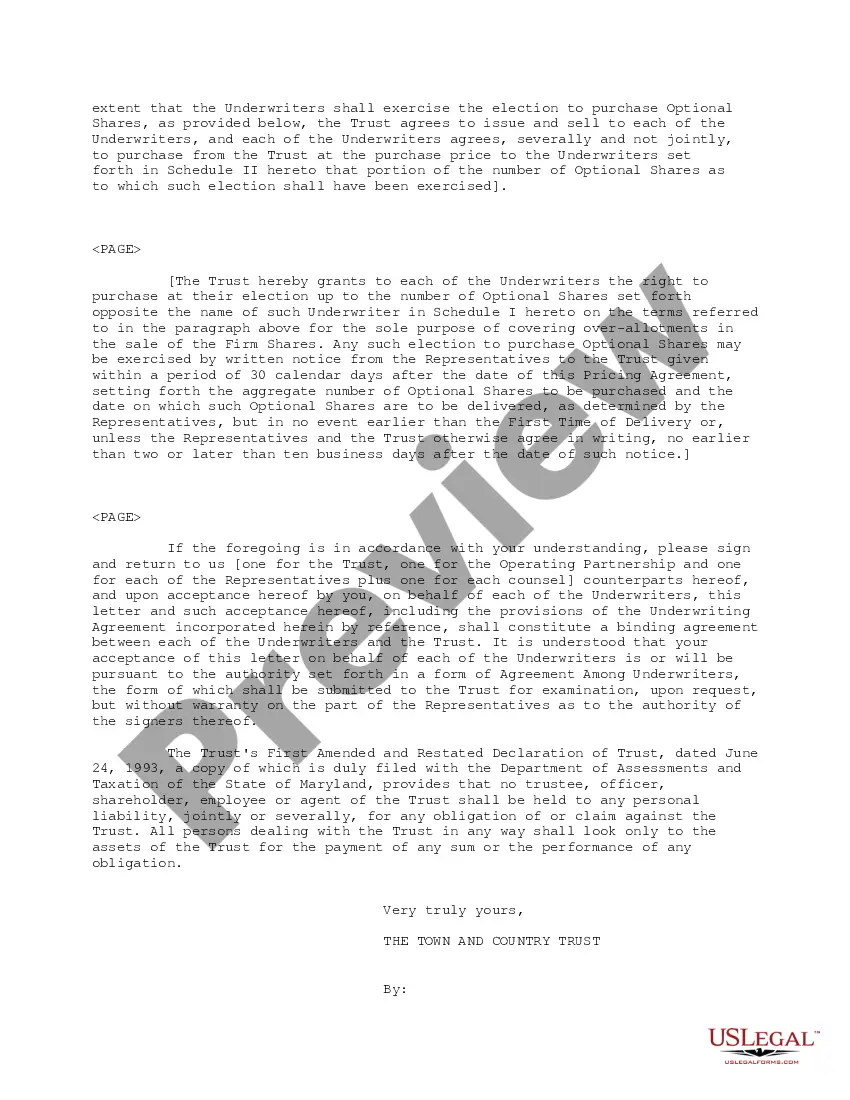
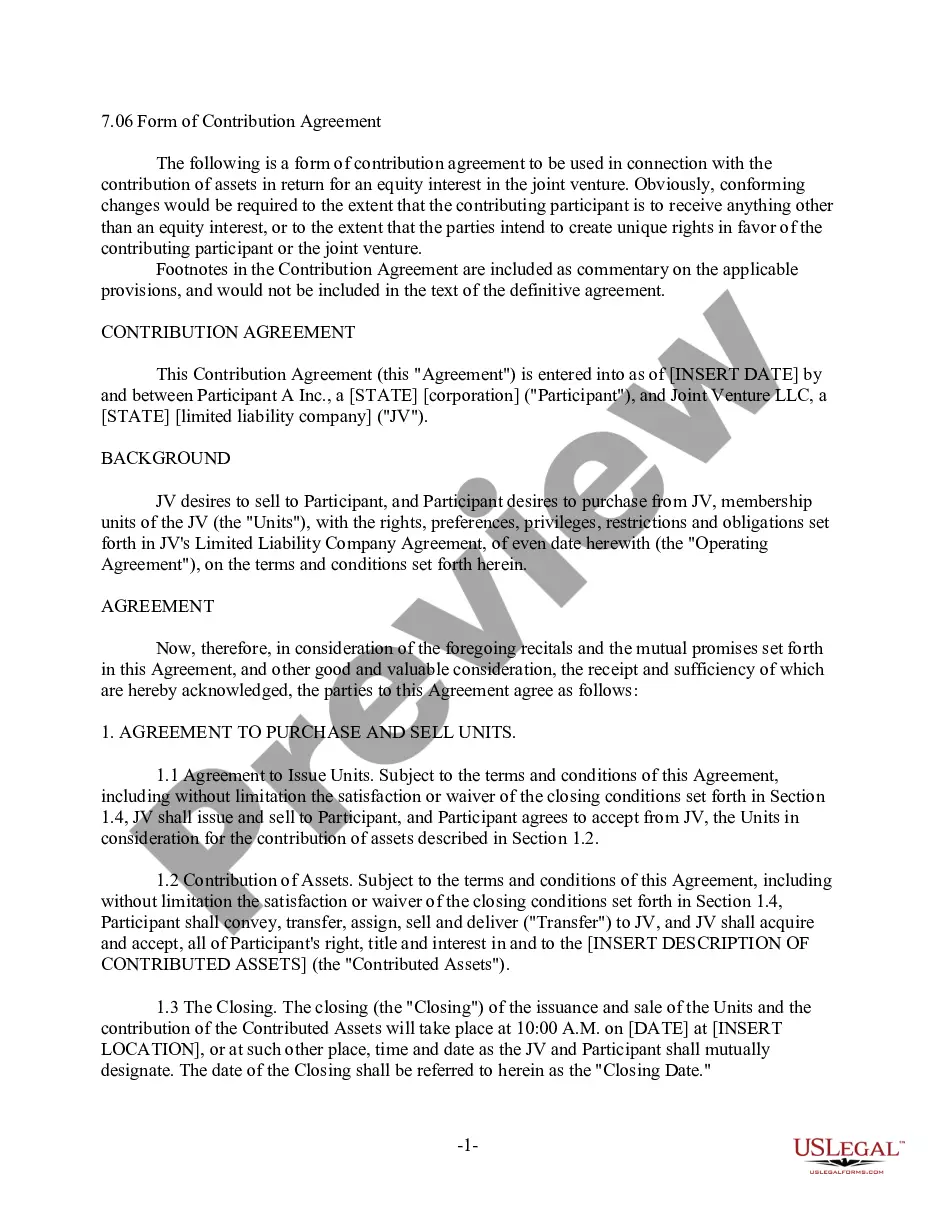
The Pricing Agreement is a legal document used to outline the terms between The Town and Country Trust and underwriters regarding the purchase of shares. This form facilitates the transaction process for issuing and selling common shares, ensuring all parties are aligned on the conditions of the agreement. Unlike standard contracts, this form specifically addresses share offerings in the context of underwriting arrangements, making it vital for real estate investment trusts and involved investors.
Key parts of this document
- Parties Involved: Identifies The Town and Country Trust and the underwriters participating in the agreement.
- Schedule of Shares: Details the number and type of shares being sold, including Firm Shares and Optional Shares.
- Purchase Price: Specifies the agreed price for the shares as per the underwriting conditions.
- Amendments Clause: Addresses any necessary amendments to the registration statement or prospectus related to the shares.
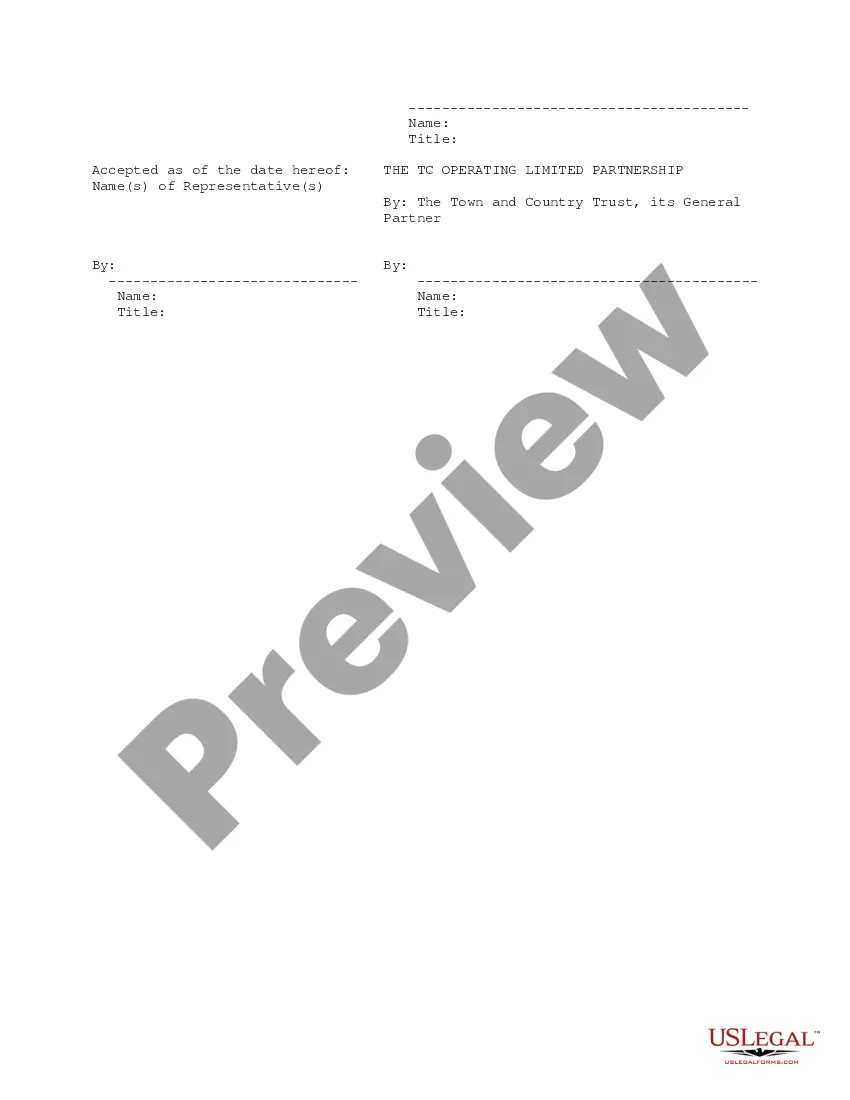
- Acceptance Terms: Outlines how and when the agreement is accepted by the underwriters and the Trust.
When this form is needed
This form is used during the underwriting process when a real estate investment trust seeks to sell shares to investors through underwriters. It is necessary when committing to a share issuance, especially if there is a need for additional purchases beyond the firm offering. This agreement helps formalize the obligations and understanding between the involved parties regarding the share transaction.
Intended users of this form
- Real estate investment trusts (REITs) that plan to issue shares.
- Investment firms or underwriters involved in purchasing shares from a REIT.
- Equity investors looking to understand the terms of share purchases.
- Legal professionals drafting agreements for share issuances.
Instructions for completing this form
- Identify the parties involved: Include the names and addresses of The Town and Country Trust and the underwriters.
- Specify the shares: Indicate the total number of Firm Shares and any Optional Shares to be purchased.
- Enter the purchase price: Clearly state the agreed price on the shares as outlined in Schedule II.
- Review and incorporate amendments: Ensure any updates to the registration statement or prospectus are documented.
- Sign and date the agreement: Obtain signatures from authorized representatives of all parties before submitting.
Notarization guidance
In most cases, this form does not require notarization. However, some jurisdictions or signing circumstances might. US Legal Forms offers online notarization powered by Notarize, accessible 24/7 for a quick, remote process.
Get your form ready online
Our built-in tools help you complete, sign, share, and store your documents in one place.
Make edits, fill in missing information, and update formatting in US Legal Forms—just like you would in MS Word.
Download a copy, print it, send it by email, or mail it via USPS—whatever works best for your next step.
Sign and collect signatures with our SignNow integration. Send to multiple recipients, set reminders, and more. Go Premium to unlock E-Sign.
If this form requires notarization, complete it online through a secure video call—no need to meet a notary in person or wait for an appointment.
We protect your documents and personal data by following strict security and privacy standards.

Make edits, fill in missing information, and update formatting in US Legal Forms—just like you would in MS Word.

Download a copy, print it, send it by email, or mail it via USPS—whatever works best for your next step.

Sign and collect signatures with our SignNow integration. Send to multiple recipients, set reminders, and more. Go Premium to unlock E-Sign.

If this form requires notarization, complete it online through a secure video call—no need to meet a notary in person or wait for an appointment.

We protect your documents and personal data by following strict security and privacy standards.
Typical mistakes to avoid
- Failing to accurately list all parties involved, which can lead to confusion or disputes.
- Not specifying the correct number of shares or purchase price, potentially leading to financial discrepancies.
- Neglecting to include necessary amendments to the prospectus or registration statement.
- Overlooking required signatures, which could render the agreement unenforceable.
Advantages of online completion
- Convenience: Download and complete the form from anywhere, at any time.
- Editability: Easily customize the form to suit specific agreements and terms.
- Reliability: Access forms drafted by licensed attorneys to ensure compliance with legal standards.
Quick recap
- The Pricing Agreement facilitates share transactions between a trust and underwriters.
- Clear identification of all parties and shares is essential for enforceability.
- Ensure all required terms and conditions are documented and agreed upon.
- Notarization is generally not required unless local laws state otherwise.
Looking for another form?

Form popularity
FAQ
Add up your overhead fees during a specific period of time. Determine the number of labor hours worked for that period of time. Divide overhead costs into hours worked to get your hourly overhead cost. Multiply your hourly overhead cost by the number of hours you or your employees worked on the job.
Total Contract Value = (Monthly Recurring Revenue Contract Term Length) + Contract Fees. For Customer A, the TCV is calculated like so: ( $50 MRR 12 months ) + $0 fees = $600. The TCV for Customer B is calculated the same way:
Grant. Financial assistance for a specific purpose or specific project without expectation of any tangible deliverables other than a final report. Cooperative Agreement. Contract. Memorandum of Understanding. Non-Disclosure Agreement. Teaming Agreement. Material Transfer Agreement. IDIQ/Master Agreement.
Contract costing is the tracking of costs associated with a specific contract with a customer.The company is reimbursed for the costs it incurred, plus a percentage profit or fixed profit.
A contract price is a total amount that is agreed upon by two parties where the project owner or client, known as the principal, pays the contractor when they complete the terms of the contract. This is according to the terms and conditions of the contract and any other modifications.
1Provide details of the parties.2Describe services or results.3Set out payment details.4Assign intellectual property rights.5Explain how to treat confidential information.6Identify who is liable indemnity.7Provide insurance obligations.8Outline any subcontracting agreements.How to prepare a contract business.gov.au\nbusiness.gov.au > products-and-services > contracts-and-tenders > how-to-...
The definition of agreement means the act of coming to a mutual decision, position or arrangement. An example of an agreement is the decision between two people to share the rent in an apartment.
Contact information for both parties. Location/state whose laws apply to the agreement. Terms and conditions of the business relationship. Terms of payment. Start date of the agreement. End date of the agreement.
The contract is equal to the gross selling price when no mortgages are assumed. If a mortgage is assumed, the contract price is the gross selling price minus the amount of the mortgage plus the excess (if any) of the mortgage over the seller's basis and expenses of sale.