Fee Agreement
What this document covers
A Fee Agreement is a legal document that outlines the terms of payment between a client and a law firm for legal services. This specific fee agreement details the financial arrangements made for corporate legal services and is crucial for clarifying the expected fees and procedures for both parties. Unlike general contracts, a fee agreement specifically focuses on the compensation structure, making it distinct and essential for maintaining transparency between a client and an attorney or law firm.
What’s included in this form
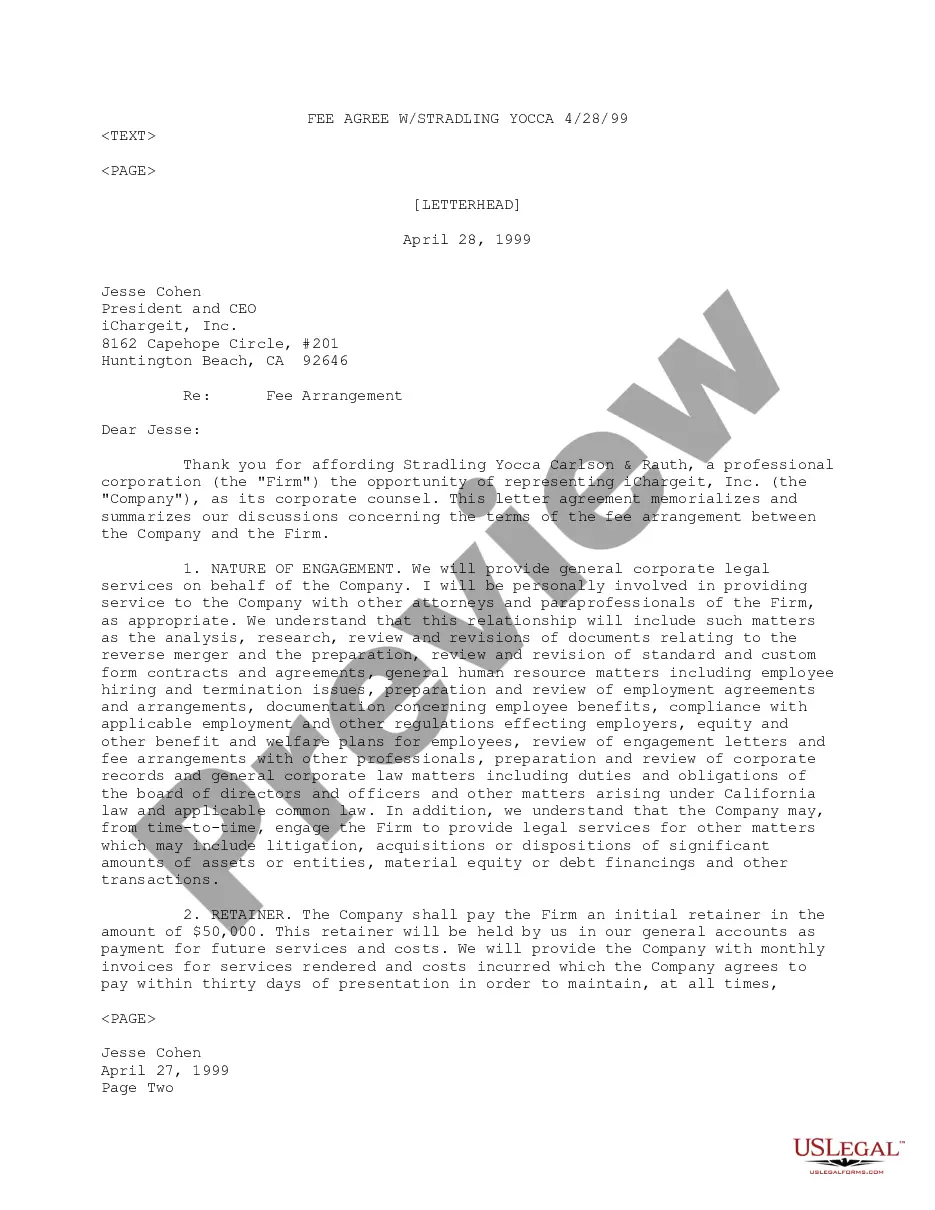
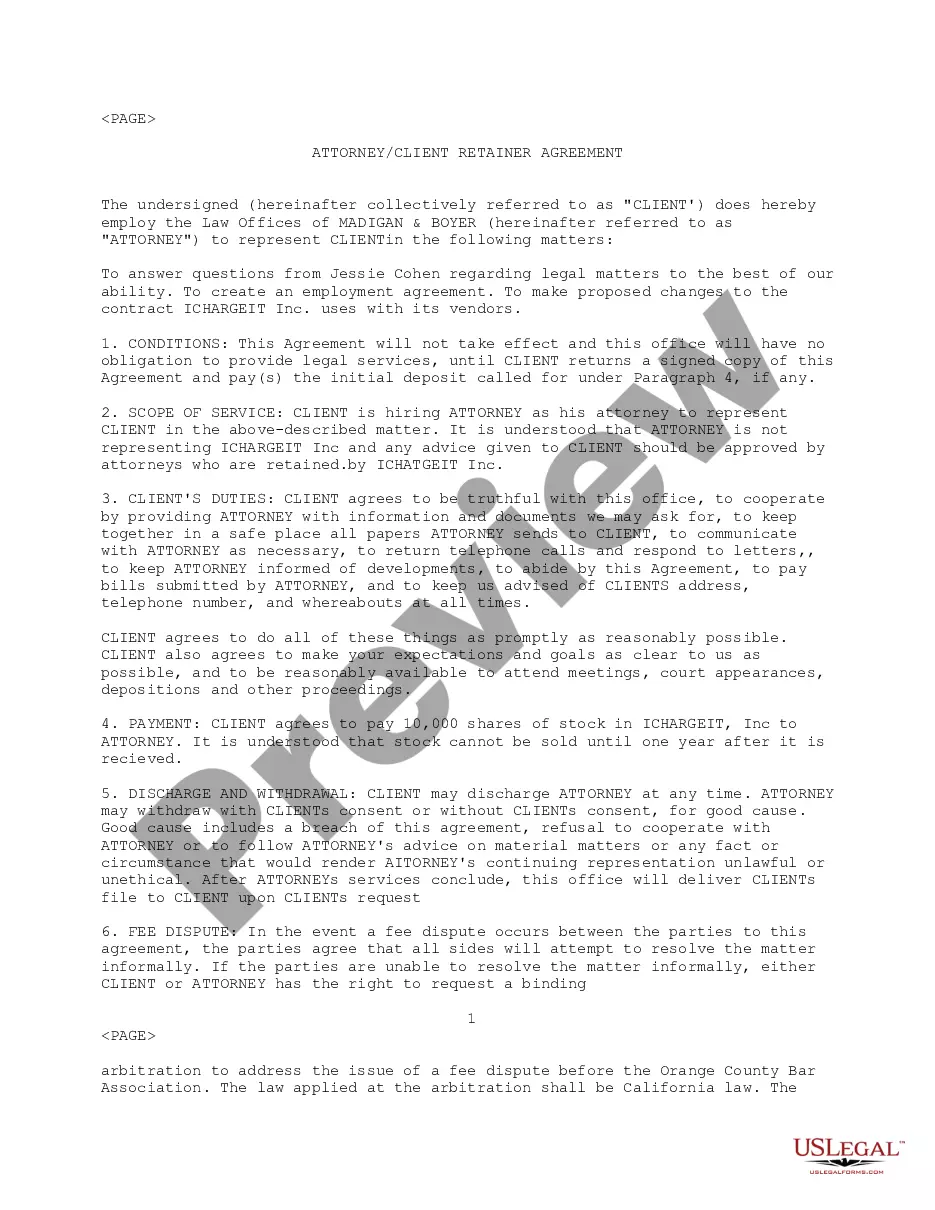
- Nature of Engagement: Describes the legal services provided.
- Retainer: Specifies the initial payment required to secure services.
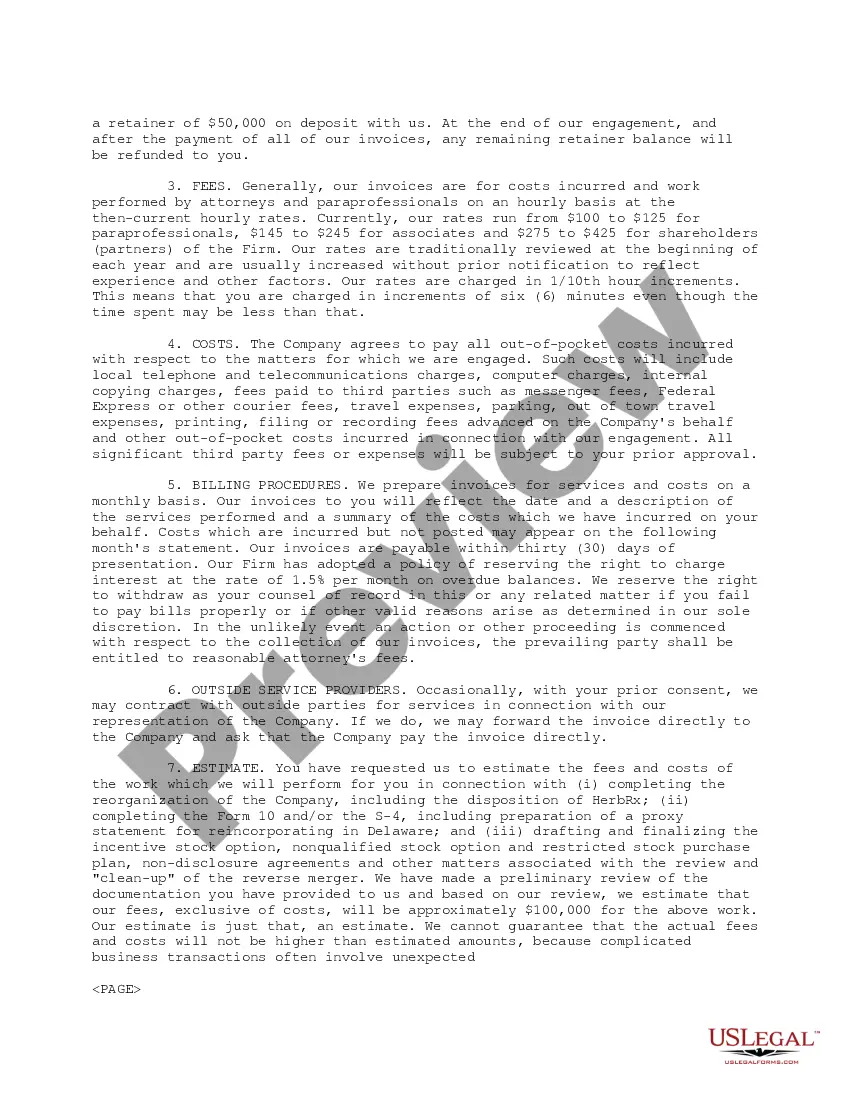
- Fees: Outlines hourly rates for attorneys and paraprofessionals.
- Costs: Lists additional expenses the client is responsible for.
- Billing Procedures: Details how and when invoices will be sent.
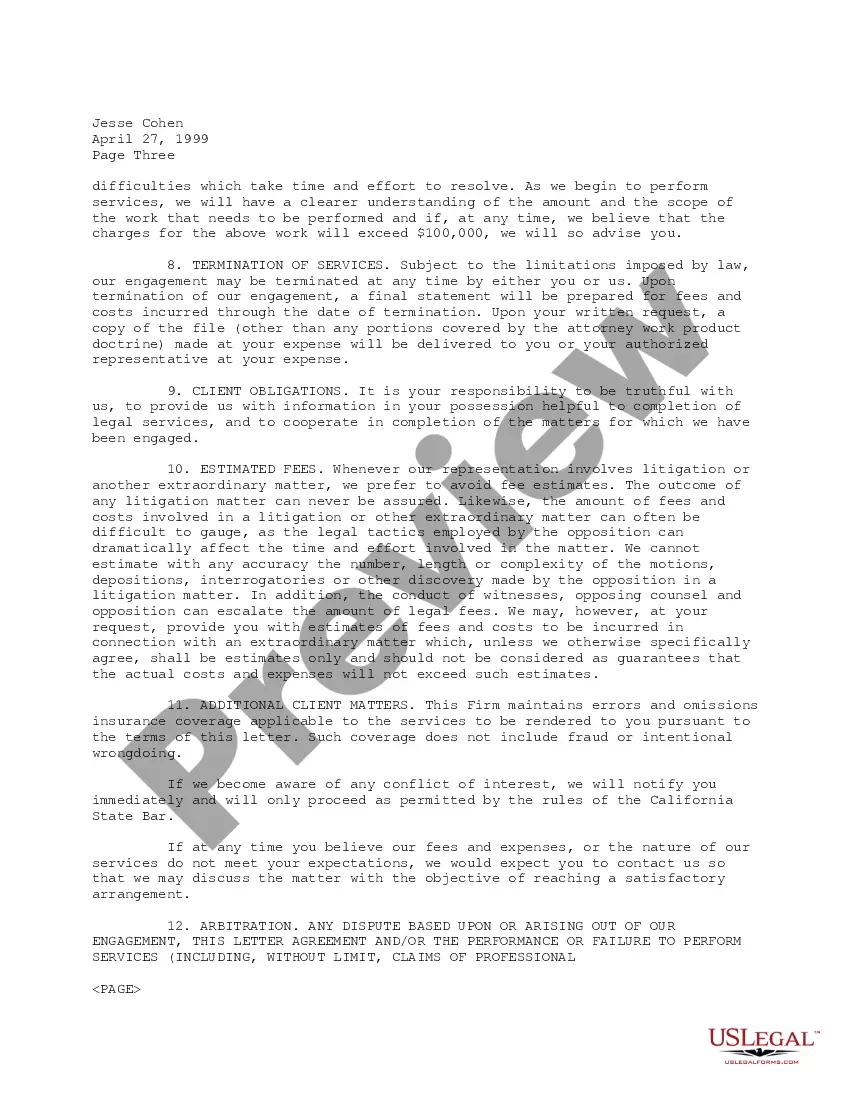
- Termination of Services: Explains how either party can end the agreement.

When to use this form
This Fee Agreement is used when a business hires a law firm to provide legal counsel and services. It should be executed before the legal services begin to ensure both parties are clear on payment terms. Typical scenarios include engaging a firm for mergers, acquisitions, corporate compliance, or any significant legal engagements that involve substantial legal fees.
Intended users of this form
This form is intended for:
- Business owners seeking legal representation.
- Corporations in need of establishing formal fee arrangements with law firms.
- Law firms providing legal services that require upfront retainer fees.
Instructions for completing this form
- Identify the parties involved: Clearly state the name of the law firm and the client.
- Specify the nature of engagement: Outline the specific legal services to be provided.
- Enter retainer amount: Indicate the initial retainer fee required from the client.
- Detail hourly rates: Include the hourly fees for various staff members involved in the case.
- Provide additional cost information: Specify any other costs that the client might incur.
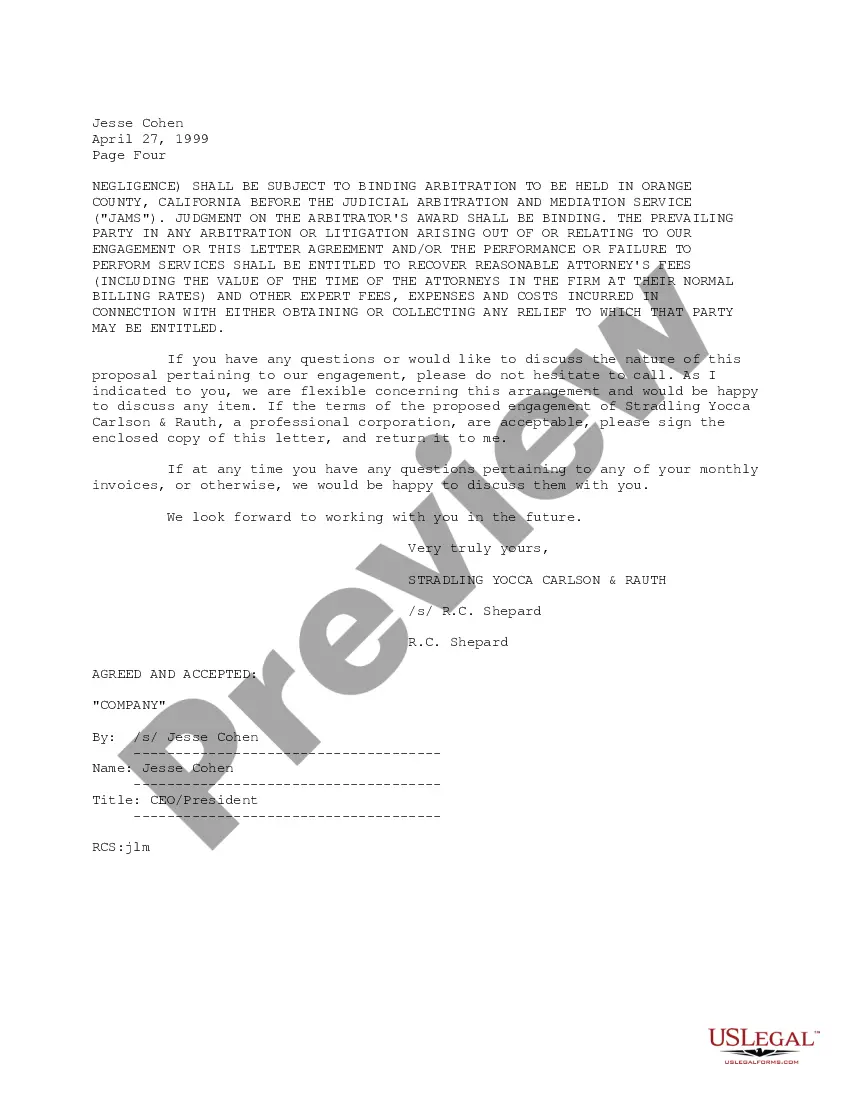
- Obtain signatures: Ensure both parties sign the agreement for it to be valid.
Notarization requirements for this form
Notarization is generally not required for this form. However, certain states or situations might demand it. You can complete notarization online through US Legal Forms, powered by Notarize, using a verified video call available anytime.
Get your form ready online
Our built-in tools help you complete, sign, share, and store your documents in one place.
Make edits, fill in missing information, and update formatting in US Legal Forms—just like you would in MS Word.
Download a copy, print it, send it by email, or mail it via USPS—whatever works best for your next step.
Sign and collect signatures with our SignNow integration. Send to multiple recipients, set reminders, and more. Go Premium to unlock E-Sign.
If this form requires notarization, complete it online through a secure video call—no need to meet a notary in person or wait for an appointment.
We protect your documents and personal data by following strict security and privacy standards.

Make edits, fill in missing information, and update formatting in US Legal Forms—just like you would in MS Word.

Download a copy, print it, send it by email, or mail it via USPS—whatever works best for your next step.

Sign and collect signatures with our SignNow integration. Send to multiple recipients, set reminders, and more. Go Premium to unlock E-Sign.

If this form requires notarization, complete it online through a secure video call—no need to meet a notary in person or wait for an appointment.

We protect your documents and personal data by following strict security and privacy standards.
Mistakes to watch out for
- Failing to specify all costs involved in the legal representation.
- Not obtaining signatures from both parties, rendering the agreement void.
- Omitting details on billing procedures and payment deadlines.
Why complete this form online
- Convenient access to downloadable legal forms prepared by licensed attorneys.
- Ease of customization to suit specific legal needs and circumstances.
- Immediate availability, allowing clients to start their legal engagement without delay.
Legal use & context
- A well-drafted Fee Agreement provides clarity on fees and expectations, reducing the risk of disputes.
- It serves as evidence of the contractual relationship between the parties.
- This agreement helps manage client expectations and protects the legal interests of the attorney and the client.
Key takeaways
- The Fee Agreement is essential for establishing a formal understanding between a law firm and its client regarding fees and services.
- Careful completion of this form ensures clarity and protects the rights of both parties.
- Utilizing this document can help prevent potential disputes about fees and services in the future.
Looking for another form?
Form popularity
FAQ
If the lawyer charges an hourly fee, the lawyer will bill you for small tasks like writing emails to you and answering your telephone calls. Some lawyers charge for their time in six-minute increments, and will round up. For example, if your lawyer charges $250 per hour, a ten-minute phone call may cost you $50.
A flat fee agreement is an agreement where the client pays a monthly flat fee for the legal representation regardless of the time the law firm puts into the case during the month.
A Finder's Fee Agreement outlines the relationship and the compensation to be expected in a relationship where an incentive is being offered in exchange for new leads or clients. Documenting your arrangement on paper helps ensure that the interests of both parties are laid out in certain terms.
A legal malpractice attorney can represent you at trial without a written contract. A written agreement is not required for an attorney to represent someone. However, an attorney cannot collect a "contingency fee" without a written contract with you.