Credit Application
Overview of this form
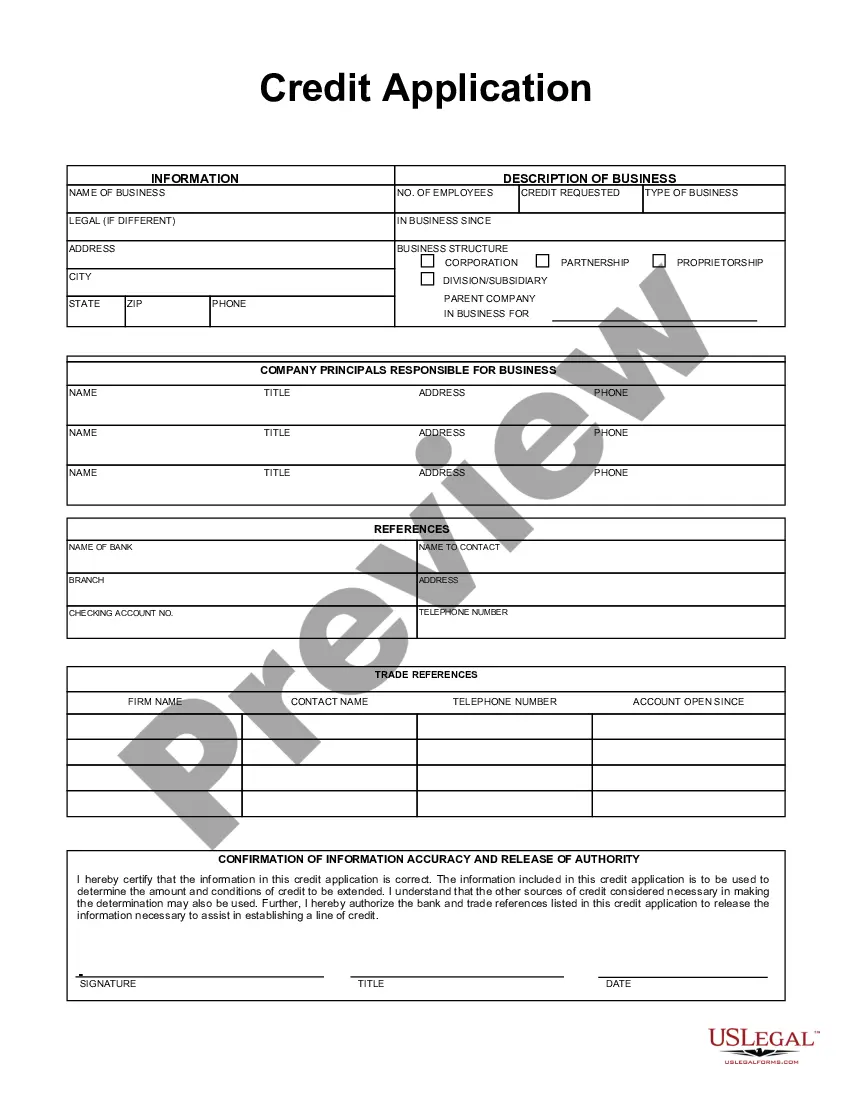
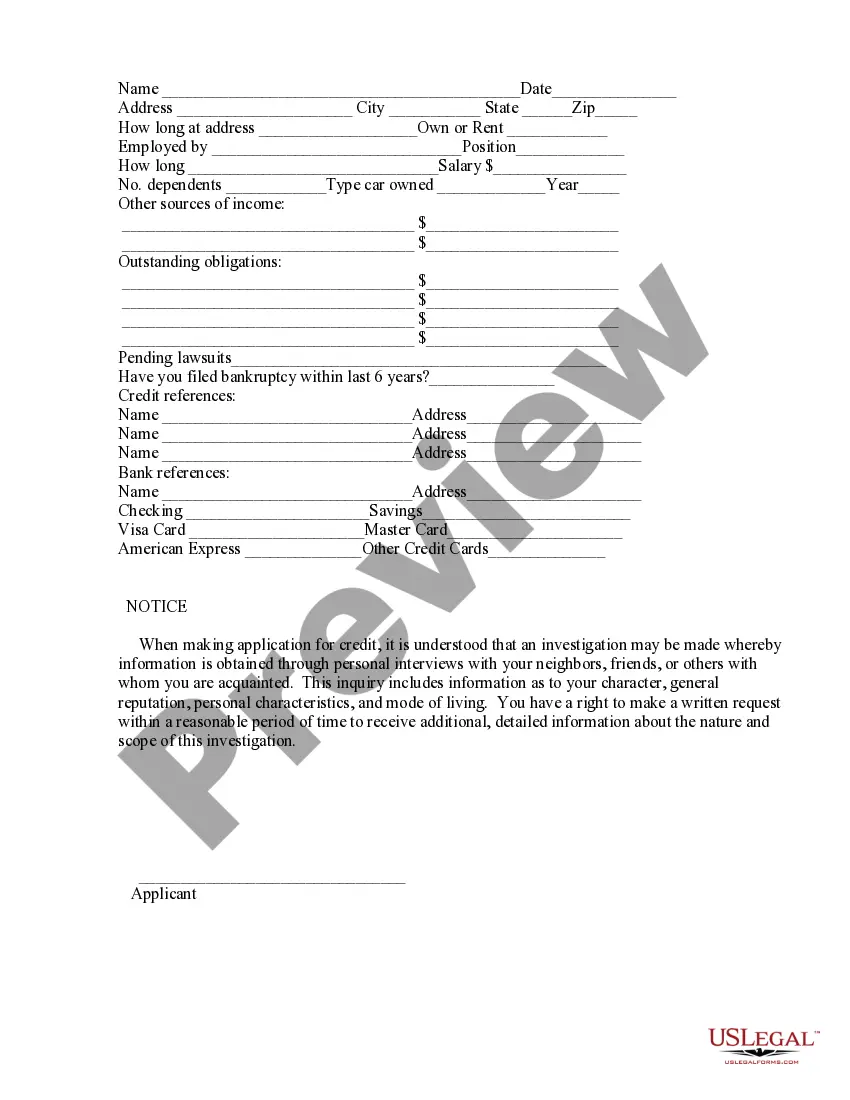
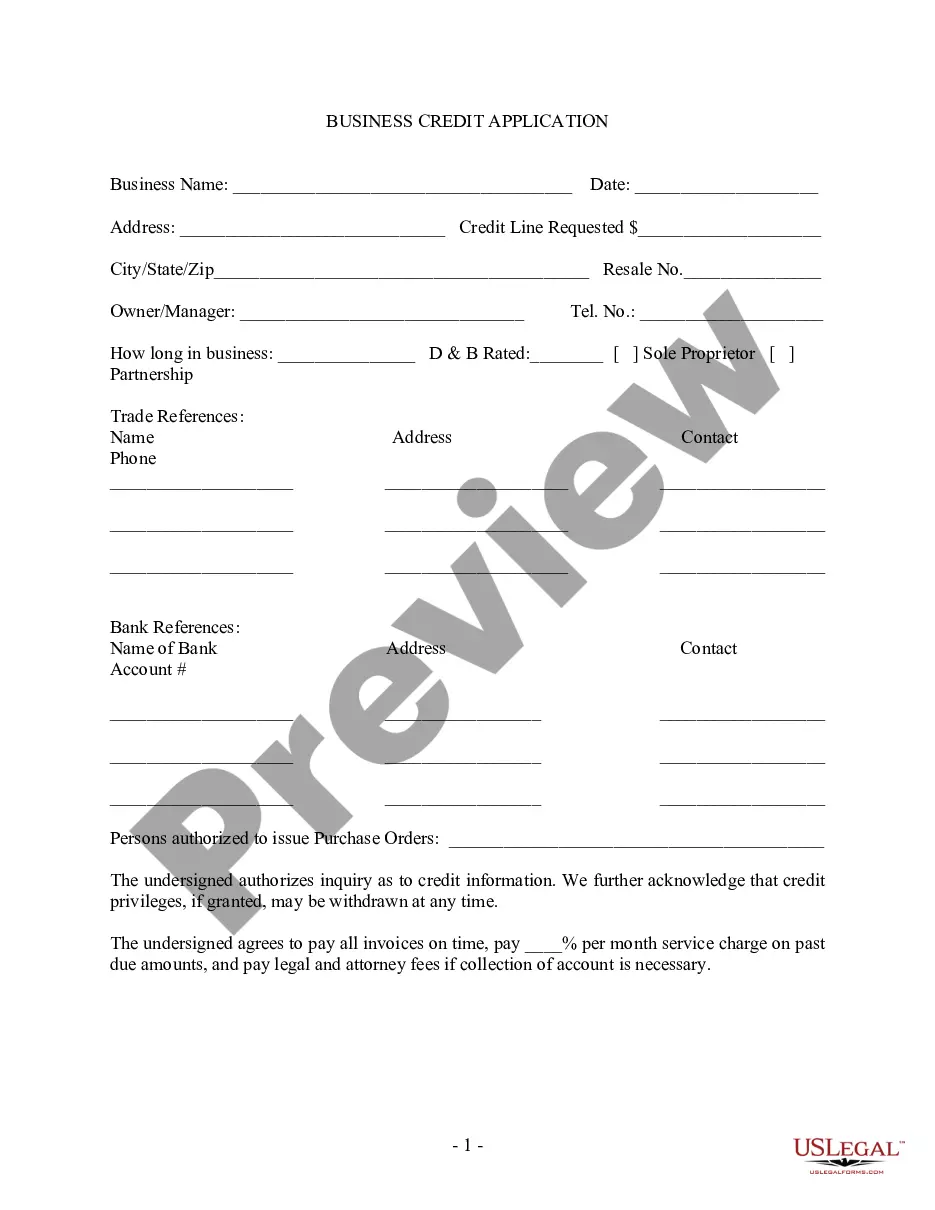
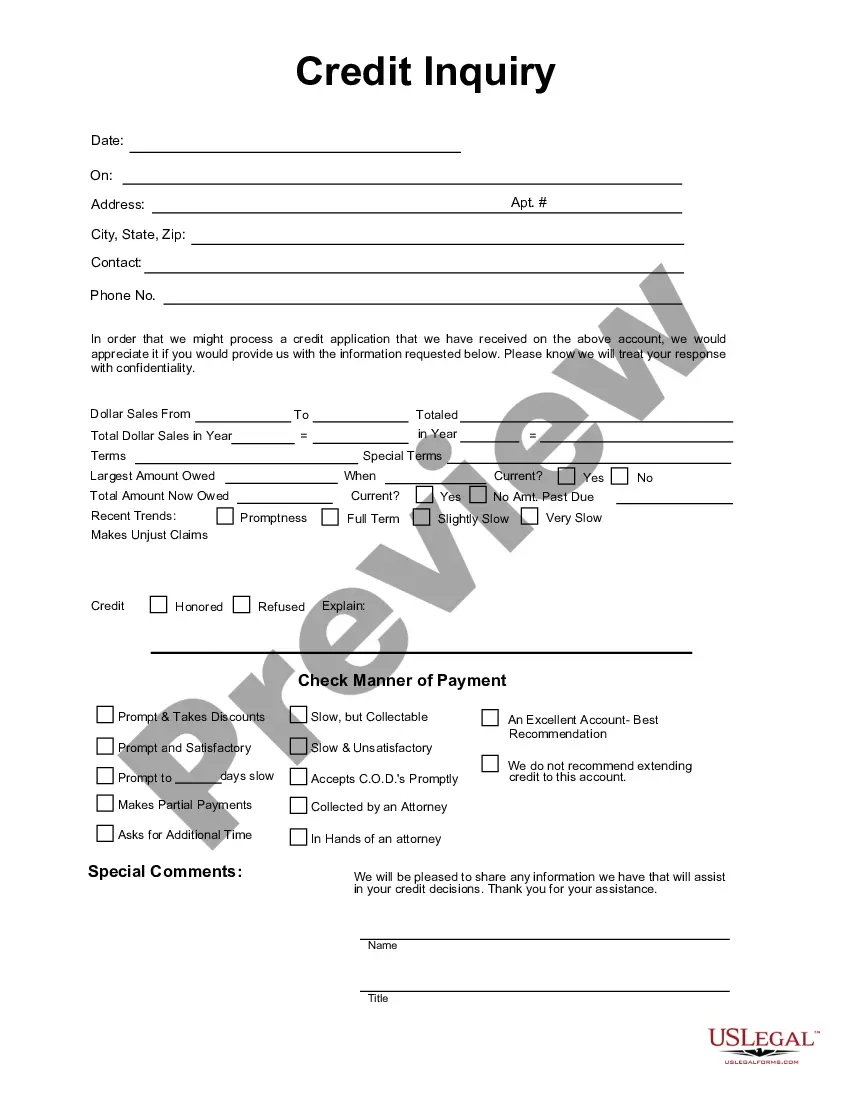
The Credit Application is a crucial document used by businesses seeking to establish a line of credit. This form enables lenders to evaluate the financial information of a business and determine the credit terms to be extended. Unlike personal credit applications, this form is specifically tailored for business entities and gathers essential details to assess their creditworthiness.
Key components of this form
- Business Information: Includes the name of the business, type, structure, and address.
- Credit Details: Specifies the amount of credit requested and the purpose of the credit.
- Principal Information: Lists the names and titles of company principals responsible for business transactions.
- References: Contains details for bank and trade references necessary for credit assessment.
- Certification of Accuracy: A declaration ensuring that the provided information is correct and authorizing the release of information for verification.
When to use this form
This form should be used when a business wants to apply for credit from suppliers or financial institutions. It is applicable for various scenarios, such as starting a new line of credit, expanding existing credit limits, or building a formal relationship with vendors. Completing this form is critical for obtaining favorable credit terms and establishing trust with credit providers.
Who can use this document
The following entities should use the Credit Application:
- Small to medium-sized businesses needing credit for operational expenses.
- Startups looking to secure credit lines as they grow.
- Corporations aiming to expand their vendor relationships and credit terms.
How to complete this form
- Provide your business name, structure, and contact information in the relevant fields.
- Specify the amount of credit requested and the type of credit needed.
- List the details of company principals responsible for business transactions.
- Enter information for bank and trade references, including contact names and account details.
- Read the certification section, sign, and date the application to confirm the accuracy of the information provided.
Notarization requirements for this form
Notarization is generally not required for this form. However, certain states or situations might demand it. You can complete notarization online through US Legal Forms, powered by Notarize, using a verified video call available anytime.
Get your form ready online
Our built-in tools help you complete, sign, share, and store your documents in one place.
Make edits, fill in missing information, and update formatting in US Legal Forms—just like you would in MS Word.
Download a copy, print it, send it by email, or mail it via USPS—whatever works best for your next step.
Sign and collect signatures with our SignNow integration. Send to multiple recipients, set reminders, and more. Go Premium to unlock E-Sign.
If this form requires notarization, complete it online through a secure video call—no need to meet a notary in person or wait for an appointment.
We protect your documents and personal data by following strict security and privacy standards.

Make edits, fill in missing information, and update formatting in US Legal Forms—just like you would in MS Word.

Download a copy, print it, send it by email, or mail it via USPS—whatever works best for your next step.

Sign and collect signatures with our SignNow integration. Send to multiple recipients, set reminders, and more. Go Premium to unlock E-Sign.

If this form requires notarization, complete it online through a secure video call—no need to meet a notary in person or wait for an appointment.

We protect your documents and personal data by following strict security and privacy standards.
Common mistakes to avoid
- Missing or incorrect contact information for business references.
- Overlooking the certification and signature sections before submitting.
- Providing inadequate financial details that could impact credit assessment.
Benefits of completing this form online
- Ease of completion: Fill out the form electronically using Adobe Acrobat or Word.
- Editable fields: Personalize the form to meet your specific business needs.
- Quick access: Downloadable format allows immediate use without the need for physical stores.
Legal use & context
- The Credit Application serves as a formal request for credit, establishing a legal basis for extending credit terms.
- It helps protect both the lender and the borrower by providing a clear record of the requested credit relationship.
- Any misrepresentation in this application can lead to legal consequences, reinforcing the importance of accuracy.
What to keep in mind
- A Credit Application is vital for establishing business credit with banks and suppliers.
- Completing the form accurately is crucial for successful credit approval.
- Reviewing and understanding the requirements and benefits can improve your chances of obtaining credit.
Looking for another form?


Form popularity
FAQ
Check your credit report. Pay your bills on time. Pay off any collections. Get caught up on past-due bills. Keep balances low on your credit cards. Pay off debt rather than continually transferring it.
This information is reported to Equifax by your lenders and creditors and includes the types of accounts (for example, a credit card, mortgage, student loan, or vehicle loan), the date those accounts were opened, your credit limit or loan amount, account balances, and your payment history.
Become an authorized user. One of the simplest ways to build credit is by becoming an authorized user on a family member or friend's credit card. Apply for a secured credit card. Get credit for paying monthly utility and cell phone bills on time.
Receive sales order. The order entry department sends a copy of each sales order to the credit department. Issue credit application. Collect and review credit application. Assign credit level. Hold order (optional). Obtain credit insurance (optional). Verify remaining credit (optional). Approve sales order.
Pay bills on time. Make frequent payments. Ask for higher credit limits. Dispute credit report errors. Become an authorized user. Use a secured credit card. Keep credit cards open. Mix it up.
It will take about six months of credit activity to establish enough history for a FICO credit score, which is used in 90% of lending decisions. 1feff FICO credit scores range from 300-850, and a score of over 700 is considered a good credit score. Scores over 800 are considered excellent.
The credit application is designed to help credit professionals make the best, informed decisions about a customers' ability and willingness to meet obligations within credit terms, according to NACM's publication.
Dispute Credit-Report Mistakes. Make a Big Debt Payment. Reduce Your Credit Card Statement Balance. Become an Authorized User. Dispute Negative Authorized-User Records. Ask for a Higher Credit Limit. Write a Goodwill Letter.
A credit application is a form used by potential borrowers to get approval for credit from lenders.The information provided on credit applications is regulated, and laws such as the Truth in Lending Act provide consumer protection and transparency.