Maryland Construction or Mechanics Lien Package - Individual
Overview of this form package
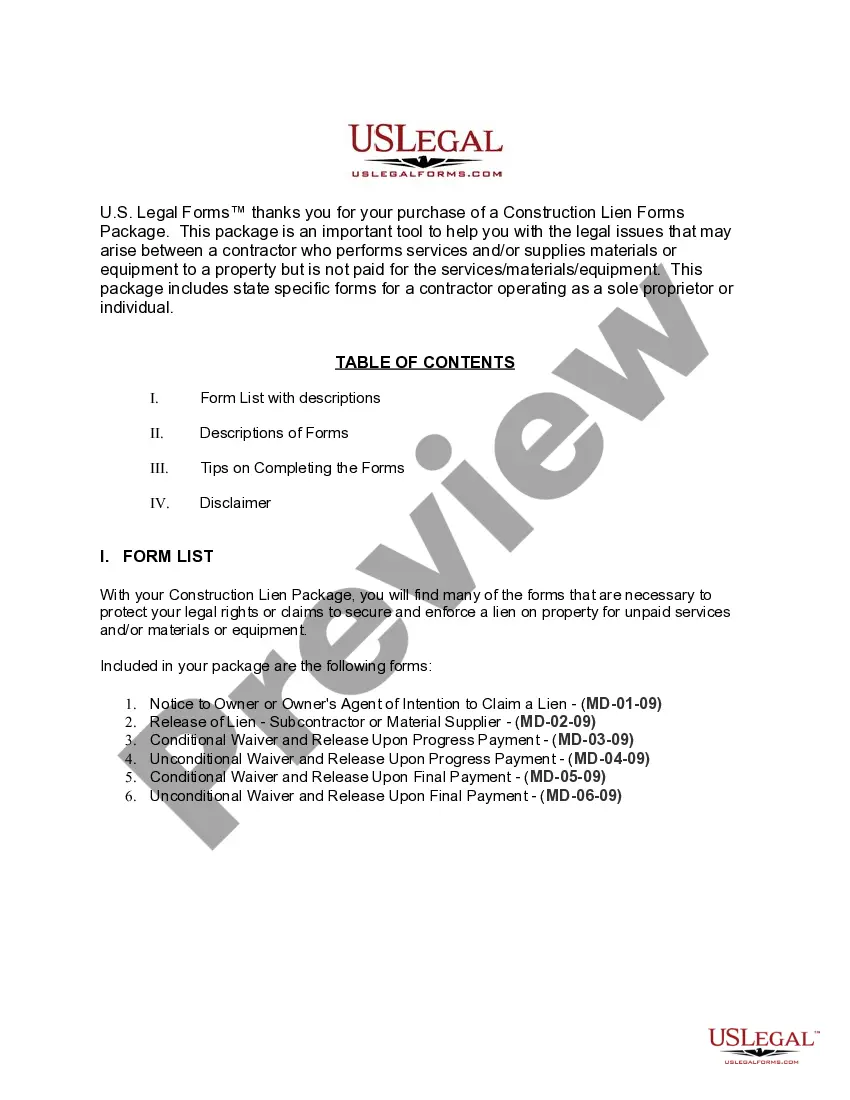
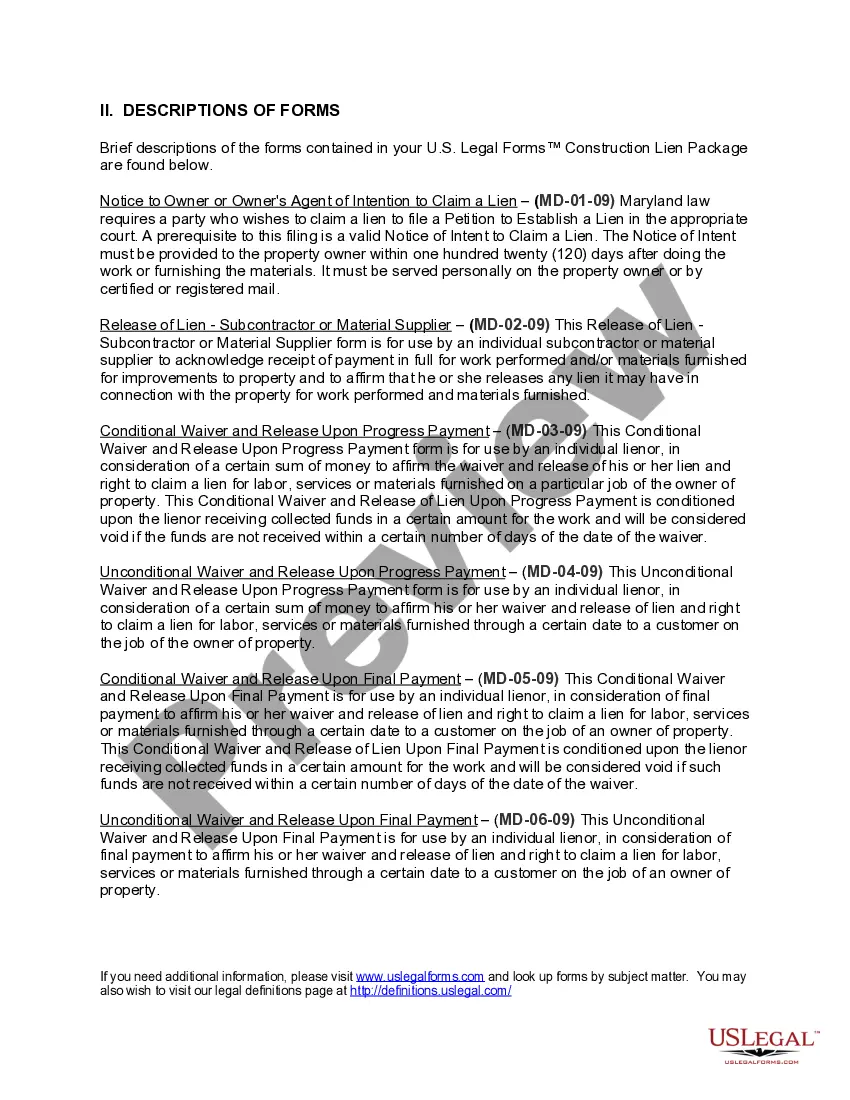
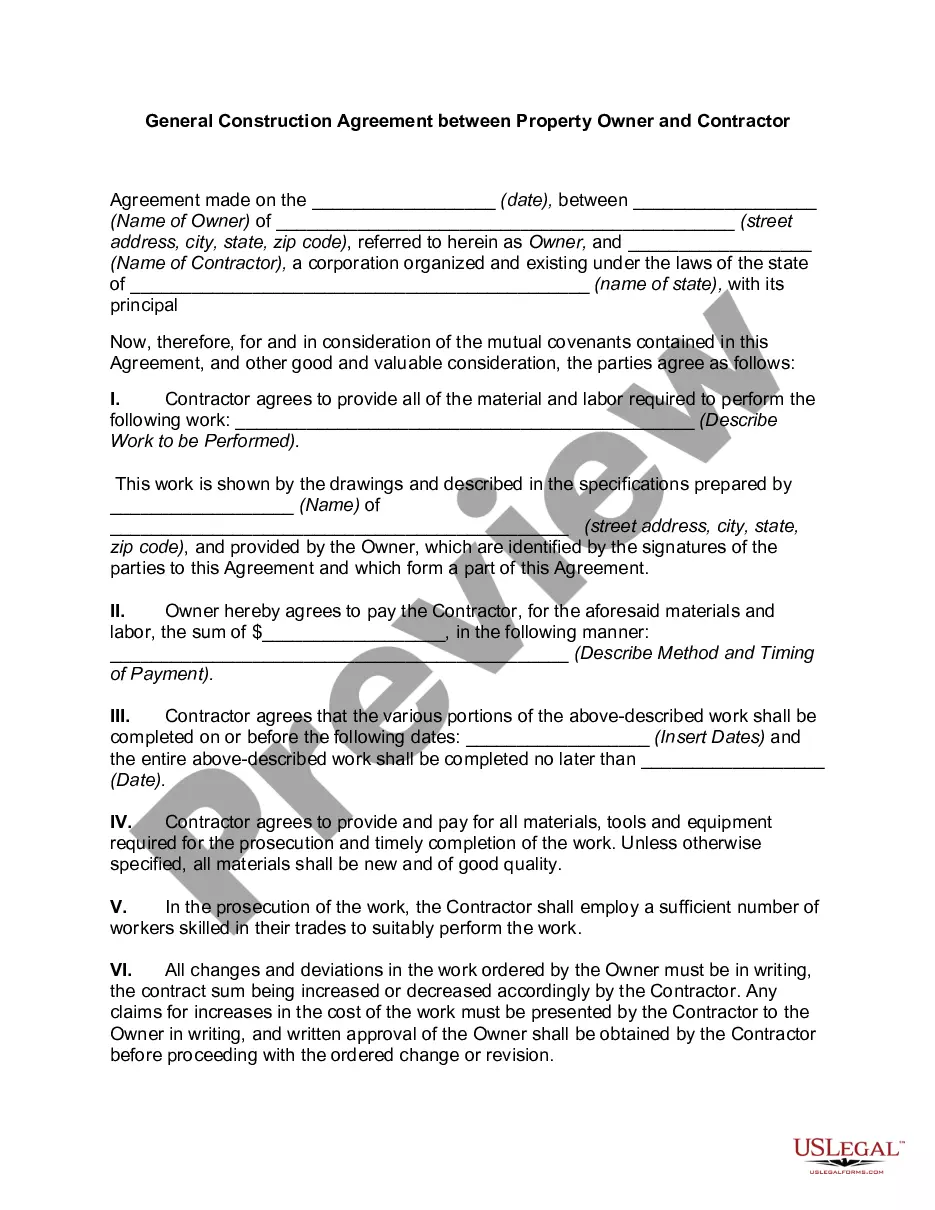
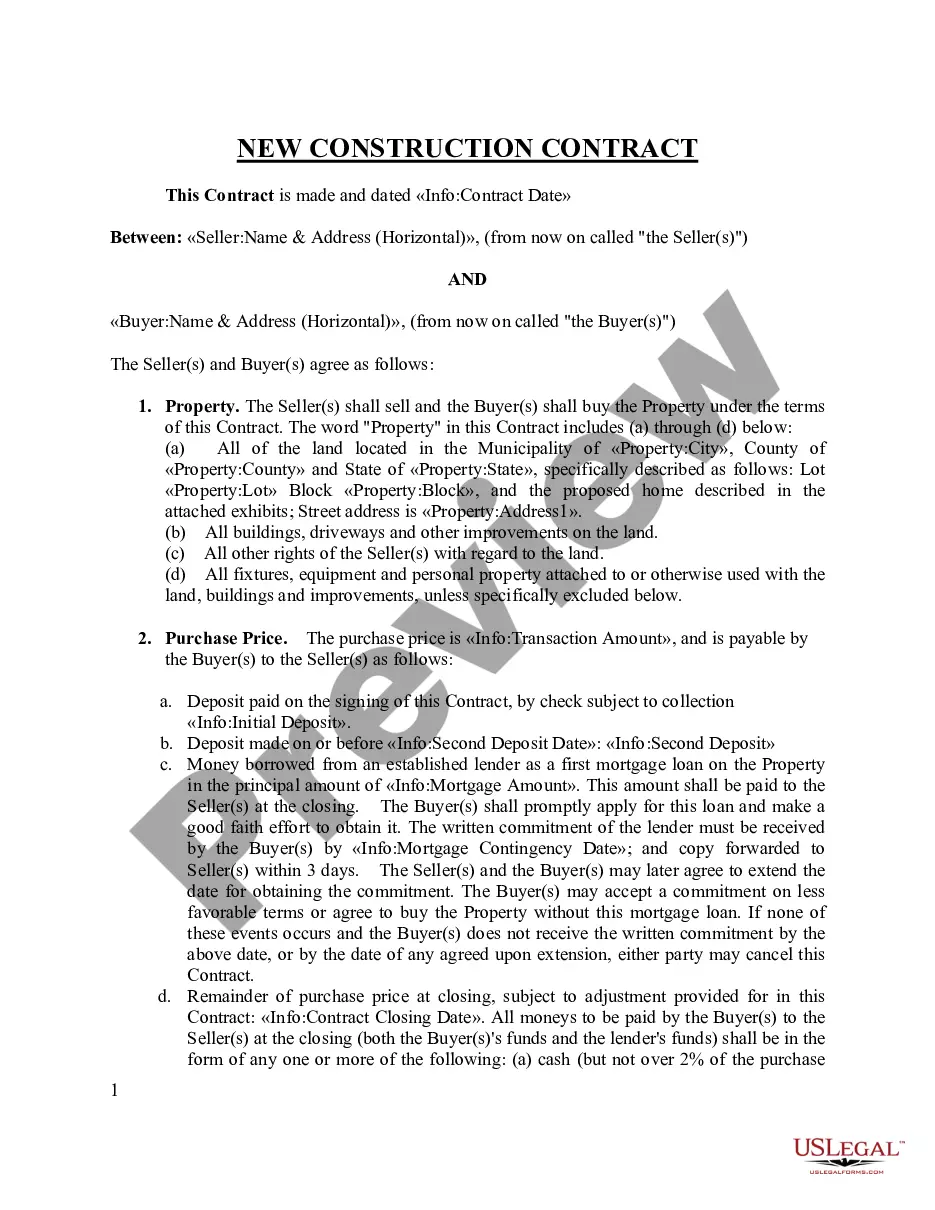
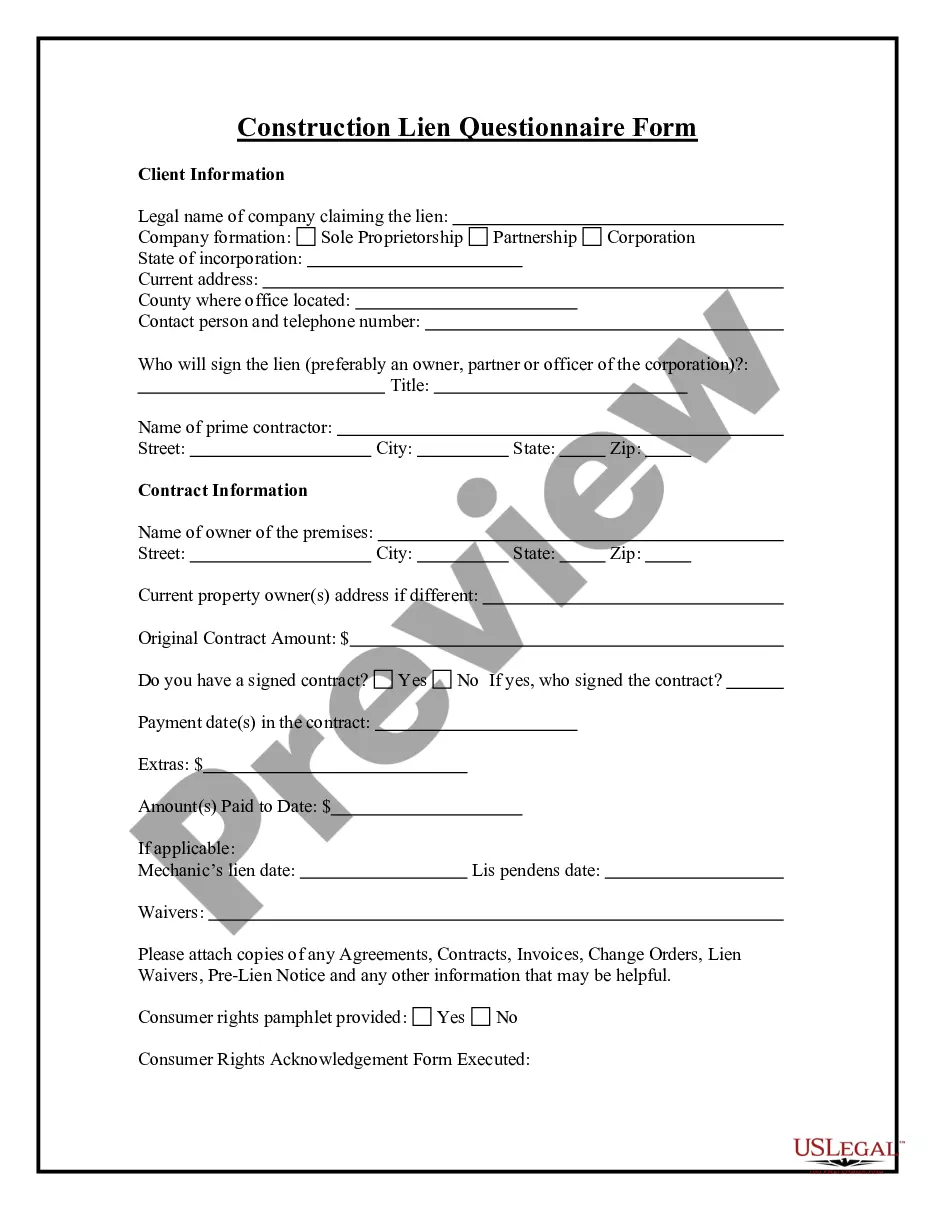
The Maryland Construction or Mechanics Lien Package - Individual is designed specifically for sole proprietors who provide labor, materials, or services to improve real property. This package assists users in recovering money owed through a lien on the improved property. It includes essential documents for filing a lien, along with instructions and tips for proper completion, making it ideal for those unfamiliar with the process.
Forms provided in this package
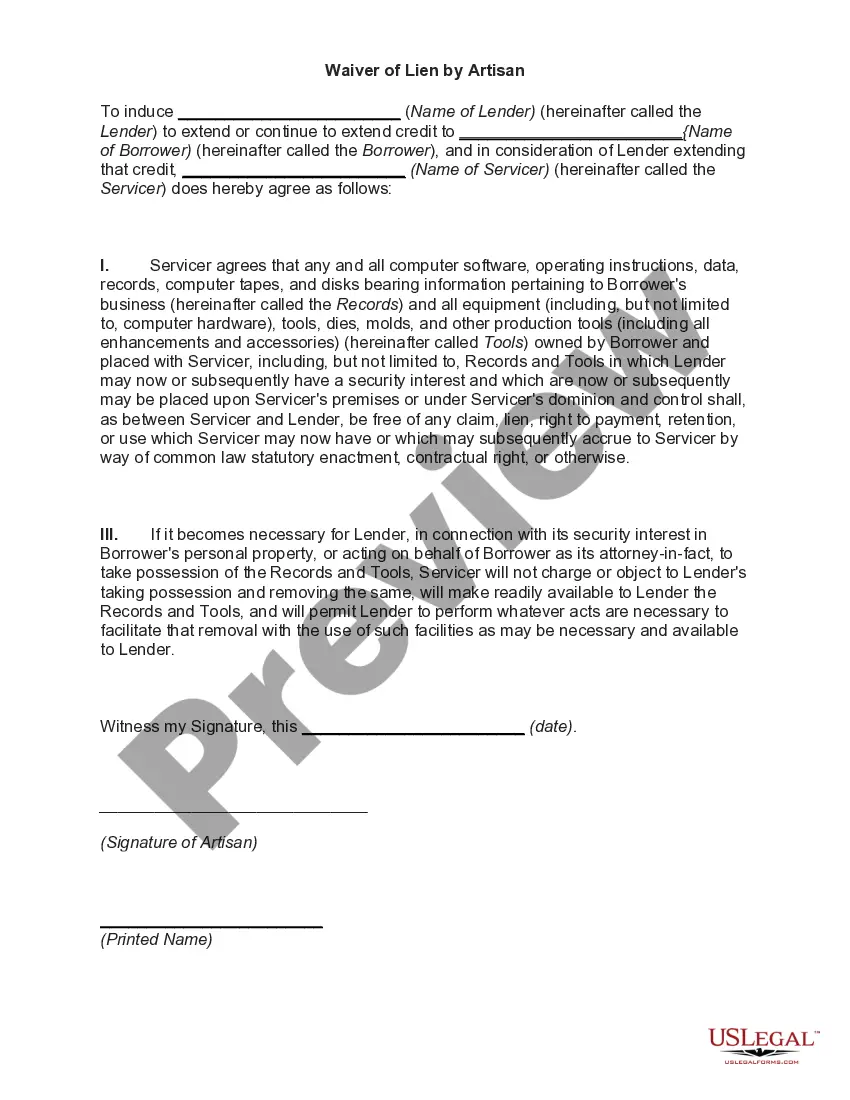
- Notice to Owner or Owner's Agent of Intention to Claim a Lien by Individual
- Release of Lien - Subcontractor or Material Supplier - Individual
- Conditional Waiver and Release Upon Progress Payment - Individual
- Unconditional Waiver and Release Upon Progress Payment - Individual
- Conditional Waiver and Release Upon Final Payment - Individual
- Unconditional Waiver and Release Upon Final Payment - Individual
When this form package is needed
This package is useful in various scenarios, such as:
- When you have not received payment for labor or materials provided for a construction project.
- When you need to secure your payment rights by filing a lien against the property improved by your services or materials.
- If you want to formally notify the property owner of your intention to file a lien.
Intended users of this form package
- Sole proprietors in the construction industry.
- Contractors and subcontractors who have provided labor or materials.
- Material suppliers looking to secure payment through a lien.
Instructions for completing these forms
- Review the included forms to understand the requirements for a mechanics lien.
- Identify all parties involved, including yourself, the property owner, and any relevant contractors.
- Enter all required dates and amounts accurately in the forms.
- Complete the Notice to Owner or Owners Agent of Intention to Claim a Lien.
- Make copies of all completed forms for your records before submitting.
Notarization requirements for forms in this package
Forms in this package typically do not require notarization. However, certain states or document types may still need it. US Legal Forms provides online notarization powered by Notarize, available 24/7 for your convenience.
Get your form ready online
Our built-in tools help you complete, sign, share, and store your documents in one place.
Make edits, fill in missing information, and update formatting in US Legal Forms—just like you would in MS Word.
Download a copy, print it, send it by email, or mail it via USPS—whatever works best for your next step.
Sign and collect signatures with our SignNow integration. Send to multiple recipients, set reminders, and more. Go Premium to unlock E-Sign.
If this form requires notarization, complete it online through a secure video call—no need to meet a notary in person or wait for an appointment.
We protect your documents and personal data by following strict security and privacy standards.

Make edits, fill in missing information, and update formatting in US Legal Forms—just like you would in MS Word.

Download a copy, print it, send it by email, or mail it via USPS—whatever works best for your next step.

Sign and collect signatures with our SignNow integration. Send to multiple recipients, set reminders, and more. Go Premium to unlock E-Sign.

If this form requires notarization, complete it online through a secure video call—no need to meet a notary in person or wait for an appointment.

We protect your documents and personal data by following strict security and privacy standards.
Mistakes to watch out for
- Failing to provide accurate information about the property or the work completed.
- Neglecting to send the lien notice to the correct property owner.
- Not adhering to the timeline for submitting the lien documentation.
Benefits of completing this package online
- Convenience of completing forms from home or office at your own pace.
- Editability, allowing for adjustments of information as needed.
- Reliable access to legally drafted forms by licensed attorneys, reducing errors.
Looking for another form?


Form popularity
FAQ
In Maryland, all mechanics liens must be filed within 180 days from last providing materials or labor. In Maryland, a lien claimant is required to initiate his enforcement of the lien by filing a Petition to Enforce the lien within 1 year from the date on which the Petition to Establish the lien was filed.
A mortgage creates a lien on your property that gives the lender the right to foreclose and sell the home to satisfy the debt. A deed of trust (sometimes called a trust deed) is also a document that gives the lender the right to sell the property to satisfy the debt should you fail to pay back the loan.
Filing a construction lien on residential projects requires filing a Notice of Unpaid Balance and Right to File Lien within 90 days of the last day of service. The homeowner must also get a copy of that notice within 10 days of its filing.
Placing the Lien With a direct contractor, the notice is part of her contract with you. If the bills go unpaid, the contractor or sub sends you a notice along with her claim of lien. She then files the lien with the county within 90 days of the project being finished or your acceptance of the work.
Who you are. The services or materials you provided. The last date you provided the services or materials. How much payment should be. The date on which you will file a lien if you do not receive payment. How the debtor should pay.
If you want to place a lien on a commercial rental property and you are not the landlord, you may need to put a lien on the property by filing with the court of record in the jurisdiction where the property is actually located.
How long does a judgment lien last in Maryland? A judgment lien in Maryland will remain attached to the debtor's property (even if the property changes hands) for 12 years.
To establish a lien, a contractor or subcontractor must file a petition in the circuit court for the county where the property is located within 180 days after completing work on the property or providing materials. It can be difficult to determine the work completion date.
While it's unlikely that just anyone can put a lien on your home or land, it's not unheard of for a court decision or a settlement to result in a lien being placed against a property.