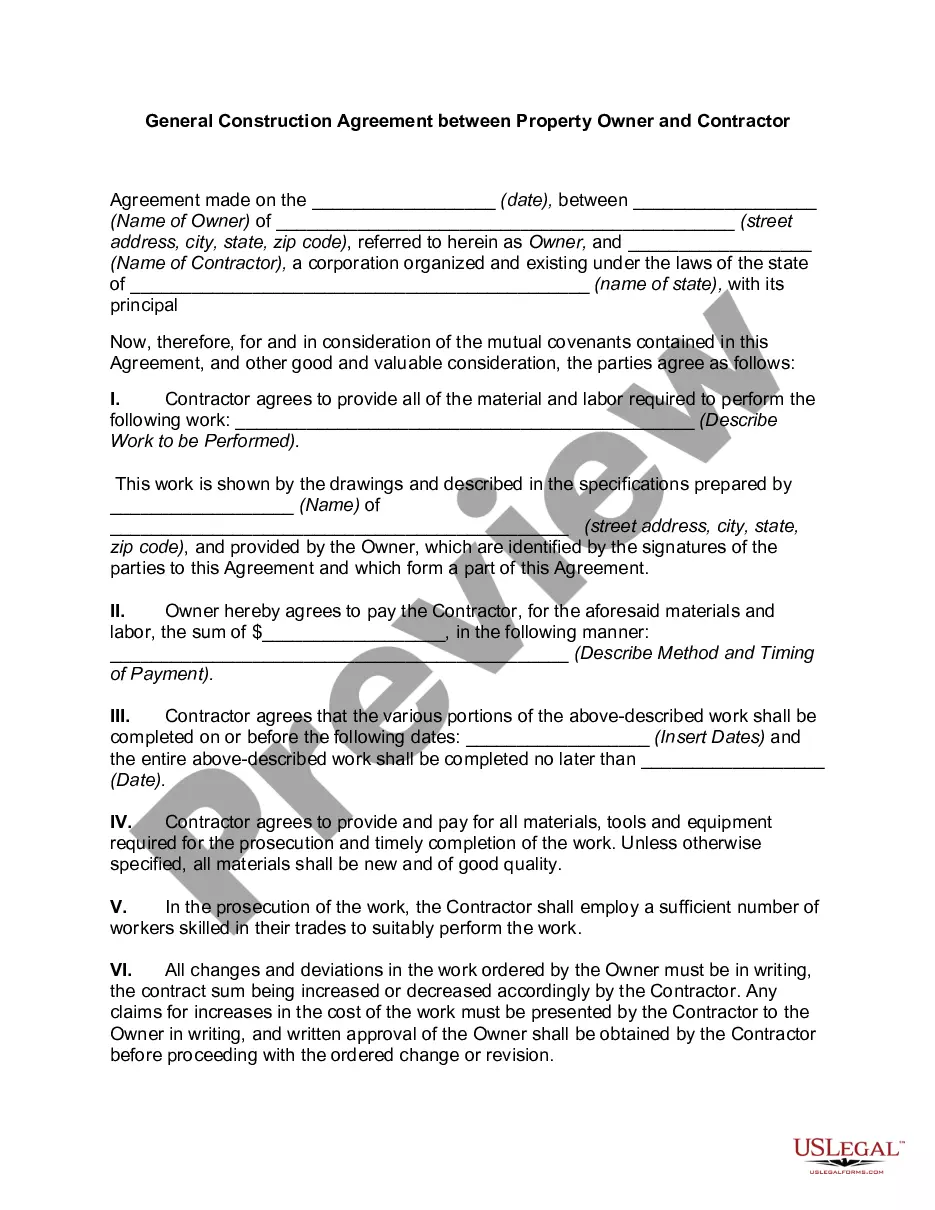
General Construction Agreement between Property Owner and Contractor
Overview of this form
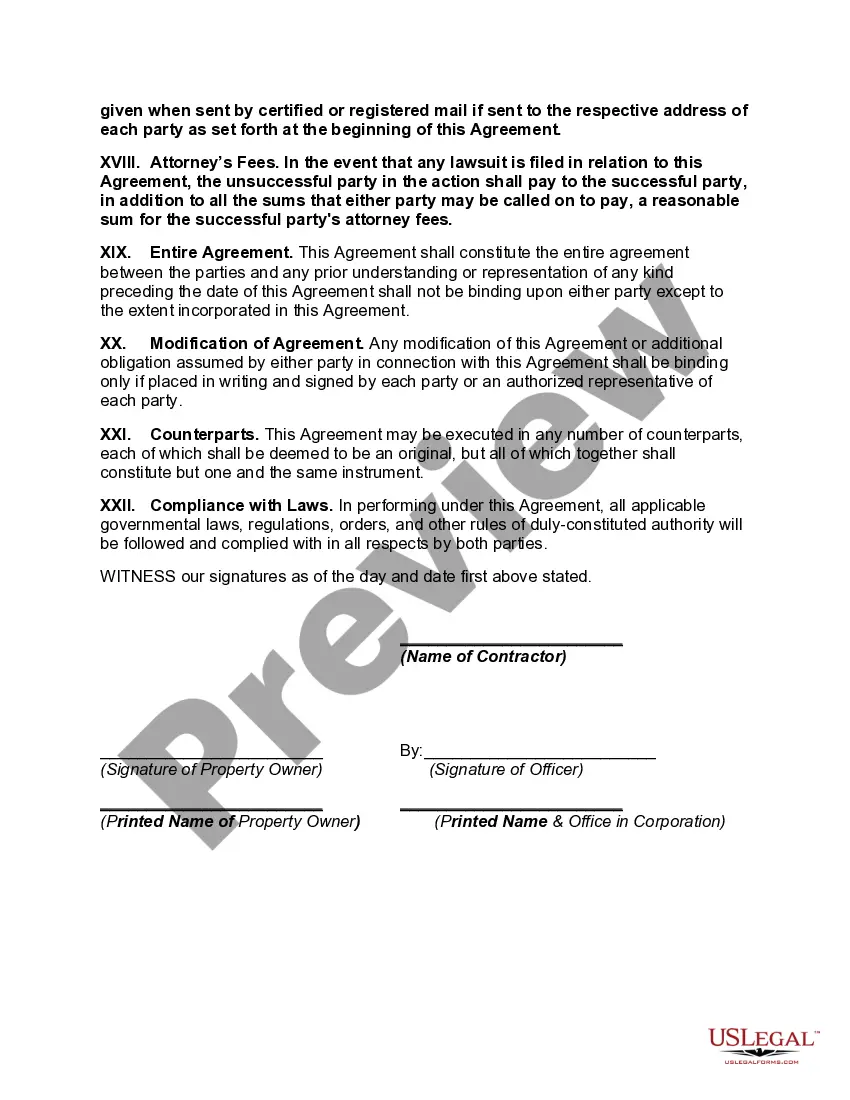
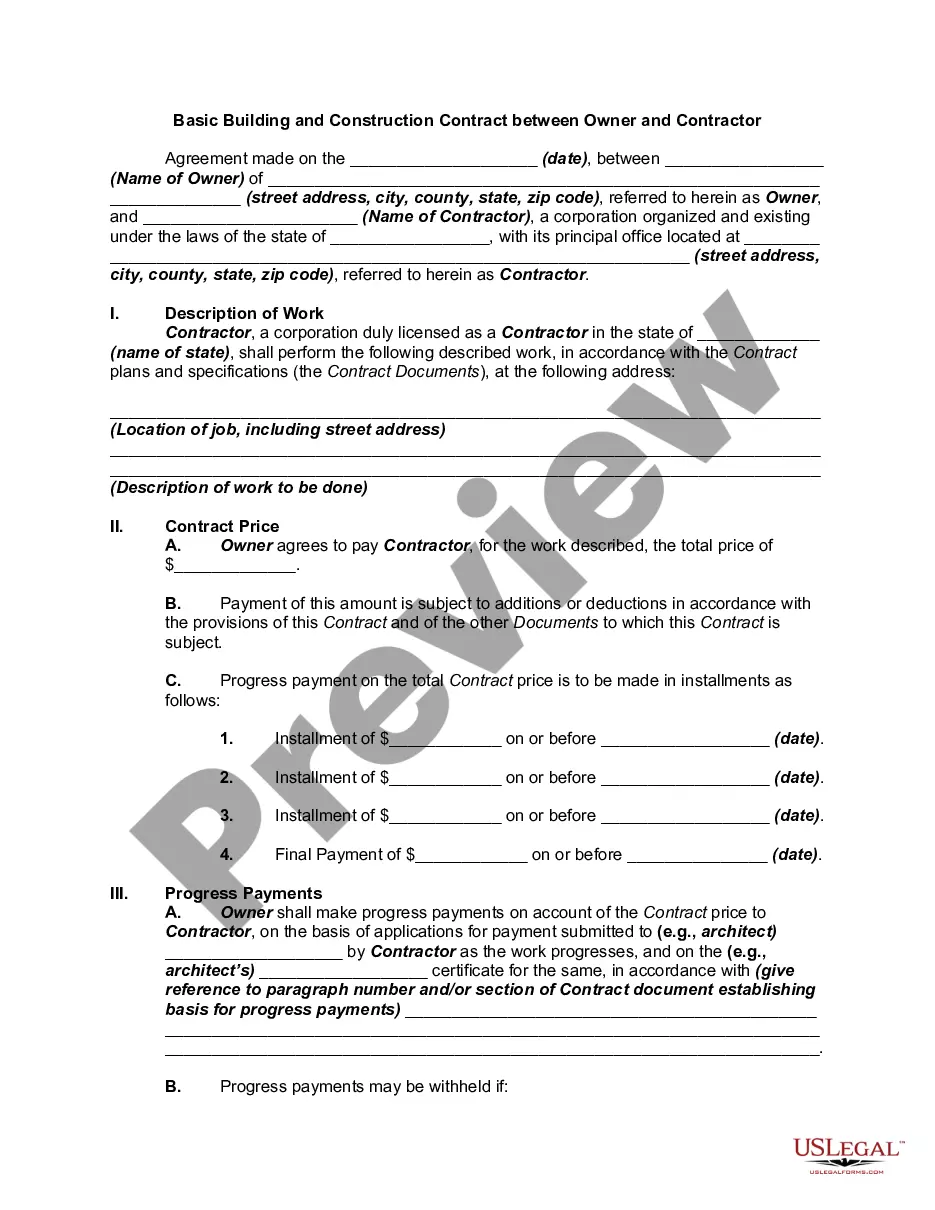
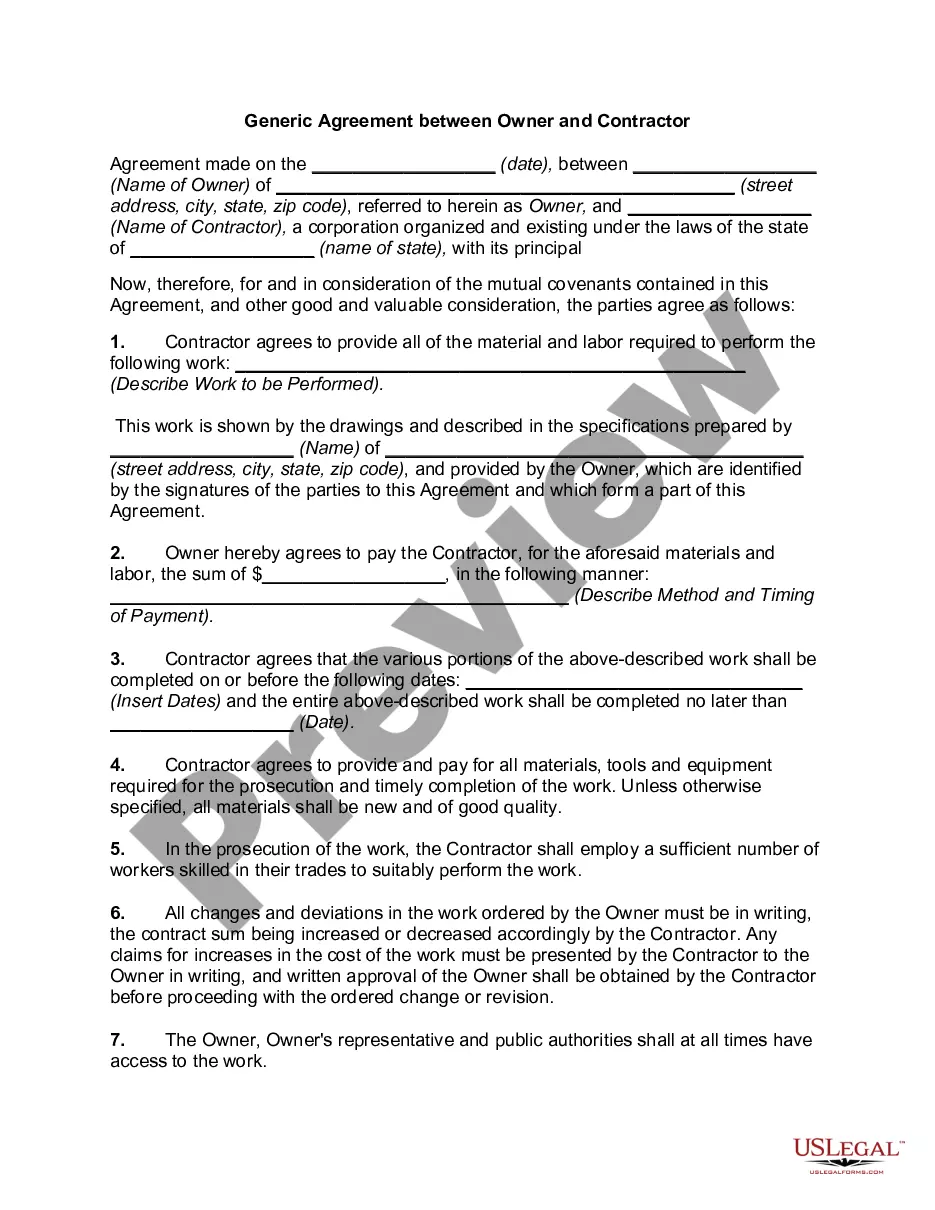
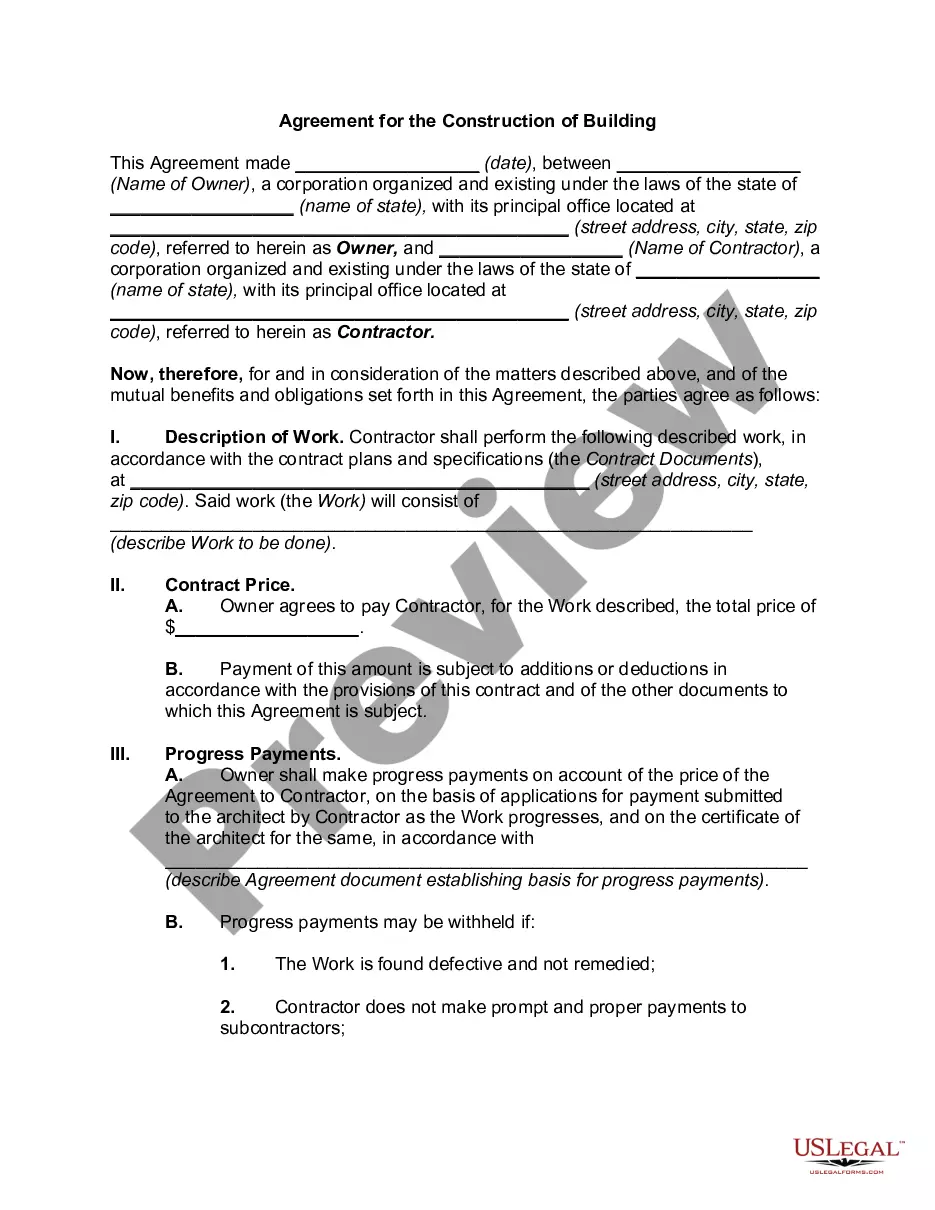
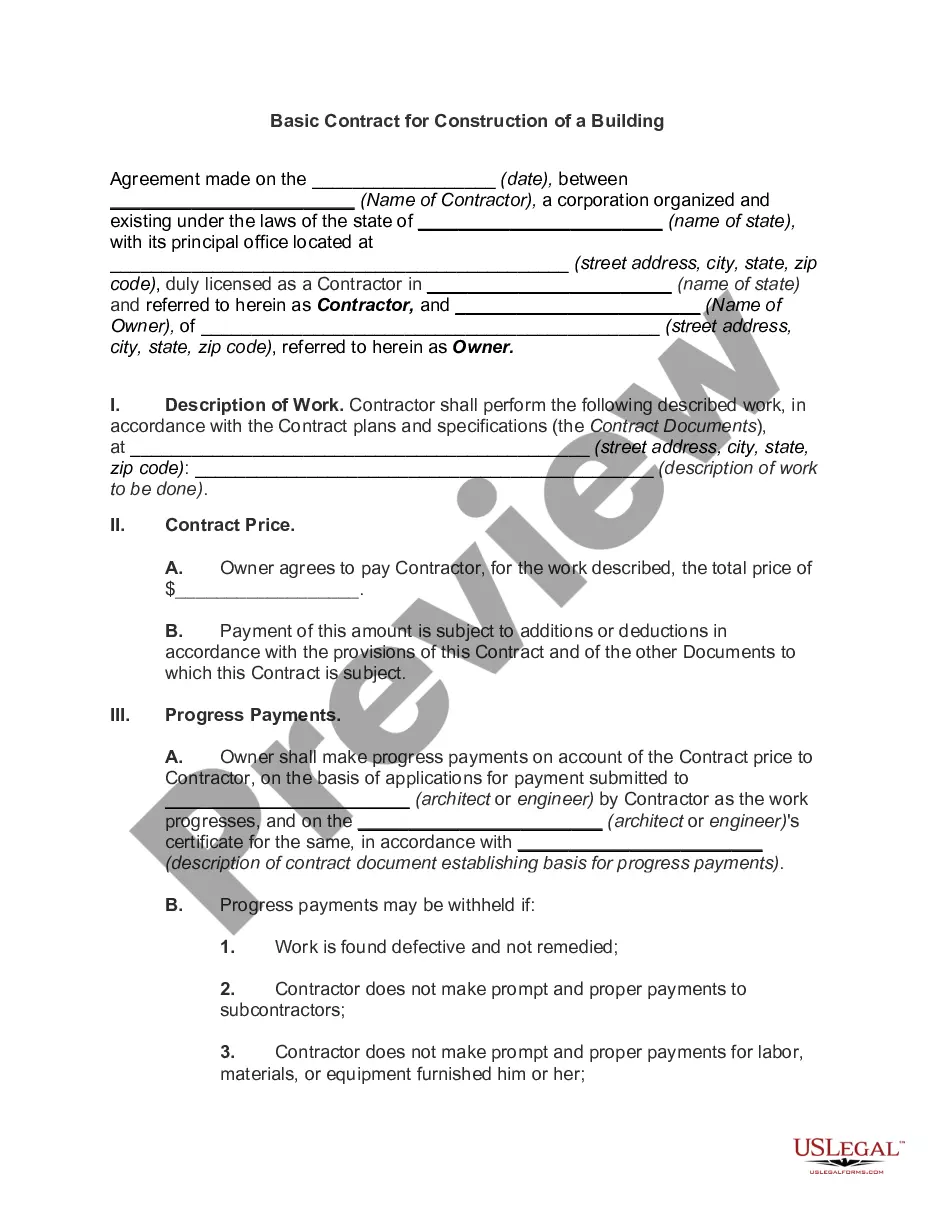
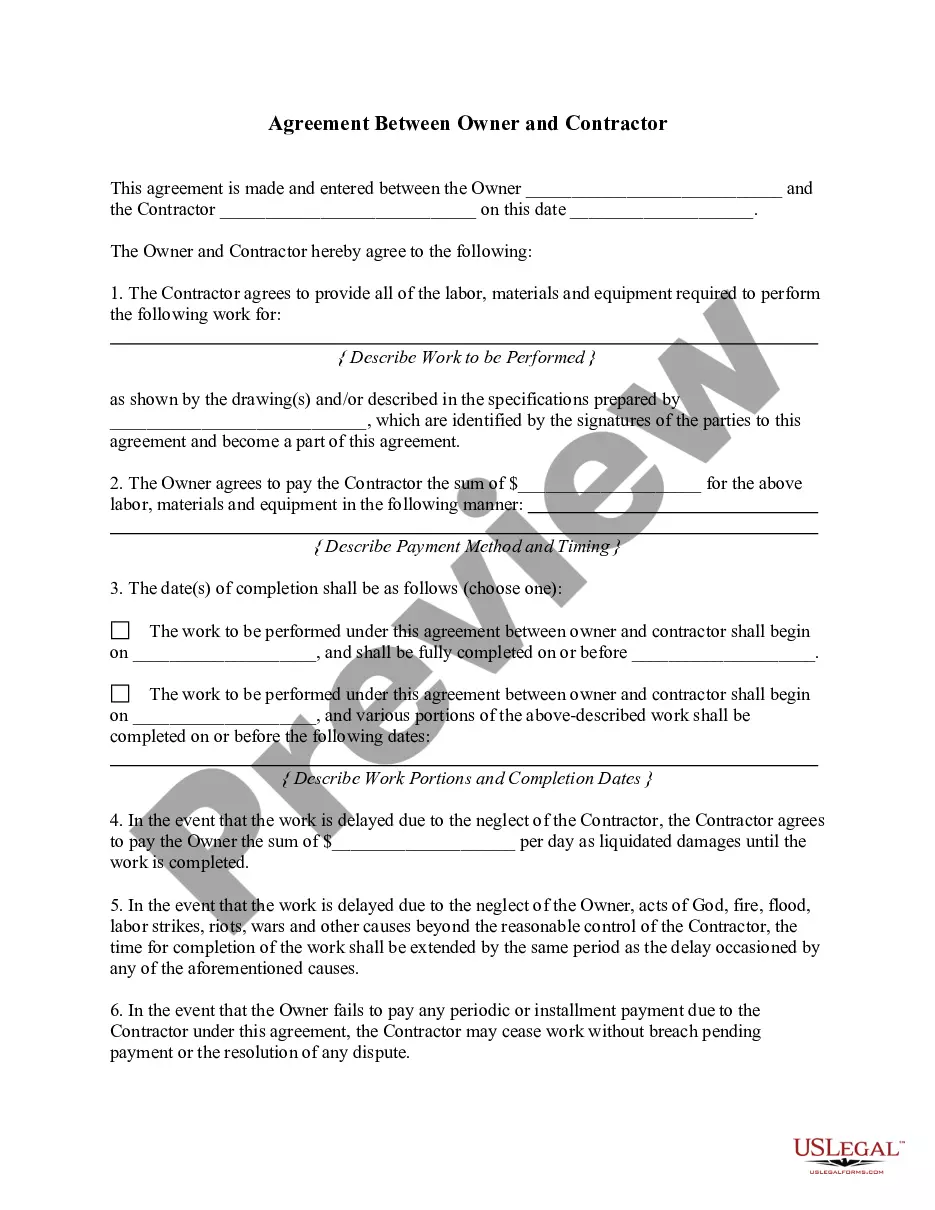
The General Construction Agreement between Property Owner and Contractor is a legally binding document that outlines the terms and conditions under which a property owner engages a contractor to perform construction work. This agreement serves to protect both parties by clarifying their responsibilities, payment structures, and timelines, significantly reducing the potential for disputes. Unlike informal agreements, this contract includes detailed specifications and requirements essential for any construction project.
Main sections of this form
- Identification of the parties involved, including names and addresses of the owner and contractor.
- Description of the specific work to be performed along with any pertinent specifications or drawings.
- Payment terms detailing the total cost and scheduled payments.
- Completion timelines with specified dates for project milestones.
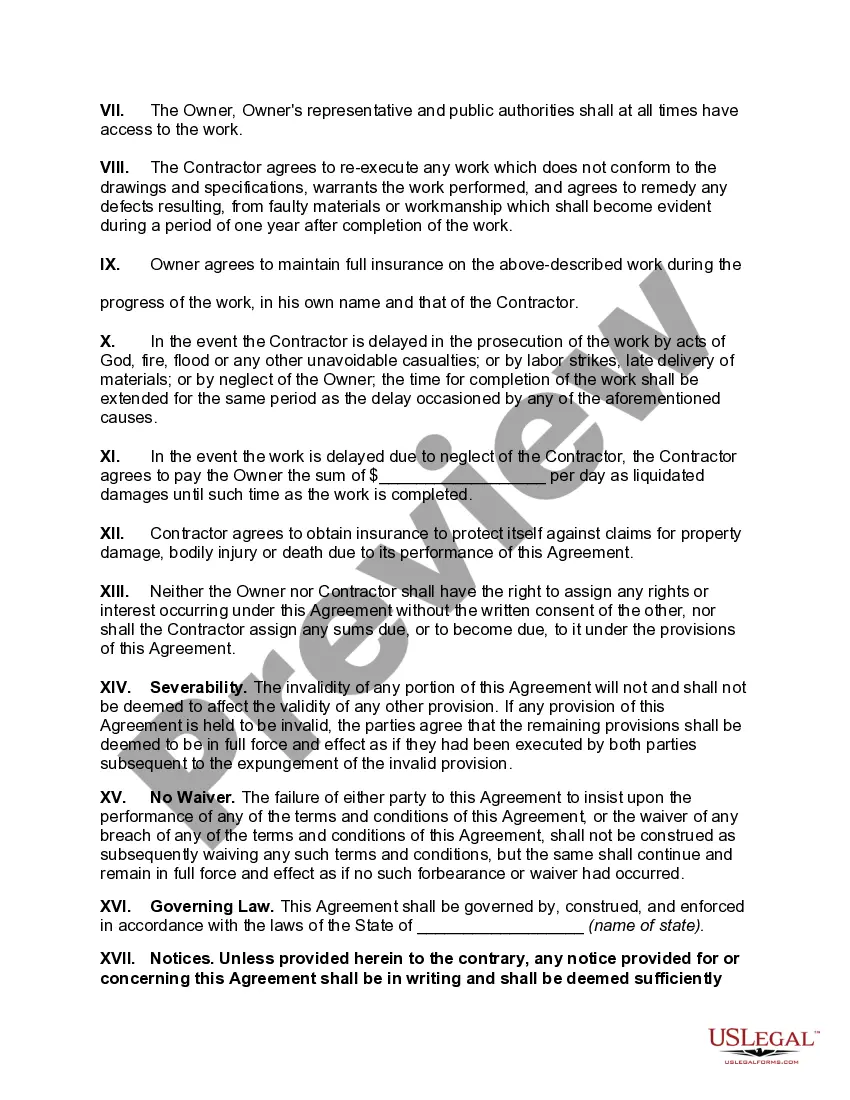
- Clauses addressing changes to the scope of work and handling delays.
- Requirements for insurance and warranties related to the work performed.
Common use cases
This agreement should be used whenever a property owner hires a contractor for construction work. It is appropriate for both residential and commercial projects. You need this form when you want to ensure that both the owner and the contractor are clear about their expectations, obligations, and rights. Utilizing this agreement helps formalize the arrangement and provides legal protection in case of disputes or misunderstandings.
Who can use this document
- Property owners looking to hire a contractor for construction work.
- Contractors who need a structured agreement to outline project responsibilities and payment terms.
- Real estate developers and construction managers overseeing larger projects.
- Homeowners engaging in renovation or construction of new homes.
How to complete this form
- Identify the parties: Enter the name and address of the property owner and contractor.
- Detail the work: Clearly describe the specific construction work to be performed.
- Set payment terms: Specify the total amount to be paid and the payment schedule.
- Insert completion dates: Fill in the start date and completion date for the project.
- Gather signatures: Ensure both parties sign and date the contract to make it enforceable.
Notarization requirements for this form
This form does not typically require notarization unless specified by local law. However, it's advisable to have it notarized for added legal security and to avoid future disputes regarding authenticity.
Get your form ready online
Our built-in tools help you complete, sign, share, and store your documents in one place.
Make edits, fill in missing information, and update formatting in US Legal Forms—just like you would in MS Word.
Download a copy, print it, send it by email, or mail it via USPS—whatever works best for your next step.
Sign and collect signatures with our SignNow integration. Send to multiple recipients, set reminders, and more. Go Premium to unlock E-Sign.
If this form requires notarization, complete it online through a secure video call—no need to meet a notary in person or wait for an appointment.
We protect your documents and personal data by following strict security and privacy standards.

Make edits, fill in missing information, and update formatting in US Legal Forms—just like you would in MS Word.

Download a copy, print it, send it by email, or mail it via USPS—whatever works best for your next step.

Sign and collect signatures with our SignNow integration. Send to multiple recipients, set reminders, and more. Go Premium to unlock E-Sign.

If this form requires notarization, complete it online through a secure video call—no need to meet a notary in person or wait for an appointment.

We protect your documents and personal data by following strict security and privacy standards.
Mistakes to watch out for
- Failing to clearly define the scope of work, leading to misunderstandings.
- Not documenting changes or additional work in writing, which can create disputes.
- Neglecting to include a timeline for completion, which can affect project management.
- Omitting signatures or dates, which can invalidate the agreement.
Advantages of online completion
- Convenient access to the form from anywhere, making it easy to complete and print.
- Editable templates allow for customization according to specific project needs.
- Reliable drafting by licensed attorneys ensures legal validity and compliance.
Looking for another form?
Form popularity
FAQ
Who the parties are. The description of the works in a concise summary. The documents that must be referred to. Any design responsibilities the contractor has. Any compliance requirements, such as from planning, building control, party walls and utility companies.
The builder-buyer agreement is a very important legal document for home buyers. It is a contract which contains all the terms and conditions which have to be complied by both the buyer and the builder.
Working with your builder Having a solid contract is important, but it doesn't replace the need for a good working relationship with your builder. Even with a contract in place, there can still be miscommunications and misunderstandings.
Direct project overhead costs are often referred to as general conditions and include costs incurred at the jobsite for supervision and administration of the overall contract but not ascribable to any particular onsite construction activity.
Get it in writing. Keep it simple. Deal with the right person. Identify each party correctly. Spell out all of the details. Specify payment obligations. Agree on circumstances that terminate the contract. Agree on a way to resolve disputes.
Direct project overhead costs are often referred to as general conditions and include costs incurred at the jobsite for supervision and administration of the overall contract but not ascribable to any particular onsite construction activity.
AIA Document A13221222009 SP is a standard form of agreement between owner and contractor for use on sustainable projects, where the basis of payment is either a stipulated sum (fixed price) or cost of the work plus a fee, with or without a guaranteed maximum price.
The builders hereby specifically agree and authorise the owner to deduct such liquidated damages, if any, from any installment of payment becoming due and payable to the builders in terms of this agreement. 4. The owner will pay to the builders a sum of Rs.............