Generic Agreement between Owner and Contractor
Understanding this form
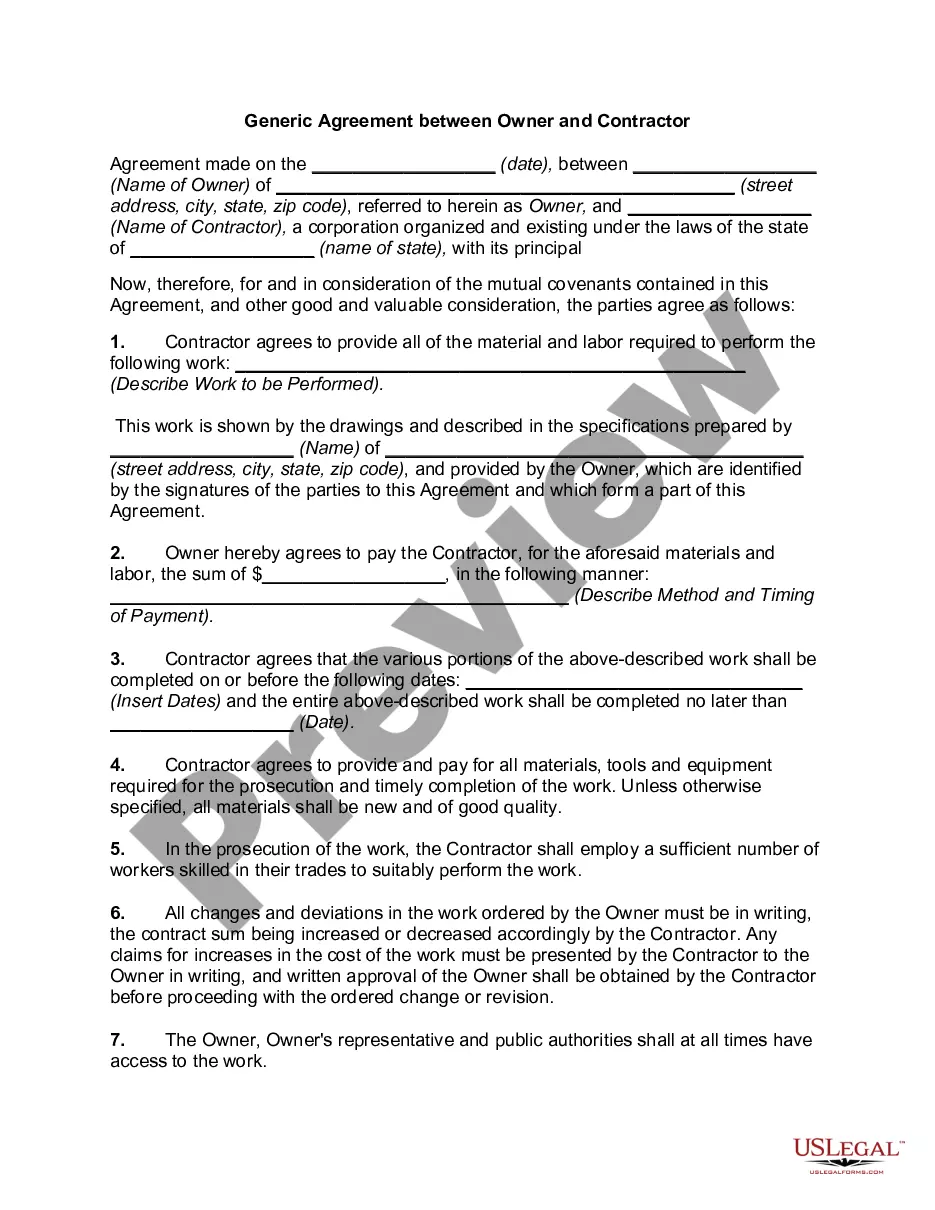
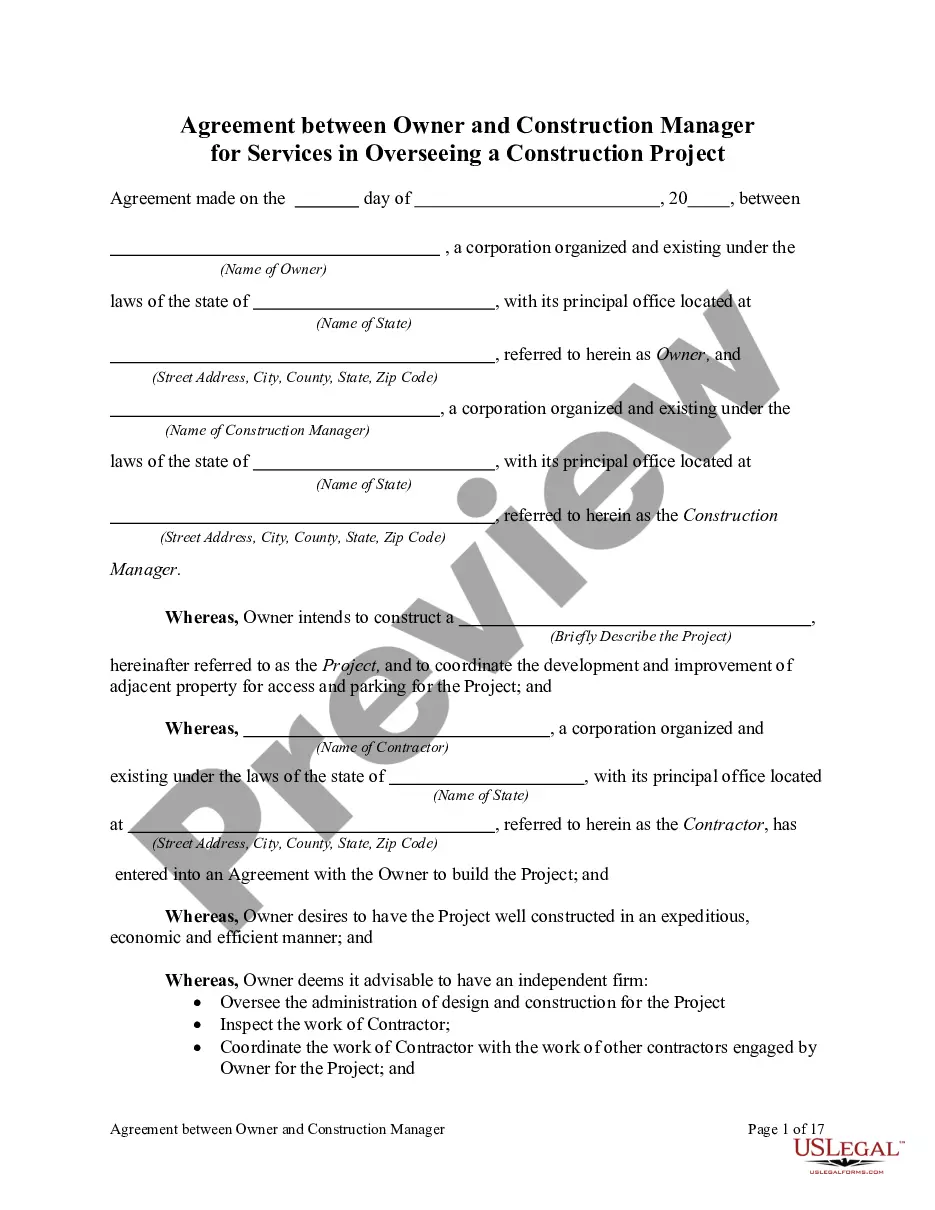
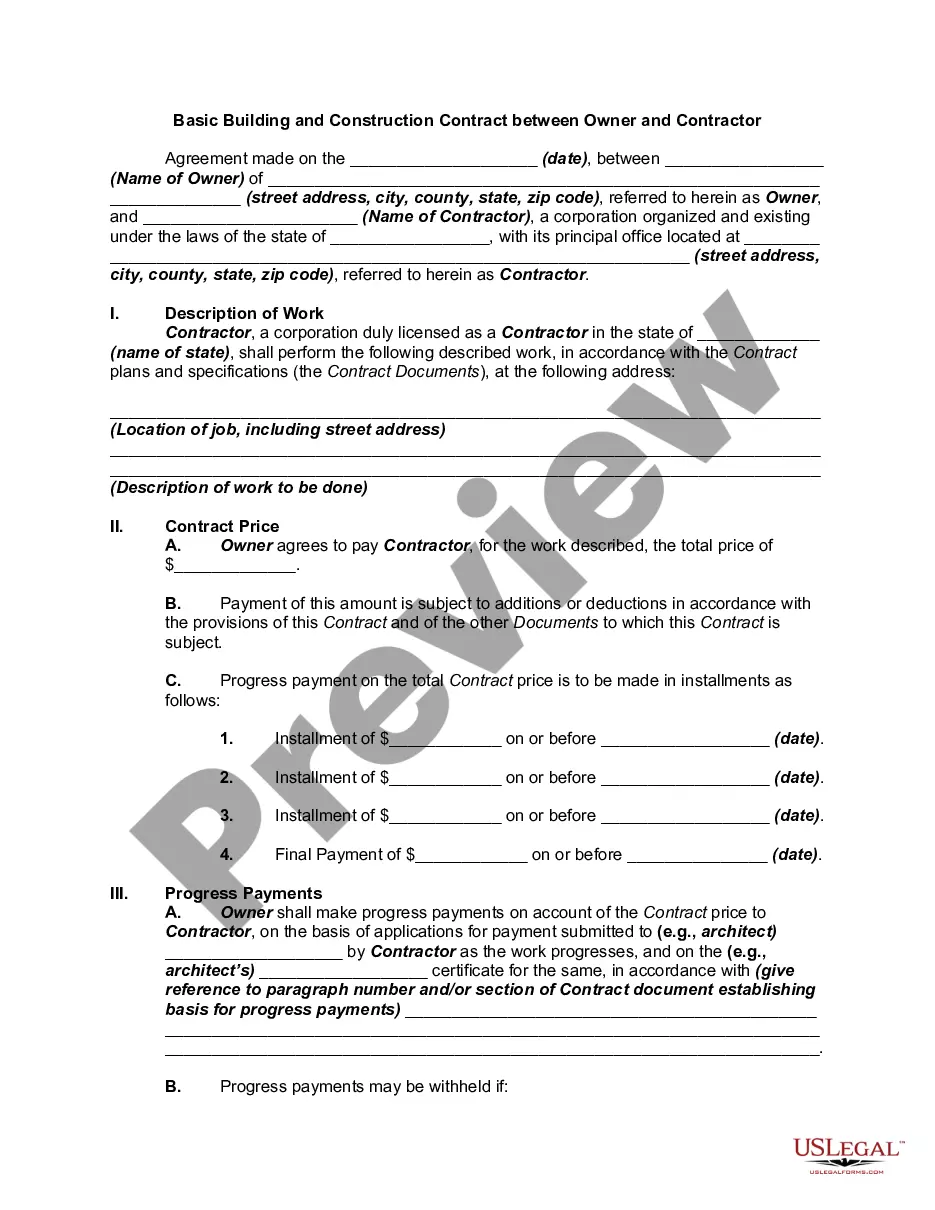
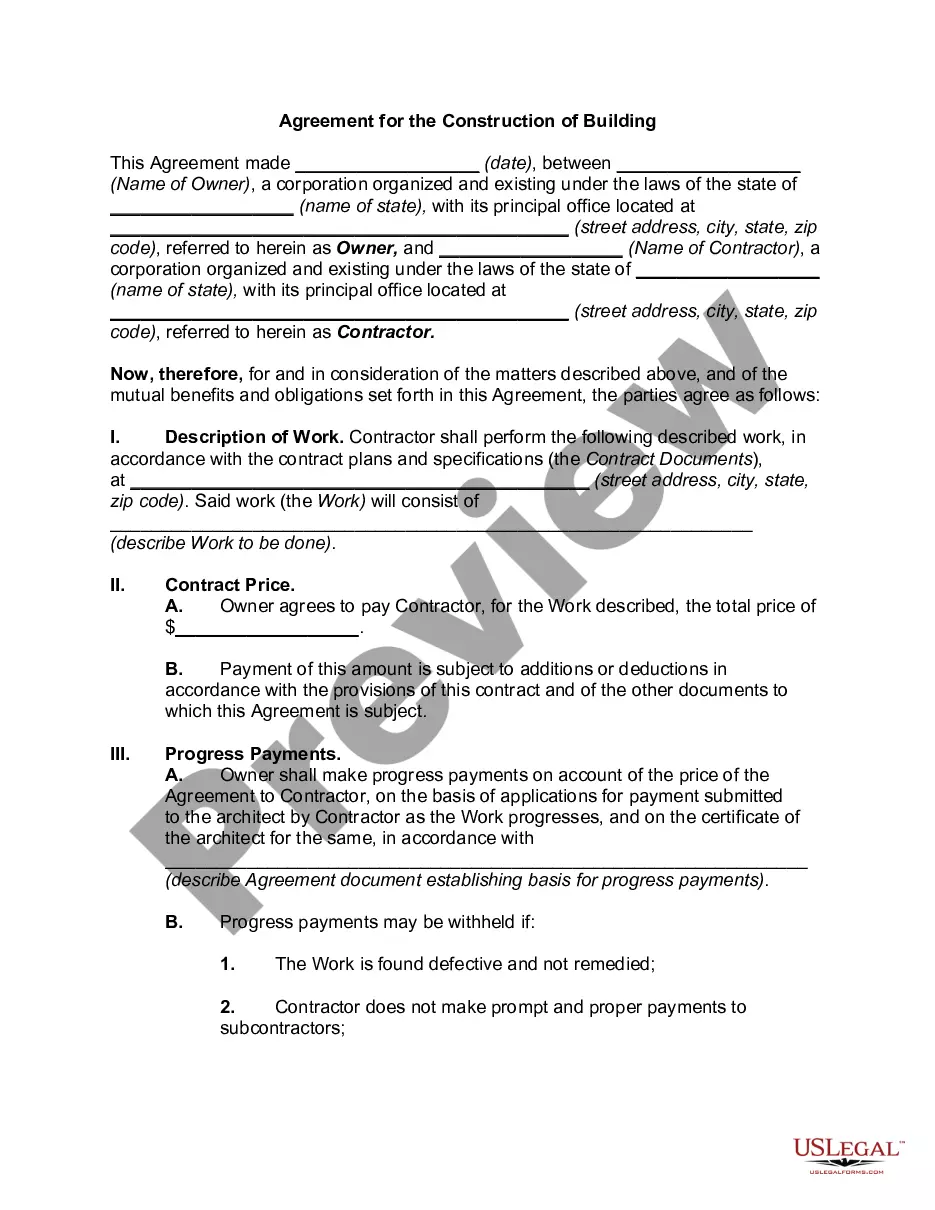
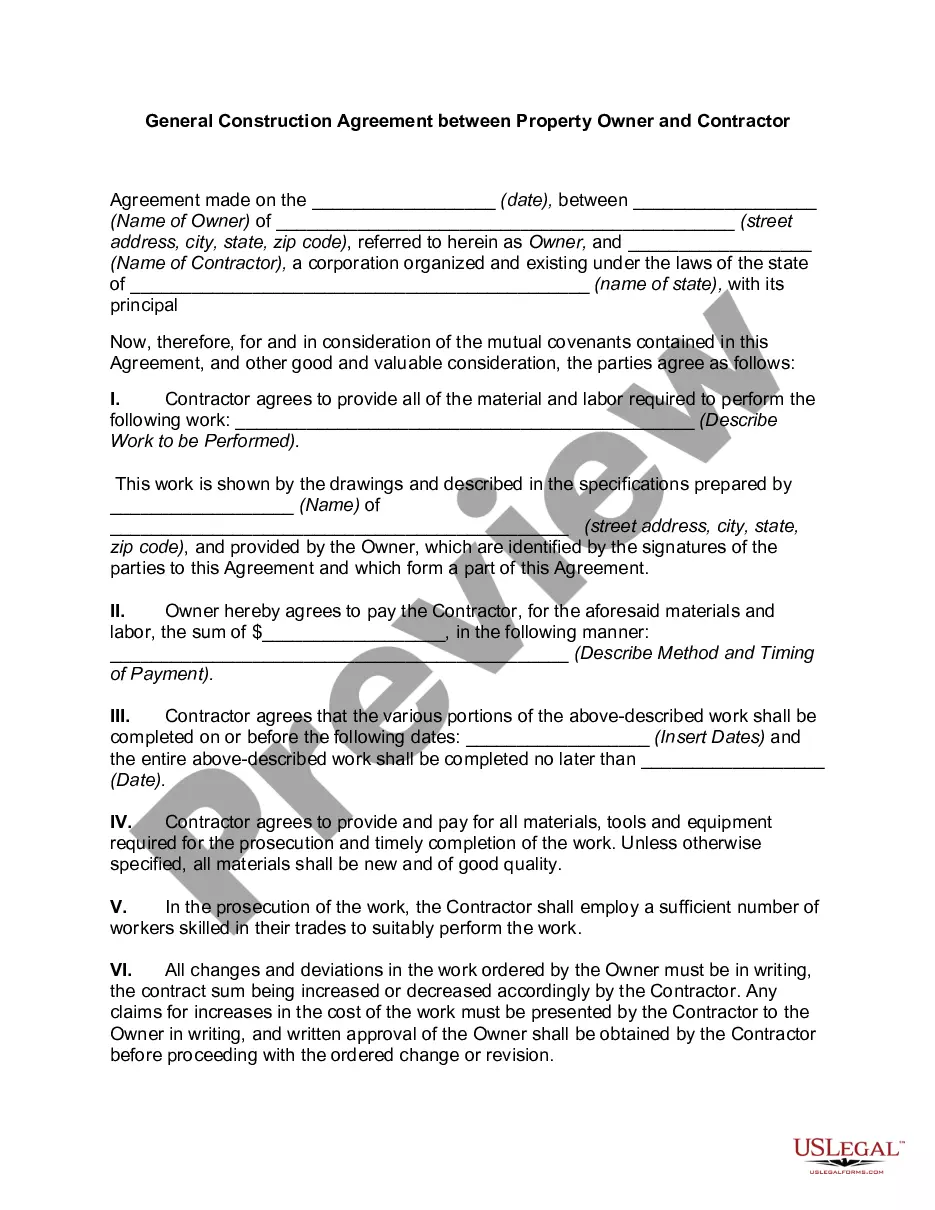
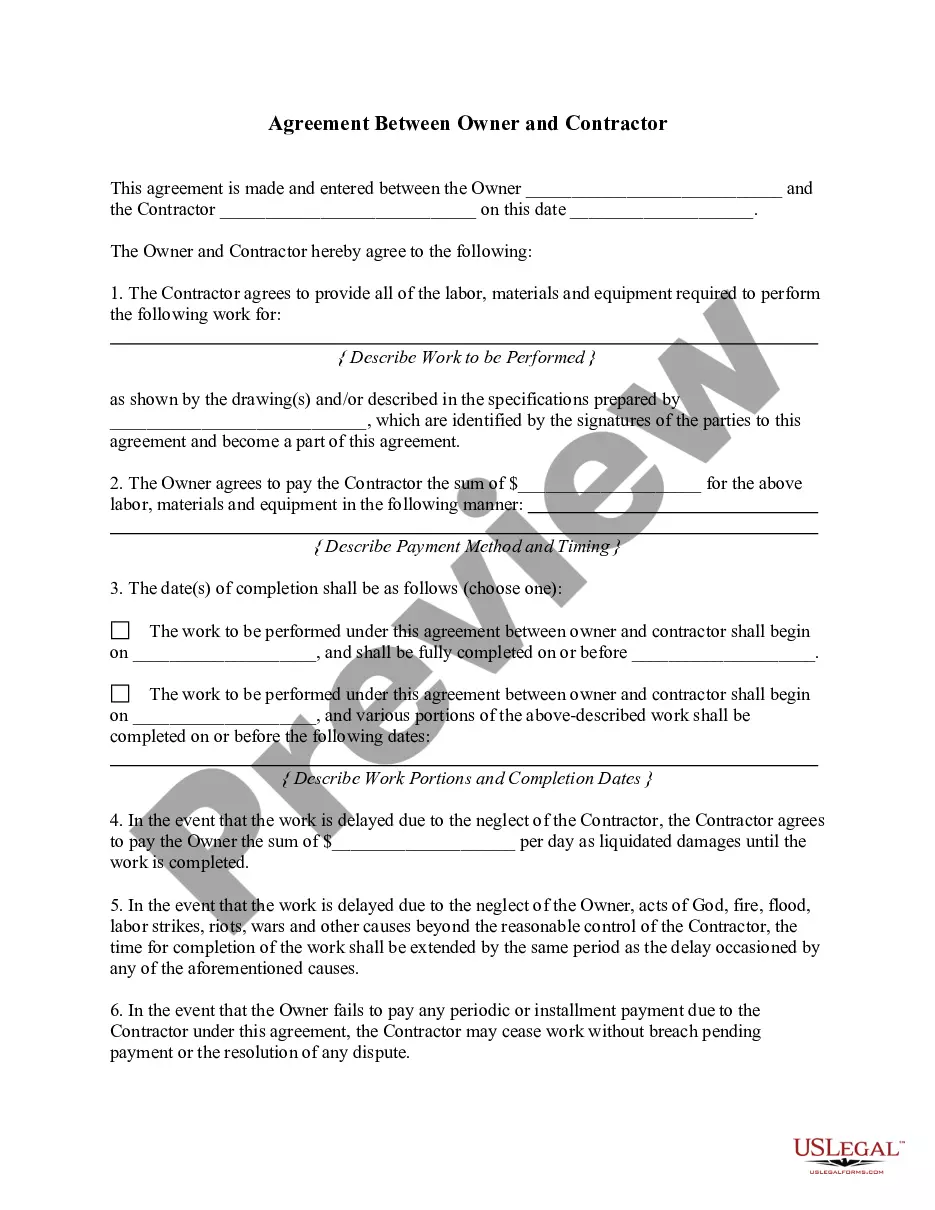
The Generic Agreement between Owner and Contractor is a legal document outlining the terms and conditions between a property owner and a contractor for a construction project. This agreement establishes the responsibilities, rights, and liabilities of both parties while ensuring proper insurance coverage and payment terms. Unlike more specific contracts, this generic agreement can be customized for various construction projects, making it a flexible option for both owners and contractors.
What’s included in this form
- Date and names of the parties involved.
- Detailed description of the work to be performed.
- Payment amount and method.
- Timeline for project completion.
- Responsibilities regarding materials and labor.
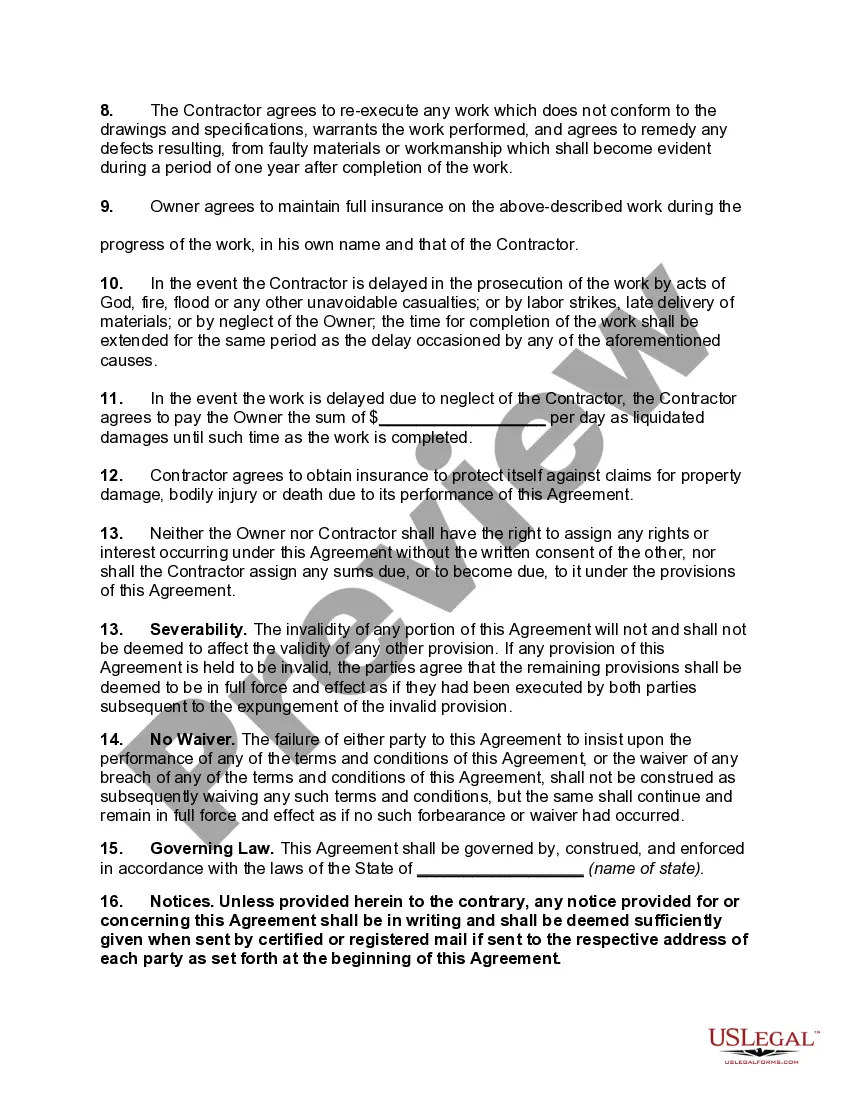
- Insurance obligations for both parties.
- Process for handling changes or delays.
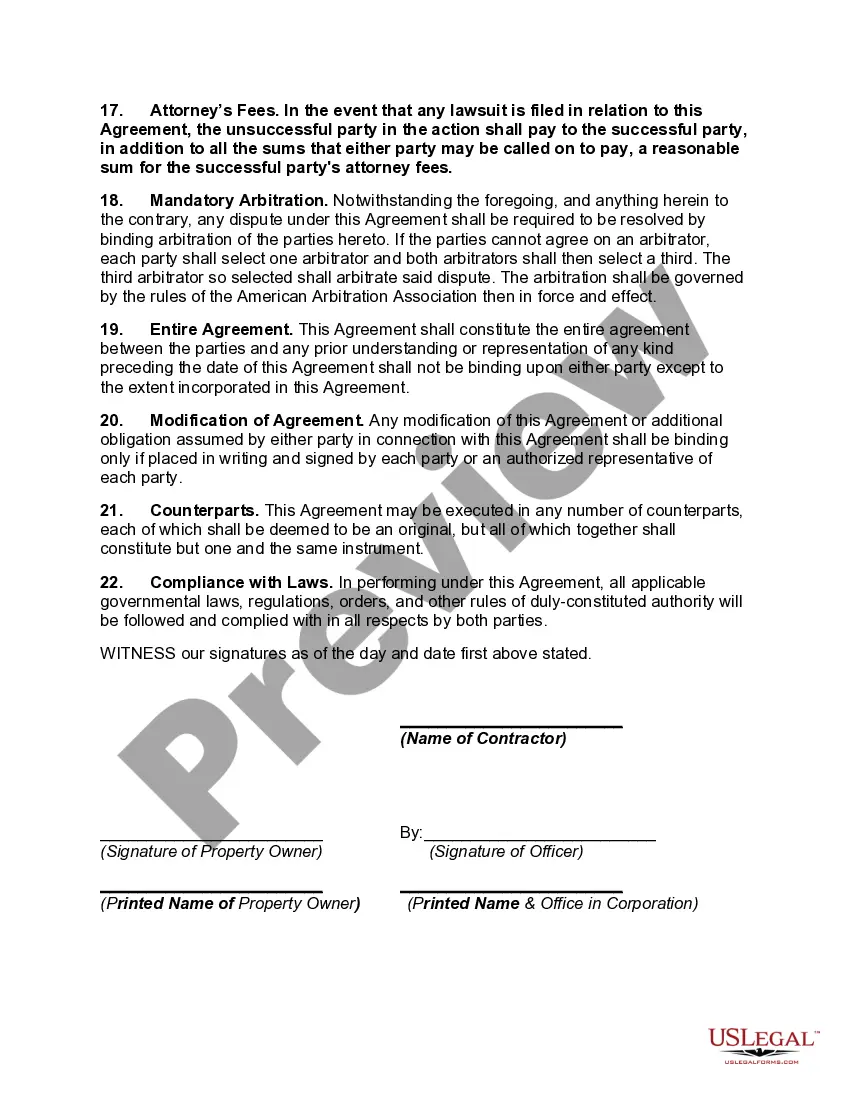
- Dispute resolution via binding arbitration.
When to use this form
This agreement should be used when a property owner hires a contractor for a construction project, such as building a new structure, renovating an existing property, or performing substantial repairs. It is suitable in situations where a clear understanding of the terms, roles, and responsibilities is essential to avoid future disputes and ensure that the project is completed satisfactorily.
Intended users of this form
- Property owners looking to hire contractors for construction projects.
- Contractors needing a standardized agreement to formalize their service engagements.
- Individuals with little legal experience who want a clear and concise contract.
How to complete this form
- Identify the date and enter the full names and addresses of both the owner and contractor.
- Clearly describe the specific work to be performed by the contractor.
- Specify the total payment amount and the method and timing of payment.
- Set the completion dates for different phases of the work, as well as the final completion date.
- Review and fill in clauses regarding insurance and liability as required.
- Ensure both parties sign and date the agreement to make it legally binding.
Does this document require notarization?
This form does not typically require notarization to be legally valid. However, some jurisdictions or document types may still require it. US Legal Forms provides secure online notarization powered by Notarize, available 24/7 for added convenience.
Get your form ready online
Our built-in tools help you complete, sign, share, and store your documents in one place.
Make edits, fill in missing information, and update formatting in US Legal Forms—just like you would in MS Word.
Download a copy, print it, send it by email, or mail it via USPS—whatever works best for your next step.
Sign and collect signatures with our SignNow integration. Send to multiple recipients, set reminders, and more. Go Premium to unlock E-Sign.
If this form requires notarization, complete it online through a secure video call—no need to meet a notary in person or wait for an appointment.
We protect your documents and personal data by following strict security and privacy standards.

Make edits, fill in missing information, and update formatting in US Legal Forms—just like you would in MS Word.

Download a copy, print it, send it by email, or mail it via USPS—whatever works best for your next step.

Sign and collect signatures with our SignNow integration. Send to multiple recipients, set reminders, and more. Go Premium to unlock E-Sign.

If this form requires notarization, complete it online through a secure video call—no need to meet a notary in person or wait for an appointment.

We protect your documents and personal data by following strict security and privacy standards.
Common mistakes to avoid
- Failing to include a detailed description of the work to be performed.
- Not specifying payment terms or completion deadlines clearly.
- Overlooking the necessary insurance requirements for the project.
- Not having both parties sign and date the agreement.
- Assuming changes can be made verbally without written confirmation.
Why use this form online
- Convenience of downloading and customizing the agreement.
- Access to templates drafted by licensed attorneys.
- Ability to fill out forms at your own pace without pressure.
- Secure electronic storage of completed documents.
- Easy access to updates in legal requirements and standards.
Looking for another form?
Form popularity
FAQ
Elements of a construction contract Name of contractor and contact information.Name of homeowner and contact information.Describe property in legal terms.List attachments to the contract.The cost.Failure of homeowner to obtain financing.Description of the work and the completion date.Right to stop the project.
The basic elements required for the agreement to be a legally enforceable contract are: mutual assent, expressed by a valid offer and acceptance; adequate consideration; capacity; and legality. In some states, elements of consideration can be satisfied by a valid substitute.
Contract Types Comparison Party 1 offersBilateralServices or goods that are of value to the other partyUnilateralServices or goods that the other party requested, usually in an open requestImpliedServices or goodsExpressAnything9 more rows ?
Types of contracts Written contracts. Verbal contracts. Part verbal, part written contracts. Standard form contracts. Period contracts. Getting contract advice.
The three most common contract types include: Fixed-price contracts. Cost-plus contracts. Time and materials contracts.
How do I create an Independent Contractor Agreement? State the location.Describe the type of service required.Provide the contractor's and client's details.Outline compensation details.State the agreement's terms.Include any additional clauses.State the signing details.
A construction contract is an agreement between a client and a contractor that specifies the details of a construction project. The details in the construction contract should cover all aspects of the project including payment, type of work to be done, contractor's legal rights and so on.
Generic contracts are essentially agreement forms. Two or more parties will need to agree on a number of terms in order to move forward. Once signed, a contract becomes a legally binding agreement. By taking this step, both parties are protected.