Basic Building and Construction Contract between Owner and Contractor
About this form
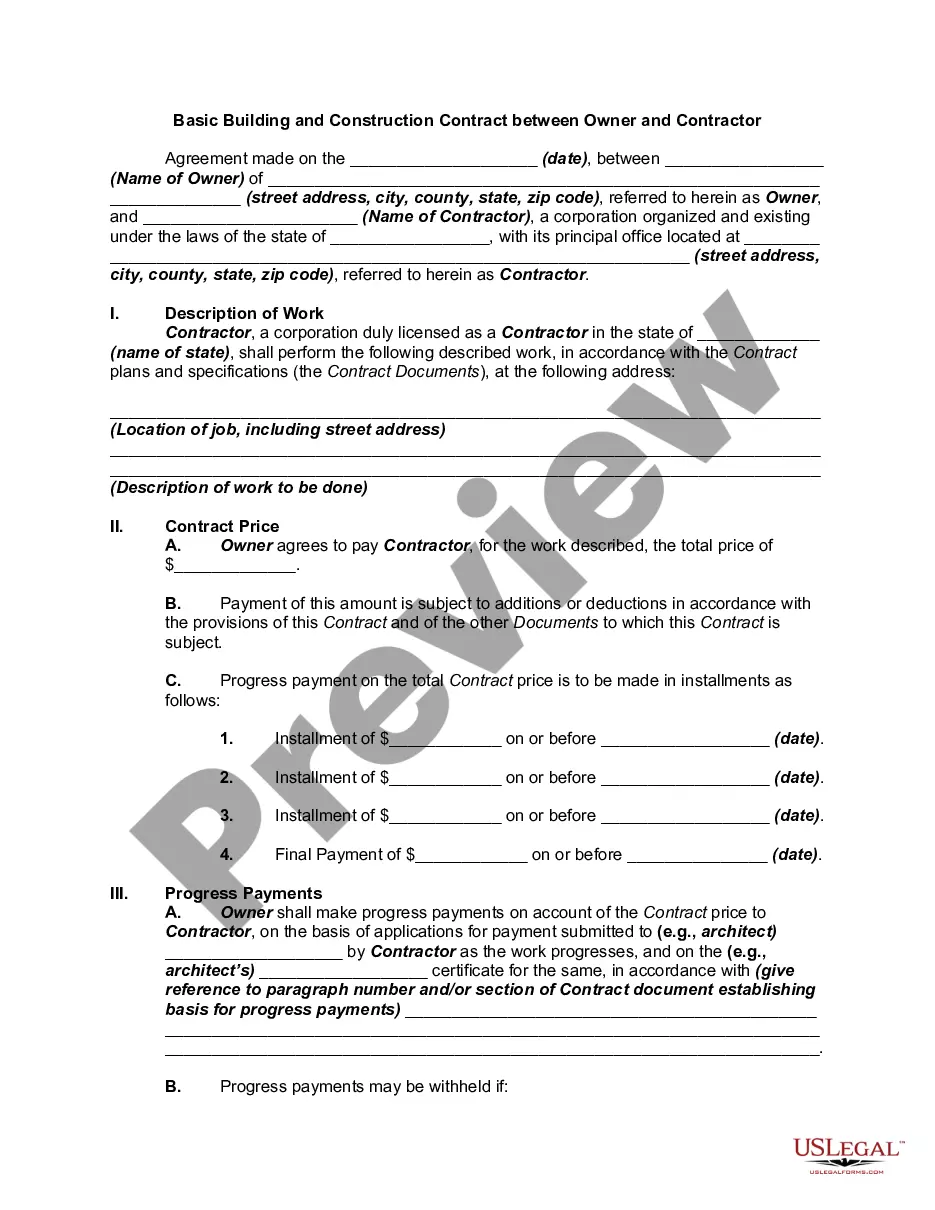
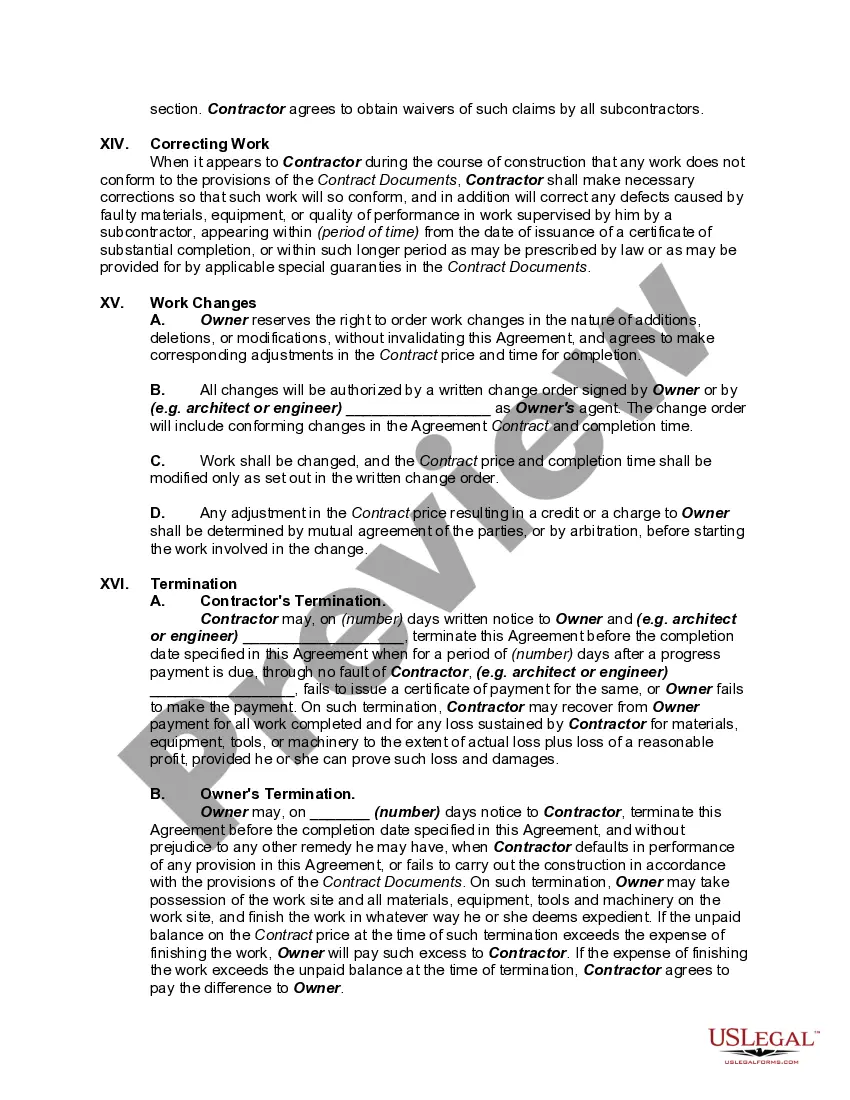
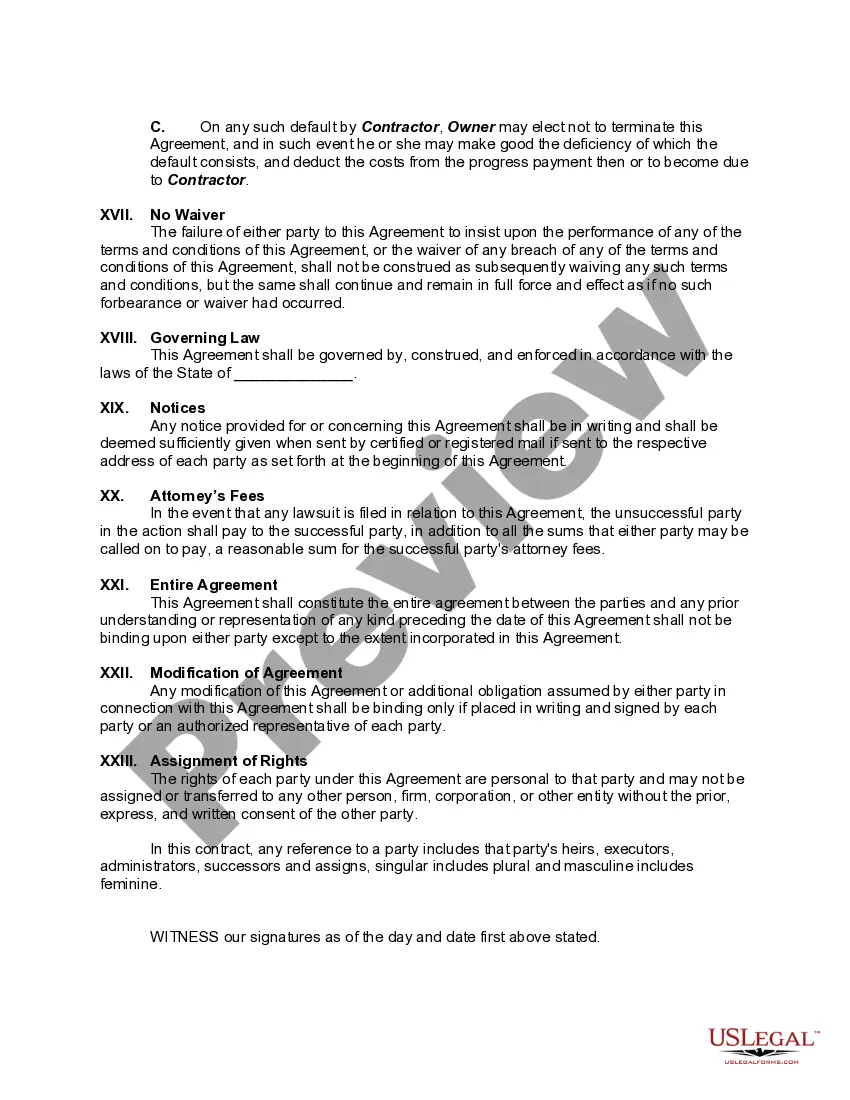
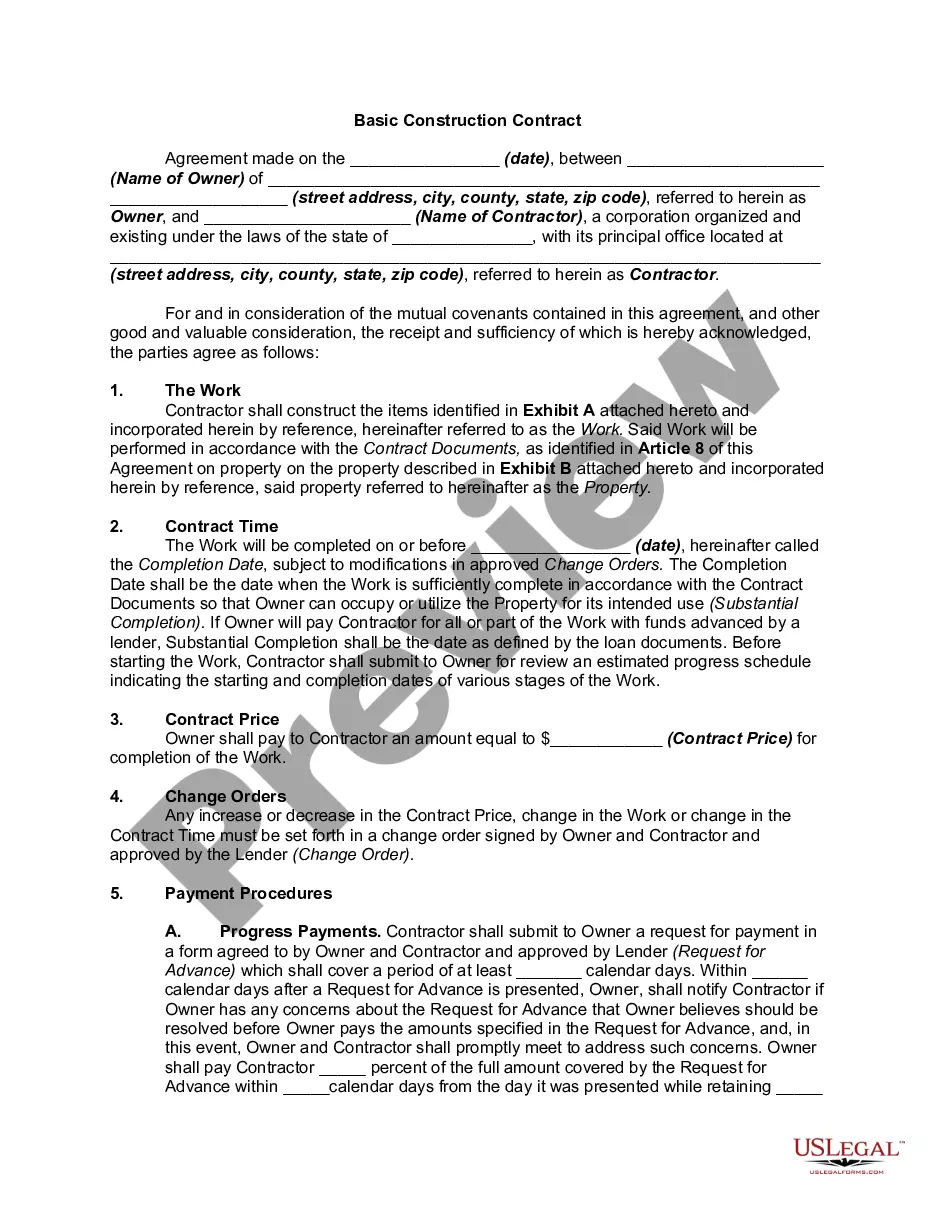
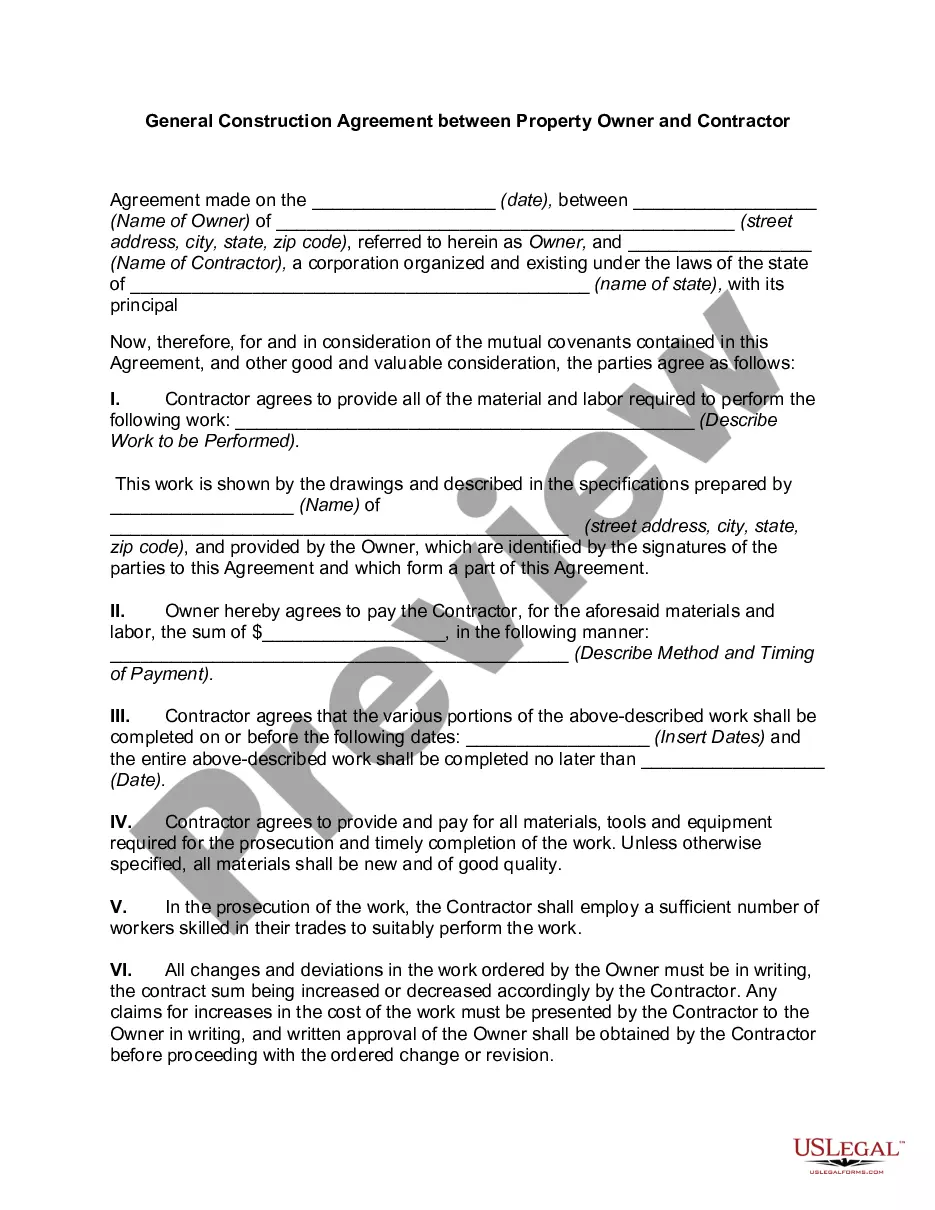
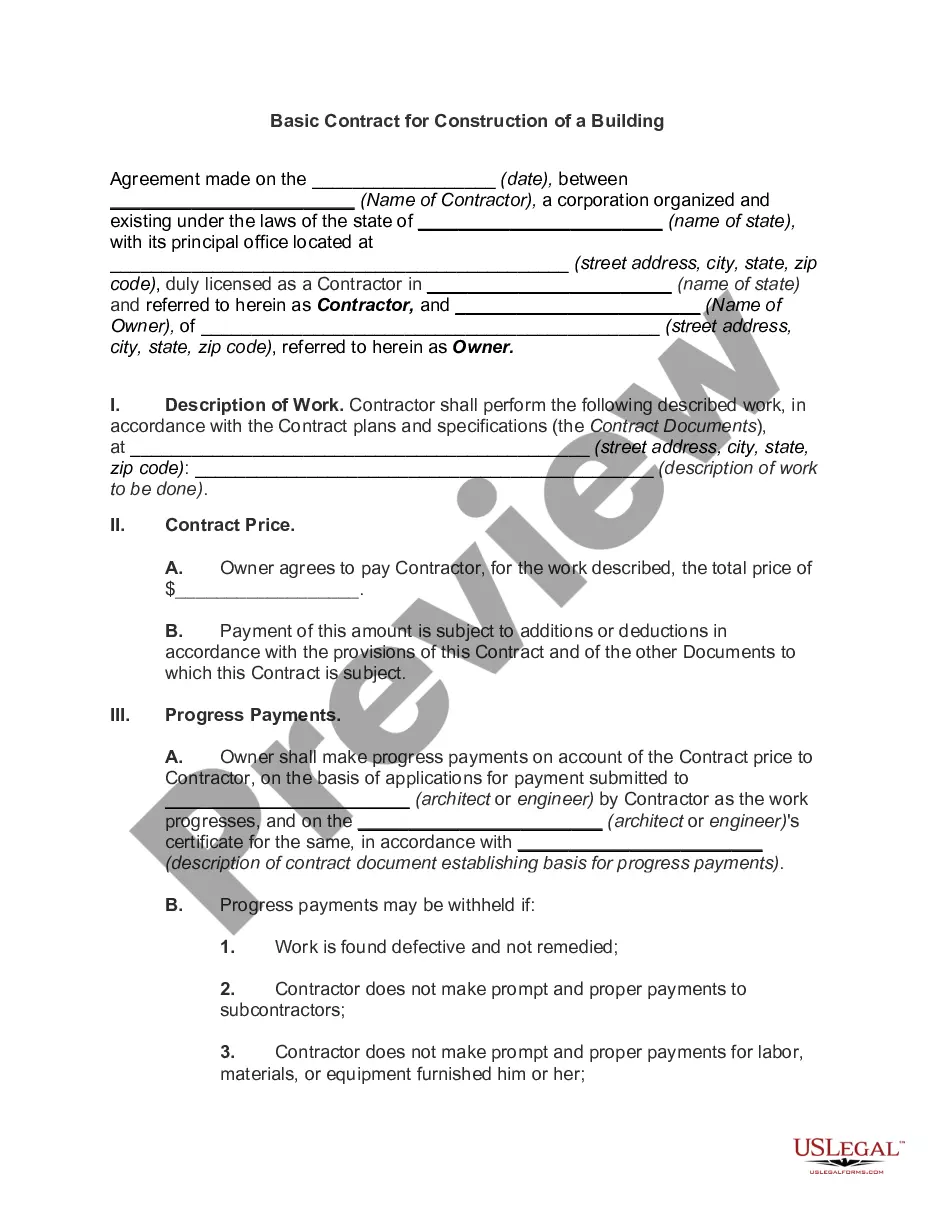
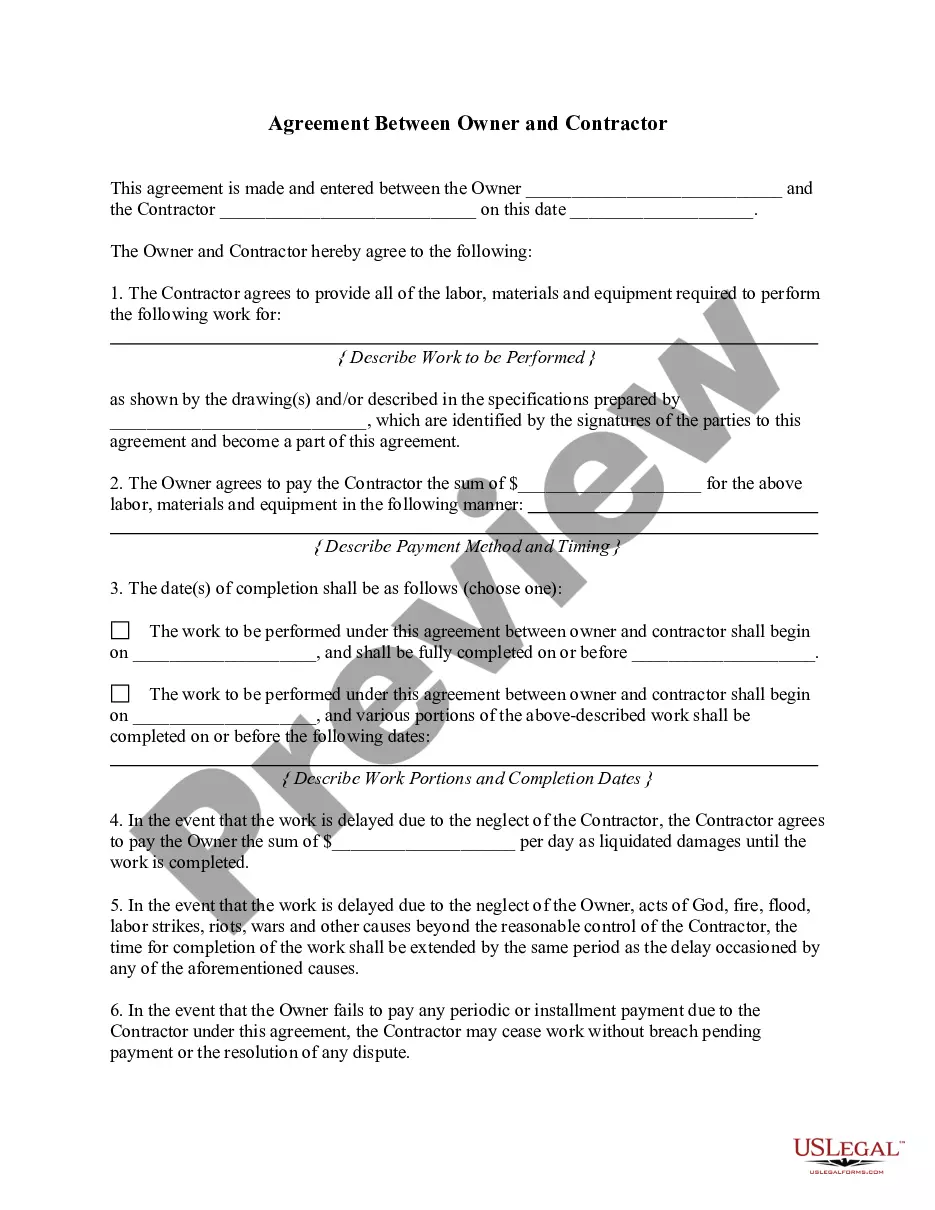
The Basic Building and Construction Contract between Owner and Contractor is a legal document that outlines the agreement between a property owner and a contractor for construction services. This form serves to clearly define the responsibilities, payment terms, and timeline for the construction project, ensuring both parties have a mutual understanding of their obligations. Unlike a verbal agreement or informal contract, this formal document helps protect both the owner and contractor by ensuring compliance with legal standards and clarity in project execution.
Key components of this form
- Parties involved: Identification of the owner and contractor, including their addresses.
- Description of work: Detailed specifications of the construction tasks to be performed.
- Contract price: Clearly stated payment structure, including total cost and payment schedule.
- Progress payments: Guidelines for payment based on milestones and inspections.
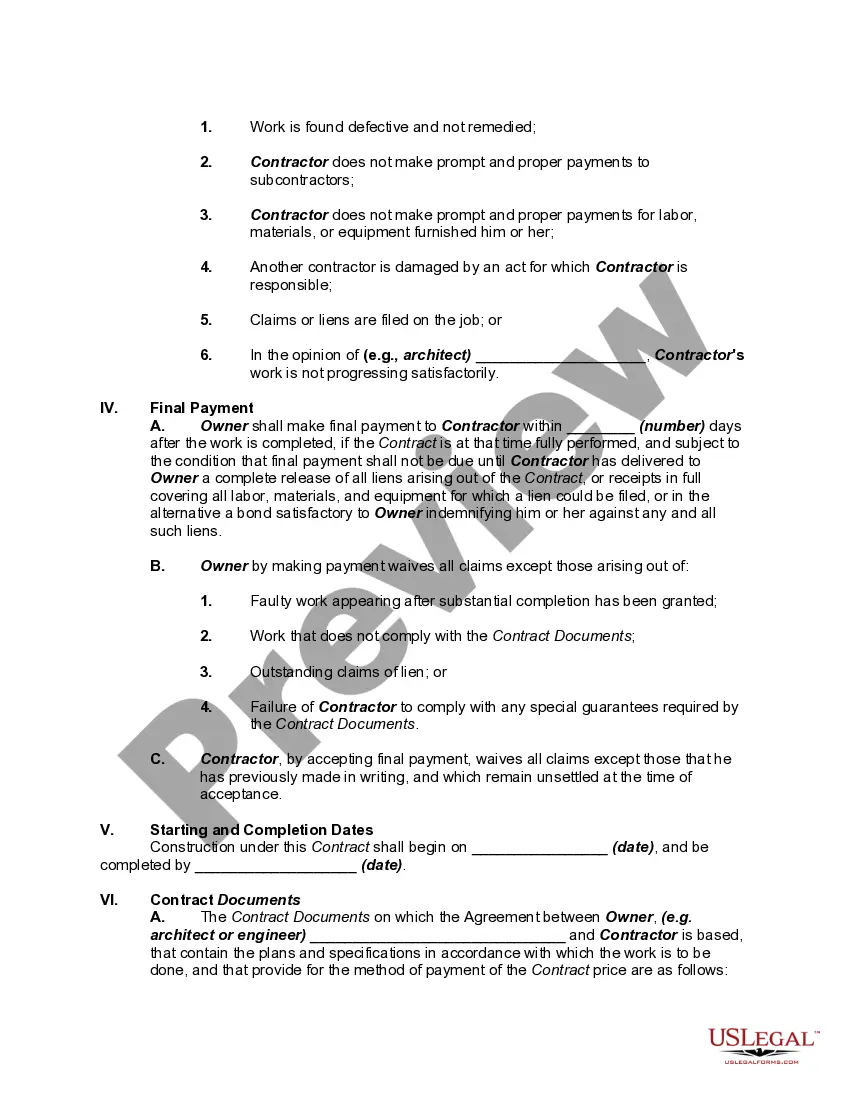
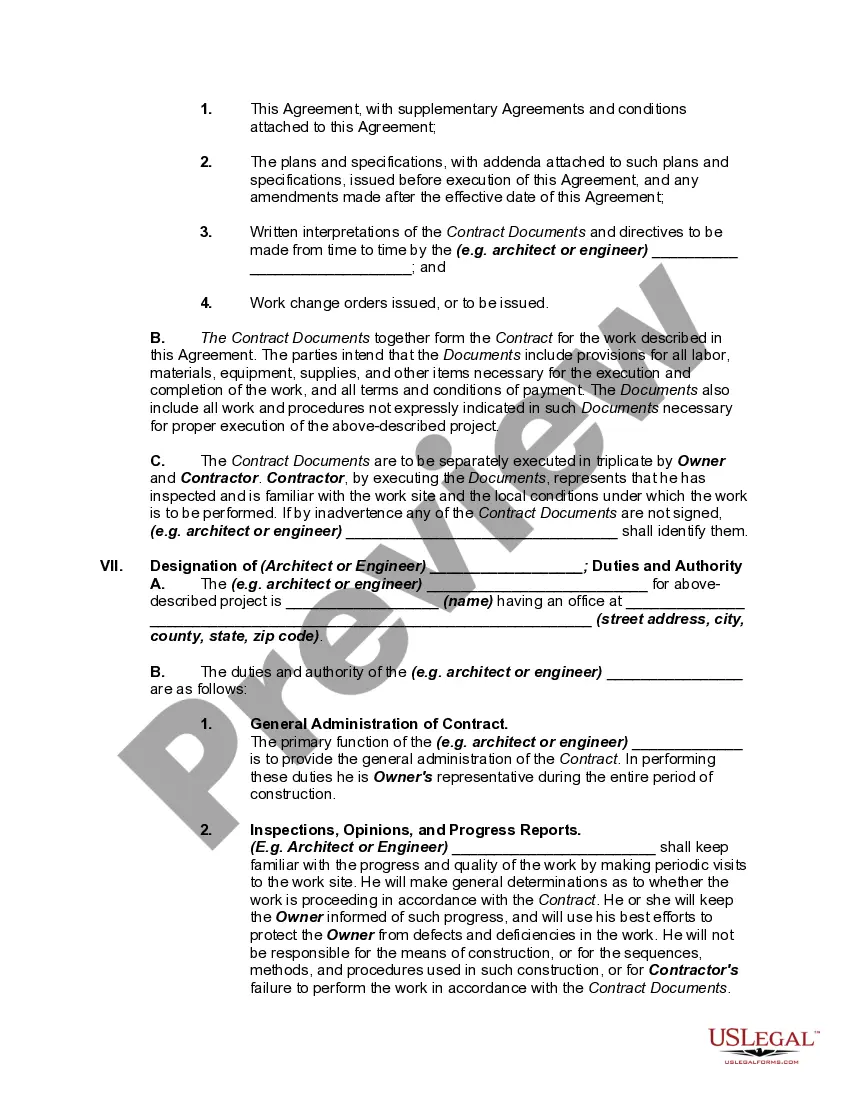
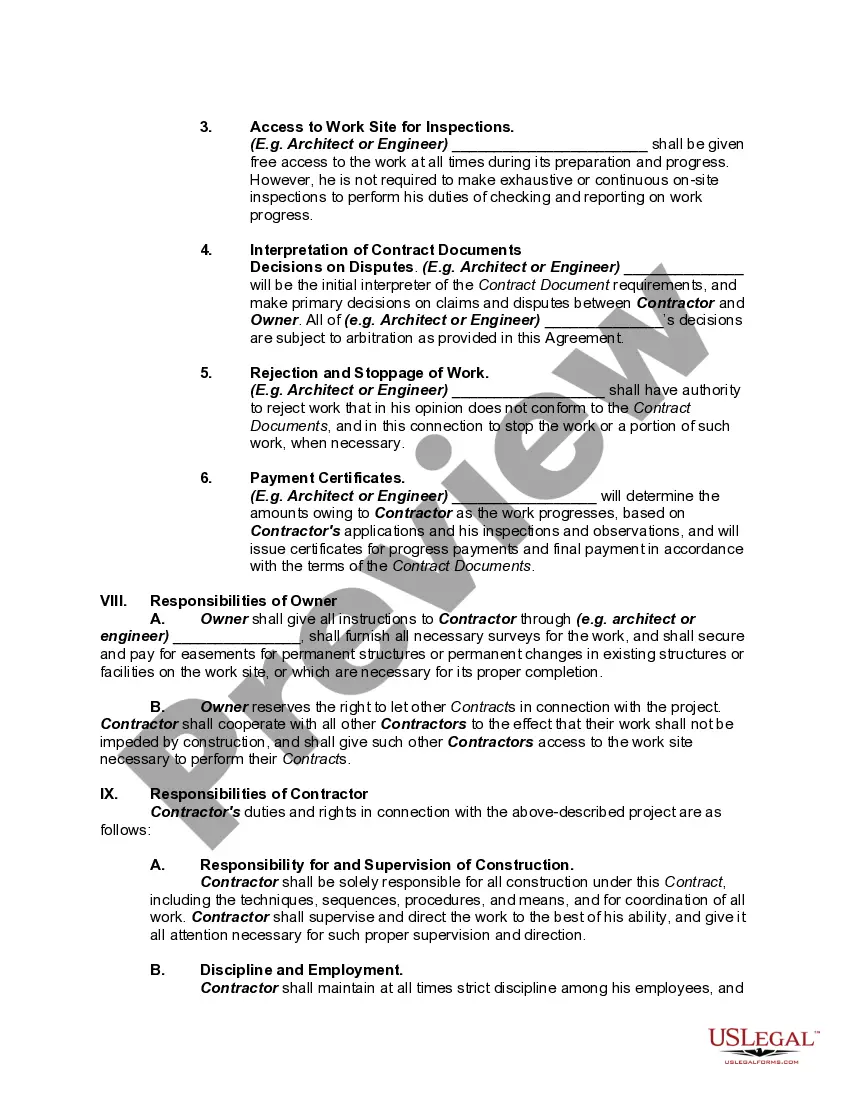
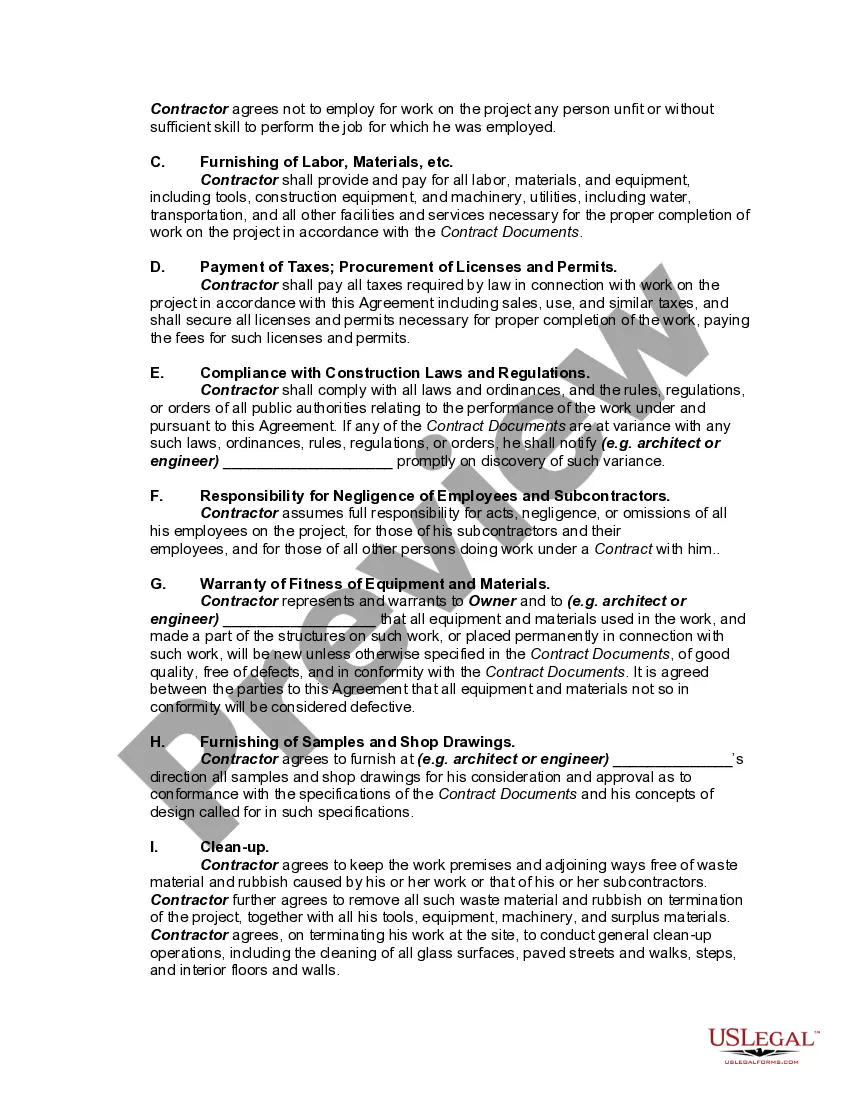
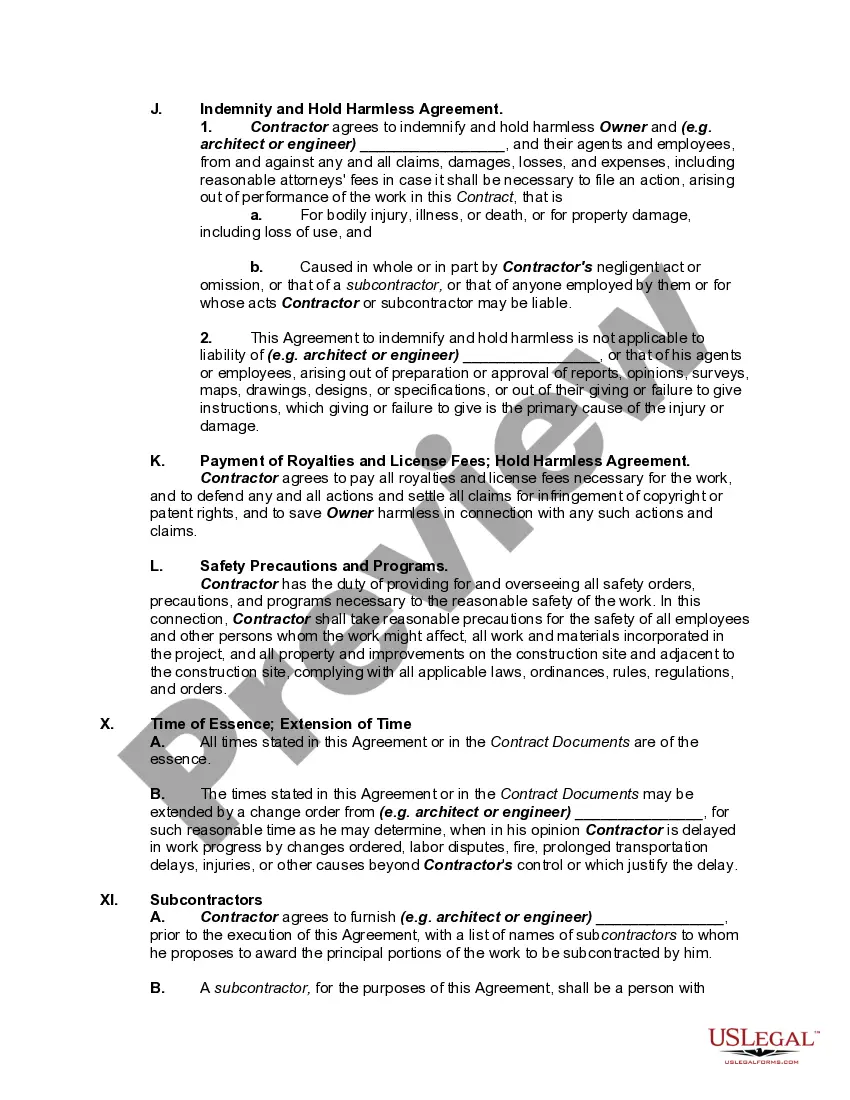
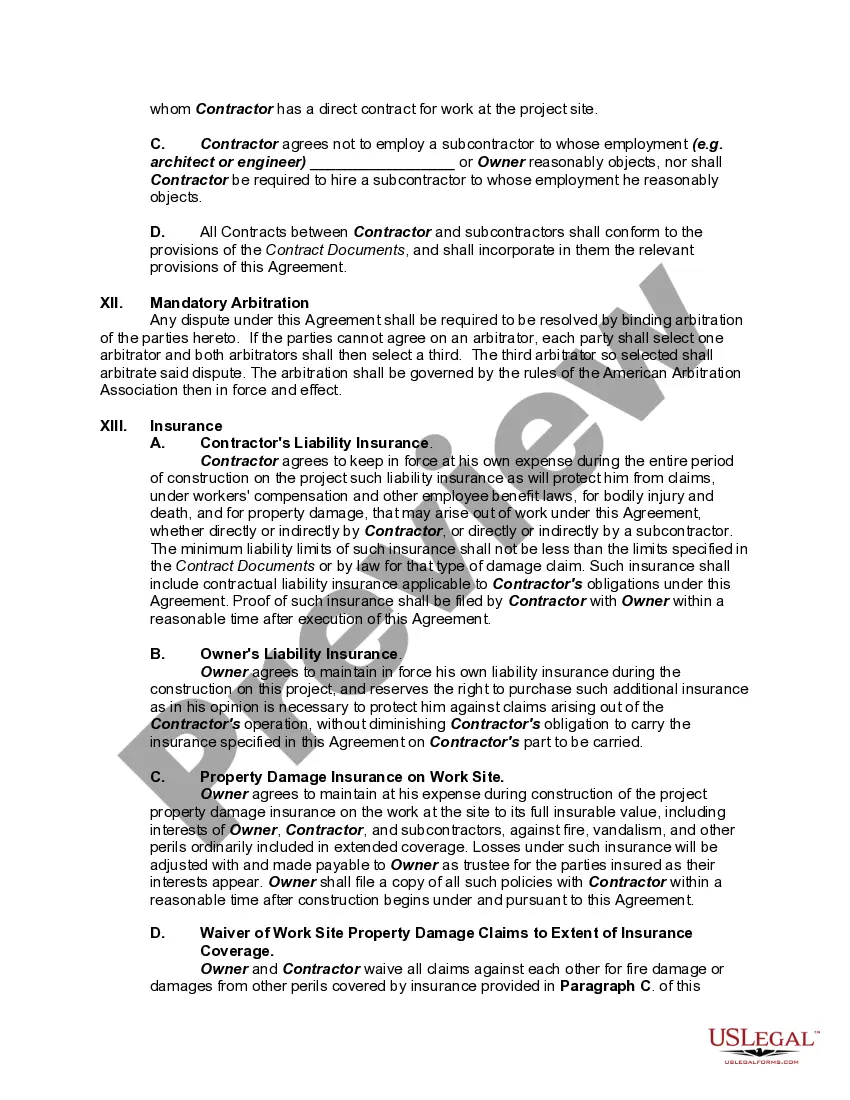
- Responsibilities of the contractor: Expectations regarding supervision, safety, and compliance with laws.
- Termination conditions: Specific conditions under which either party can terminate the contract.

Situations where this form applies
This construction contract form is necessary when an individual or entity planning to undertake a construction project engages a contractor for the work. It is suitable for residential, commercial, or industrial projects where clear terms and conditions are needed to mitigate risks associated with construction work. Common situations for using this contract include building a new home, renovating an existing structure, or managing a large-scale construction job.
Who should use this form
This form is intended for:
- Property owners who want to ensure their rights and responsibilities are clearly defined during a construction project.
- Contractors looking for a standard template to follow that outlines their duties and payment structure.
- Project managers involved in overseeing construction work and requiring a documented agreement between the owner and contractor.
Steps to complete this form
- Identify the parties: Fill in the names and addresses of both the owner and the contractor at the beginning of the form.
- Describe the work: Clearly outline the construction tasks and specifications in the designated section.
- Specify the contract price: Indicate the total payment amount and outline the payment schedule by entering the installment amounts and dates.
- Outline responsibilities: Review and understand the roles and obligations of both parties as defined in the form.
- Sign and date the agreement: Ensure both parties sign and date the contract once all information is accurate and agreeable.
Notarization requirements for this form
In most cases, this form does not require notarization. However, some jurisdictions or signing circumstances might. US Legal Forms offers online notarization powered by Notarize, accessible 24/7 for a quick, remote process.
Get your form ready online
Our built-in tools help you complete, sign, share, and store your documents in one place.
Make edits, fill in missing information, and update formatting in US Legal Forms—just like you would in MS Word.
Download a copy, print it, send it by email, or mail it via USPS—whatever works best for your next step.
Sign and collect signatures with our SignNow integration. Send to multiple recipients, set reminders, and more. Go Premium to unlock E-Sign.
If this form requires notarization, complete it online through a secure video call—no need to meet a notary in person or wait for an appointment.
We protect your documents and personal data by following strict security and privacy standards.

Make edits, fill in missing information, and update formatting in US Legal Forms—just like you would in MS Word.

Download a copy, print it, send it by email, or mail it via USPS—whatever works best for your next step.

Sign and collect signatures with our SignNow integration. Send to multiple recipients, set reminders, and more. Go Premium to unlock E-Sign.

If this form requires notarization, complete it online through a secure video call—no need to meet a notary in person or wait for an appointment.

We protect your documents and personal data by following strict security and privacy standards.
Mistakes to watch out for
- Failing to clearly define the scope of work, which can lead to misunderstandings later.
- Not including a payment schedule, causing confusion about when payments are due.
- Overlooking necessary insurance coverage details that protect both parties.
- Not having the contract signed by both parties before work begins, potentially leading to disputes.
Benefits of completing this form online
- Convenience of downloading and printing the form directly from your device.
- Editability allows you to customize the contract to meet specific project requirements.
- Reliability, knowing the form has been drafted by licensed attorneys to meet legal standards.
- Access to additional resources for guidance on filling out and managing construction contracts.
Looking for another form?

Form popularity
FAQ
Who the parties are. The description of the works in a concise summary. The documents that must be referred to. Any design responsibilities the contractor has. Any compliance requirements, such as from planning, building control, party walls and utility companies.
Who the parties are. The description of the works in a concise summary. The documents that must be referred to. Any design responsibilities the contractor has. Any compliance requirements, such as from planning, building control, party walls and utility companies.
The builder-buyer agreement is a very important legal document for home buyers. It is a contract which contains all the terms and conditions which have to be complied by both the buyer and the builder.
The builders hereby specifically agree and authorise the owner to deduct such liquidated damages, if any, from any installment of payment becoming due and payable to the builders in terms of this agreement. 4. The owner will pay to the builders a sum of Rs.............
Identifying/Contact Information. Title and Description of the Project. Projected Timeline and Completion Date. Cost Estimate and Payment Schedule. Stop Work Clause and Stop Payment Clause. Act of God Clause. Change Order Agreement. Warranty.
Before signing a construction contract, you should receive a detailed list of expenses and plans for the project. Make sure you know exactly what you're receiving for the moneyincluding all labor charges and material costs. When will you complete the project?
#1: Review Your Bid. #2: Review Complete Plans. #3: Review All Specifications. #4: Visit the Job Site. #5: Review the Job Schedule. #6: Complete a Project Checklist. #7: Verify Project Funding. #8: Read Complete Contract.
Working with your builder Having a solid contract is important, but it doesn't replace the need for a good working relationship with your builder. Even with a contract in place, there can still be miscommunications and misunderstandings.
Identifying/Contact Information. Title and Description of the Project. Projected Timeline and Completion Date. Cost Estimate and Payment Schedule. Stop Work Clause and Stop Payment Clause. Act of God Clause. Change Order Agreement. Warranty.