Basic Contract for Construction of a Building
About this form
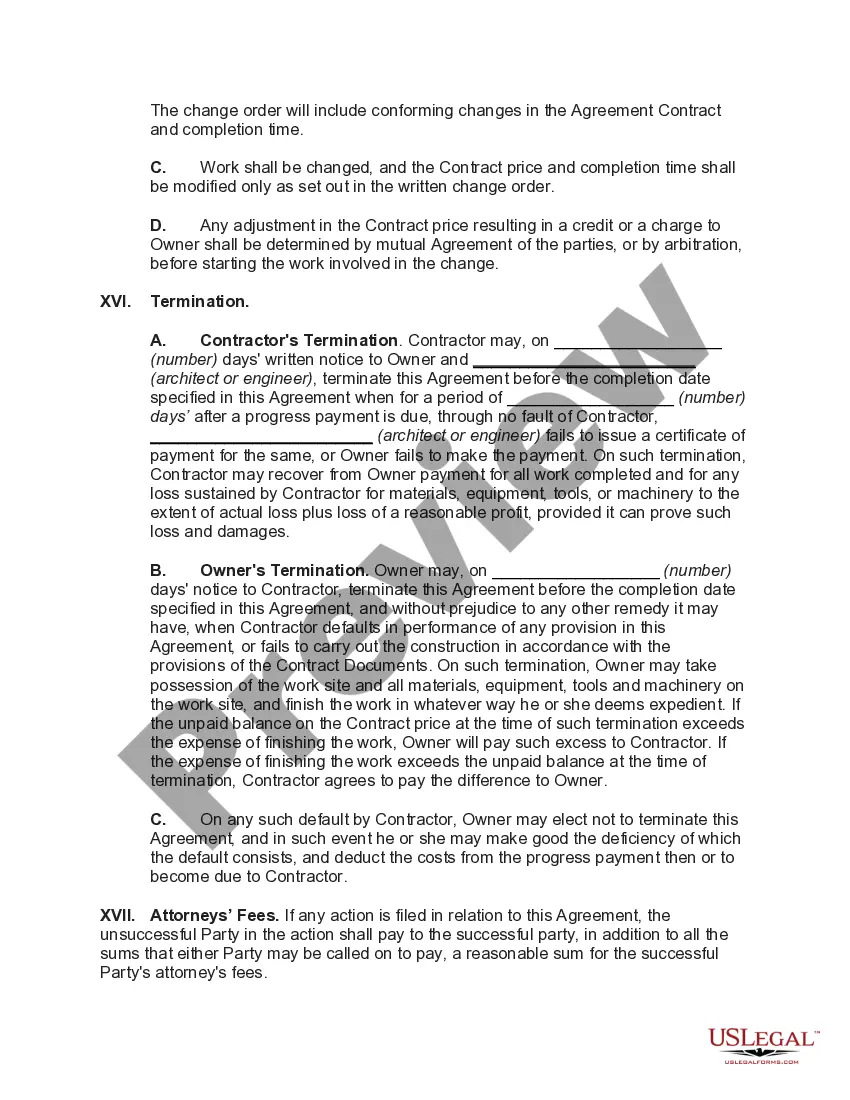
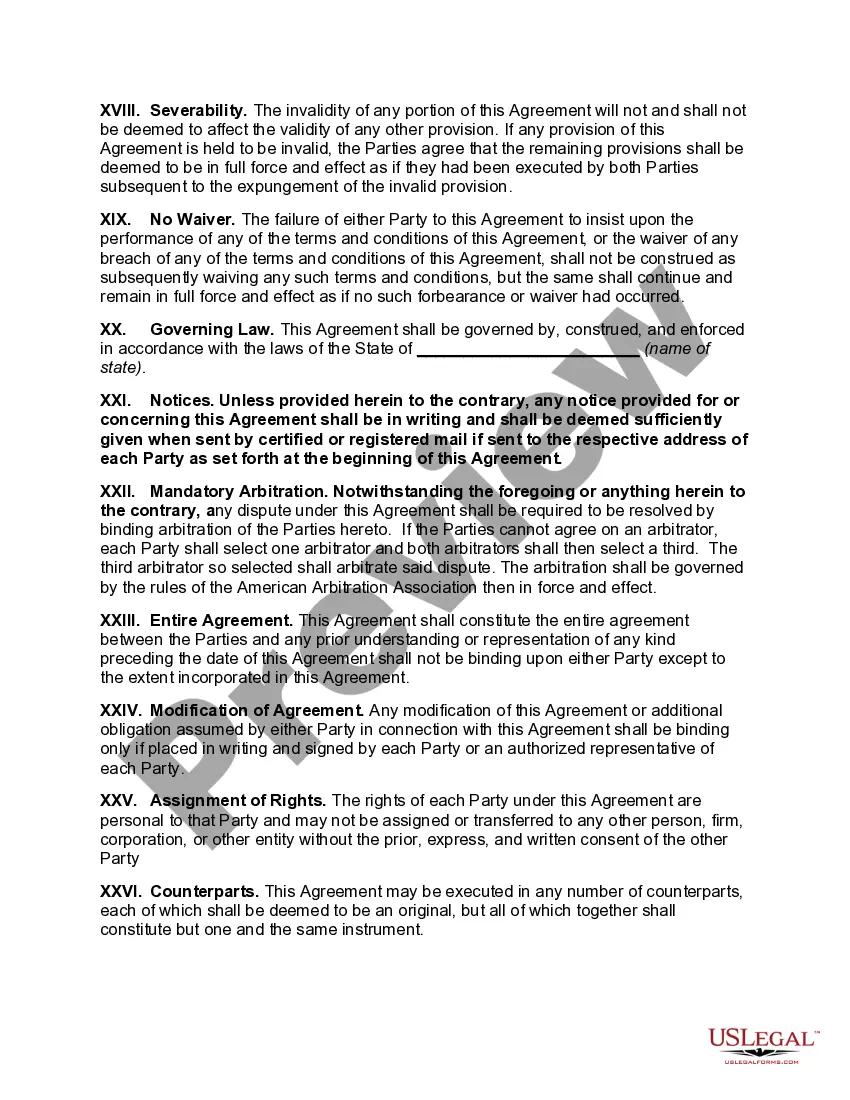
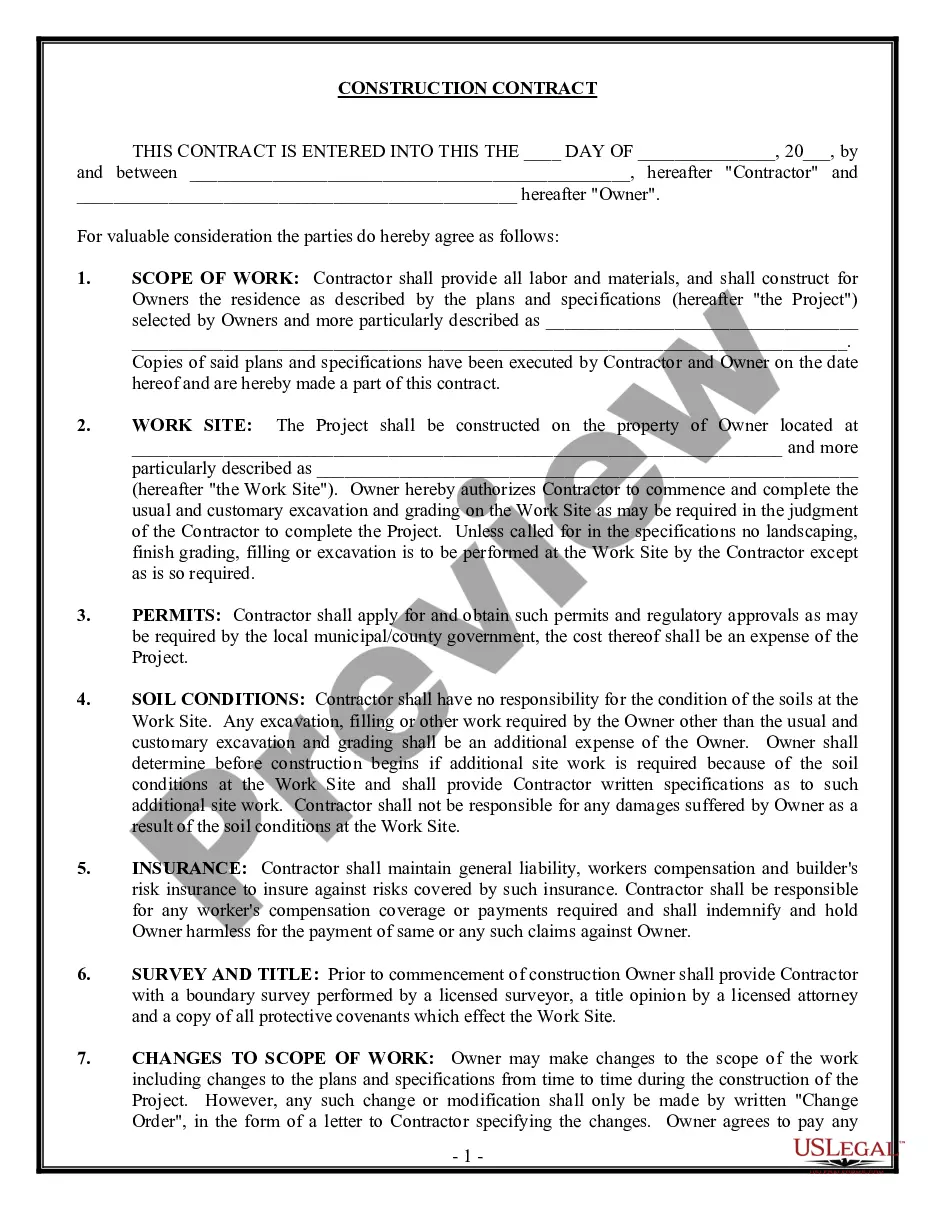
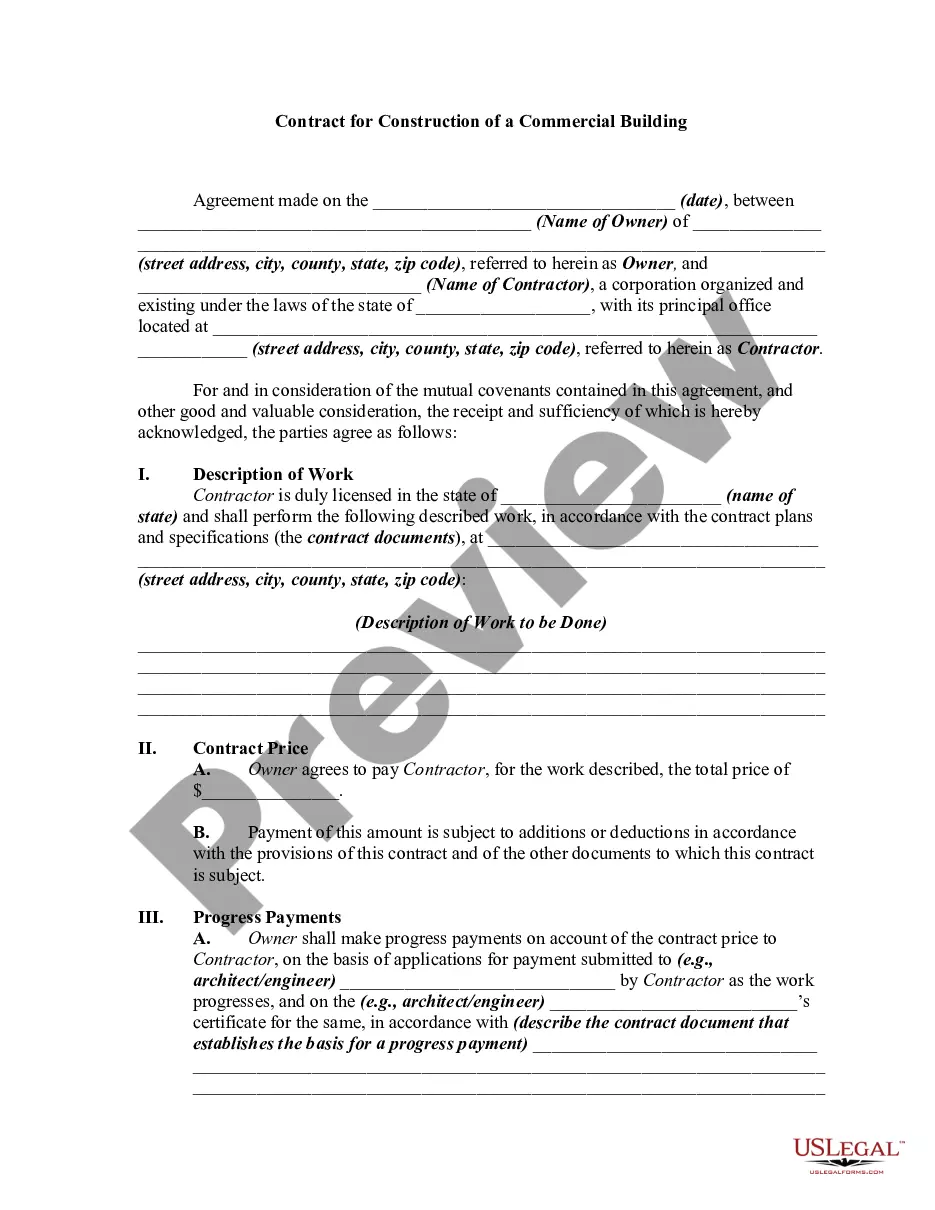
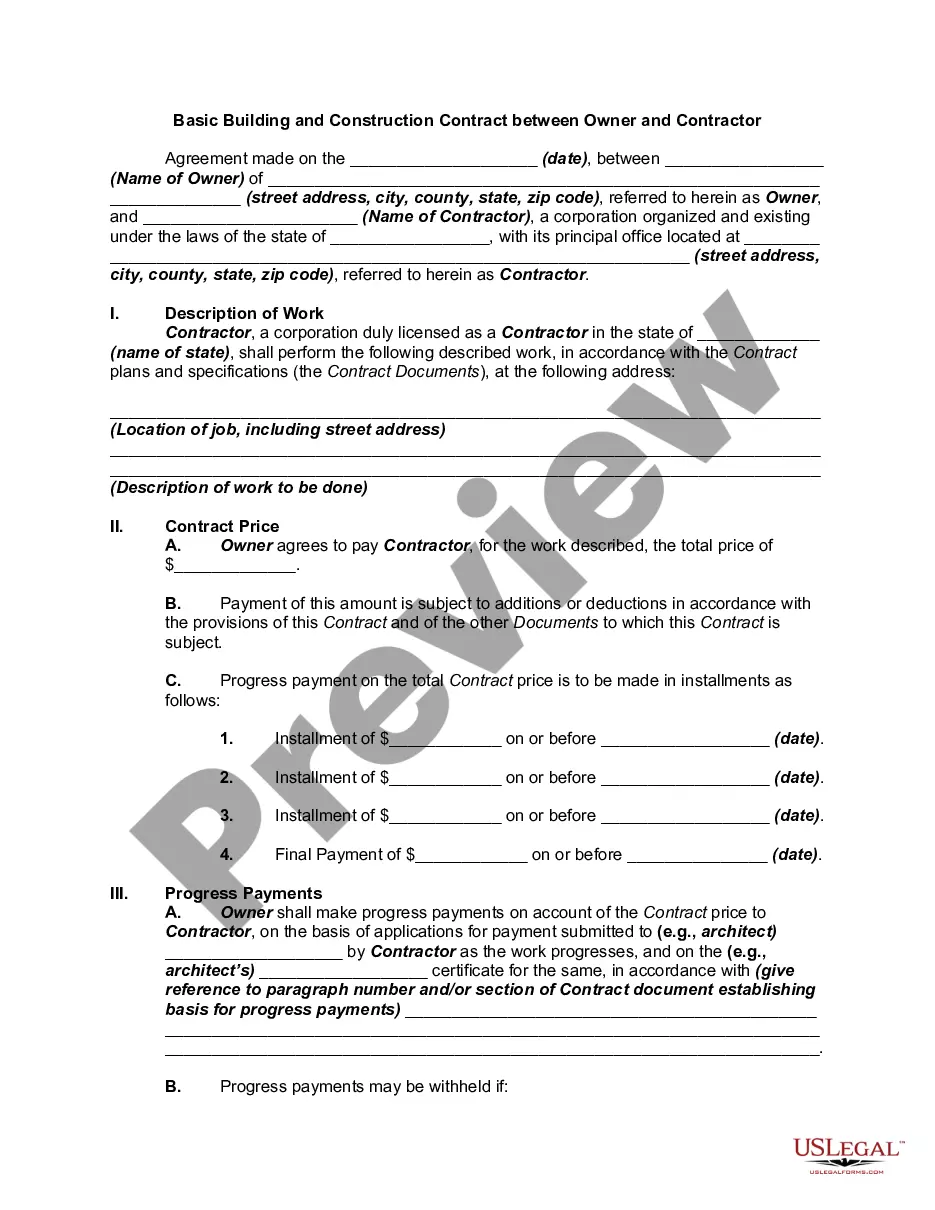
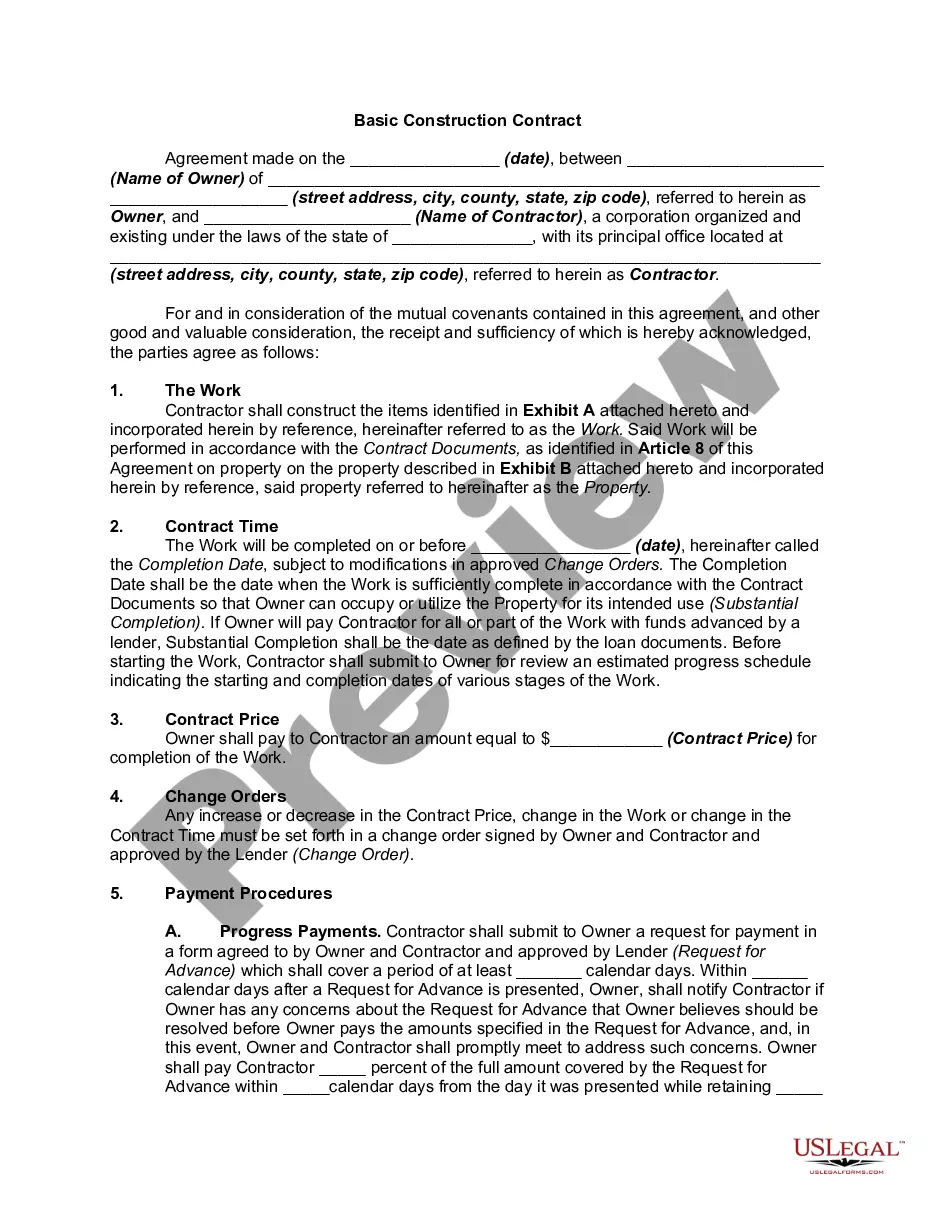
The Basic Contract for Construction of a Building is a legally binding agreement between a contractor and the owner who plans to construct a building. This form outlines the scope of work, payment terms, construction timelines, and responsibilities of both parties. It differs from other contracts by providing a basic structure while allowing room for customization based on specific project needs.
Key parts of this document
- Date of the agreement and identification of the parties involved.
- Description of the work to be performed, including specifications and location.
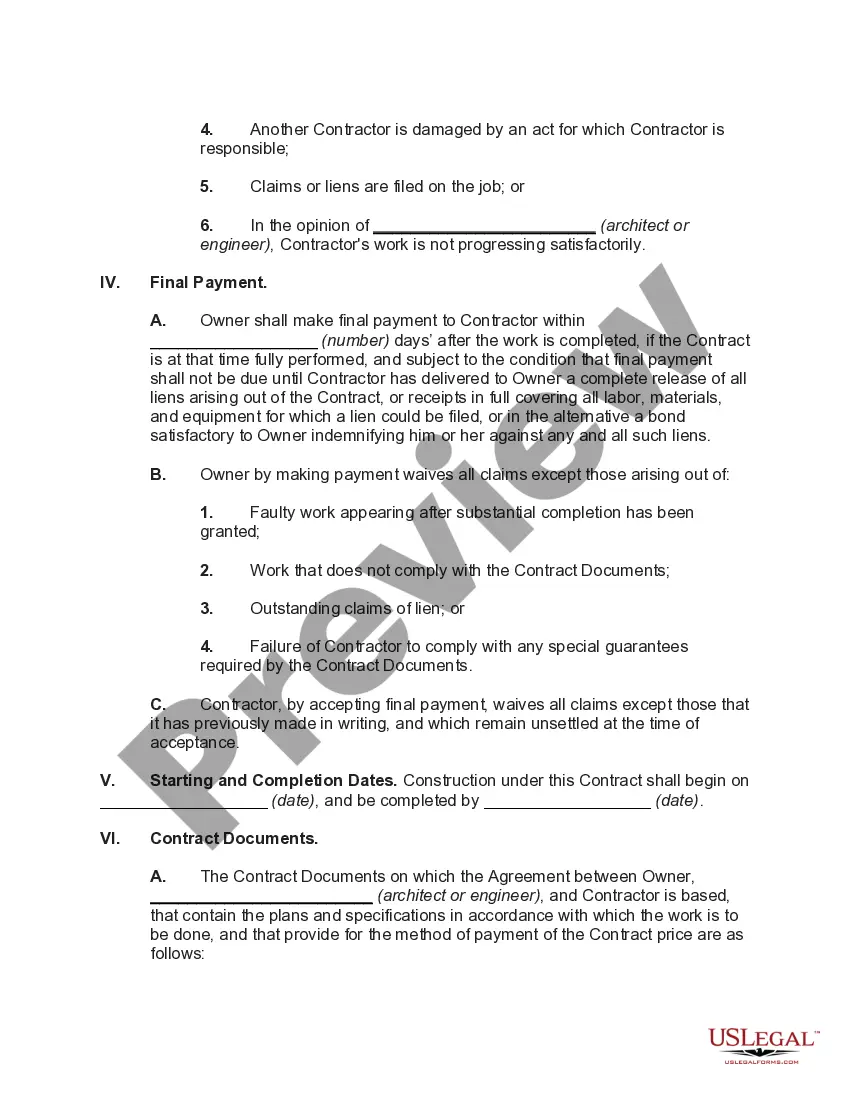
- Contract price and terms for progress and final payments.
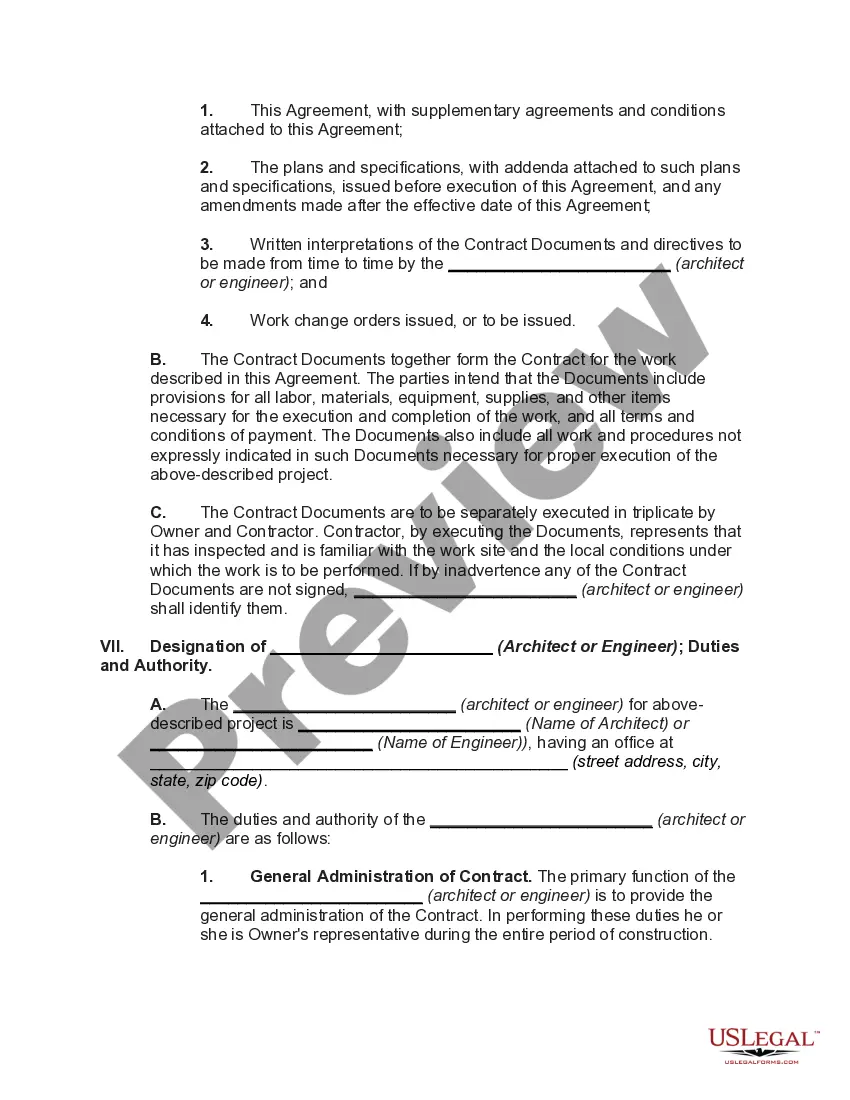
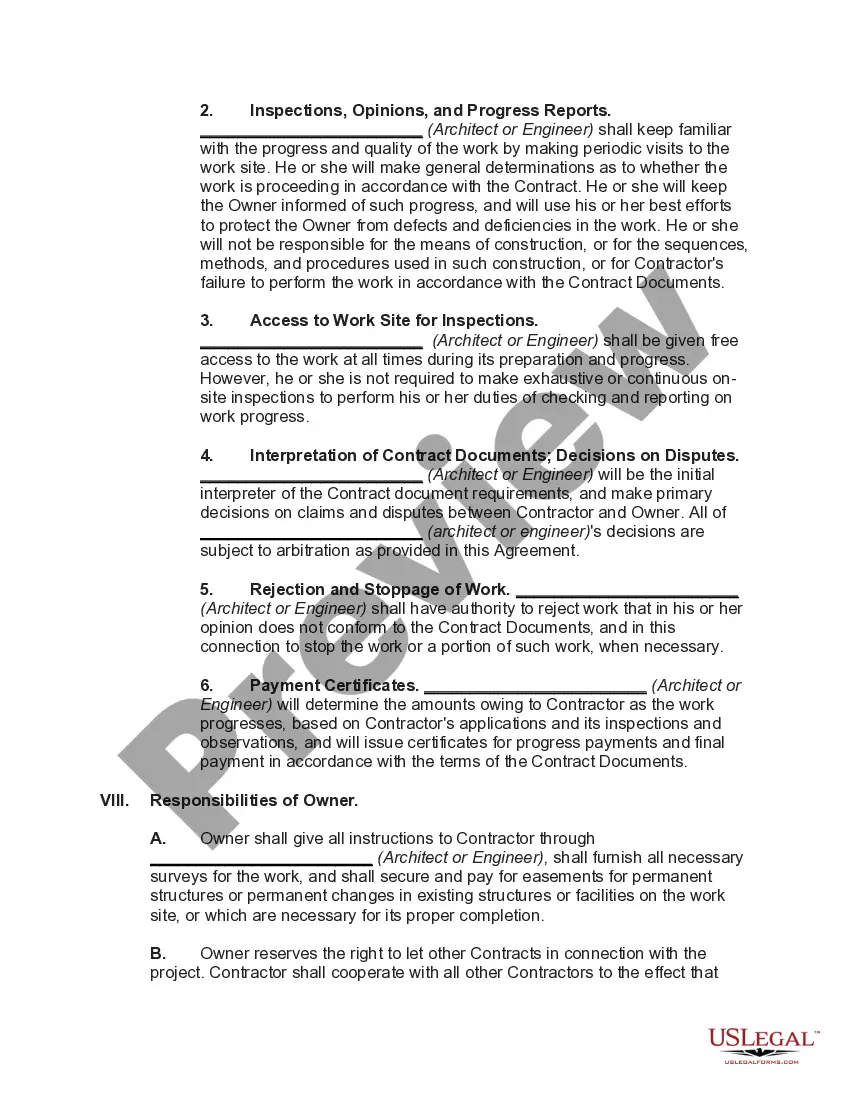
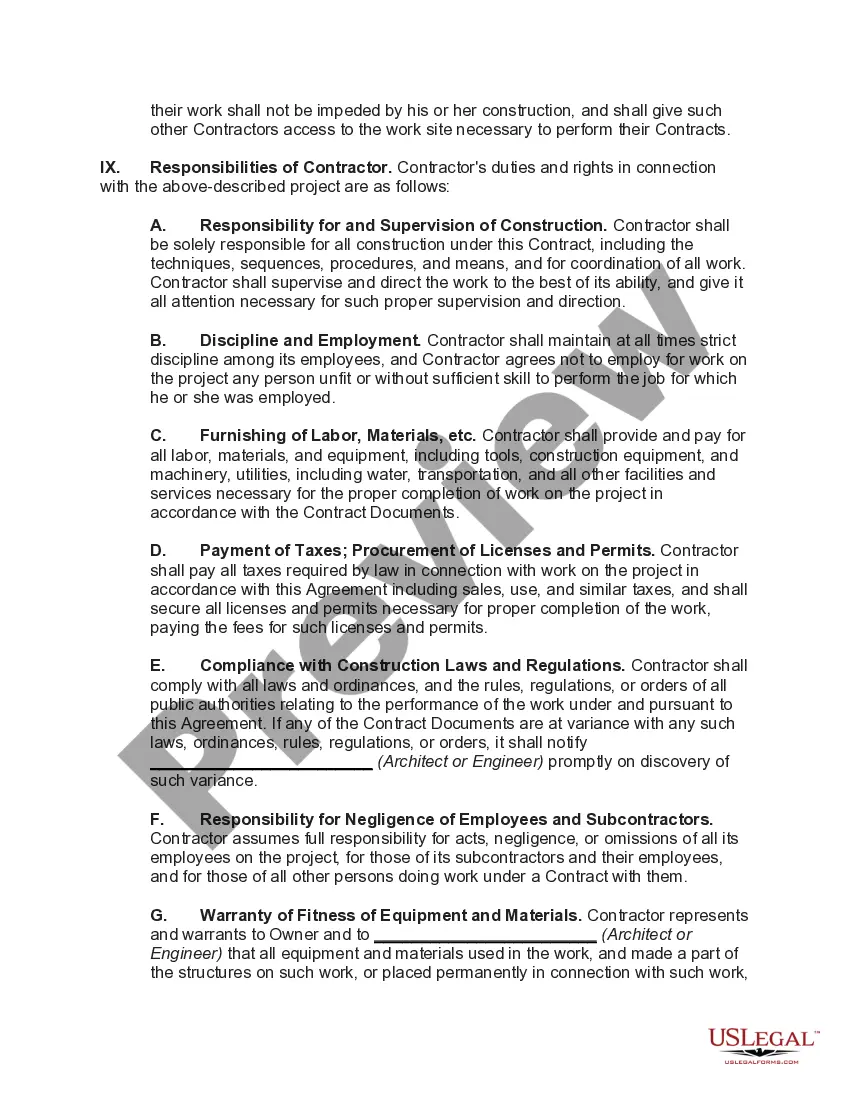
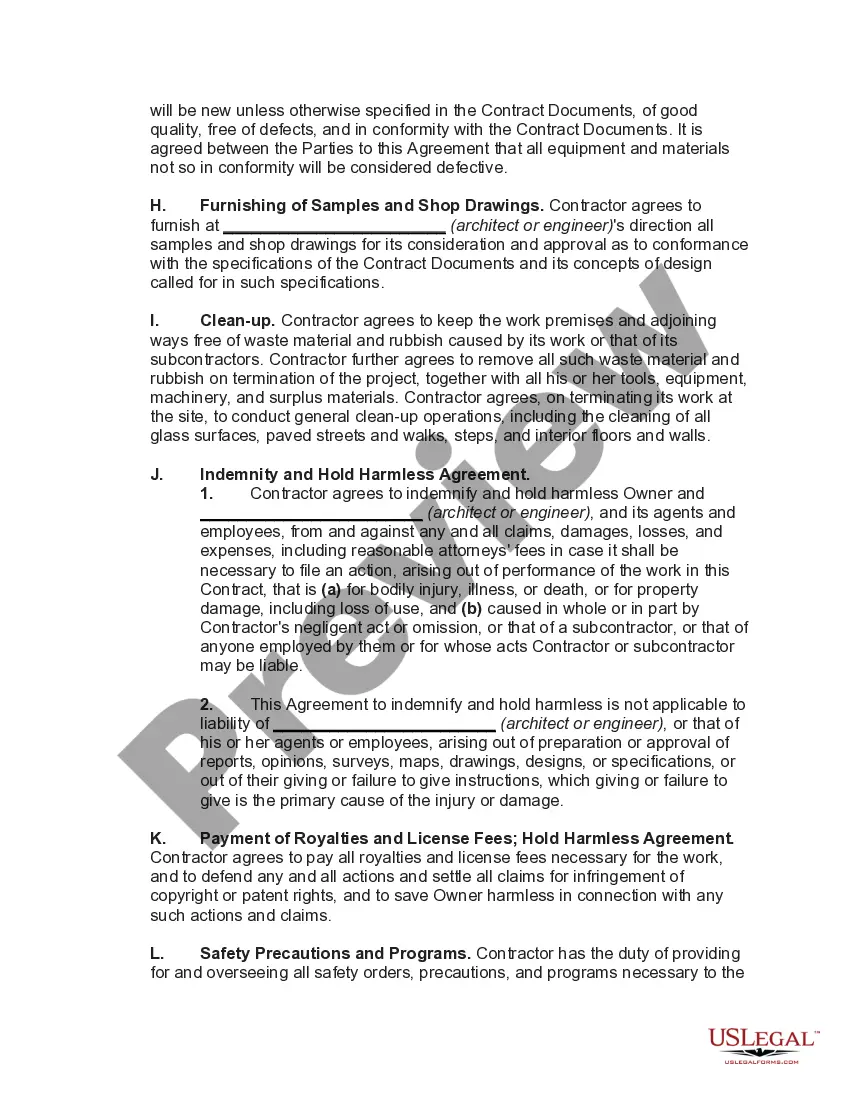
- Responsibilities of the contractor and the owner.
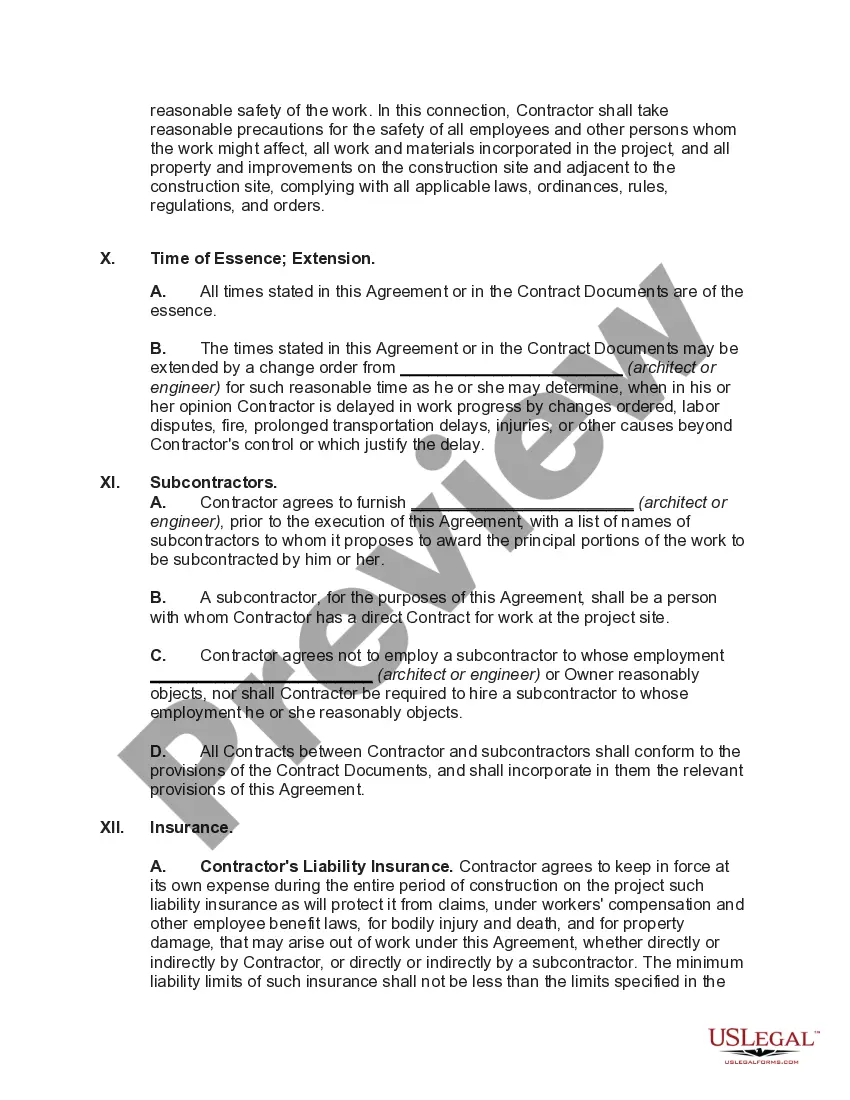
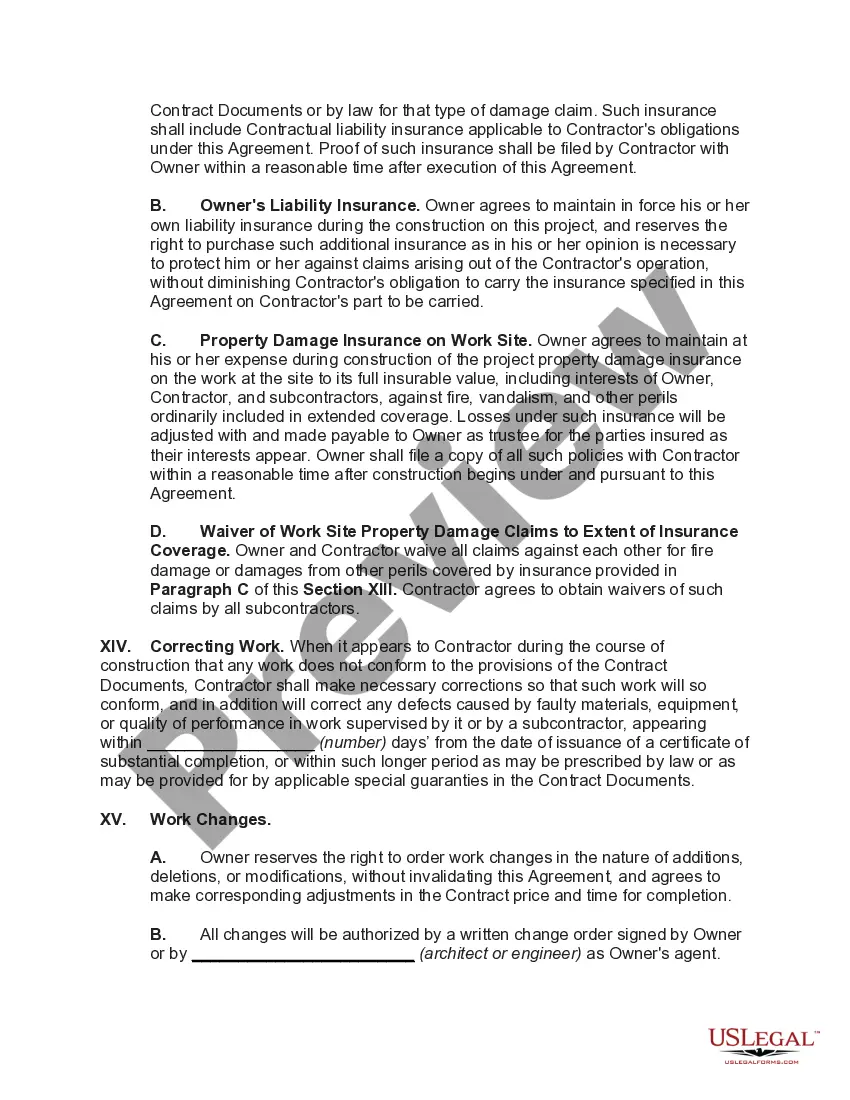
- Provisions for change orders and potential terminations.
- Legal implications, including mandatory arbitration provisions.


Situations where this form applies
This form is useful when an owner intends to hire a contractor for building projects. Scenarios include new construction, renovations, or remodels where clear terms regarding work expectations, payment schedules, and timelines are necessary. Using this contract helps ensure that both parties are aware of their rights and obligations.
Who this form is for
- Property owners seeking to engage a contractor for construction projects.
- Contractors looking to formalize an agreement with a client.
- Architects or engineers involved in construction management.
- Individuals or businesses planning construction in compliance with local laws.
Instructions for completing this form
- Identify the parties involved by filling in their names and addresses at the beginning of the document.
- Provide a detailed description of the work to be performed, including location and specific tasks.
- Enter the total contract price and clarify any terms regarding progress payments and final settlement.
- Specify the start and completion dates for construction.
- Review all responsibilities and ensure both parties understand their obligations before signing.
Is notarization required?
This form does not typically require notarization unless specified by local law. However, it is advisable for both parties to sign in the presence of a witness to affirm the legitimacy of the agreement.
Get your form ready online
Our built-in tools help you complete, sign, share, and store your documents in one place.
Make edits, fill in missing information, and update formatting in US Legal Forms—just like you would in MS Word.
Download a copy, print it, send it by email, or mail it via USPS—whatever works best for your next step.
Sign and collect signatures with our SignNow integration. Send to multiple recipients, set reminders, and more. Go Premium to unlock E-Sign.
If this form requires notarization, complete it online through a secure video call—no need to meet a notary in person or wait for an appointment.
We protect your documents and personal data by following strict security and privacy standards.

Make edits, fill in missing information, and update formatting in US Legal Forms—just like you would in MS Word.

Download a copy, print it, send it by email, or mail it via USPS—whatever works best for your next step.

Sign and collect signatures with our SignNow integration. Send to multiple recipients, set reminders, and more. Go Premium to unlock E-Sign.

If this form requires notarization, complete it online through a secure video call—no need to meet a notary in person or wait for an appointment.

We protect your documents and personal data by following strict security and privacy standards.
Mistakes to watch out for
- Failing to clearly define the scope of work, leading to disputes later.
- Not specifying payment details and timelines can result in payment delays.
- Neglecting to include provisions for change orders can complicate project adjustments.
- Not ensuring both parties sign the contract, leading to ambiguity about enforceability.
Why use this form online
- Convenient access to downloadable templates that can be customized.
- Ability to edit and fill in details at your own pace.
- Reliability of legal forms drafted by licensed attorneys to ensure compliance.
Legal use & context
- The contract serves as a binding agreement enforceable in court.
- In case of disputes, the form outlines the arbitration process to resolve issues amicably.
- Both parties are legally obligated to adhere to the terms once signed.
Quick recap
- Use this form to clearly define roles and responsibilities in construction projects.
- Ensure all payment terms, timelines, and project details are explicitly stated.
- Review local laws to ensure compliance and address any state-specific requirements.
Looking for another form?
Form popularity
FAQ
#1: Review Your Bid. #2: Review Complete Plans. #3: Review All Specifications. #4: Visit the Job Site. #5: Review the Job Schedule. #6: Complete a Project Checklist. #7: Verify Project Funding. #8: Read Complete Contract.
Look for assistance from others who may have bid on construction contracts in the past or review a list bid service companies you can find through FedSpending.org or USASpending.gov. In addition to helping you locate and complete bid documents, a bid service may also alert you to available subcontracting opportunities.
Identifying/Contact Information. Title and Description of the Project. Projected Timeline and Completion Date. Cost Estimate and Payment Schedule. Stop Work Clause and Stop Payment Clause. Act of God Clause. Change Order Agreement. Warranty.
Identifying/Contact Information. Title and Description of the Project. Projected Timeline and Completion Date. Cost Estimate and Payment Schedule. Stop Work Clause and Stop Payment Clause. Act of God Clause. Change Order Agreement. Warranty.
The five requirements for creating a valid contract are an offer, acceptance, consideration, competency and legal intent.
Name of contractor and contact information. Name of homeowner and contact information. Describe property in legal terms. List attachments to the contract. The cost. Failure of homeowner to obtain financing. Description of the work and the completion date. Right to stop the project.
So, what is a construction contract? The HGCRA defines a construction contract as an agreement with a person for the carrying out of construction operations, arranging for the carrying out of construction operations by others and providing labour, or the labour of others, to carry out construction operations.
Standard construction contracts should have the following information and clauses: Name of contractor and contact information. Include the contractor's license number along with phone number, email address, and company address. Name of homeowner and contact information.
Who the parties are. The description of the works in a concise summary. The documents that must be referred to. Any design responsibilities the contractor has. Any compliance requirements, such as from planning, building control, party walls and utility companies.