Electrical Safety Training Manual
Overview of this form
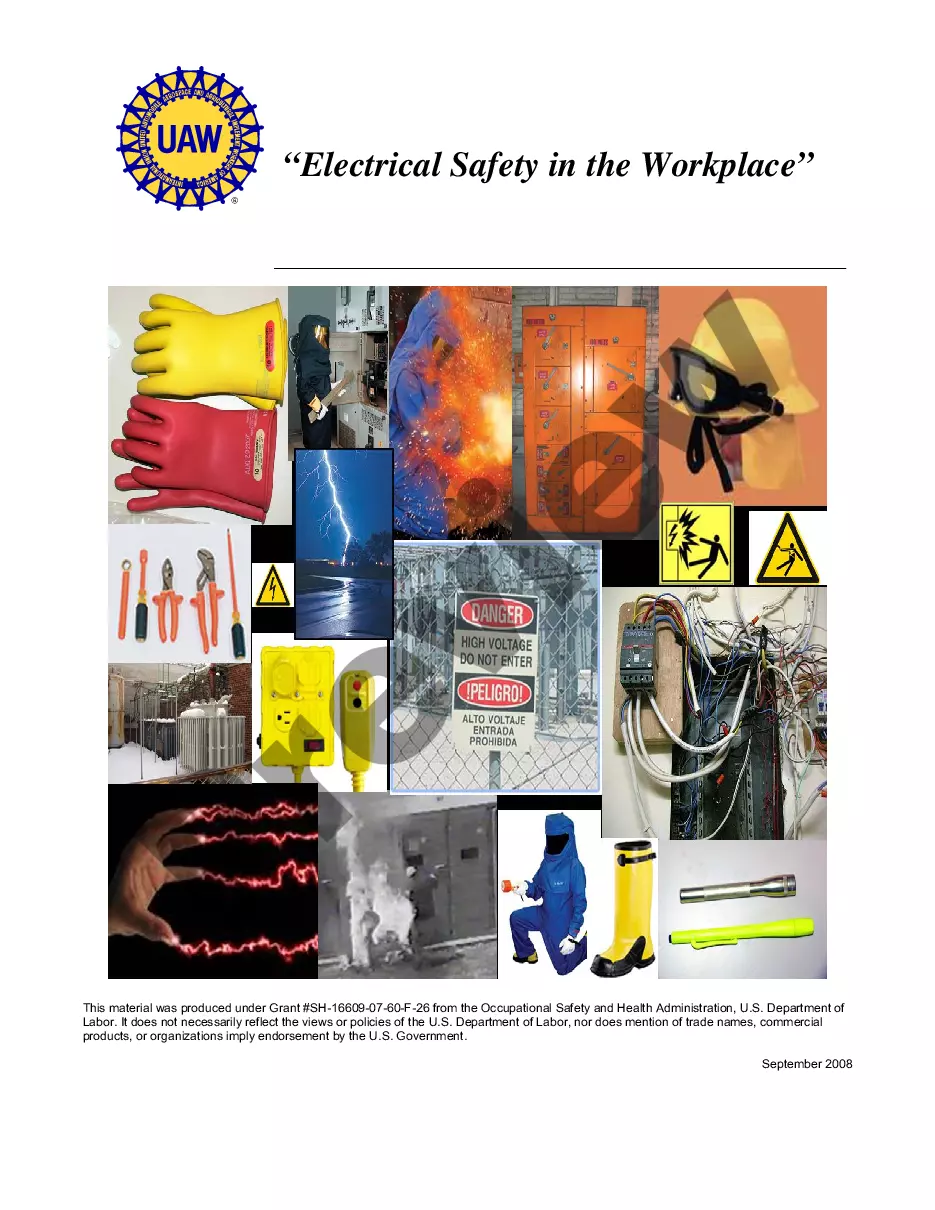
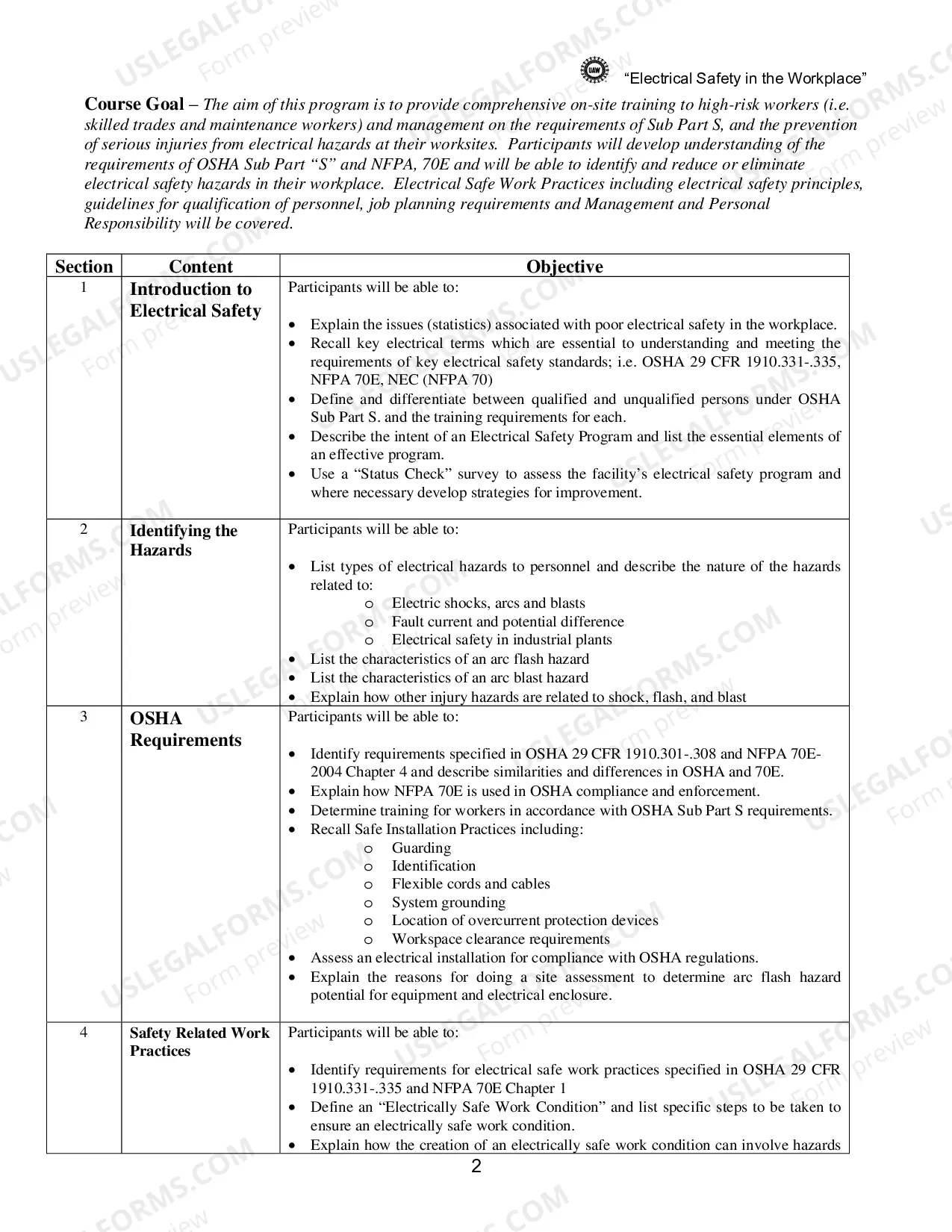
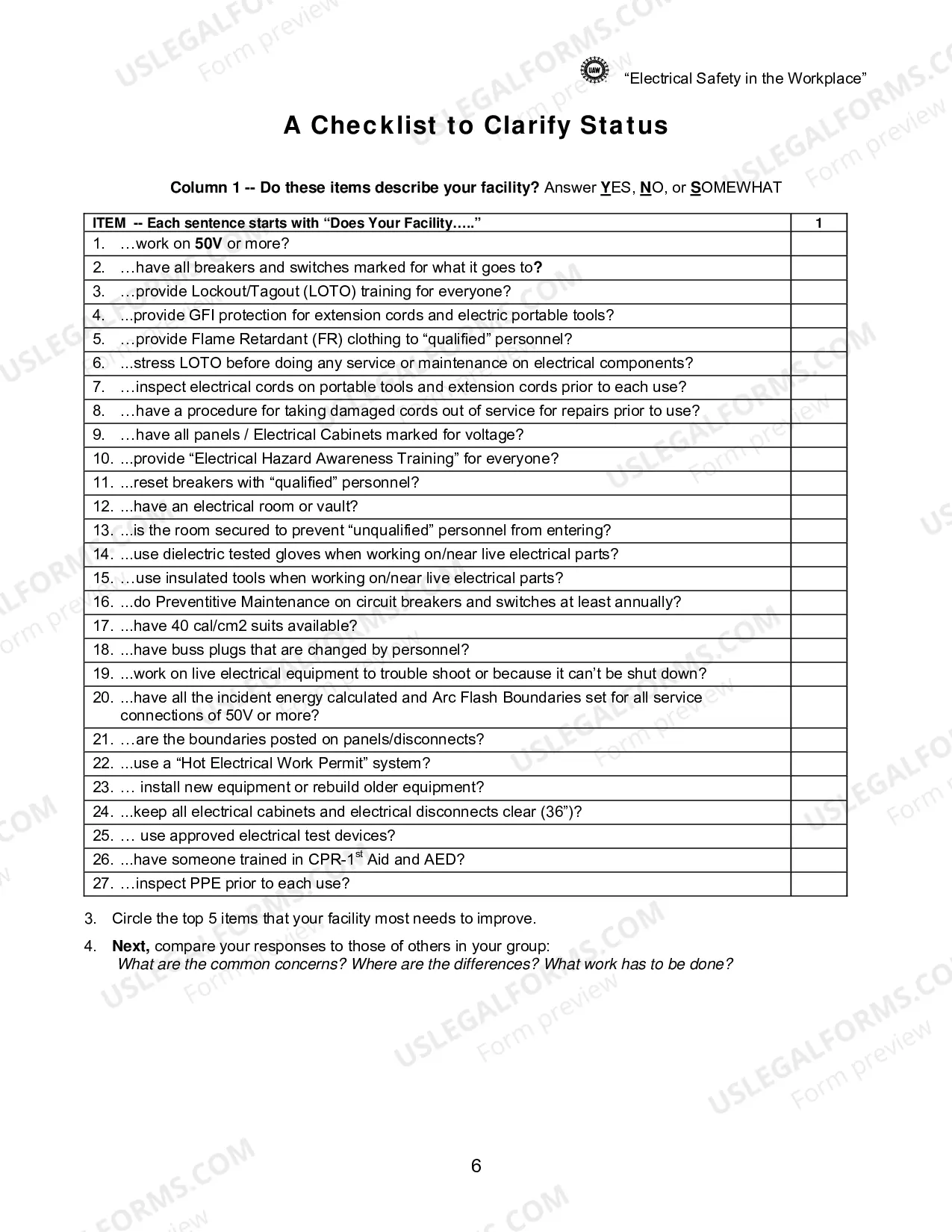
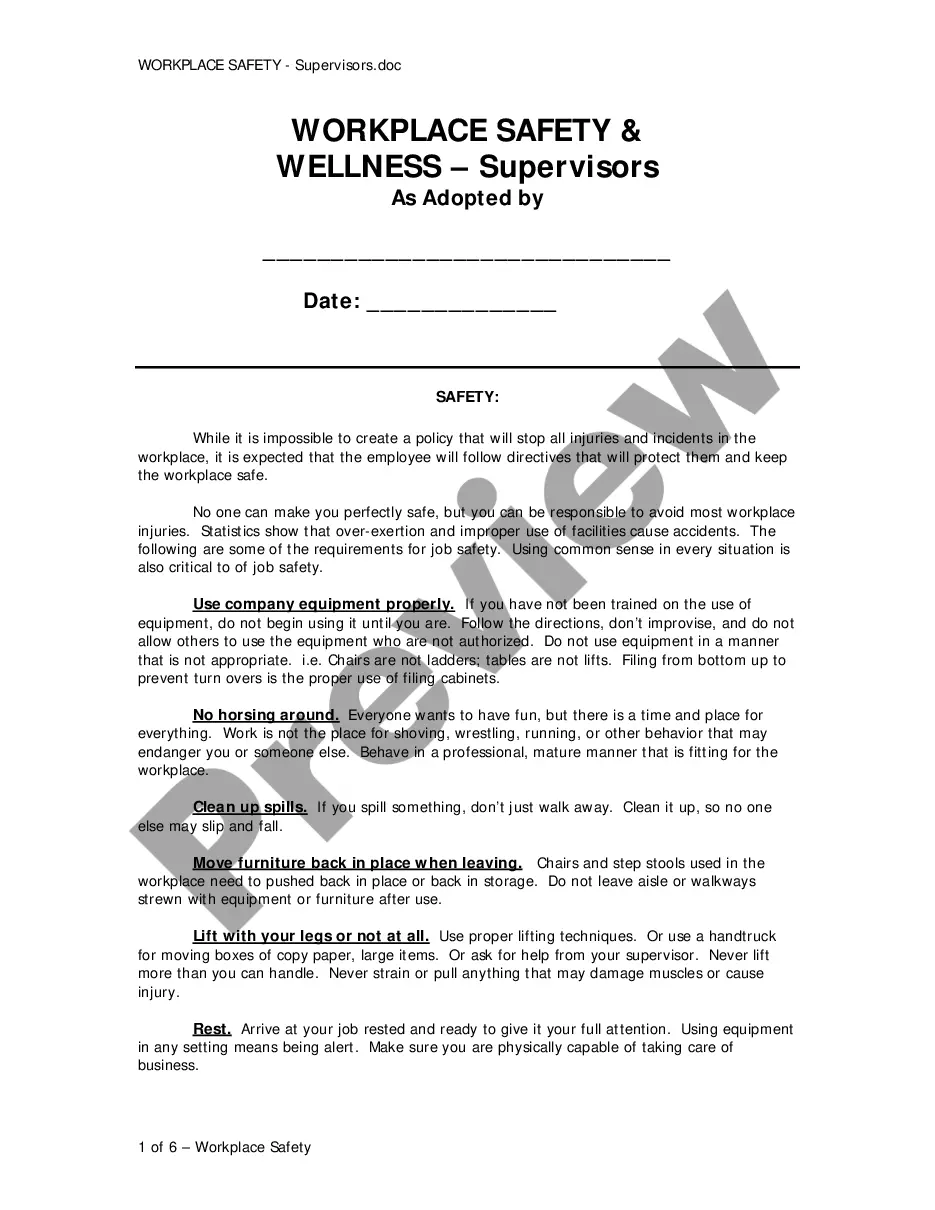
The Electrical Safety Training Manual is a comprehensive guide designed for enhancing electrical safety awareness in the workplace. This manual provides critical training materials focused on the legal and safety requirements set out by OSHA regulations and NFPA standards. Unlike general safety manuals, this specific training manual addresses the unique electrical hazards encountered by skilled trades and maintenance workers, ensuring a well-informed workforce capable of identifying and mitigating electrical risks effectively.
What’s included in this form
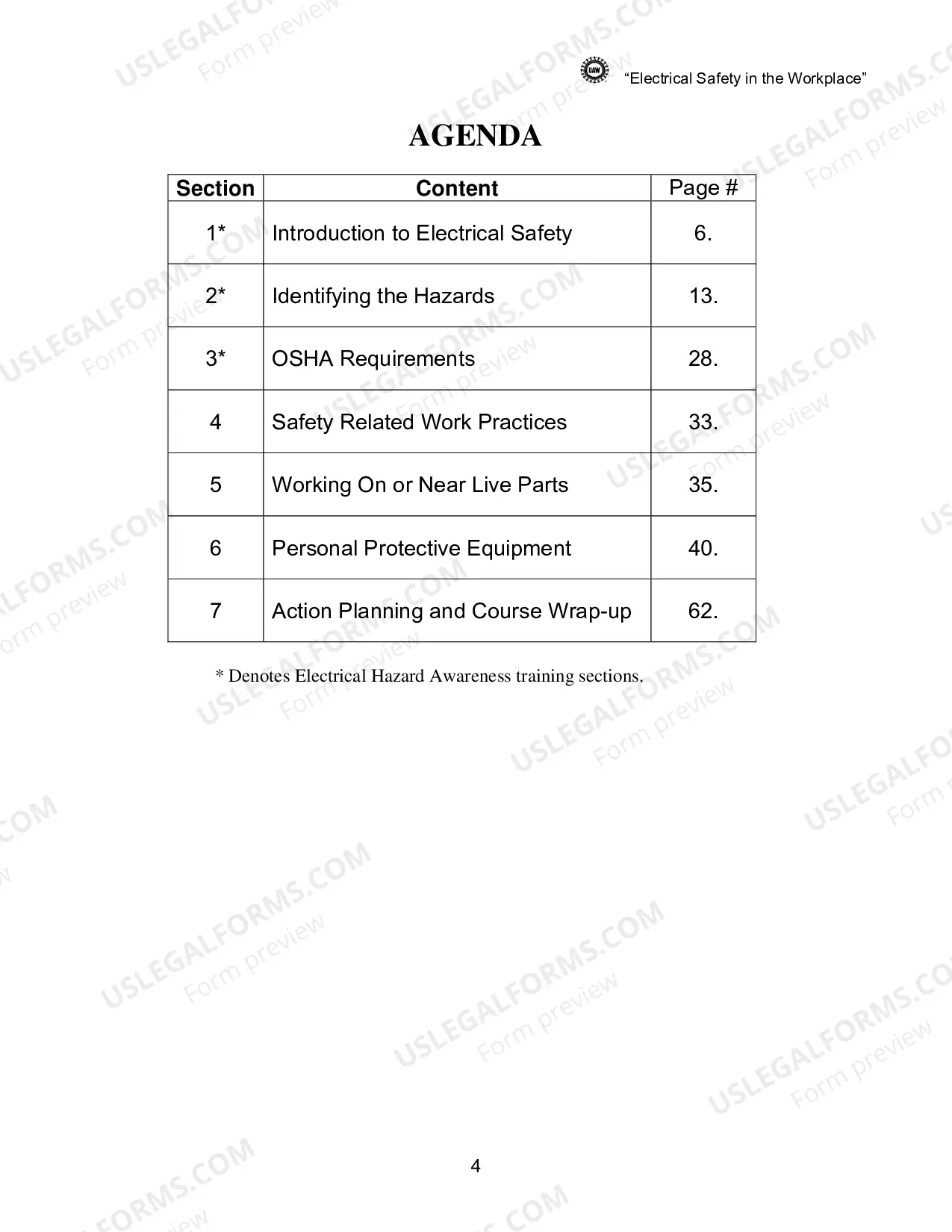
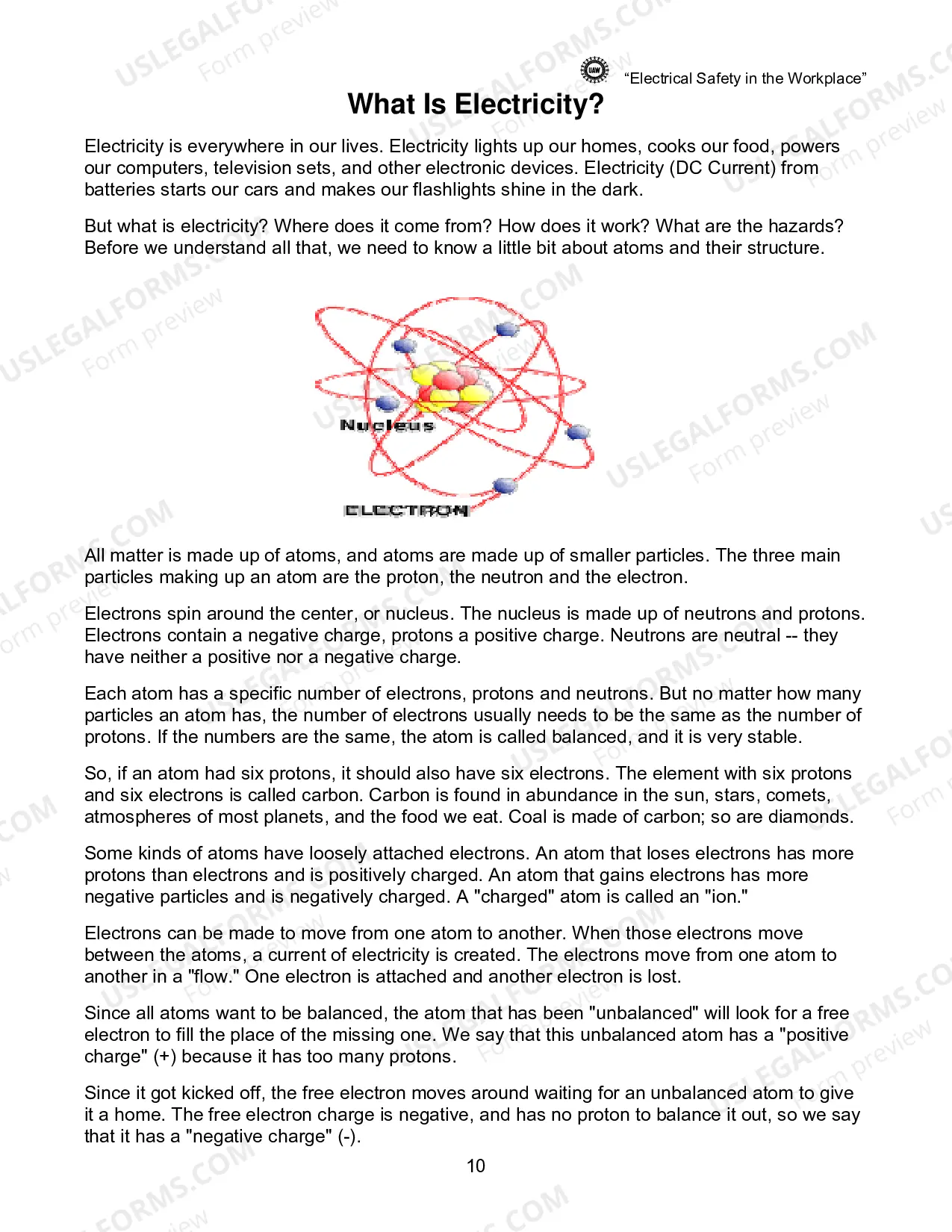
- Introduction to electrical safety, including key terms and statistics.
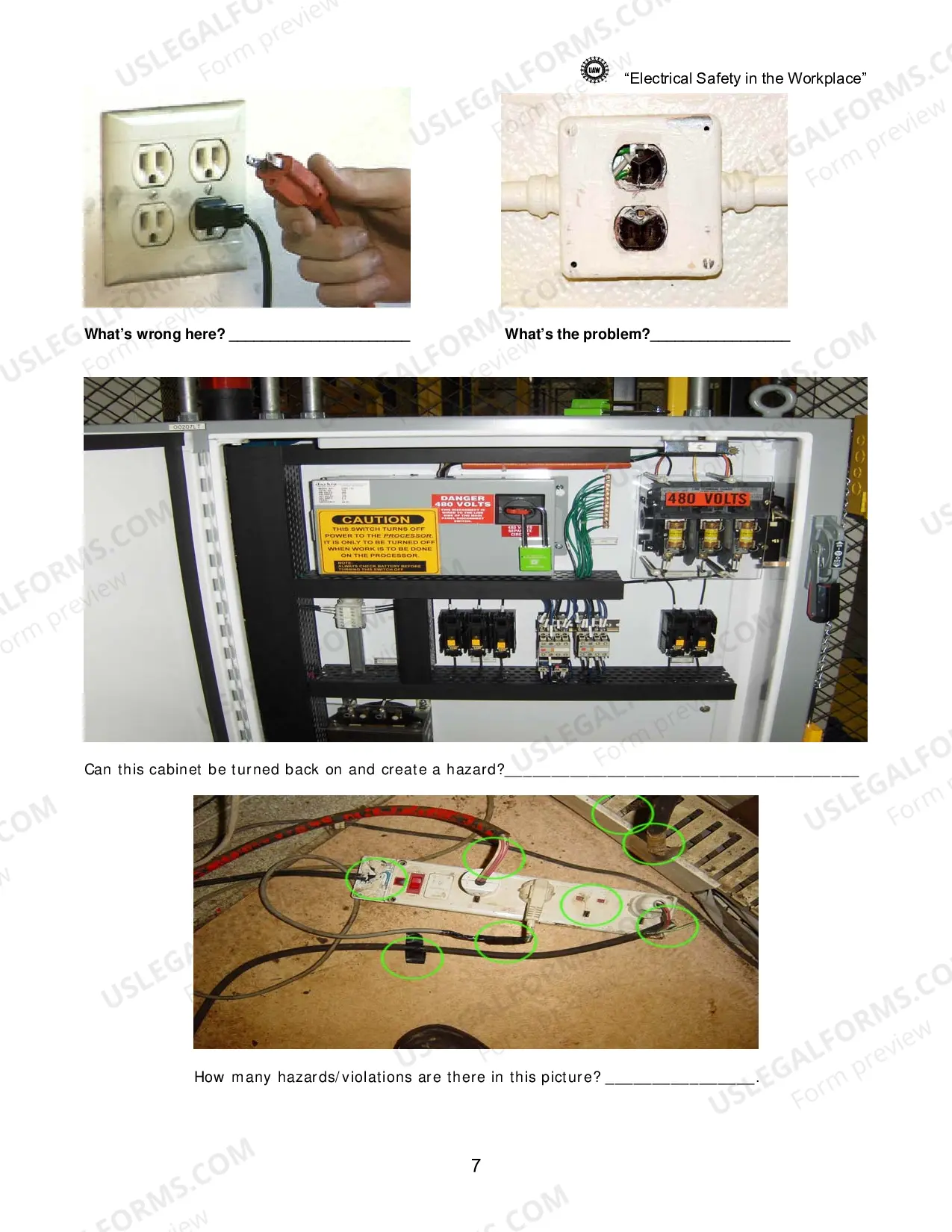
- Identification and classification of electrical hazards.
- Overview of OSHA requirements related to electrical safety in the workplace.
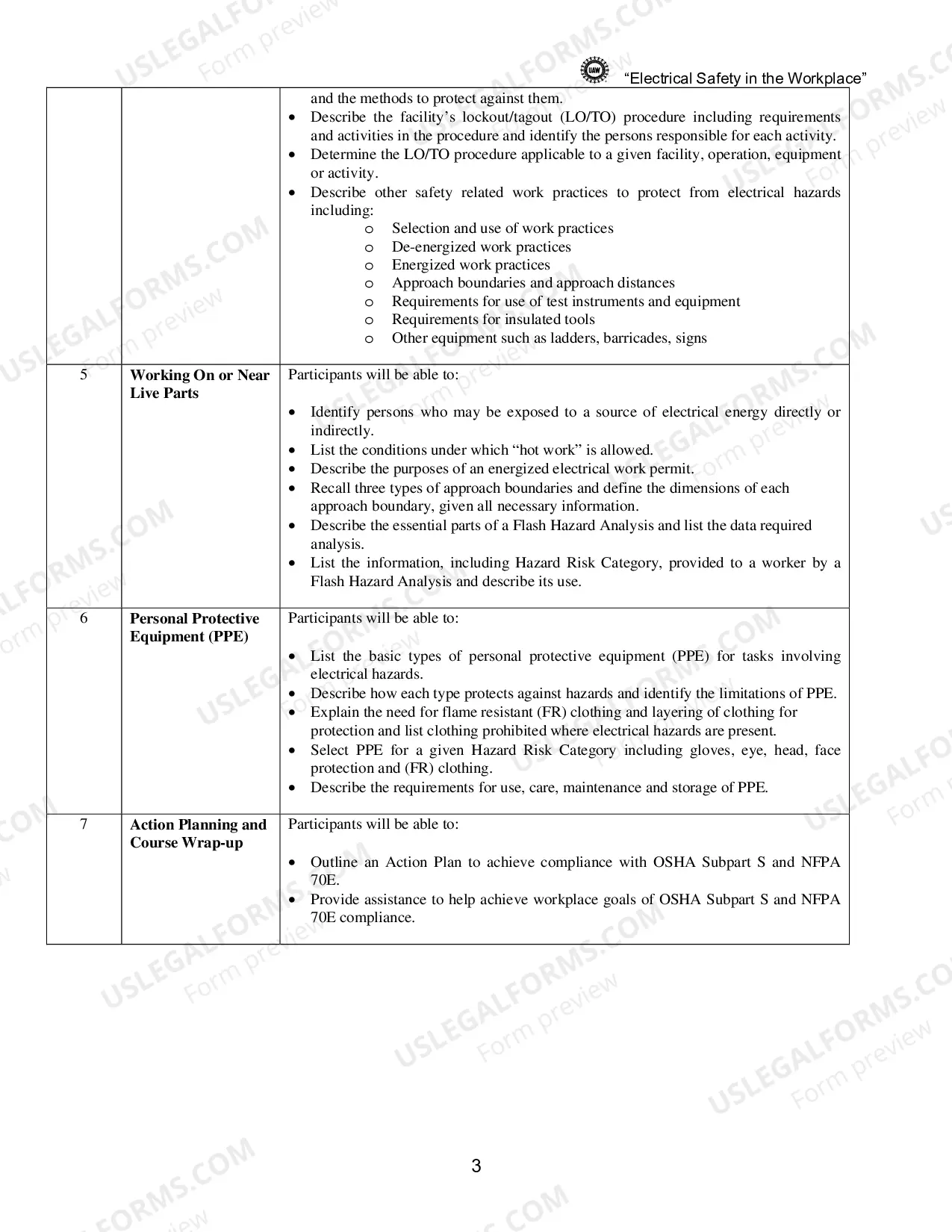
- Safe work practices involving live electrical equipment.
- Guidance on personal protective equipment (PPE) necessary for electrical work.
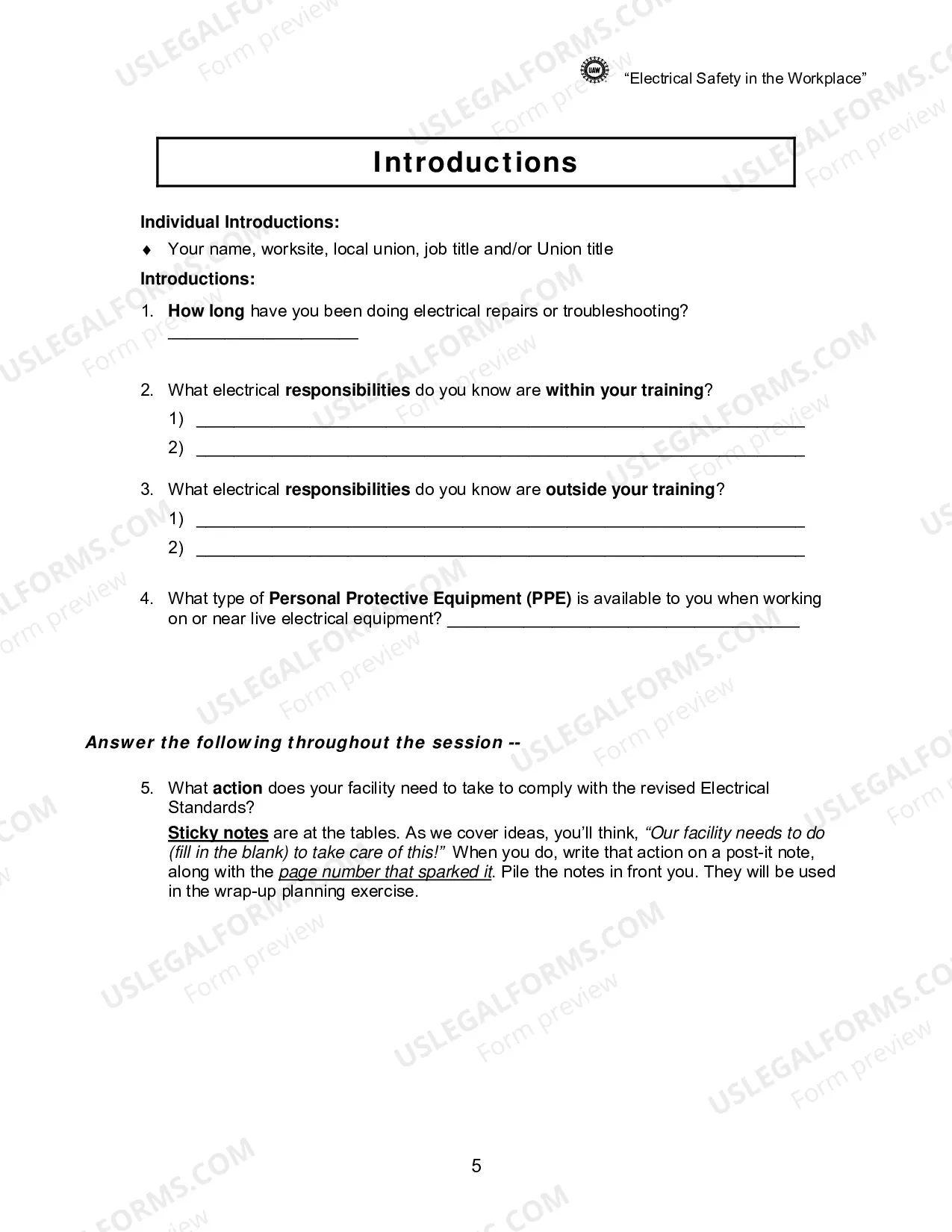
- Action planning section to help manage and improve electrical safety.


When to use this document
This training manual should be utilized in workplaces where employees are exposed to electrical systems and components, particularly in settings such as construction sites, manufacturing plants, and maintenance facilities. It is essential whenever new workers are hired, when there are changes in procedures or equipment, and during regular safety training sessions to ensure compliance with safety regulations and to prevent accidents.
Who needs this form
- Safety officers responsible for workplace safety training.
- Electrically qualified personnel required to work on or near live electrical parts.
- Management to ensure compliance with OSHA and NFPA safety standards.
- New employees who need foundational knowledge of electrical safety practices.
Instructions for completing this form
- Review the manual sections thoroughly to understand the content.
- Conduct training sessions that cover each key component, ensuring clarity in understanding.
- Complete the action plan section with specific strategies tailored for your workplace electrical safety needs.
- Gather feedback from participants during training to ensure comprehension of safety practices.
- Keep records of training sessions for compliance purposes.
Notarization requirements for this form
This form does not typically require notarization unless specified by local law.
Get your form ready online
Our built-in tools help you complete, sign, share, and store your documents in one place.
Make edits, fill in missing information, and update formatting in US Legal Forms—just like you would in MS Word.
Download a copy, print it, send it by email, or mail it via USPS—whatever works best for your next step.
Sign and collect signatures with our SignNow integration. Send to multiple recipients, set reminders, and more. Go Premium to unlock E-Sign.
If this form requires notarization, complete it online through a secure video call—no need to meet a notary in person or wait for an appointment.
We protect your documents and personal data by following strict security and privacy standards.

Make edits, fill in missing information, and update formatting in US Legal Forms—just like you would in MS Word.

Download a copy, print it, send it by email, or mail it via USPS—whatever works best for your next step.

Sign and collect signatures with our SignNow integration. Send to multiple recipients, set reminders, and more. Go Premium to unlock E-Sign.

If this form requires notarization, complete it online through a secure video call—no need to meet a notary in person or wait for an appointment.

We protect your documents and personal data by following strict security and privacy standards.
Mistakes to watch out for
- Neglecting to regularly update the training manual according to new safety regulations.
- Overlooking personalized training adjustments based on specific workplace conditions.
- Failing to engage employees actively, which can reduce information retention.
Benefits of completing this form online
- Convenience of accessing the manual anytime and anywhere.
- Editability allows for customization to suit specific organizational needs.
- Reliable updates directly reflecting the latest OSHA regulations and industry standards.
Legal use & context
- This training manual aids in reducing risks associated with electrical hazards in the workplace.
- Compliance with OSHA and NFPA standards is critical for legal protection and employee safety.
- Employers can face penalties if electrical safety practices are not adhered to correctly.
Summary of main points
- Understanding electrical safety is crucial for preventing workplace accidents.
- Regular training is required to keep employees updated on safety protocols.
- Compliance with OSHA and NFPA standards protects both employees and employers legally.
Looking for another form?




Form popularity
FAQ
Identify power source. Disconnect power sources. Verify that power is off. Lockout/tagout. Verify again. Discharge stored electrical energy (and install safety grounds under certain conditions)
Electrical safety basics Don't work with exposed conductors carrying 50 volts or more. Make sure electrical equipment is properly connected, grounded and in good working order. Extension cords may not be used as permanent wiring and should be removed after temporary use for an activity or event.
STAY ALERT - and stay alive. WEAR THE RIGHT CLOTHES - work clothes should fit properly. USE THE RIGHT TOOLS - if you need a hammer, get a hammer. LEARN HOW TO LIFT - Lifting takes more than muscle; it is an art. DON'T BE A PRANKSTER - practical jokes and horseplay can be dangerous, especially around heavy machinery.
Make a commitment to safety. Include safety in your company mission statement and involve the executives in setting safety related goals. Learn the requirements in place for your industry. Identify hazards and risks. Develop processes and programs. Educate your workforce. Investigate and track all accidents and incidents.
The first step of the electrical safety model is recognizing the electrical hazards around you. Only then can you avoid or control the hazards.
Never put fingers or other objects in an outlet. Keep metal objects out of toasters. Never use anything with a cord or plug around water. Never pull a plug out by its cord. Stay away from substations and power lines. Don't climb on power poles. Never fly kites near power lines. Stay away from broken or fallen power lines.
Delivering due diligence. As an employer, you are responsible for creating a safe workplace and enforcing written safety procedures. Do the right thing. De-energize whenever possible. Conduct a hazard analysis. The importance of PPE.
Never put fingers or other objects in an outlet. Keep metal objects out of toasters. Never use anything with a cord or plug around water. Never pull a plug out by its cord. Stay away from substations and power lines. Don't climb on power poles. Never fly kites near power lines. Stay away from broken or fallen power lines.
An electrical safety program is an important part of your overall company safety program, and NFPA 70E's policies and procedures are already written and available for use.Your program should identify safe work procedures for working on or near areas where an electrical hazard exists. Hazard/risk evaluation procedure.