Termination Meeting Checklist
About this form
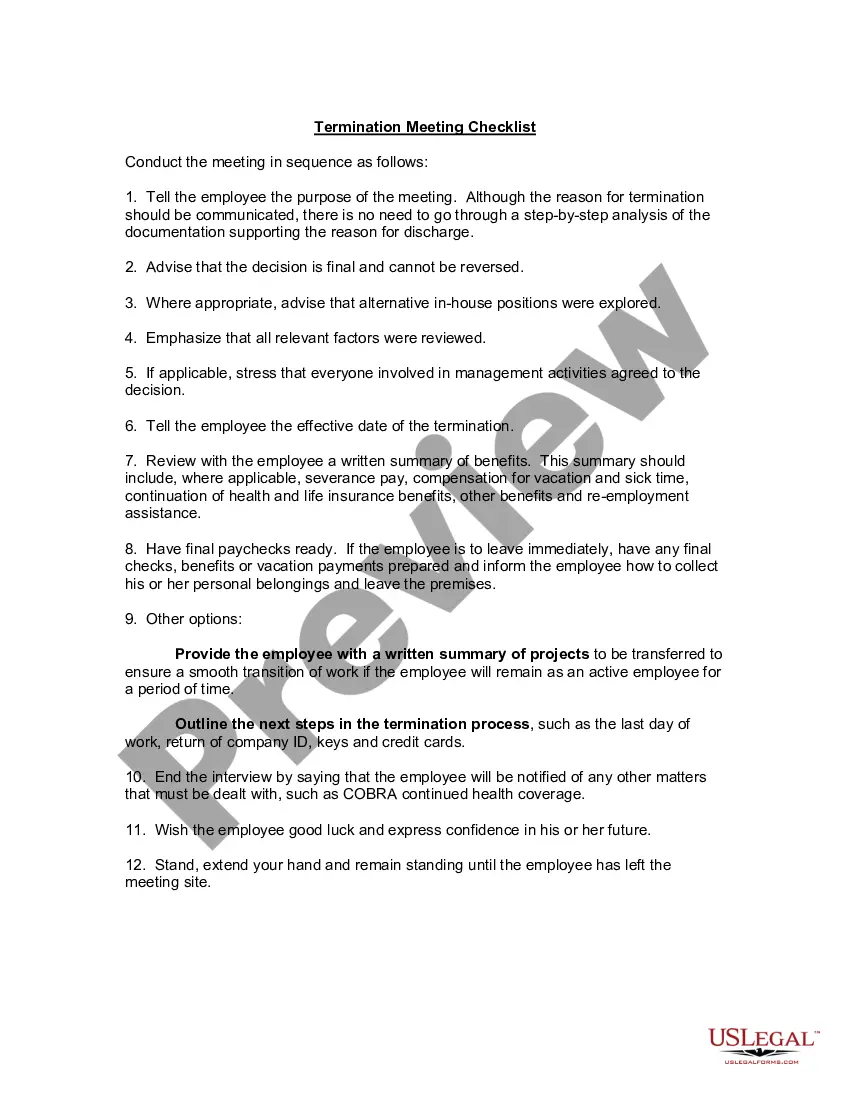
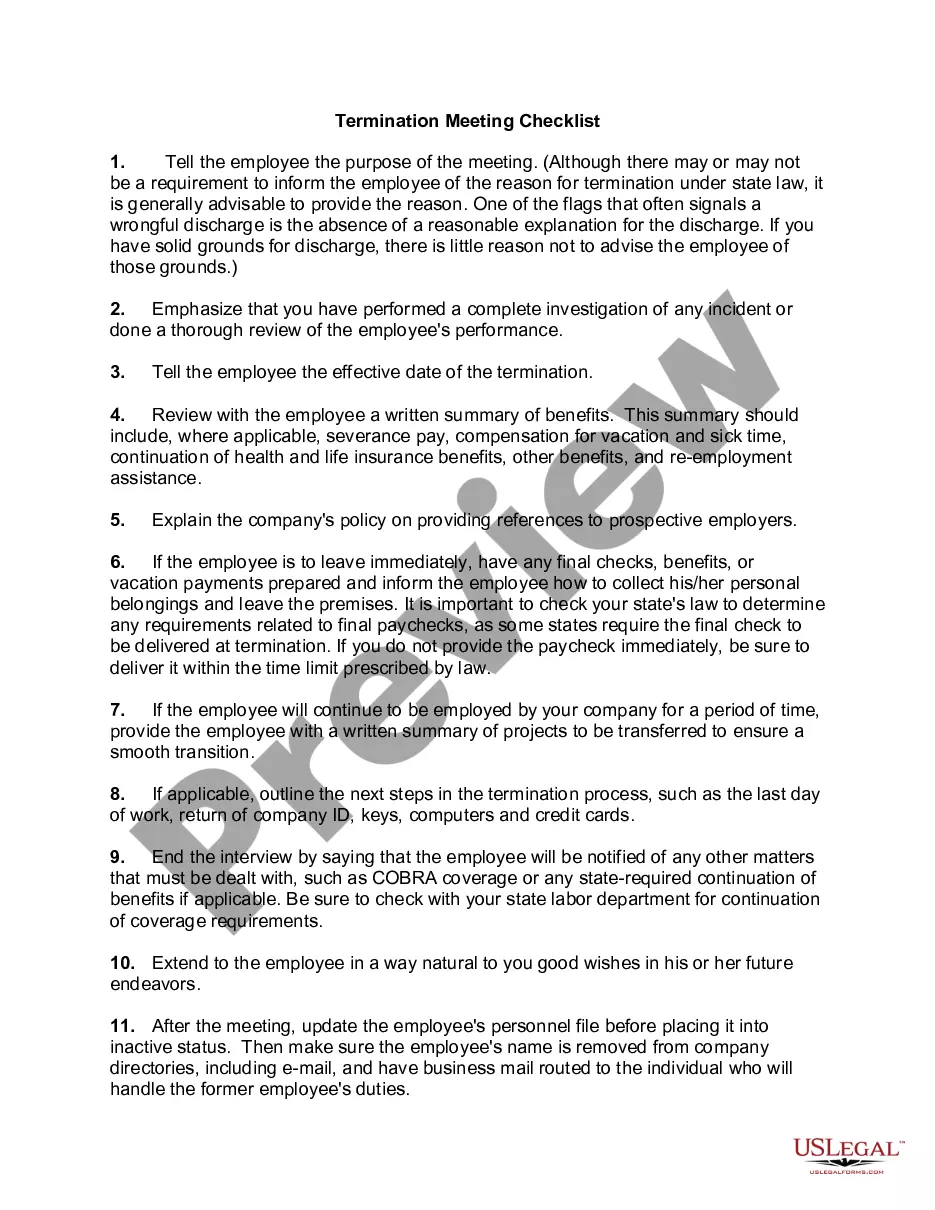
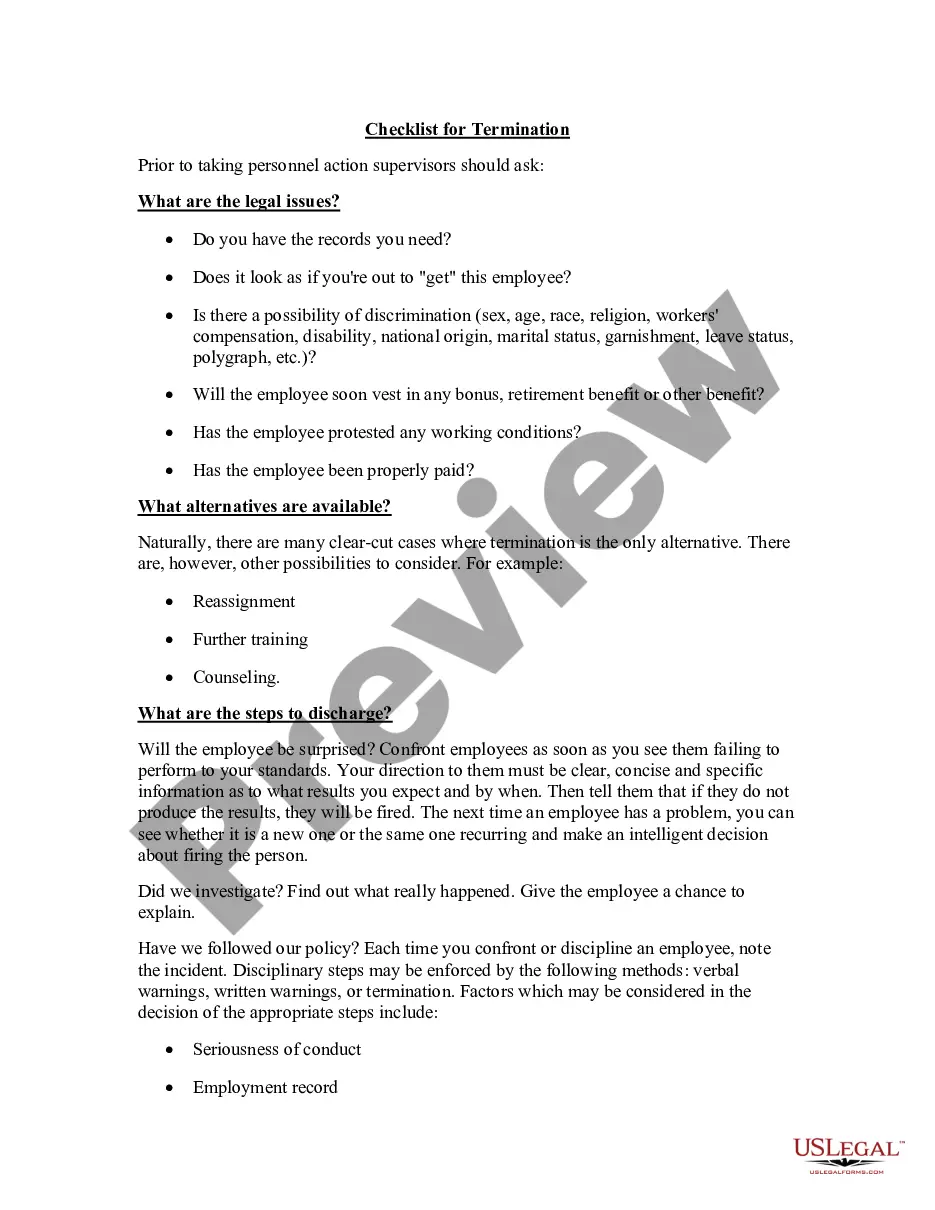
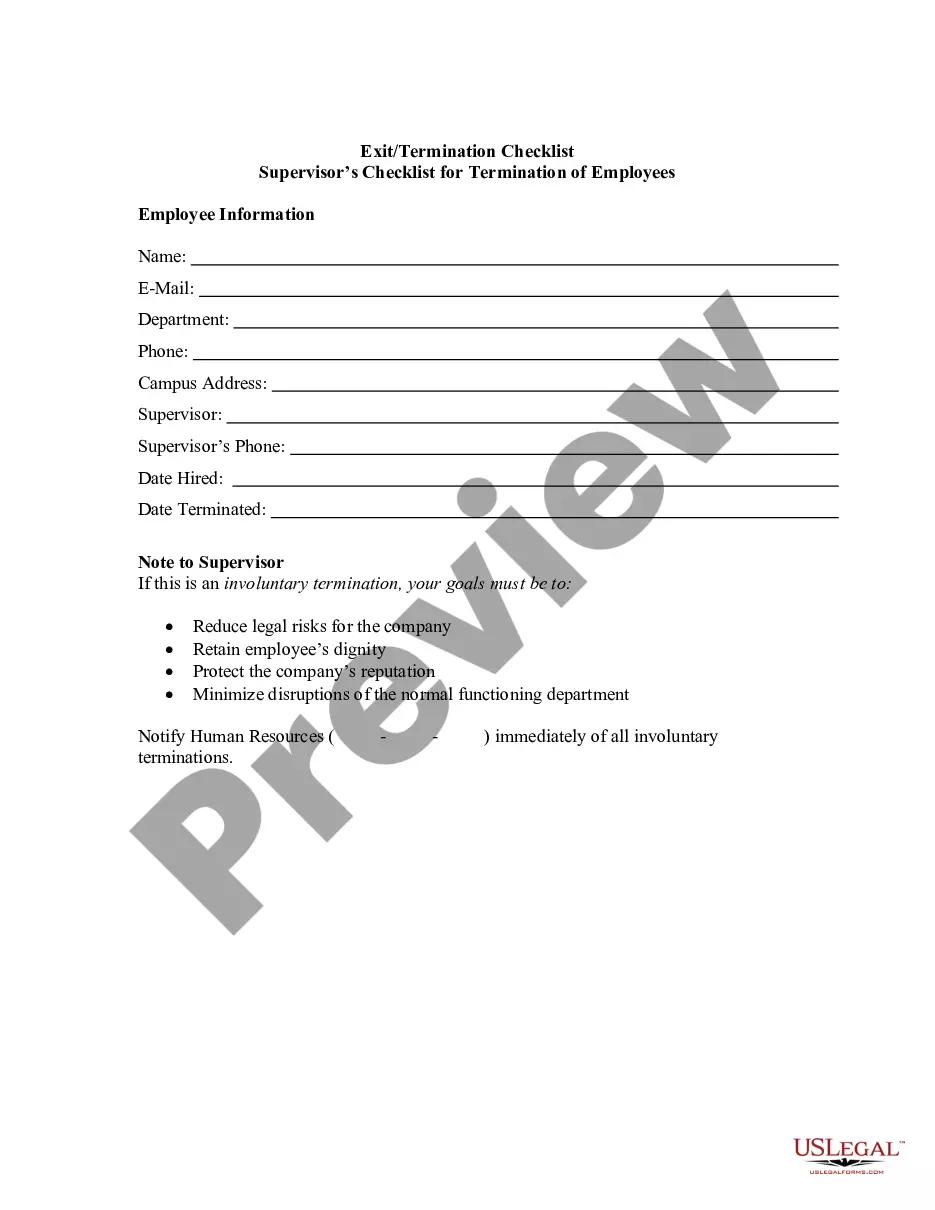
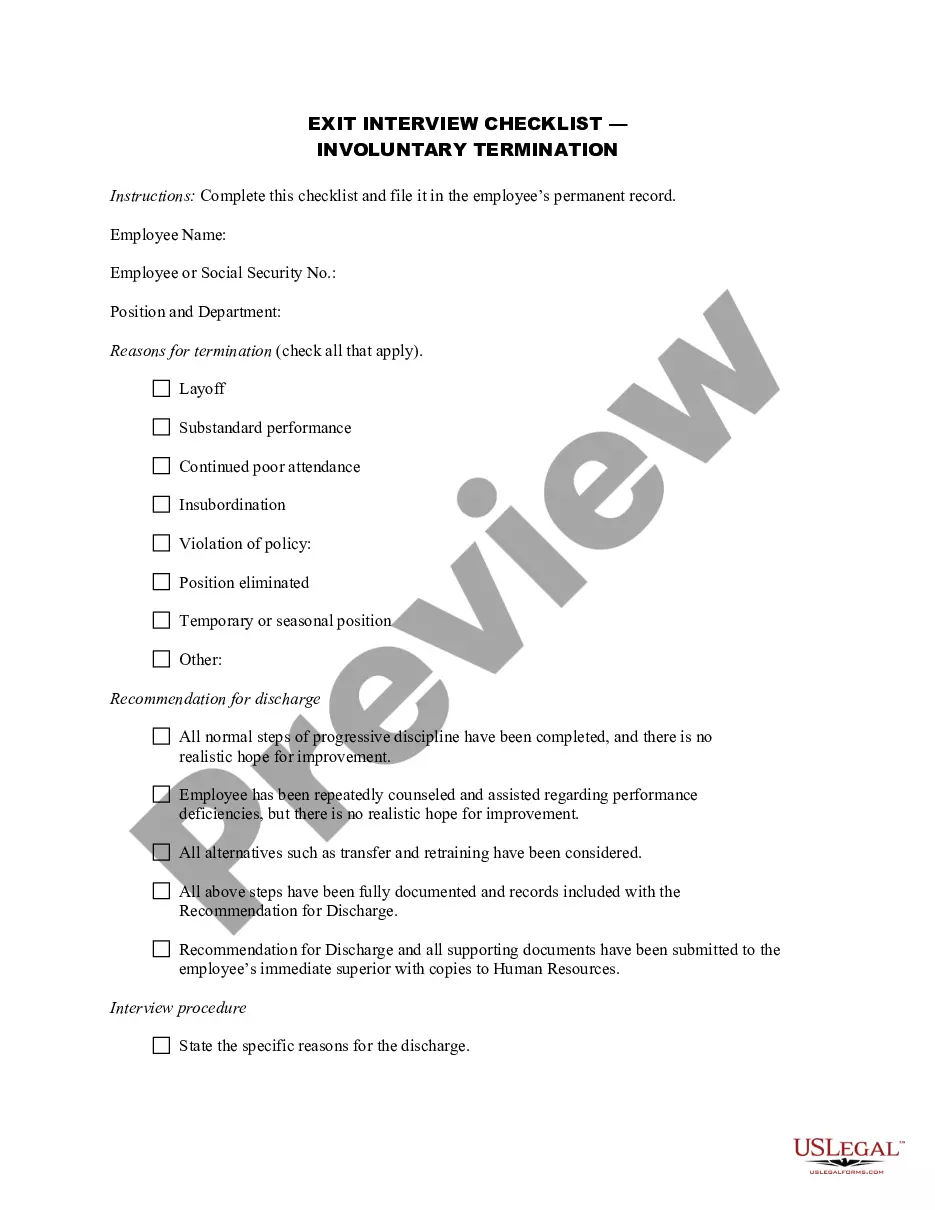
The Termination Meeting Checklist is a structured guide designed to assist management in conducting a termination meeting with an employee. This form ensures that all necessary steps are followed to communicate the termination process clearly and respectfully, differentiating it from other human resources documentation by focusing specifically on the termination meeting itself.
Key parts of this document
- Purpose of the meeting and communication of termination reasons
- Finality of the decision and exploration of alternatives
- Effective date of termination and review of benefits
- Preparation of final paychecks and transition of projects
- Outline of final steps, including return of company property
- Closure of the meeting with good wishes and support
Situations where this form applies
This checklist should be utilized when an employer needs to conduct a termination meeting with an employee. It's particularly important in situations involving layoffs, performance-related dismissals, or any decision that affects an employee's job status. Using this form helps ensure that the meeting is handled professionally and legally.
Who should use this form
- Human resources personnel tasked with managing employee relations
- Managers responsible for handling terminations
- Business owners needing an effective process for employee separations
Instructions for completing this form
- Clearly explain the purpose of the meeting to the employee.
- Communicate that the termination decision is final and summarize any relevant considerations.
- Review the effective date of termination and provide a summary of benefits.
- Present the employee's final paycheck and outline the steps for returning company property.
- Conclude the meeting with supportive comments and indicate the next steps.
Notarization guidance
This form usually doesn’t need to be notarized. However, local laws or specific transactions may require it. Our online notarization service, powered by Notarize, lets you complete it remotely through a secure video session, available 24/7.
Get your form ready online
Our built-in tools help you complete, sign, share, and store your documents in one place.
Make edits, fill in missing information, and update formatting in US Legal Forms—just like you would in MS Word.
Download a copy, print it, send it by email, or mail it via USPS—whatever works best for your next step.
Sign and collect signatures with our SignNow integration. Send to multiple recipients, set reminders, and more. Go Premium to unlock E-Sign.
If this form requires notarization, complete it online through a secure video call—no need to meet a notary in person or wait for an appointment.
We protect your documents and personal data by following strict security and privacy standards.

Make edits, fill in missing information, and update formatting in US Legal Forms—just like you would in MS Word.

Download a copy, print it, send it by email, or mail it via USPS—whatever works best for your next step.

Sign and collect signatures with our SignNow integration. Send to multiple recipients, set reminders, and more. Go Premium to unlock E-Sign.

If this form requires notarization, complete it online through a secure video call—no need to meet a notary in person or wait for an appointment.

We protect your documents and personal data by following strict security and privacy standards.
Common mistakes to avoid
- Failing to communicate the finality of the decision clearly.
- Not having final paychecks prepared in advance.
- Omitting details about benefits and compensation during the discussion.
- Rushing through the meeting without allowing time for questions.
Advantages of online completion
- Convenience of accessing the form from any location.
- Editability to customize the checklist to fit specific needs.
- Reliable legal framework created by licensed attorneys.
Legal use & context
- The checklist serves as a documented guideline for conducting termination meetings, which can safeguard against potential legal disputes.
- Using this form can provide clarity that supports the organization's decision-making process.
- It helps ensure compliance with employment laws, which vary by state.
Quick recap
- The Termination Meeting Checklist guides management through the termination process.
- It's important to communicate clearly and respectfully with the employee.
- Preparation ahead of the meeting can help avoid common mistakes.
Looking for another form?

Form popularity
FAQ
This is really hard for me. I'm not sure how to say this. We've decided to let you go. We've decided to go in a different direction. We'll work out the details later. Compared to Susan, your performance is subpar.
Notify the employee of their termination date. State the reason(s) for termination. Explain their compensation and benefits going forward. Notify them of any company property they must return. Remind them of signed agreements. Include HR contact information.
Don't storm off the premises without taking the time to save any documents you need from your work computer. Don't begin to discuss severance issues prior to taking some time to process your firing, if possible. Don't refuse to help with the transition if some time will elapse prior to your termination date.
The words you use to terminate an employee should be simple and to-the-point. Don't waffle. Go somewhere private and then lead with the punch line, says Glickman. She suggests you begin by saying, I have some bad news for you.
Start the termination meeting by saying, Hello, John, sit down. I've got some bad news for you. By announcing right from the start that there's bad news ahead, you will rivet the individual's attention on what's coming next. 2. Break the bad news.
DO consider your decision fully beforehand. DON'T fire someone without warning. DO let them know in person. DON'T get someone else to do the dirty work. DO give them a full explanation. DON'T do it in front of an audience. DO allow the employee to ask questions. DON'T get personal.
It's a natural human thing to want to say 'I'm sorry,' says Grote. But when it comes to firing a poor performer, he recommends couching your regret in terms where personal responsibility lies squarely on the individual. He suggests saying something like, 'I'm sorry that the situation has gotten to this point. '
End the meeting on the most positive note possible. Wish the employee good luck and shake his or her hand. If you can honestly say something positive about the employee's tenure at the company, by all means do so.