Easement Agreement
What this document covers
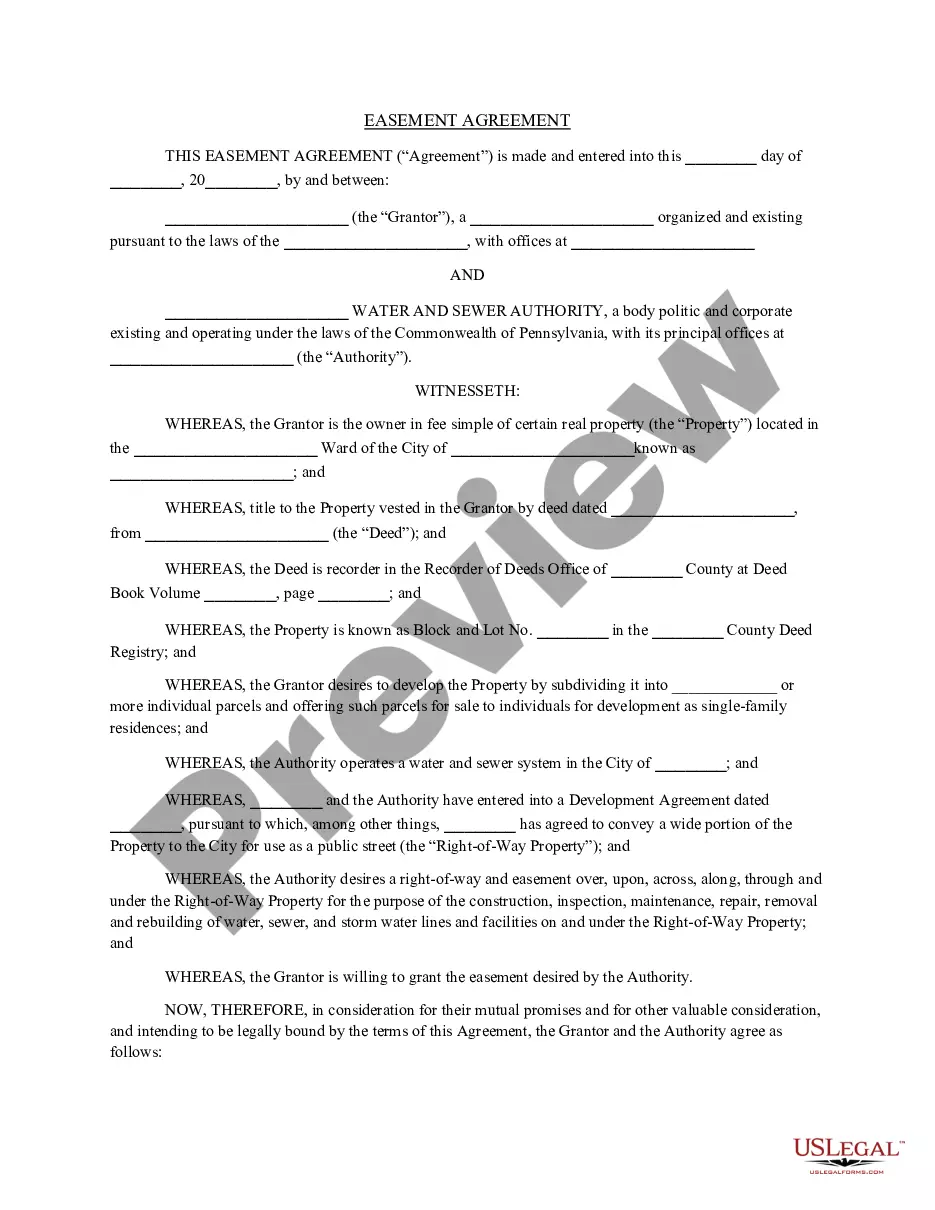
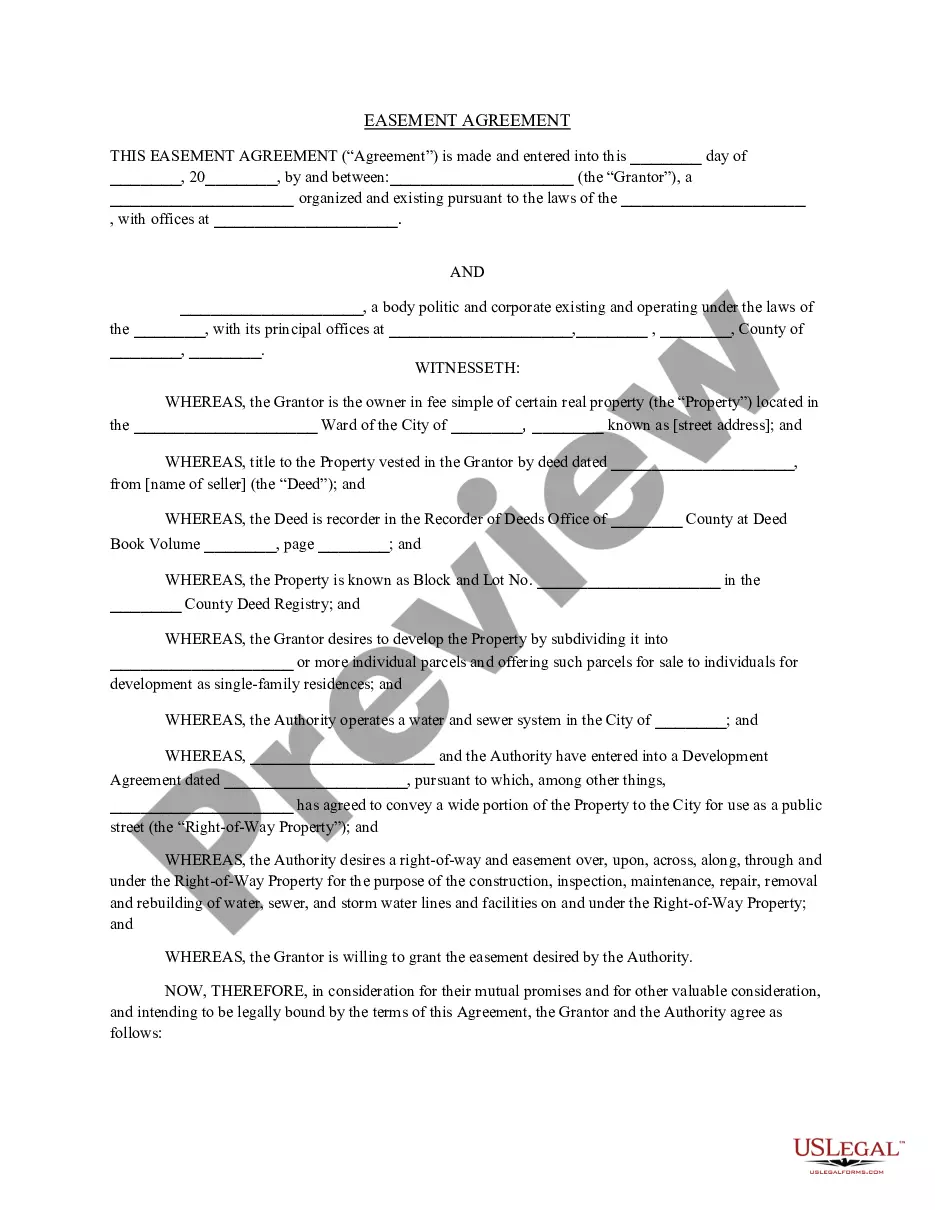
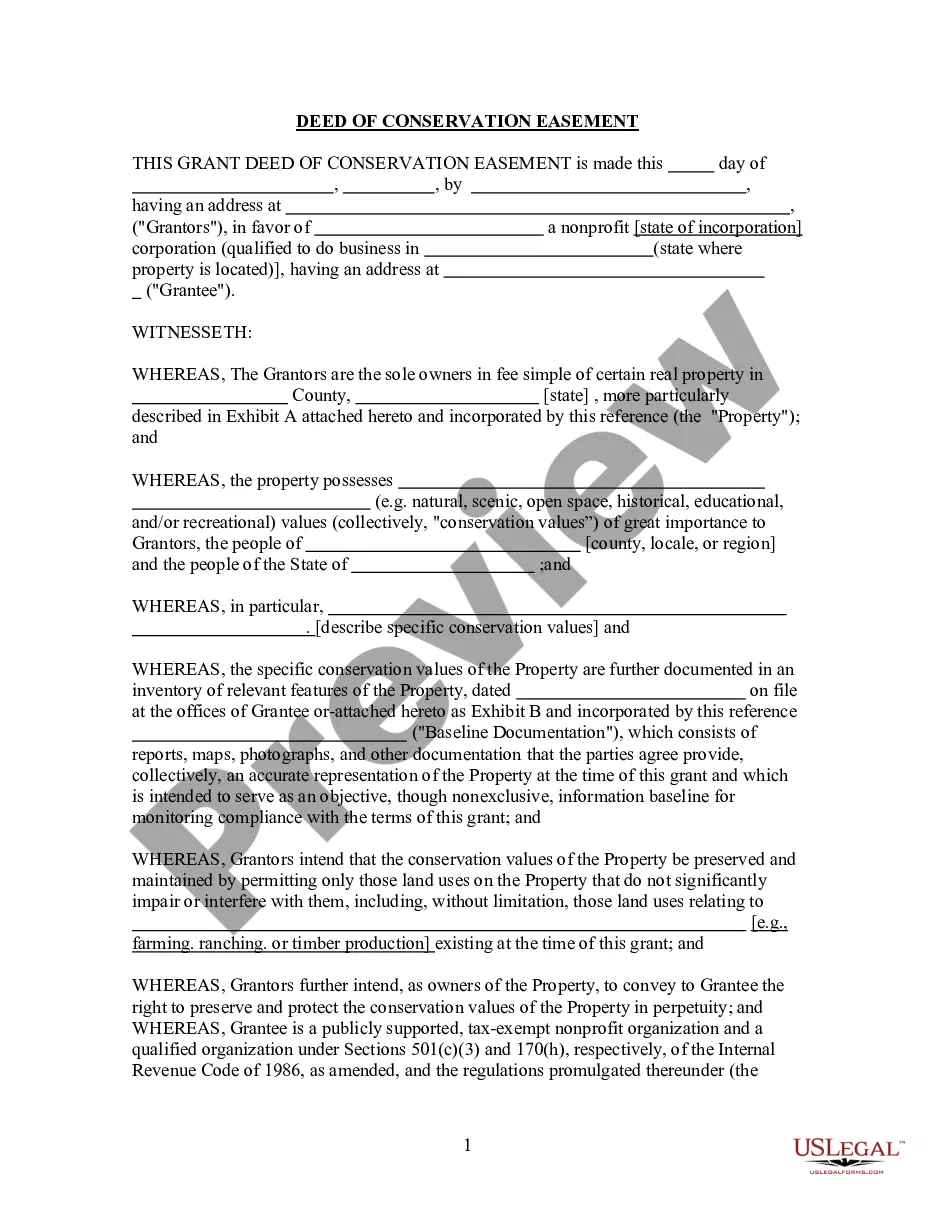
An easement agreement is a legal document that allows one party to use or benefit from a portion of another party's land for a specific limited purpose. Unlike a lease, this agreement does not grant possession or ownership rights to the land. This form is crucial for property owners and authorities to clarify the terms under which land use is shared, particularly regarding utilities or infrastructure projects.
Main sections of this form
- Identification of the parties involved (Grantor and Authority).
- Description of the property and the specific easement area.
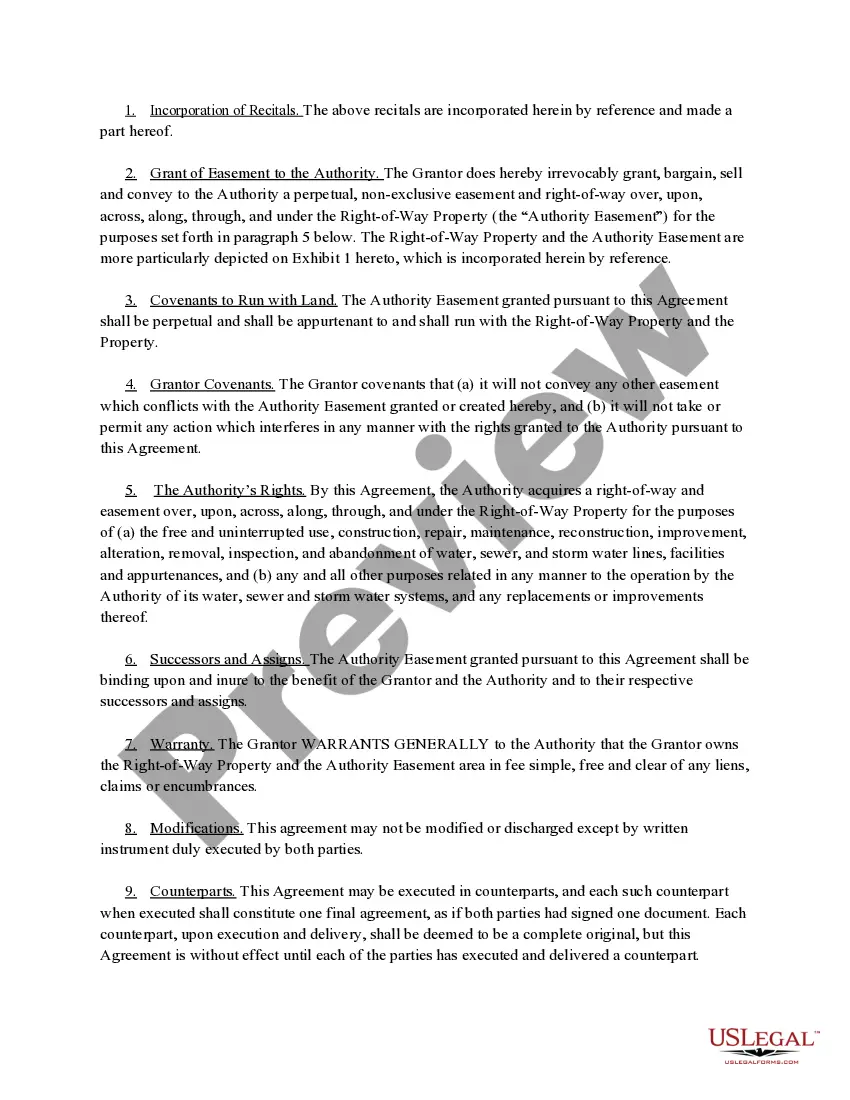
- Details on the purpose of the easement, including maintenance and construction rights.
- Covenants that run with the land, ensuring ongoing obligations for future owners.
- Legal warranties regarding ownership and liens.
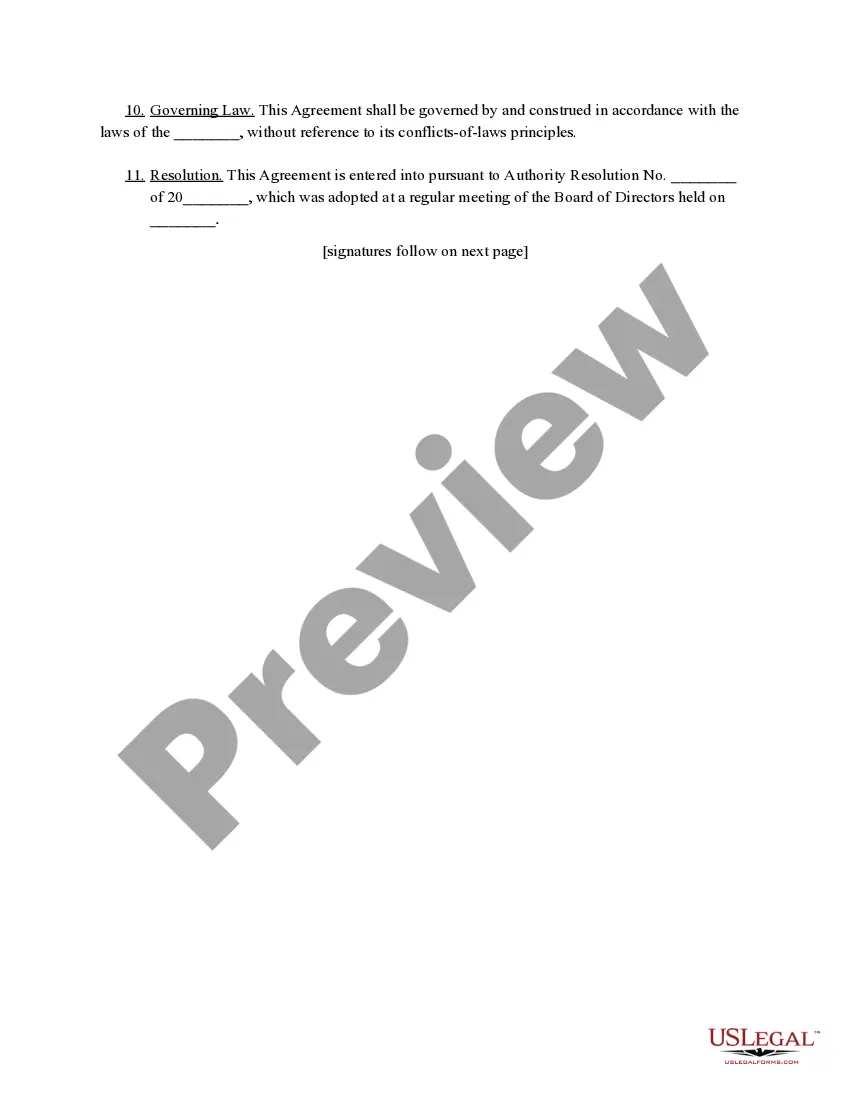
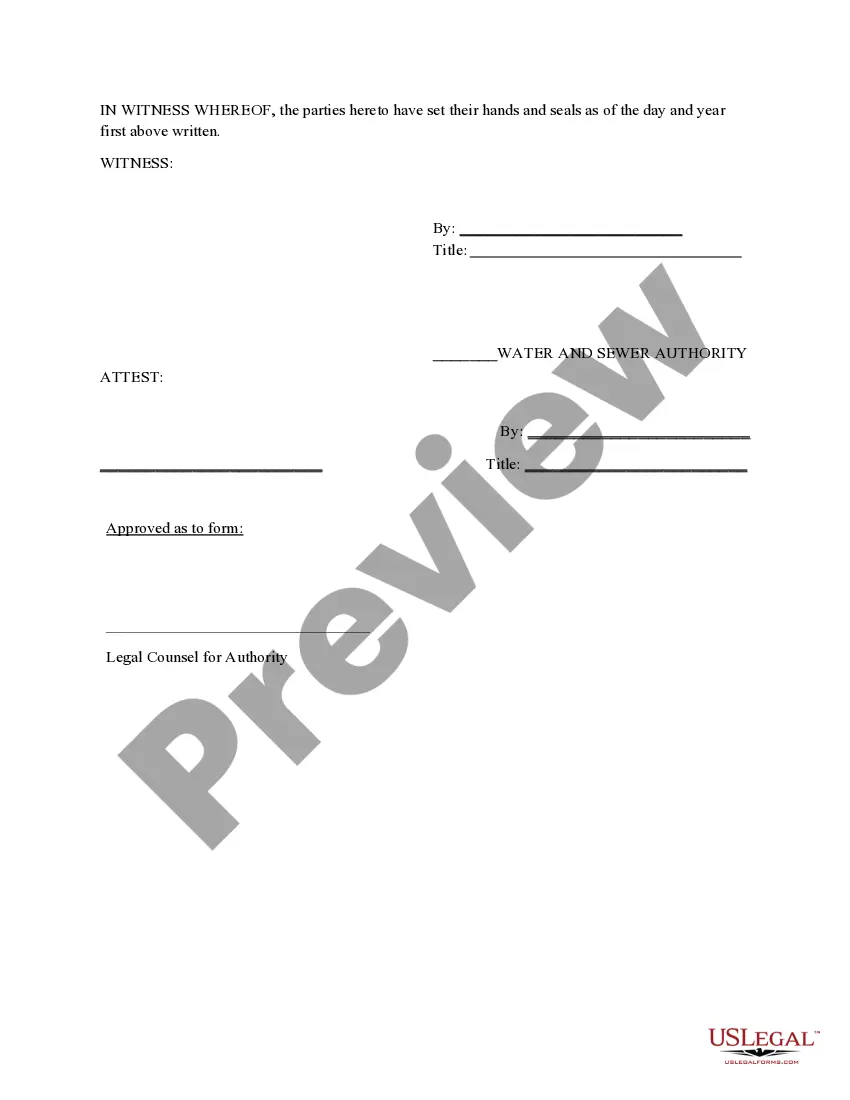
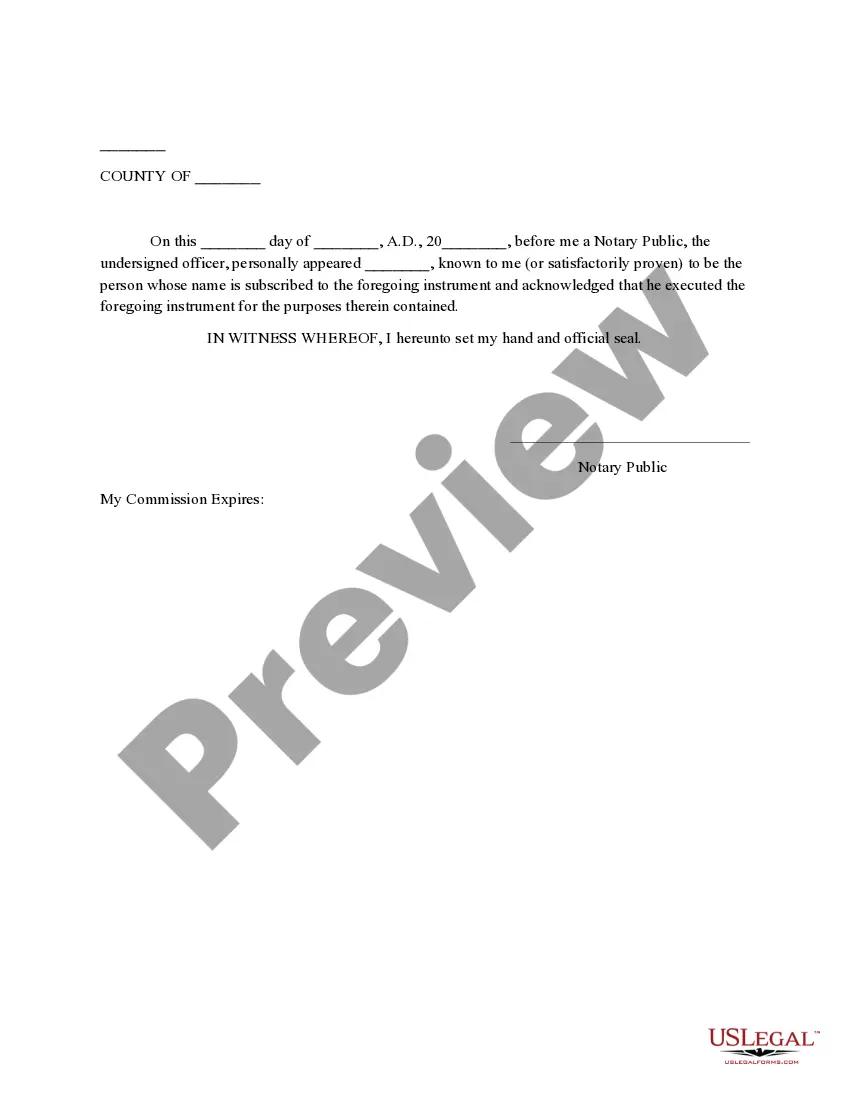
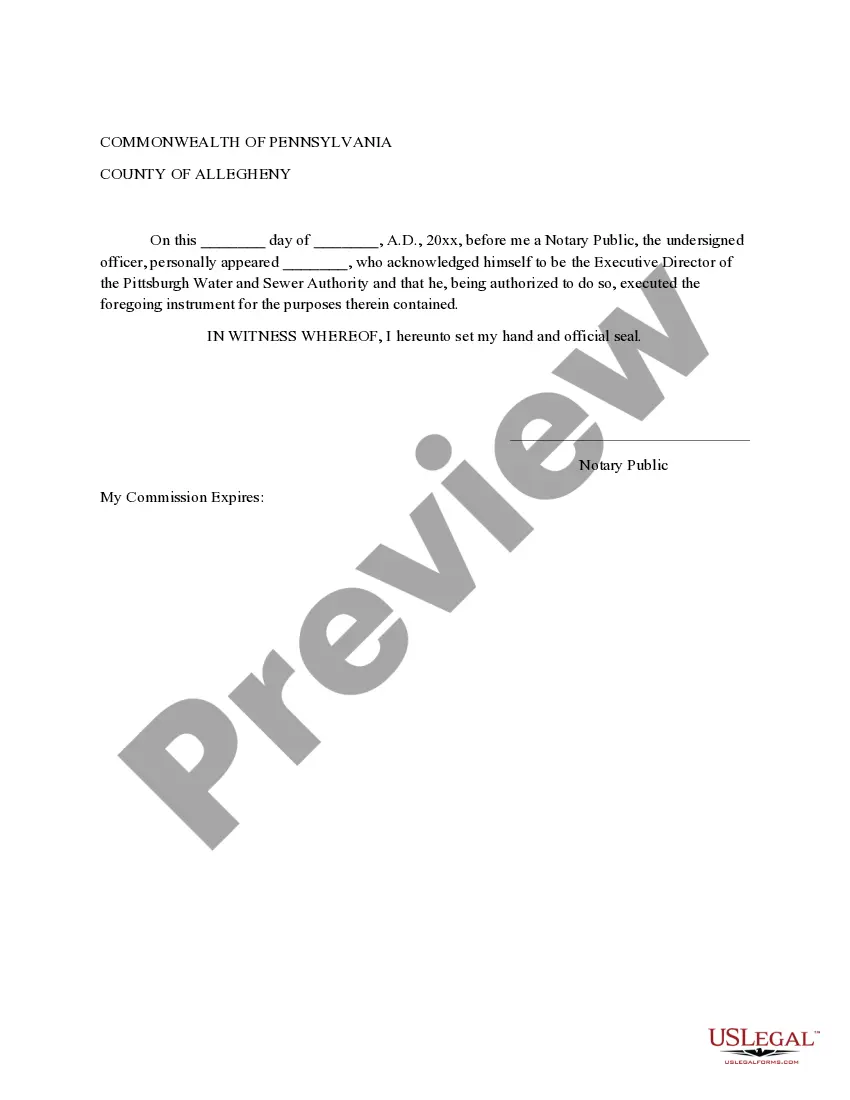
- Signatures, notarization provisions, and execution details.
When to use this form
This easement agreement is typically used when a property owner (the Grantor) needs to allow a utility authority to access a portion of their land for the installation, maintenance, or inspection of essential services such as water, sewer, or stormwater lines. It is particularly relevant when developing properties for residential use, where shared access to utilities is necessary for new developments.
Who this form is for
This form is suitable for:
- Property owners who wish to grant limited use of their land for utility purposes.
- Utility authorities needing legal access to install or maintain services.
- Developers looking to subdivide land and require easements for utilities.
- Real estate professionals assisting clients with property development projects.
Steps to complete this form
- Identify and enter the names of the parties involved in the agreement.
- Provide a detailed description of the property being used for the easement.
- Specify the purpose of the easement and the rights granted, including maintenance and construction details.
- Fill in the necessary dates, including the date of execution and agreement.
- Ensure all parties sign the agreement, and arrange for notarization if required.
Notarization requirements for this form
Yes, this form must be notarized to be legally valid. Notarization verifies the identities of the parties involved and confirms that they signed the agreement willingly. US Legal Forms offers a secure online notarization service, available 24/7, ensuring you can complete this process without needing to travel.
Get your form ready online
Our built-in tools help you complete, sign, share, and store your documents in one place.
Make edits, fill in missing information, and update formatting in US Legal Forms—just like you would in MS Word.
Download a copy, print it, send it by email, or mail it via USPS—whatever works best for your next step.
Sign and collect signatures with our SignNow integration. Send to multiple recipients, set reminders, and more. Go Premium to unlock E-Sign.
If this form requires notarization, complete it online through a secure video call—no need to meet a notary in person or wait for an appointment.
We protect your documents and personal data by following strict security and privacy standards.

Make edits, fill in missing information, and update formatting in US Legal Forms—just like you would in MS Word.

Download a copy, print it, send it by email, or mail it via USPS—whatever works best for your next step.

Sign and collect signatures with our SignNow integration. Send to multiple recipients, set reminders, and more. Go Premium to unlock E-Sign.

If this form requires notarization, complete it online through a secure video call—no need to meet a notary in person or wait for an appointment.

We protect your documents and personal data by following strict security and privacy standards.
Typical mistakes to avoid
- Failing to provide a clear description of the easement area.
- Neglecting to define the specific rights granted to the authority.
- Not including provisions regarding future modifications or conflicts.
- Omitting necessary signatures or notarization, which can invalidate the agreement.
Benefits of completing this form online
- Easy access to downloadable formats, ensuring you have the latest legal language.
- Convenient editing options allow you to customize the form as per your needs.
- Guided instructions help simplify the completion process.
- Peace of mind knowing the form has been drafted by licensed attorneys.
Looking for another form?
Form popularity
FAQ
Easement appurtenant takes place between two adjacent properties - dominant estate and servient estate. An example of an easement appurtenant is a driveway over a neighbor's land to reach your property. An easement in gross grants specific property uses to individual entities rather than to a property.
The legal right to use another person's property (also known as a right of way) for a certain purpose refers to an easement.
Another common example of easement is an easement that provides road access. If one property is behind another, the property in front may have to allow the owner of the property in the back to cross their property in order to have access to the road. This type of easement is called an easement by necessity.
Generally, the owner of any easement has a duty to maintain the easement.
The owner, or any person who by virtue of a real right may cultivate or use any immovable, which is surrounded by other immovables pertaining to other persons and without adequate outlet to a public highway, is entitled to demand a right of way through the neighboring estates, after payment of the proper indemnity.
4 "Easement" defined. - An easement is a right which the owner or occupier of certain land possesses, as such, for the beneficial enjoyment of that land, to do and continue to do something, or to prevent and continue to prevent something being done, in or upon, or in respect of, certain other land not his own. The Indian Easements Act, 1882 - Indian Kanoon indiankanoon.org ? doc indiankanoon.org ? doc
There must be a dominant and servient tenement; The easement must accommodate the dominant tenement; The dominant and servient owners must be different people; The right must be capable of forming the subject matter of a grant. What is an easement and how are they created and used? tanfieldchambers.co.uk ? 2016/02/16 ? what... tanfieldchambers.co.uk ? 2016/02/16 ? what...
An easement is a legal term that refers to the lawful right a person has to use a property they do not own for a specified purpose and time. It is a nonpossessory property interest that gives the easement holder legal rights to use another person's property, usually with the property owner's knowledge.
Affirmative easements are the most common. They allow privileged use of land owned by others. Negative easements are more restrictive. They limit how land is used.