Conservation Easement Agreement
Overview of this form
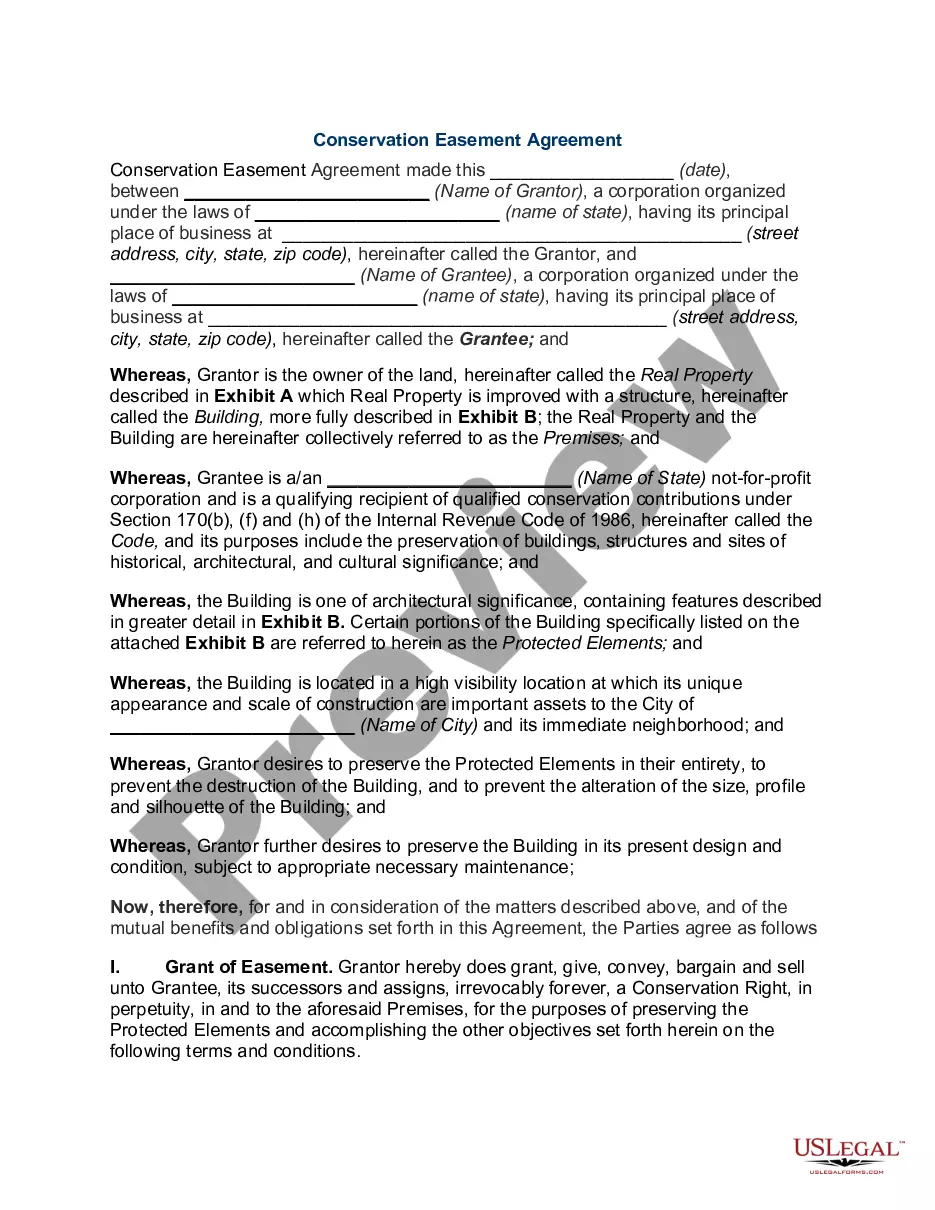
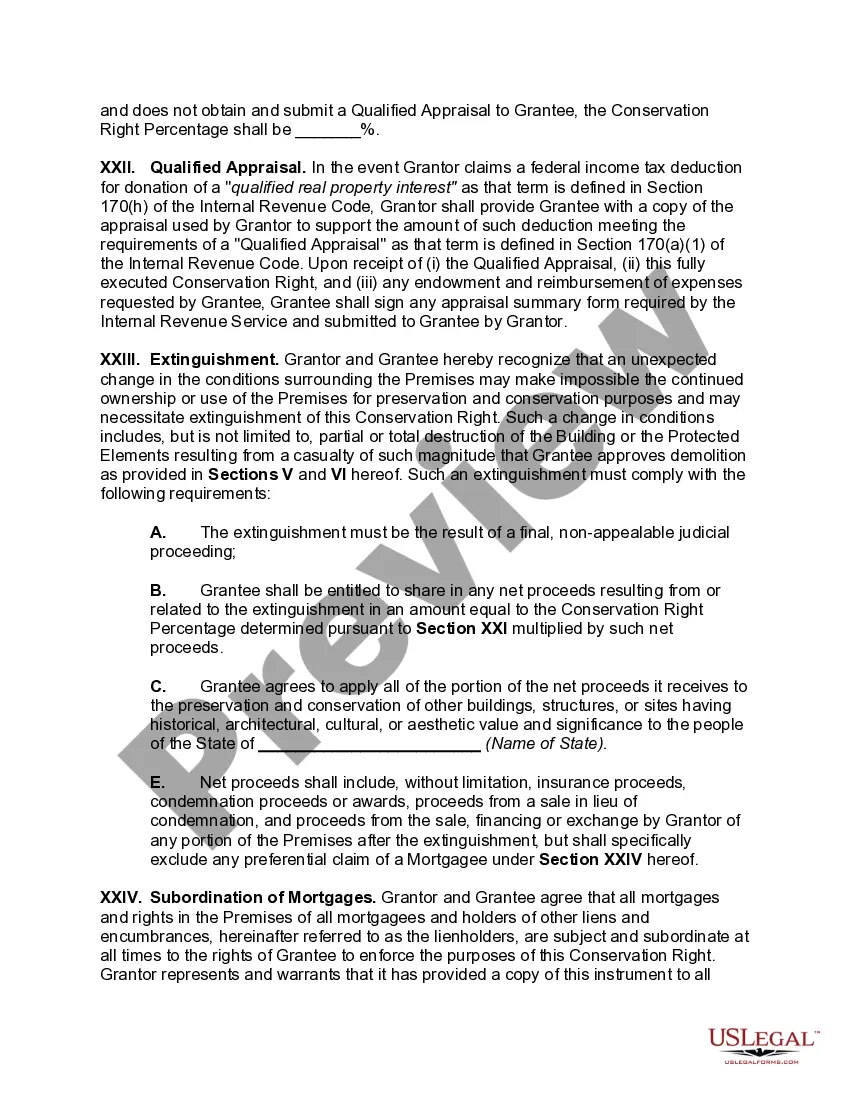
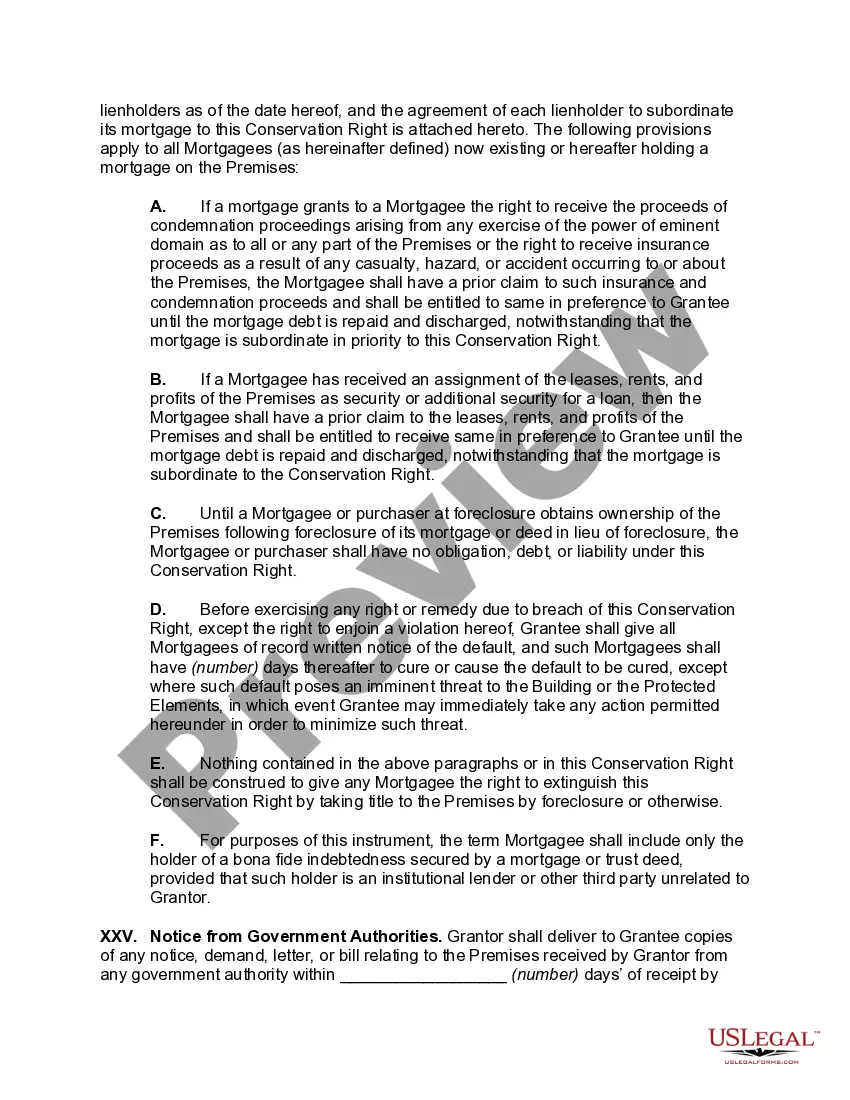
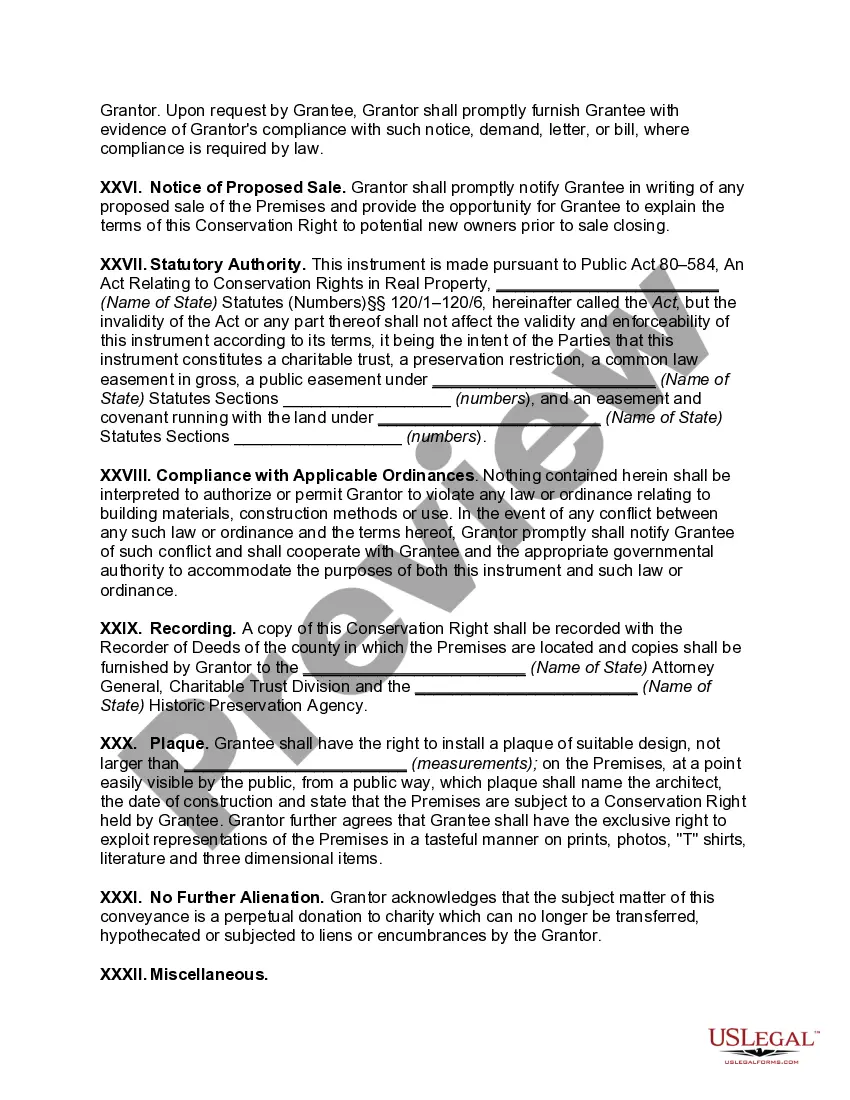
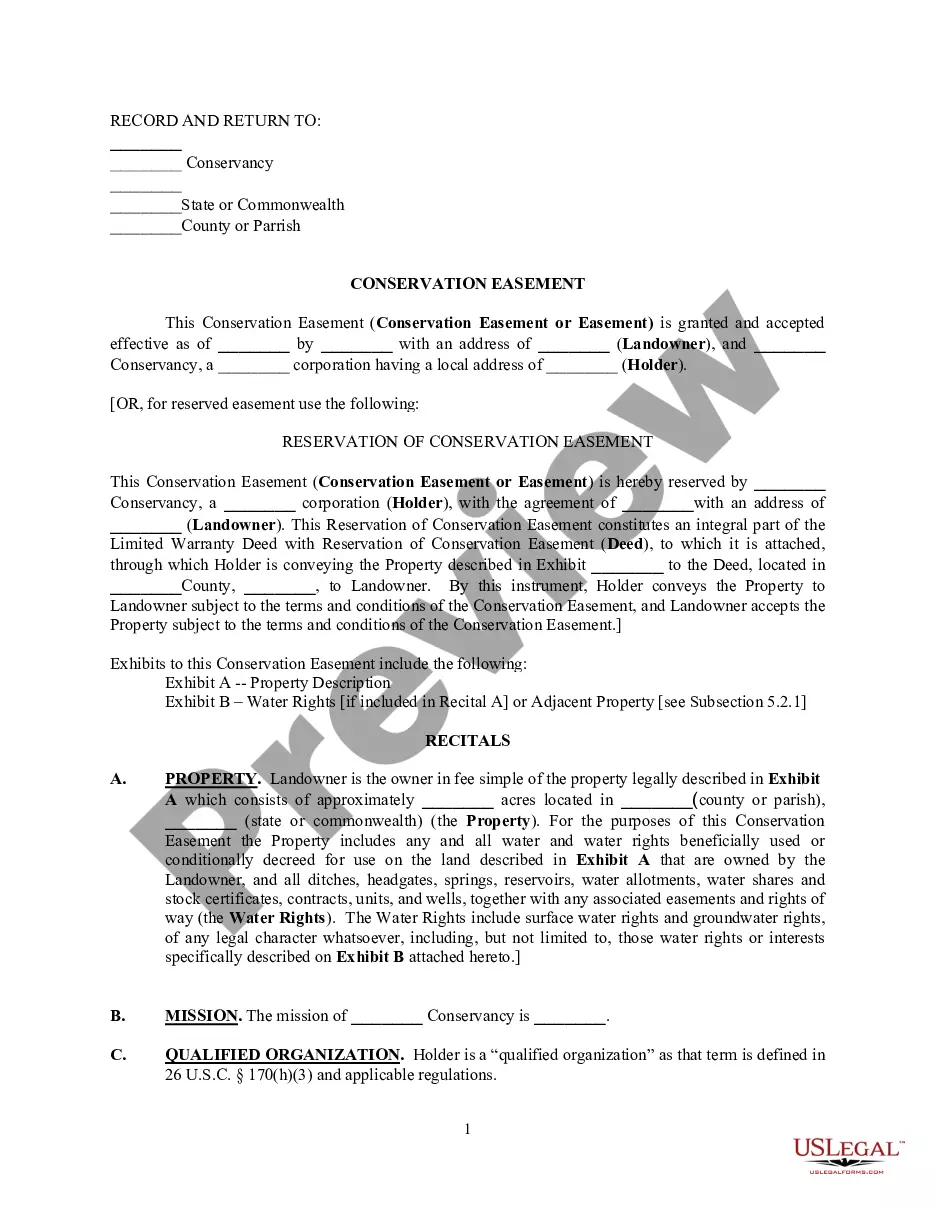
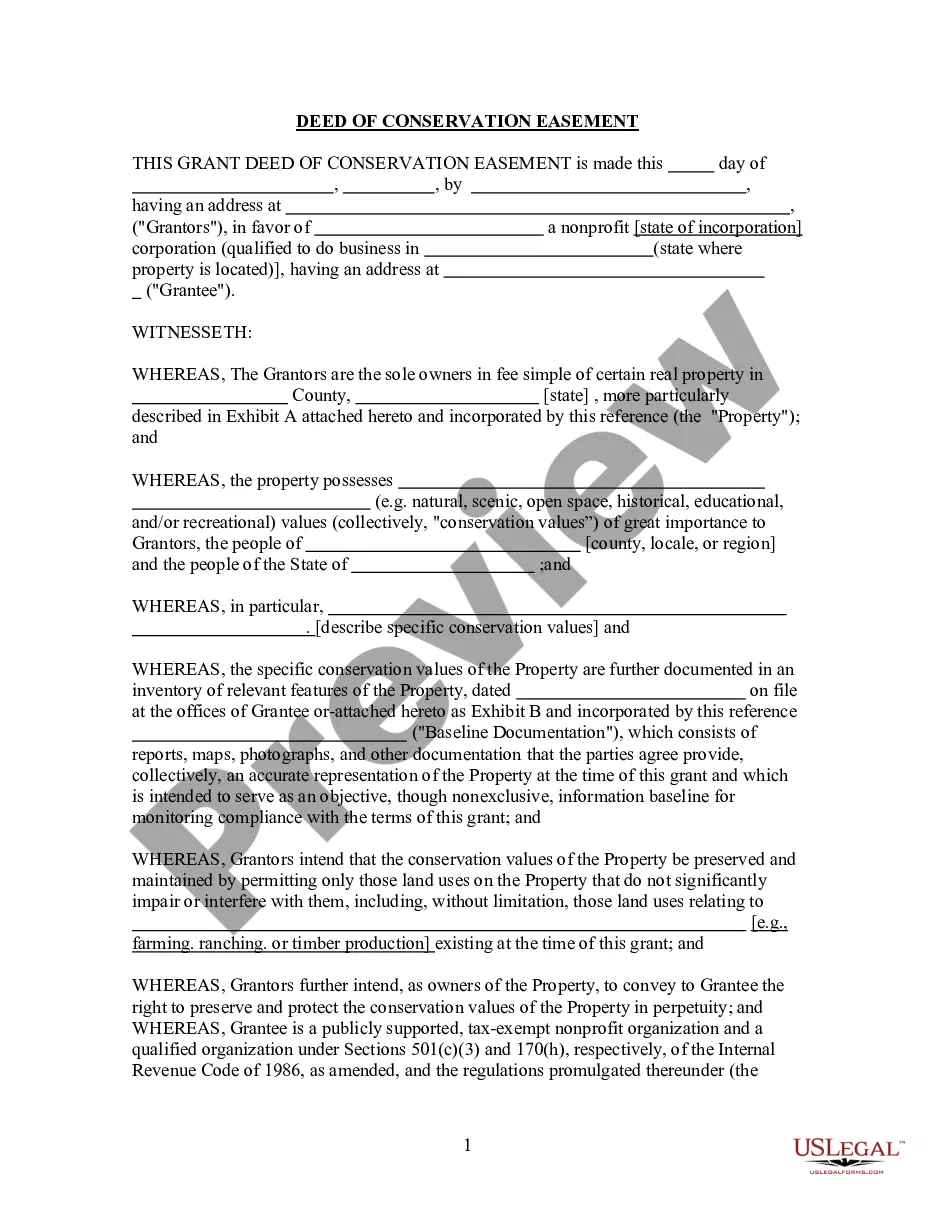
The Conservation Easement Agreement is a legal document that establishes a voluntary agreement to limit the use of land in order to protect its conservation values. This agreement is designed to safeguard specific features and characteristics of a property, often for future generations, and may also be referred to as a conservation restriction or conservation agreement. It differs from other property agreements as it focuses specifically on the preservation of conservation values rather than on commercial interests or transactions.
What’s included in this form
- Grant of Easement: Establishes the rights given to the Grantee for preserving the property's Protected Elements.
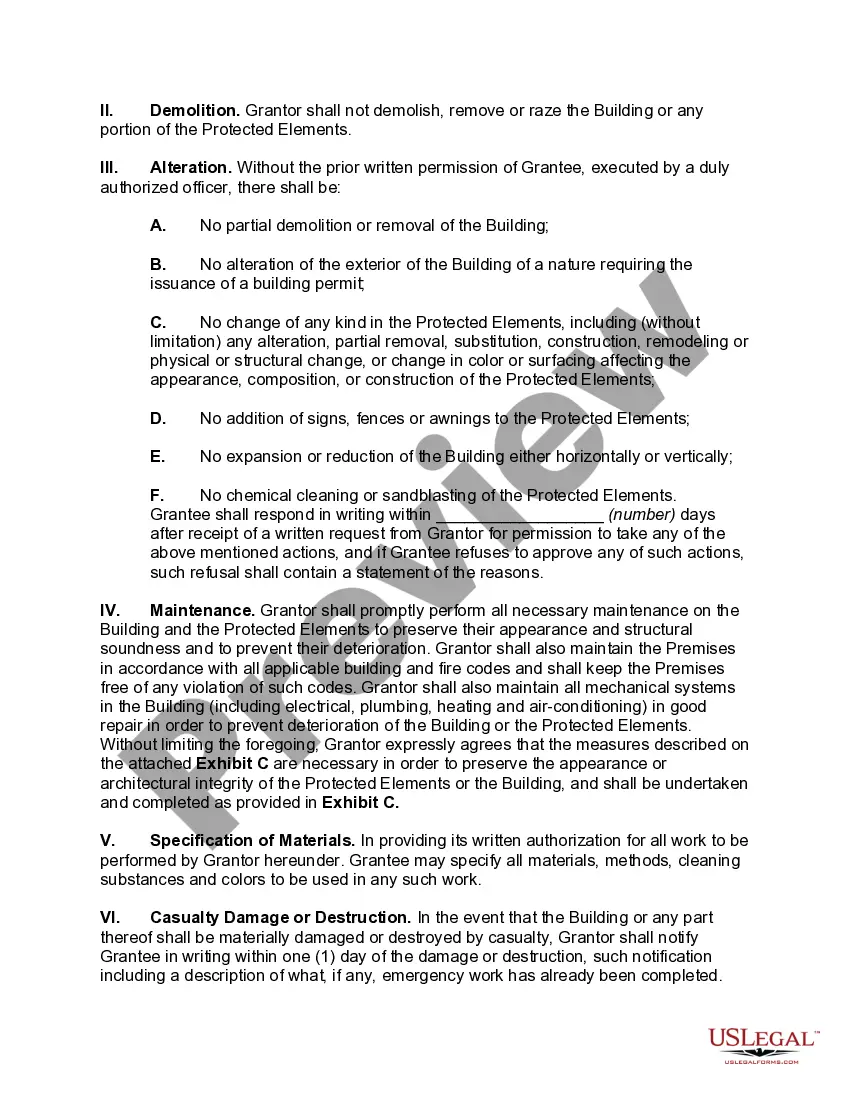
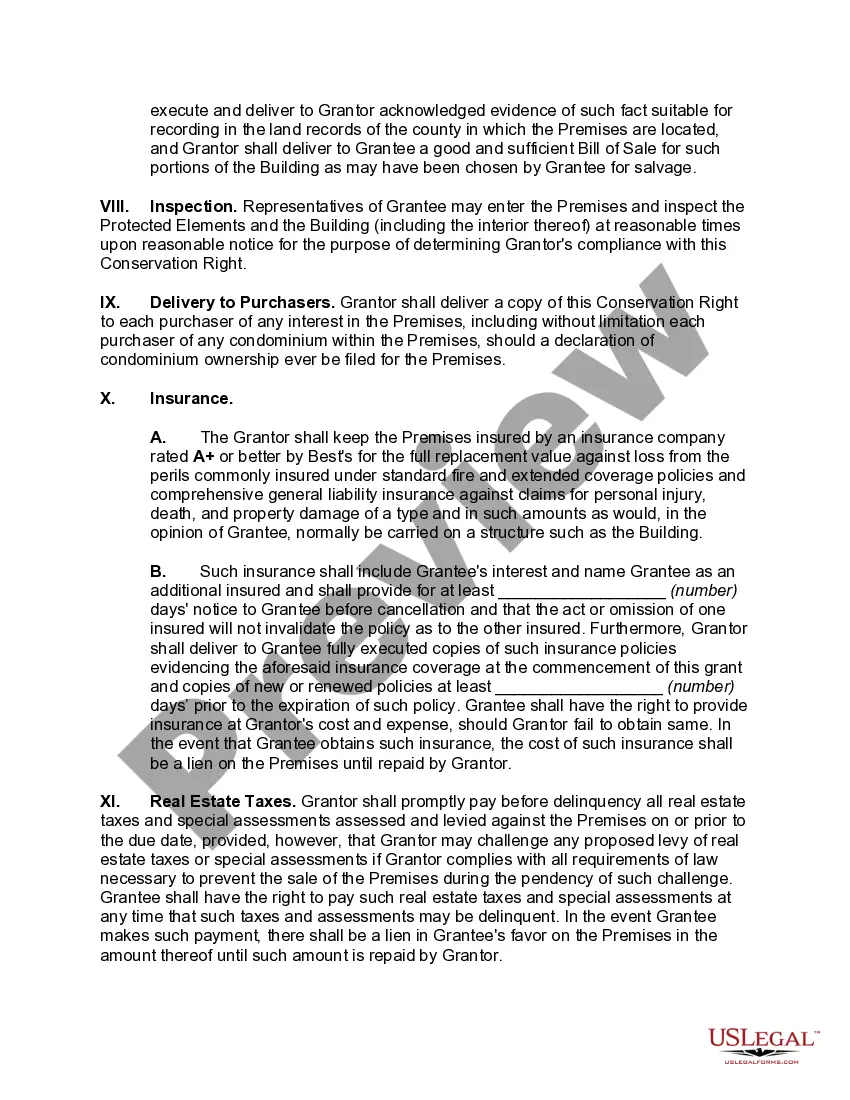
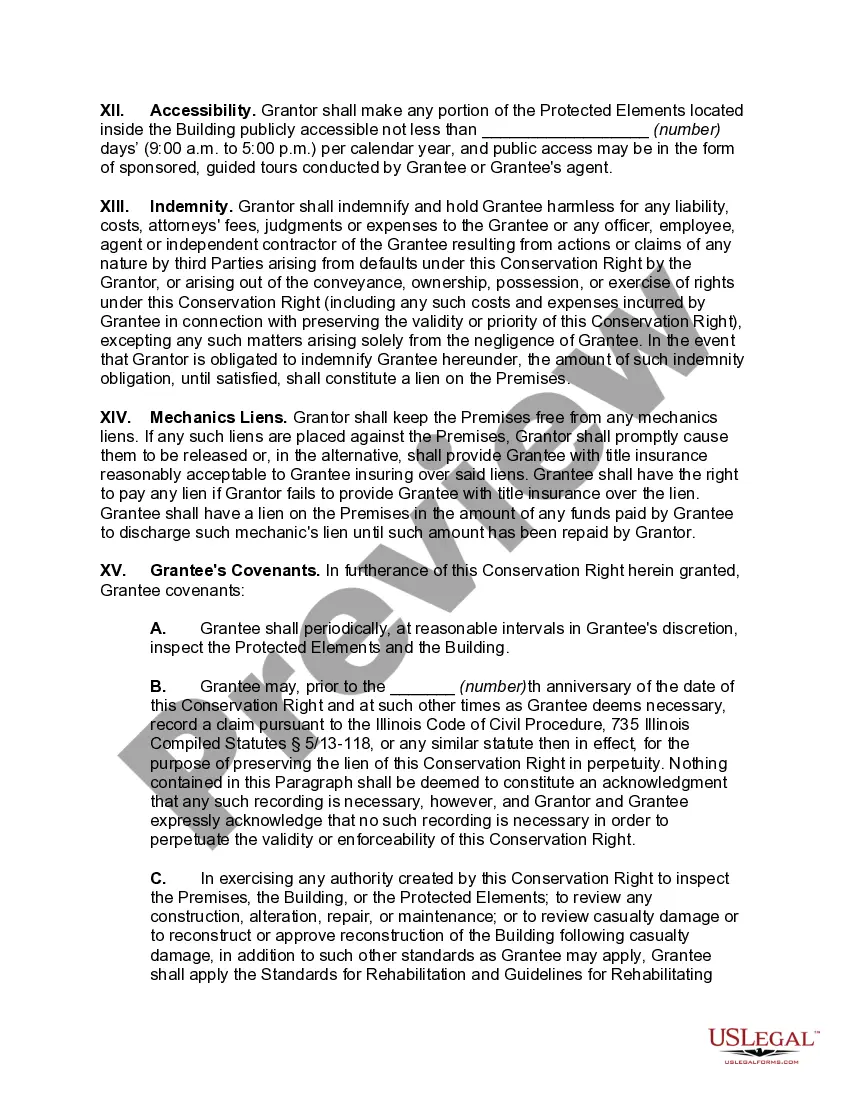
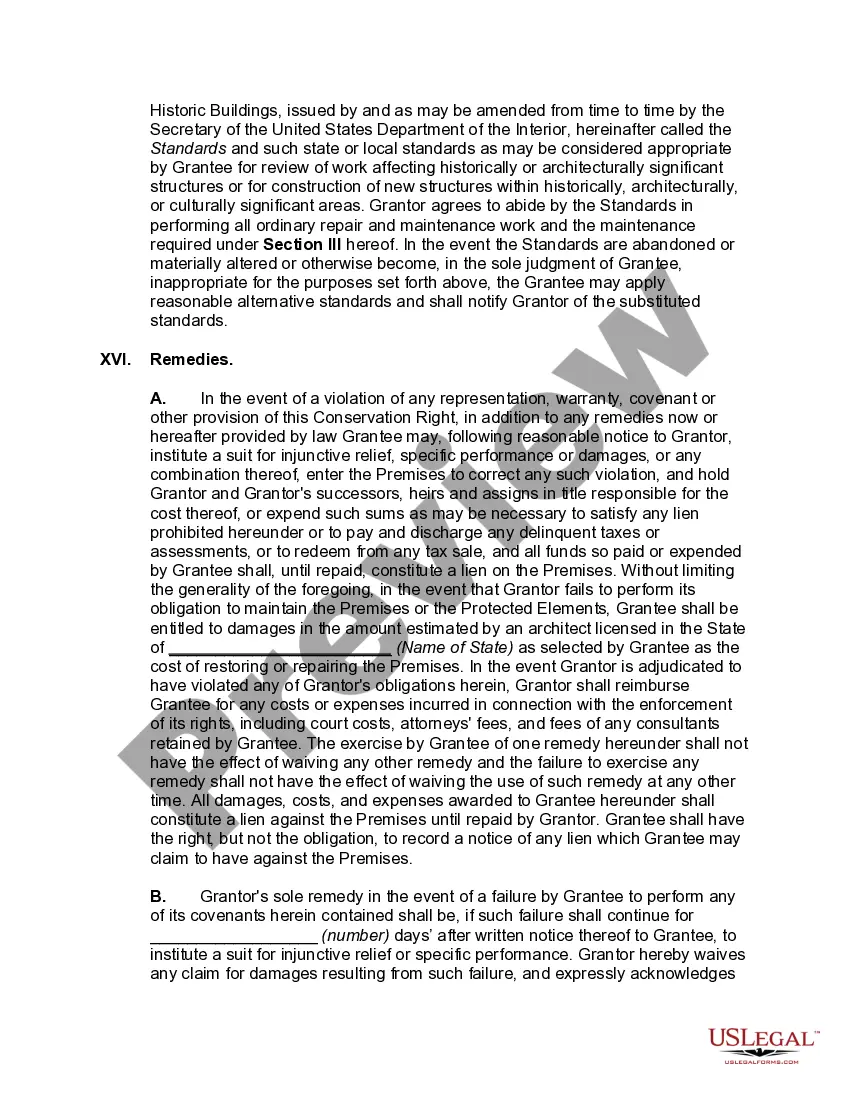
- Alteration and Maintenance: Outlines the conditions under which the Grantor can alter or must maintain the property.
- Insurance: Requires the Grantor to keep the property insured to protect against loss or damage.
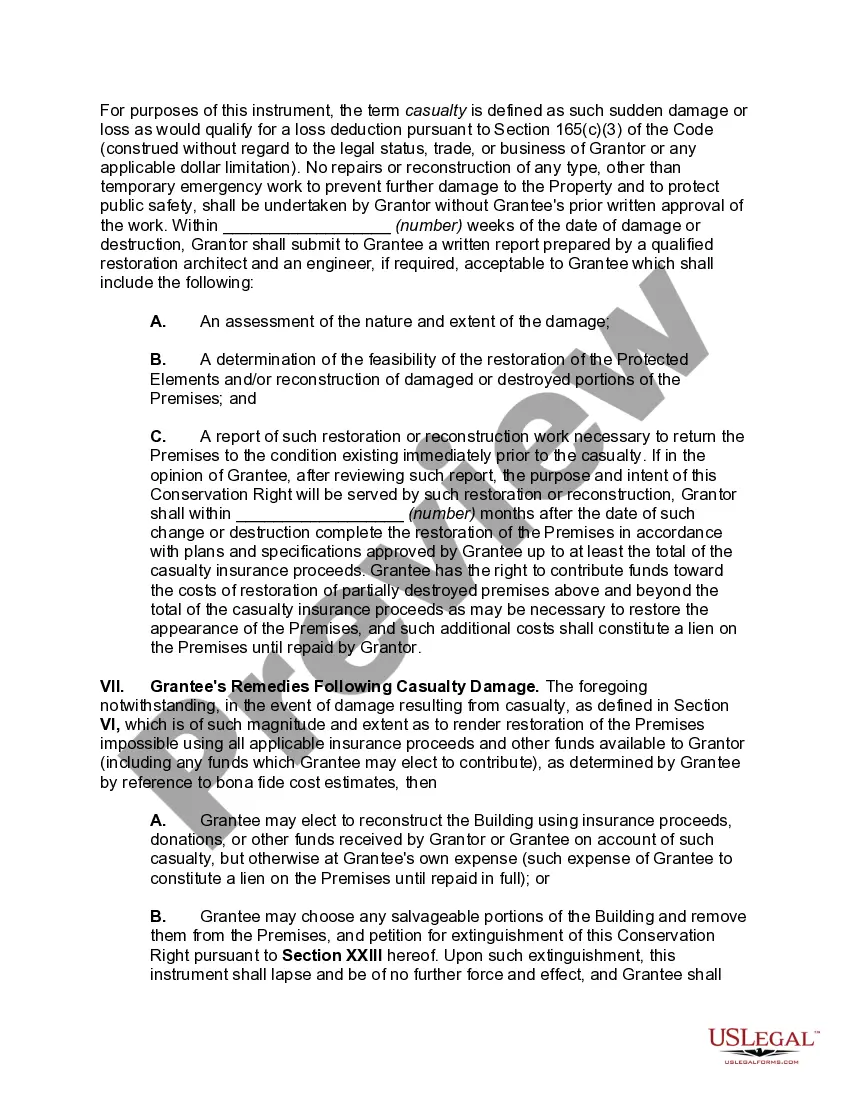
- Inspection: Allows Grantee representatives to inspect the property for compliance.
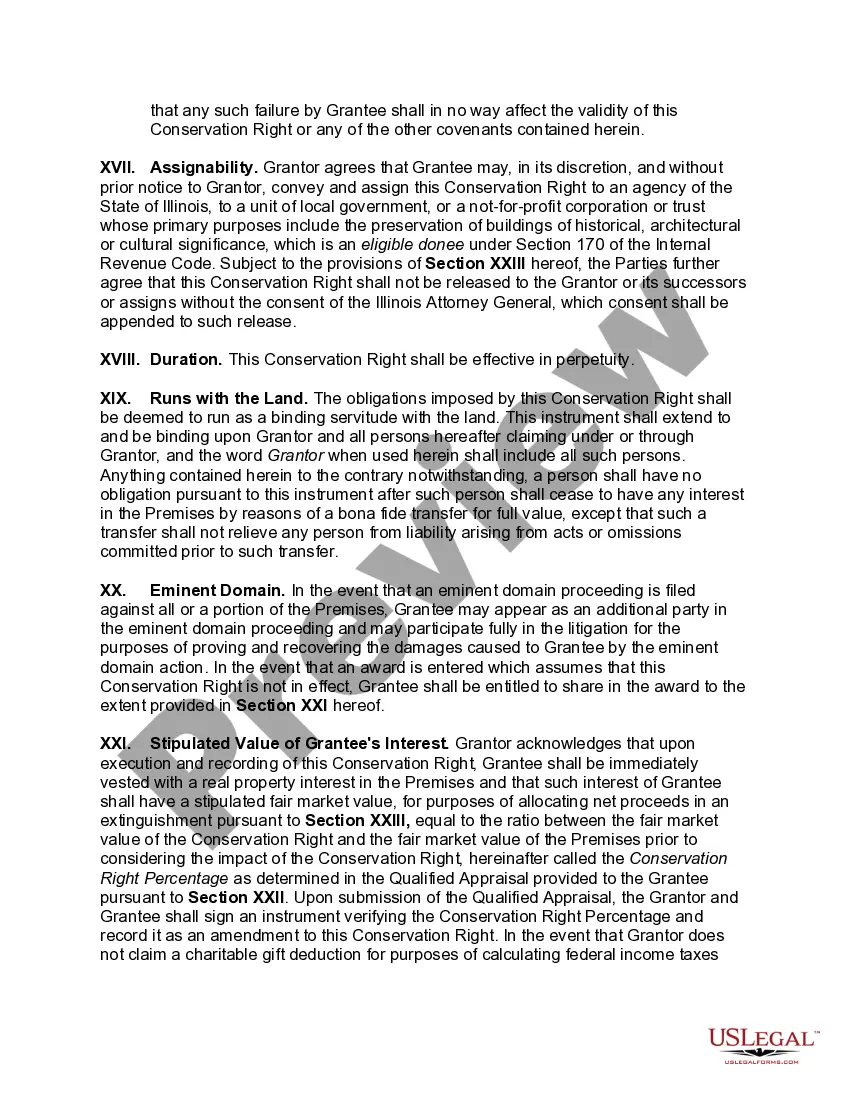
- Duration and Binding Nature: Specifies that the agreement is effective in perpetuity and runs with the land.

When to use this document
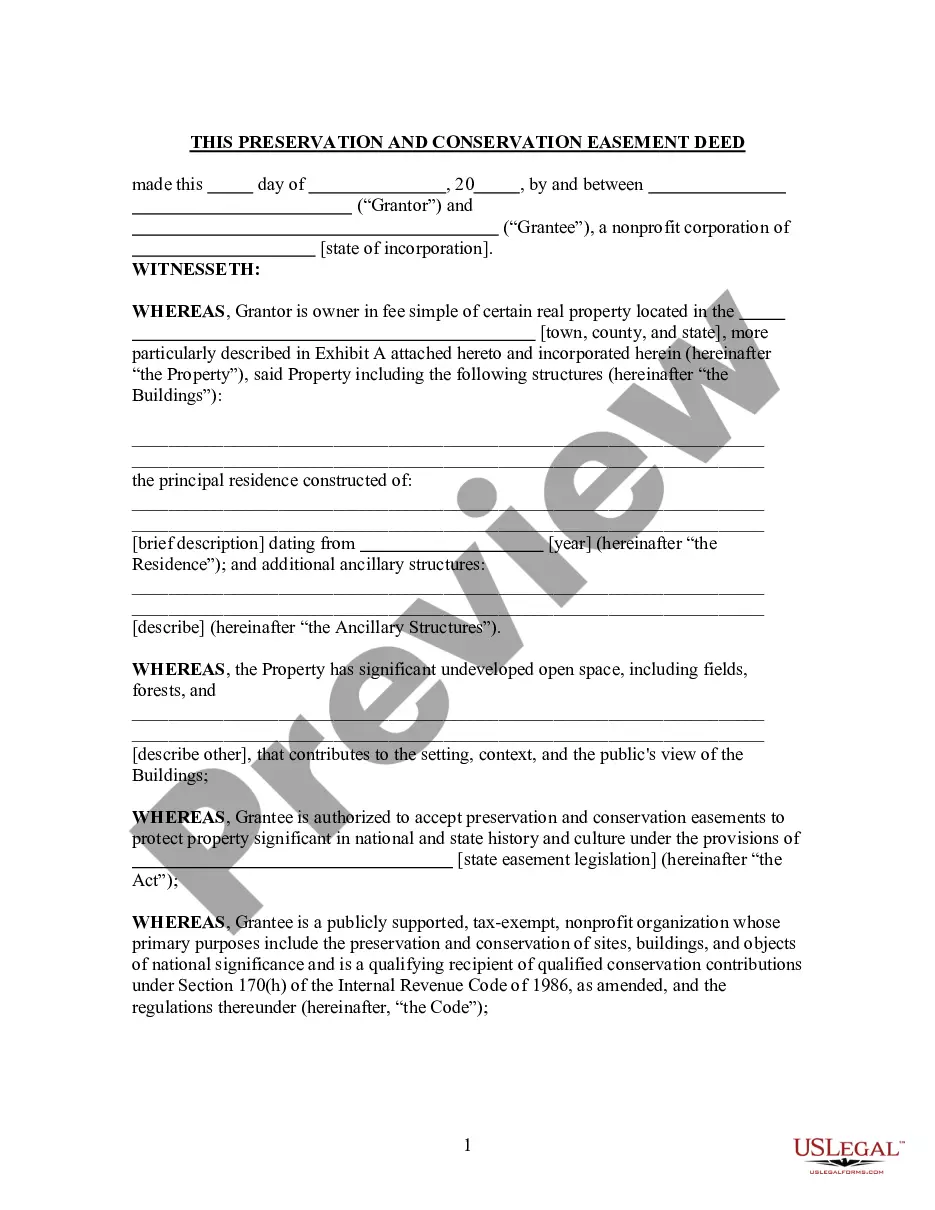
This form should be used when a landowner wishes to establish a legal framework to protect the conservation values of their property. It is applicable in situations where the owner wants to preserve specific historic, architectural, or aesthetic features, ensuring they remain intact for future generations. This agreement may be particularly useful for properties with unique landscapes, historic buildings, or cultural significance.
Who can use this document
- Property owners looking to protect the conservation aspects of their land.
- Organizations or individuals involved in conservation efforts and historic preservation.
- Real estate attorneys assisting clients with conservation easements.
- Non-profit organizations focused on environmental or historical preservation.
How to complete this form
- Identify the parties involved: Enter the names and addresses of the Grantor (property owner) and Grantee (entity receiving the easement).
- Describe the property: Specify the location and details of the property that is subject to the easement.
- Detail the Protected Elements: Outline the significant features of the property that are to be preserved.
- State conditions: Include any specific conditions regarding maintenance, alterations, and insurance obligations.
- Sign and date: Ensure both parties sign the document, including any required witnesses or notaries, as applicable.
Is notarization required?
This form does not typically require notarization unless specified by local law. However, having the agreement notarized can add an additional layer of legal protection and validity.
Get your form ready online
Our built-in tools help you complete, sign, share, and store your documents in one place.
Make edits, fill in missing information, and update formatting in US Legal Forms—just like you would in MS Word.
Download a copy, print it, send it by email, or mail it via USPS—whatever works best for your next step.
Sign and collect signatures with our SignNow integration. Send to multiple recipients, set reminders, and more. Go Premium to unlock E-Sign.
If this form requires notarization, complete it online through a secure video call—no need to meet a notary in person or wait for an appointment.
We protect your documents and personal data by following strict security and privacy standards.

Make edits, fill in missing information, and update formatting in US Legal Forms—just like you would in MS Word.

Download a copy, print it, send it by email, or mail it via USPS—whatever works best for your next step.

Sign and collect signatures with our SignNow integration. Send to multiple recipients, set reminders, and more. Go Premium to unlock E-Sign.

If this form requires notarization, complete it online through a secure video call—no need to meet a notary in person or wait for an appointment.

We protect your documents and personal data by following strict security and privacy standards.
Avoid these common issues
- Failing to include detailed descriptions of the Protected Elements.
- Not specifying maintenance and alteration conditions clearly.
- Omitting signatures or necessary notarization requirements.
- Using vague language that could lead to different interpretations of the easement's terms.
Advantages of online completion
- Convenience: Access and download the agreement at any time from anywhere.
- Editability: Tailor the template to fit specific needs without starting from scratch.
- Reliability: Ensure that the form is compliant with current legal standards and reviewed by licensed attorneys.
Looking for another form?
Form popularity
FAQ
Conservation easements may indirectly help protect water quality. Land that property owners set aside in a permanent conservation easement has a prescribed set of uses or activities that generally restrict future development. Often, this limits impervious surface development and preserves an area's natural hydrology.
Yes, under certain circumstances. Any family member who is related to the covenant holder within the fourth degree of civil reckoning can receive up to 5 acres of your covenant property solely for the purpose of building a home without breaching the covenant.
A conservation easement is a voluntary, legal agreement that permanently limits uses of the land in order to protect its conservation values. Also known as a conservation restriction or conservation agreement, a conservation easement is one option to protect a property for future generations.
Conservation easements must clearly identify the purposes of the easement and the resources to be protected. Any reserved rights must be consistent with the protection of the conservation values of the property and the donee land trust must have the commitment and the resources to enforce the terms of the restriction.
Most conservation easements are permanent and bind all future landowners (including heirs). Conservation easement holders and farmers may not always share a common vision. Conservation easements can reduce the property's overall value, making the land worth less for future sales.
Conservation easements offer effective and flexible protection, and are one of the most frequently used tools for conserving private land. This voluntary legal agreement protects the land by permanently limiting some uses that would compromise the conservation values or the landowners' goals for the property.
A conservation easement is a legal agreement between a landowner and a land trust or government agency, that permanently limits uses of the land in order to protect its conservation values. It allows landowners to continue to own and use their land, and they can also sell it or pass it on to heirs.