California Conservation Easement Deed
What is this form?
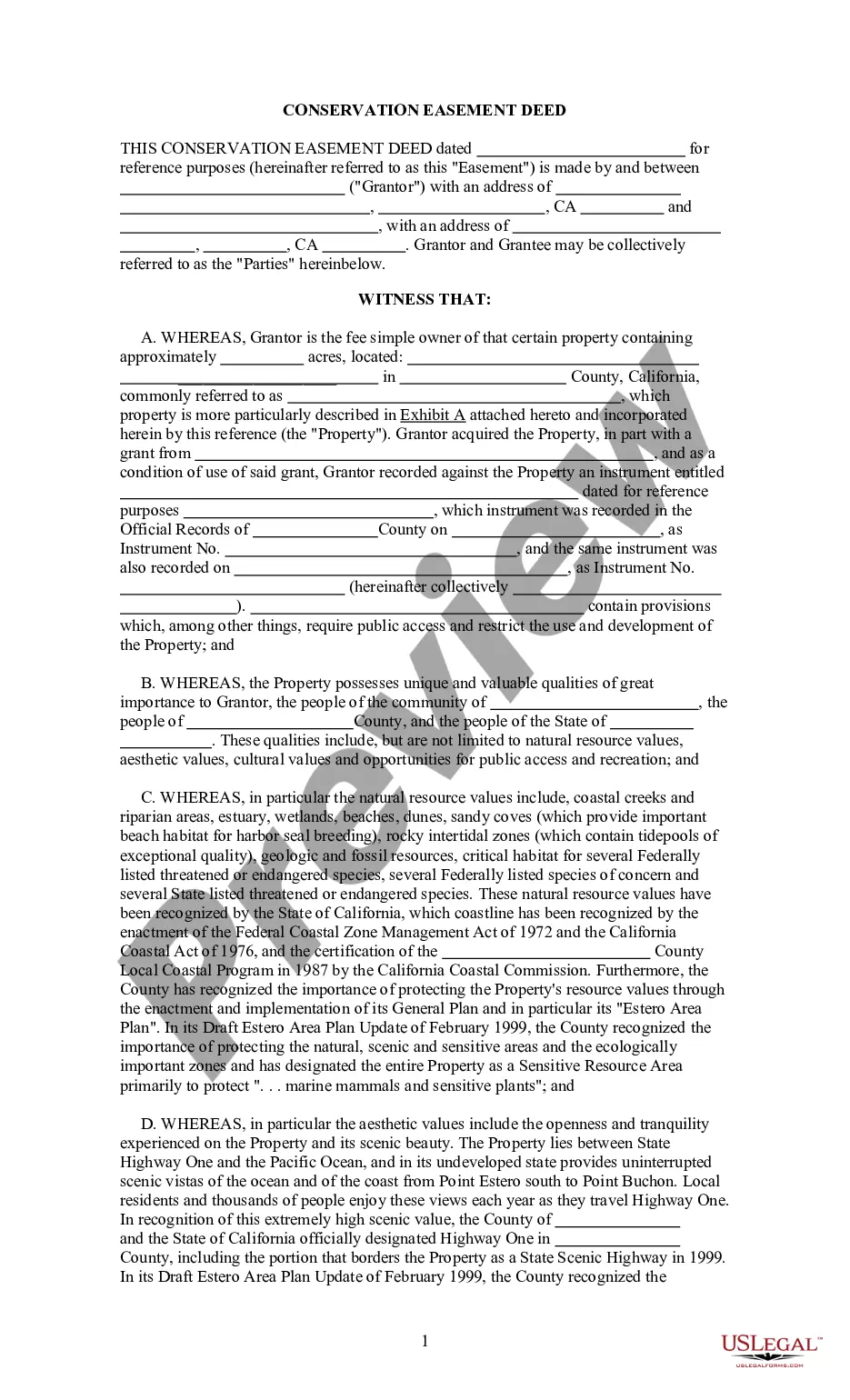
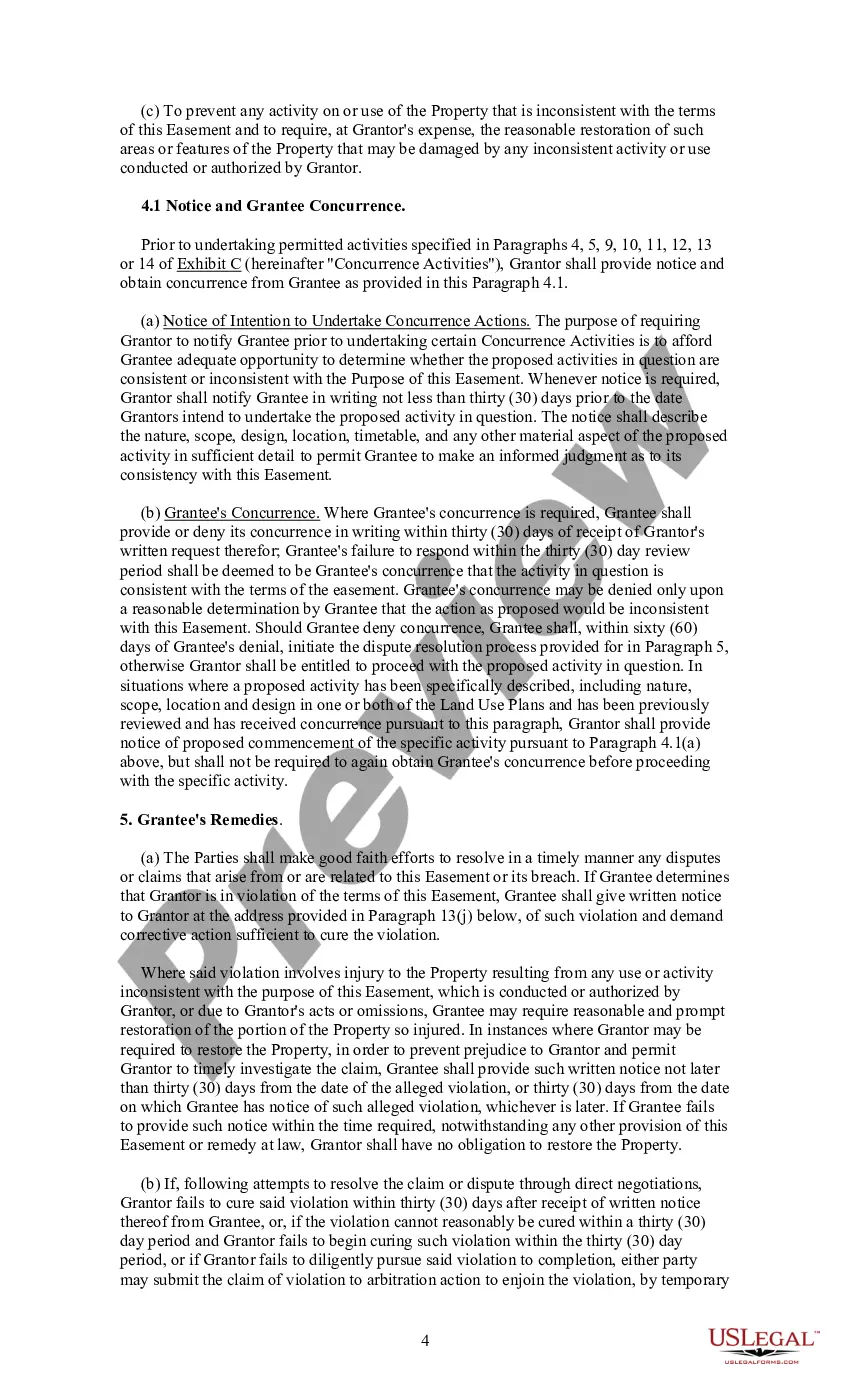
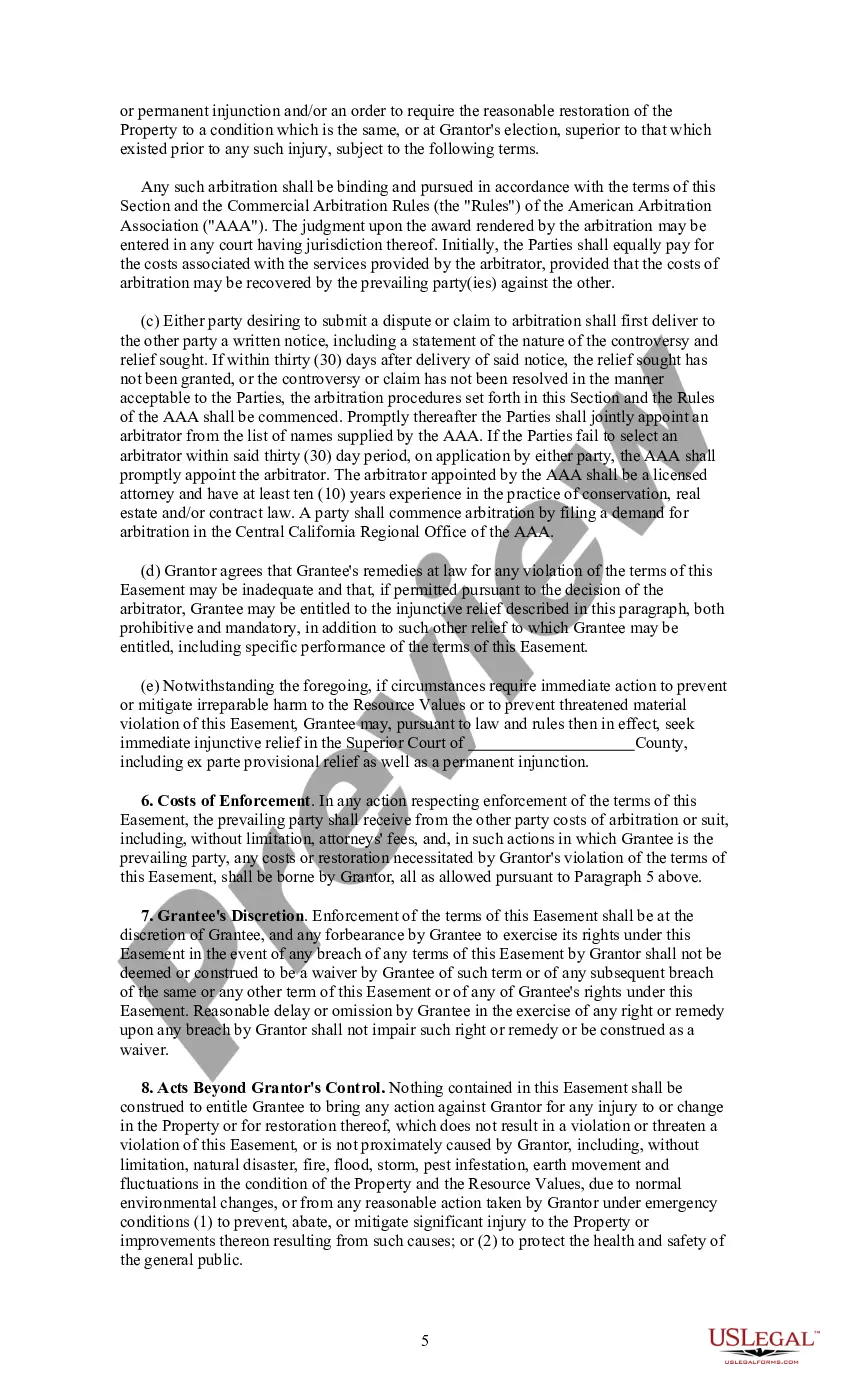
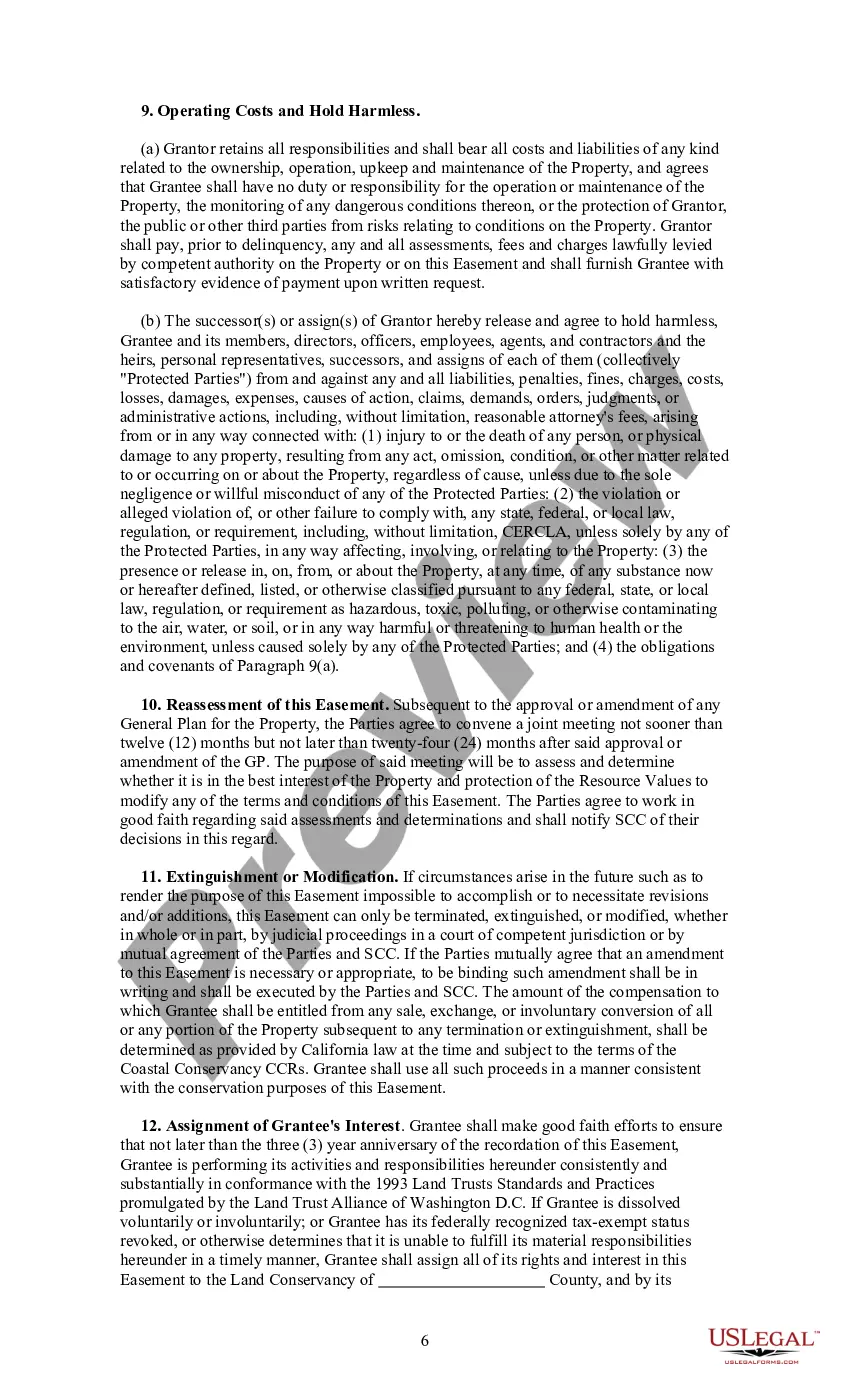
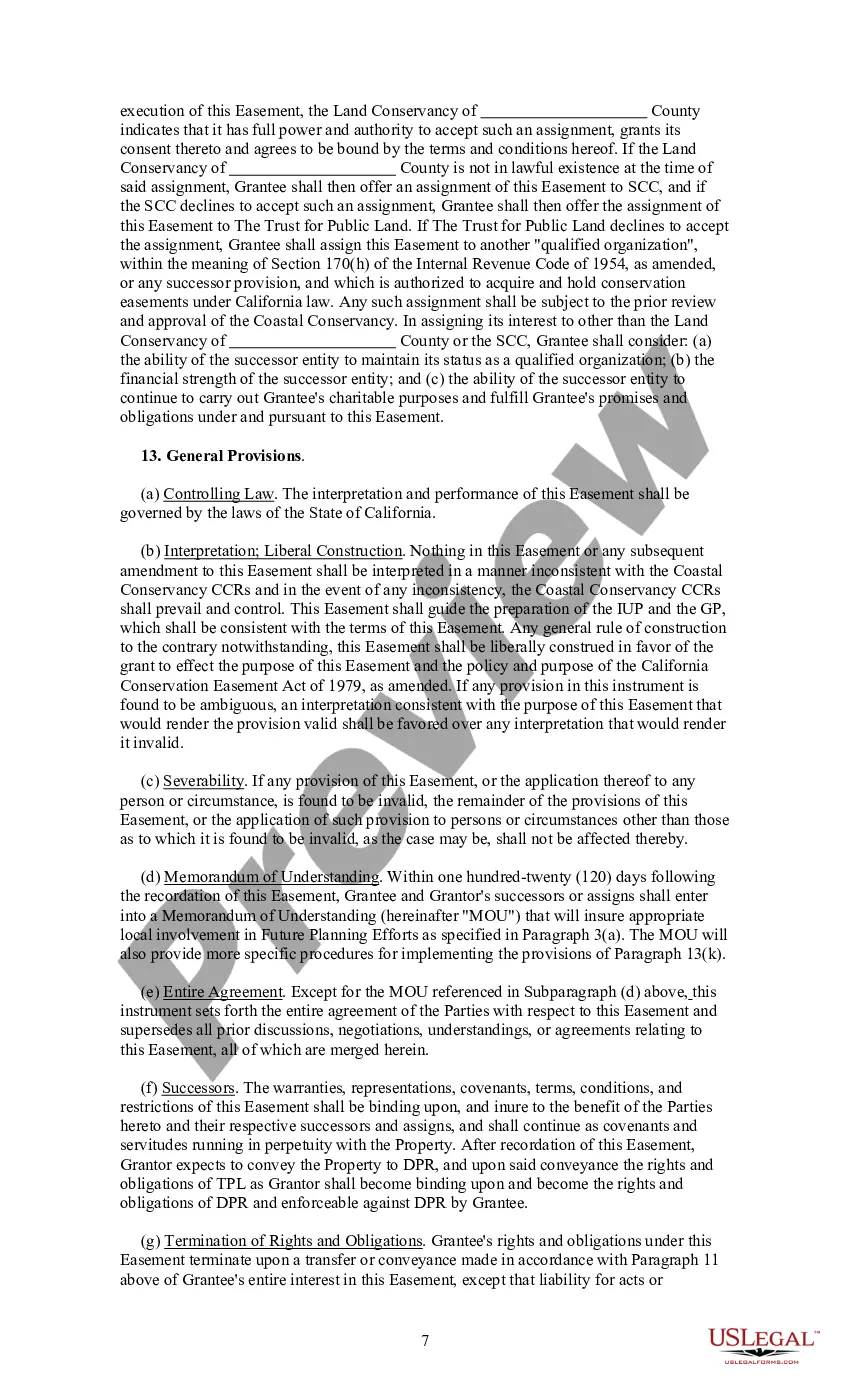
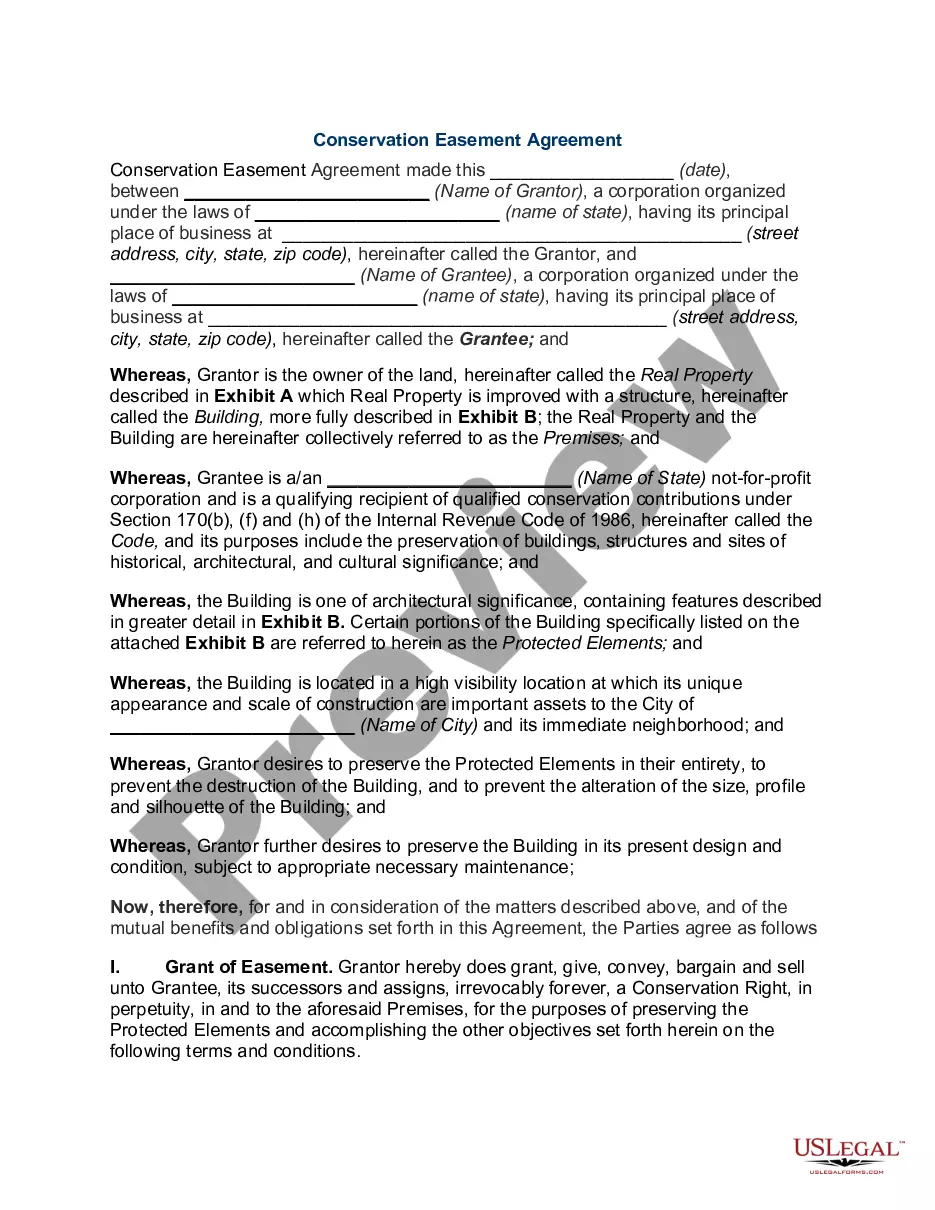
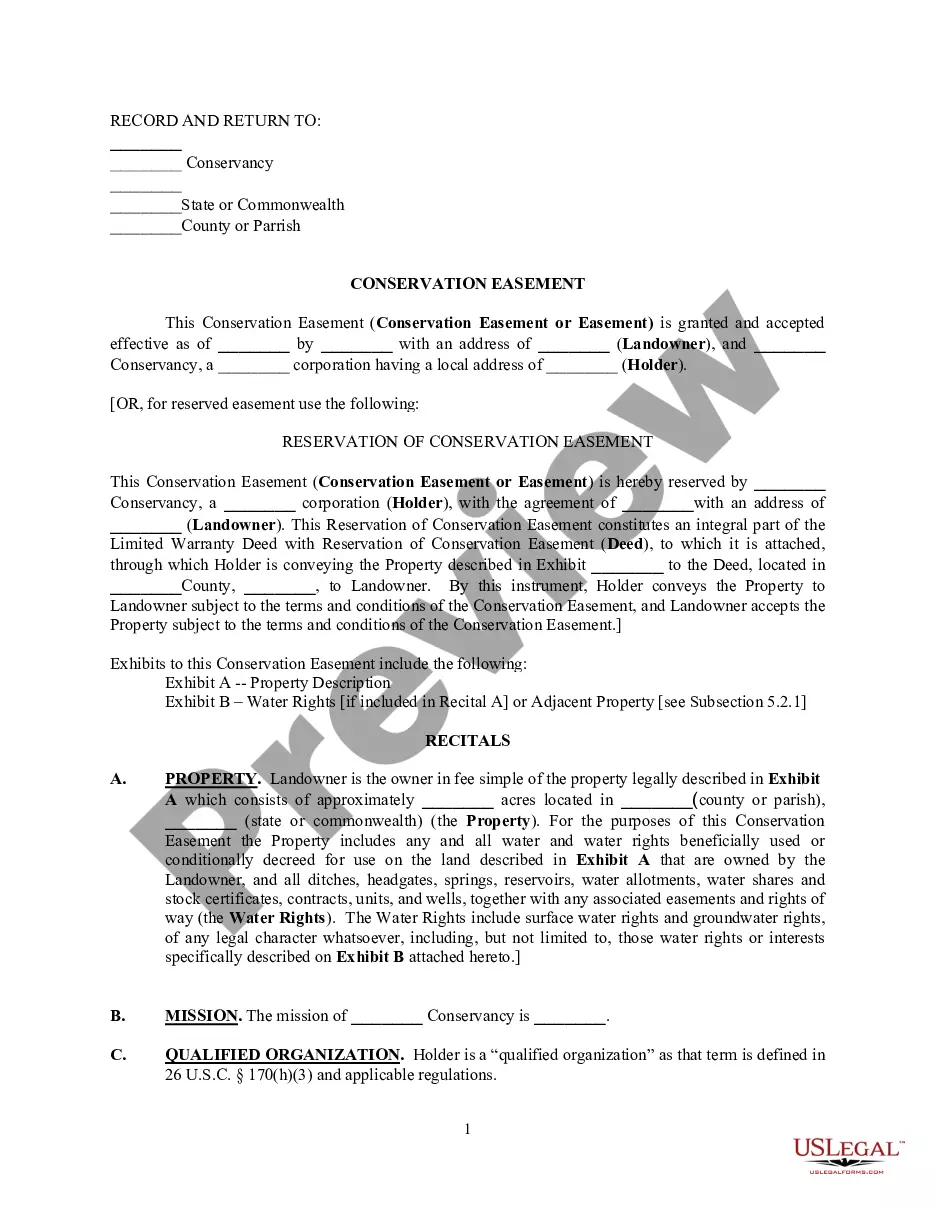
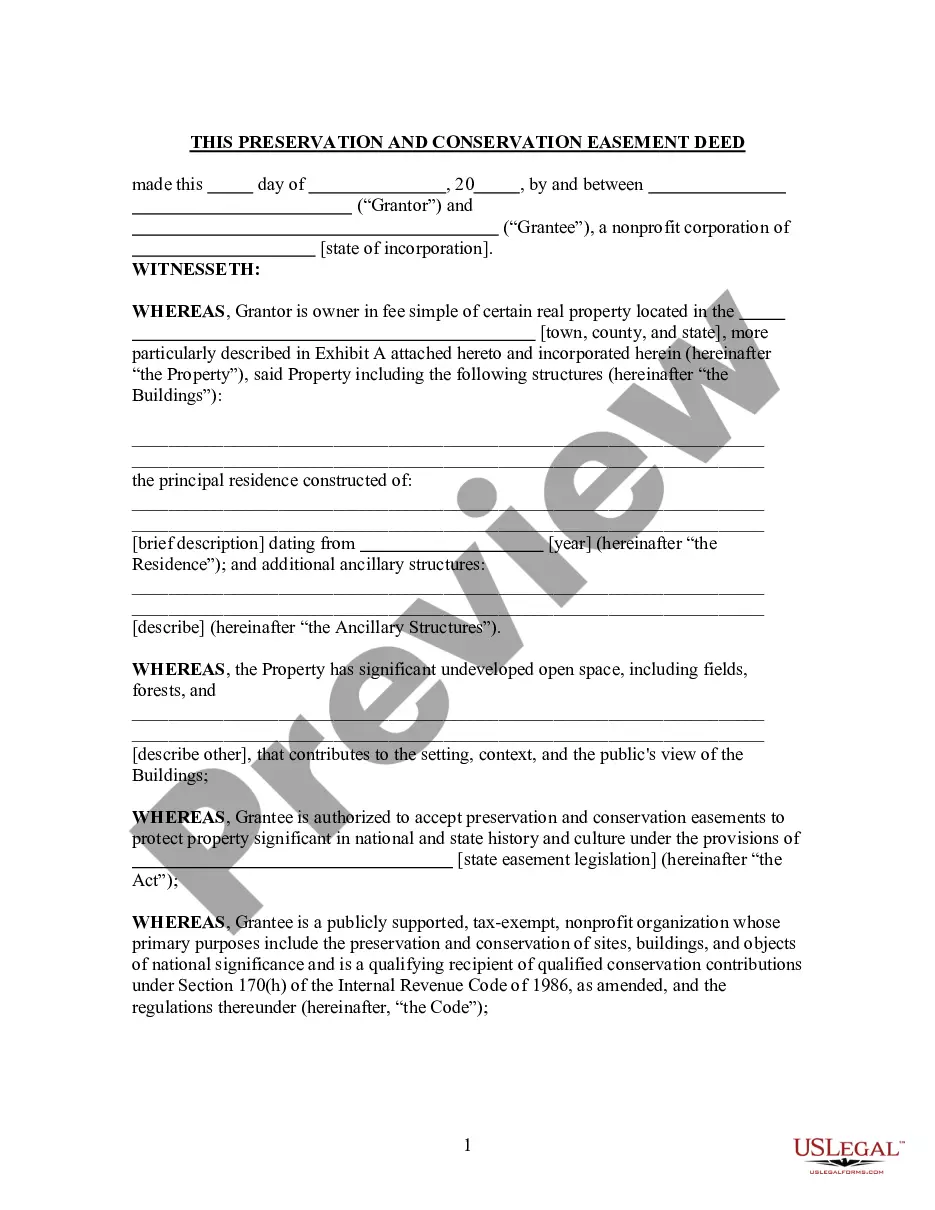
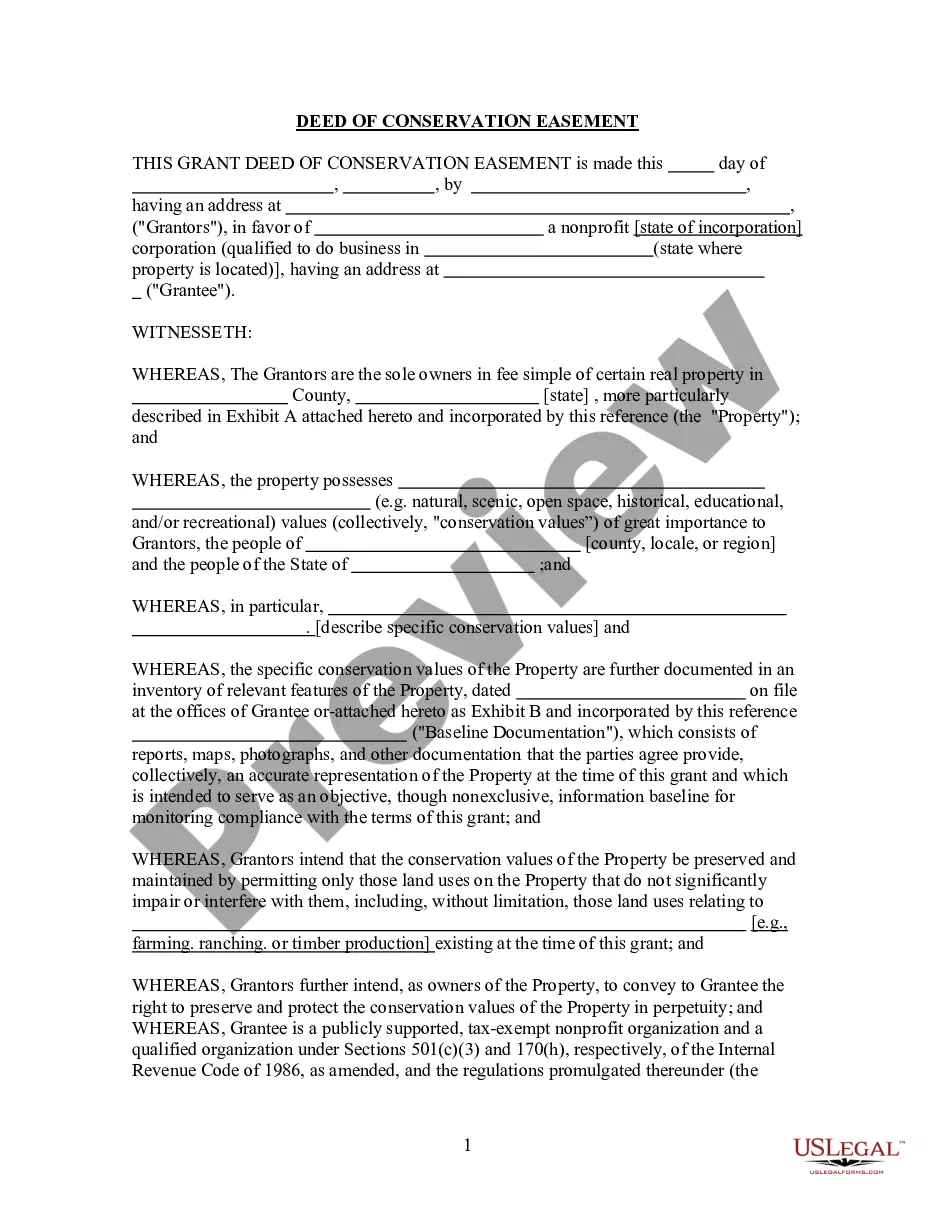
The Conservation Easement Deed is a legal document granted between two non-profit corporations to protect and maintain the natural, aesthetic, and cultural values of a property. This form is specifically designed to ensure public access and recreational opportunities while preserving the ecological integrity of the designated area. Unlike typical property deeds, which convey ownership, this form establishes a binding agreement that restricts future development to safeguard environmental resources.
Key components of this form
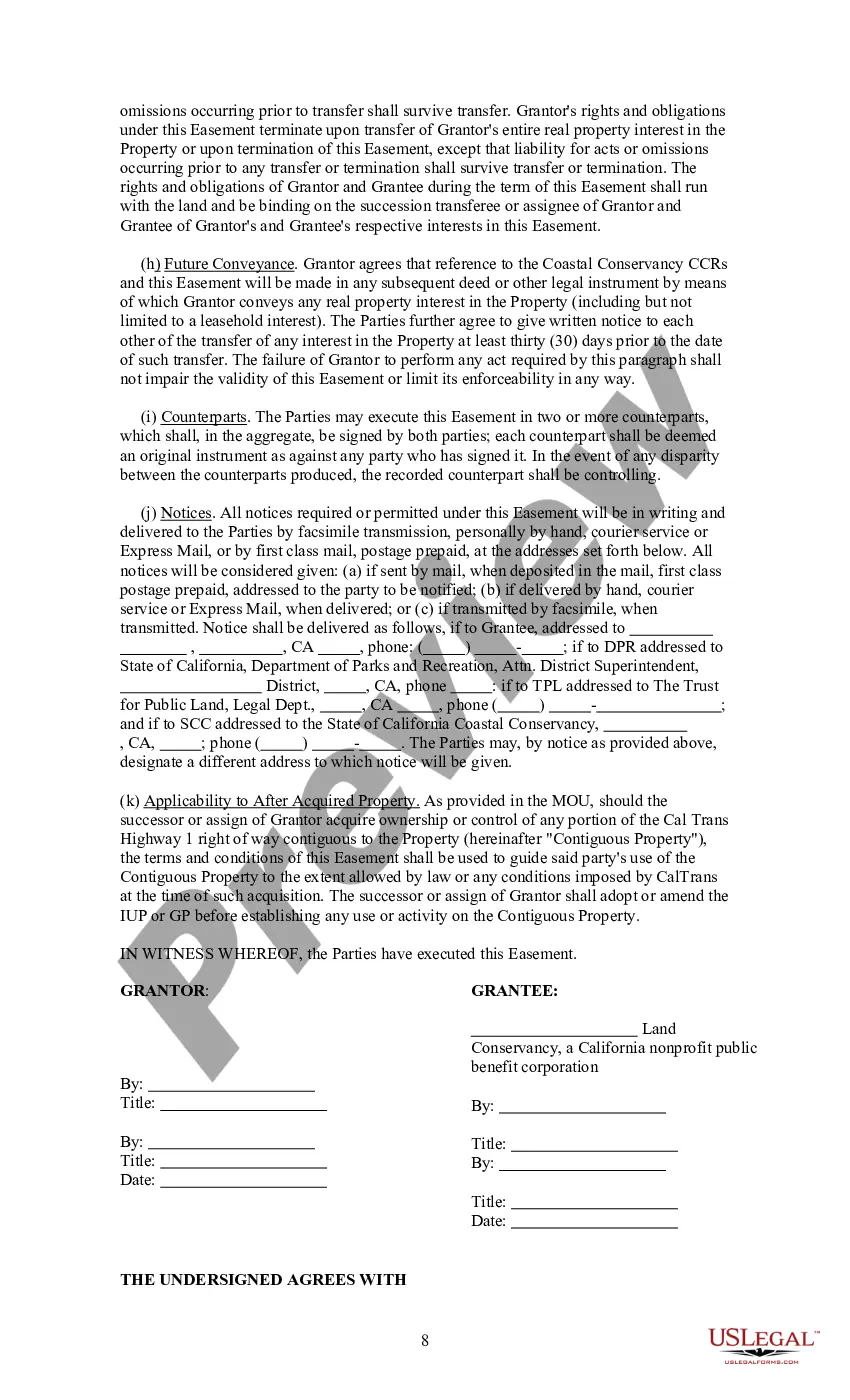
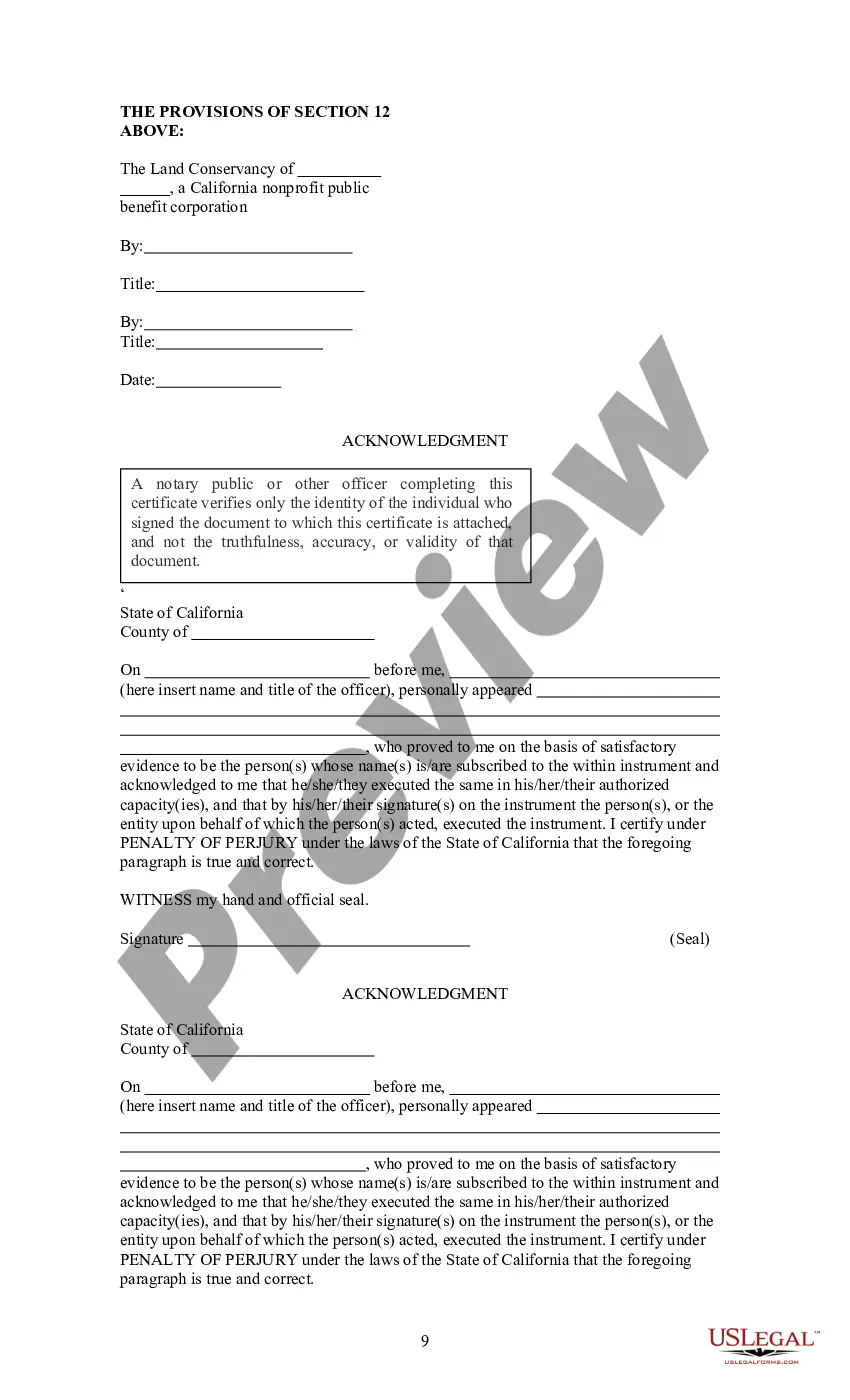
- Signatures of the Grantor and Grantee, specifying the parties involved.
- A detailed acknowledgment section, verifying the identities of the signatories before a notary.
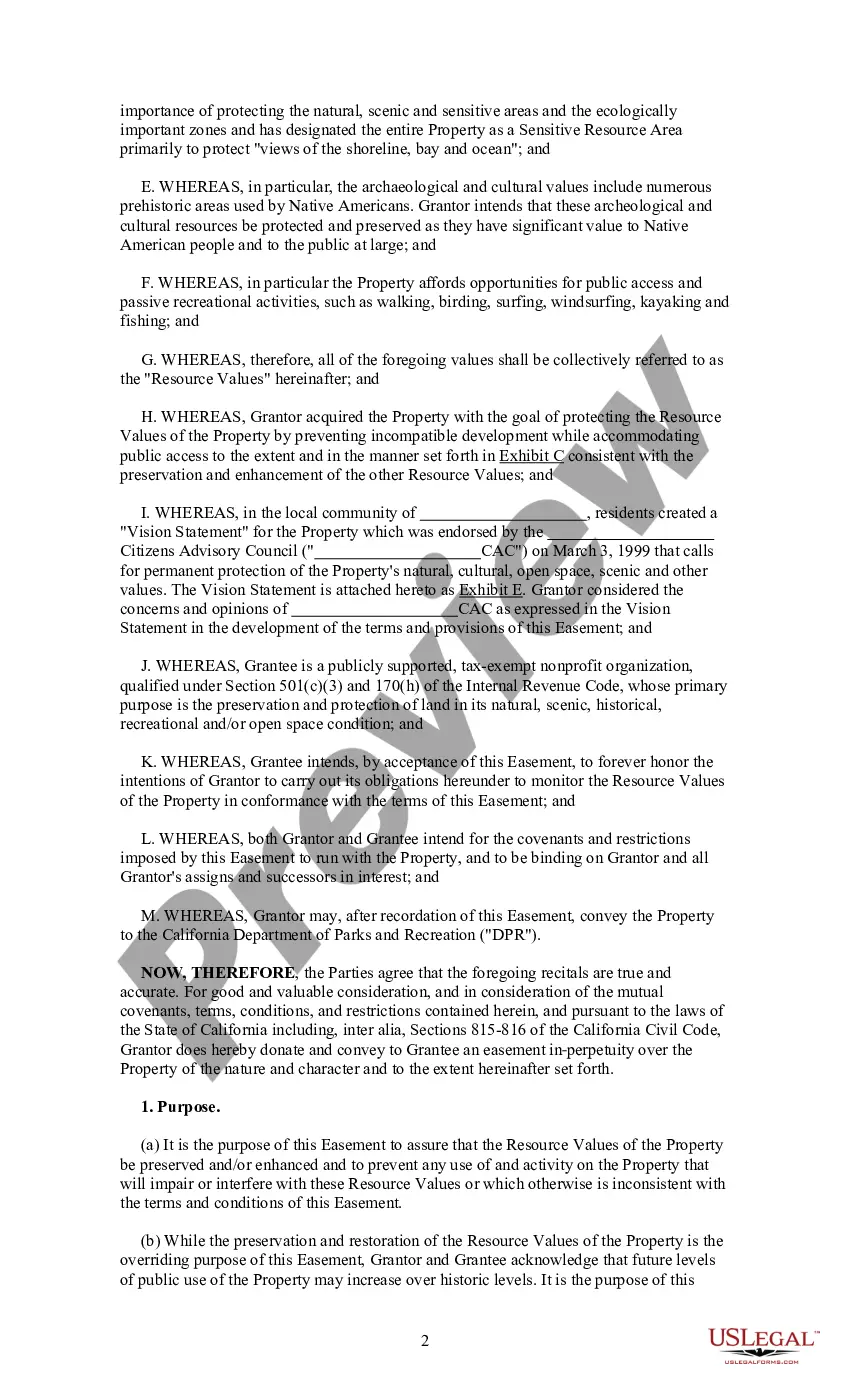
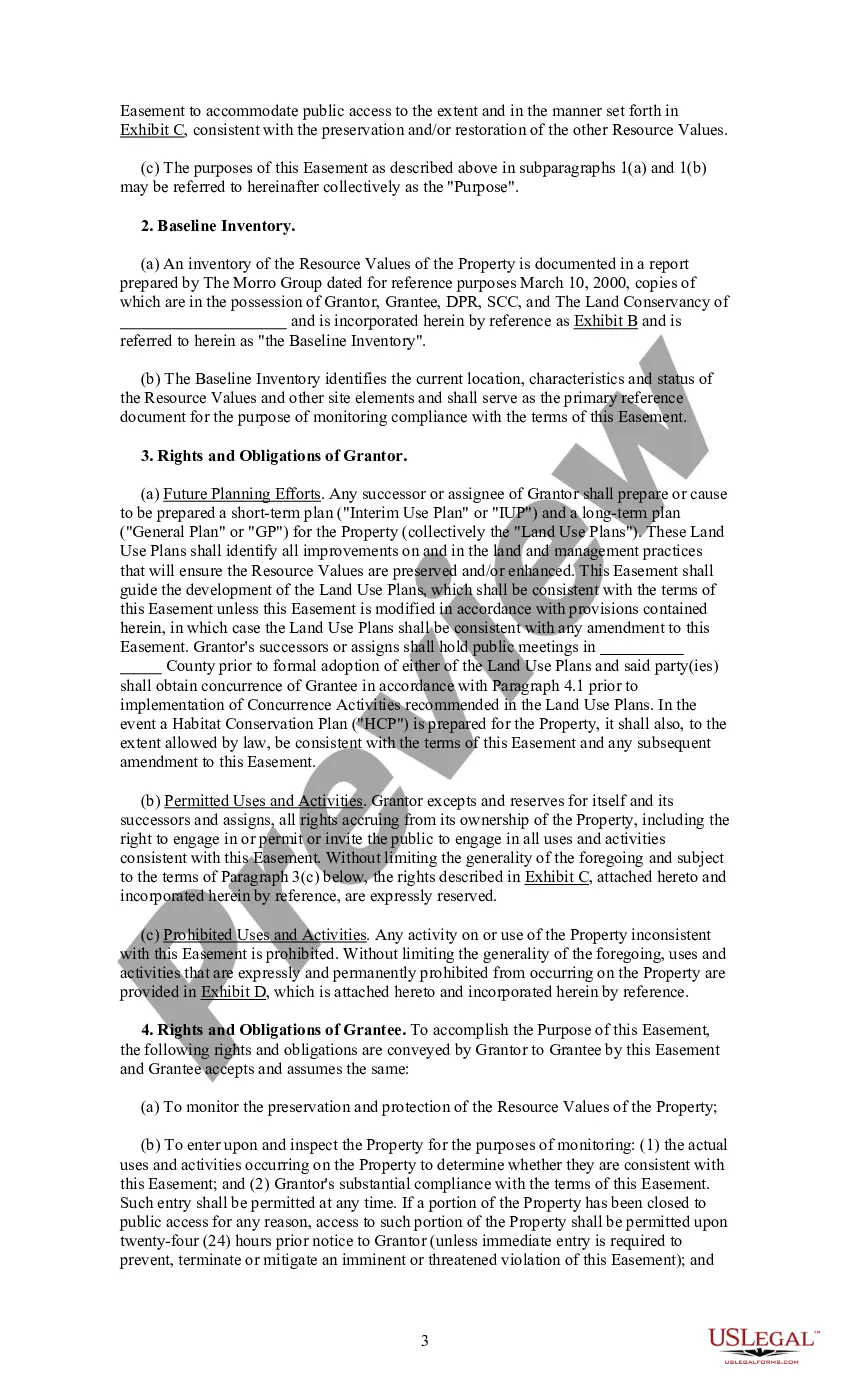
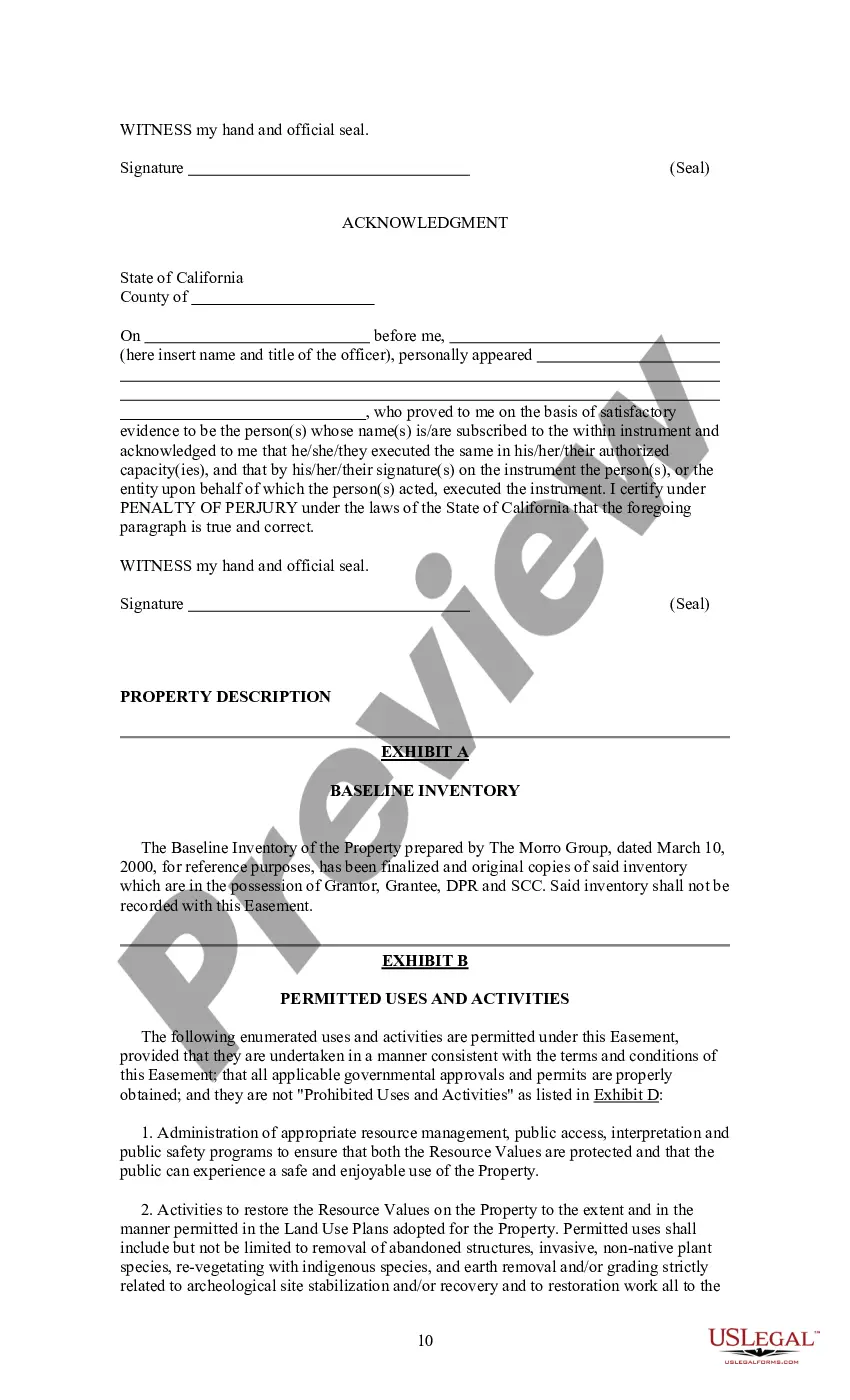
- A baseline inventory that describes the property's resource values for monitoring purposes.
- Permitted and prohibited uses outlined to ensure preservation and appropriate public access.
- Guidelines for establishing minimum support facilities for public use without compromising the environment.

When to use this form
This form is necessary when two non-profit organizations wish to enter into a legally binding agreement to conserve a property. It is commonly used in scenarios involving land trusts, environmental preservation initiatives, and public access projects, where the goal is to prevent developmental threats and protect the ecological and cultural values of an area.
Who should use this form
- Two non-profit organizations involved in conservation efforts.
- Land trust organizations looking to protect specific properties.
- Government entities seeking to establish public access to natural resources.
- Conservationists and environmental advocates focused on preserving natural habitats.
How to prepare this document
- Identify the parties involved as the Grantor and Grantee.
- Provide a description of the property being conserved.
- Fill in the details of the baseline inventory to document existing resource values.
- Specify the permitted and prohibited uses and activities related to the property.
- Both parties should sign in the presence of a notary public for validation.
Notarization requirements for this form
Yes, this form must be notarized to be legally valid. It requires acknowledgment by a notary public to confirm the identities of the signatories and their capacity to act on behalf of their organizations. US Legal Forms offers integrated online notarization for convenience, ensuring a secure and accessible process at any time.
Get your form ready online
Our built-in tools help you complete, sign, share, and store your documents in one place.
Make edits, fill in missing information, and update formatting in US Legal Forms—just like you would in MS Word.
Download a copy, print it, send it by email, or mail it via USPS—whatever works best for your next step.
Sign and collect signatures with our SignNow integration. Send to multiple recipients, set reminders, and more. Go Premium to unlock E-Sign.
If this form requires notarization, complete it online through a secure video call—no need to meet a notary in person or wait for an appointment.
We protect your documents and personal data by following strict security and privacy standards.

Make edits, fill in missing information, and update formatting in US Legal Forms—just like you would in MS Word.

Download a copy, print it, send it by email, or mail it via USPS—whatever works best for your next step.

Sign and collect signatures with our SignNow integration. Send to multiple recipients, set reminders, and more. Go Premium to unlock E-Sign.

If this form requires notarization, complete it online through a secure video call—no need to meet a notary in person or wait for an appointment.

We protect your documents and personal data by following strict security and privacy standards.
Typical mistakes to avoid
- Failing to accurately describe the property in detail.
- Not including all necessary signatures and acknowledgments.
- Neglecting to review and comprehend the permitted and prohibited uses.
- Overlooking state-specific legal requirements that may apply to conservation easements.
Why complete this form online
- Instant access to professionally drafted legal templates.
- Easy to modify and customize for specific needs.
- Convenient download options for hard copy storage or electronic filing.
- Guidance available to help ensure completion and adherence to legal requirements.
Summary of main points
- The Conservation Easement Deed is essential for protecting property from development.
- Two non-profits can establish legal agreements to maintain the natural and cultural resources of a property.
- Completion involves specific steps, including notary acknowledgment.
Looking for another form?
Form popularity
FAQ
In California, the rules for easements are outlined in state laws and local ordinances. Typically, easements must be recorded to be enforceable, and they should clearly state the rights and restrictions involved. The California Conservation Easement Deed comes with specific guidelines on enforcement and compliance, making it essential to understand these rules fully. Consulting with uslegalforms can help clarify any legal questions.
A conservation easement in California is a legal agreement that allows a landowner to limit certain uses of their property to protect its conservation values. This arrangement can preserve natural resources, open spaces, and wildlife habitats while still allowing the owner to maintain ownership. The California Conservation Easement Deed helps balance development with environmental stewardship, creating a lasting impact.
One significant disadvantage of an easement is the limit it places on property rights, affecting how you can utilize your land. This lack of flexibility may not suit everyone, especially if future needs evolve. Furthermore, once a California Conservation Easement Deed is established, reversing it can be a challenging process. Assessing your long-term goals is vital before entering into such agreements.
Conservation easements carry risks, such as losing future development opportunities and potential financial implications. If your needs change, you may find the restrictions burdensome. Additionally, the regulations surrounding California Conservation Easement Deeds can be complex, and failing to comply can lead to legal issues. It's essential to consider these risks carefully and seek expert guidance.
Some people view conservation easements as controversial due to the limitations they place on landowners. While they promote environmental protection, critics argue they can restrict economic development and personal property rights. The balance between conservation and property freedom often sparks debate. Understanding both sides can help you make informed decisions regarding a California Conservation Easement Deed.
Conservation easements offer numerous benefits, such as tax incentives and the preservation of natural landscapes. They help protect wildlife habitats and maintain the character of communities. However, there are also downsides, like the restrictions they impose on land use and the potential decrease in property value. Evaluating these factors is crucial when considering a California Conservation Easement Deed.
Removing your land from a conservation easement is possible, but it requires a legal process. You will typically need to work with the original grantor of the California Conservation Easement Deed and possibly other governing bodies. This process may involve negotiations and documentation to ensure compliance with regulations. It’s wise to consult with an attorney experienced in conservation law before proceeding.
An example of an easement would be a situation where a California Conservation Easement Deed allows a landowner to maintain a designated conservation area while permitting access for wildlife. This easement supports both land use and conservation objectives. It highlights how easements can balance individual property rights with community environmental needs. Exploring options like these through a platform like USLegalForms can simplify the process.
Different types of conservation easements include restrictive easements, which limit development, and agricultural easements, which preserve farming operations. Each easement type serves unique purposes in a California Conservation Easement Deed framework. For example, some easements focus on wildlife habitat protection while others emphasize scenic views. Understanding these types can help you select the best fit for your conservation goals.
Writing a property easement, such as a California Conservation Easement Deed, requires clarity and precision. Begin by describing the parties involved, the property in question, and the specific rights granted. Detail any restrictions or obligations on the land use, ensuring both parties understand the terms. Consulting with a legal expert can help you avoid pitfalls and ensure your easement serves its conservation purpose effectively.