Conservation Easement
About this form
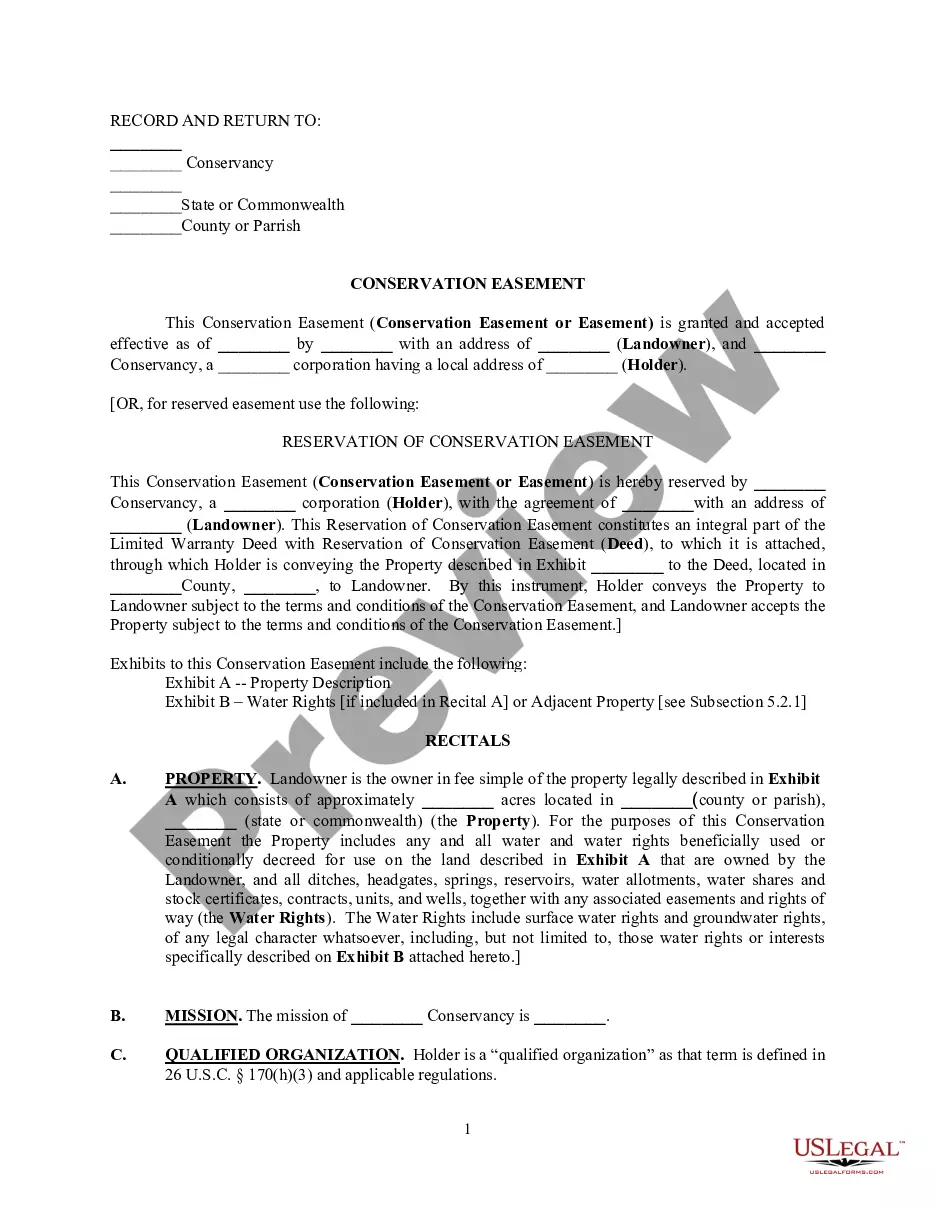
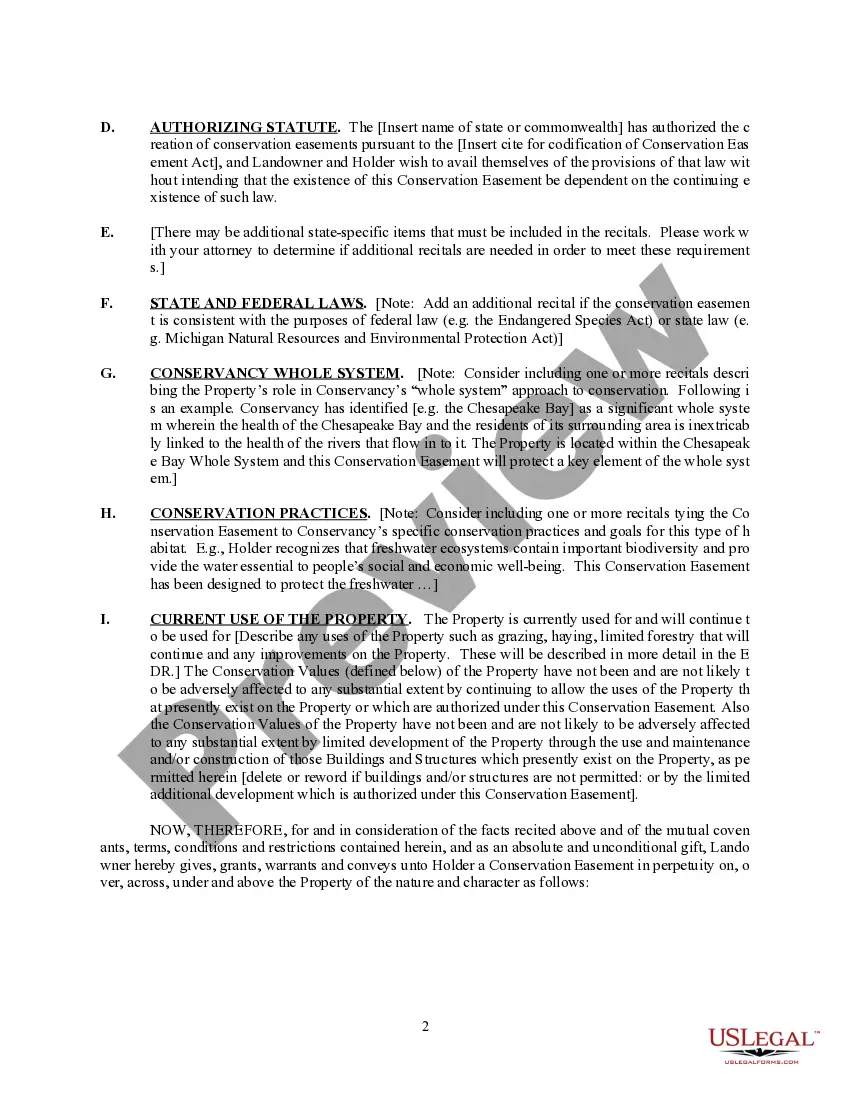
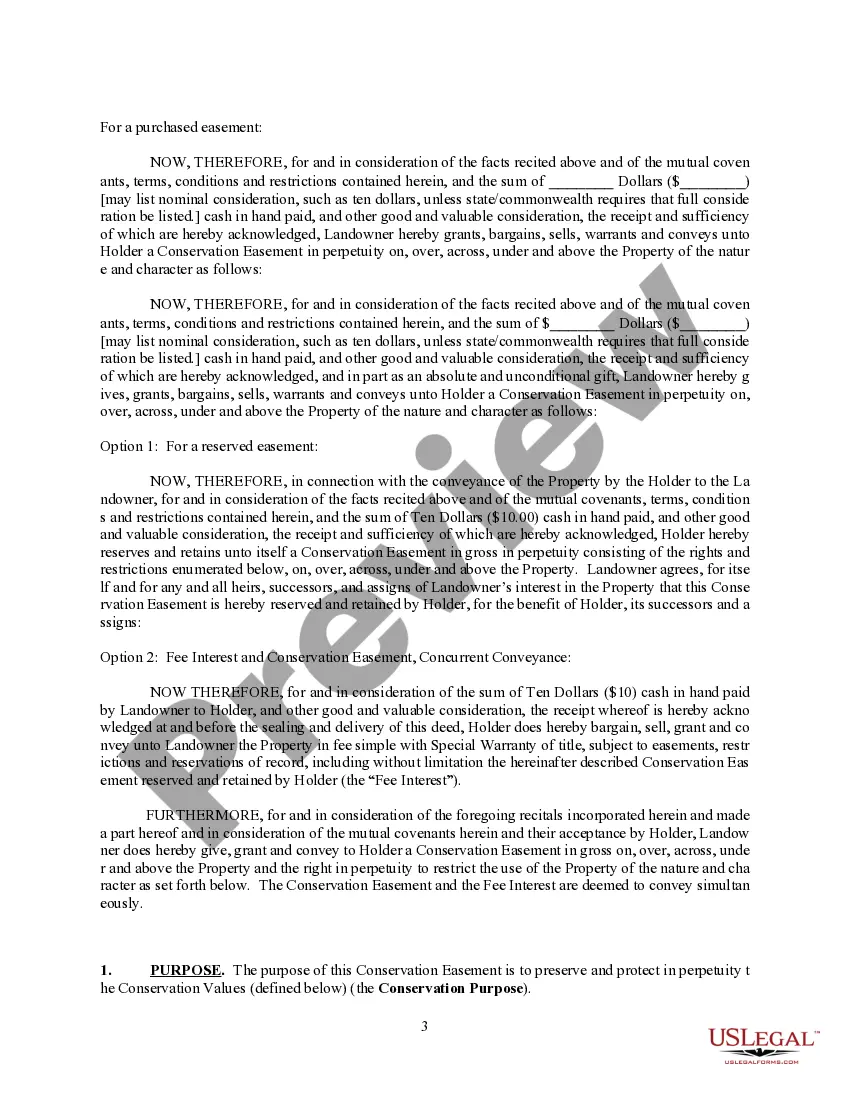
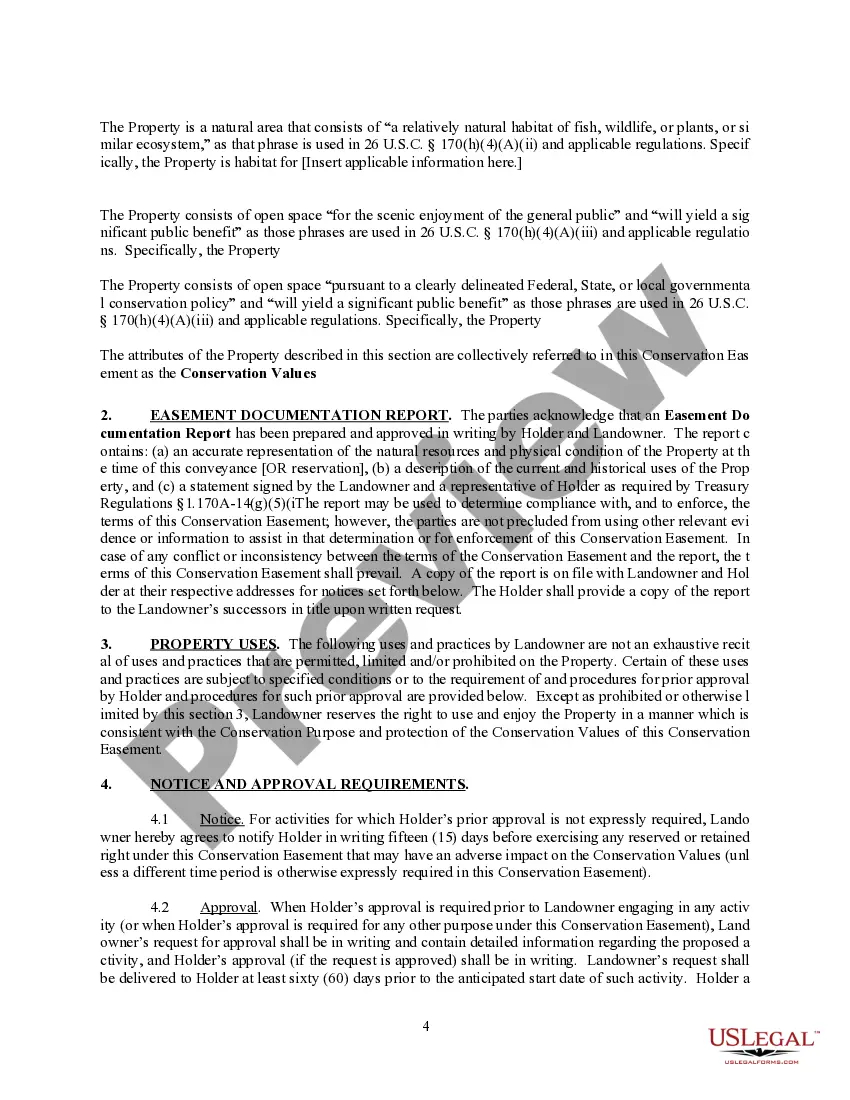
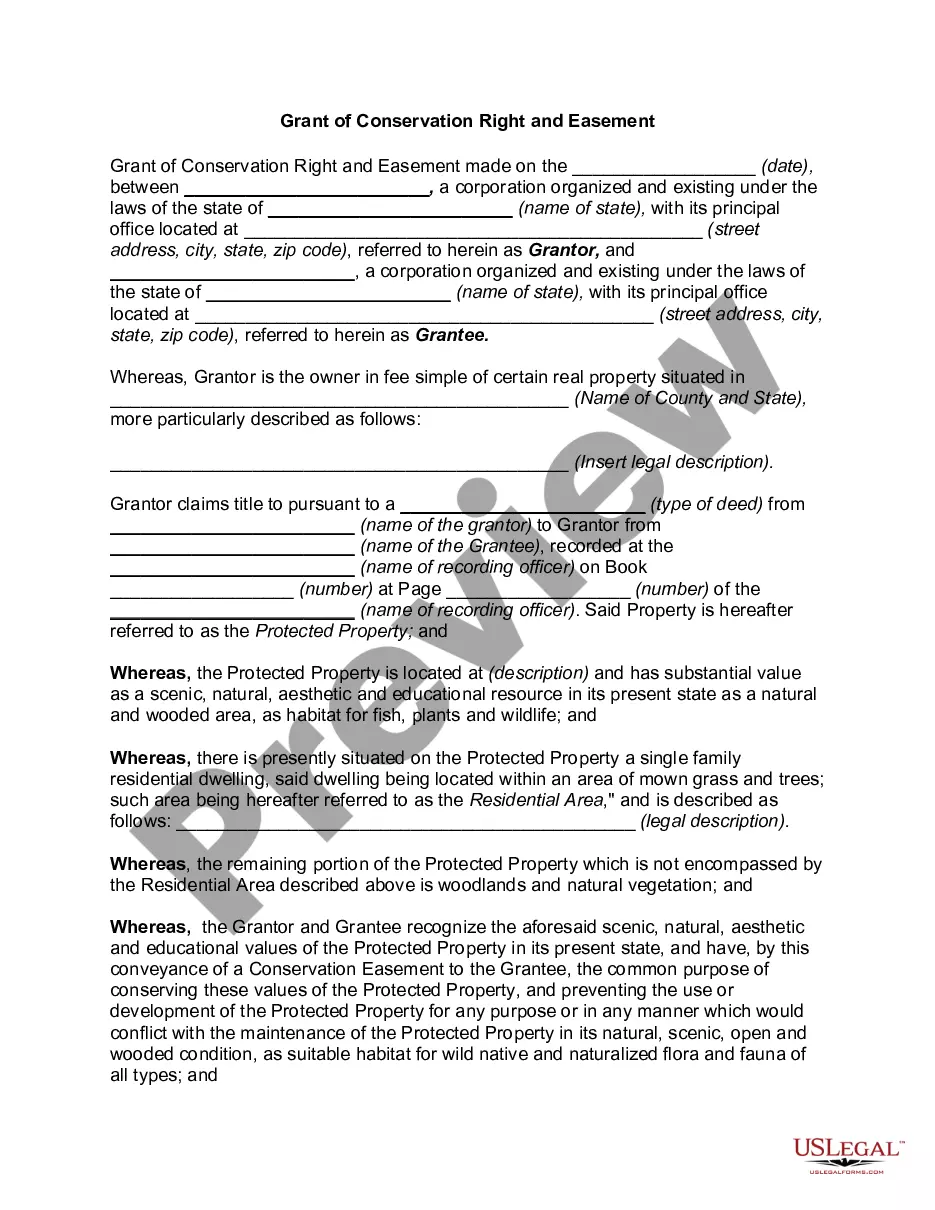
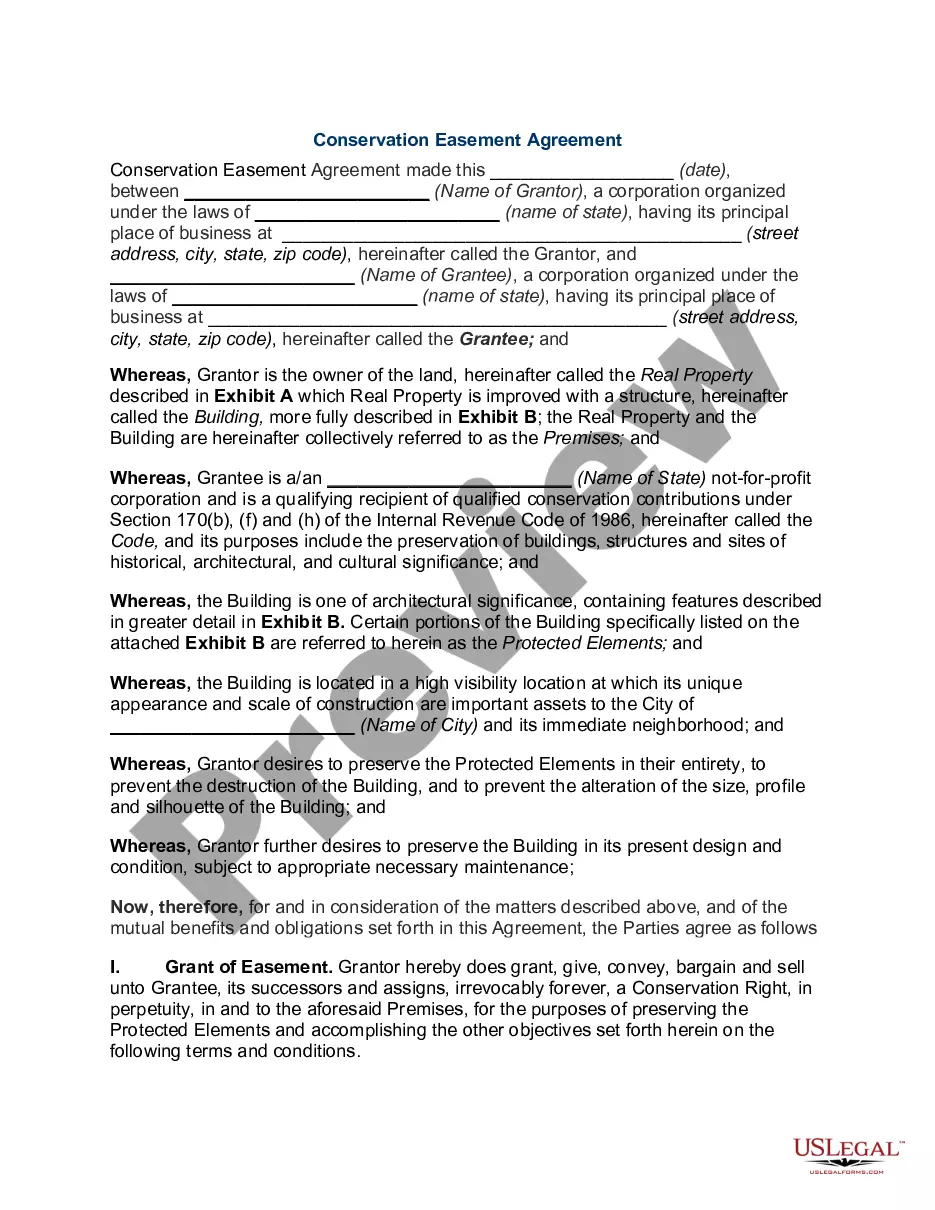
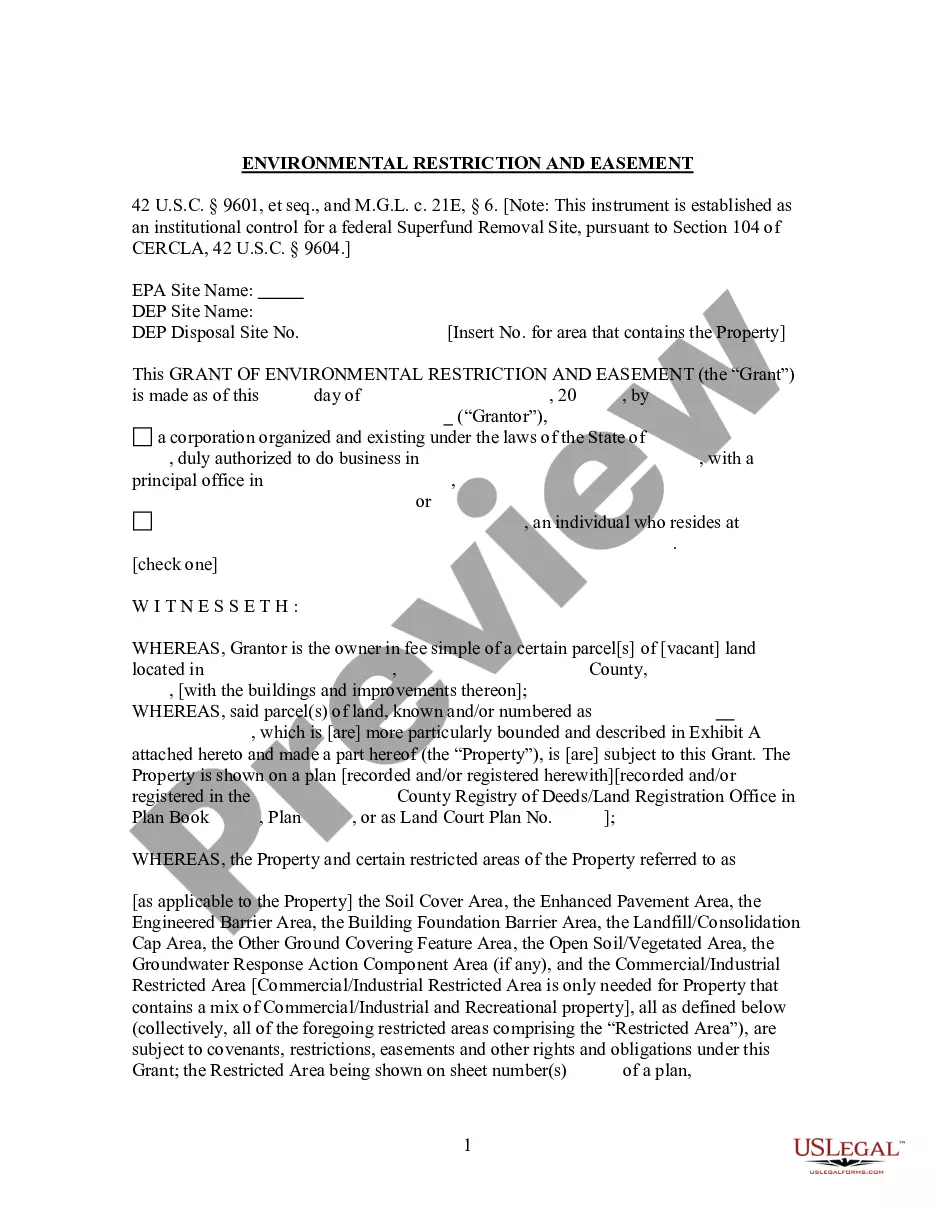
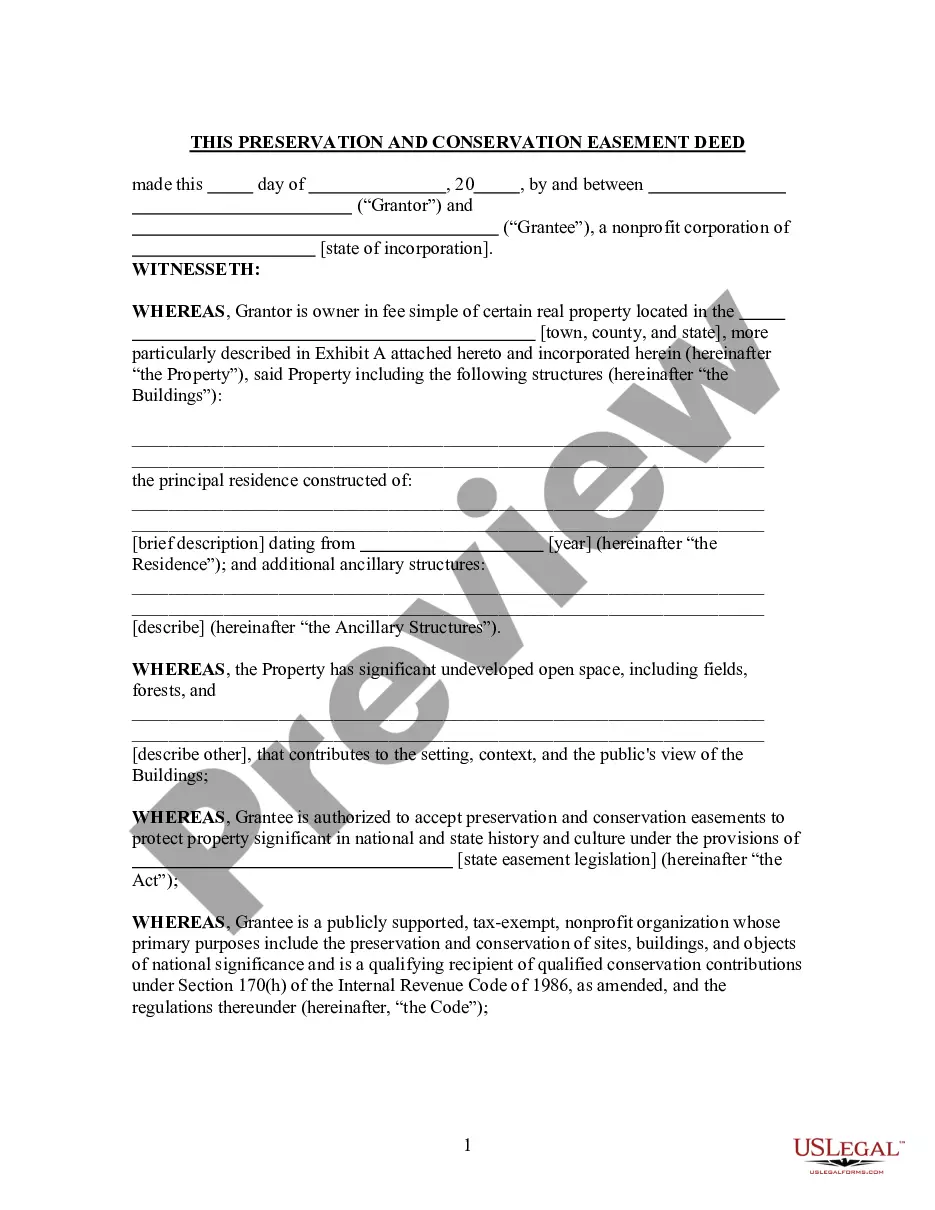
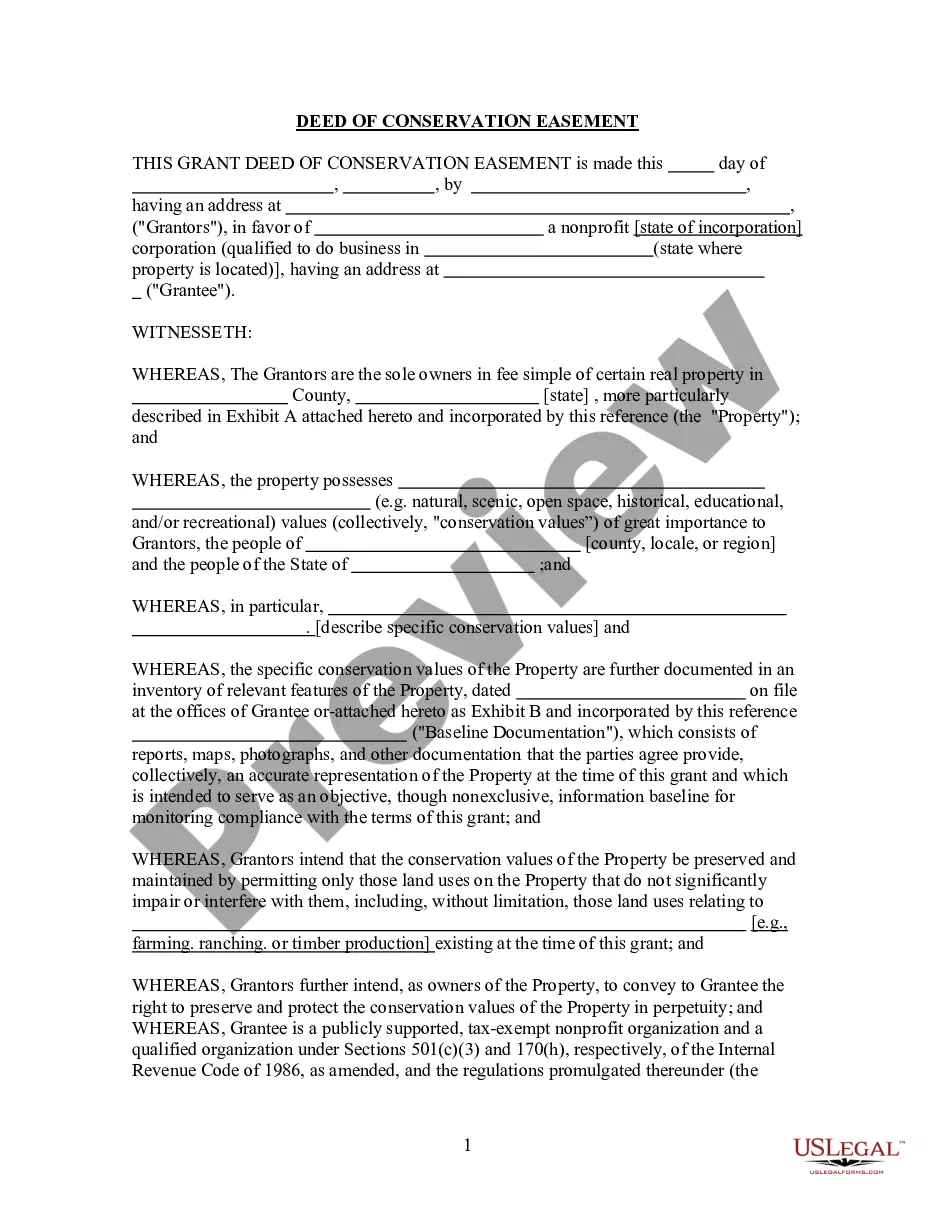
The Conservation Easement is a legal agreement that allows a landowner to convey certain uses or benefits of their land to another party, typically a conservancy, without relinquishing ownership. This legal document serves to protect the conservation values of a property while allowing the landowner to retain some rights to the land. Unlike other property agreements, a conservation easement restricts future development and land use to preserve natural resources, wildlife habitats, or open space. It is an essential tool for individuals looking to protect environmentally significant land.
Form components explained
- Identification of the landowner and the conservancy holding the easement.
- Property description, including acreage and specific features.
- Mission statement and purpose of the conservancy.
- Description of conservation practices and goals concerning the property.
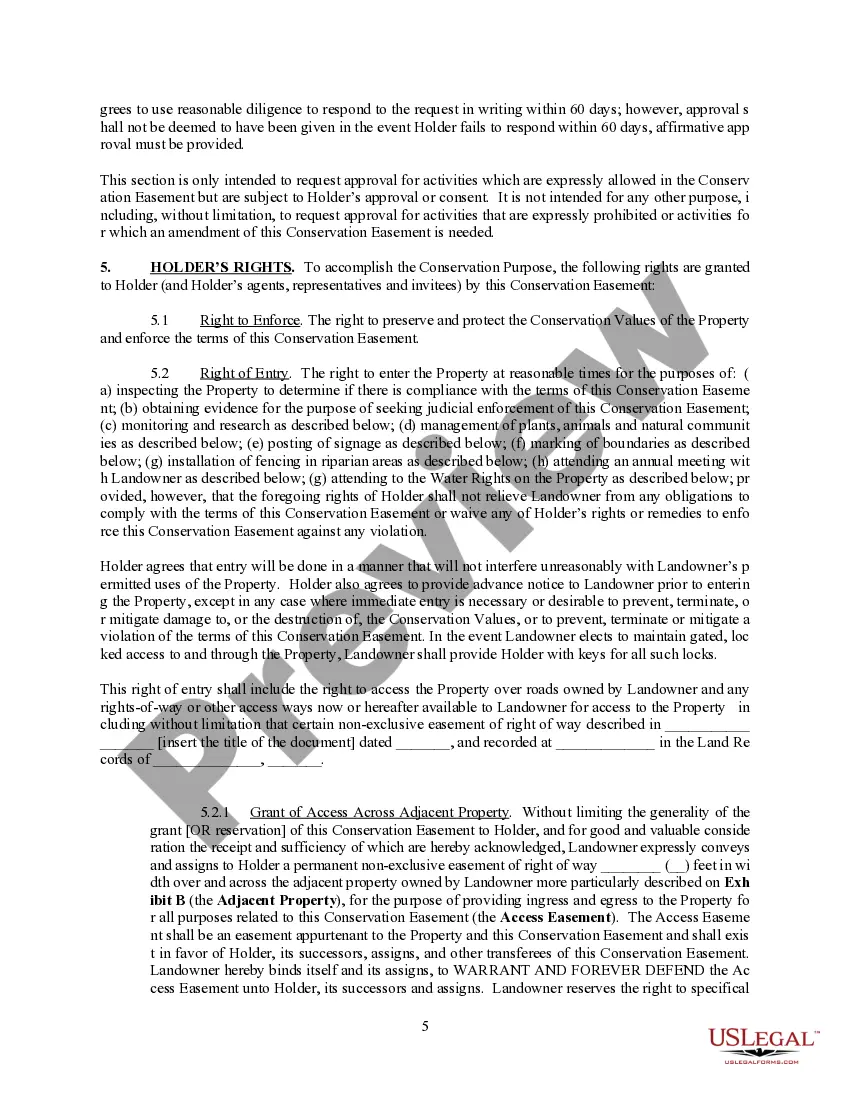
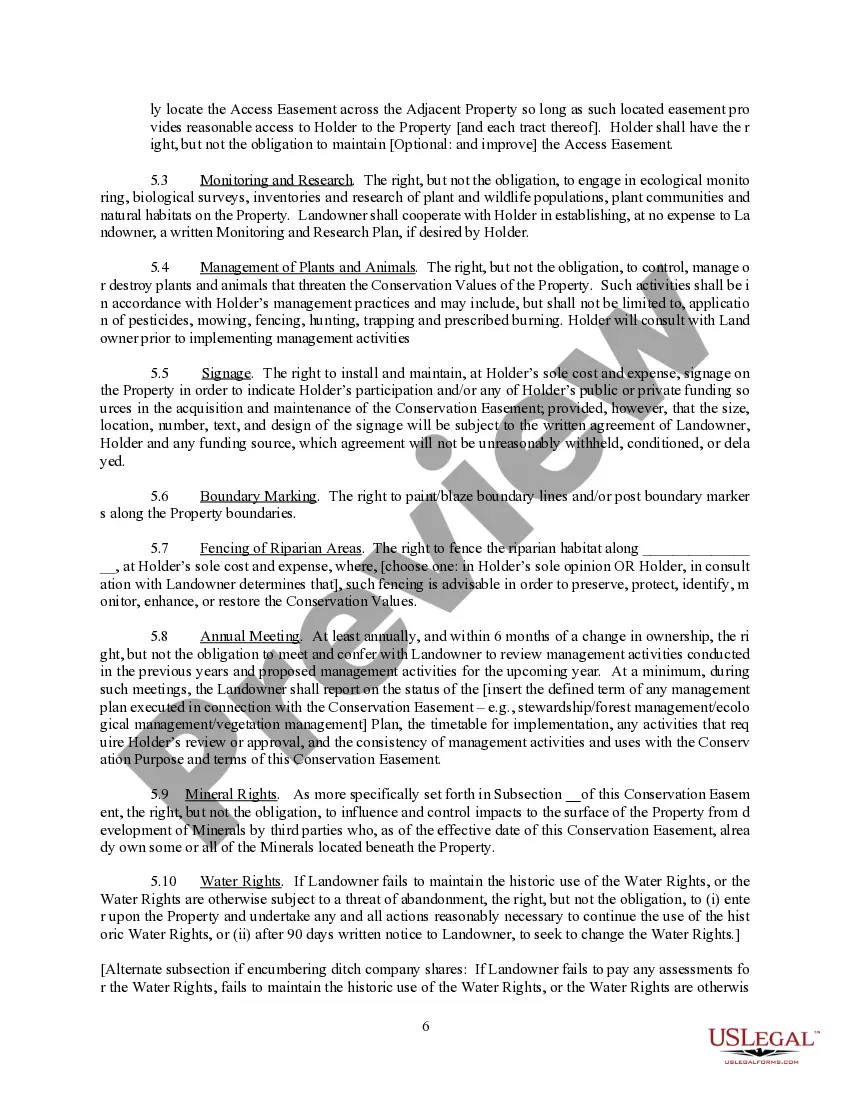
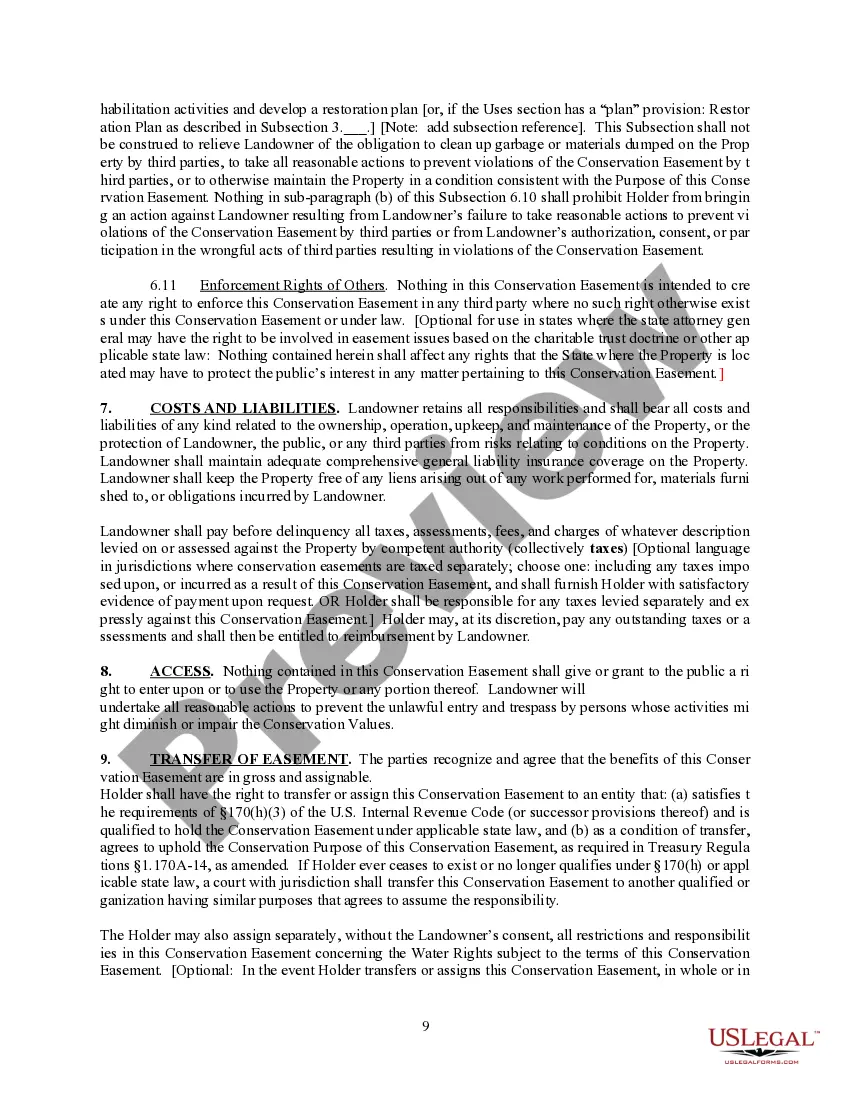
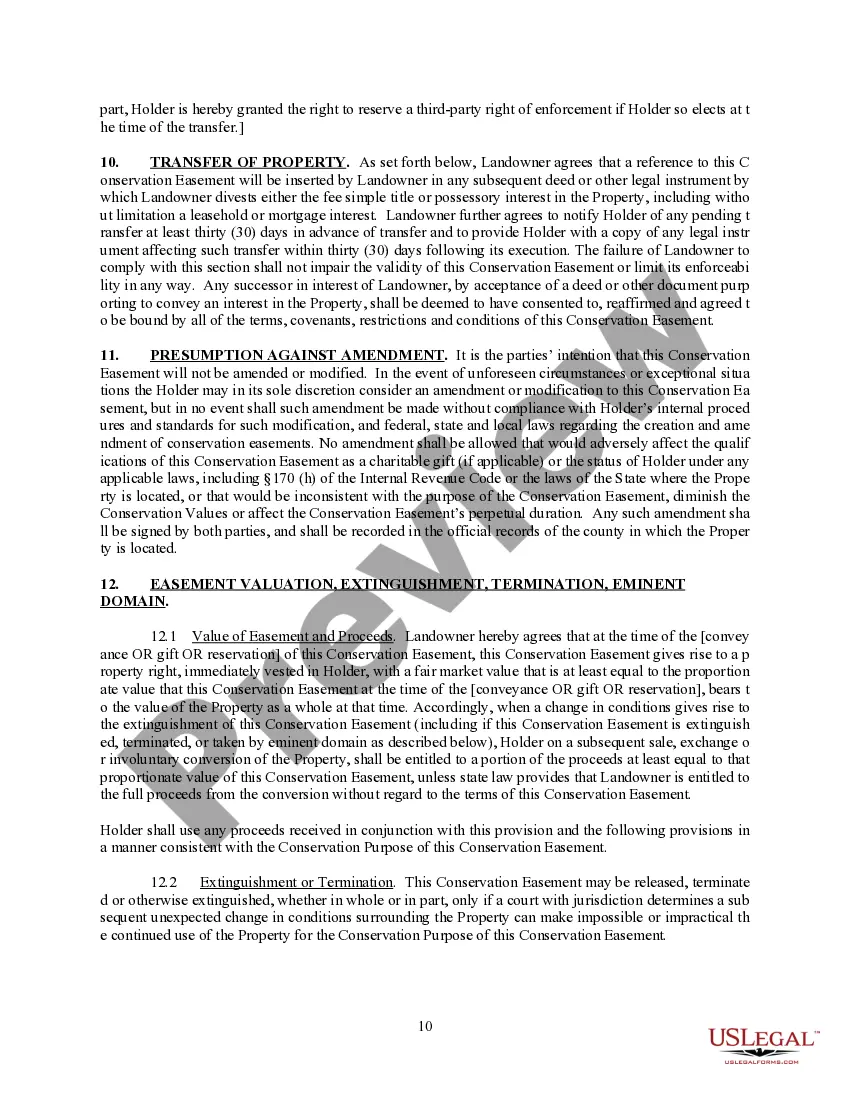
- Rights and obligations of both the landowner and the holder of the easement, including monitoring and management rights.
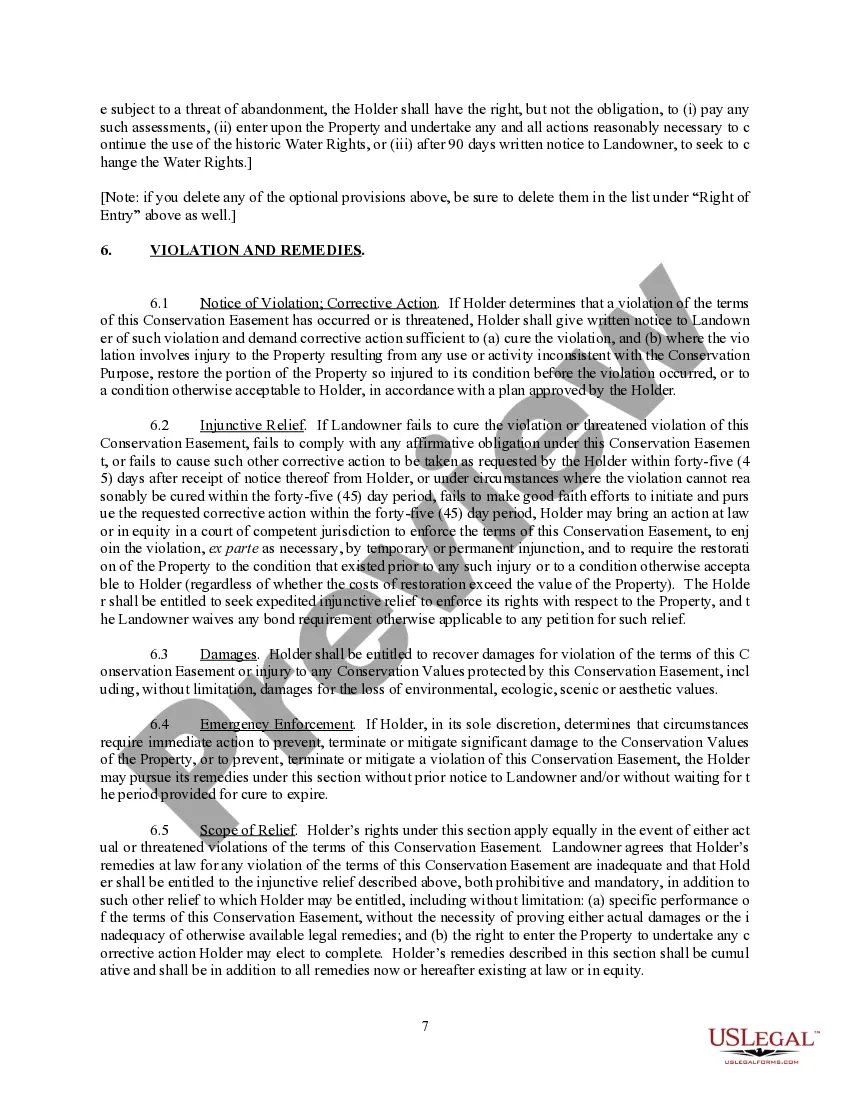
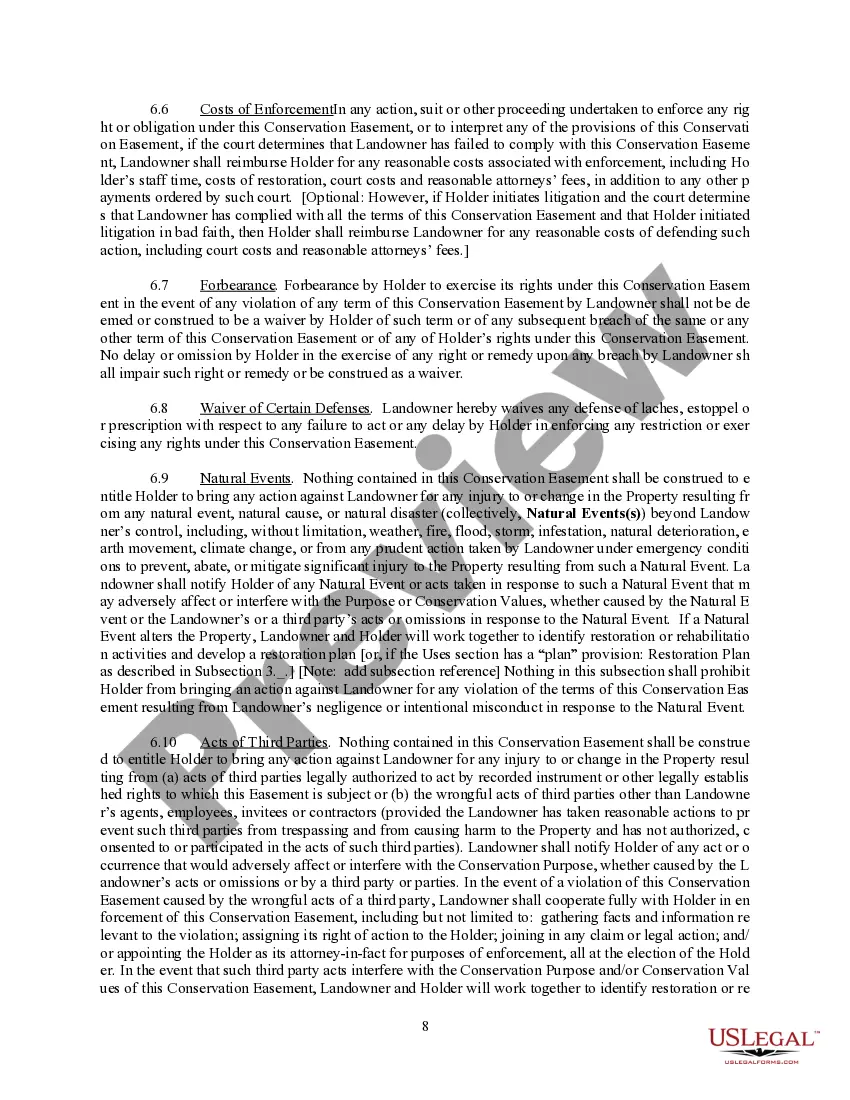
- Terms of enforcement and resolution of violations.

Situations where this form applies
This form is used when a landowner wishes to protect their property for conservation purposes without giving up ownership. It is appropriate in situations where a landowner wants to preserve natural habitats, water resources, or agricultural land from future development. It is also applicable for landowners seeking tax benefits from conservation donations.
Who this form is for
This form is intended for:
- Landowners who wish to conserve their property.
- Environmental organizations or conservancies involved in land conservation.
- Individuals interested in establishing long-term protections for natural resources.
- Propertyowners seeking potential tax benefits related to conservation easements.
Instructions for completing this form
- Identify the parties involved: specify the landowner and the conservancy.
- Provide a detailed description of the property, including legal descriptions and any relevant water rights.
- State the conservation purpose and mission of the conservancy.
- Outline the rights and responsibilities of both the landowner and the conservancy regarding property management and monitoring.
- Sign and date the form, ensuring it is witnessed or notarized if required by local law.
Notarization guidance
Yes, this form must be notarized to be legally valid. US Legal Forms offers integrated online notarization services, allowing you to complete this process securely via video call at any time without the need to travel.
Get your form ready online
Our built-in tools help you complete, sign, share, and store your documents in one place.
Make edits, fill in missing information, and update formatting in US Legal Forms—just like you would in MS Word.
Download a copy, print it, send it by email, or mail it via USPS—whatever works best for your next step.
Sign and collect signatures with our SignNow integration. Send to multiple recipients, set reminders, and more. Go Premium to unlock E-Sign.
If this form requires notarization, complete it online through a secure video call—no need to meet a notary in person or wait for an appointment.
We protect your documents and personal data by following strict security and privacy standards.

Make edits, fill in missing information, and update formatting in US Legal Forms—just like you would in MS Word.

Download a copy, print it, send it by email, or mail it via USPS—whatever works best for your next step.

Sign and collect signatures with our SignNow integration. Send to multiple recipients, set reminders, and more. Go Premium to unlock E-Sign.

If this form requires notarization, complete it online through a secure video call—no need to meet a notary in person or wait for an appointment.

We protect your documents and personal data by following strict security and privacy standards.
Common mistakes
- Failing to provide a detailed property description, leading to ambiguities.
- Not sufficiently outlining the rights and responsibilities of the parties involved.
- Neglecting to consult with a legal advisor for jurisdiction-specific requirements.
Why complete this form online
- Convenience: Access the form anytime, ensuring quick turnaround on legal documents.
- Editability: Easily make necessary customizations to fit specific property and legal needs.
- Reliable: Forms are drafted by licensed attorneys, ensuring compliance with legal standards.
What to keep in mind
- A conservation easement is crucial for landowners looking to protect their properties from future development.
- Ensure all details about the property and the parties involved are clearly outlined.
- Consider consulting legal counsel for state-specific requirements and implications.
Looking for another form?
Form popularity
FAQ
Income Tax Benefits Landowners donating qualifying conservation easements may be eligible to deduct up to 50% of their adjusted gross income each year for the year of the easement donation and the following five years, or until the value of the easement gift is used up, whichever occurs first.
(a) A conservation easement is an interest in real property voluntarily created and freely transferable in whole or in part for the purposes stated in Section 815.1 by any lawful method for the transfer of interests in real property in this state. (b) A conservation easement shall be perpetual in duration.
Benefits Conservation easements can be an effective tool to protect land, often at lower cost to land trusts and public agencies. A conservation easement is a legally binding agreement between a landowner and a land trust or government agency where the landowner retains many private property rights.
Conservation easements may indirectly help protect water quality. Land that property owners set aside in a permanent conservation easement has a prescribed set of uses or activities that generally restrict future development. Often, this limits impervious surface development and preserves an area's natural hydrology.
Most conservation easements are permanent and bind all future landowners (including heirs). Conservation easement holders and farmers may not always share a common vision. Conservation easements can reduce the property's overall value, making the land worth less for future sales.
A conservation easement is a legal agreement made voluntarily between a landowner and a land trust or government agency to protect a piece of land conservation. When the easement is made, it permanently limits the use of the land in question.