Environmental Restriction Easement
Overview of this form
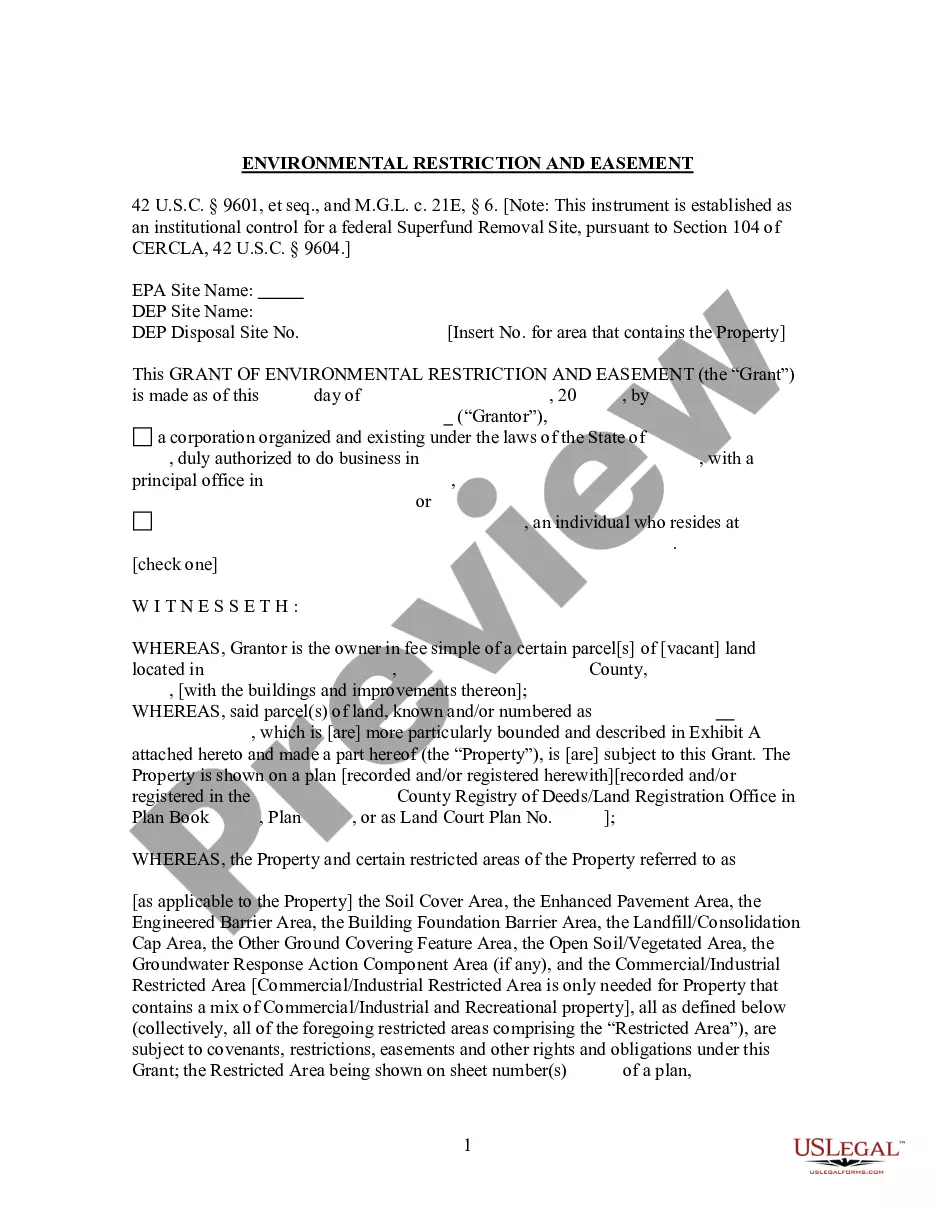
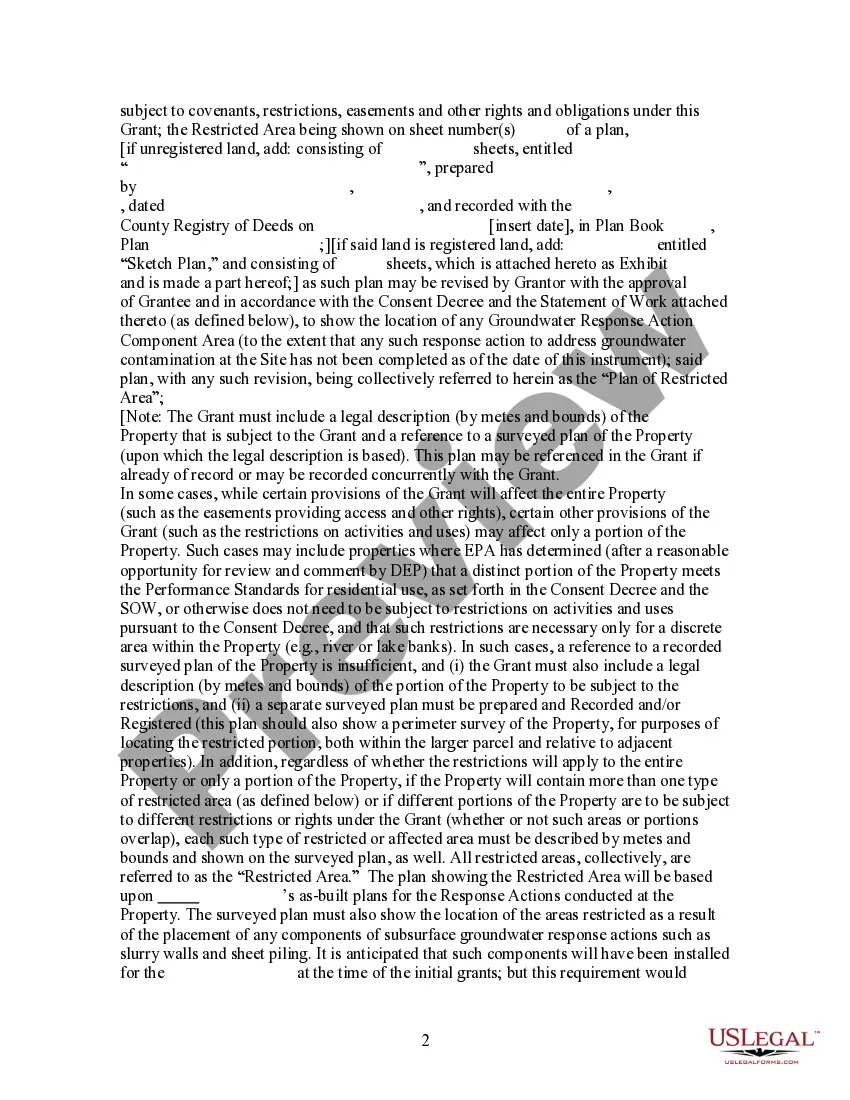
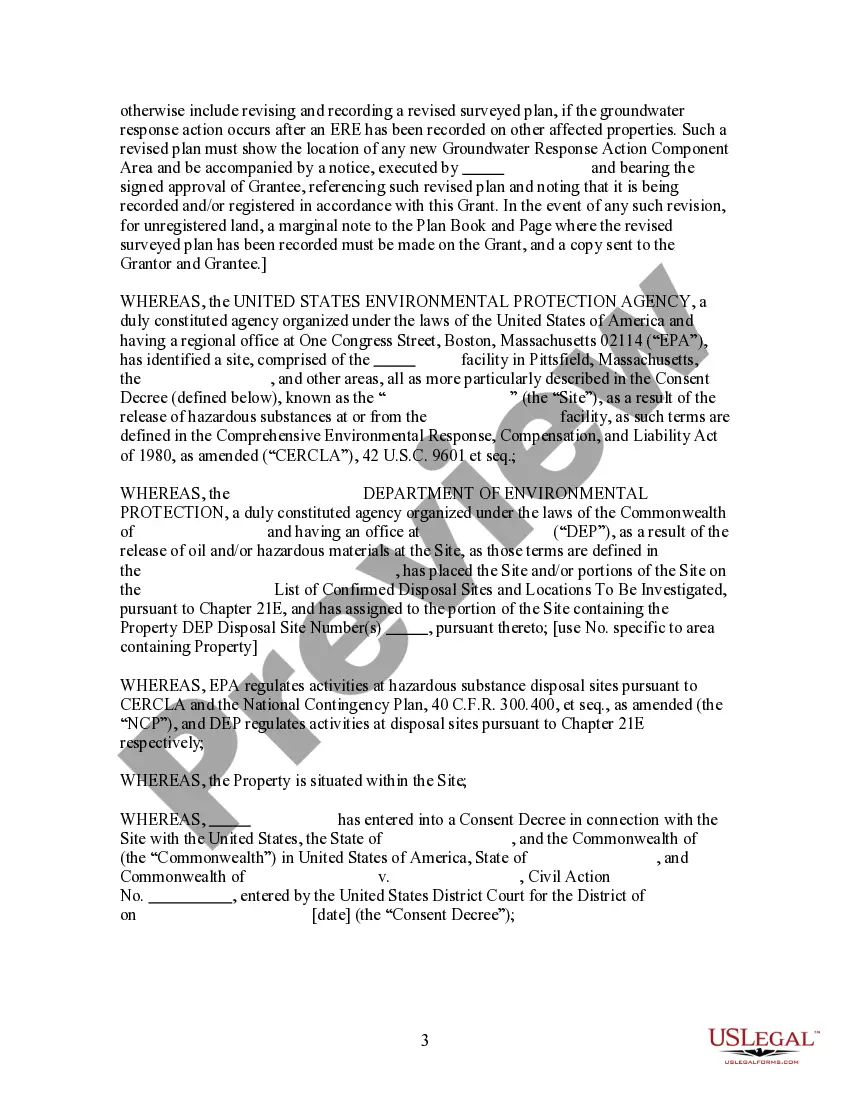
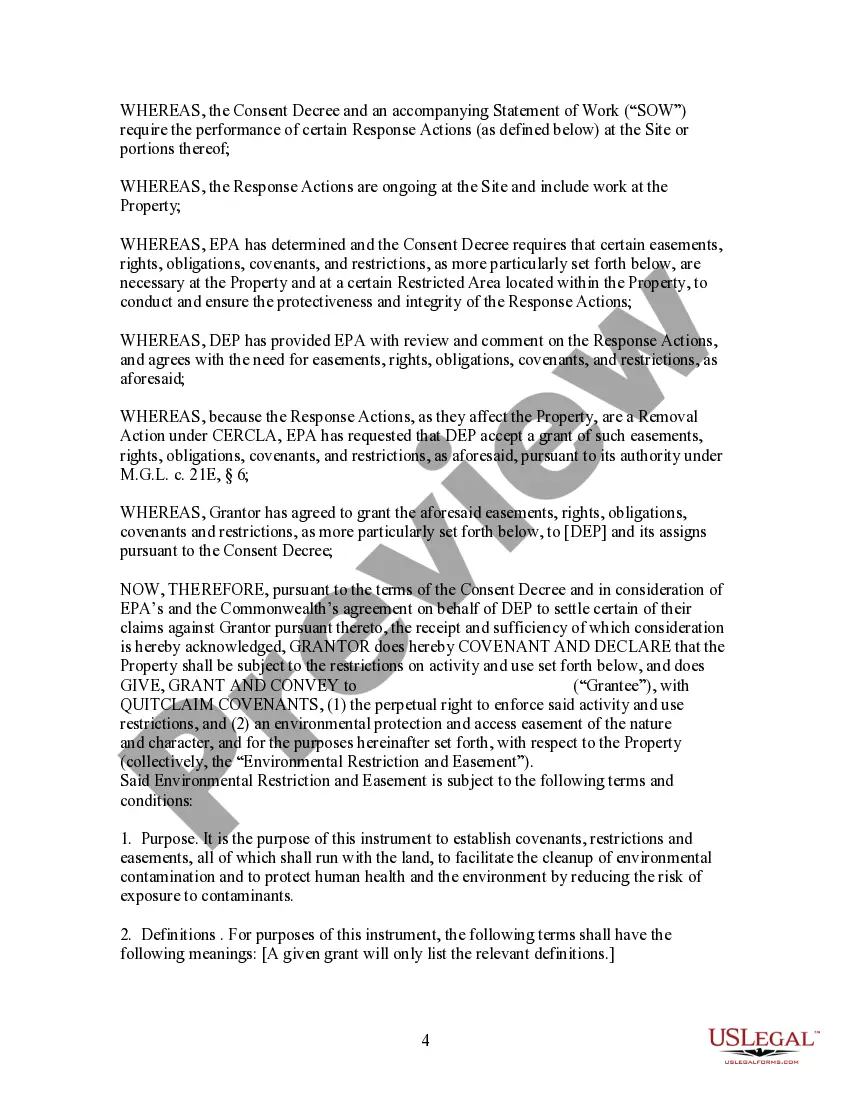
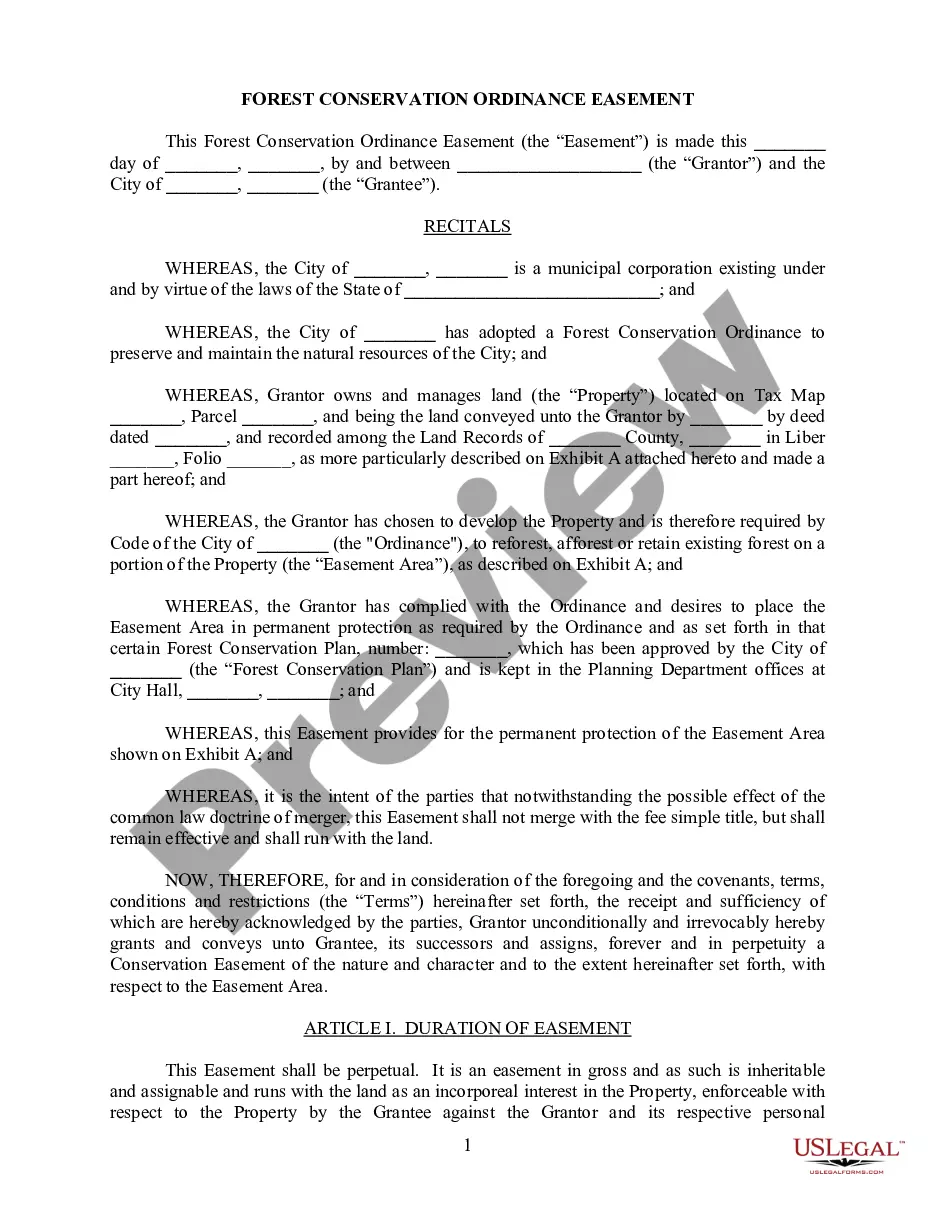
The Environmental Restriction Easement is a legal document that establishes specific covenants and restrictions on a property, typically as part of a federal court order related to environmental cleanup efforts. This form is essential for facilitating the cleanup of contaminated properties while ensuring the protection of human health and the environment. Unlike general easements, this form focuses specifically on environmental protections to mitigate exposure to hazardous substances at designated sites.
Key parts of this document
- A clear legal description of the property, including specifics such as metes and bounds.
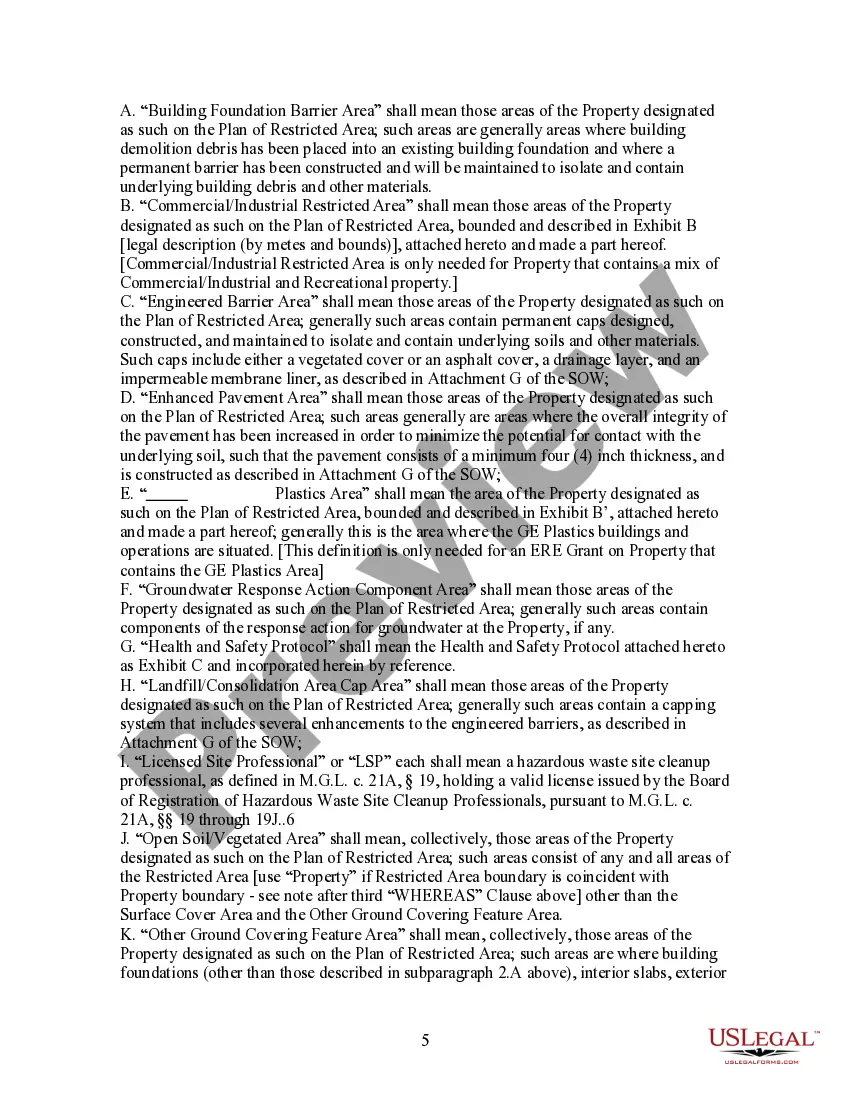
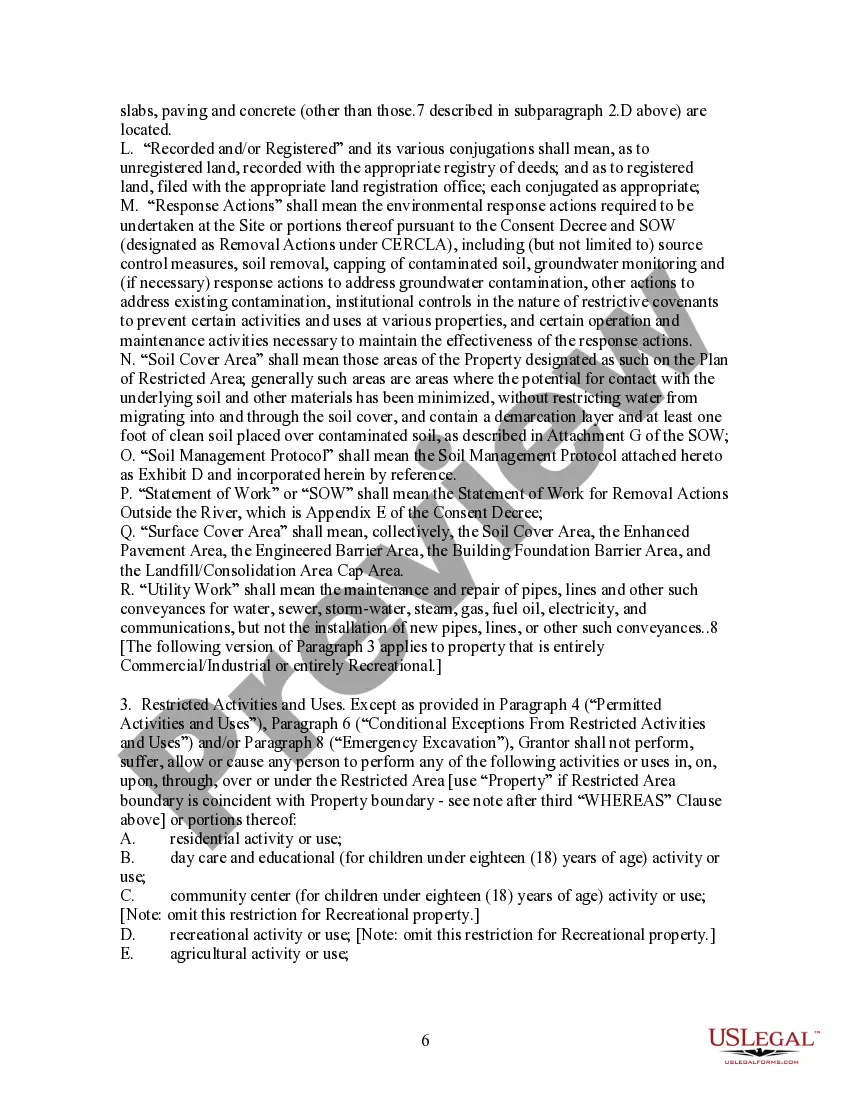
- Definitions of key terms related to the property and restricted activities.
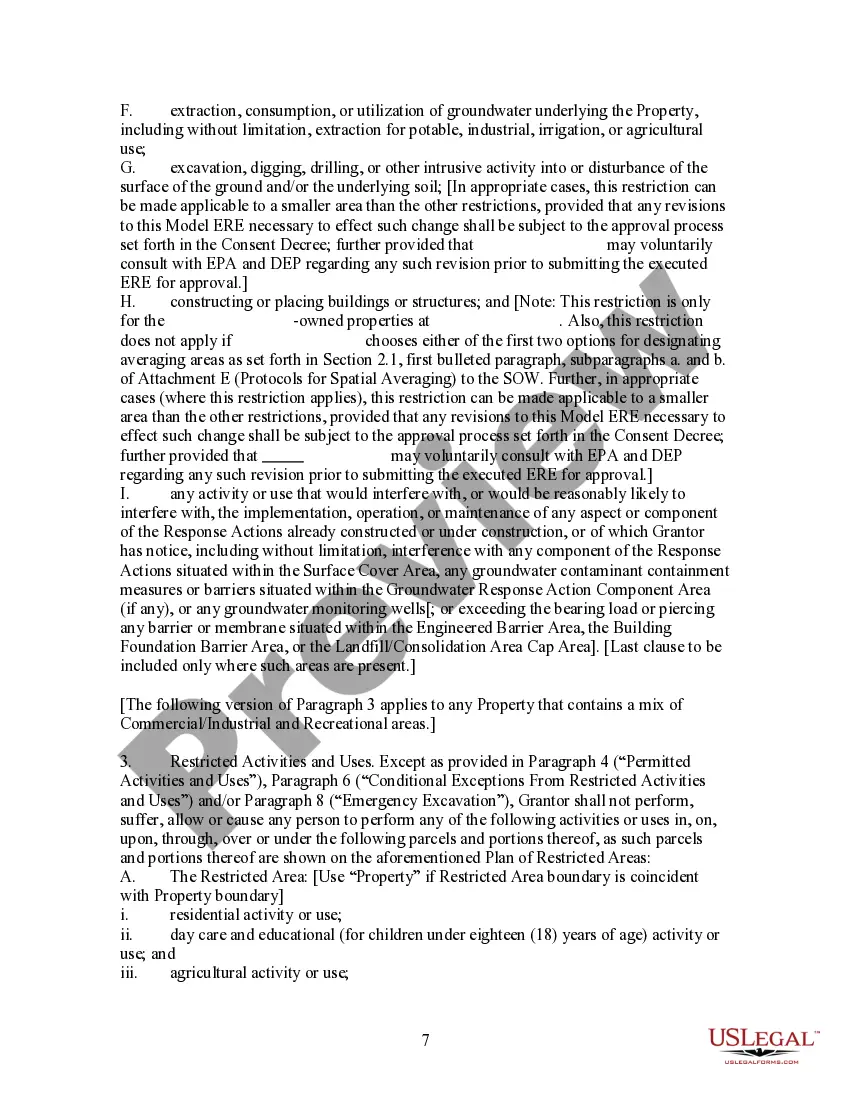
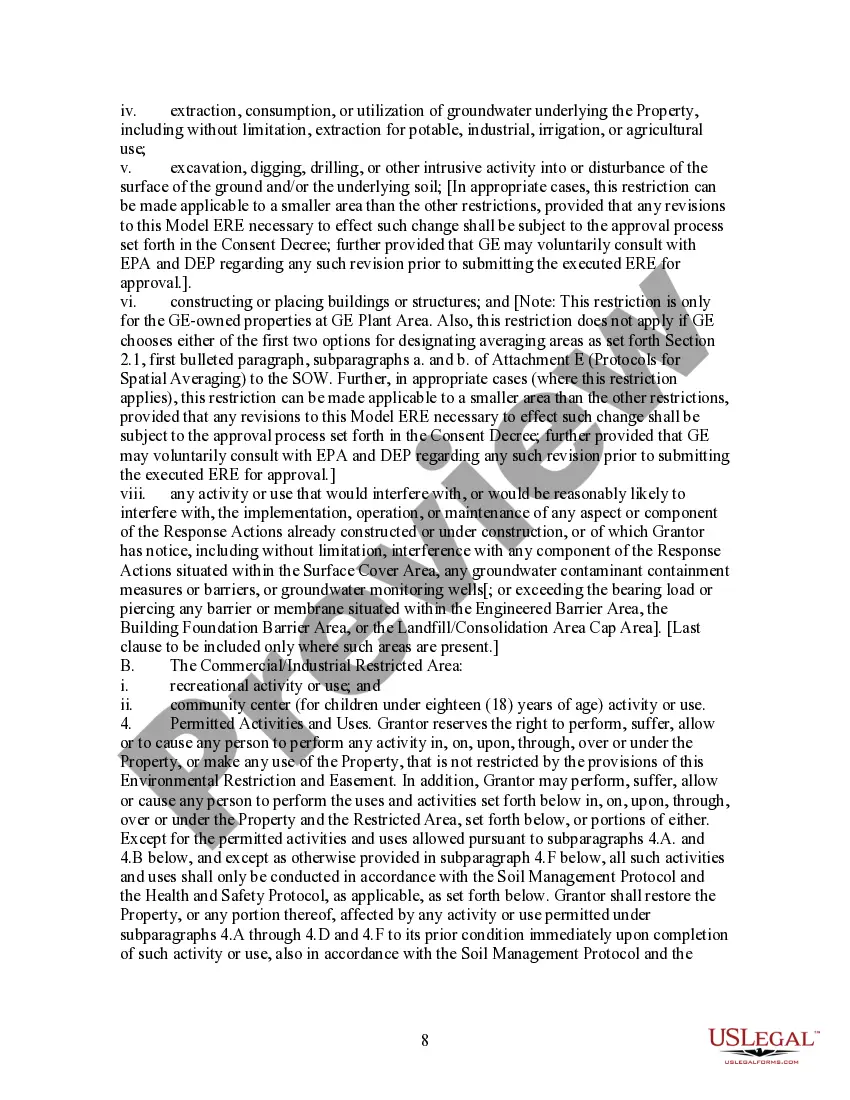
- Details about the restricted activities that cannot be performed on the property.
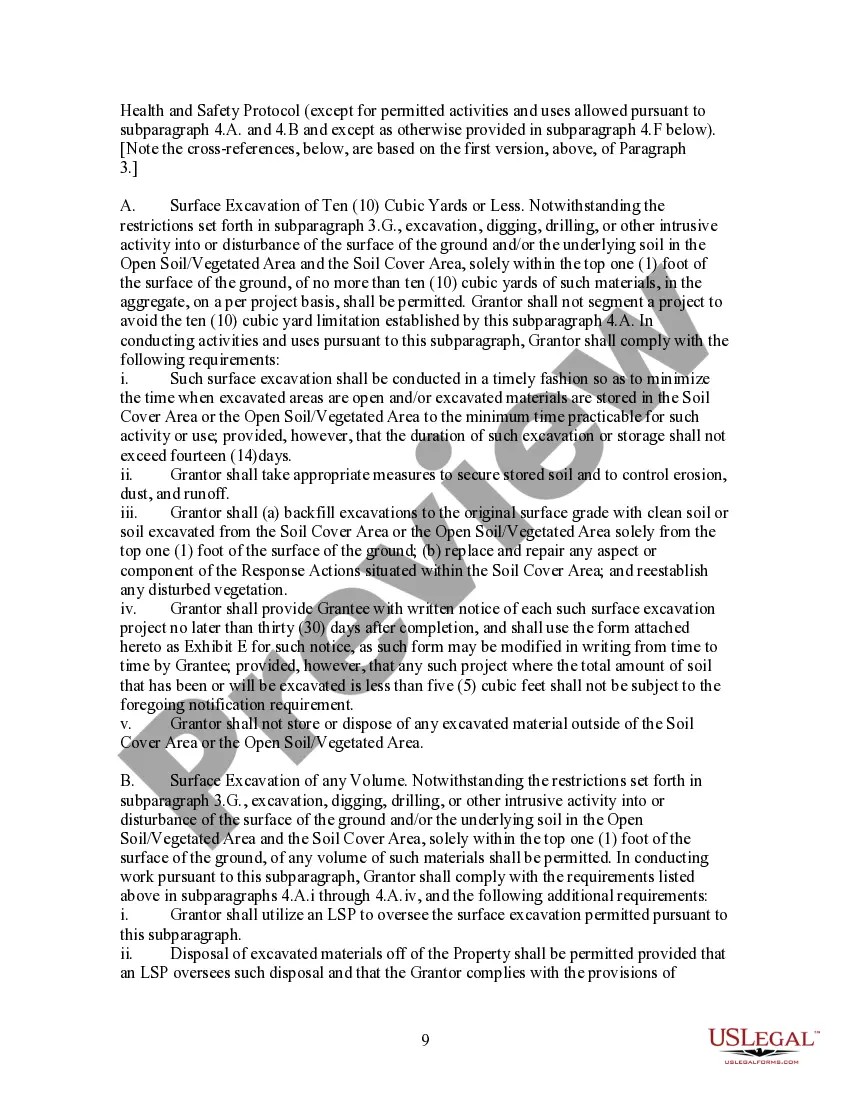
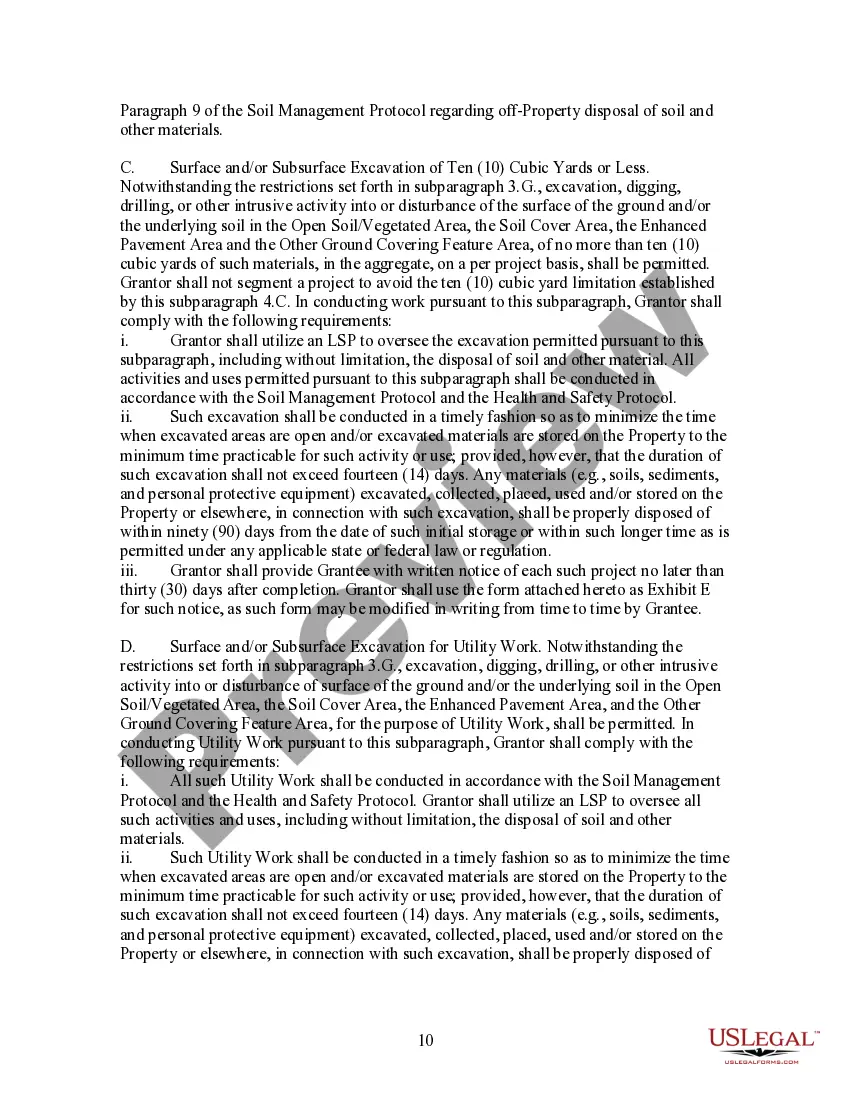
- Permitted activities and any conditional exceptions that may apply.
- Obligations and conditions that the grantor must follow to maintain compliance.
- Provisions for enforcement and compliance monitoring by the overseeing authorities.

When to use this document
This form should be used when a property is impacted by hazardous substances and is subject to federal environmental regulations. It is necessary when property owners need to establish restrictions on the usage of the land to ensure compliance with cleanup actions mandated by federal authorities such as the EPA. Additionally, it is used when there is a need to manage potential risks associated with contamination in order to protect public health and the environment.
Who should use this form
- Property owners dealing with sites affected by hazardous substances.
- Developers or investors considering projects on contaminated land.
- Environmental professionals overseeing remediation activities.
- Legal representatives managing property compliance with environmental laws.
Instructions for completing this form
- Identify the parties involved in the easement and enter their details.
- Specify the property by including a detailed legal description.
- Outline any restrictions on property use, listing forbidden activities.
- Detail any permitted activities and conditional exceptions as they apply.
- Have the form signed by all necessary parties to certify agreement.
Notarization guidance
This form does not typically require notarization unless specified by local law. It is advisable to verify any specific local requirements to ensure compliance.
Get your form ready online
Our built-in tools help you complete, sign, share, and store your documents in one place.
Make edits, fill in missing information, and update formatting in US Legal Forms—just like you would in MS Word.
Download a copy, print it, send it by email, or mail it via USPS—whatever works best for your next step.
Sign and collect signatures with our SignNow integration. Send to multiple recipients, set reminders, and more. Go Premium to unlock E-Sign.
If this form requires notarization, complete it online through a secure video call—no need to meet a notary in person or wait for an appointment.
We protect your documents and personal data by following strict security and privacy standards.

Make edits, fill in missing information, and update formatting in US Legal Forms—just like you would in MS Word.

Download a copy, print it, send it by email, or mail it via USPS—whatever works best for your next step.

Sign and collect signatures with our SignNow integration. Send to multiple recipients, set reminders, and more. Go Premium to unlock E-Sign.

If this form requires notarization, complete it online through a secure video call—no need to meet a notary in person or wait for an appointment.

We protect your documents and personal data by following strict security and privacy standards.
Common mistakes
- Failing to provide a complete and accurate legal description of the property.
- Not including all relevant parties' signatures, leading to disputes later.
- Ignoring state-specific requirements related to the easement.
- Omitting key definitions that may lead to ambiguities in interpretation.
Advantages of online completion
- Convenience of accessing and completing the form from anywhere at any time.
- Editability allows for easy updates and revisions as needed.
- Access to legal templates drafted by licensed attorneys ensures reliability.
- Safeguards compliance with legal requirements to streamline the filing process.
Legal use & context
- The Environmental Restriction Easement acts as a legal safeguard to enforce remediation efforts.
- It is enforceable by both state and federal agencies to maintain compliance with environmental regulations.
- Failure to comply with the terms of the easement may result in legal penalties and remediation costs.
Quick recap
- The Environmental Restriction Easement is crucial for maintaining environmental safety and compliance.
- Accurate completion and awareness of legal requirements are key to avoiding future legal issues.
- Understanding the restrictions and permitted activities on a property is essential for property owners.
Looking for another form?
Form popularity
FAQ
Generally speaking, deed restrictions do not expire unless there is a specified, written expiration date. If there is a specific expiration date, it is possible for an HOA to vote to extend the time limit on the restriction.
In other words, you may be able to remove your restrictive covenant- but there are no guarantees.If you can agree to have the covenant removed, a 'Deed of Release of Restrictive Covenant' should be drawn up and signed by the dominant and servient owners.
If a neighbour threatens to breach a restrictive covenant binding on them you will probably want to obtain an injunction to prevent breach rather than simply claim monetary compensation.Generally only the owner of land which was, or was part of, the land intended to be benefited by the covenant, can enforce it.
A deed restriction can also be removed by a court order in some rare circumstances. If the deed restriction is discriminatory or illegal in other ways, a court will order it to be removed. In some situations, a judge can also find a deed restriction to be unfair and have it removed.
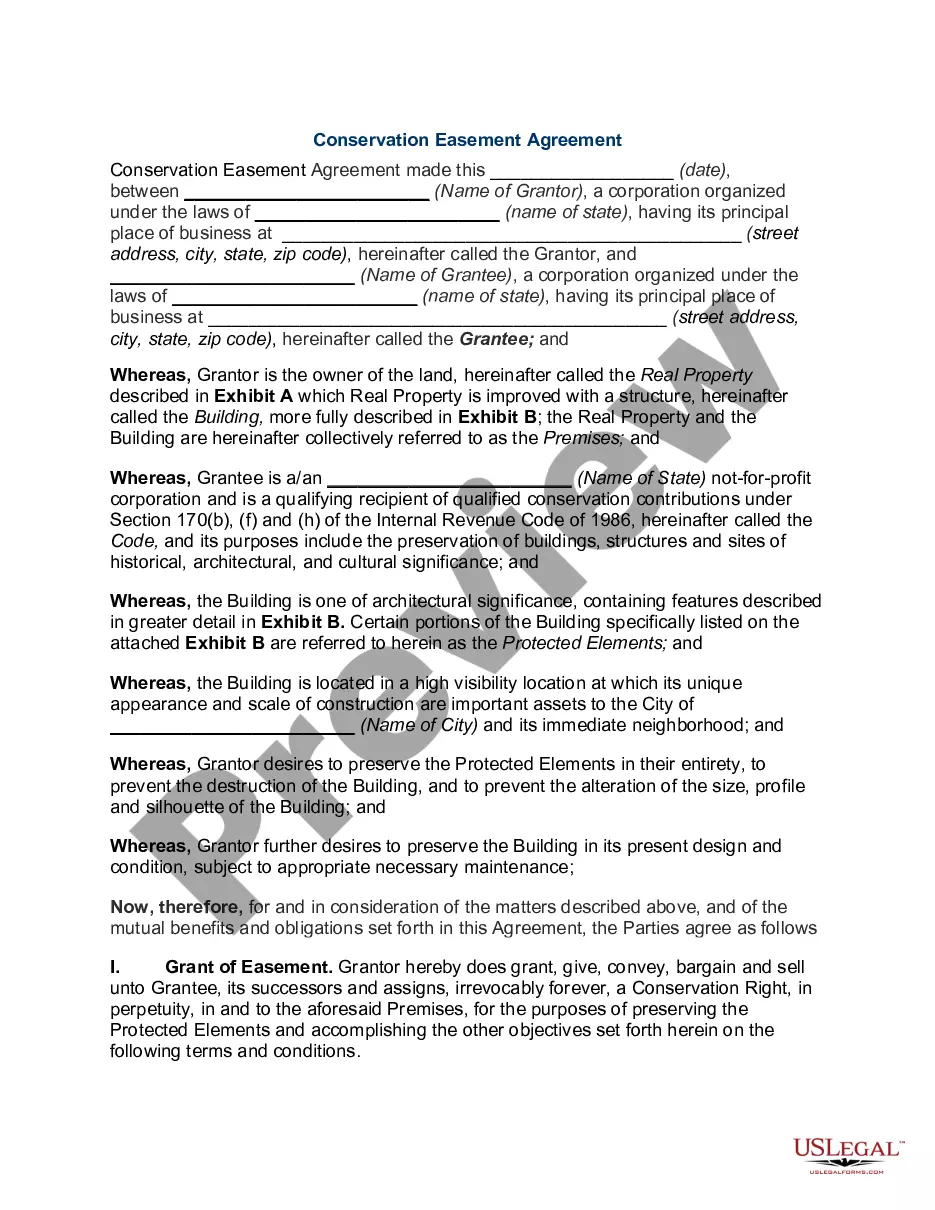
What are Easements and Rights-of-Way? Easements are nonpossessory interests in real property. More simply, an easement is the right to use another's property for a specific purpose. Rights-of-way are easements that specifically grant the holder the right to travel over another's property.
If you're considering a house with a deed restriction, you may be able to get the restriction removed before making your purchase. Here's what the process looks like: Get a copy of the covenant detailing the deed restriction. You'll need to go to the courthouse or your county clerk's office for this.
A private right of way is an easement, which is the right to use part of another's property in a particular way even though they do not own it.
A deed restriction is a limitation on how you can use your property. Deed restrictions can limit what you do on your property as well as what you can build on your land. They often involve a homeowners association. HOAs institute these standards to keep property values high.
While an easement provides a right to use someone else's land, a restrictive covenant places limits on how an owner can use his or her own property.