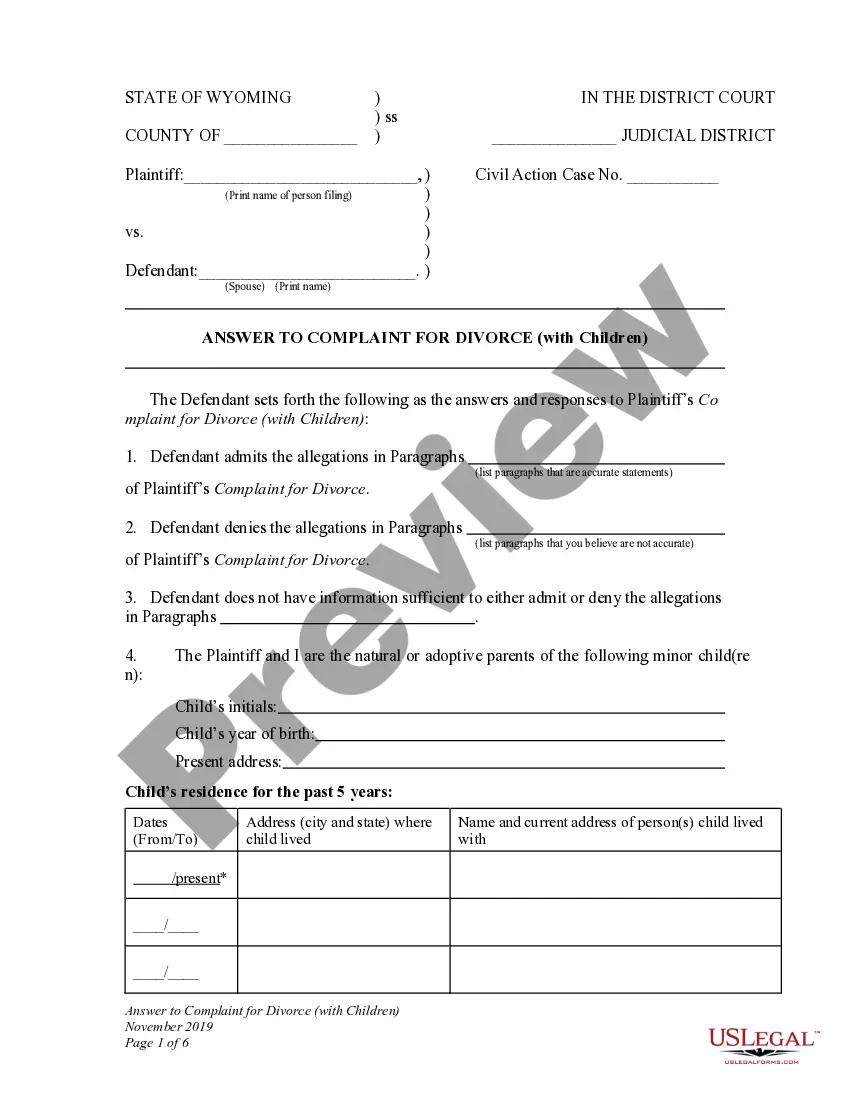
Easement Agreement
What is this form?
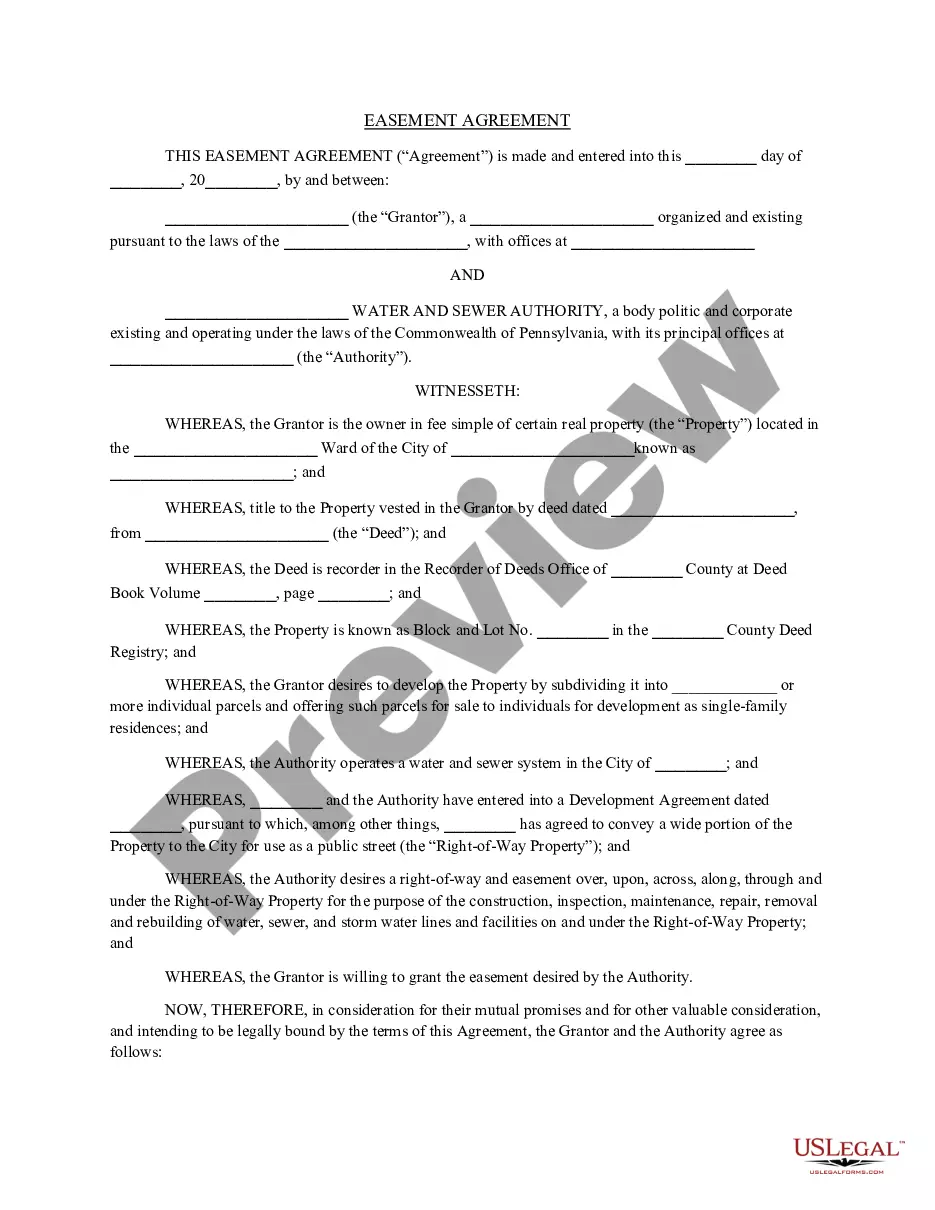
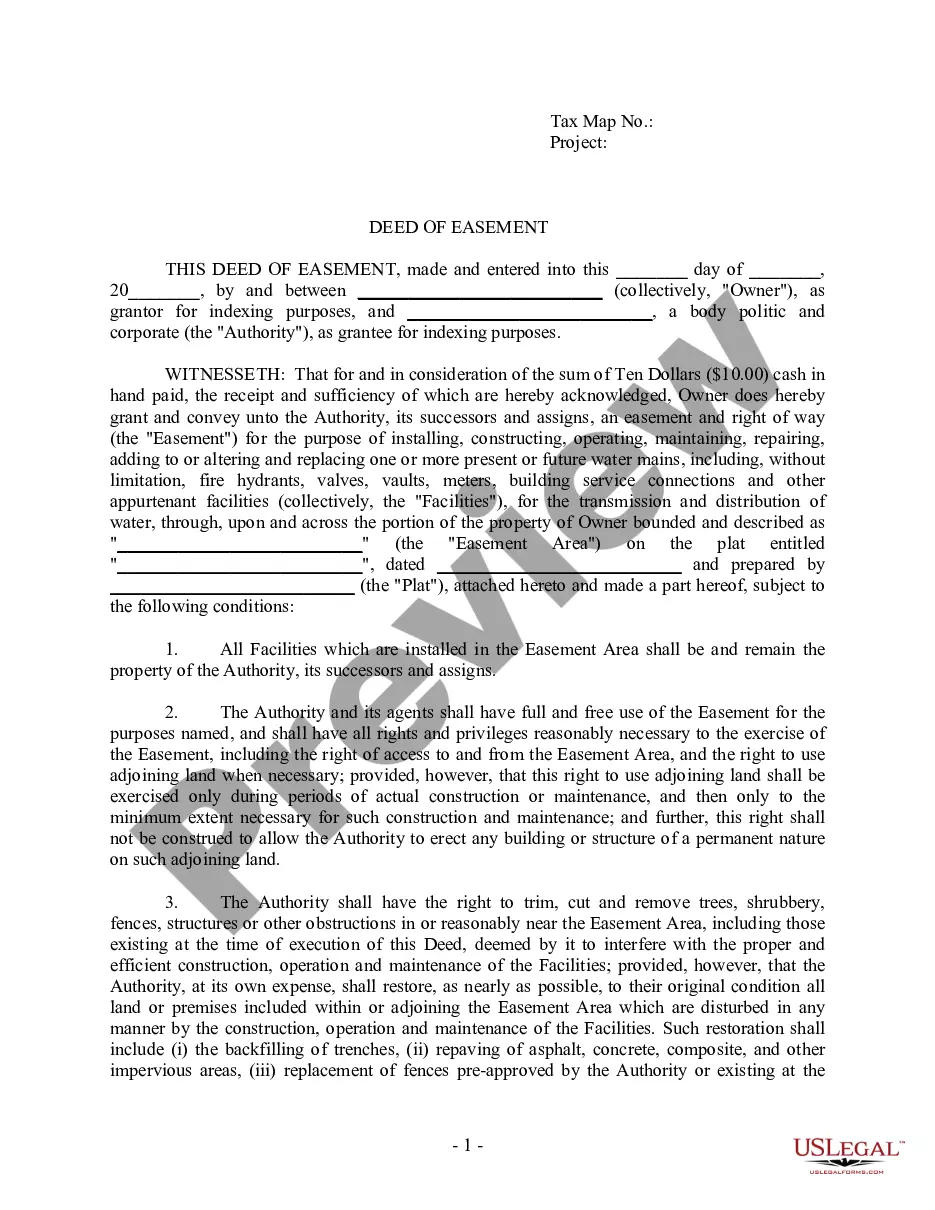
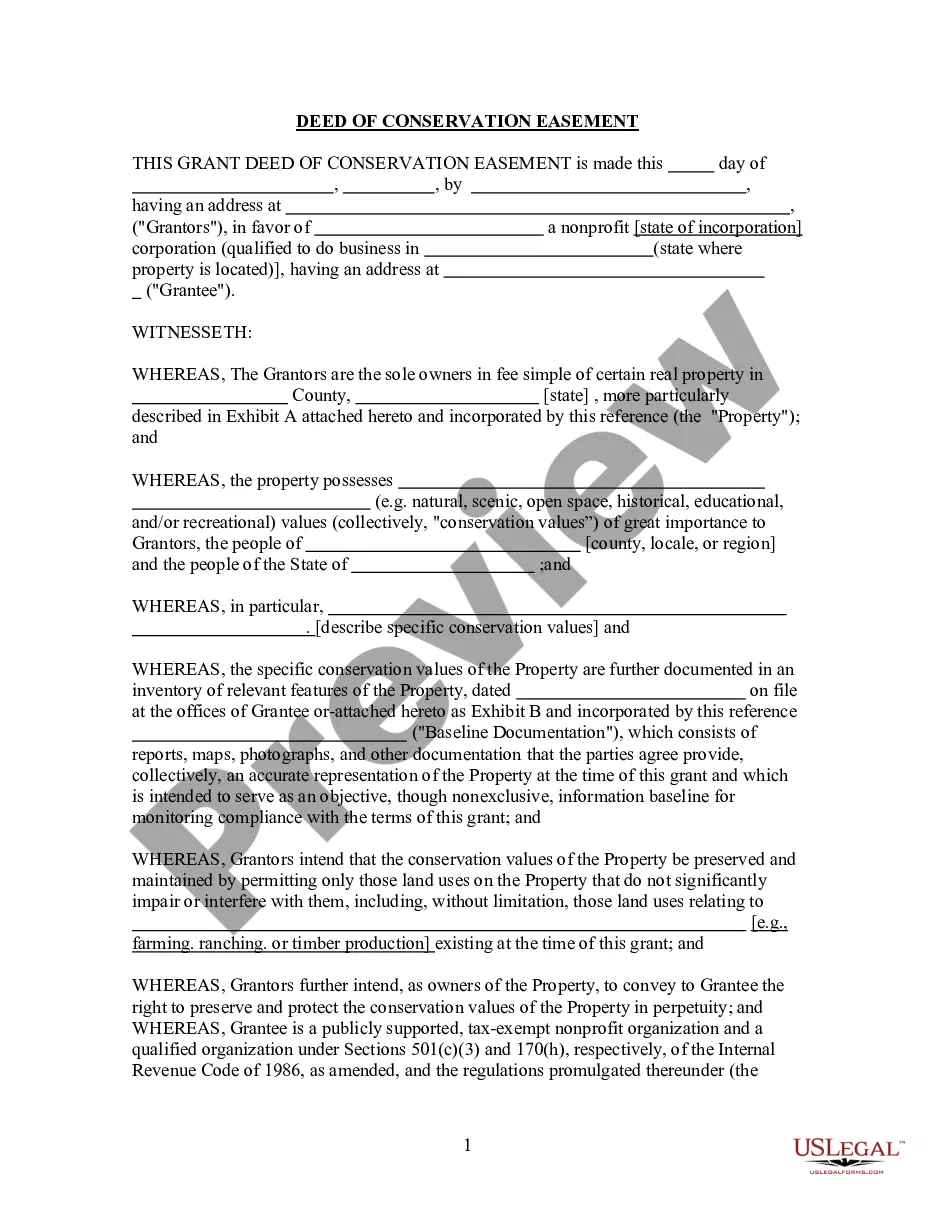
The Easement Agreement is a legal document that allows one party to use a portion of another party's land for a specific purpose, without transferring ownership. This agreement is particularly important for homeowners or developers who need to grant access for utilities such as water and sewer lines while retaining control of their property. Unlike other real estate documents, this form specifically addresses easements, which do not provide the right to possess or alter the land beyond the agreed purposes.
What’s included in this form
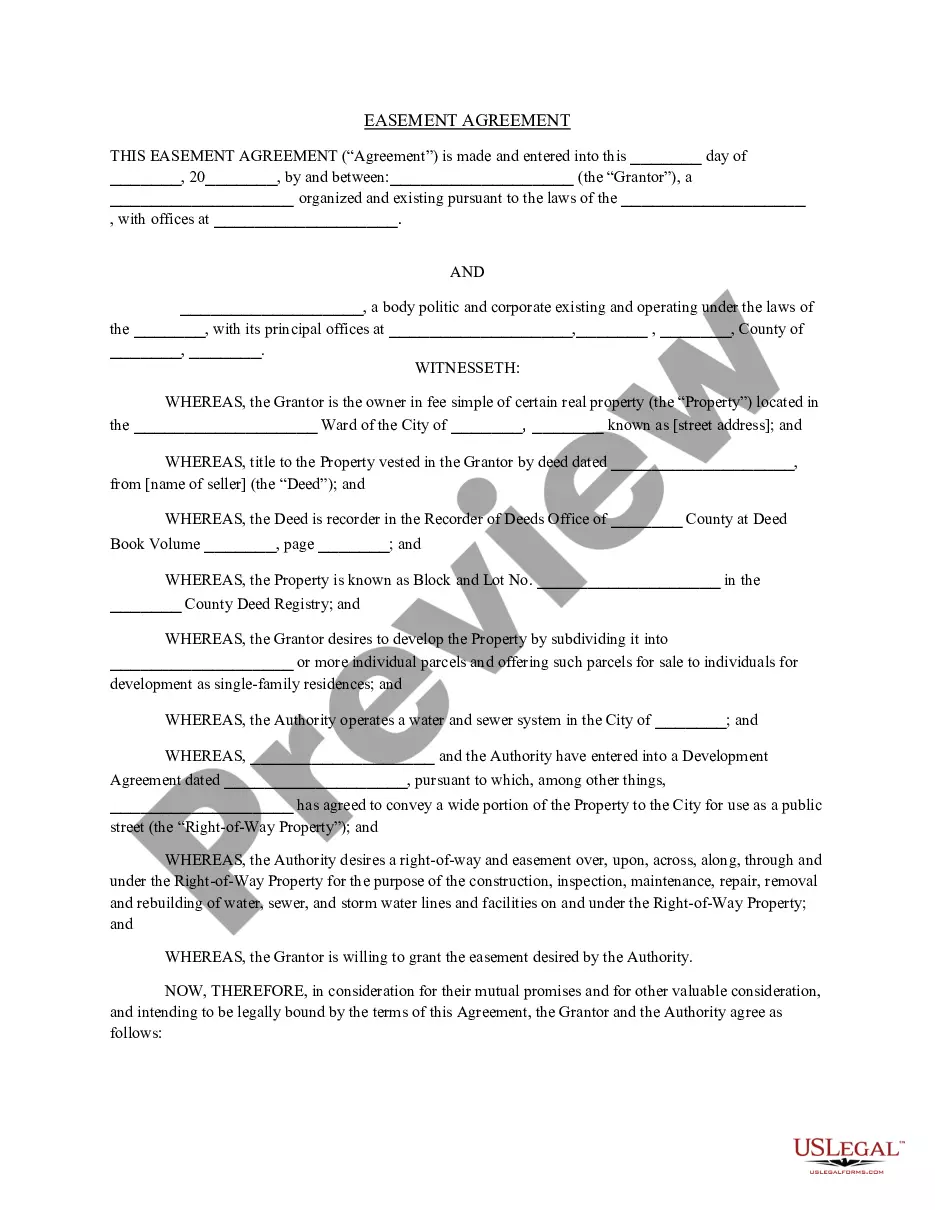
- Identification of the Grantor and the Authority involved in the agreement.
- Description of the property affected by the easement.
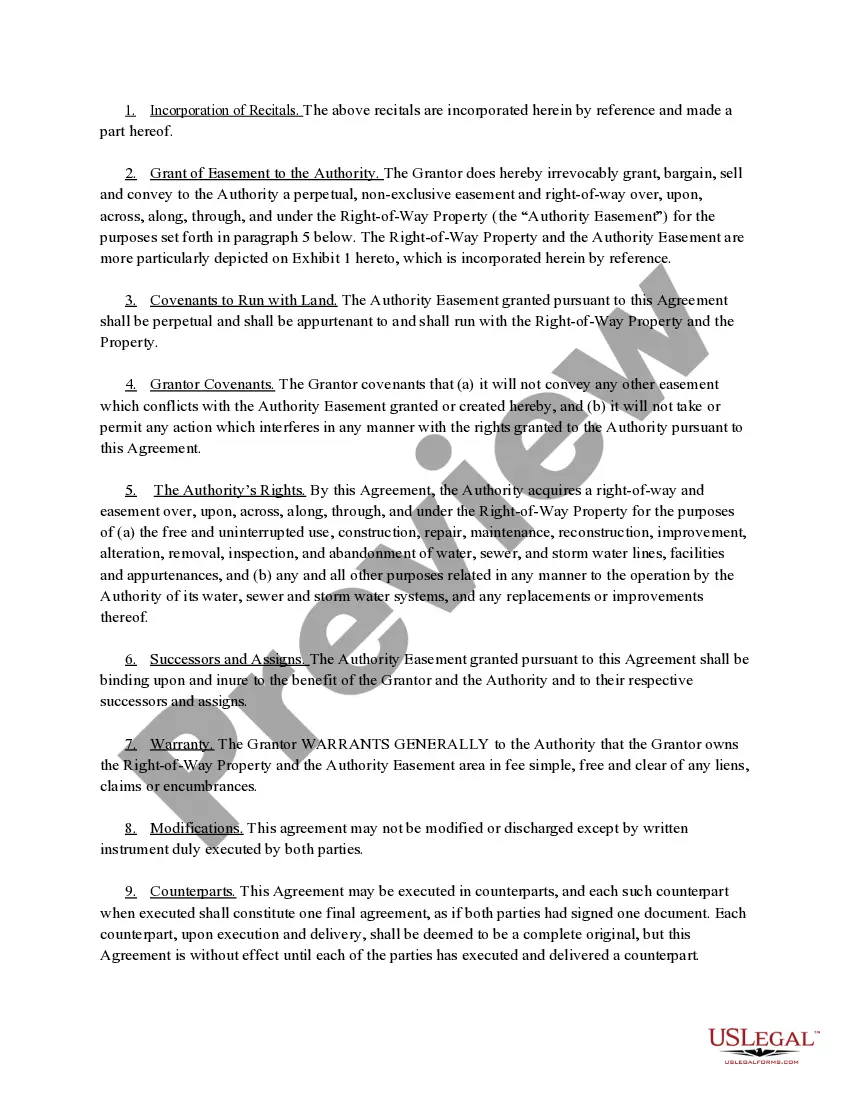
- Grant of a perpetual, non-exclusive easement for specified uses.
- Covenants that ensure no conflicting easements are granted by the Grantor.
- Rights granted to the Authority for maintenance and operation of utility systems.
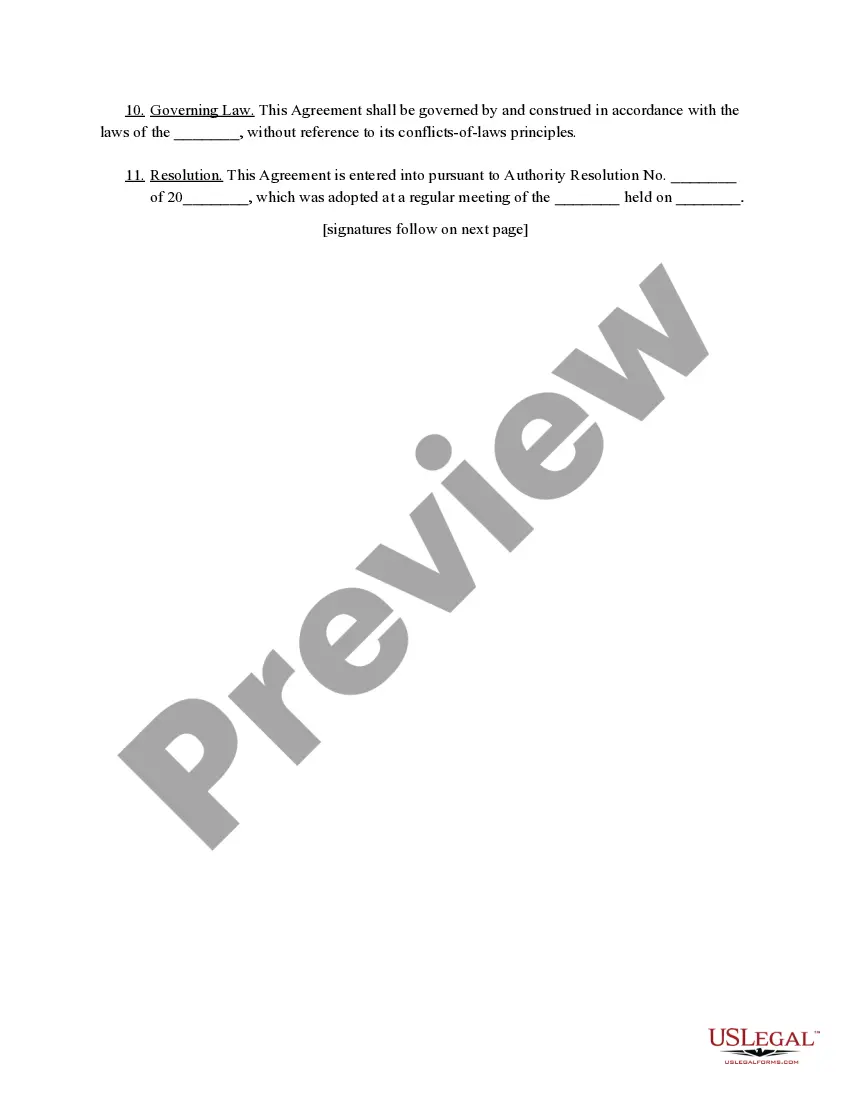
- Successor clauses ensuring the agreement binds future owners of the property.


When to use this form
This form should be used when a property owner (the Grantor) needs to provide another party (the Authority) with the legal right to access their land for specific purposes such as constructing, maintaining, or inspecting utility lines. It is beneficial in development projects where infrastructure requires an easement, facilitating relationships between land developers and municipalities or utility companies.
Intended users of this form
- Property owners wishing to grant access to utility companies.
- Developers needing to secure easements for construction projects.
- Municipalities wanting to establish rights for public utility operations.
- Any individual or entity that plans to utilize another's land for specific operations without claiming ownership.
Steps to complete this form
- Identify the parties involved, including the Grantor and the Authority.
- Provide a detailed description of the property being affected by the easement.
- State the specific purposes for which the easement is granted.
- Include all relevant dates and execution details for legal recognition.
- Ensure both parties sign the document and have it notarized, if necessary.
Does this form need to be notarized?
This form does not typically require notarization unless specified by local law. However, notarization may enhance its legal standing and provide additional security for both parties involved.
Get your form ready online
Our built-in tools help you complete, sign, share, and store your documents in one place.
Make edits, fill in missing information, and update formatting in US Legal Forms—just like you would in MS Word.
Download a copy, print it, send it by email, or mail it via USPS—whatever works best for your next step.
Sign and collect signatures with our SignNow integration. Send to multiple recipients, set reminders, and more. Go Premium to unlock E-Sign.
If this form requires notarization, complete it online through a secure video call—no need to meet a notary in person or wait for an appointment.
We protect your documents and personal data by following strict security and privacy standards.

Make edits, fill in missing information, and update formatting in US Legal Forms—just like you would in MS Word.

Download a copy, print it, send it by email, or mail it via USPS—whatever works best for your next step.

Sign and collect signatures with our SignNow integration. Send to multiple recipients, set reminders, and more. Go Premium to unlock E-Sign.

If this form requires notarization, complete it online through a secure video call—no need to meet a notary in person or wait for an appointment.

We protect your documents and personal data by following strict security and privacy standards.
Common mistakes
- Failing to include a legal description of the property involved.
- Not specifying the exact purposes of the easement.
- Omitting signatures or failing to have the document notarized when required.
- Granting easements that conflict with existing rights on the property.
Advantages of online completion
- Convenience of downloading and filling out the form at your own pace.
- Editability allows for quick changes to meet specific needs.
- Access to templates prepared by licensed attorneys for accuracy and reliability.
Looking for another form?

Form popularity
FAQ
For example, when a person is required to use a neighbor's driveway to access his home, it's considered an easement by necessity.
Affirmative easements are the most common. They allow privileged use of land owned by others. Negative easements are more restrictive. They limit how land is used.
Which of the following is an example of an easement by necessity? A court grants a land-locked owner the right to use a neighbor's driveway for access.
Easement appurtenant takes place between two adjacent properties - dominant estate and servient estate. An example of an easement appurtenant is a driveway over a neighbor's land to reach your property. An easement in gross grants specific property uses to individual entities rather than to a property.
Easement definition. The right held by one person to make specific, limited use of land owned by another.
There must be a dominant and servient tenement; The easement must accommodate the dominant tenement; The dominant and servient owners must be different people; The right must be capable of forming the subject matter of a grant. What is an easement and how are they created and used? tanfieldchambers.co.uk ? 2016/02/16 ? what... tanfieldchambers.co.uk ? 2016/02/16 ? what...
The owner, or any person who by virtue of a real right may cultivate or use any immovable, which is surrounded by other immovables pertaining to other persons and without adequate outlet to a public highway, is entitled to demand a right of way through the neighboring estates, after payment of the proper indemnity.
4 "Easement" defined. - An easement is a right which the owner or occupier of certain land possesses, as such, for the beneficial enjoyment of that land, to do and continue to do something, or to prevent and continue to prevent something being done, in or upon, or in respect of, certain other land not his own. The Indian Easements Act, 1882 - Indian Kanoon indiankanoon.org ? doc indiankanoon.org ? doc
An easement in gross can be sold to either an individual (personal) or to a company (commercial). For example, if your family owns land that abuts a highway and a local dairy farm wants to access that highway by cutting through your land, your family may sell a commercial easement in gross to the dairy.