Licensing Representation Agreement
Understanding this form
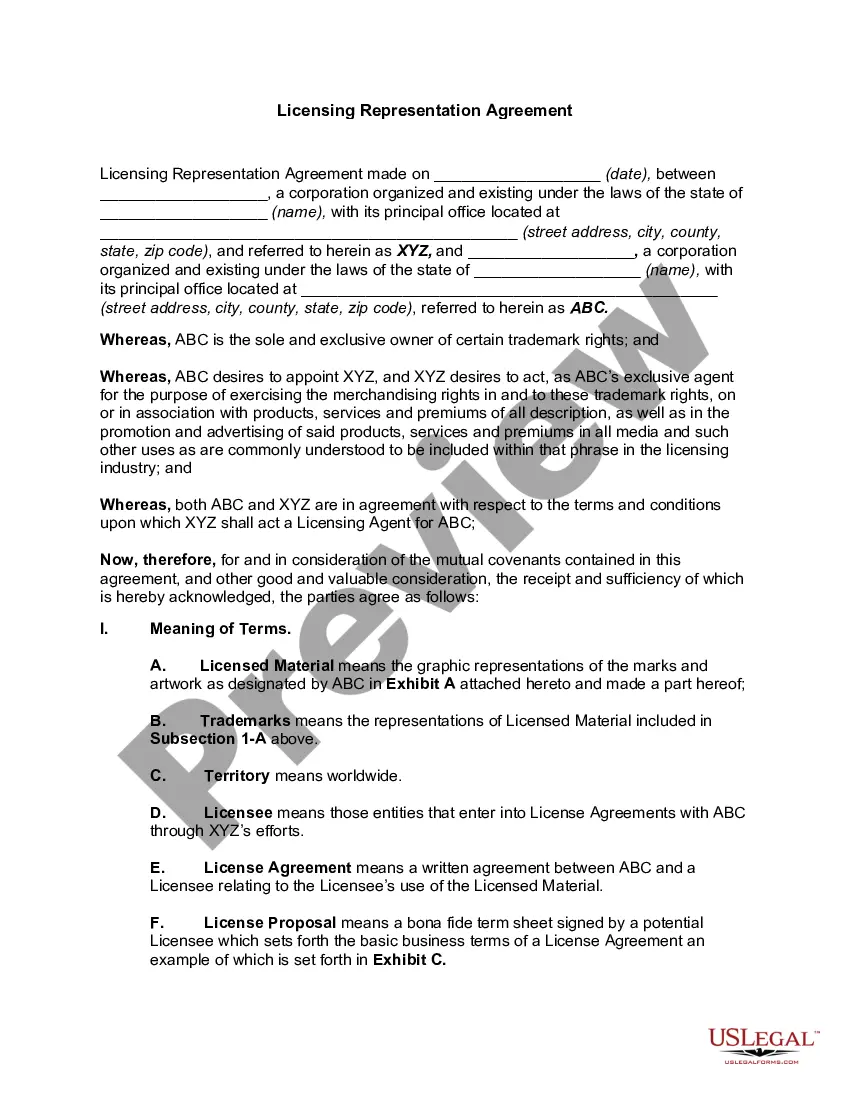
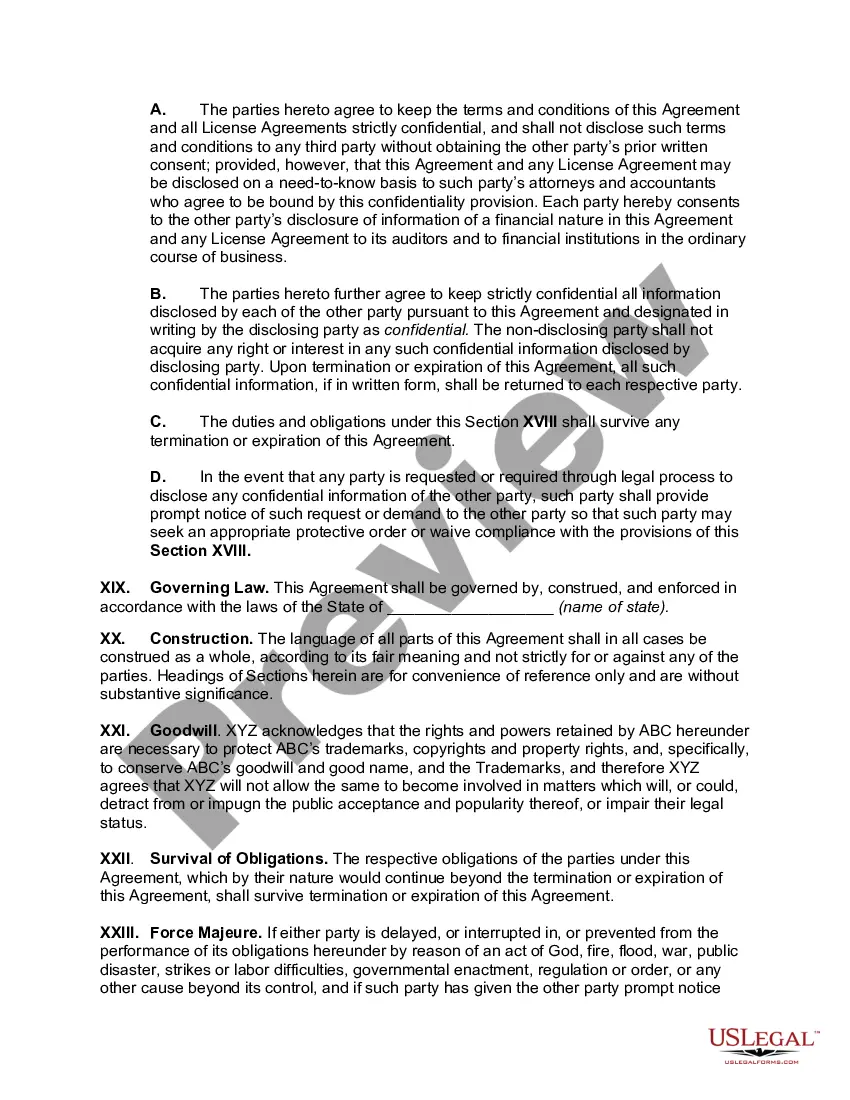
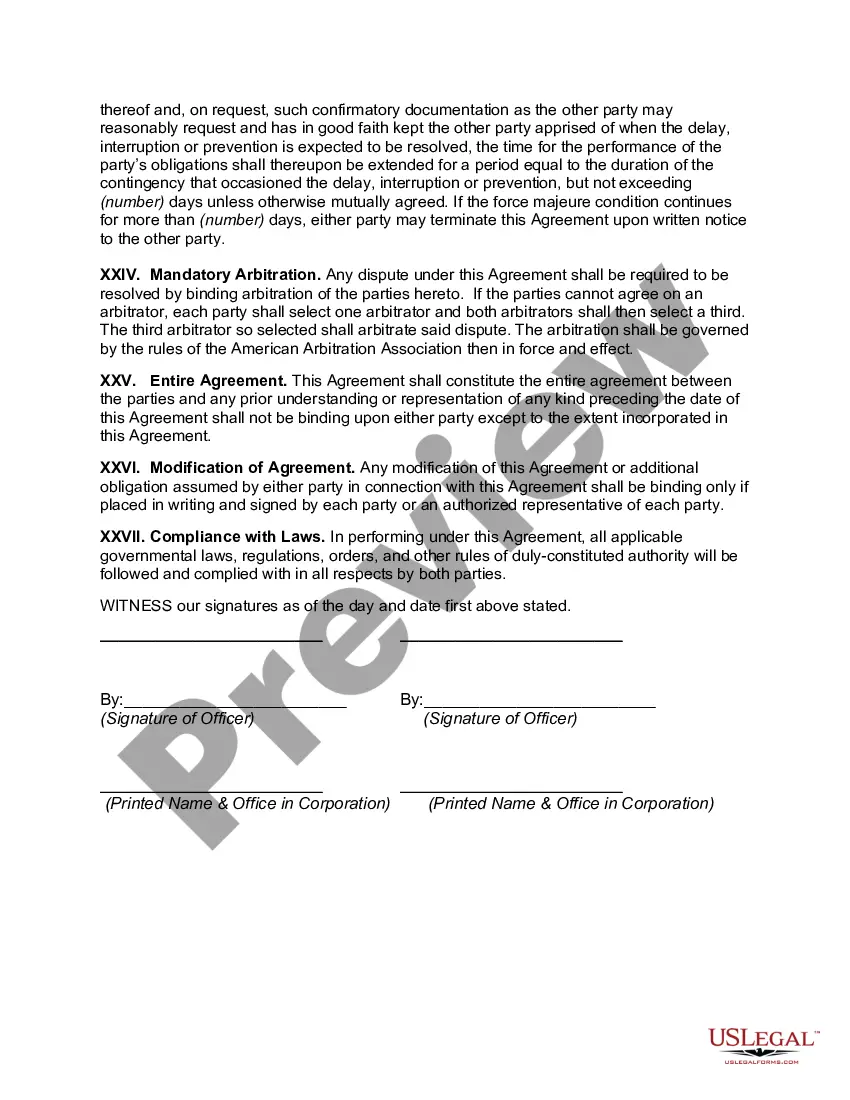
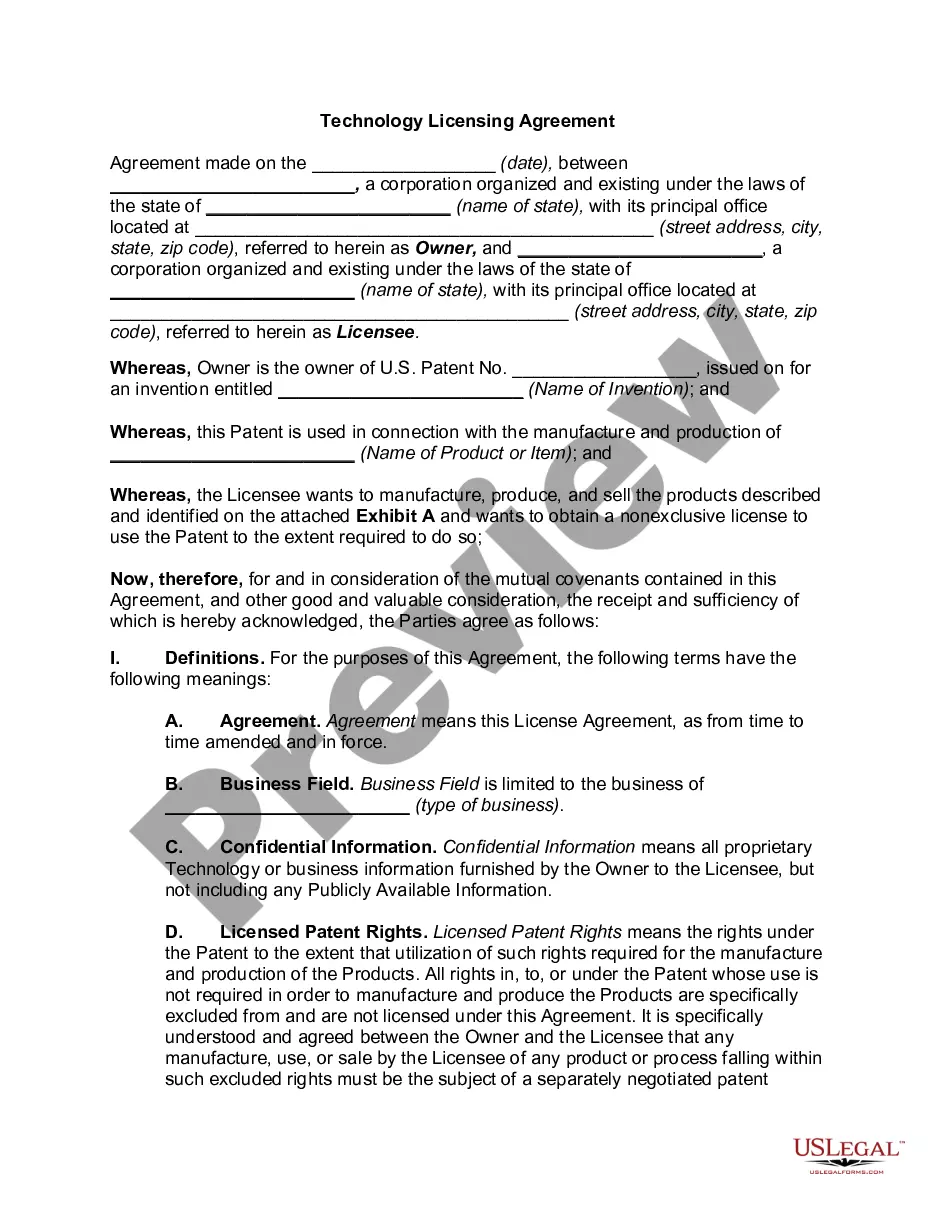
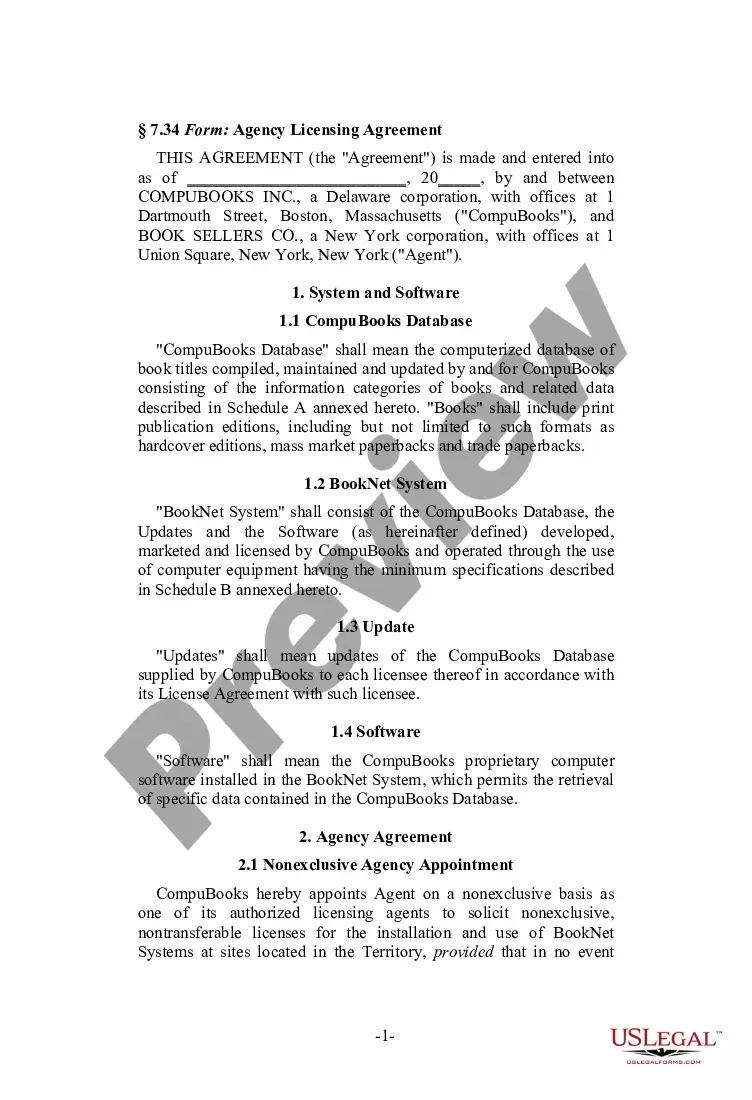
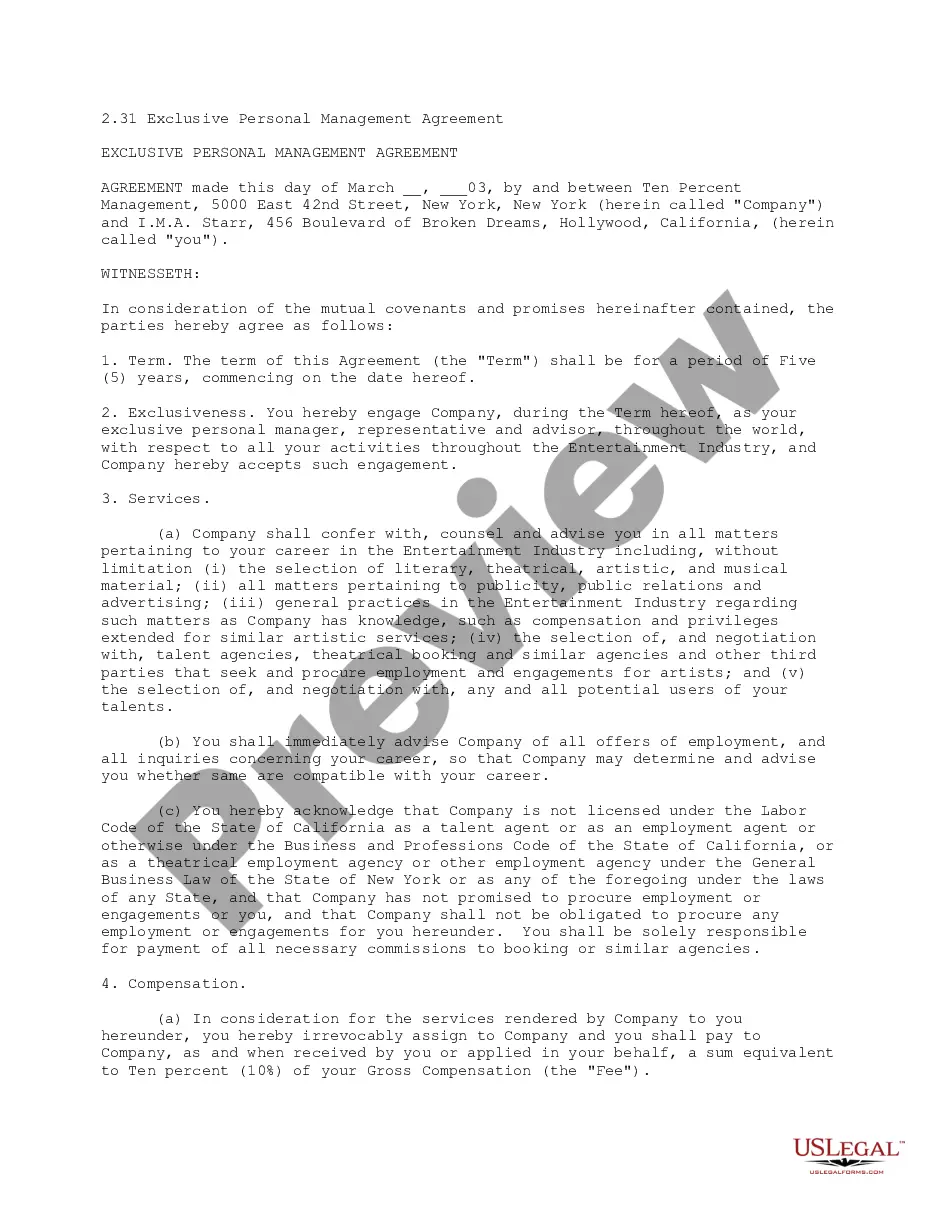
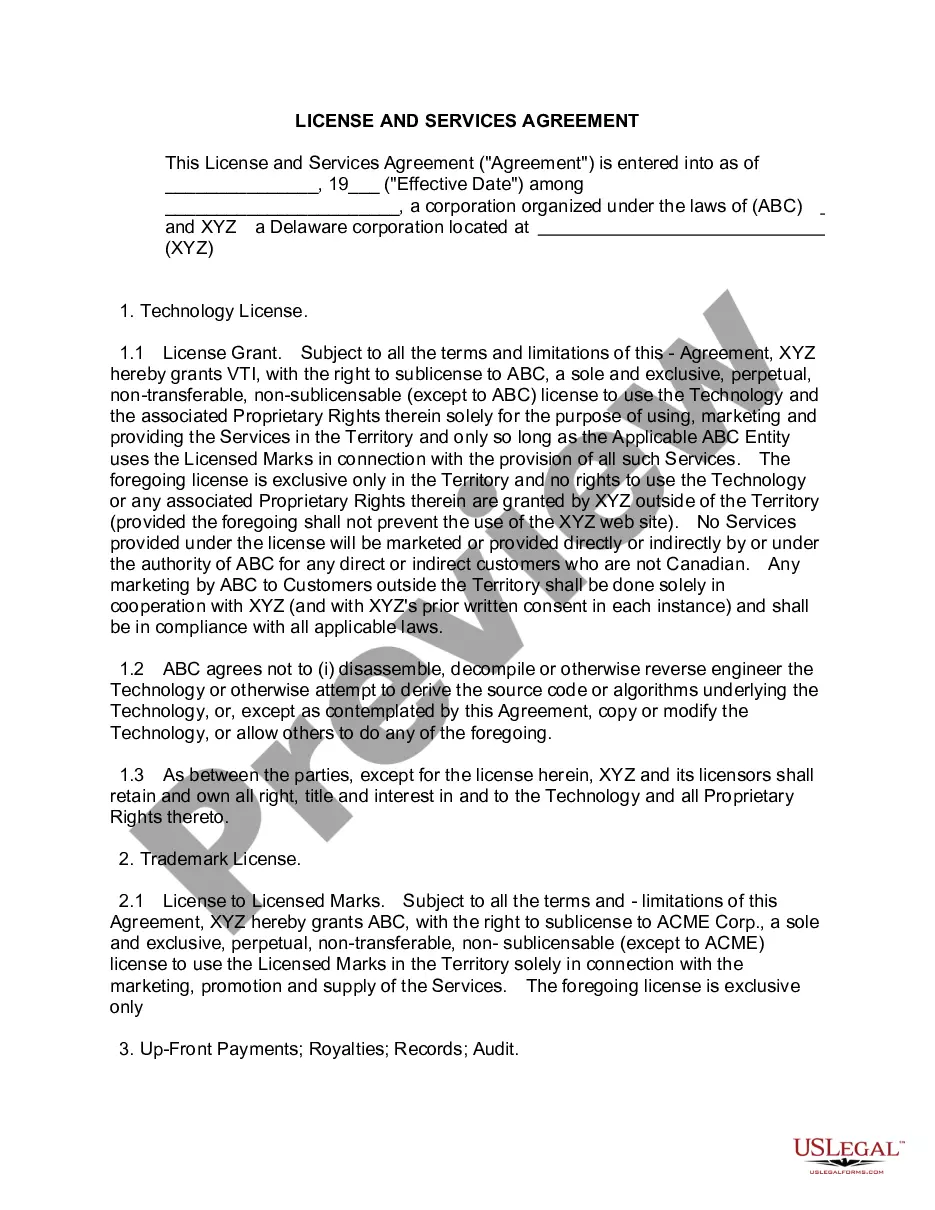
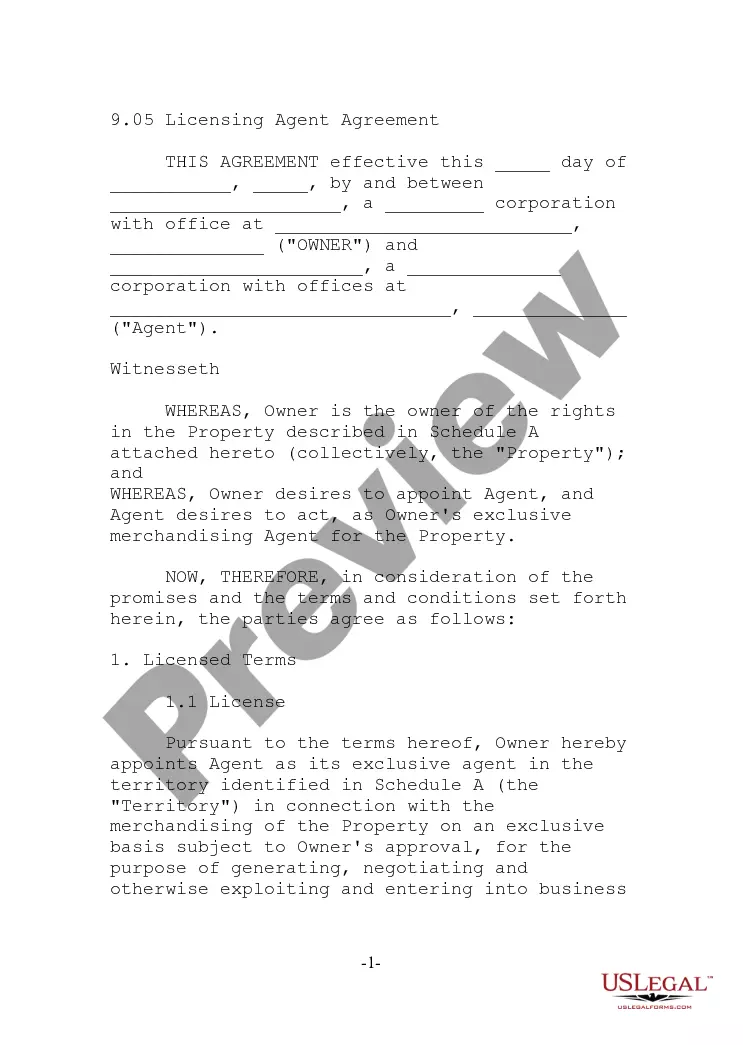
The Licensing Representation Agreement is a legal document that establishes a relationship between the owner of a trademark or patent (the licensor) and a third party seeking to use that trademark or patent (the licensee). This agreement grants the licensee permission to utilize these assets under specific stipulations, differing from other forms by its focus on representation and merchandising rights.
Key components of this form
- Definitions of key terms, including Licensed Material and Territory.
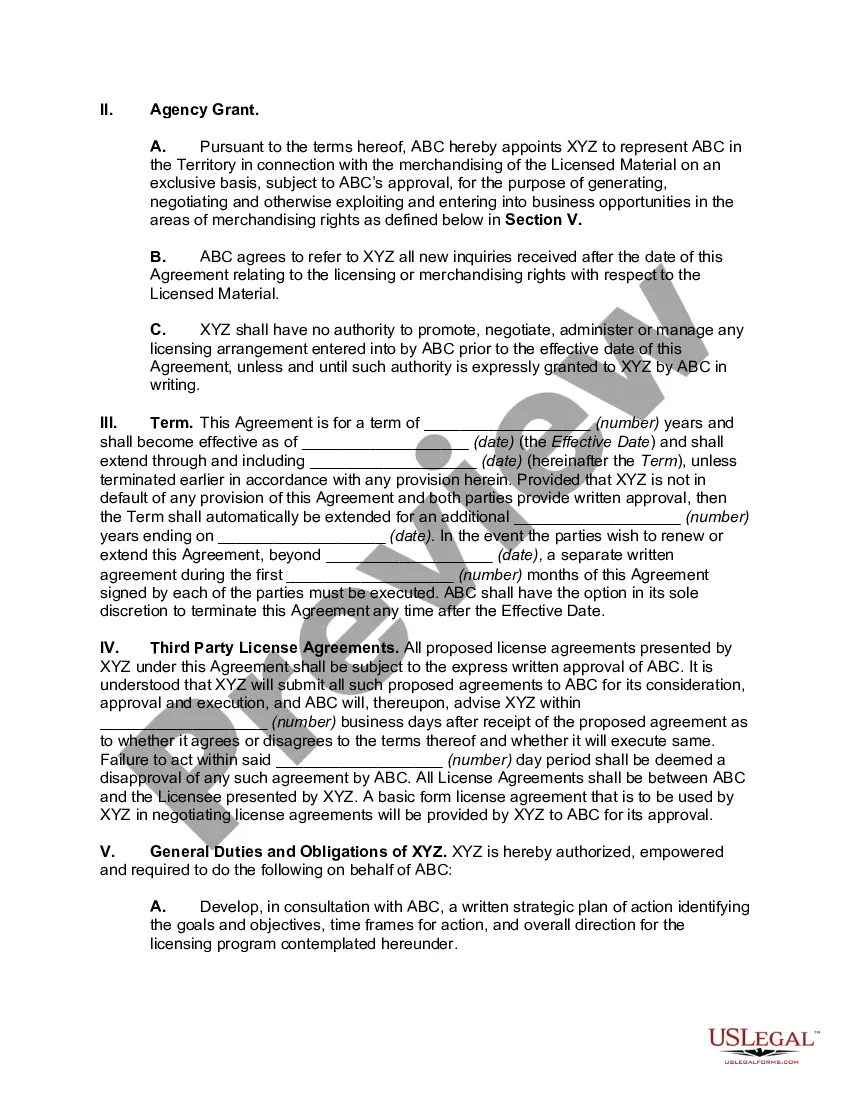
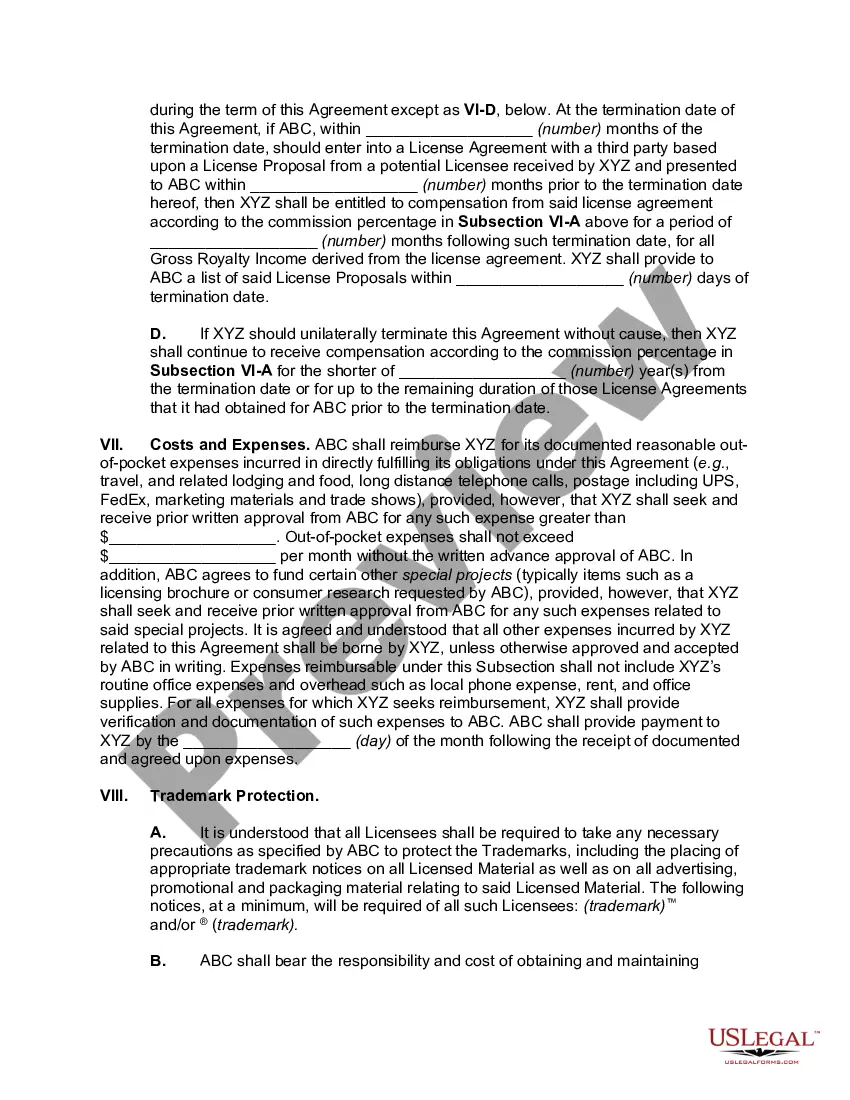
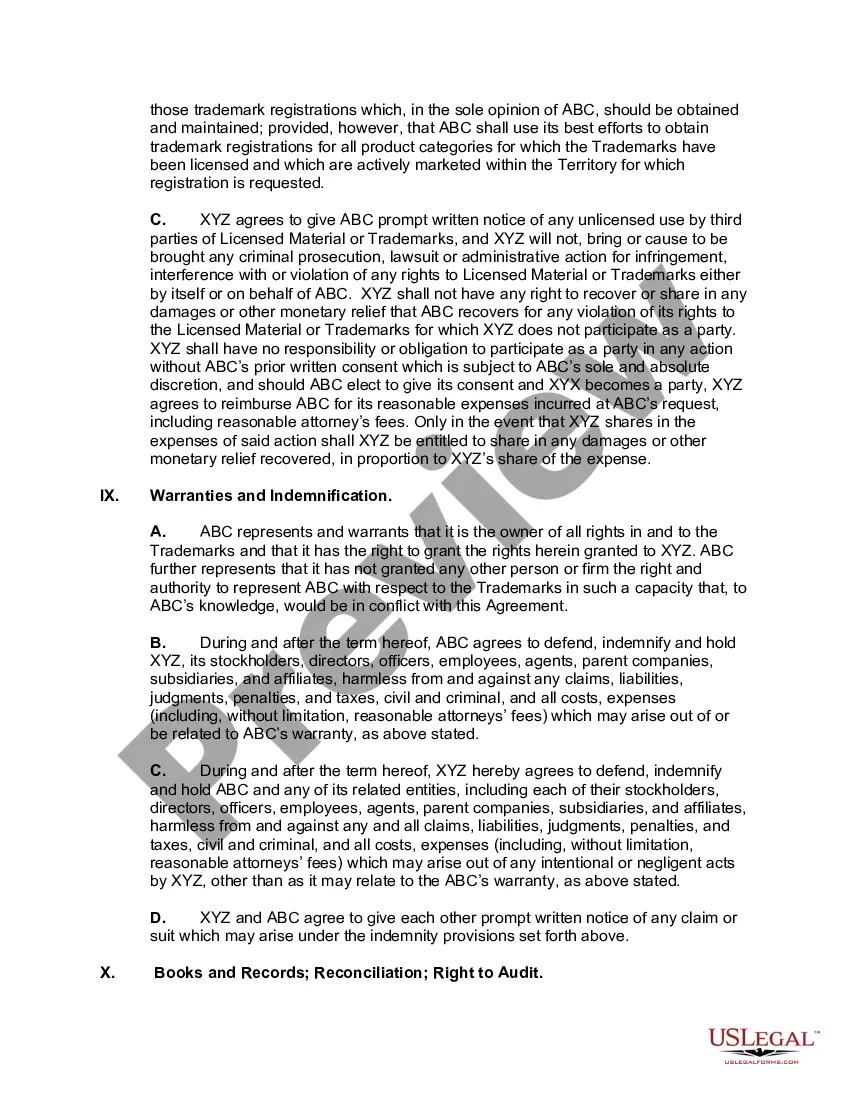
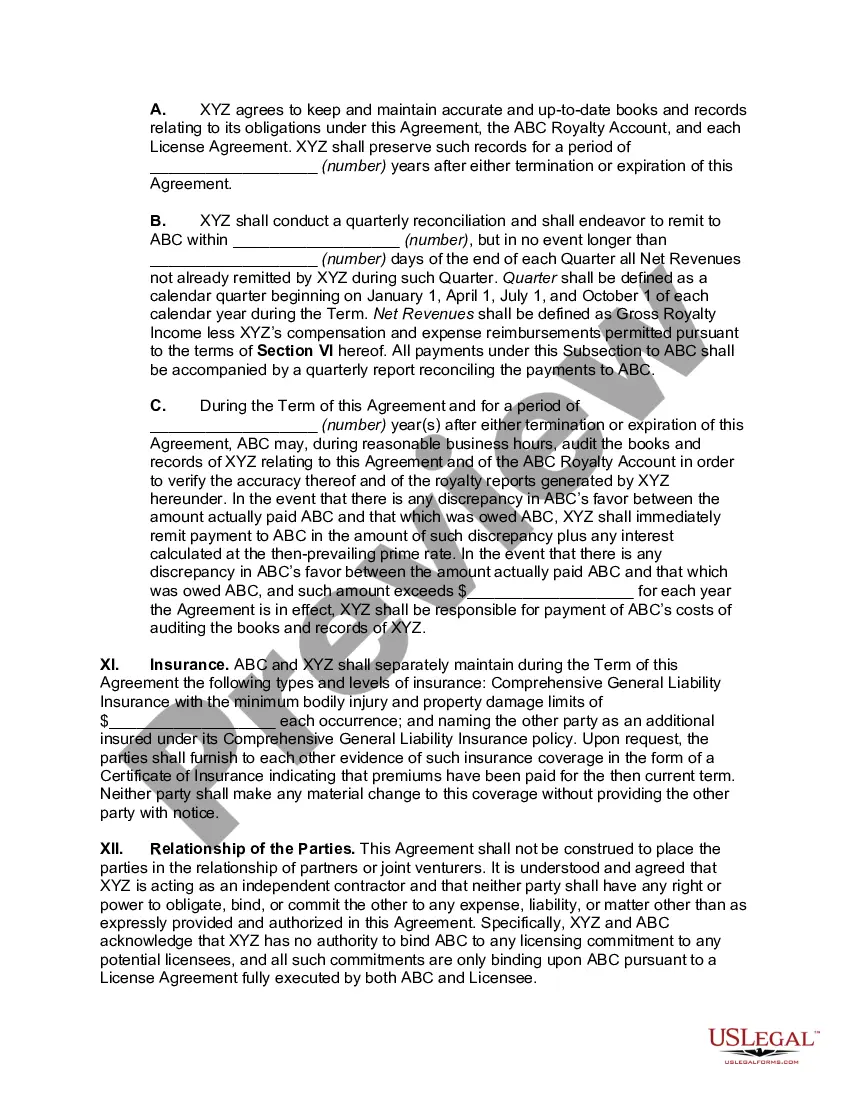
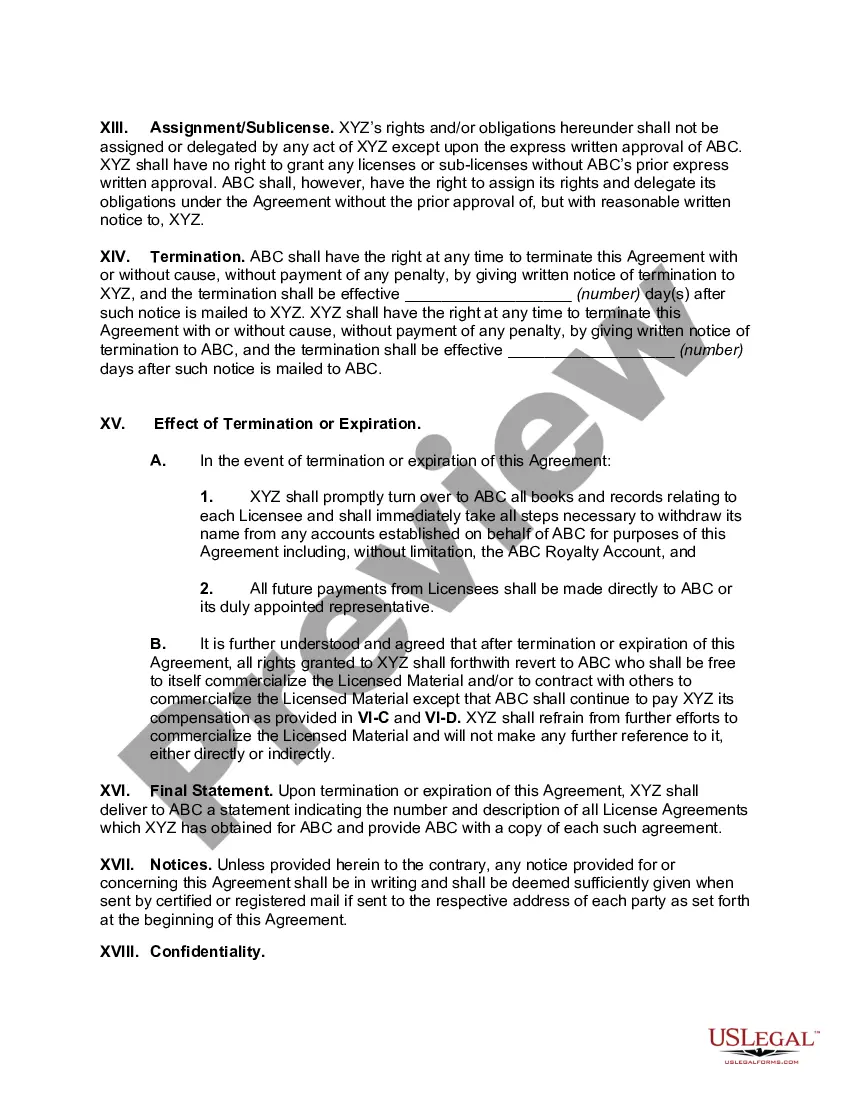
- Authority granted to the representative to negotiate licensing agreements.
- Conditions related to third-party licensing agreements and approvals required.
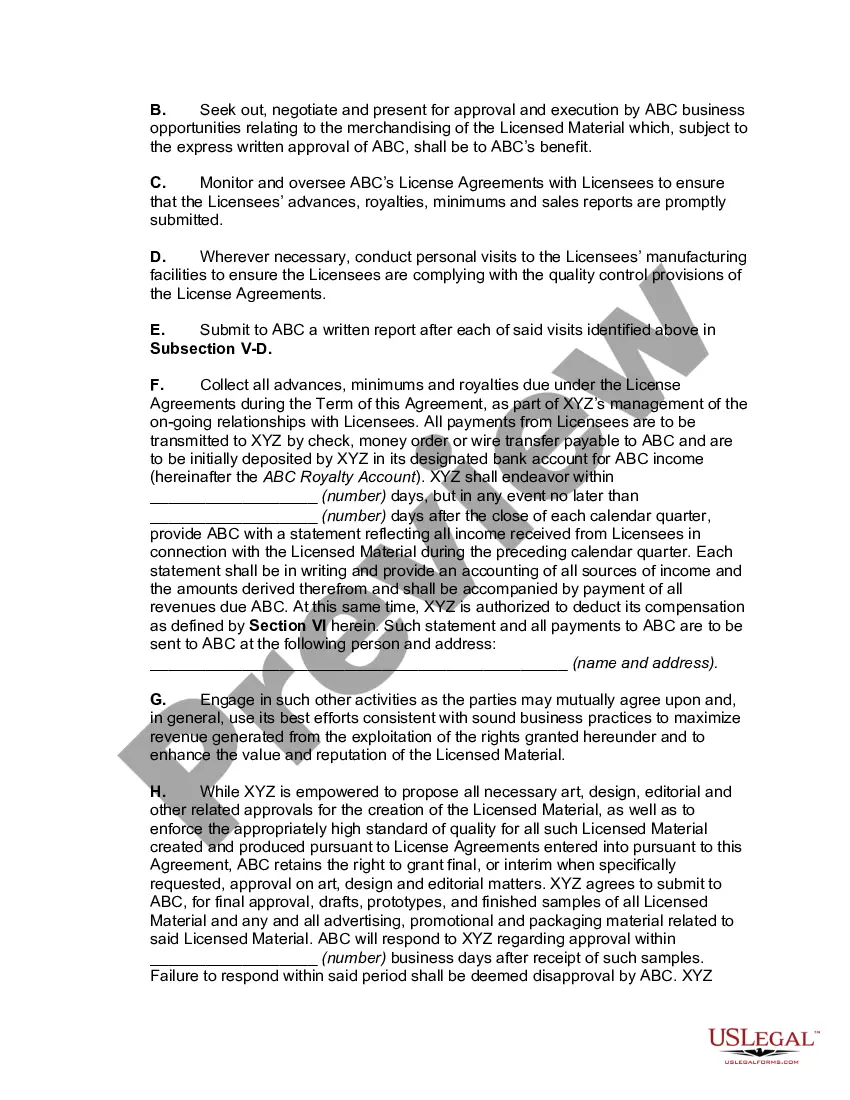
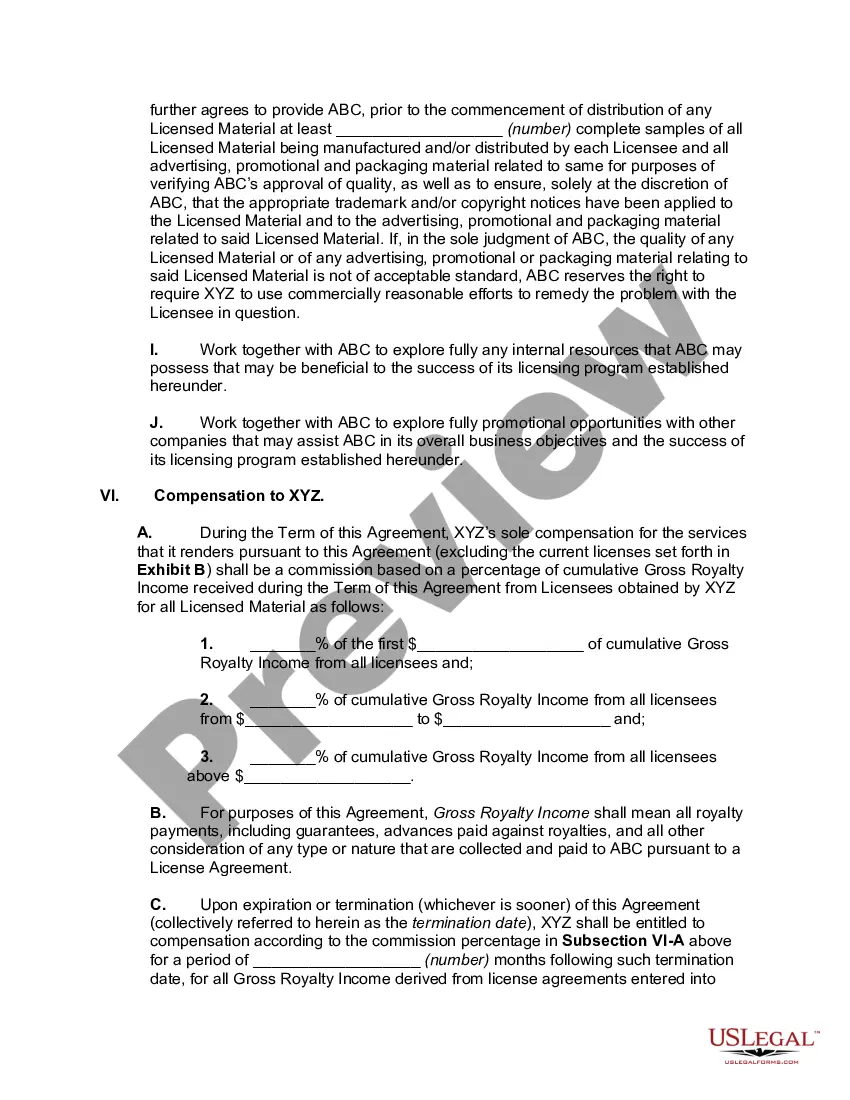
- Compensation structure for the representative based on revenue generated.
- Responsibilities of both parties in maintaining quality control and contractual obligations.
When this form is needed
This form is essential when a trademark or patent owner wants to authorize a third party, such as an advertising agency or sales representative, to manage licensing and merchandising efforts on their behalf. It is suitable when entering new markets, promoting products, or negotiating agreements with potential licensees.
Who should use this form
- Business owners with trademarks or patents looking to expand their market presence.
- Agencies or individuals interested in managing licensing agreements for trademarks or patents.
- Legal professionals tasked with drafting agreements for trademark or patent licensing.
Instructions for completing this form
- Identify the parties involved by entering the names and locations of both the licensor and licensee.
- Specify the effective date of the agreement and the duration of the licensing term.
- Detail the territory in which the licensing rights apply.
- Complete fields related to compensation, including percentage commissions and earning thresholds.
- Gather necessary approvals and signatures from both parties involved for validation.
Notarization guidance
This form does not typically require notarization unless specified by local law. Users may wish to consult with legal counsel to confirm requirements specific to their region.
Get your form ready online
Our built-in tools help you complete, sign, share, and store your documents in one place.
Make edits, fill in missing information, and update formatting in US Legal Forms—just like you would in MS Word.
Download a copy, print it, send it by email, or mail it via USPS—whatever works best for your next step.
Sign and collect signatures with our SignNow integration. Send to multiple recipients, set reminders, and more. Go Premium to unlock E-Sign.
If this form requires notarization, complete it online through a secure video call—no need to meet a notary in person or wait for an appointment.
We protect your documents and personal data by following strict security and privacy standards.

Make edits, fill in missing information, and update formatting in US Legal Forms—just like you would in MS Word.

Download a copy, print it, send it by email, or mail it via USPS—whatever works best for your next step.

Sign and collect signatures with our SignNow integration. Send to multiple recipients, set reminders, and more. Go Premium to unlock E-Sign.

If this form requires notarization, complete it online through a secure video call—no need to meet a notary in person or wait for an appointment.

We protect your documents and personal data by following strict security and privacy standards.
Mistakes to watch out for
- Failing to clearly define the Licensed Material and the Territory.
- Not specifying proper compensation terms and payment schedules.
- Omitting the necessary party approvals for proposed licensing agreements.
Why use this form online
- Convenient access to professional legal templates that can be customized.
- Ability to download and print forms for immediate use.
- Instant updates to reflect changes in laws or best practices.
Looking for another form?
Form popularity
FAQ
An example of a licensing agreement is a contract between the copyright holders of software and another company, allowing the latter to use the computer software for their daily business operations.
Download a template for a licensing agreement. Choose your role as the licensor or licensee. Define the license(s) in the agreement. Decide whether the license is exclusive or not. Settle the matter of fees and payment schedule. Add a renewal date and rules.
A trademark licensing agreement is a legal contract between a trademark owner and another party that have agreed to use the trademark on preapproved terms decided between the contracting parties.
A licensing agreement allows one party (the licensee) to use and/or earn revenue from the property of the owner (the licensor). Licensing agreements generate revenues, called royalties, earned by a company for allowing its copyrighted or patented material to be used by another company.
Exclusive or non-exclusive. In an exclusive license, the intellectual property holder is licensing the work only to one person, for that particular use/territory. Territory. Use. Attribution. Derivative works. Confidentiality. Time frame. Termination.
It creates an opportunity for passive income. It creates new business opportunities. It reduces risks for both parties. It creates an easier entry into foreign markets. It creates self-employment opportunities. It offers the freedom to develop a unique marketing approach.
The 3 P's of collegiate licensing are protection, promotion, and profit.
If you want a licensing agreement tailored to your specific situation, most attorneys charge $100-$300 or more an hour.
Owners of intellectual property rights are free to allow others to exercise their rights. A permission to exercise a right is known as a licence. In this agreement the holder of the right allows a third party to use that right in return for some form of remuneration.