Stock Certificate Package
Understanding this form package
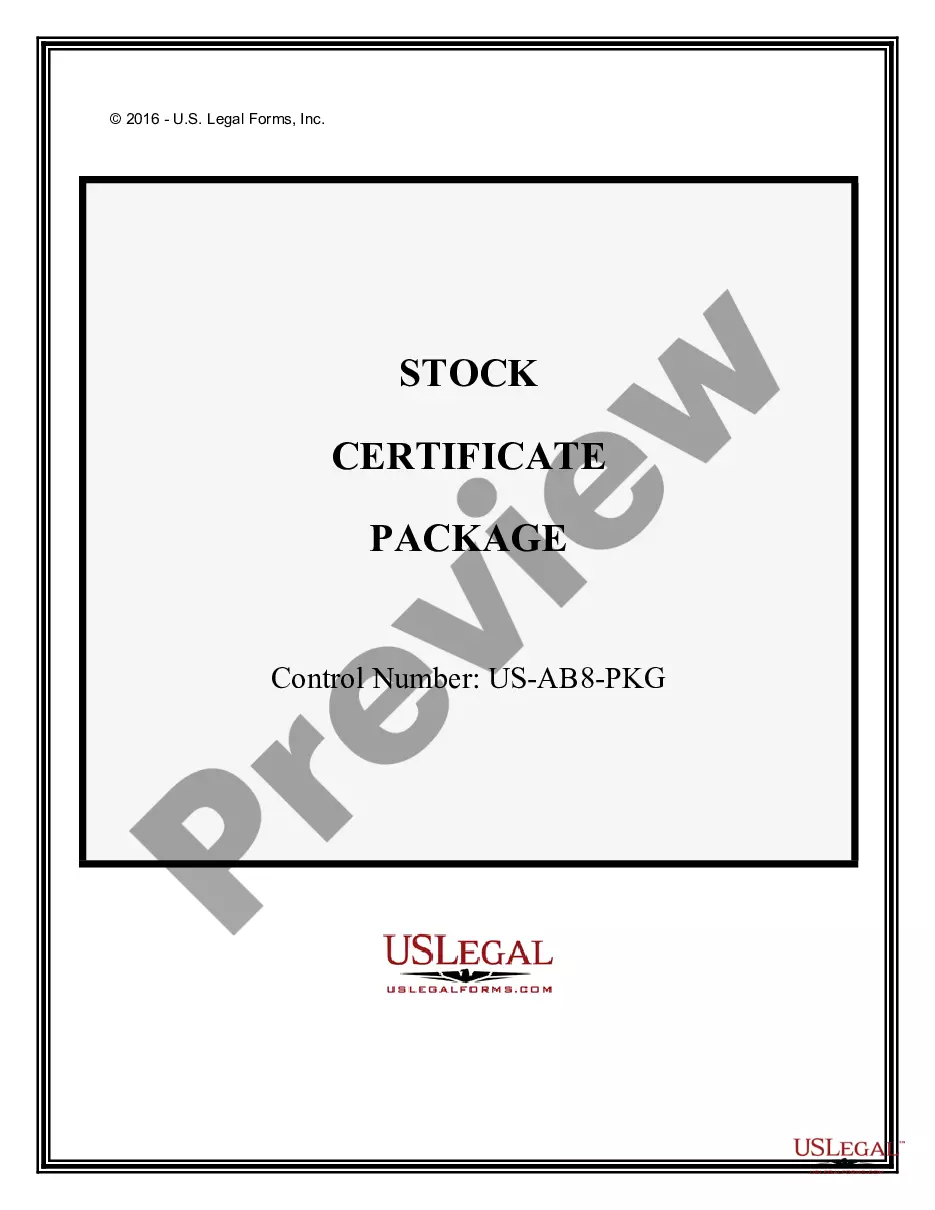
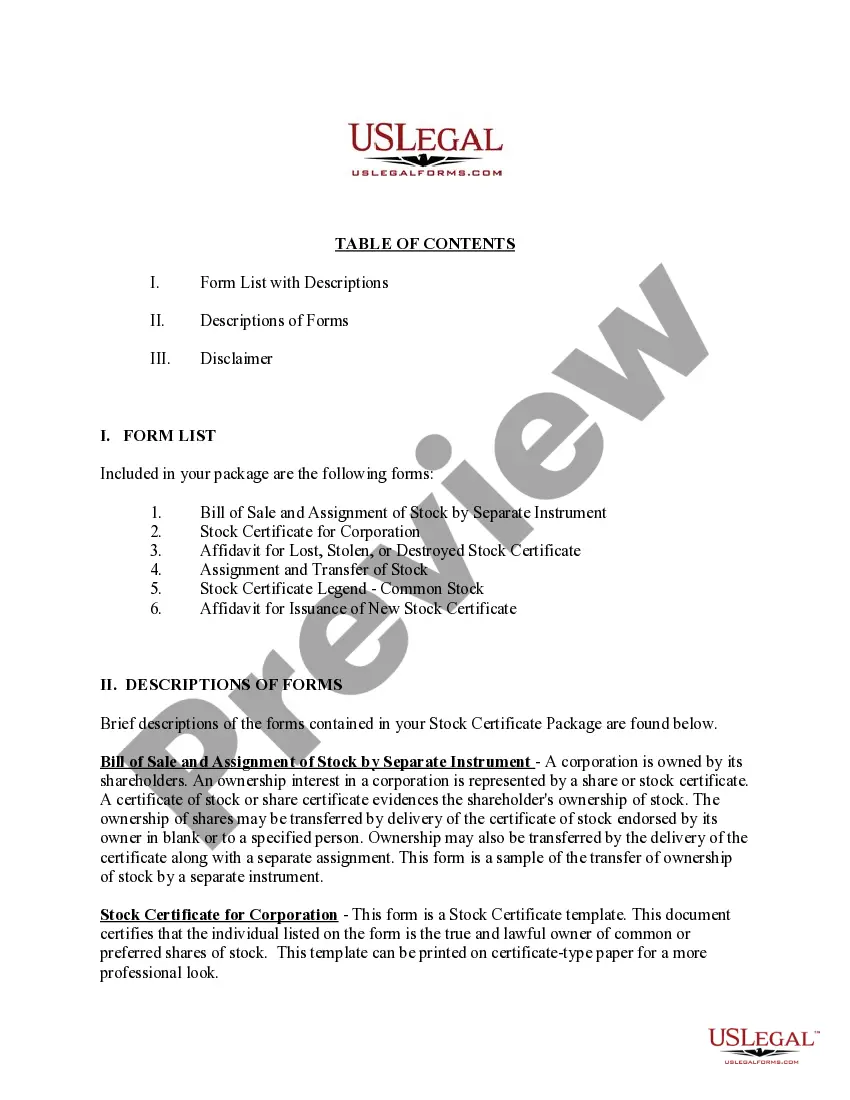
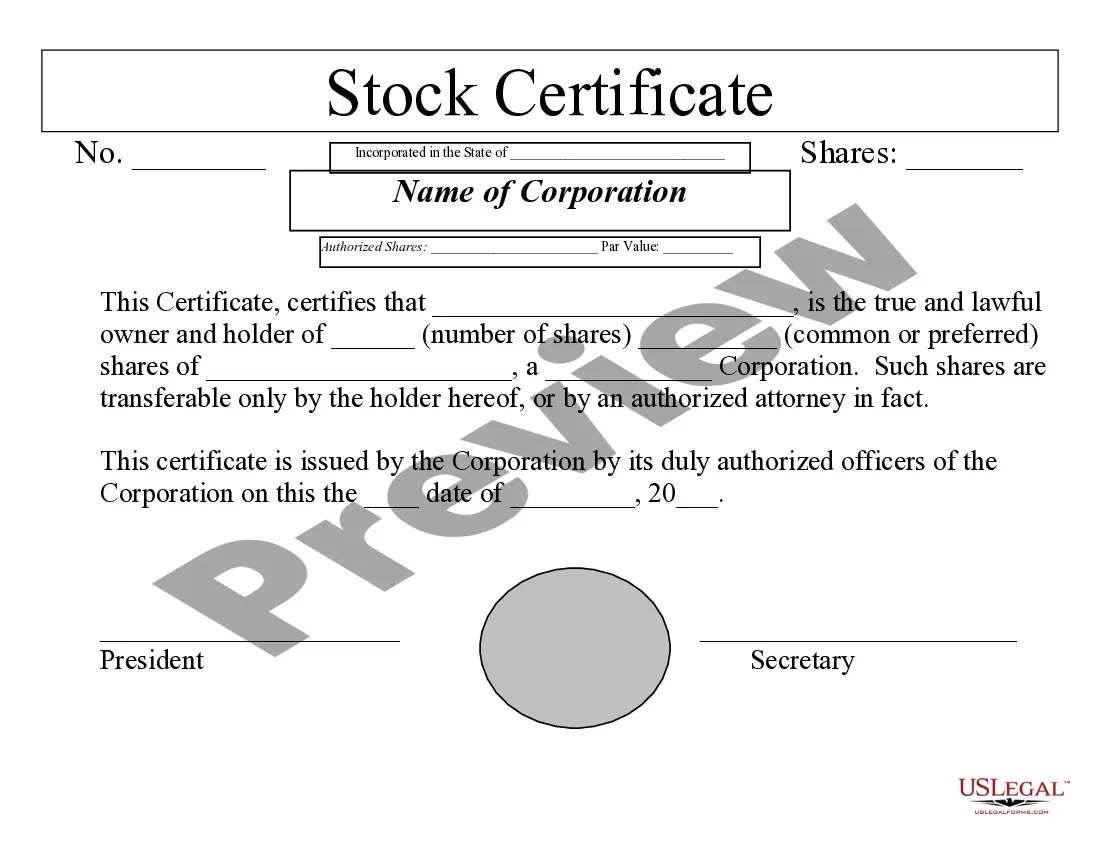
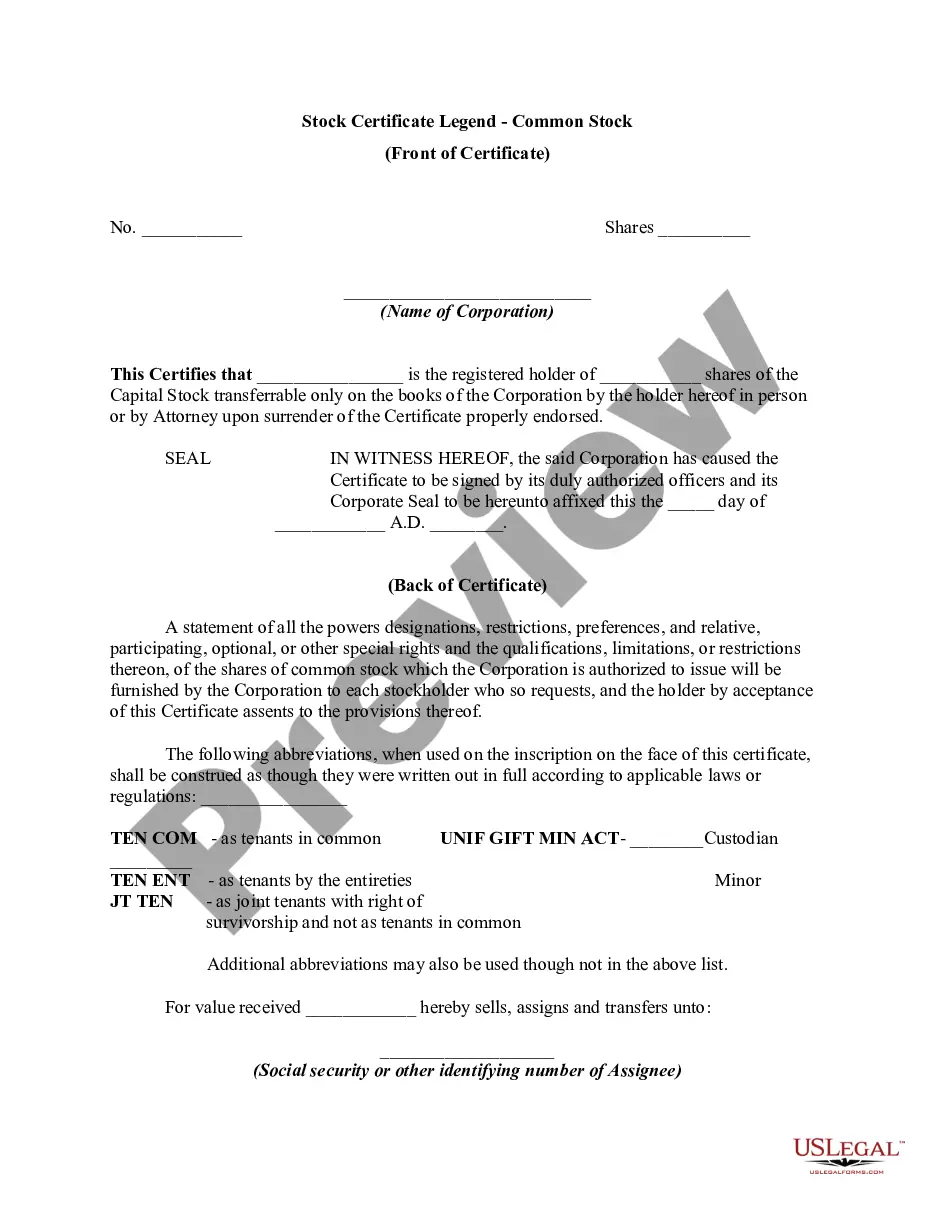
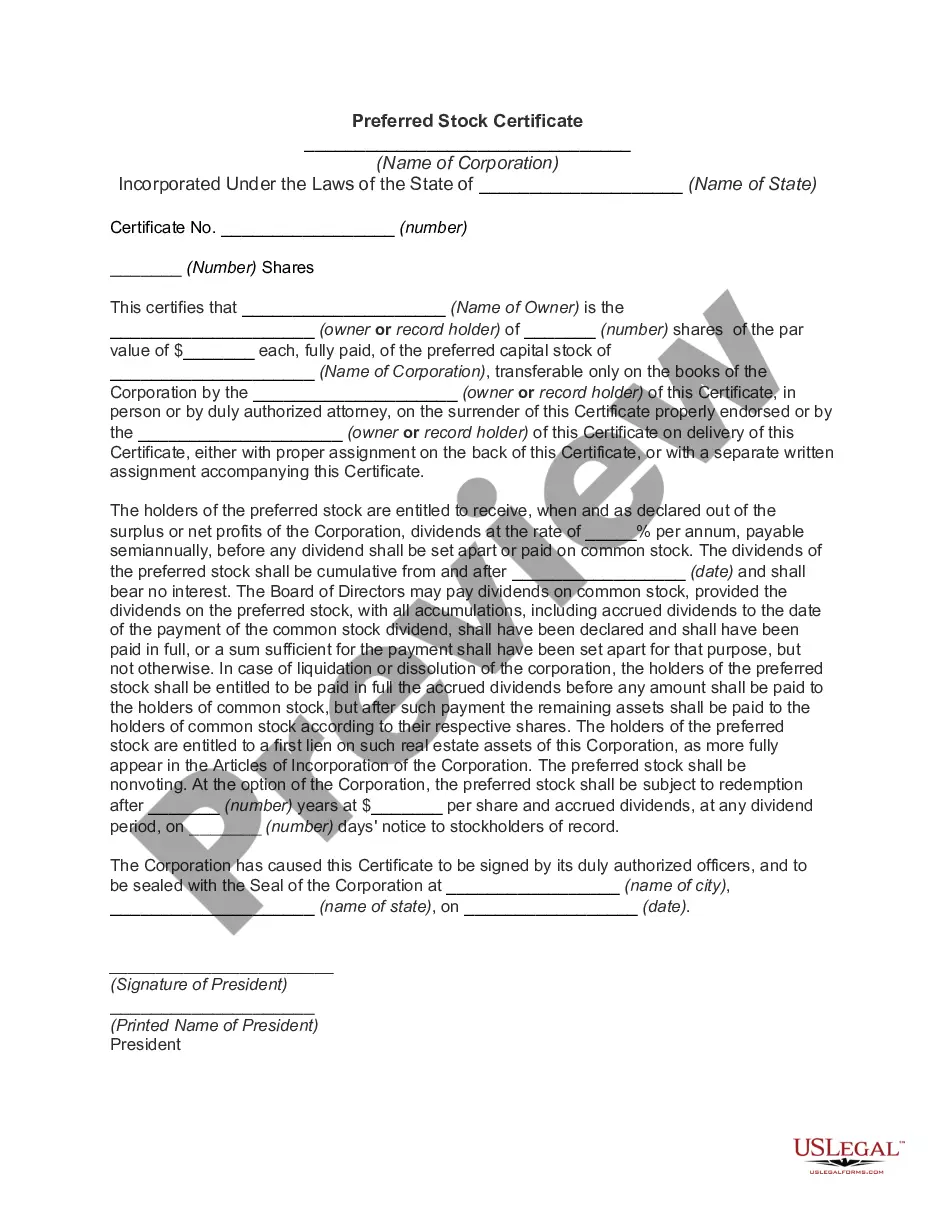
The Stock Certificate Package offers a comprehensive set of legal forms essential for corporations and shareholders. This package includes sample stock certificates, legends, a stock ledger, and forms for transferring ownership. Unlike other form packages, the Stock Certificate Package is specifically tailored for managing stock ownership and its related processes, ensuring you have all necessary documents for efficient stock transactions and maintaining corporate records.
What’s included in this form package
When to use this document
This package is useful in a variety of situations, including:
- Issuing stock certificates to new shareholders.
- Documenting the sale or transfer of stock ownership.
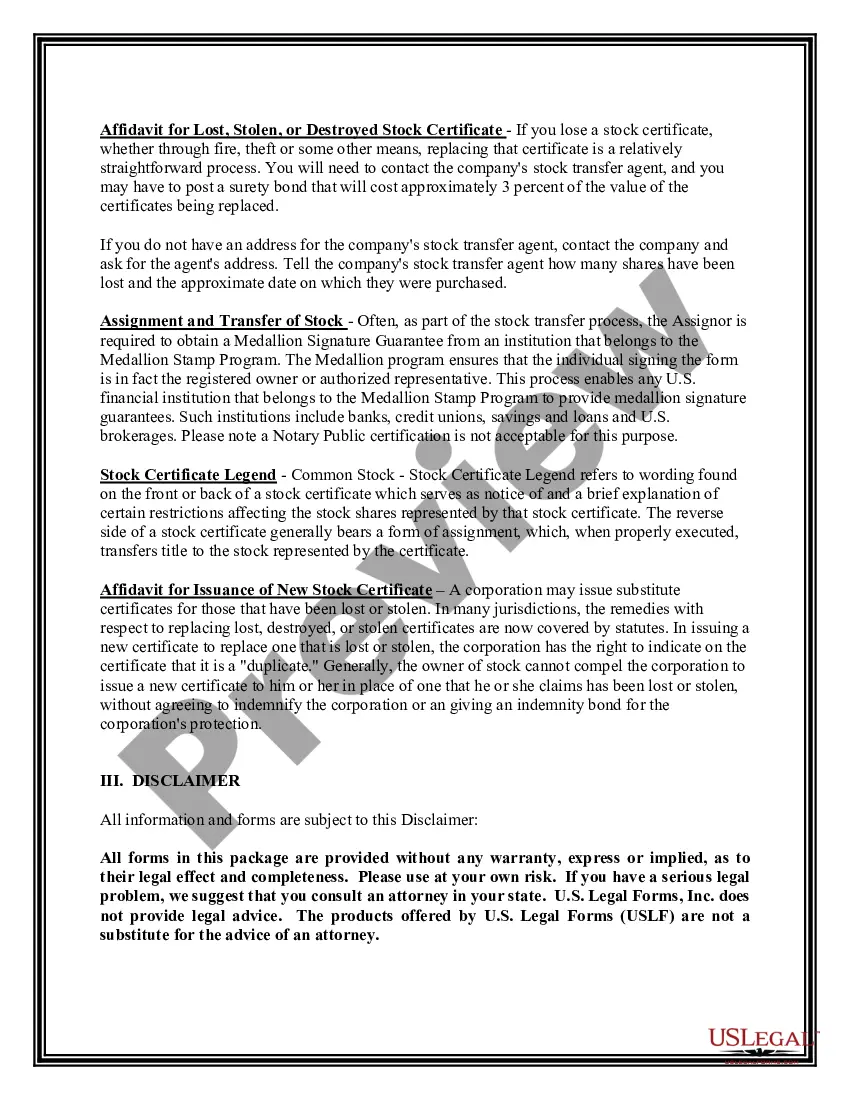
- Replacing lost, stolen, or destroyed stock certificates.
- Ensuring compliance with corporate documentation and maintenance requirements.
Who should use this form package
- Corporation owners and shareholders.
- Business attorneys assisting clients with stock transfers.
- Corporate secretaries responsible for maintaining stock records.
- Individuals managing estates that include corporate shares.
How to complete these forms
- Review all included forms to understand their purpose and details.
- Identify the shareholders and the relevant stock details.
- Fill out the Stock Certificate for Corporation, ensuring accurate ownership information.
- Use the Affidavit for Lost, Stolen, or Destroyed Stock Certificate if applicable.
- Have any required signatures, such as the assignor's and a Medallion Signature Guarantee if transferring stock.
- Store the completed documents securely and manage corporate records accordingly.
Do documents in this package require notarization?
Forms in this package typically do not require notarization. However, certain states or document types may still need it. US Legal Forms provides online notarization powered by Notarize, available 24/7 for your convenience.
Get your form ready online
Our built-in tools help you complete, sign, share, and store your documents in one place.
Make edits, fill in missing information, and update formatting in US Legal Forms—just like you would in MS Word.
Download a copy, print it, send it by email, or mail it via USPS—whatever works best for your next step.
Sign and collect signatures with our SignNow integration. Send to multiple recipients, set reminders, and more. Go Premium to unlock E-Sign.
If this form requires notarization, complete it online through a secure video call—no need to meet a notary in person or wait for an appointment.
We protect your documents and personal data by following strict security and privacy standards.

Make edits, fill in missing information, and update formatting in US Legal Forms—just like you would in MS Word.

Download a copy, print it, send it by email, or mail it via USPS—whatever works best for your next step.

Sign and collect signatures with our SignNow integration. Send to multiple recipients, set reminders, and more. Go Premium to unlock E-Sign.

If this form requires notarization, complete it online through a secure video call—no need to meet a notary in person or wait for an appointment.

We protect your documents and personal data by following strict security and privacy standards.
Common mistakes to avoid
- Failing to properly sign and endorse stock certificates.
- Not including necessary details about the stock transfer in the assignment forms.
- Assuming notarization is not required when it may be necessary for certain transactions.
- Overlooking company policies regarding the issuance of new stock certificates.
Benefits of using this package online
- Convenient access to legally-vetted forms that can be downloaded instantly.
- Edit and customize forms to meet your specific corporate needs.
- Reliability of documents prepared by licensed attorneys ensuring legal compliance.
- Time-saving compared to traditional methods of obtaining legal forms.
Looking for another form?
Form popularity
FAQ
An old stock or bond certificate may still be valuable even if it no longer trades under the name printed on the certificate. The company may have merged with another company or simply changed its name.
The simplest way to get a stock certificate today is to ask your broker. If you bought your shares through a brokerage firm, it will have an account with your name and the number of shares you purchased.
Locate the Company. The first step is making sure the company is still in business. Find the CUSIP Number. The secretary of state's office in the state of incorporation must be listed on the stock certificate. Contact the Transfer Agent. Complete the Transfer Form. Place an Order. Keep Old Certificates.
Brokers may charge up to $500 for issuing a paper certificate, though this fee can be avoided by either holding share in street name (in the United States street name securities are securities held electronically in the account of a stockbroker, similar to a bank account) or registering shares directly with the stock
Date: Including month and year. The certificate's identification number: At the top of the document (generally on the left side), write the number of the certificate. Share's identification number: This line is also at the top (generally on the right side). Put the shares number and the prices of the transaction.
Contact your stockbroker to search the stock's worth via its CUSIP number if the steps given earlier yield no results. This number is printed on the back of the stock certificate. Use a fee-based service to search your stock's history if the earlier steps come up empty. Fees can range from $40 to $85 or more.
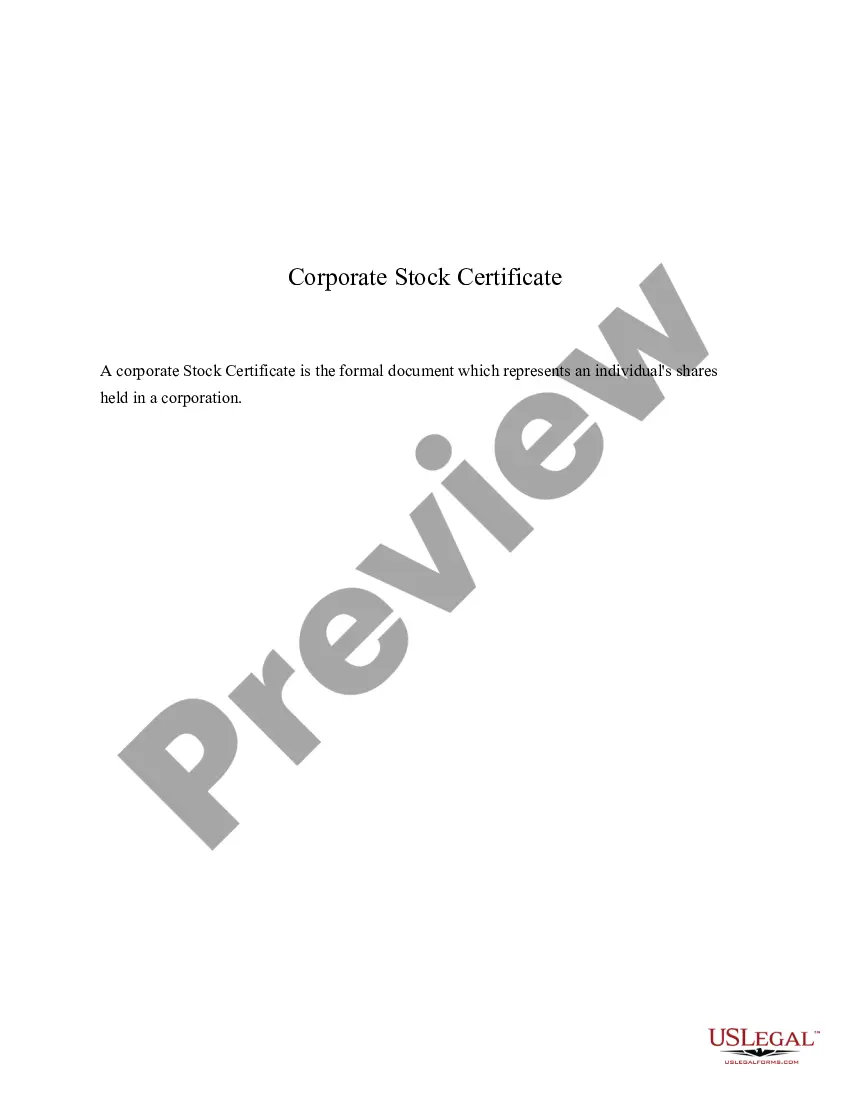
A stock certificate is a physical piece of paper that represents a shareholder's ownership in a company. Stock certificates include information such as the number of shares owned, the date of purchase, an identification number, usually a corporate seal, and signatures.
An old stock or bond certificate may still be valuable even if it no longer trades under the name printed on the certificate. The company may have merged with another company or simply changed its name.
Stock shares do not have an expiration date.This may be the case with an old stock certificate you found in a trunk, but it will not hurt to check it out.