Preferred Stock Certificate
Overview of this form
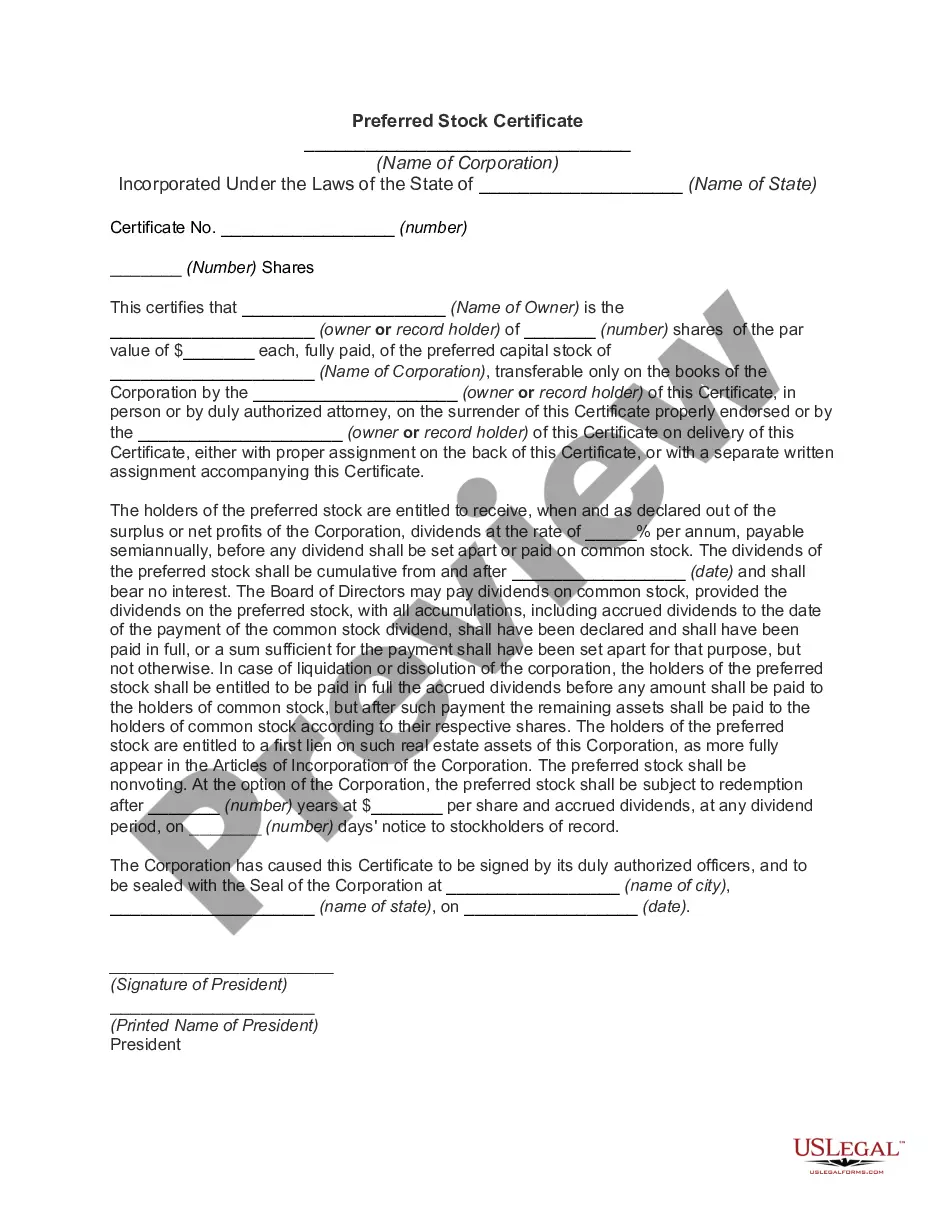
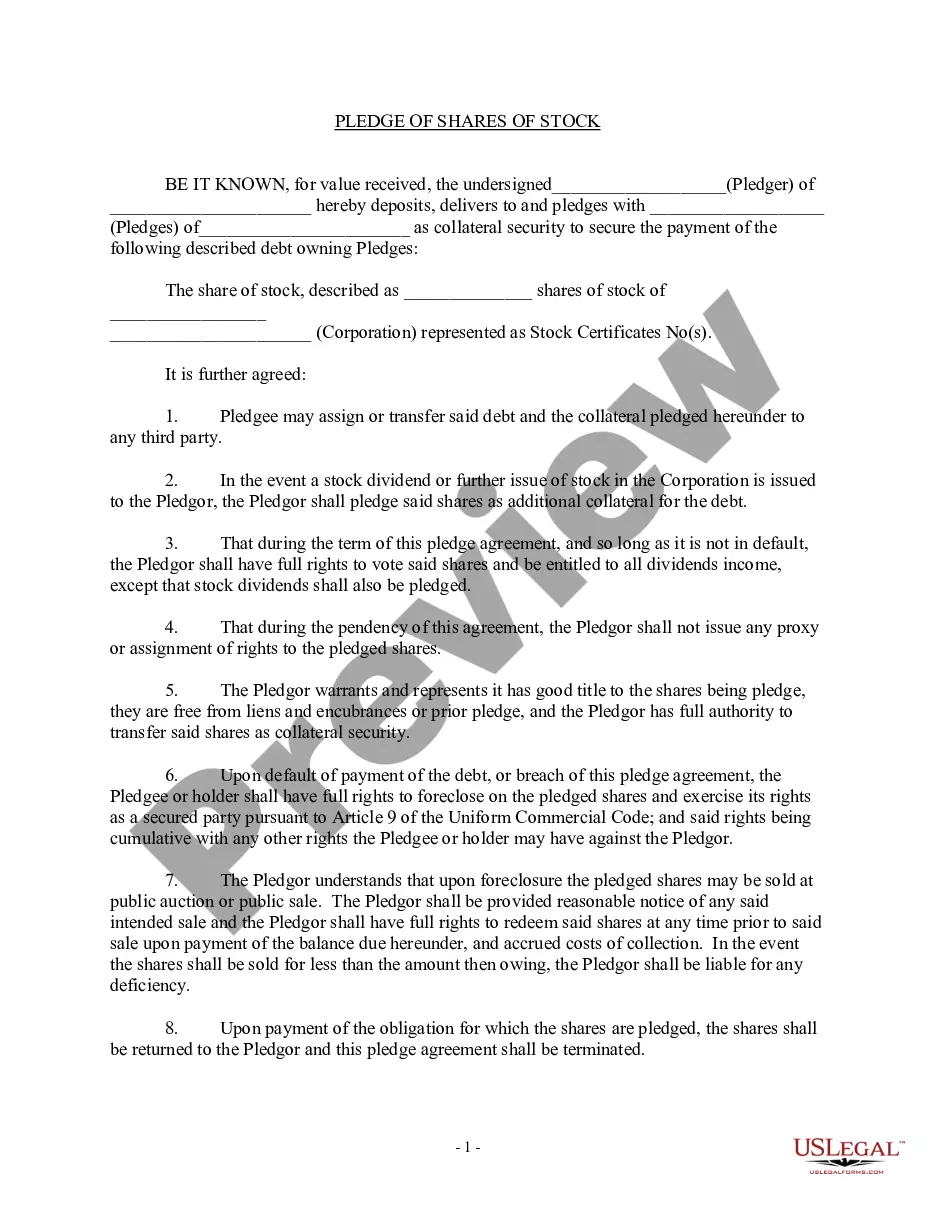
The Preferred Stock Certificate is a legal document that certifies ownership of preferred shares in a corporation. Unlike common stockholders, preferred stockholders have priority over dividends and asset distributions in the event of liquidation. This certificate outlines the specific rights, privileges, and duties associated with the preferred stock, distinguishing it from common stock by its fixed dividend payments and non-voting status.
Key components of this form
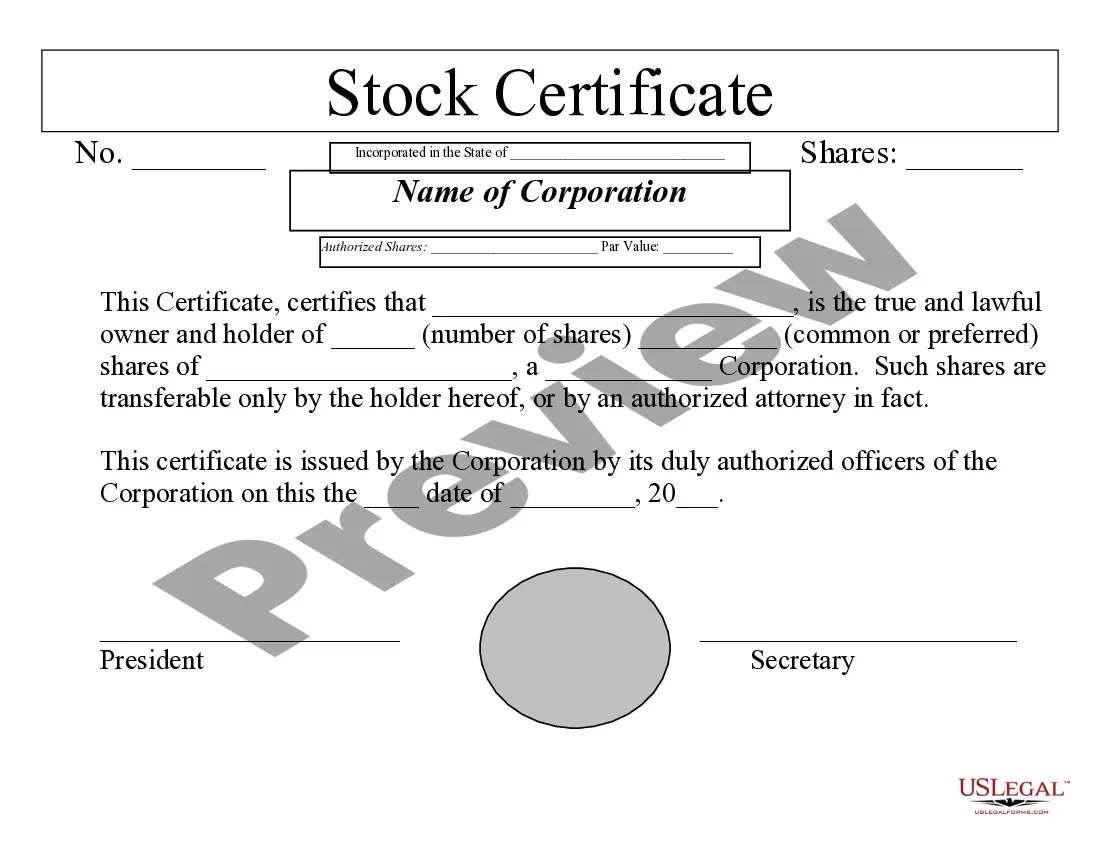
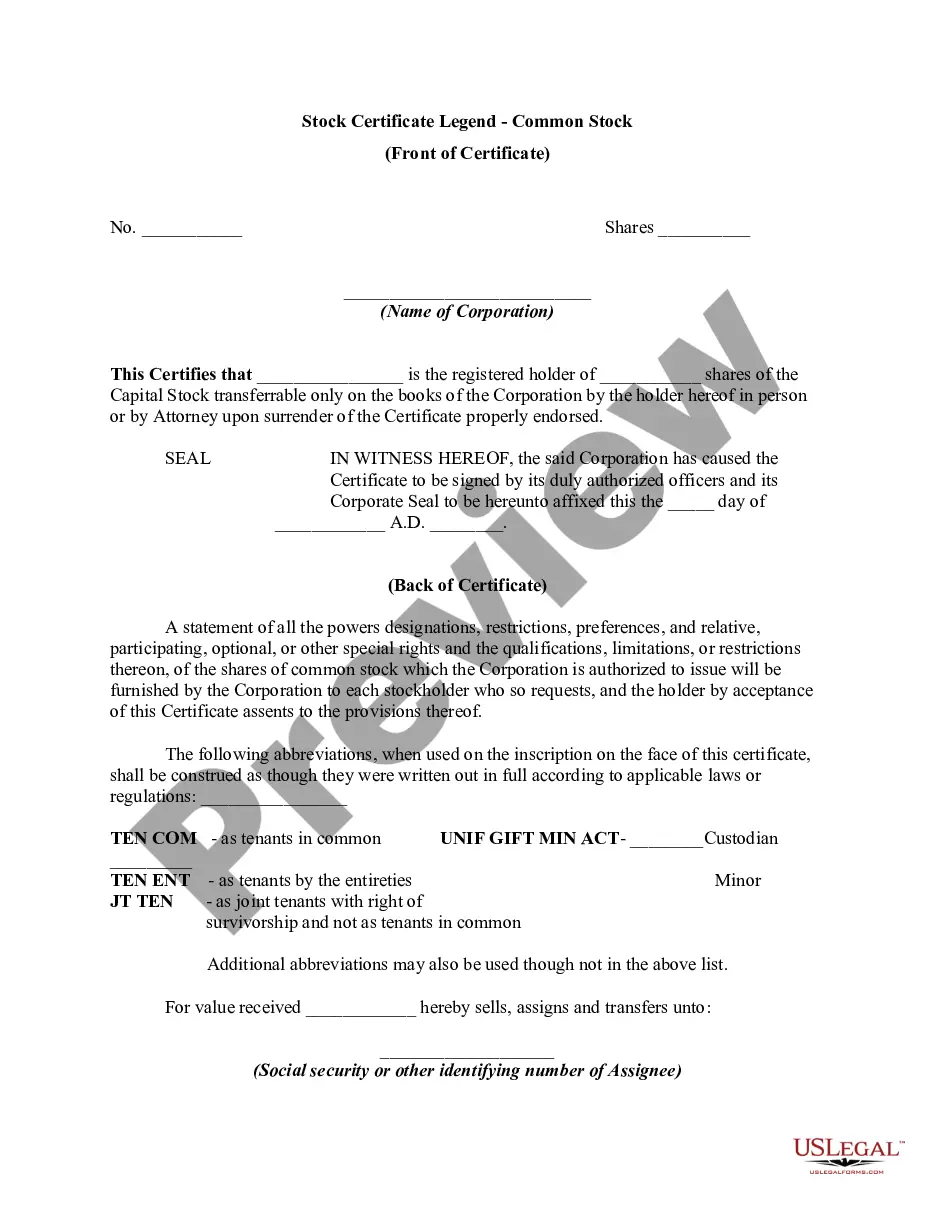
- Corporation name and state of incorporation.
- Certificate number and total number of shares issued.
- Name of the shareholder and their ownership details.
- Dividend rate and payment schedule for preferred shares.
- Conditions regarding the redemption of shares and cumulative dividends.
- Signatures of authorized corporate officers and corporate seal.

When to use this document
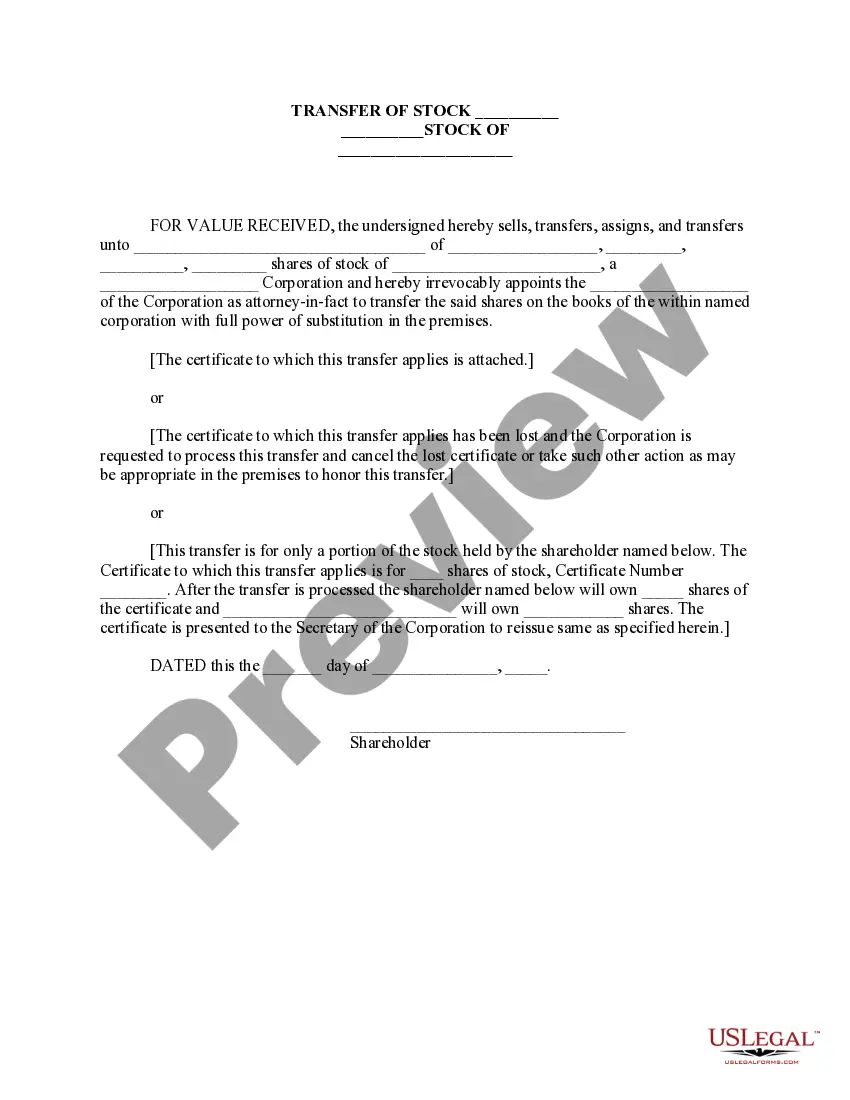
The Preferred Stock Certificate should be used when a corporation issues preferred shares to investors. It is essential for maintaining accurate records of ownership and clarifying the rights of preferred stockholders in matters such as dividends and liquidation distributions. This form is also used when transferring ownership of preferred shares between parties.
Who needs this form
- Corporate officers or directors who need to issue preferred stock to investors.
- Corporations seeking to provide a defined dividend structure for investors.
- Stockholders or potential investors in preferred shares looking to understand their rights.
Instructions for completing this form
- Enter the name of the corporation and the state where it is incorporated.
- Fill in the certificate number and the total number of preferred shares issued.
- Specify the name of the owner and the owner's status (e.g., record holder).
- Detail the dividend rate and the date from which dividends are cumulative.
- Obtain signatures from the president and secretary of the corporation.
- Add the corporate seal for validation.
Does this document require notarization?
This form does not typically require notarization unless specified by local law. Always check state-specific regulations to confirm the requirements for your corporation.
Get your form ready online
Our built-in tools help you complete, sign, share, and store your documents in one place.
Make edits, fill in missing information, and update formatting in US Legal Forms—just like you would in MS Word.
Download a copy, print it, send it by email, or mail it via USPS—whatever works best for your next step.
Sign and collect signatures with our SignNow integration. Send to multiple recipients, set reminders, and more. Go Premium to unlock E-Sign.
If this form requires notarization, complete it online through a secure video call—no need to meet a notary in person or wait for an appointment.
We protect your documents and personal data by following strict security and privacy standards.

Make edits, fill in missing information, and update formatting in US Legal Forms—just like you would in MS Word.

Download a copy, print it, send it by email, or mail it via USPS—whatever works best for your next step.

Sign and collect signatures with our SignNow integration. Send to multiple recipients, set reminders, and more. Go Premium to unlock E-Sign.

If this form requires notarization, complete it online through a secure video call—no need to meet a notary in person or wait for an appointment.

We protect your documents and personal data by following strict security and privacy standards.
Common mistakes to avoid
- Failing to include the corporationâs seal on the certificate.
- Leaving the dividend rate section blank or misentering the percentage.
- Neglecting to obtain the signatures of both the president and secretary.
- Not correctly identifying the owner of the shares on the certificate.
Advantages of online completion
- Immediate access to a legally sound template drafted by licensed attorneys.
- Better organization and storage of corporate records in digital format.
- Easy customization to fit specific corporate needs.
- Convenience of downloading and printing the form at your own pace.
Looking for another form?
Form popularity
FAQ
Locate the Company. The first step is making sure the company is still in business. Find the CUSIP Number. The secretary of state's office in the state of incorporation must be listed on the stock certificate. Contact the Transfer Agent. Complete the Transfer Form. Place an Order. Keep Old Certificates.
Preferred stock is equity. Just like common stock, its shares represent an ownership stake in a company. However, preferred stock normally has a fixed dividend payout as well. That's why some call preferred stock a stock that acts like a bond.
An old stock or bond certificate may still be valuable even if it no longer trades under the name printed on the certificate. The company may have merged with another company or simply changed its name.
For example, the holder of 100 shares of a corporation's 8% $100 par preferred stock will receive annual dividends of $800 (8% X $100 = $8 per share X 100 shares) before the common stockholders are allowed to receive any cash dividends for the year.
An old stock or bond certificate may still be valuable even if it no longer trades under the name printed on the certificate. The company may have merged with another company or simply changed its name.
Stock shares do not have an expiration date.This may be the case with an old stock certificate you found in a trunk, but it will not hurt to check it out.
A certificate which contains a copy of the board resolution setting out the powers, designations, preferences or rights of a class or series of a class of stock of a corporation (typically a series of preferred stock) if they are not already contained in the certificate of incorporation of the corporation.
The main difference between preferred and common stock is that preferred stock gives no voting rights to shareholders while common stock does. Preferred shareholders have priority over a company's income, meaning they are paid dividends before common shareholders.
Contact your stockbroker to search the stock's worth via its CUSIP number if the steps given earlier yield no results. This number is printed on the back of the stock certificate. Use a fee-based service to search your stock's history if the earlier steps come up empty. Fees can range from $40 to $85 or more.