Career Planning Policy
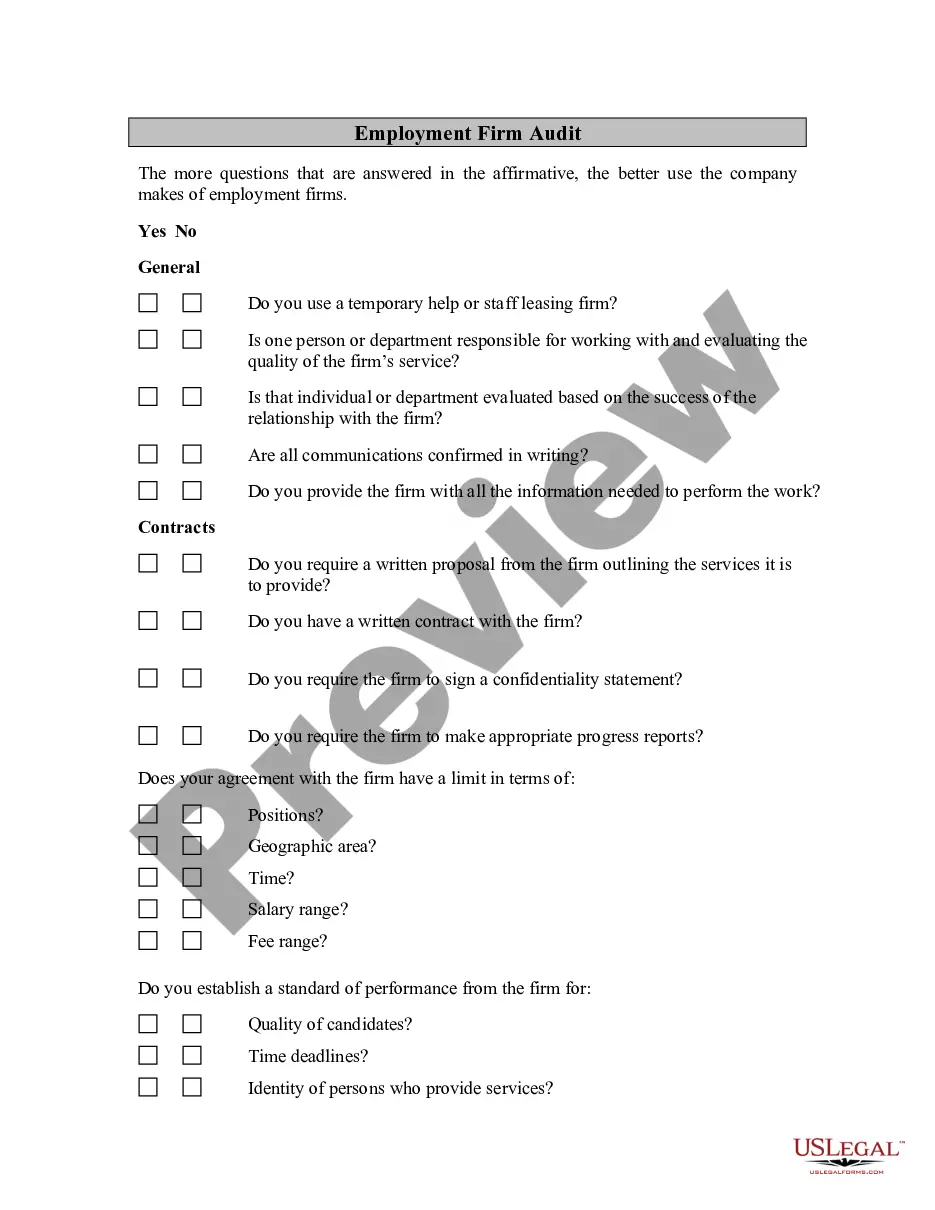
Understanding this form
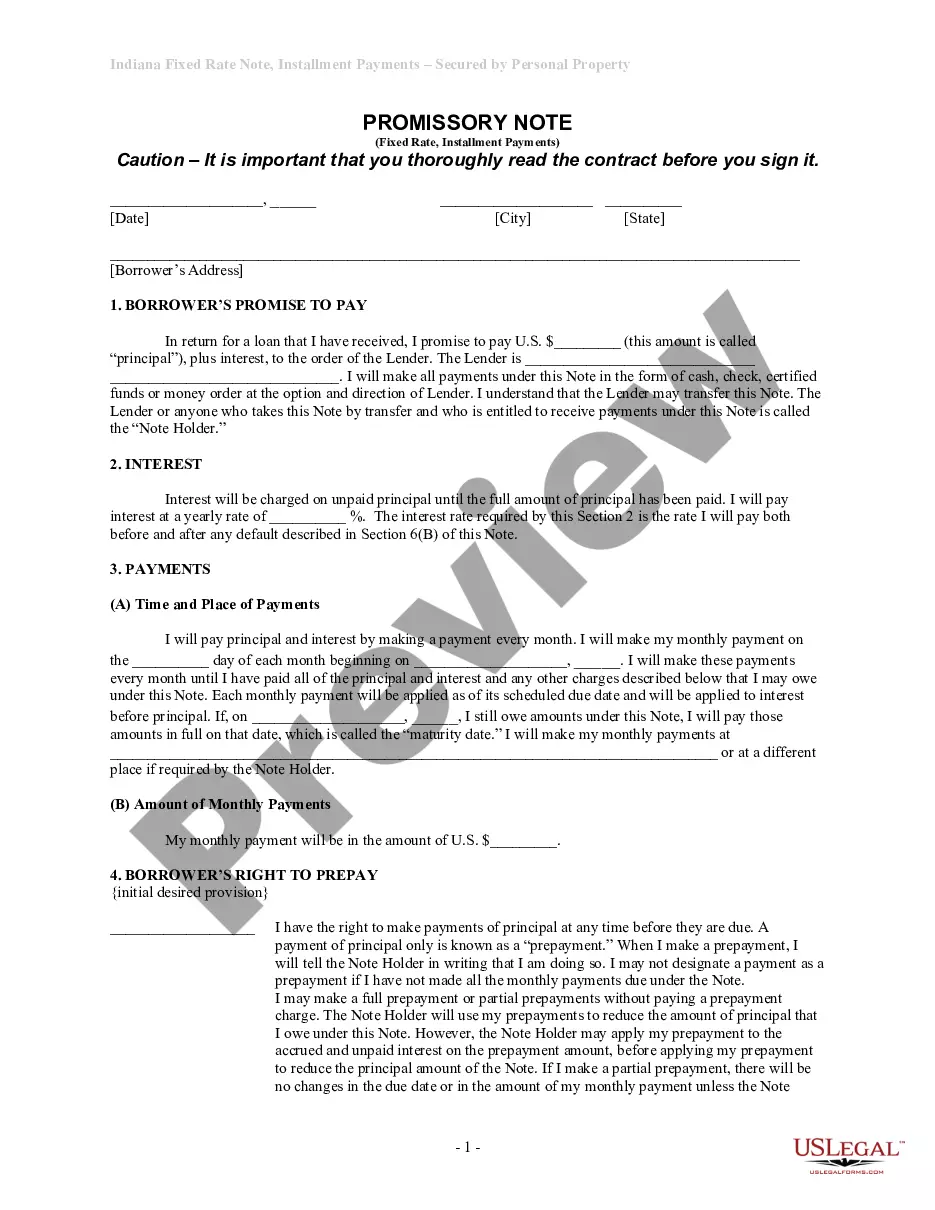
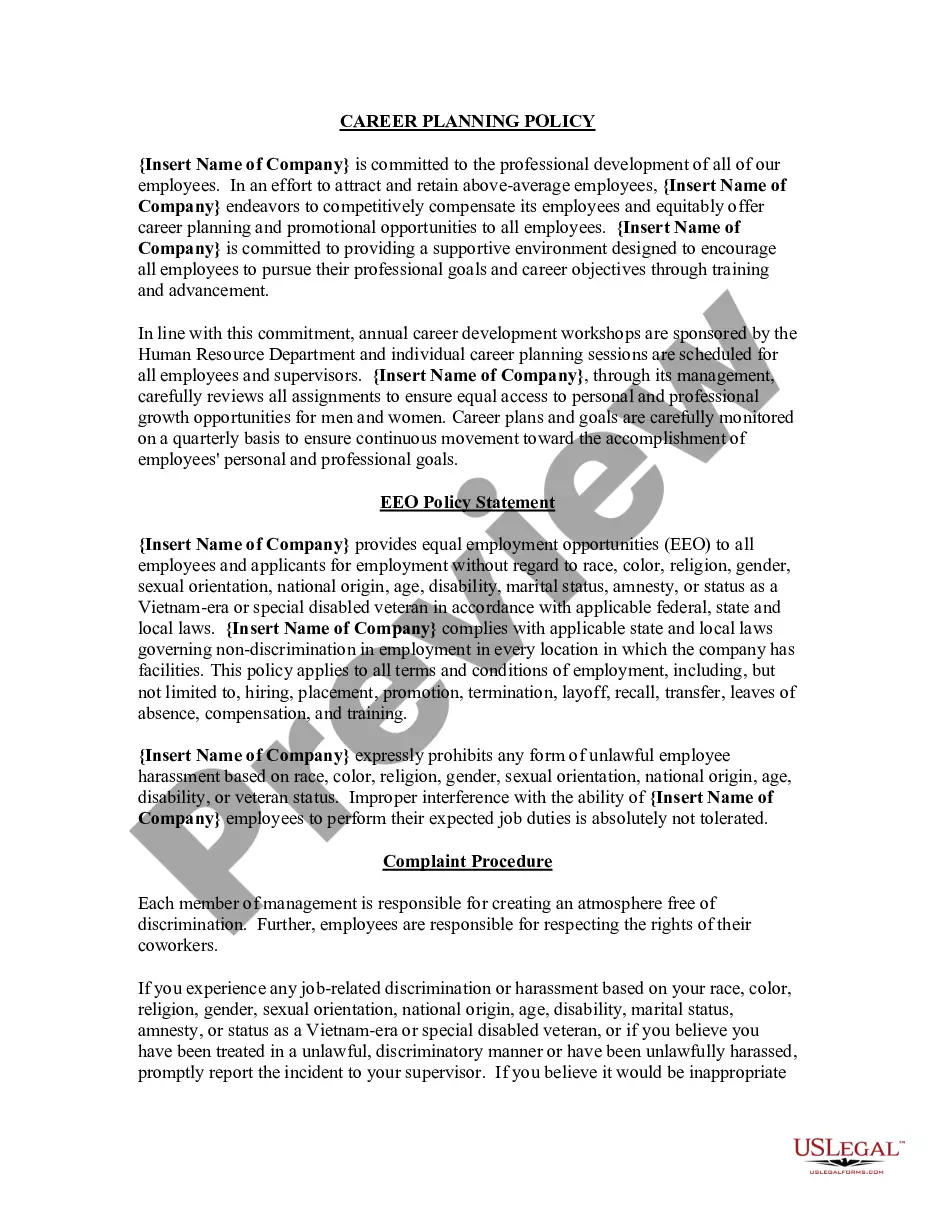
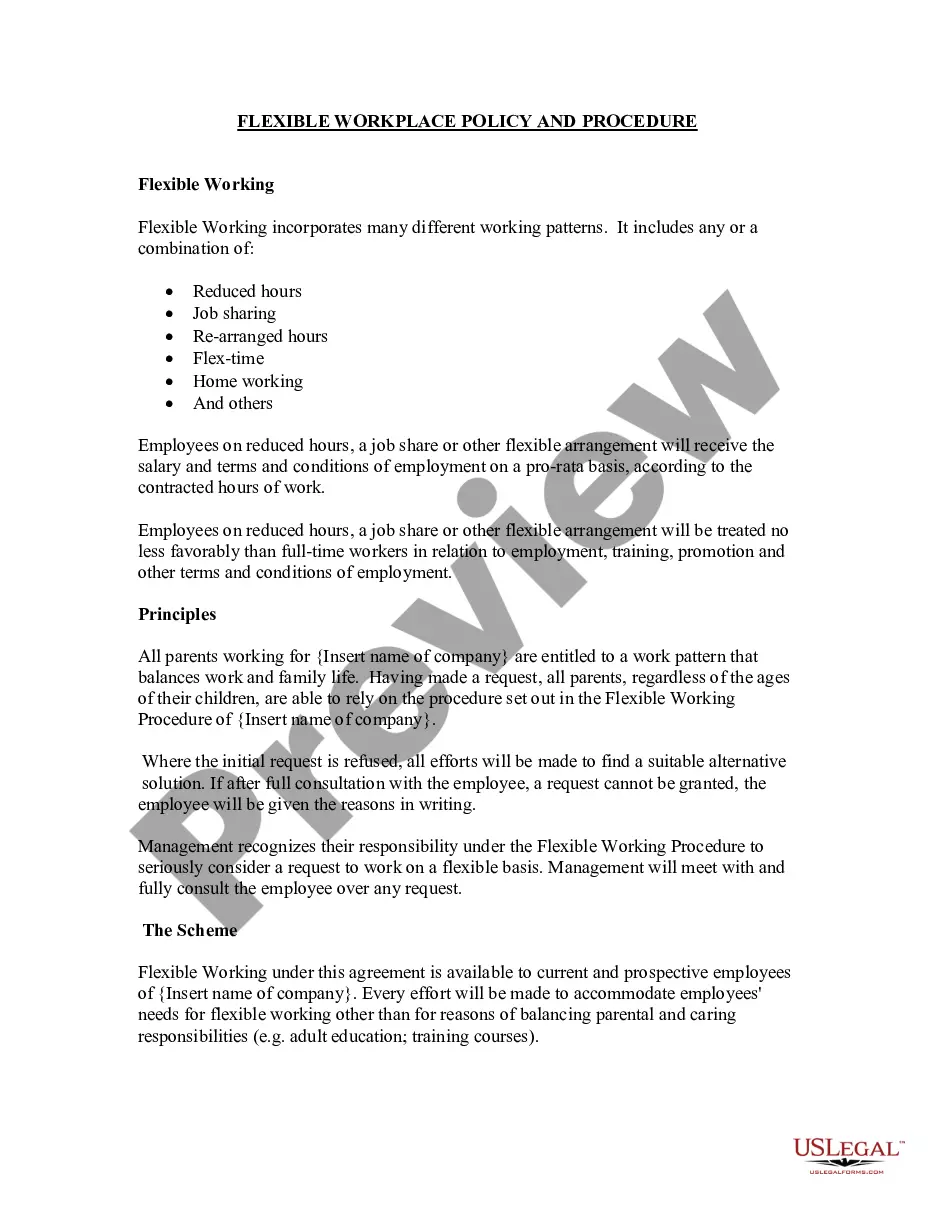
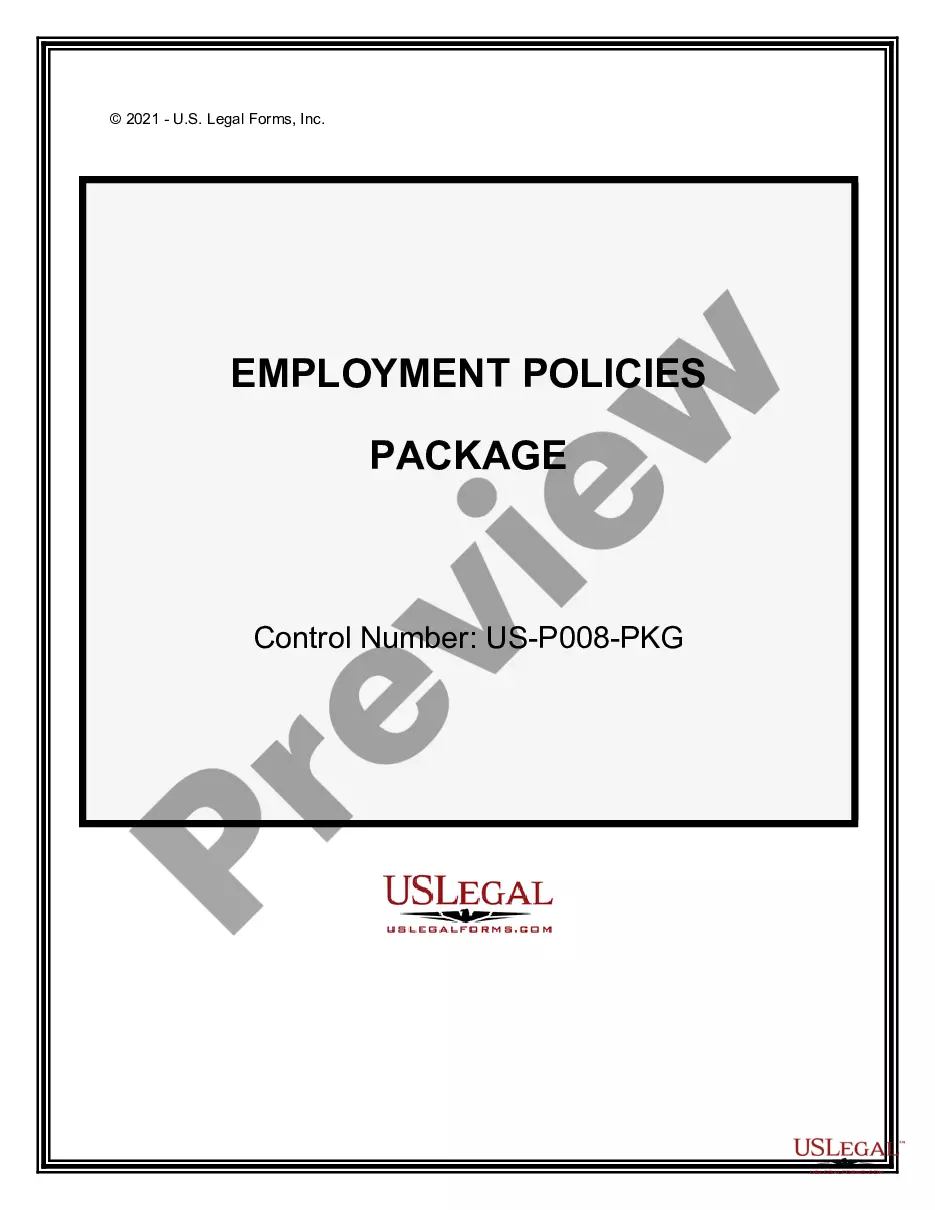
The Career Planning Policy is a formal document that outlines the procedures and commitments of a company towards the professional development of its employees. It establishes a structured approach for career advancement and training opportunities while ensuring equal access for all employees, setting it apart from general employment agreements. This policy serves as a guide for organizations to foster a supportive workplace culture focused on career growth and equitable treatment.
Form components explained
- Introduction to the company's commitment to career development.
- Details on annual career development workshops and individual planning sessions.
- Equal Employment Opportunity (EEO) policy statement addressing non-discrimination.
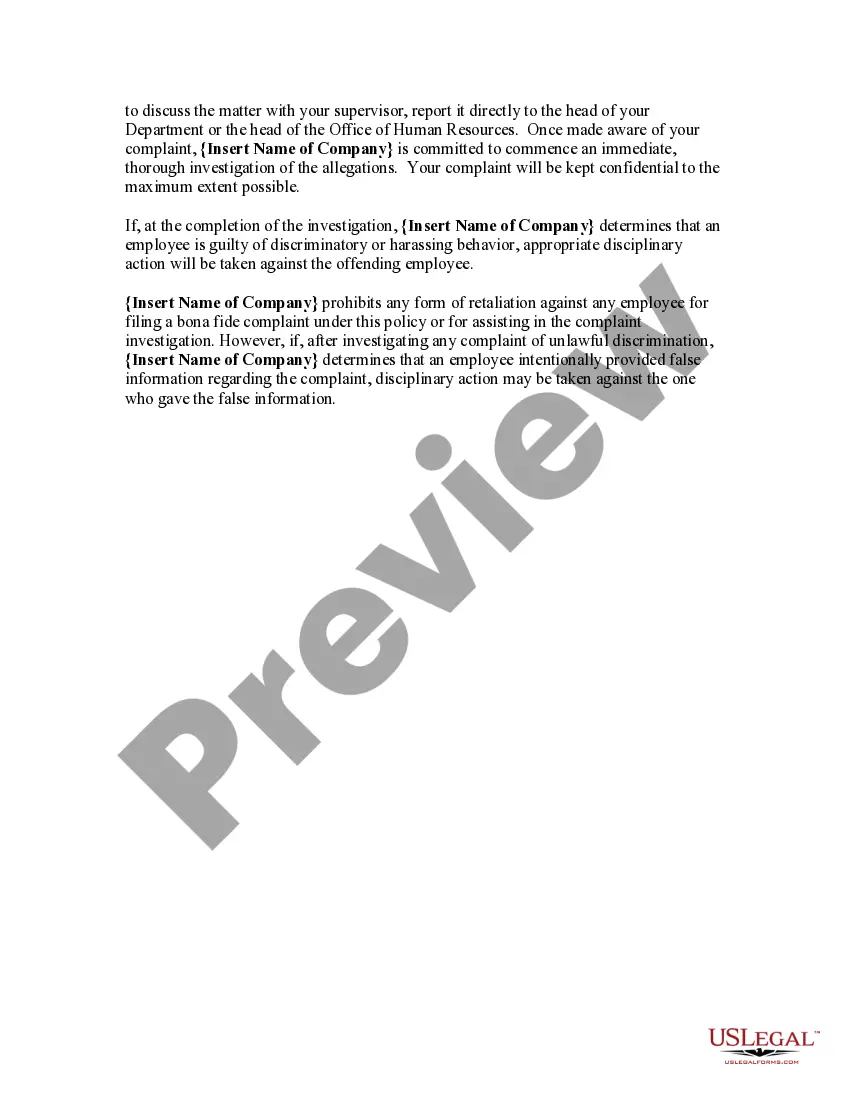
- Complaint procedure for reporting discrimination or harassment.
- Assurance against retaliation for employees who file complaints.

Common use cases
This Career Planning Policy should be implemented when establishing or updating a company's framework for employee development. It is applicable during onboarding sessions, team meetings focused on professional growth, and in response to employee inquiries about career advancement opportunities. This policy ensures that all employees understand the available resources and processes for their career development.
Who needs this form
This form is intended for:
- Human resource departments looking to formalize career development policies.
- Management teams aiming to enhance employee engagement through clear growth paths.
- Companies of any size wishing to implement equitable and supportive career planning processes.
- Employees seeking clarity on career advancement opportunities within their organization.
How to complete this form
- Insert the company's name in all designated areas.
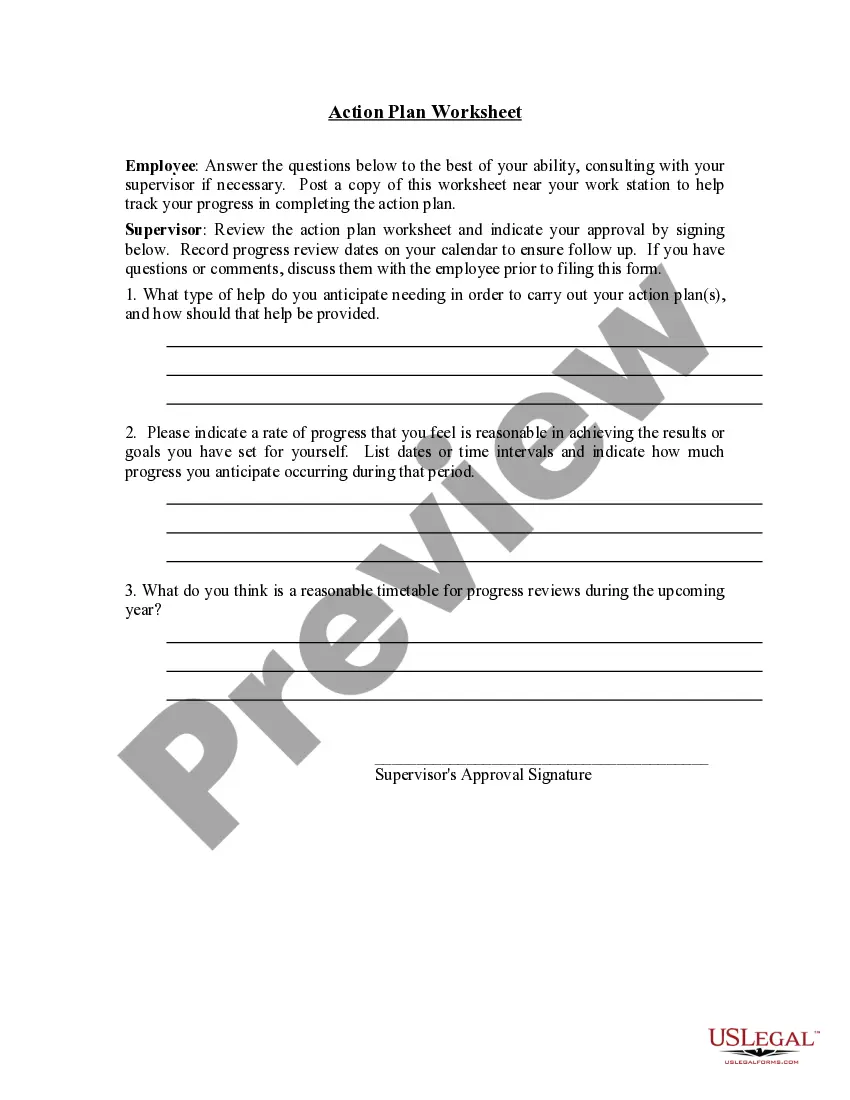
- Outline specific career development programs and workshops offered by the company.
- Define the EEO policy clearly, ensuring compliance with legal standards.
- Establish a clear procedure for reporting discrimination or harassment concerns.
- Review and finalize the document by having it signed by the appropriate parties in management.
Notarization requirements for this form
This form does not typically require notarization unless specified by local law.
Get your form ready online
Our built-in tools help you complete, sign, share, and store your documents in one place.
Make edits, fill in missing information, and update formatting in US Legal Forms—just like you would in MS Word.
Download a copy, print it, send it by email, or mail it via USPS—whatever works best for your next step.
Sign and collect signatures with our SignNow integration. Send to multiple recipients, set reminders, and more. Go Premium to unlock E-Sign.
If this form requires notarization, complete it online through a secure video call—no need to meet a notary in person or wait for an appointment.
We protect your documents and personal data by following strict security and privacy standards.

Make edits, fill in missing information, and update formatting in US Legal Forms—just like you would in MS Word.

Download a copy, print it, send it by email, or mail it via USPS—whatever works best for your next step.

Sign and collect signatures with our SignNow integration. Send to multiple recipients, set reminders, and more. Go Premium to unlock E-Sign.

If this form requires notarization, complete it online through a secure video call—no need to meet a notary in person or wait for an appointment.

We protect your documents and personal data by following strict security and privacy standards.
Typical mistakes to avoid
- Failing to customize the policy to align with company culture and values.
- Omitting important legal language pertaining to equal employment opportunities.
- Not clearly defining the procedures for reporting complaints, leading to confusion.
- Neglecting to review the policy regularly to ensure it meets current laws and company practices.
Benefits of using this form online
- Convenient access: Download the form anytime, anywhere.
- Editability: Easily customize the policy to fit your organizationâs specific needs.
- Reliability: Ensure the policy is crafted in compliance with legal standards by licensed attorneys.
Legal use & context
- This form protects employees' rights and promotes a culture of inclusivity.
- It serves as a guideline to ensure compliance with federal and state employment laws.
- Adopting this policy can strengthen a companyâs legal standing in cases of employee disputes.
What to keep in mind
- The Career Planning Policy outlines a company's commitment to employee development.
- It includes important sections on equal opportunity and complaint procedures.
- Companies should customize the form to reflect their unique environment and legal requirements.
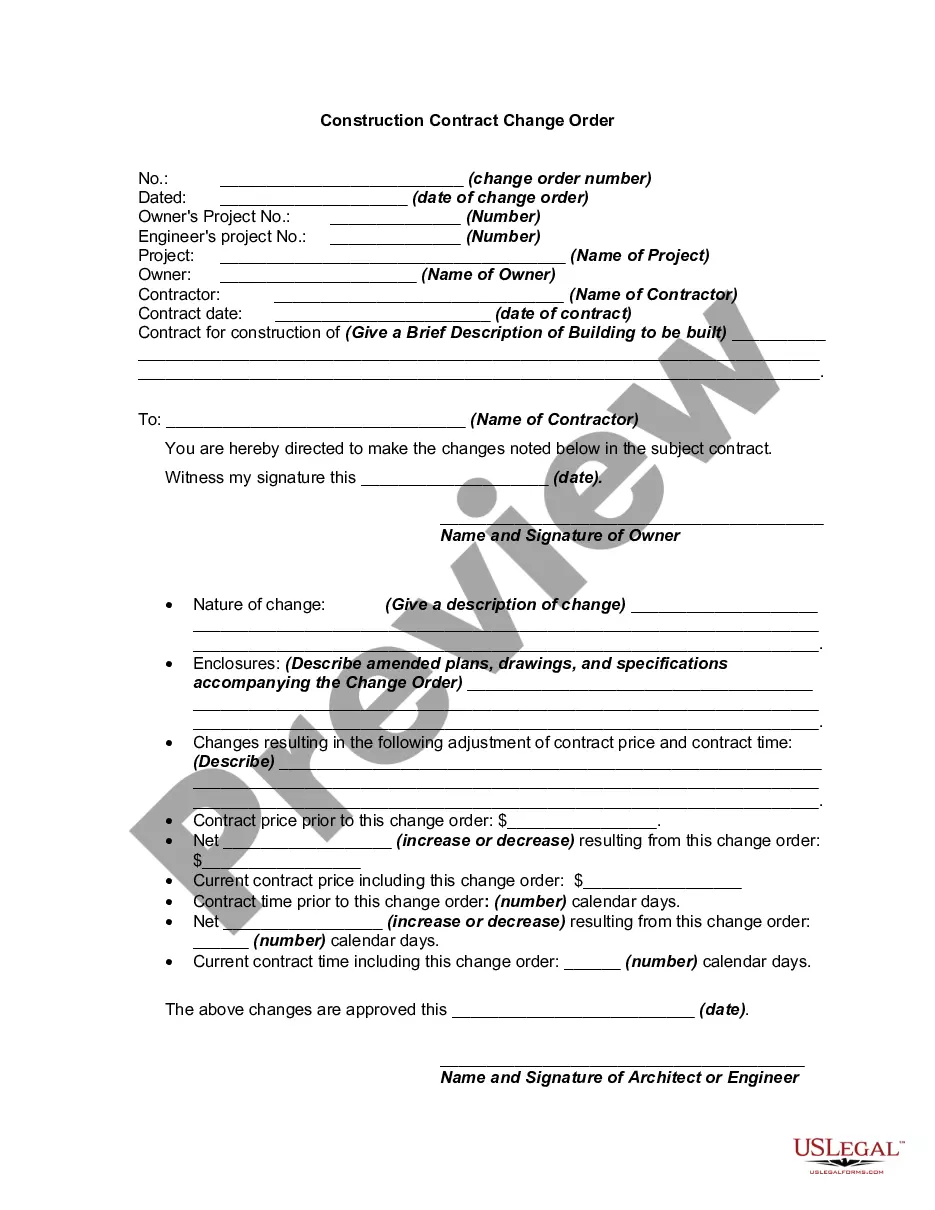
Looking for another form?



Form popularity
FAQ
Step 1: Get to know yourself. Identify your vision, values, interests, skills, traits and abilities. Step 2: Explore your occupational options. Step 3: Get ready by evaluating your career options. Step 4: Take action to achieve your career goals. Use career planning to take charge of the changes in your life and work.
Assessment of Your Strengths. You are really good at certain things. Identifying What Kind of Boss Helps You Thrive. Training and Education Planning. Alignment of Non-Work Aspects of Your Life. Building Your Personal Board of Directors.
Step one: Set your macro goal. Consider what you want to achieve by writing this plan, and write down your ultimate goal. Step two: Set your micro goals. Step three: Make it attainable. Step four: Make it realistic. Step five: Make your goals time-bound.
Writing a career development plan. Identify and define a primary career interest. Identify long-term professional goals. Identify the short-term goals. Identify positive tasks in the current role. Identify the negative tasks in the current role. Identify additional skills and experience. Identify progress checkpoints.
The career planning process has four components: (1) Self Assessment, (2) Career Exploration, (3) Career Identification, and (4) Action Plan. If you're driven, you can easily go through these steps on your own.
Step 1: Explore Career Options. Step 2: Conduct Field Research. Step 3: Determine Your Job Target. Step 4: Build Your Credentials and Resume. Step 5: Prepare for Your Job Search. Step 6: Launch Your Job Search.
Step 1: Establish personal and career development goals. Step 2: Establish work development needs. Step 3: Develop an action plan. Step 4: Make changes on the path to development. Step 5: Reflect on efficacy and update the plan as required.
Goal Description. Your statement of what you want to be able to do differently as a result of development. Action Steps. The activities that will help you reach your goal through practice or education. Measurable Definition of Success. Describes how you will know when you have achieved your goal. Resources Needed. Target Date.