Job Postings Policy
Understanding this form
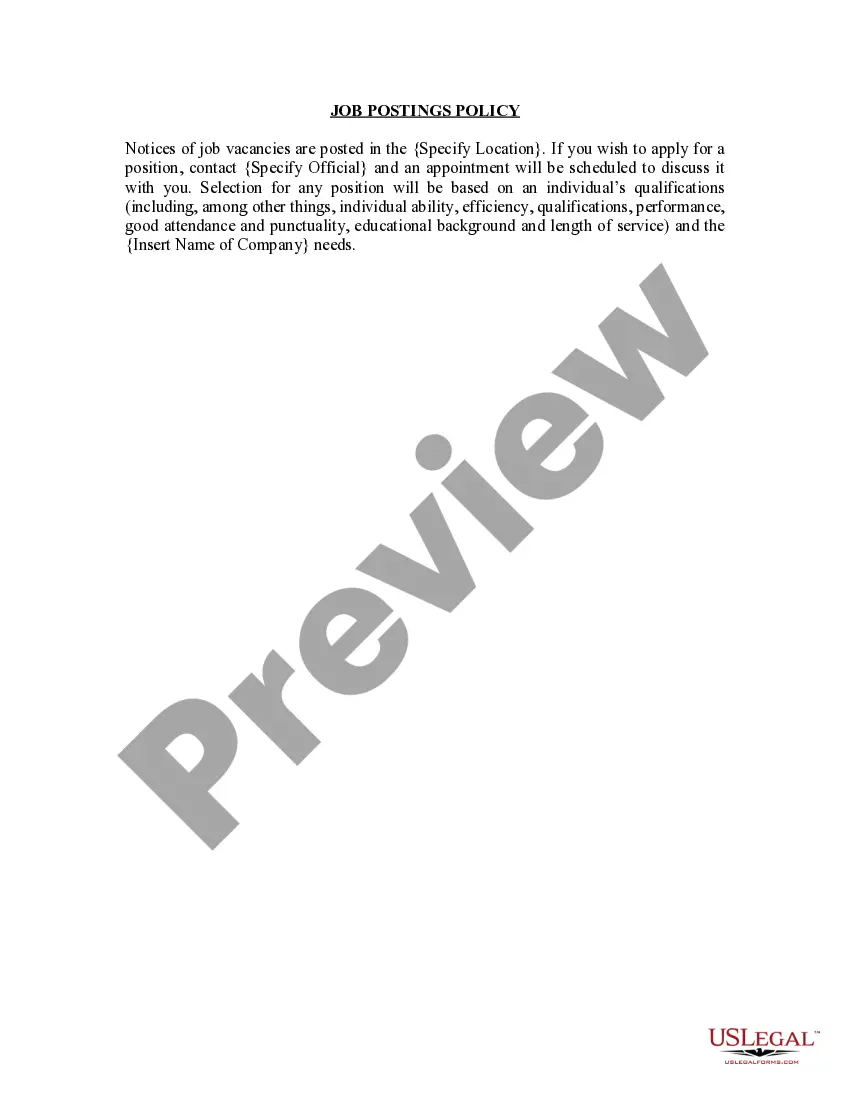
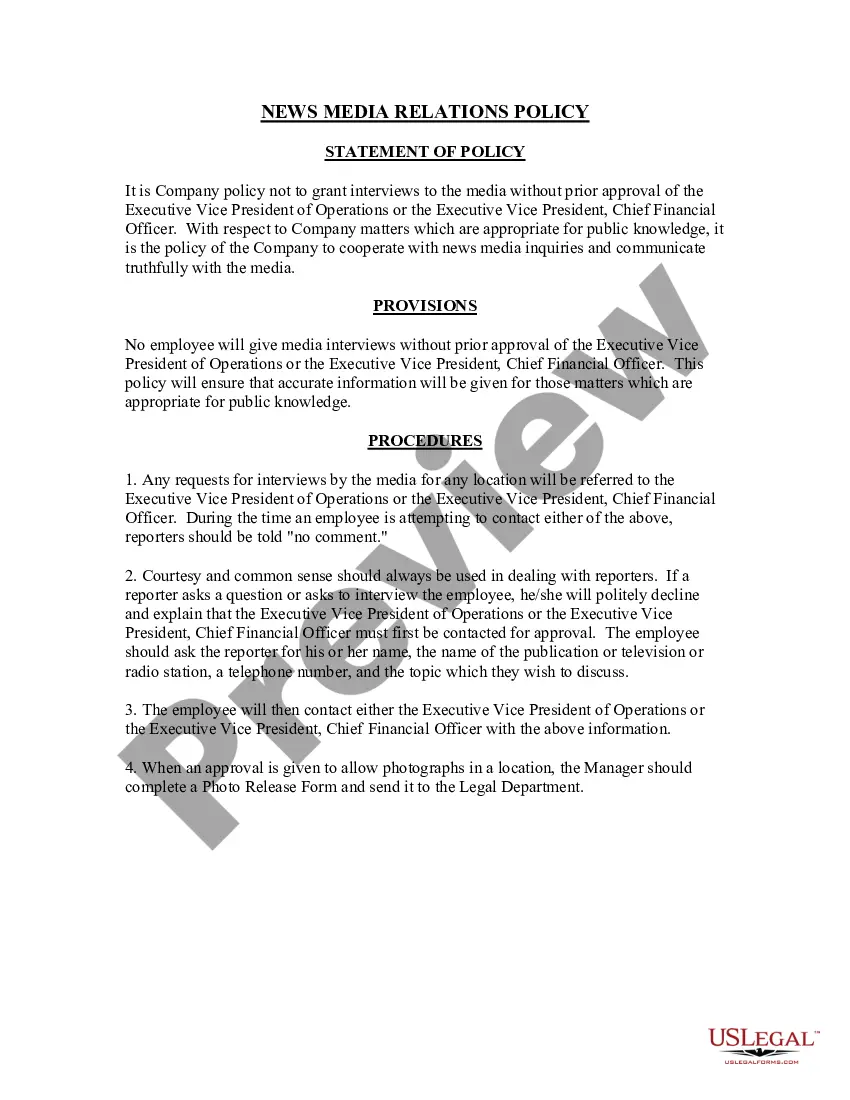
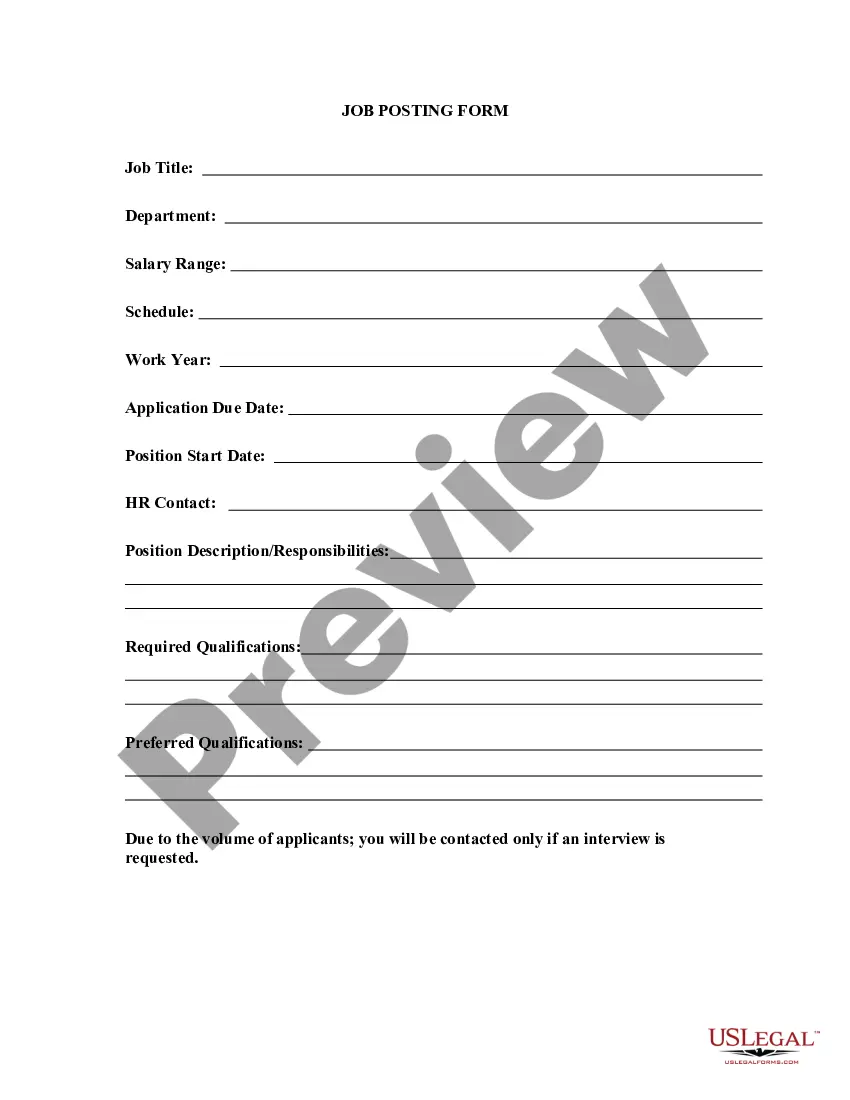
The Job Postings Policy is a crucial document that outlines the procedures for how job vacancies within a company are posted and filled. It ensures that all employees are informed about available positions and the process for applying. This form is essential for maintaining transparency and fairness in the hiring process, distinguishing it from other employment-related forms.
Main sections of this form
- Specification of the location where job postings will be made.
- Instructions on how to apply for a posted position.
- Criteria for selection based on qualifications and other relevant factors.
- Indication of whom to contact for further discussions about the position.
Common use cases
This form is used when an organization needs to establish consistency and clarity in how job vacancies are communicated to employees. It is especially useful when there are multiple openings, to provide a standard process for applications and ensure compliance with internal hiring procedures.
Who this form is for
- Human Resources departments managing internal job postings.
- Managers looking to fill open positions within their teams.
- Employees interested in applying for new roles within the organization.
Steps to complete this form
- Identify the job positions that will be posted within the organization.
- Specify the location where these job postings will be visible to employees.
- Designate the official responsible for handling applications for the positions.
- Establish criteria for applicant selection clearly.
- Inform employees about the process for applying, including any relevant deadlines.
Does this form need to be notarized?
In most cases, this form does not require notarization. However, some jurisdictions or signing circumstances might. US Legal Forms offers online notarization powered by Notarize, accessible 24/7 for a quick, remote process.
Get your form ready online
Our built-in tools help you complete, sign, share, and store your documents in one place.
Make edits, fill in missing information, and update formatting in US Legal Forms—just like you would in MS Word.
Download a copy, print it, send it by email, or mail it via USPS—whatever works best for your next step.
Sign and collect signatures with our SignNow integration. Send to multiple recipients, set reminders, and more. Go Premium to unlock E-Sign.
If this form requires notarization, complete it online through a secure video call—no need to meet a notary in person or wait for an appointment.
We protect your documents and personal data by following strict security and privacy standards.

Make edits, fill in missing information, and update formatting in US Legal Forms—just like you would in MS Word.

Download a copy, print it, send it by email, or mail it via USPS—whatever works best for your next step.

Sign and collect signatures with our SignNow integration. Send to multiple recipients, set reminders, and more. Go Premium to unlock E-Sign.

If this form requires notarization, complete it online through a secure video call—no need to meet a notary in person or wait for an appointment.

We protect your documents and personal data by following strict security and privacy standards.
Typical mistakes to avoid
- Failing to update the policy with new job postings regularly.
- Not clearly specifying the selection criteria, creating confusion.
- Neglecting to communicate to employees about the application process.
Benefits of using this form online
- Easy access to documents that can be quickly updated as positions change.
- Streamlines communication among employees regarding job opportunities.
- Ensures a consistent procedure that can be referenced by all staff members.
Main things to remember
- The Job Postings Policy provides essential guidelines for internal job openings.
- Employees should understand how to apply for positions and the criteria used for selection.
- Maintain clear communication regarding the policy to promote fairness within the organization.
Looking for another form?

Form popularity
FAQ
Describing the Position. An effective job description typically contains two components: an overview of the role and the job responsibilities. Summarize the Role. List Job Responsibilities. Make it Easy to Read. Provide Qualifications and Skill Requirements. Share Organizational Values & Culture.
Use an accurate job title. Draw them in with your introduction. List the roles duties and requirements. Required and desirable skills should be clearly separated. Specific location. Always include a salary range. Jazz up your job posting with great company benefits. Detail out the application process.
There is no specific legal requirement for employers to advertise every job vacancy that arises.Where the employer recruits friends, family or other contacts of current employees without advertising a vacancy externally, this may give rise to allegations of unlawful discrimination.
There is no statutory requirement on employers to advertise jobs internally. However, it is good practice to do so and it may assist in defending a discrimination claim if existing employees have full notice of the availability of a post to enable them to apply.
Though most employers may not be legally required to post a job, many human resources teams choose to do so for the majority of job openings in their organization.Posting jobs can give internal employees the opportunity to express interest, which the employer may not have known about otherwise.
If, however, the employer does not have any written rules, policies or procedures relating to recruitment then the short answer is no, employers do not need to advertise a job role before appointing a candidate. There is no legal requirement for vacancies to be advertised, either internally or externally.
Most employers are not legally required to post any job listing, although many do so to avoid the appearance of illegal discrimination. Some contractors who do business with the U.S. government are required to post most of their employment opportunities through a state job listing service or equivalent.
But, generally no, you're not required to post for it. Only federal contractors are required to post open positions, so you can offer the employee the job without posting it for potential external or internal candidates to apply.