Stock Certificate Legend - Common Stock
About this form
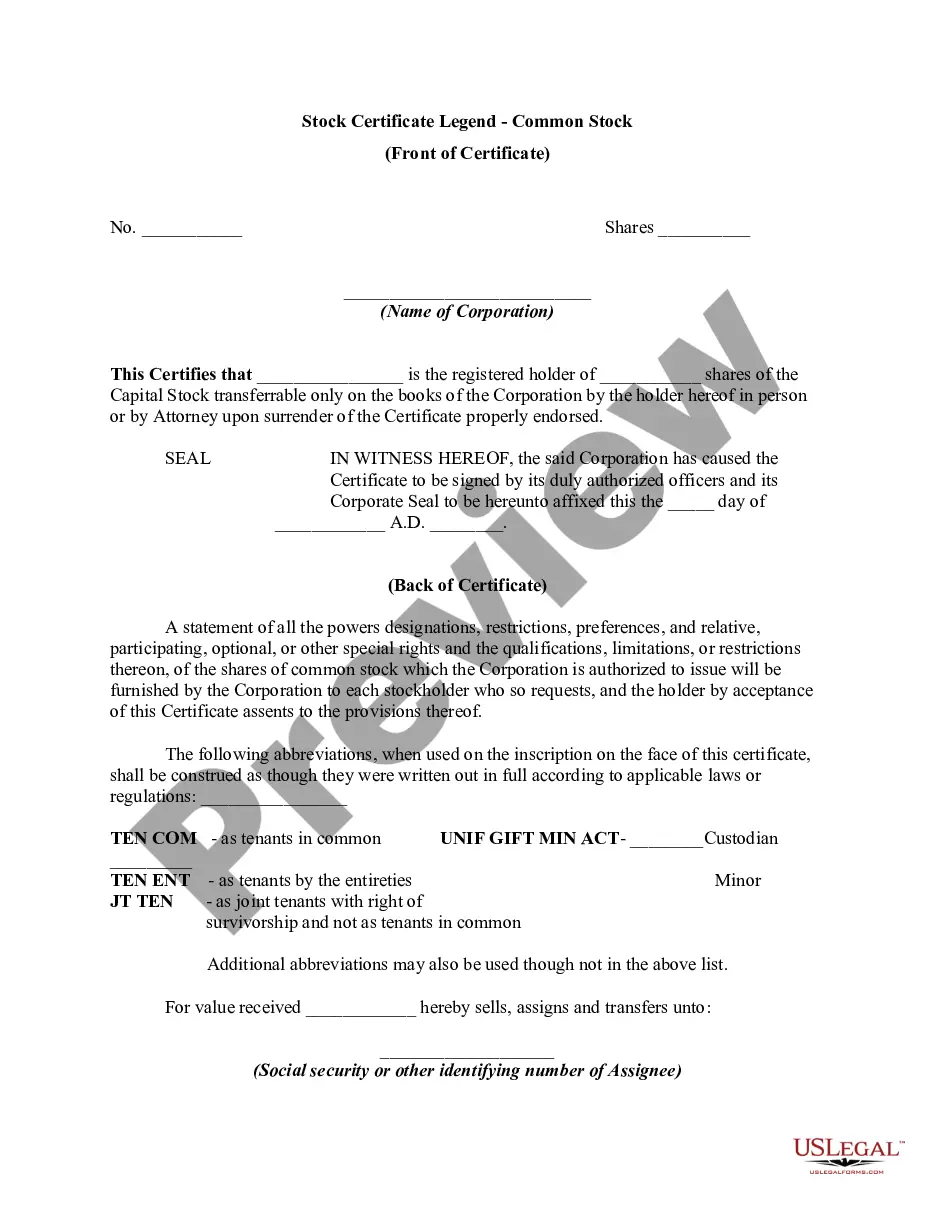
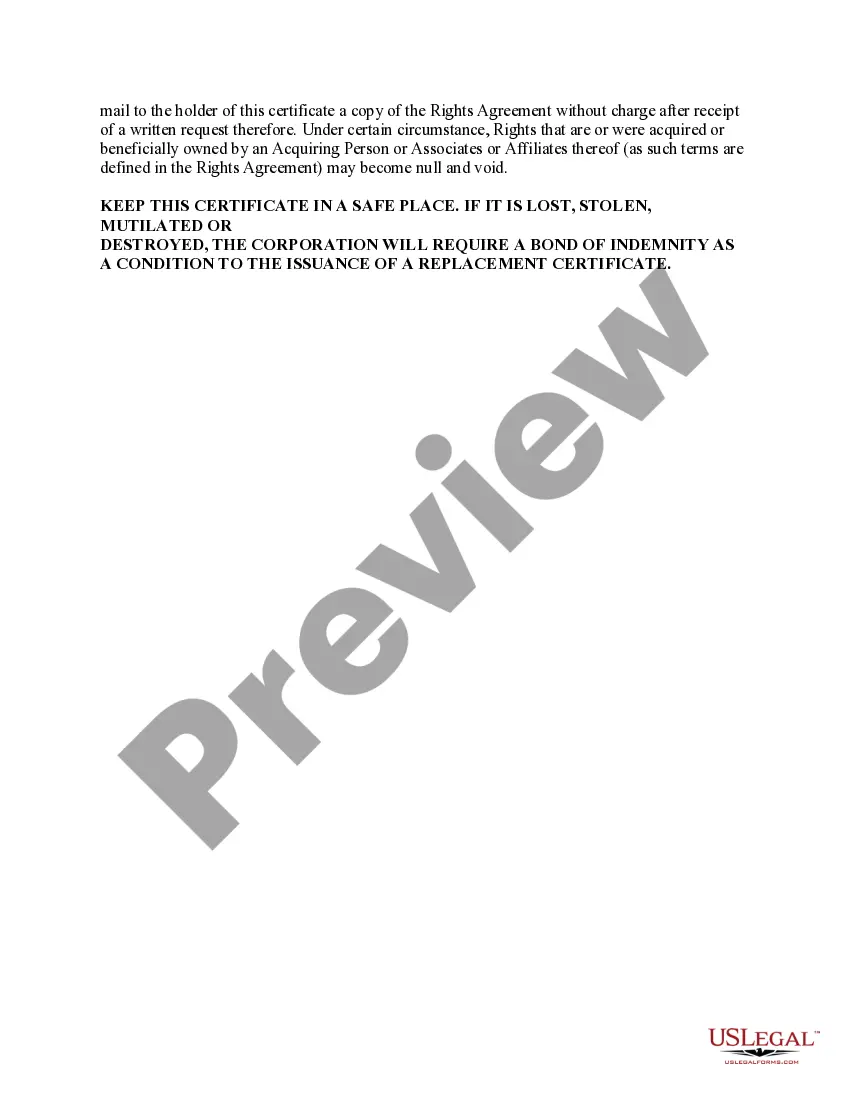
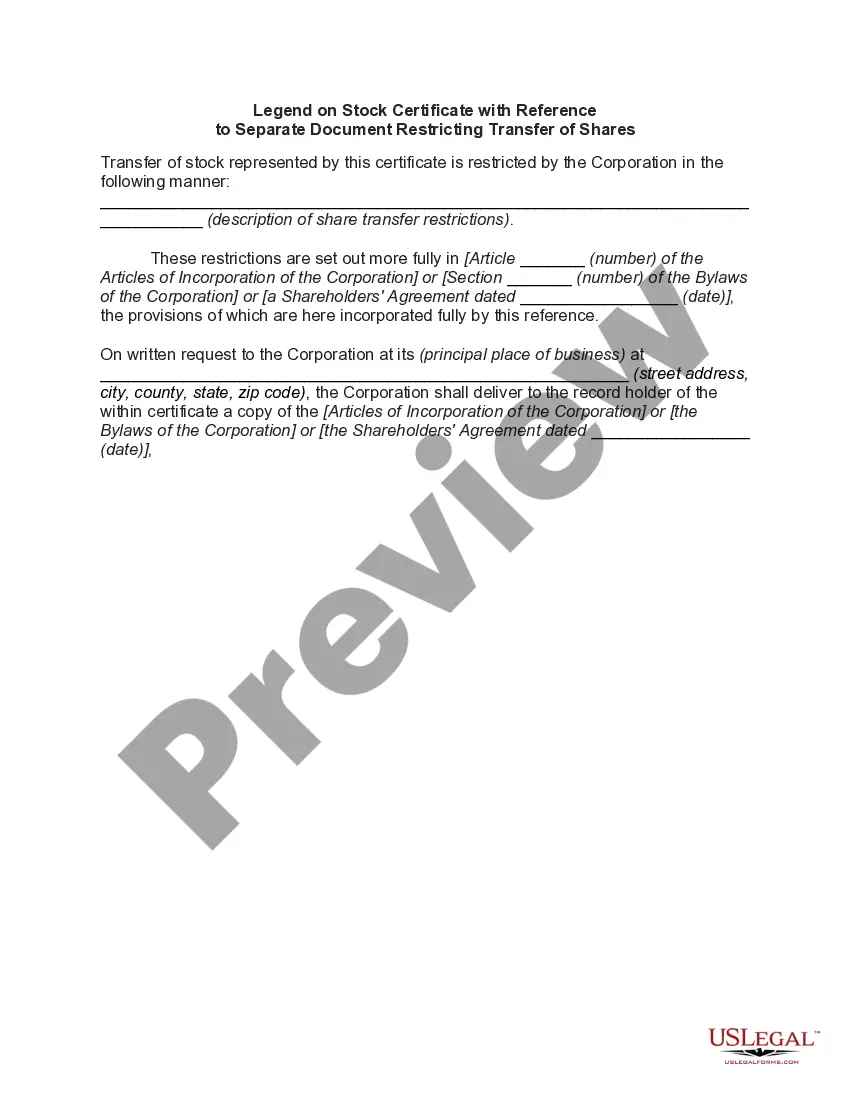
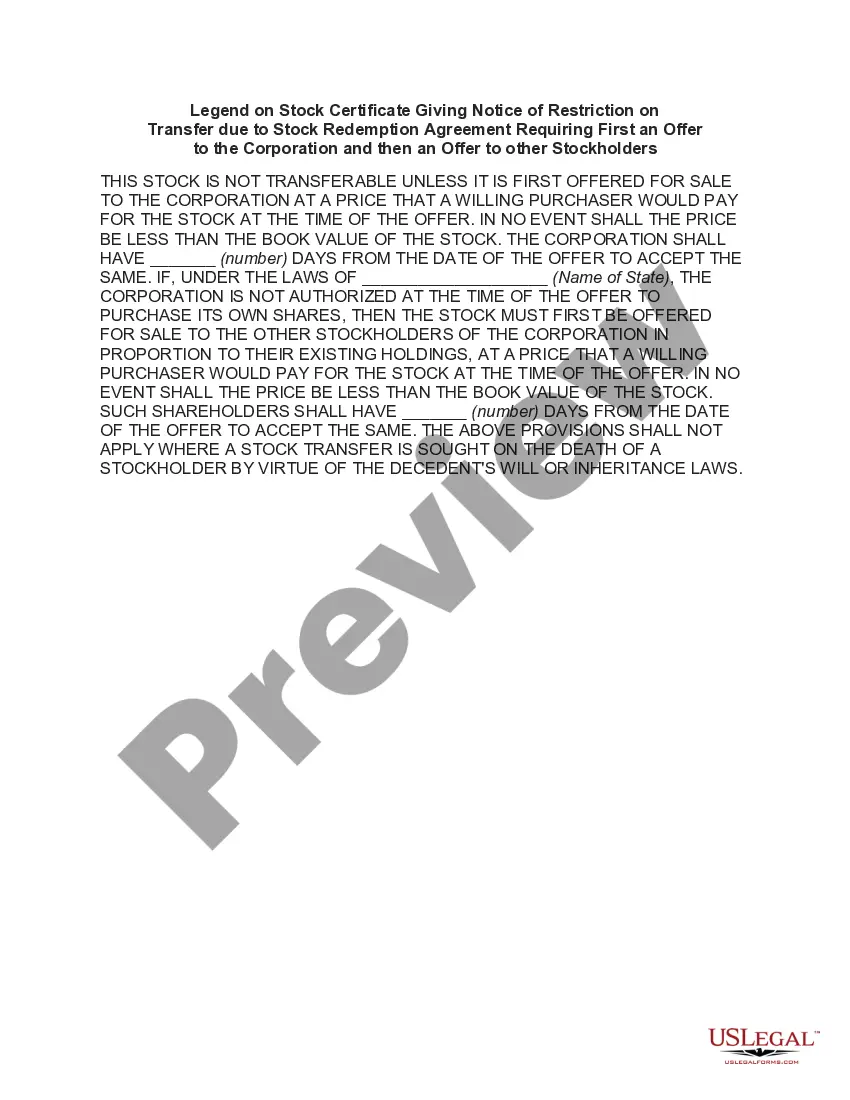
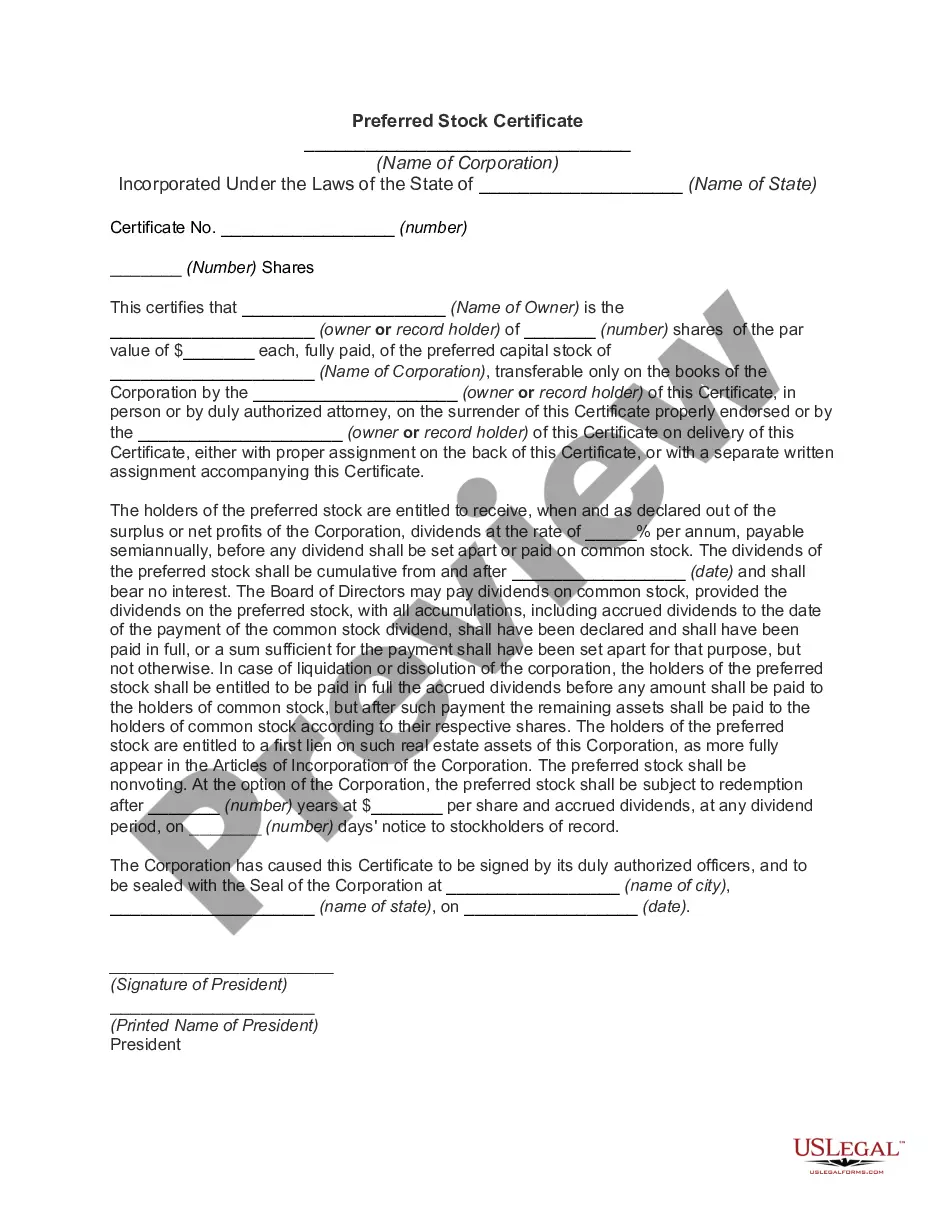
The Stock Certificate Legend - Common Stock is a legal document that outlines certain restrictions and rights associated with shares of common stock. This form provides essential wording on the stock certificate itself, serving as a notice to the holder about the limitations on the transfer of shares. Unlike other stock forms, this legend includes specific provisions regarding transfer rights and obligations, ensuring that both the corporation and the stockholder understand the legal implications of ownership.
Main sections of this form
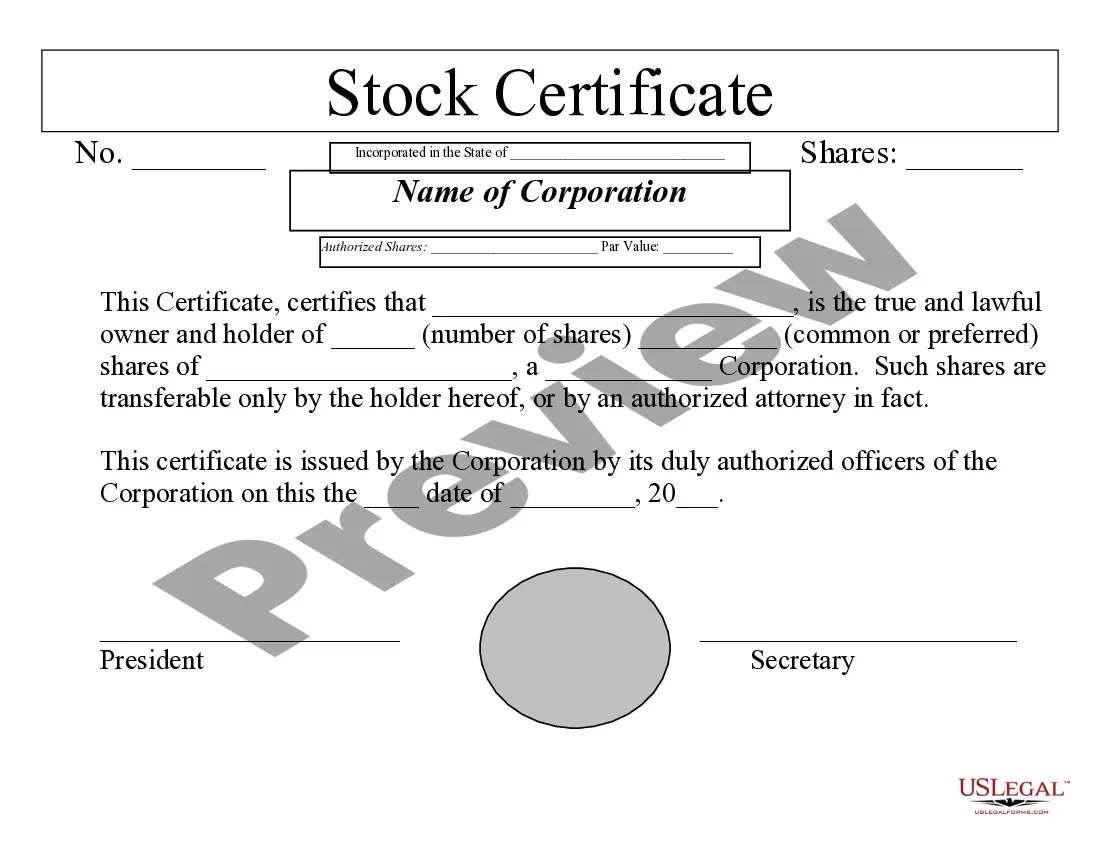
- Certificate number and share quantity
- Name of the corporation issuing the certificate
- Holder's name and share quantity
- Corporate officers' signatures and the corporate seal
- Statement of powers, designations, and restrictions on the shares
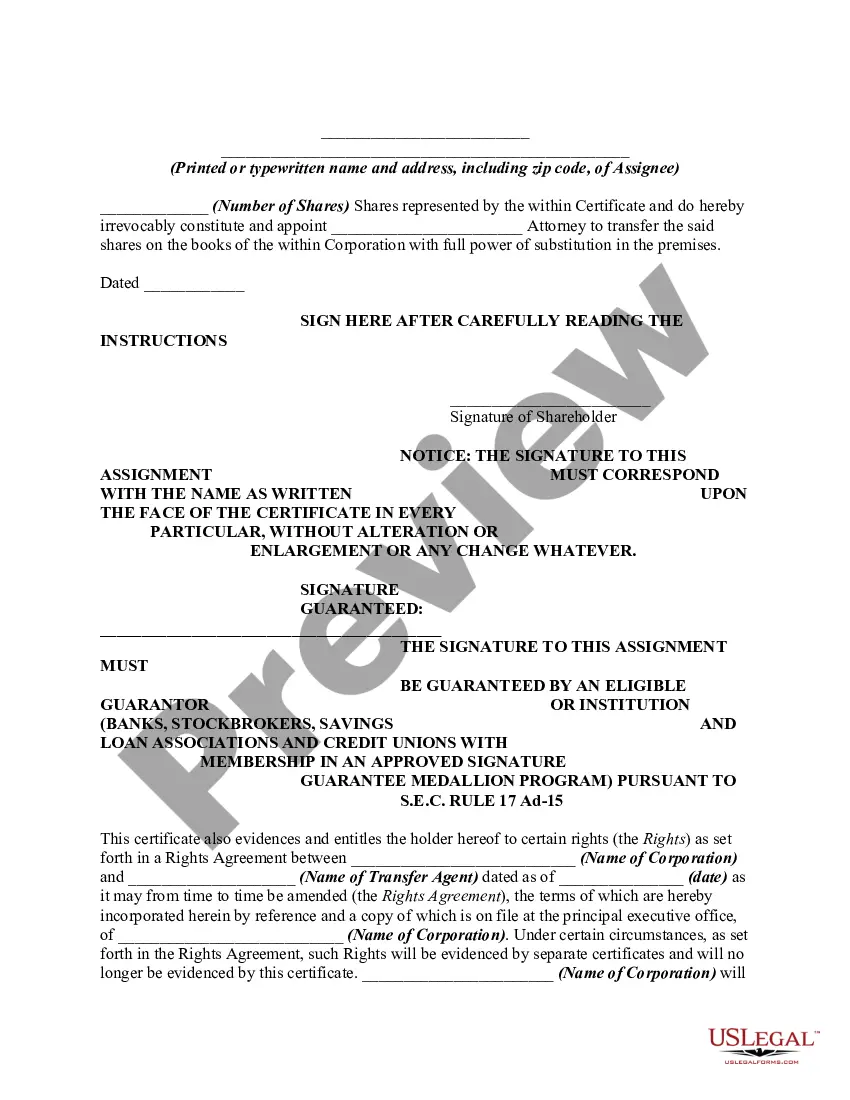
- Provisions for transferring ownership and a signature guarantee requirement
Common use cases
This form is necessary when a corporation issues shares of common stock and needs to inform the stockholder about any restrictions on those shares. Use this form when transferring ownership of stock, ensuring that both parties acknowledge and comply with the restrictions indicated on the certificate. It is also applicable in situations where stockholders request information regarding their rights associated with their shares.
Who needs this form
- Corporations issuing shares of common stock
- Registered holders of common stock wishing to transfer ownership
- Investors looking to understand the restrictions related to their stock
- Legal professionals advising clients on stock transfer procedures
How to complete this form
- Fill in the certificate number and the total number of shares issued.
- Provide the name of the corporation and the name of the registered shareholder.
- Have the corporate officers sign the certificate and affix the corporate seal.
- Include a statement of any powers, restrictions, and preferences on the shares.
- Complete the assignment section for transferring ownership, including signatures and guarantees as required.
Notarization requirements for this form
This form does not typically require notarization unless specified by local law. Always check your state-specific regulations to confirm if any additional steps are needed for validation.
Get your form ready online
Our built-in tools help you complete, sign, share, and store your documents in one place.
Make edits, fill in missing information, and update formatting in US Legal Forms—just like you would in MS Word.
Download a copy, print it, send it by email, or mail it via USPS—whatever works best for your next step.
Sign and collect signatures with our SignNow integration. Send to multiple recipients, set reminders, and more. Go Premium to unlock E-Sign.
If this form requires notarization, complete it online through a secure video call—no need to meet a notary in person or wait for an appointment.
We protect your documents and personal data by following strict security and privacy standards.

Make edits, fill in missing information, and update formatting in US Legal Forms—just like you would in MS Word.

Download a copy, print it, send it by email, or mail it via USPS—whatever works best for your next step.

Sign and collect signatures with our SignNow integration. Send to multiple recipients, set reminders, and more. Go Premium to unlock E-Sign.

If this form requires notarization, complete it online through a secure video call—no need to meet a notary in person or wait for an appointment.

We protect your documents and personal data by following strict security and privacy standards.
Common mistakes
- Failing to accurately complete the certificate number and share quantity.
- Not ensuring that signatures match the names as written on the certificate.
- Omitting the corporate seal, which is necessary for validation.
- Neglecting to include the necessary signature guarantee.
Benefits of using this form online
- Convenient access to legal templates for easy download and use.
- Editable formats that allow users to customize the form quickly.
- Reliability, knowing that templates are drafted by licensed attorneys.
Legal use & context
The Stock Certificate Legend is crucial for legal recognition of ownership and facilitates the transfer of shares. It provides necessary documentation that supports both the corporation's right to issue stock and the stockholders' rights as owners. Properly completing and executing this form helps prevent disputes over stock ownership.
What to keep in mind
- The form serves as a record of stock ownership and relevant restrictions.
- Proper completion and execution are essential for legal validity.
- Understanding the rights associated with shares helps in avoiding potential disputes.
Looking for another form?


Form popularity
FAQ
Locate the Company. The first step is making sure the company is still in business. Find the CUSIP Number. The secretary of state's office in the state of incorporation must be listed on the stock certificate. Contact the Transfer Agent. Complete the Transfer Form. Place an Order. Keep Old Certificates.
In Section C-Shares to be Transferred, fill in the number of original stock certificate shares, the number of book shares and the total number of shares you want to transfer. In Section D-Transfer Reason, check the box that explains why you are transferring the shares, the date of the transfer and the value per share.
Open the free PDF file you will receive by email. Start inserting the State of formation, name of the company, number of shares, par value and class. You can insert a clause and the text will resize depending on the number of characters you insert. Insert the signature titles.
Name of the Corporation. State of Incorporation. Date Incorporated. Number and Class of Shares Issued. Registered Number of Certificate. Name of Shareholder. Date Certificate Issued. Authorized Signatures.
A legend is a statement on a stock certificate noting restrictions on the transfer of the stock. A stock legend is typically put in place due to the requirements established by the Securities and Exchange Commission (SEC) for unregistered securities.
Contact your stockbroker to search the stock's worth via its CUSIP number if the steps given earlier yield no results. This number is printed on the back of the stock certificate. Use a fee-based service to search your stock's history if the earlier steps come up empty.
Name of the shareholder; Complete mailing address of the stock shareholder including contact number; Stock certificate number; The total number of shares outstanding; The date the shares were purchased;
A stock certificate is a physical piece of paper that represents a shareholder's ownership in a company. Stock certificates include information such as the number of shares owned, the date of purchase, an identification number, usually a corporate seal, and signatures.
The common stock originally traded on the Pink Sheets but was later canceled.But, unfortunately for shareholders in the old GM, the relative safety of the new GM's stock is of no value to them. Shares of the old GM are canceled.