Agency Licensing Agreement
About this form
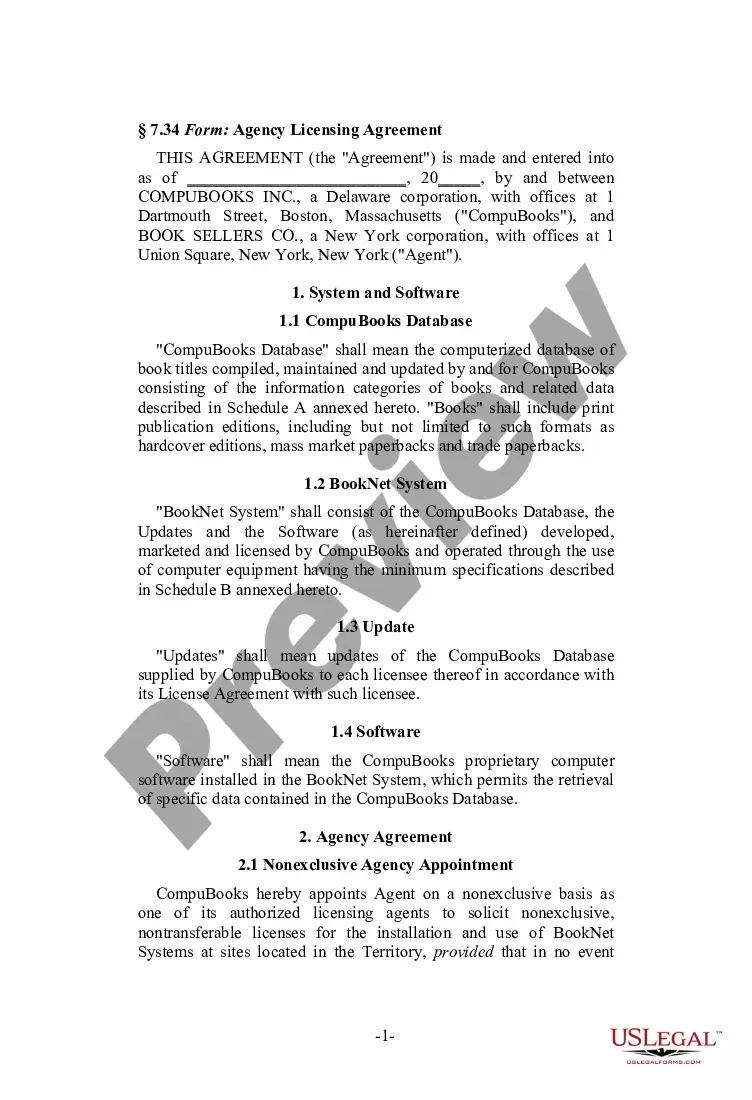
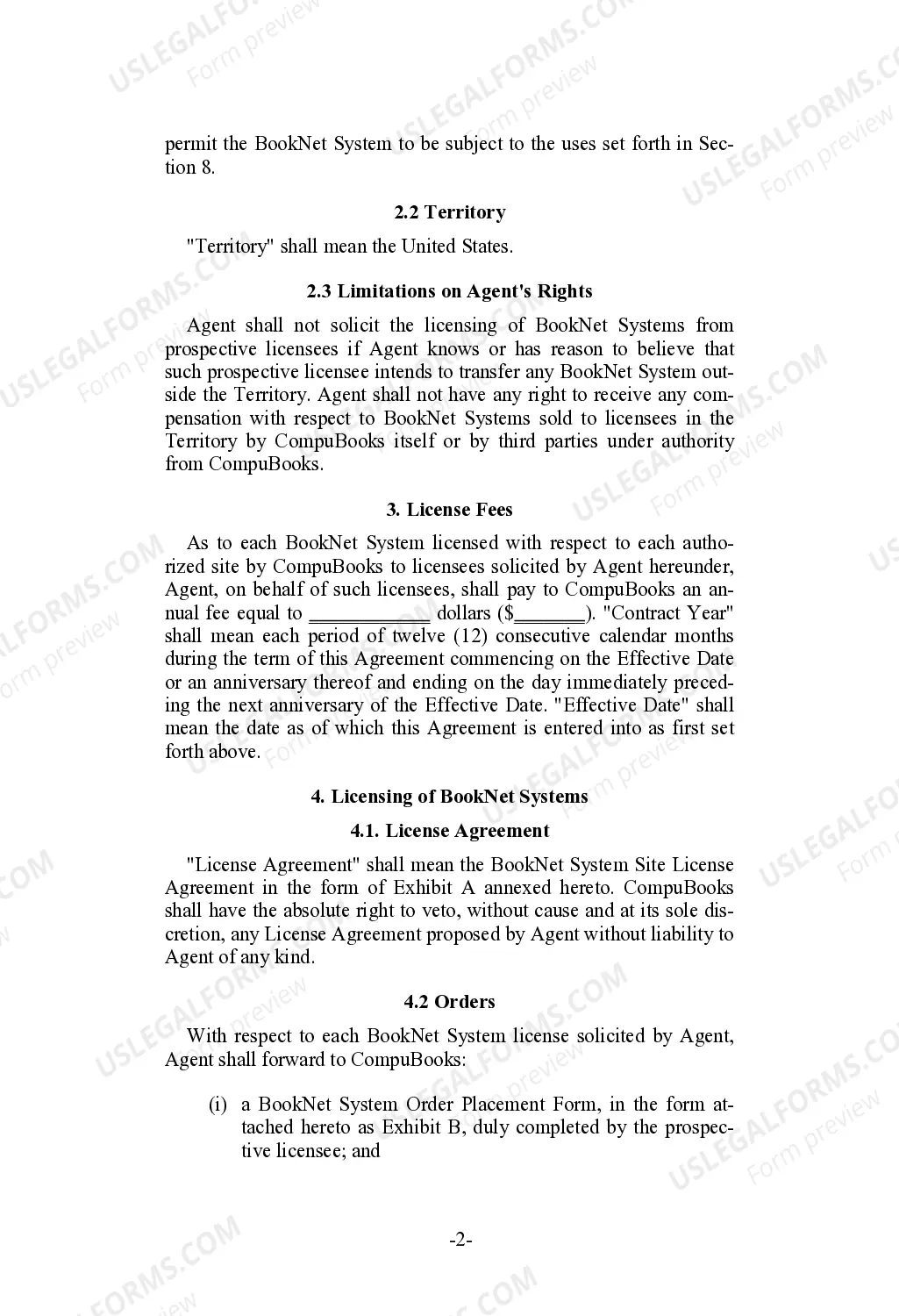
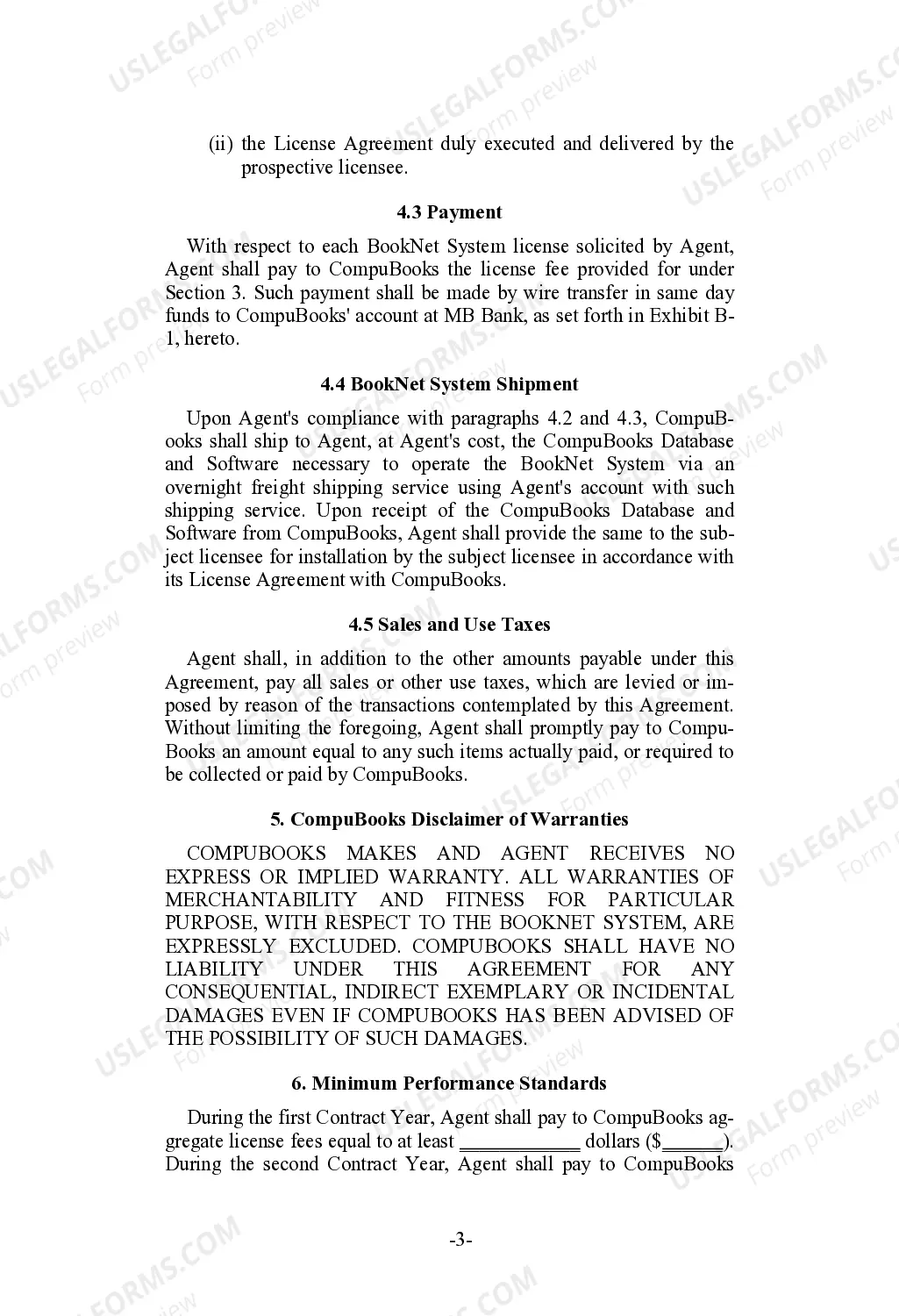
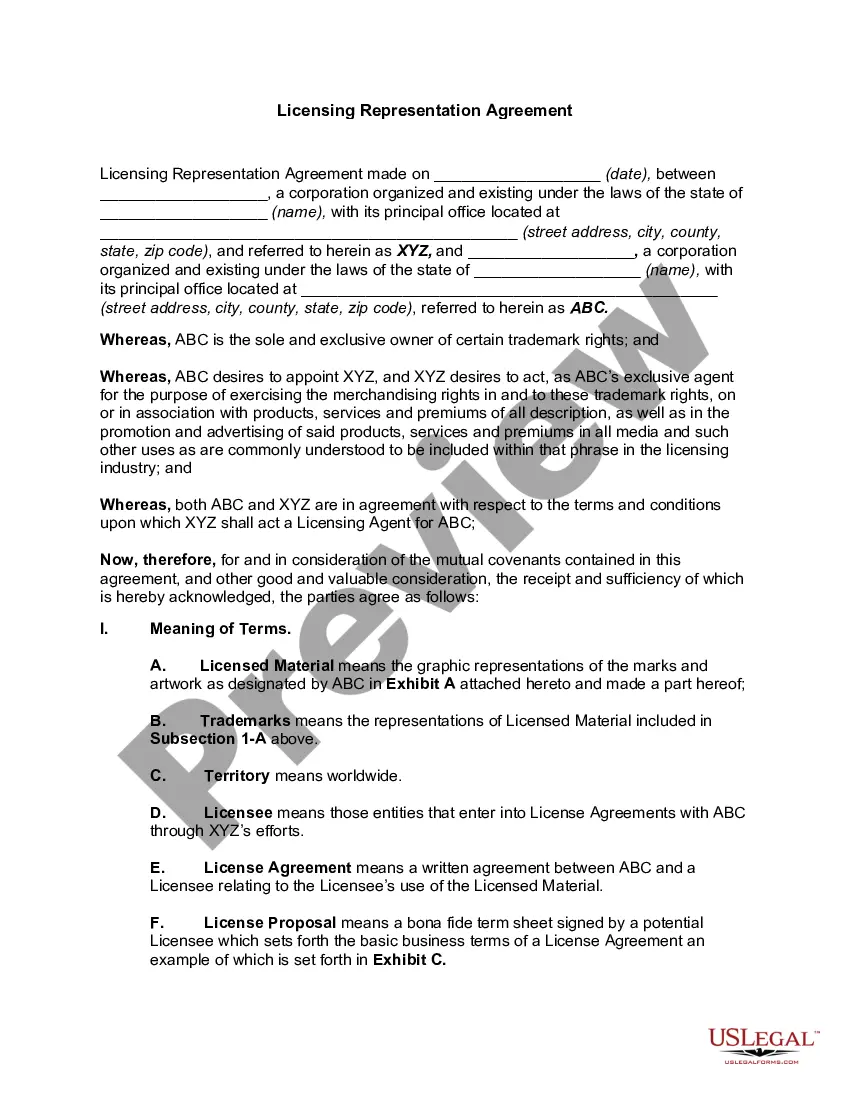
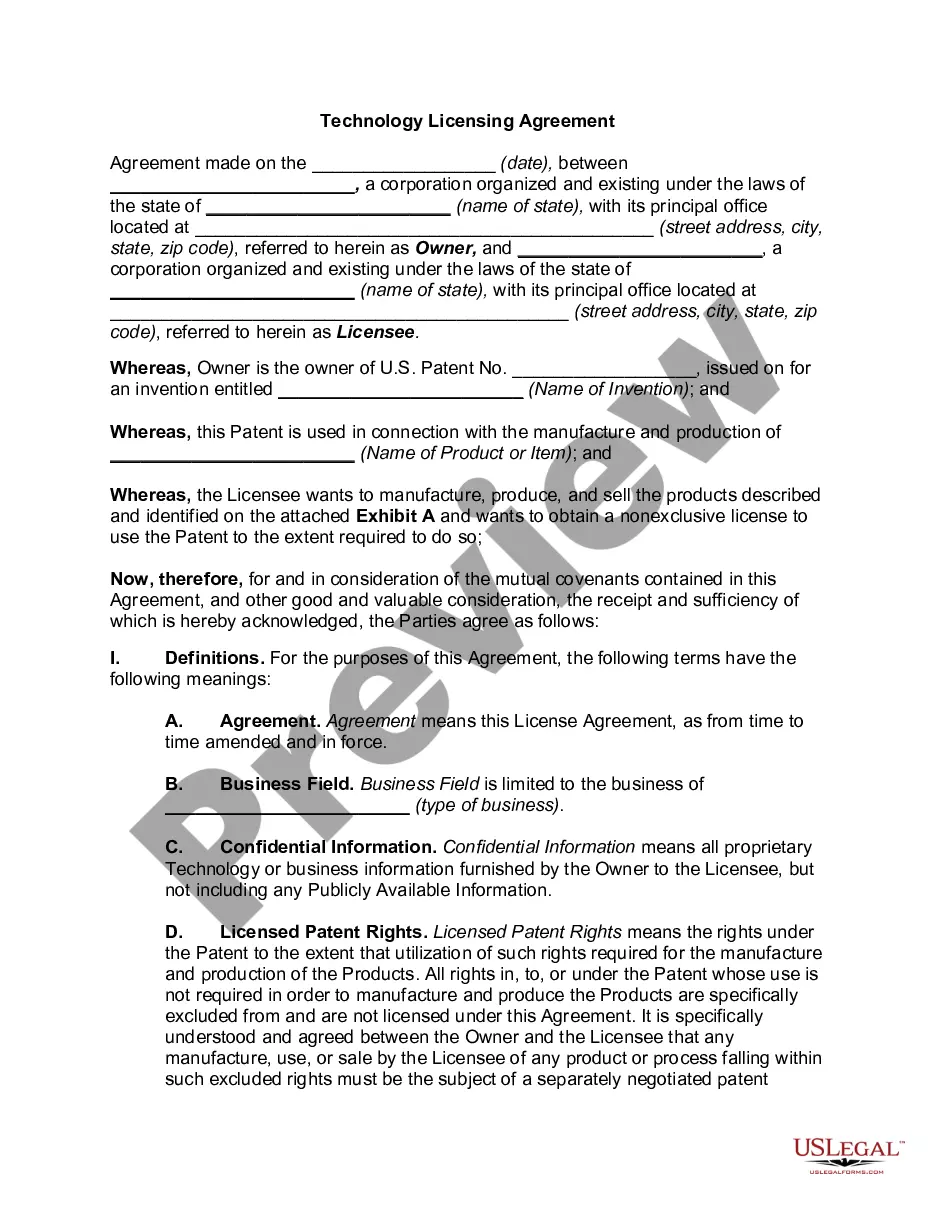
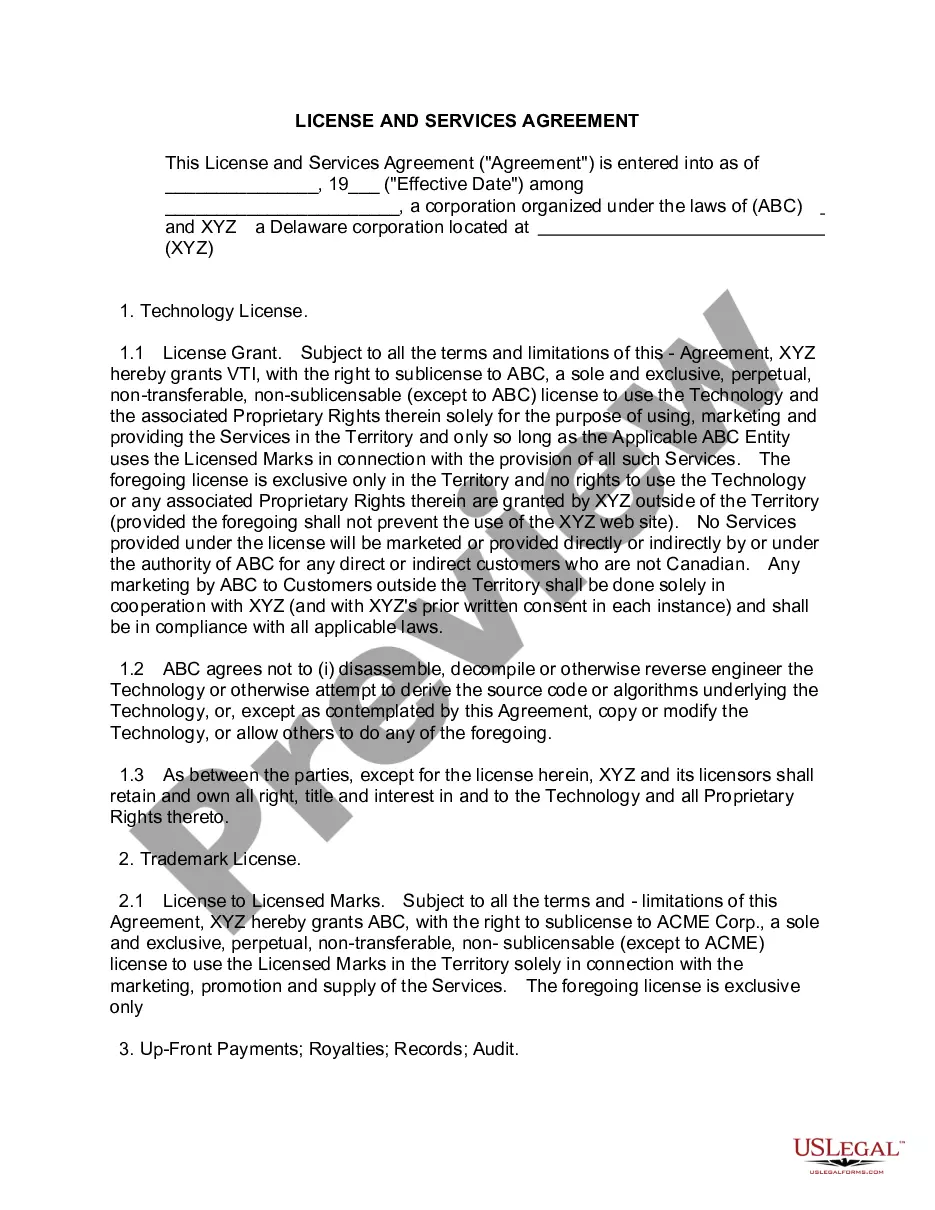
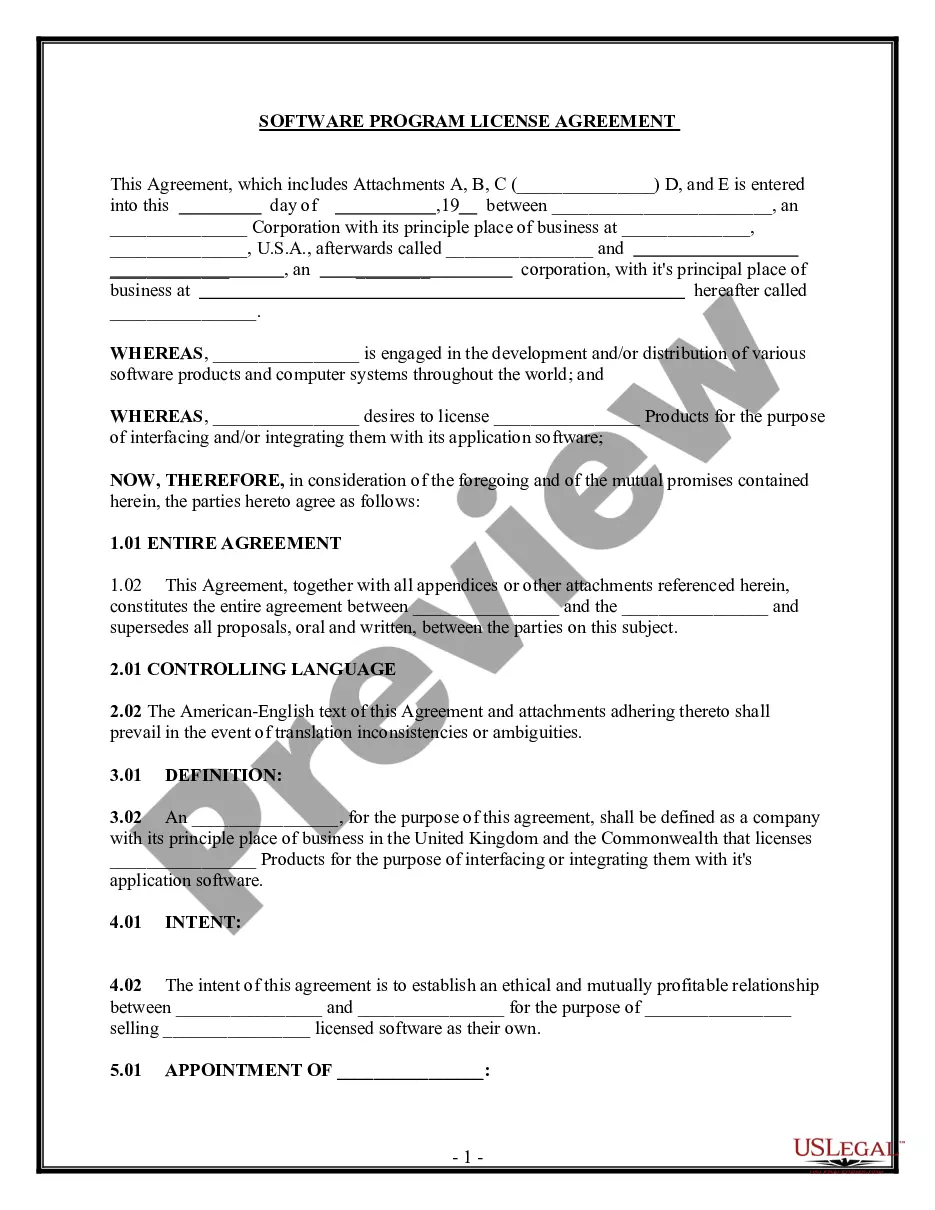
The Agency Licensing Agreement is a legal contract that outlines the relationship between two parties regarding the licensing of software or computer services. Specifically designed for businesses and individual contractors, this agreement allows an agent to solicit licenses for the use of said software while protecting the interests of the original software developer. It ensures both parties understand their rights and obligations under the arrangement, making it distinct from other standard licensing agreements.
Form components explained
- Definition of parties involved and their roles.
- Specifications regarding the software and database being licensed.
- Terms for agency appointment, including territory and rights limitations.
- Details on license fees and payment structures.
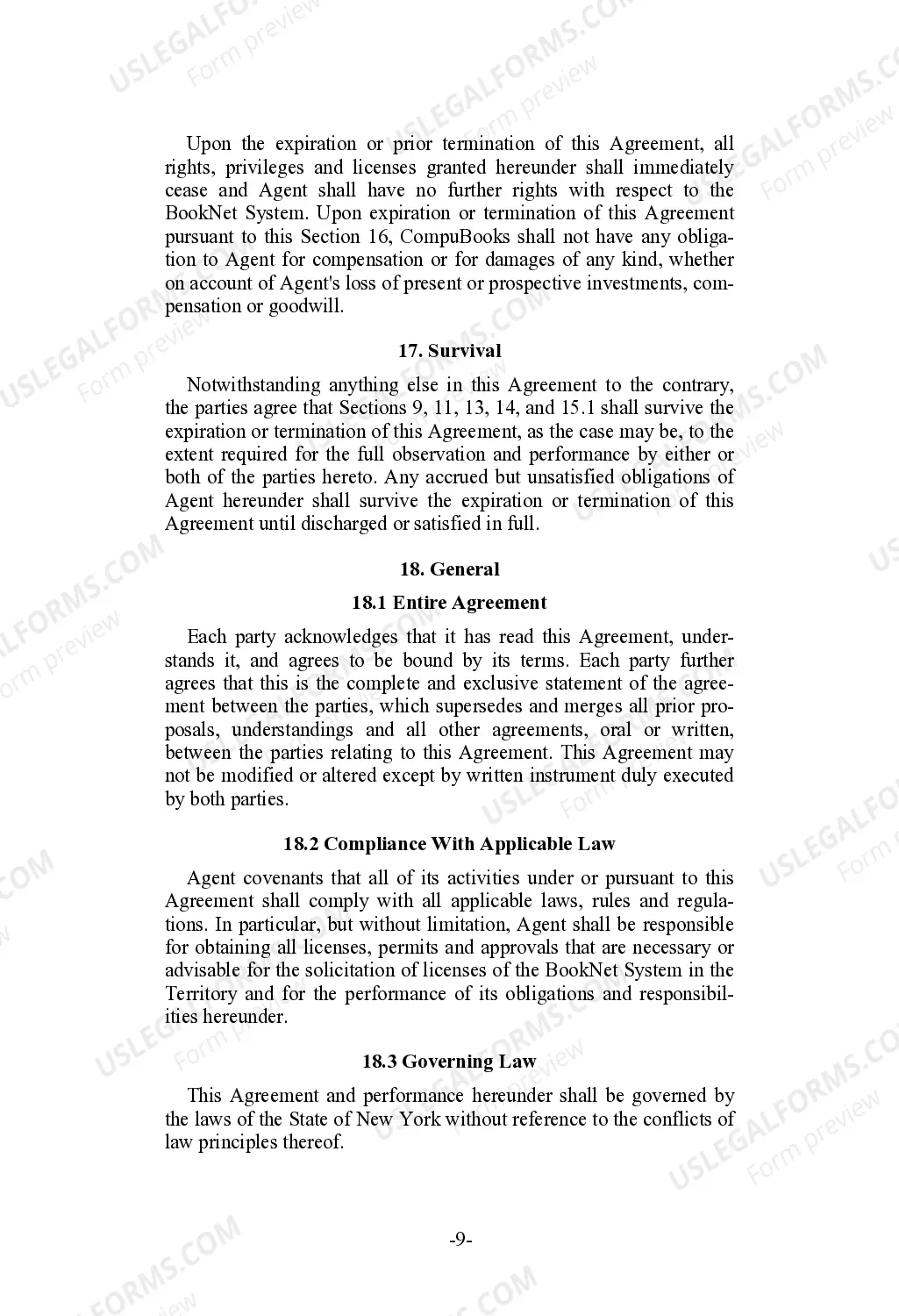
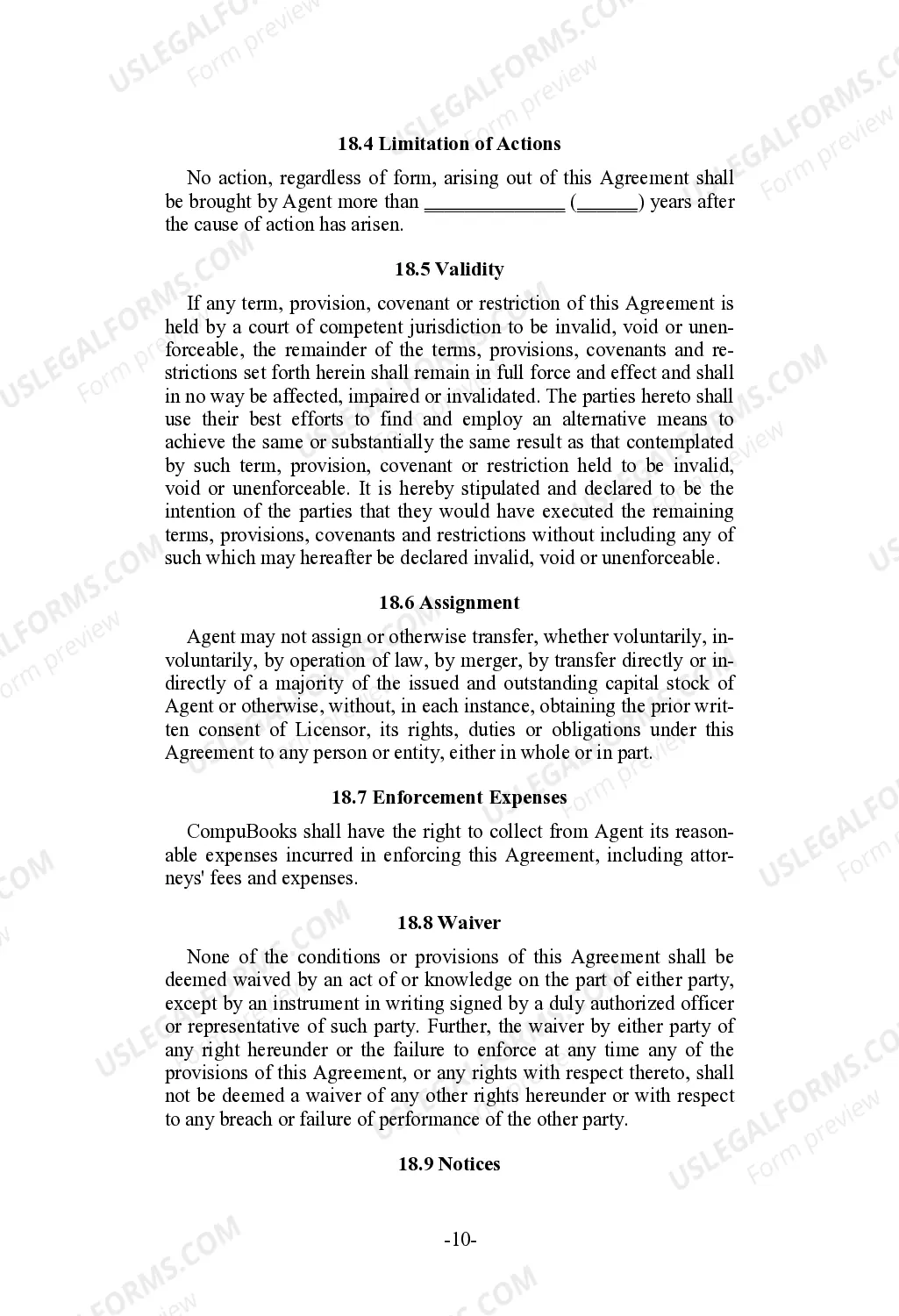
- Indemnification clauses protecting both parties from legal claims.
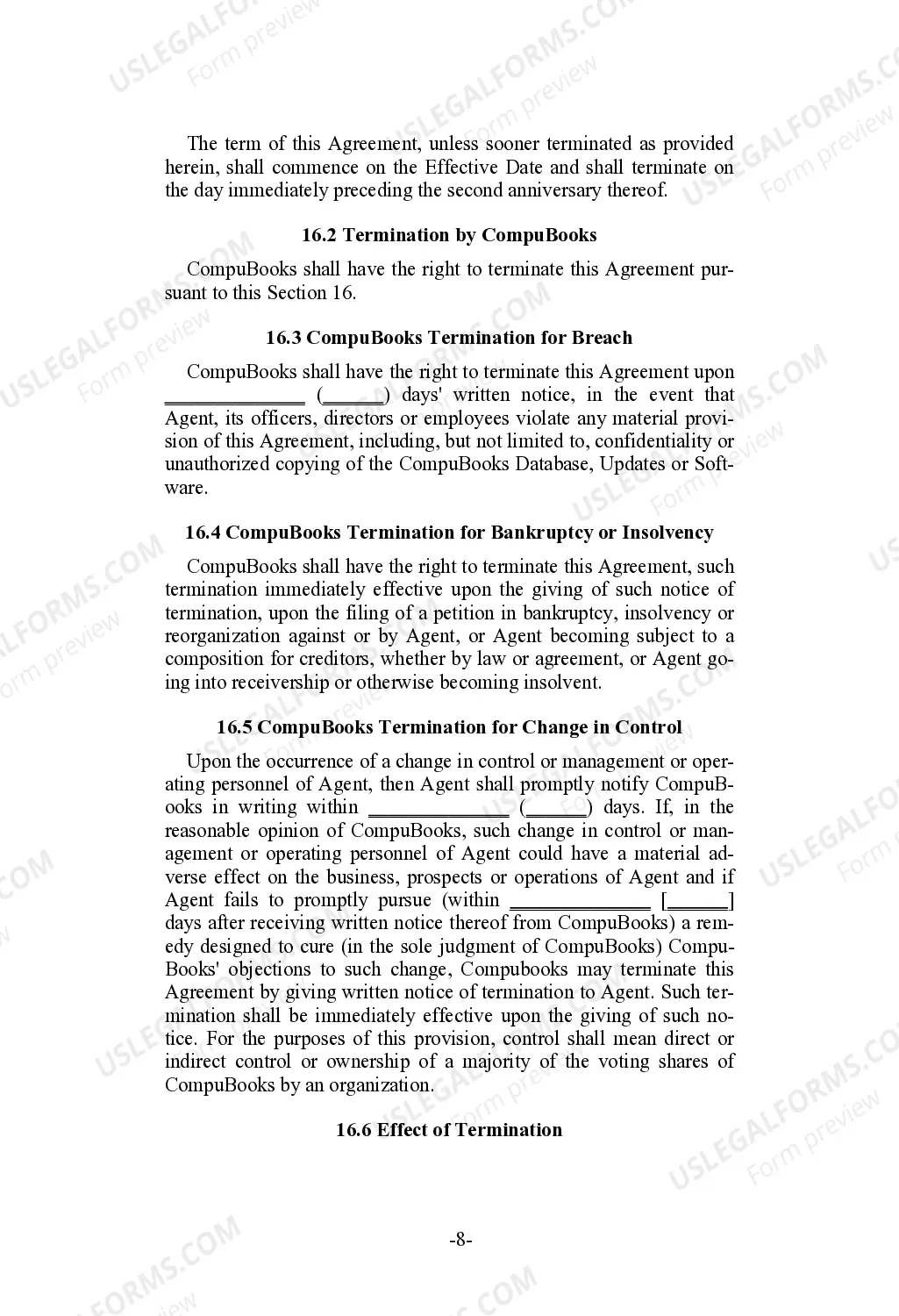
- Conditions under which the agreement may be terminated.

When to use this document
This form should be used when a business wishes to appoint an agent to license a software product, particularly if the software will be distributed or utilized across different locations or territories. It is particularly useful for scenarios where the original developer wants to expand market reach but requires an intermediary to handle the licensing process. Additionally, contractors and businesses looking to formalize partnerships in distributing software should use this agreement to clarify expectations and responsibilities.
Who should use this form
- Software developers or companies looking to license their products through an agent.
- Agents or representatives who are authorized to sell software licenses on behalf of developers.
- Businesses that require clear terms regarding the use and distribution of software services.
- Contractors looking for legal protection and clarity in agency relationships in technology sales.
Completing this form step by step
- Identify the parties involved by filling in their legal names and addresses.
- Detail the specific software and database being licensed.
- Specify the location or territory in which the agent is authorized to operate.
- Fill in the license fee and any other financial terms agreed upon by both parties.
- Review the terms regarding termination and responsibilities to ensure mutual understanding.
- Obtain signatures from both parties to finalize the agreement.
Notarization guidance
This form does not typically require notarization unless specified by local law. However, it's advisable to check local regulations or consult a legal professional to ensure compliance.
Get your form ready online
Our built-in tools help you complete, sign, share, and store your documents in one place.
Make edits, fill in missing information, and update formatting in US Legal Forms—just like you would in MS Word.
Download a copy, print it, send it by email, or mail it via USPS—whatever works best for your next step.
Sign and collect signatures with our SignNow integration. Send to multiple recipients, set reminders, and more. Go Premium to unlock E-Sign.
If this form requires notarization, complete it online through a secure video call—no need to meet a notary in person or wait for an appointment.
We protect your documents and personal data by following strict security and privacy standards.

Make edits, fill in missing information, and update formatting in US Legal Forms—just like you would in MS Word.

Download a copy, print it, send it by email, or mail it via USPS—whatever works best for your next step.

Sign and collect signatures with our SignNow integration. Send to multiple recipients, set reminders, and more. Go Premium to unlock E-Sign.

If this form requires notarization, complete it online through a secure video call—no need to meet a notary in person or wait for an appointment.

We protect your documents and personal data by following strict security and privacy standards.
Mistakes to watch out for
- Failing to clearly define the roles of each party.
- Not specifying the territory in which the agreement is enforceable.
- Omitting key financial terms, such as licensing fees.
- Neglecting to clarify the conditions under which the agreement can be terminated.
Why complete this form online
- Convenient download and customization according to specific business needs.
- Access to forms drafted by licensed attorneys, ensuring legal accuracy.
- Editable formats allow for easy updates as business circumstances change.
- Instant access to legal documentation without the need for in-person meetings.
Legal use & context:
- The agreement establishes clear terms for licensing software, which can be enforced in a court of law.
- Parties are bound by the outlined terms subject to state laws regarding contract enforceability.
- It limits the use of the software to what is explicitly stated in the agreement, protecting both partiesâ interests.
Quick recap
- The Agency Licensing Agreement formalizes the role of an agent in soliciting software licenses.
- Defining key components such as fees and responsibilities is crucial for enforceability.
- Using the form online provides users with a tailored, convenient legal tool.
Looking for another form?


Form popularity
FAQ
A license agreement is a business contract between two parties. The licensor (the seller of the license) owns the asset being licensed and the licensee (the buyer) pays for the right to use the license. The licensee pays royalties to the owner in exchange for the right to sell the product or use the technology.
In a typical licensing agreement, the licensor agrees to provide the licensee with intellectual property rights such as the licensor's technology, brand name, or product creation know-how.
Exclusive or non-exclusive. In an exclusive license, the intellectual property holder is licensing the work only to one person, for that particular use/territory. Territory. Use. Attribution. Derivative works. Confidentiality. Time frame. Termination.
The 3 P's of collegiate licensing are protection, promotion, and profit.
Download a template for a licensing agreement. Choose your role as the licensor or licensee. Define the license(s) in the agreement. Decide whether the license is exclusive or not. Settle the matter of fees and payment schedule. Add a renewal date and rules.
An example of a licensing agreement is a contract between the copyright holders of software and another company, allowing the latter to use the computer software for their daily business operations.
An example of a licensing agreement is a contract between the copyright holders of software and another company, allowing the latter to use the computer software for their daily business operations.