Illinois Heirship Affidavit - Descent

About this form
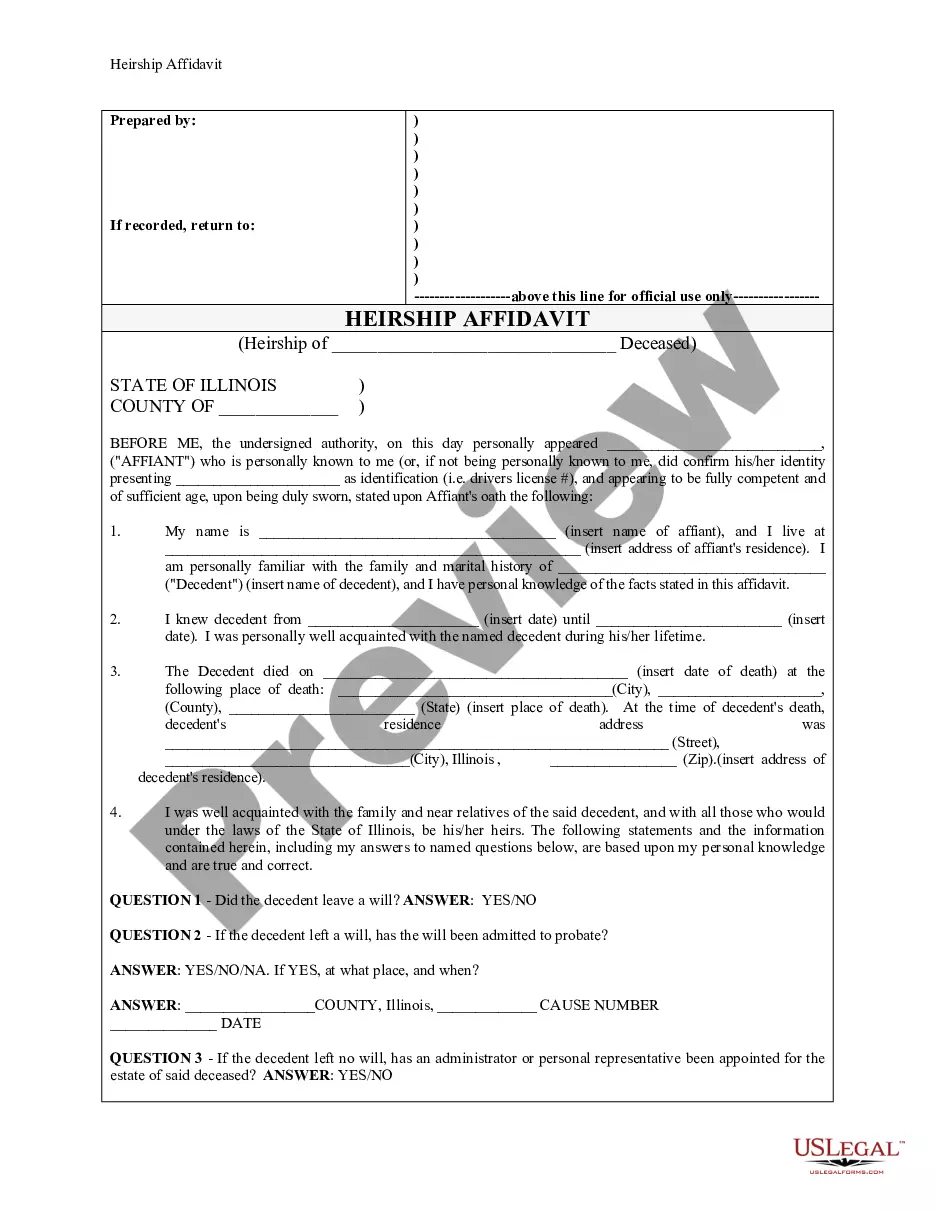
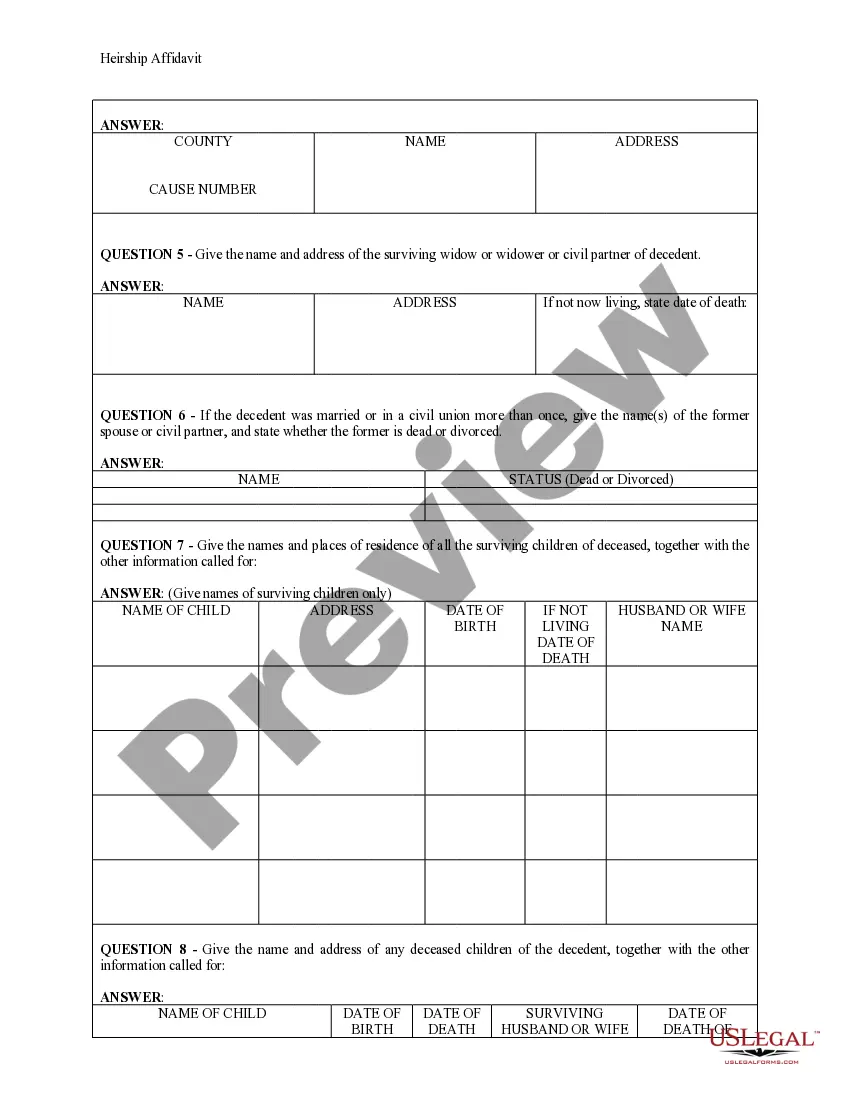
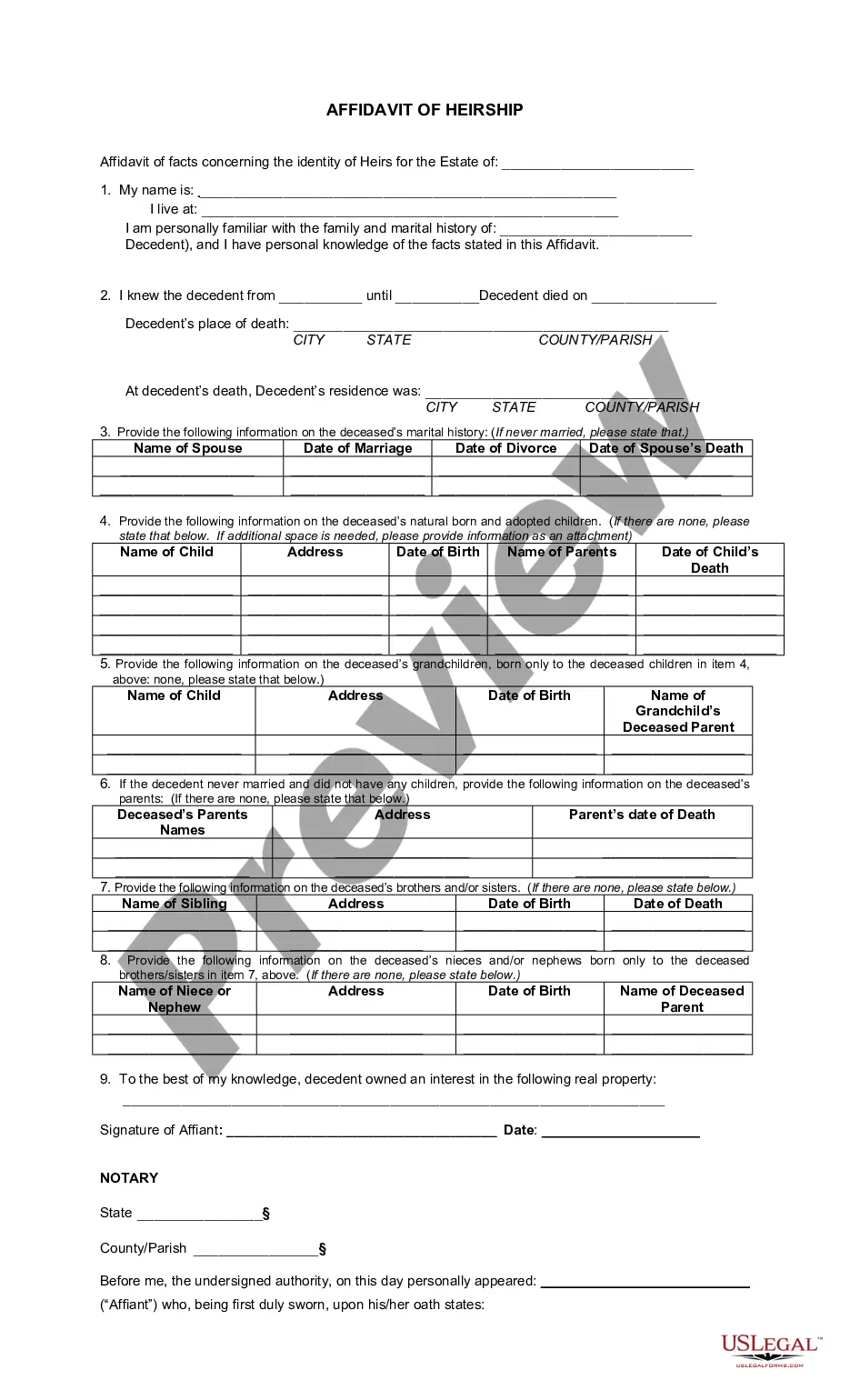
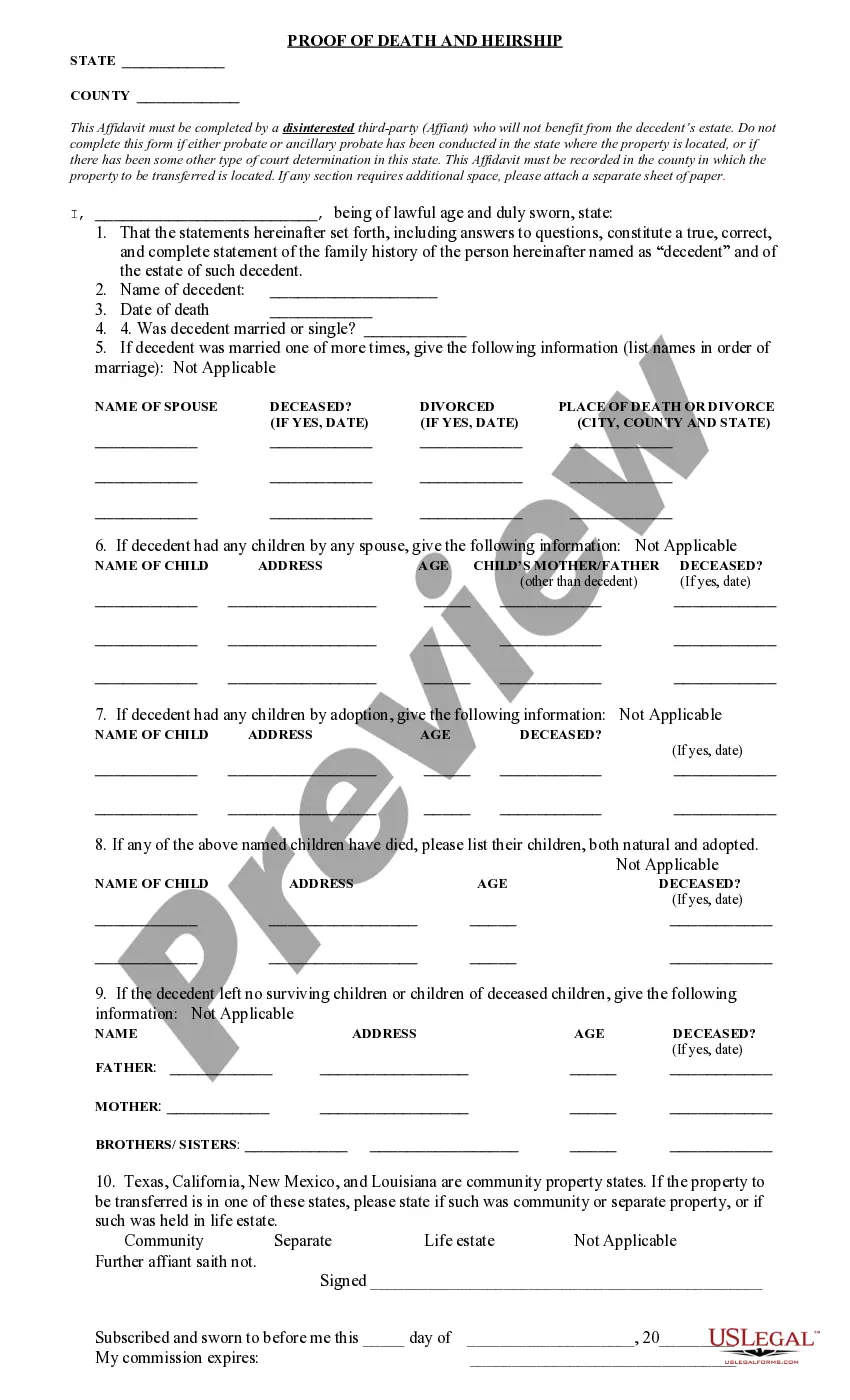
The Heirship Affidavit - Descent is a legal document that allows an individual to declare the heirs of a deceased person. This form establishes the heirs' rights to the deceased's personal and real property, especially when no will exists. Unlike other forms, it typically does not involve probate proceedings and is essential for individuals who need to verify heirs when transferring property ownership.
Key parts of this document
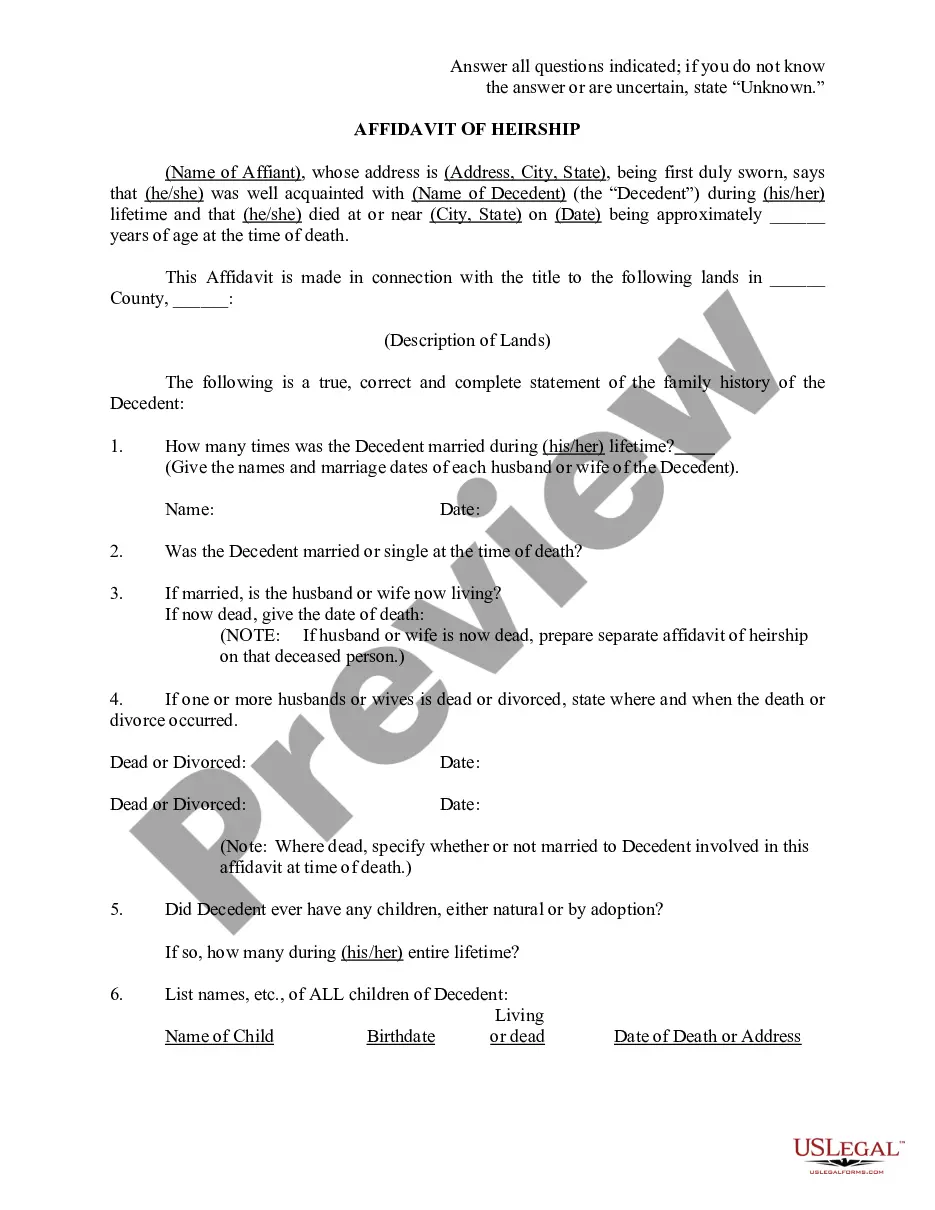
- Affiant's name and address, confirming personal acquaintance with the deceased.
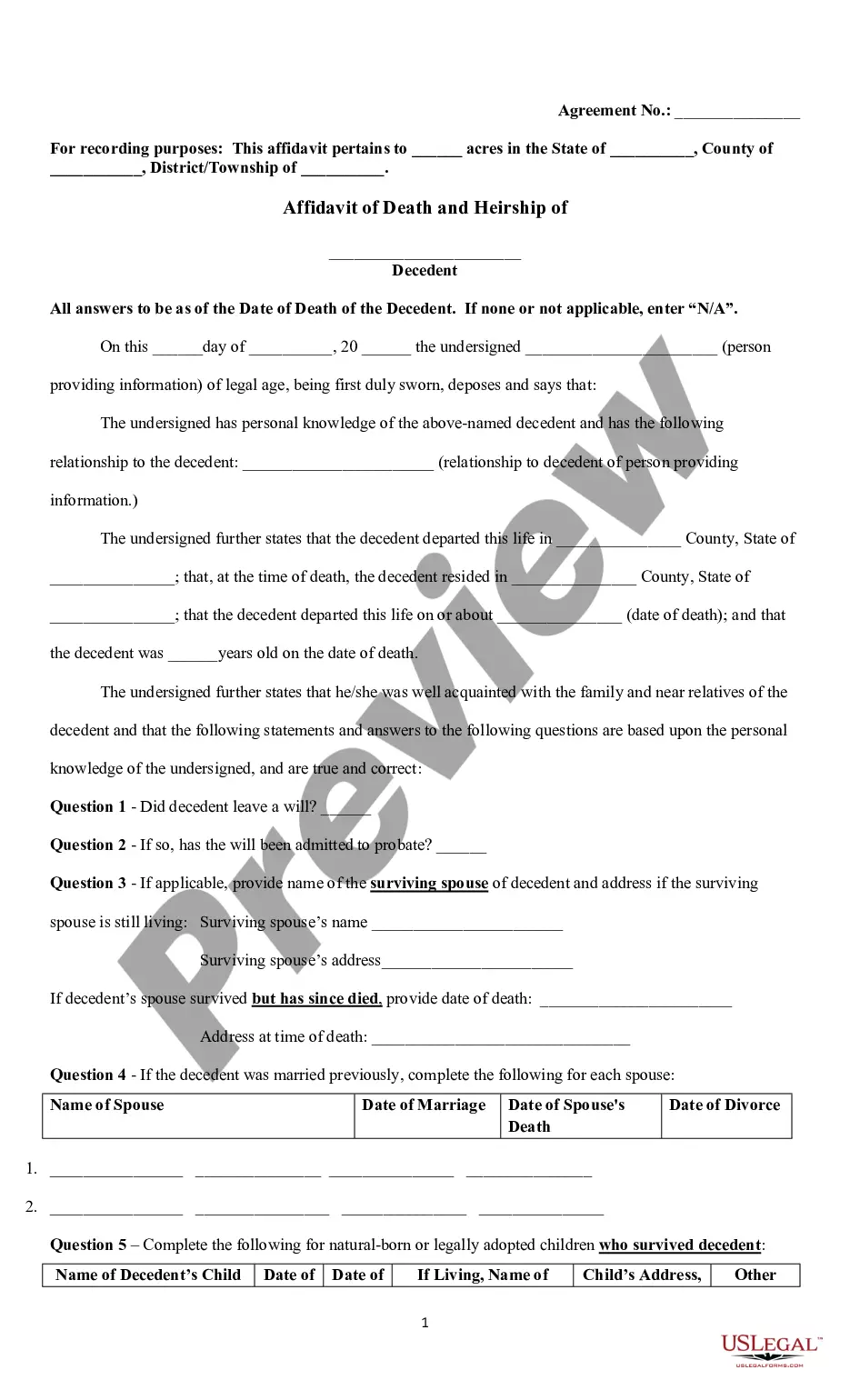
- Details about the decedent including dates and place of death.
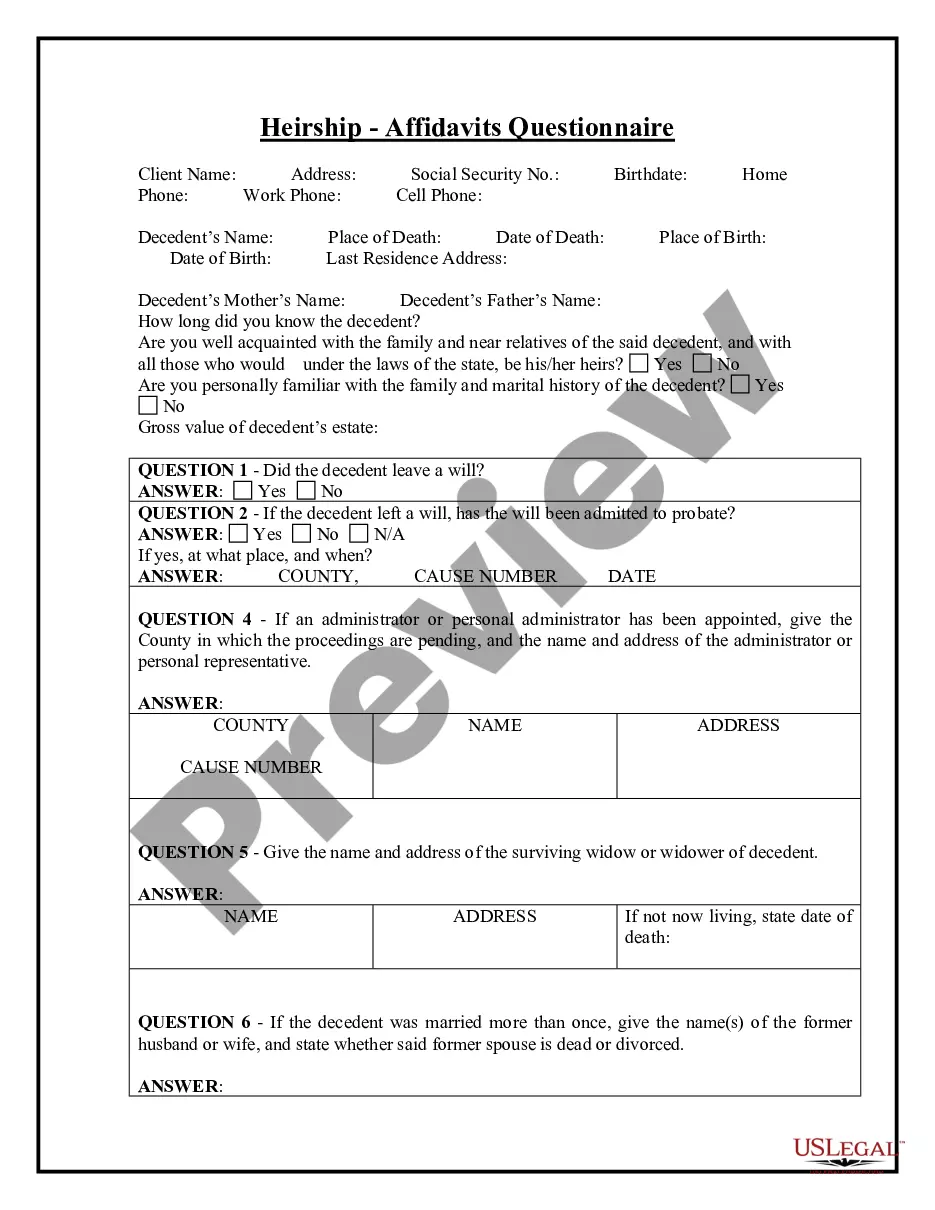
- Questions related to the existence of a will and its probate status.
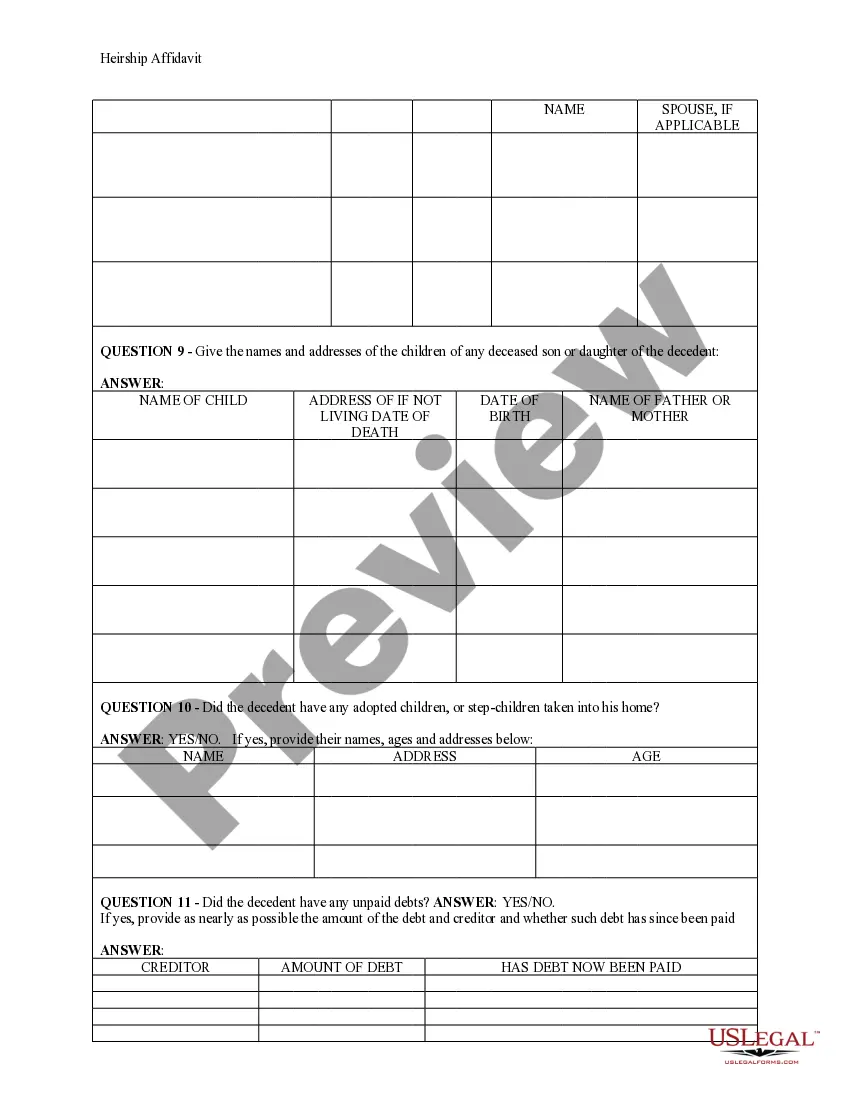
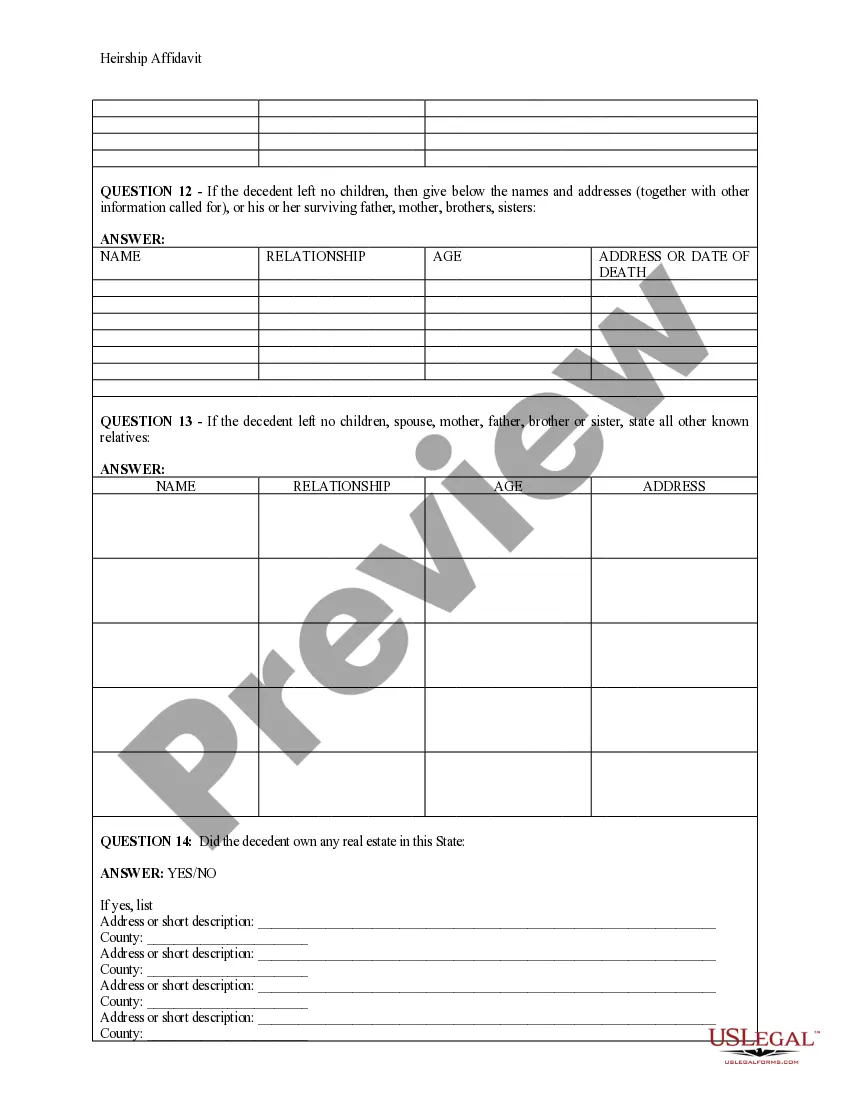
- Information on the surviving family members, including their names and addresses.
- Declarations regarding any outstanding debts of the deceased.
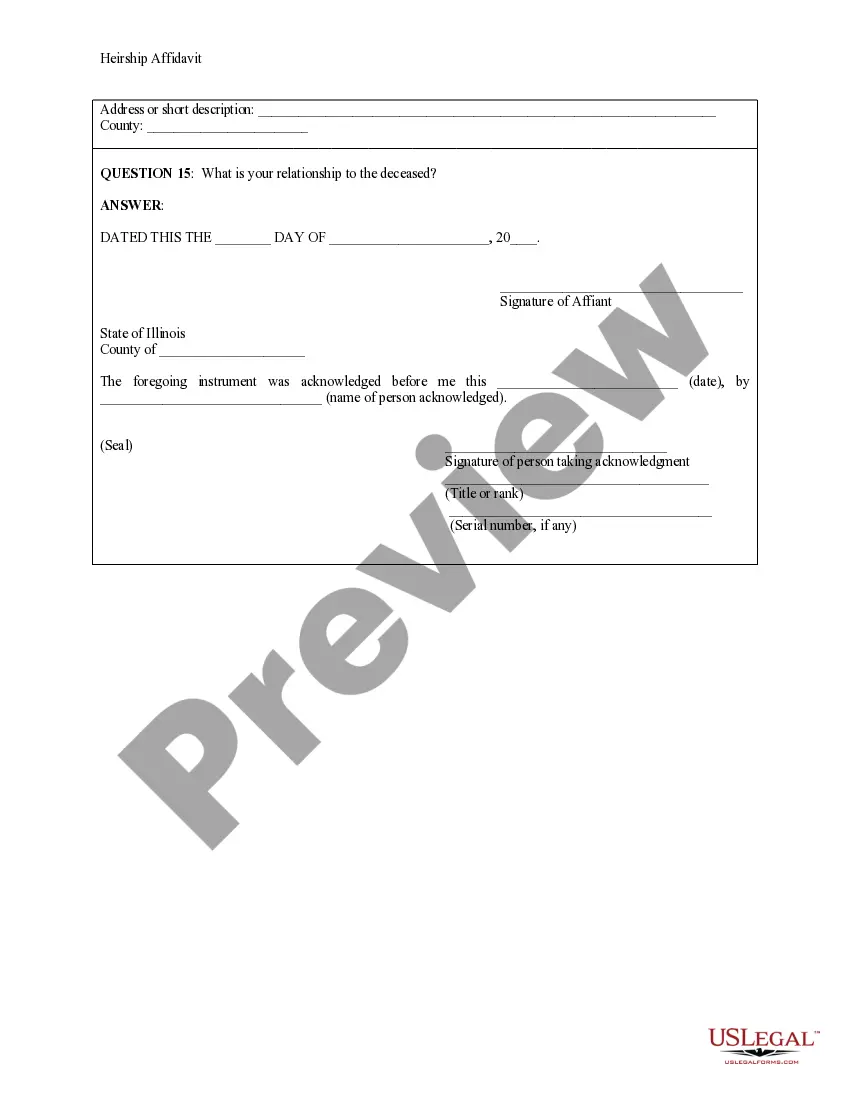
- Confirmation of the relationship of the affiant to the deceased.
Common use cases
This form is typically used when an individual dies without a will, and there is a need to establish the rightful heirs for property transfer. Situations may include selling inherited land, settling the estate, or transferring ownership of an asset where proof of heirship is required.
Who should use this form
- Individuals who need to declare heirs for a deceased relative.
- Surviving family members seeking to manage or sell the deceased's property.
- Affiants who are not heirs themselves, but are knowledgeable about the family and inheritance.
How to complete this form
- Identify the affiant and provide their name and address.
- State details about the deceased, including their date of death and place of residence.
- Answer all questions related to the existence of a will and provide details about surviving family members.
- Specify the affiant's relationship to the deceased.
- Sign the affidavit in the presence of a notary public.
Notarization guidance
This form needs to be notarized to ensure legal validity. US Legal Forms provides secure online notarization powered by Notarize, allowing you to complete the process through a verified video call, available anytime.
Get your form ready online
Our built-in tools help you complete, sign, share, and store your documents in one place.
Make edits, fill in missing information, and update formatting in US Legal Forms—just like you would in MS Word.
Download a copy, print it, send it by email, or mail it via USPS—whatever works best for your next step.
Sign and collect signatures with our SignNow integration. Send to multiple recipients, set reminders, and more. Go Premium to unlock E-Sign.
If this form requires notarization, complete it online through a secure video call—no need to meet a notary in person or wait for an appointment.
We protect your documents and personal data by following strict security and privacy standards.

Make edits, fill in missing information, and update formatting in US Legal Forms—just like you would in MS Word.

Download a copy, print it, send it by email, or mail it via USPS—whatever works best for your next step.

Sign and collect signatures with our SignNow integration. Send to multiple recipients, set reminders, and more. Go Premium to unlock E-Sign.

If this form requires notarization, complete it online through a secure video call—no need to meet a notary in person or wait for an appointment.

We protect your documents and personal data by following strict security and privacy standards.
Common mistakes to avoid
- Not ensuring that the affiant is not an heir or has conflict of interest.
- Failing to accurately answer questions related to the will's existence.
- Leaving out important details about the deceased's assets and family structure.
Why use this form online
- Convenience: Access and download the form at any time without the need to visit a legal office.
- Editability: Fill out the form digitally or print it for manual completion.
- Reliability: Receive professionally drafted forms that meet state-specific legal requirements.
Summary of main points
- The Heirship Affidavit helps establish heirs when there is no will.
- It is a critical document for transferring ownership of property.
- Complete the form accurately and have it notarized for legal validity.
Looking for another form?

Form popularity
FAQ
Merriam-Webster defines heir as "one who inherits or is entitled to inherit property" and legatee as "someone who receives money or property from a person who has died."
When a person who owns real property dies intestate, and there is no survivor mentioned in the deed, the heirs of the decedent, must file an affidavit of descent to establish their chain of title to the property. This affidavit, is known as an affidavit of descent.
In Illinois, Per Stirpes is the default method of dividing up a deceased person's estate if the deceased dies without having a will.The other two surviving children of the father will again each get an equal amount of money, this time just a third of the estate.
Meaning differences. Merriam-Webster defines heir as "one who inherits or is entitled to inherit property" and legatee as "someone who receives money or property from a person who has died."
(A judgment in this case is a court order, in writing, reciting that the deceased person is dead, the date of death and a list of who are the heirs.) Proof. Once the judgment is issued, copies of the judgment can be used to show proof as to who is entitled to estate assets.
An affidavit of heirship is needed to transfer a deceased person's interest in real or personal property to his or her heirs when the decedent dies without leaving a last will and testament or without disposing of all of his or her property in a will.
A fee of $15 for the first page and $4 for each additional page is common. Ask if you can file the two affidavits of heirship as one document. Some counties let you file the two affidavits of heirship as one document if the decedent and property descriptions are the same.
An heir is the person who legally stands to inherit assets in the absence of direction from the decedent. Whereas a legatee is someone the decedent has directed shall receive assets. So if a decedent had a will leaving money to a nephew, the nephew is a legatee.
The heirship of a deceased person is determined through a document called an Affidavit of Heirship. This is a form that gives a detailed explanation of the heirs at law of the deceased person at the time of his/her death.The deceased, DOROTHY, died at Anytown, Illinois on January 1, 2015.