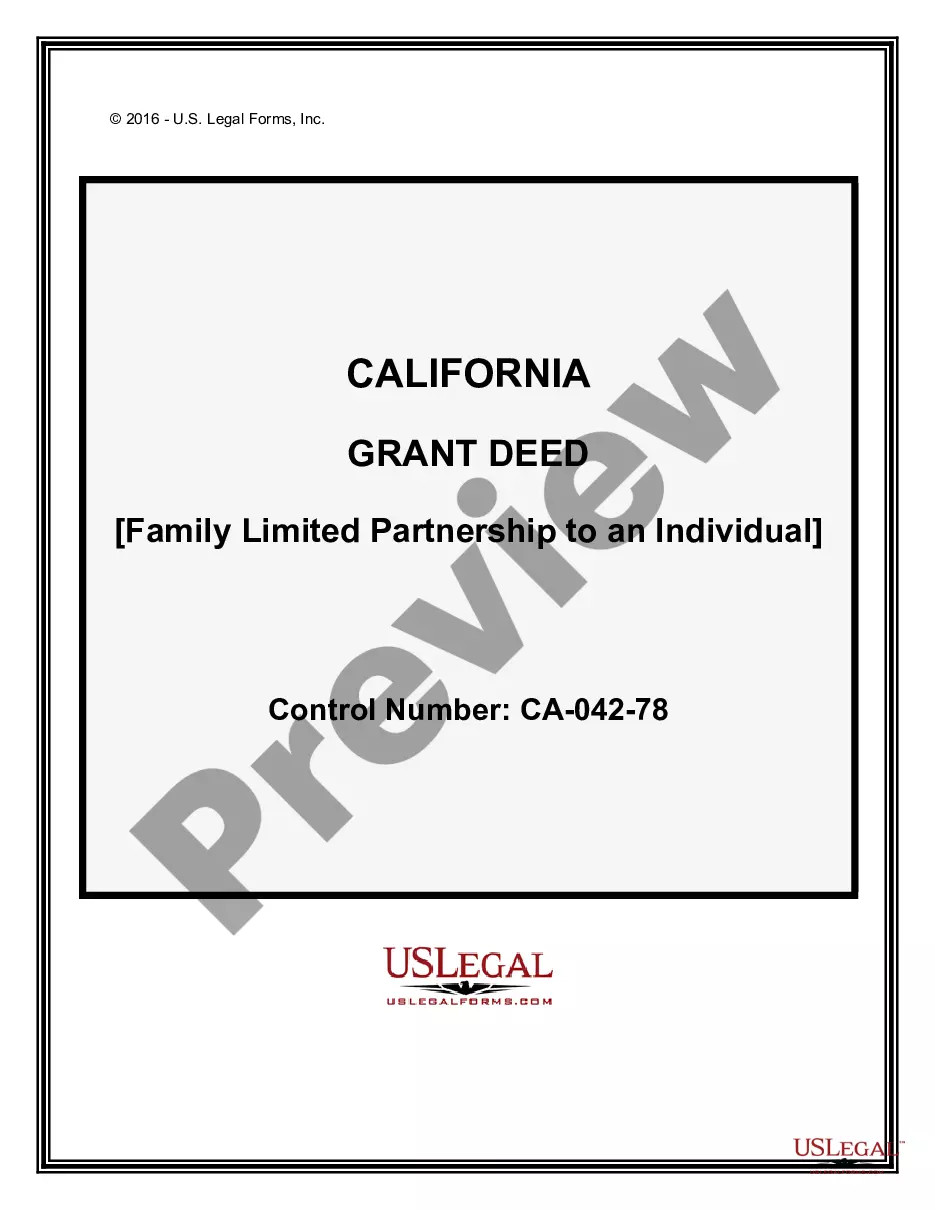
California Grant Deed from Family Limited Partnership to an Individual.
About this form
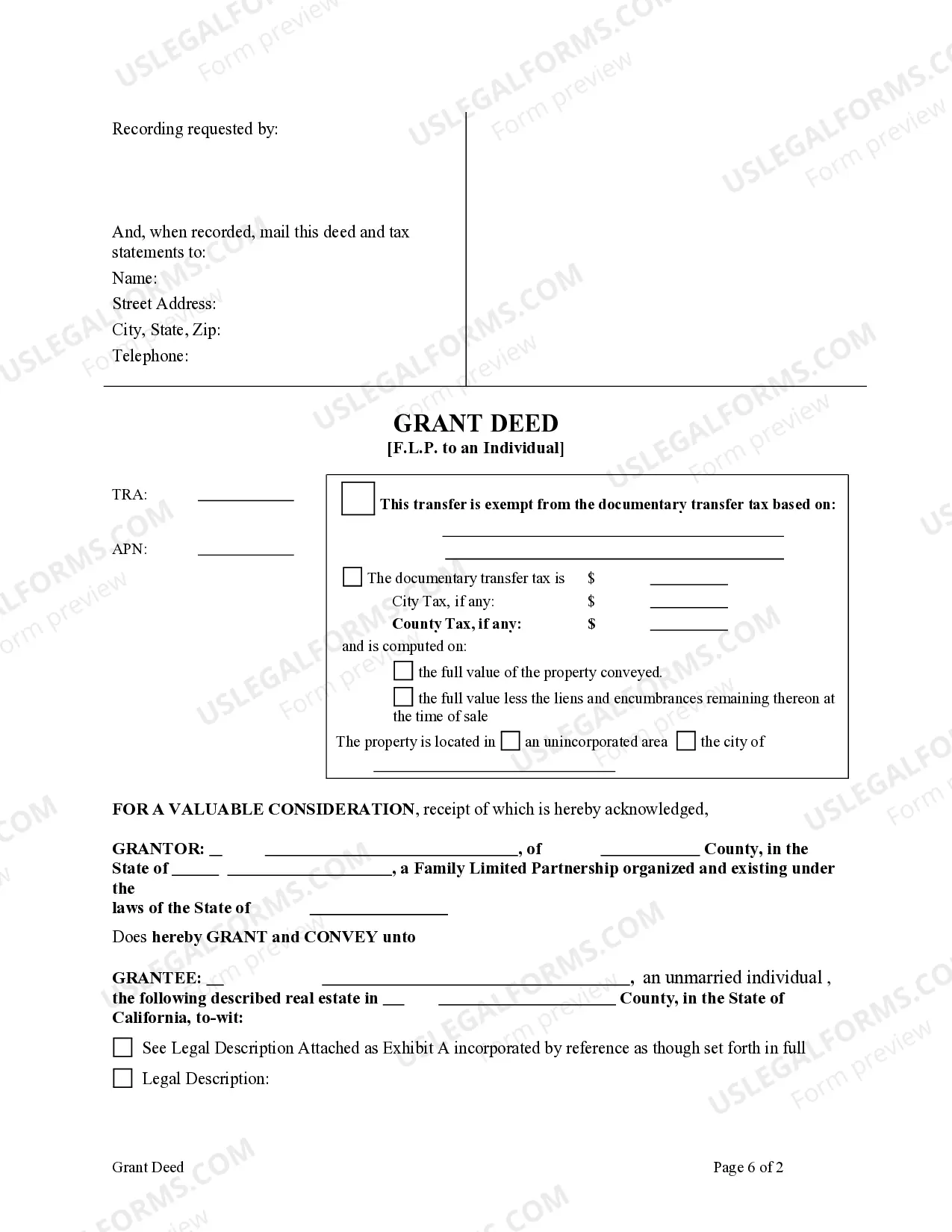
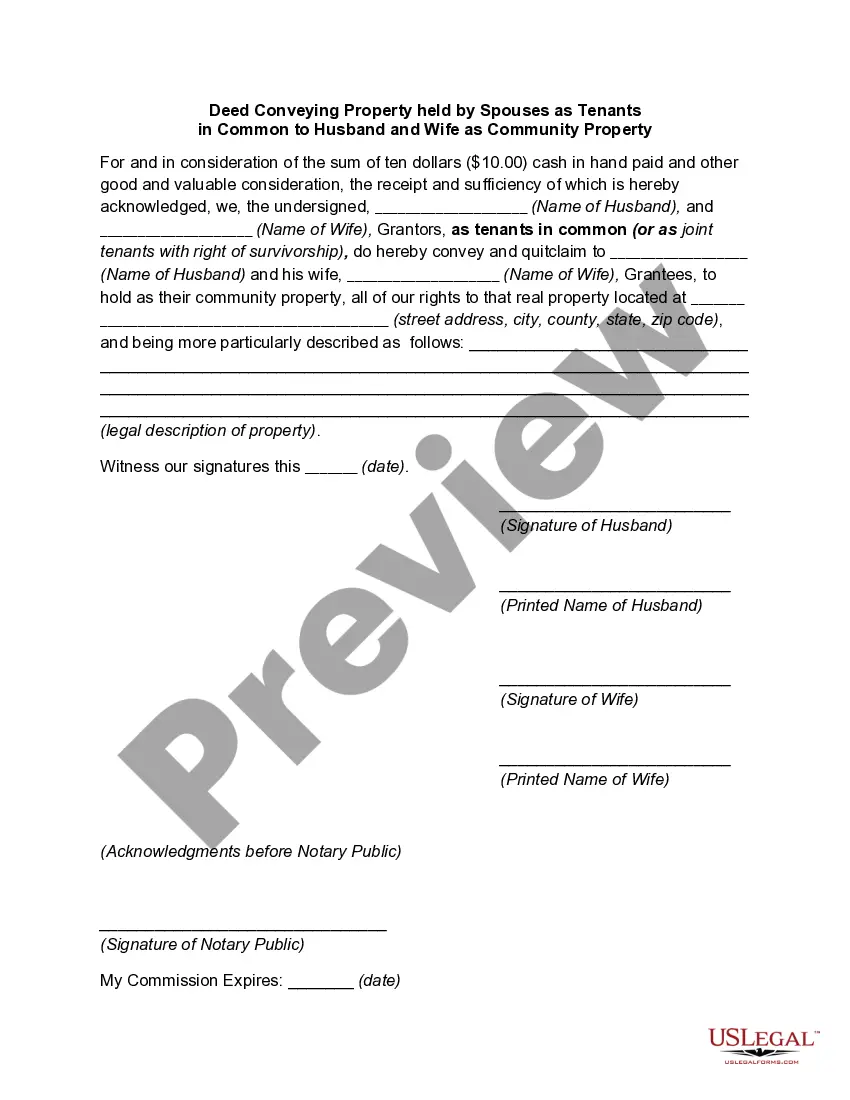
This Grant Deed from Family Limited Partnership to an Individual is a legal document used to transfer real property from a Family Limited Partnership (as the Grantor) to an individual (as the Grantee). This form ensures that the ownership of the property is properly conveyed and warrants that the Grantor holds clear title to the property being transferred, and it complies with all applicable state laws. It differs from other deed forms, such as a Quitclaim Deed, which does not guarantee title.
Main sections of this form
- Identification of the Grantor (Family Limited Partnership) and Grantee (individual)
- Details of the property being transferred, including legal descriptions
- Warranties by the Grantor regarding the title
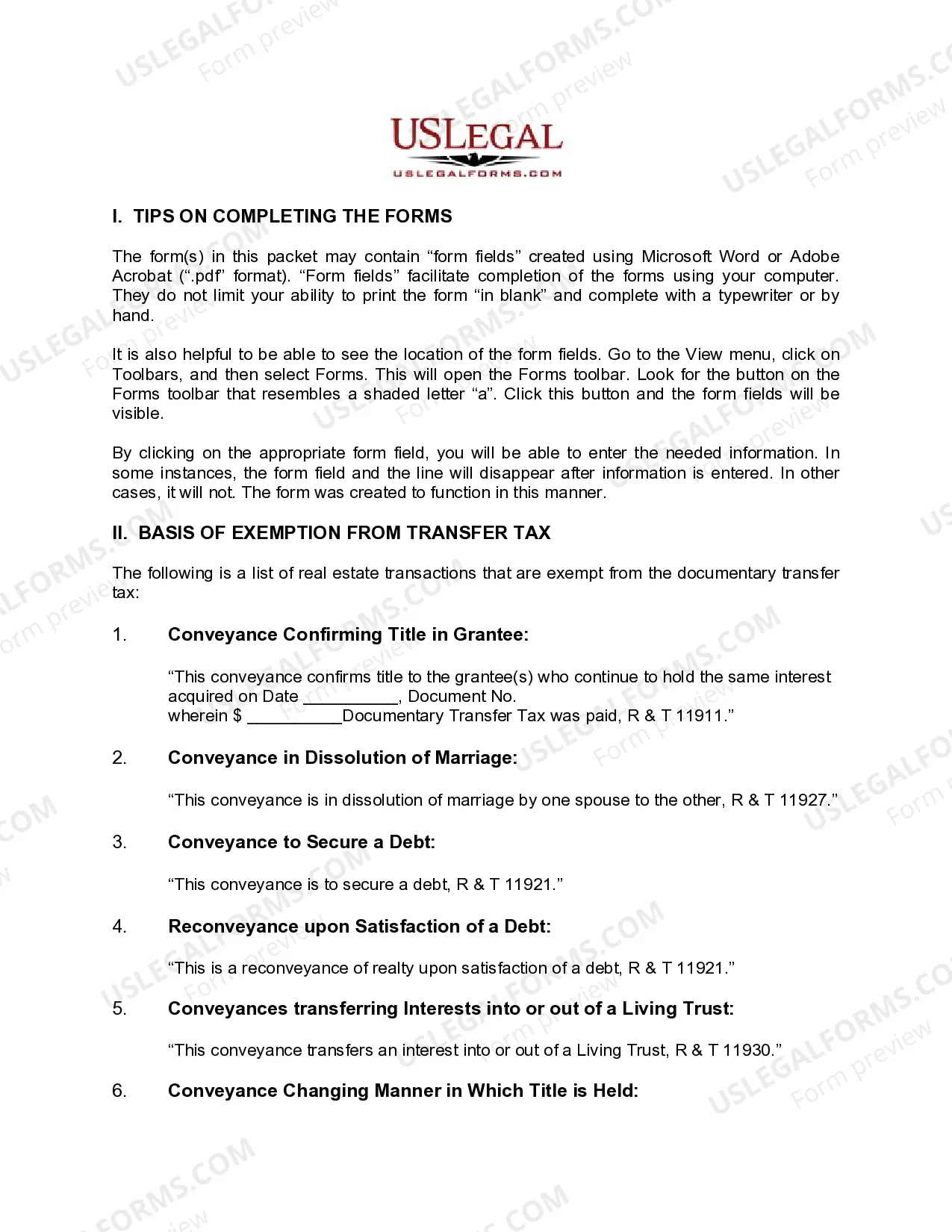
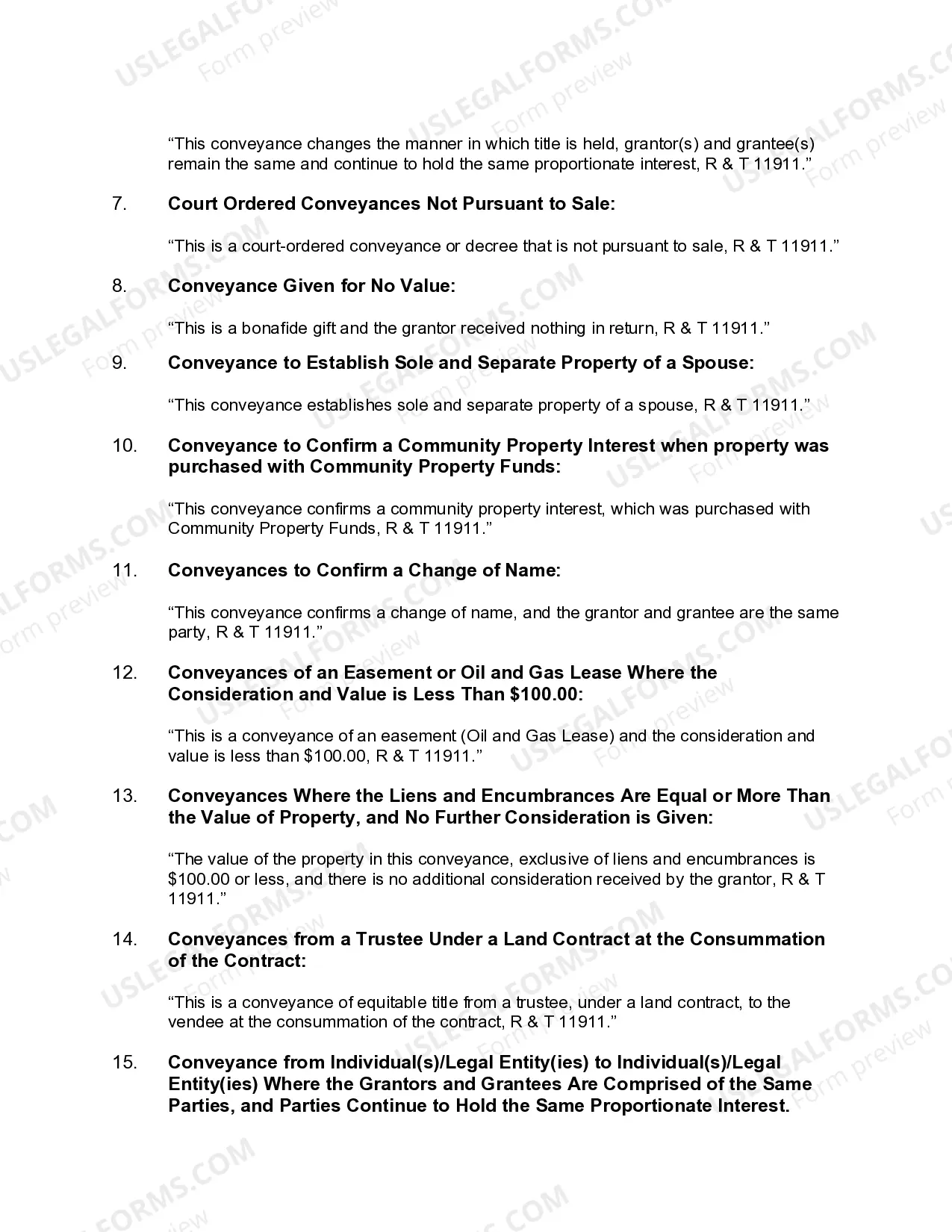
- Exemption from transfer tax details, if applicable
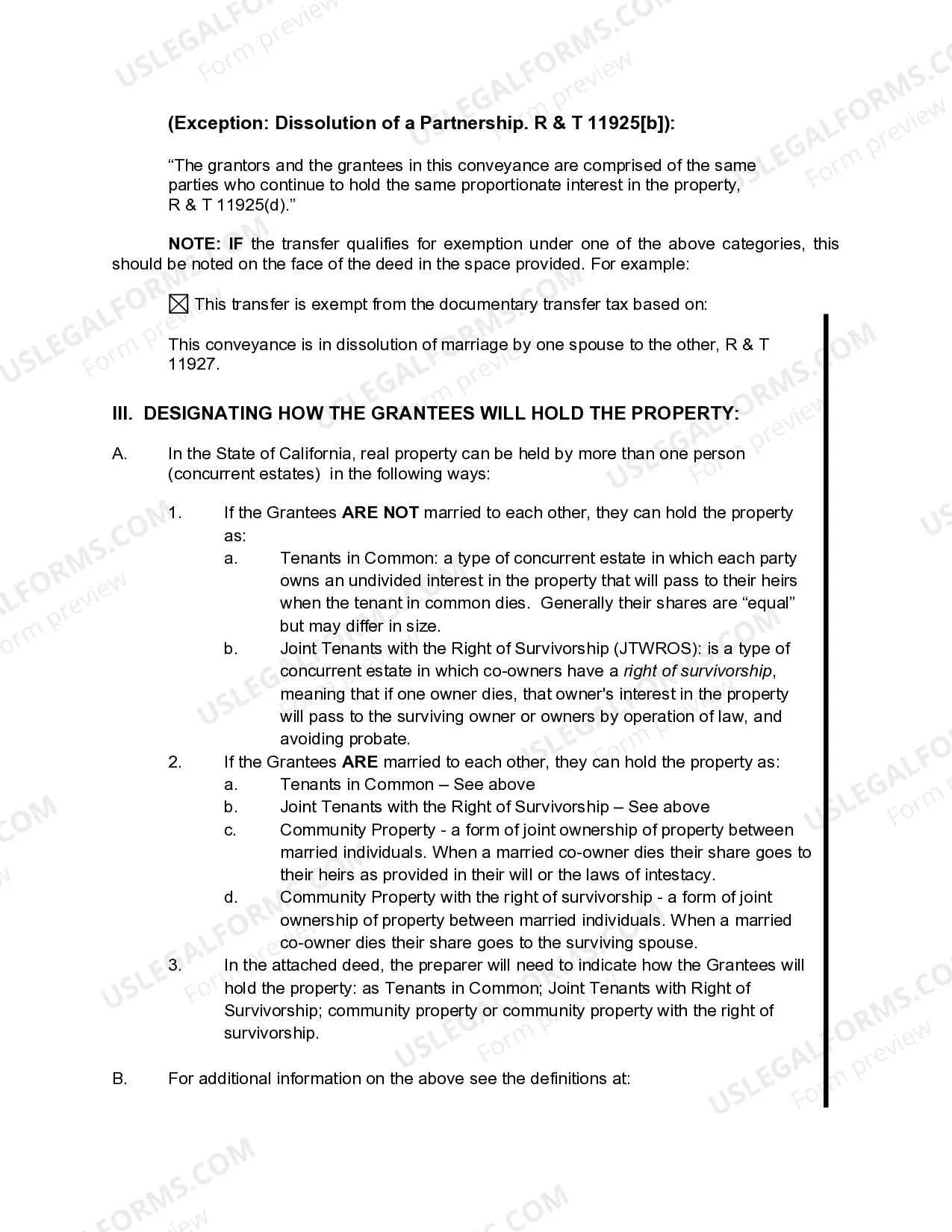
- Designations for how Grantees will hold the property (e.g., as tenants in common or joint tenants)
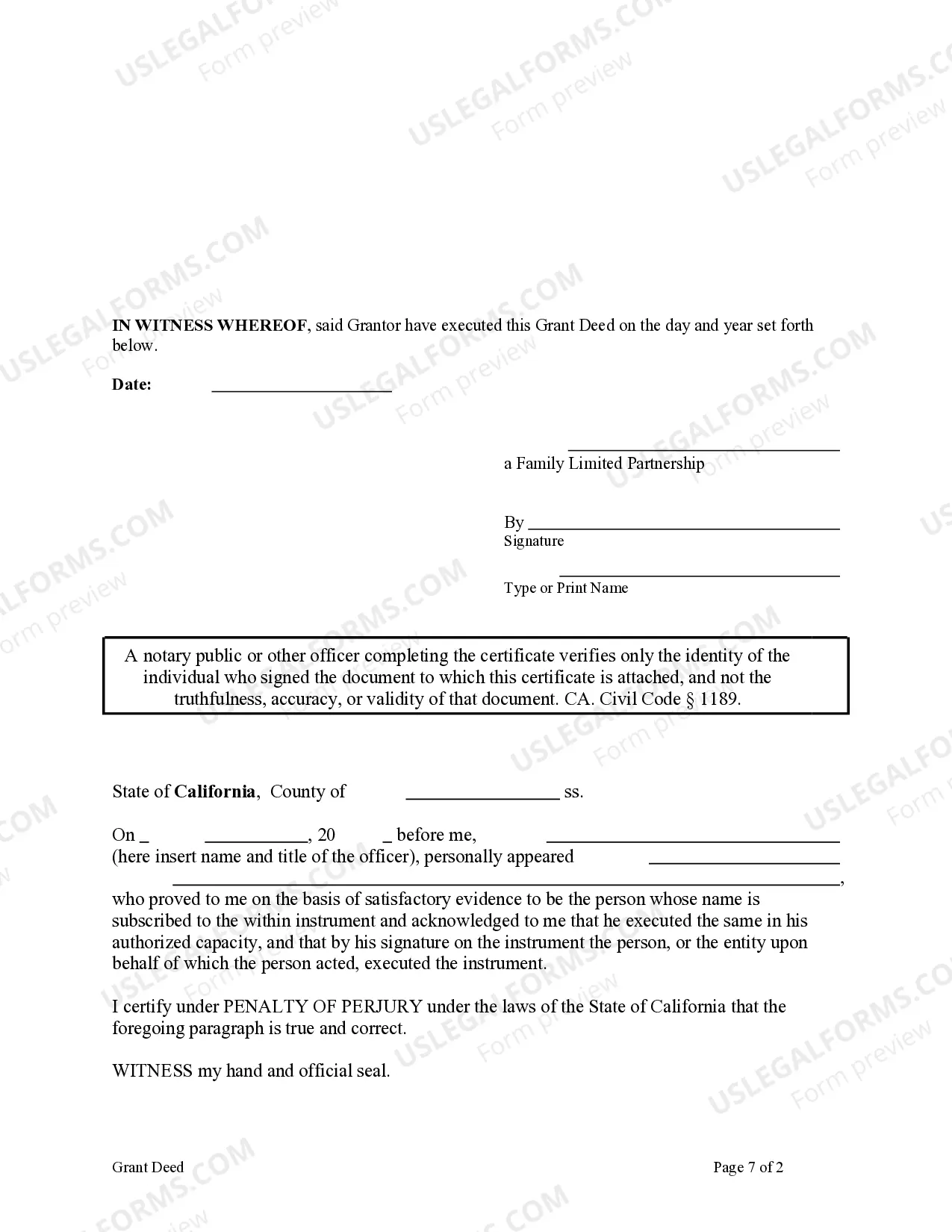
- Signatures and notary acknowledgment areas


When this form is needed
This form should be used when a Family Limited Partnership wishes to transfer ownership of real property to an individual. Common scenarios include estate planning, where property is passed down to family members, or restructuring ownership within a family business. It is also useful for confirming property titles and ensuring that ownership rights are legally documented.
Who this form is for
- Family Limited Partnerships looking to transfer property to individual members
- Individuals receiving property from a Family Limited Partnership
- Estate planners and family members involved in property management
- Real estate attorneys assisting with property transfers
Instructions for completing this form
- Identify and enter the names of the Grantor (Family Limited Partnership) and Grantee (individual).
- Provide a complete legal description of the property being transferred.
- Specify the date of the transfer and any exemptions from transfer tax.
- Indicate how the Grantees will hold the property (e.g., tenants in common, joint tenants with rights of survivorship).
- Ensure all parties sign the document in the designated areas.
- Arrange for the form to be notarized to finalize legality.
Notarization guidance
To make this form legally binding, it must be notarized. Our online notarization service, powered by Notarize, lets you verify and sign documents remotely through an encrypted video session.
Get your form ready online
Our built-in tools help you complete, sign, share, and store your documents in one place.
Make edits, fill in missing information, and update formatting in US Legal Forms—just like you would in MS Word.
Download a copy, print it, send it by email, or mail it via USPS—whatever works best for your next step.
Sign and collect signatures with our SignNow integration. Send to multiple recipients, set reminders, and more. Go Premium to unlock E-Sign.
If this form requires notarization, complete it online through a secure video call—no need to meet a notary in person or wait for an appointment.
We protect your documents and personal data by following strict security and privacy standards.

Make edits, fill in missing information, and update formatting in US Legal Forms—just like you would in MS Word.

Download a copy, print it, send it by email, or mail it via USPS—whatever works best for your next step.

Sign and collect signatures with our SignNow integration. Send to multiple recipients, set reminders, and more. Go Premium to unlock E-Sign.

If this form requires notarization, complete it online through a secure video call—no need to meet a notary in person or wait for an appointment.

We protect your documents and personal data by following strict security and privacy standards.
Avoid these common issues
- Failing to include a complete legal description of the property.
- Not designating how the Grantees will hold the property.
- Omitting signatures or notarization, which can invalidate the deed.
- Incorrectly stating the names of the Grantor and Grantee.
Advantages of online completion
- Convenient downloading and access from anywhere, saving time.
- Editability to tailor the form to your specific situation.
- Reliability, as all forms are drafted by licensed attorneys.
Looking for another form?
Form popularity
FAQ
Transferring property from an LLC to an individual involves several steps. First, you need to draft a California Grant Deed from Family Limited Partnership to an Individual, which clearly outlines the transfer. This deed should be signed and notarized to ensure its validity. Finally, file the deed with the county recorder's office to formalize the property transfer and update public records.
Filling out a California grant deed requires careful attention to detail. First, you need to identify the grantor, which is the Family Limited Partnership, and the grantee, the individual receiving the property. Clearly describe the property being transferred, including its legal description and address. Using platforms like USLegalForms can guide you through the process, ensuring that your California Grant Deed from Family Limited Partnership to an Individual is completed accurately and efficiently.
To change a grant deed in California, you must prepare a new grant deed that reflects the changes you intend to make. This document needs to be signed by the current owner and notarized. Once completed, file the new deed with the county recorder's office. If you need assistance with creating a new California Grant Deed from Family Limited Partnership to an Individual, consider using US Legal Forms for easy access to the necessary resources.
Yes, a grant deed serves as proof of ownership in California. This legal document verifies that the grantor has the right to transfer the property. It contains the details of the property and the parties involved in the transaction. For those dealing with a California Grant Deed from Family Limited Partnership to an Individual, it is crucial to properly execute and record the deed to establish ownership.
To transfer property from one person to another in California, you need to execute a grant deed. This document clearly states the transfer of ownership. When transferring property from a Family Limited Partnership to an individual, ensure you meet all legal requirements. Using a platform like US Legal Forms can help you create a compliant California Grant Deed from Family Limited Partnership to an Individual.
The most common method to transfer ownership is through a deed, such as the California Grant Deed from Family Limited Partnership to an Individual. This method allows for a clear and legally recognized transfer of property. It’s always wise to keep proper records and consult legal resources to ensure compliance with local laws.
The best way to leave property to a family member is to create a clear legal document, such as a California Grant Deed from Family Limited Partnership to an Individual, during your lifetime. This has the added advantage of avoiding probate, which can delay the transfer. Working with a qualified expert ensures that your wishes are respected and executed correctly.
Transferring a grant deed in California generally involves drafting the deed, signing it, and then recording it with the county recorder’s office. Using a California Grant Deed from Family Limited Partnership to an Individual makes this process straightforward. It's beneficial to follow local requirements closely to avoid any future issues regarding ownership.
Yes, an LLC can gift property to an individual, typically through a formal deed like the California Grant Deed from Family Limited Partnership to an Individual. However, it is crucial to consult with a legal advisor to understand any tax consequences that may arise from the gift. Proper documentation ensures that the transfer is legally binding and clear.
To transfer property within a family, a California Grant Deed from Family Limited Partnership to an Individual is a preferred method due to its clarity and legal recognition. This deed helps establish ownership while protecting the rights of both the giver and recipient. It creates a transparent record of the property’s new ownership, which can simplify future transactions.