Securities Exchange Act Sec. 14(a) - 15 U.S.C. 77n - Rule 14a-9 17 C.F.R. Sec. 14a-9 - Solicitation of Proxies
About this form
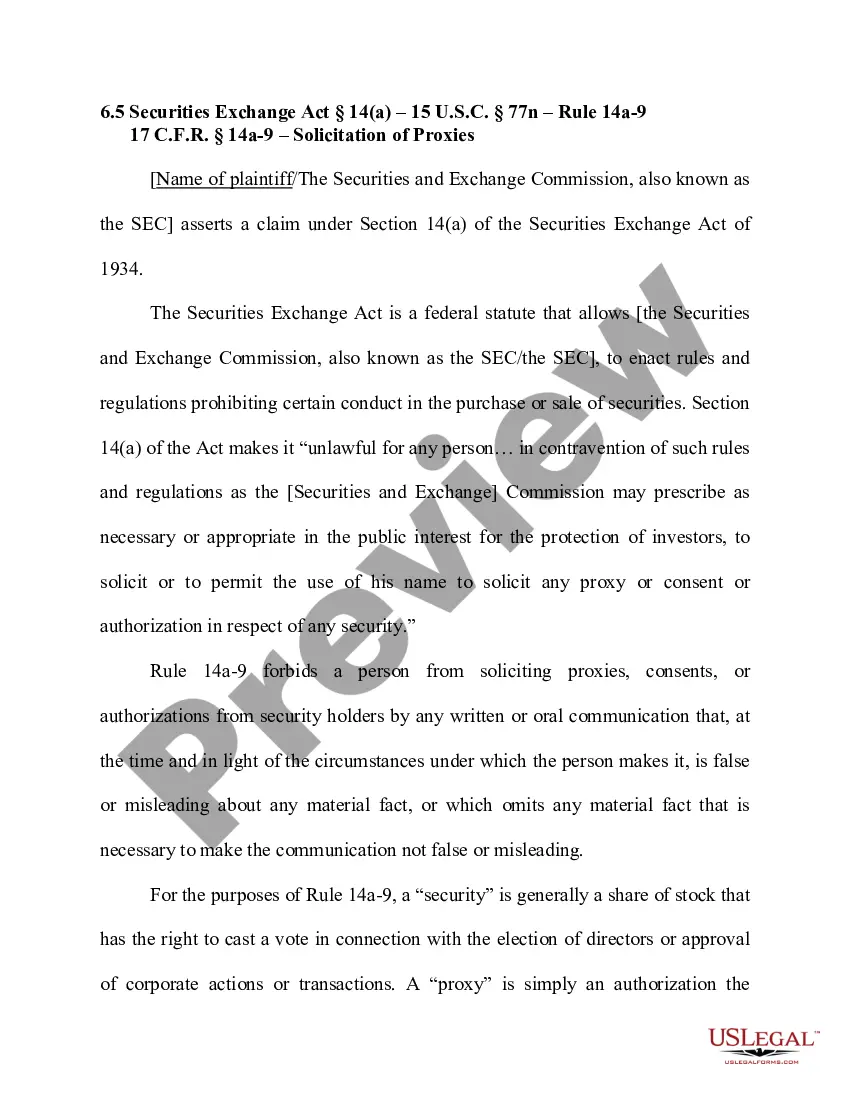
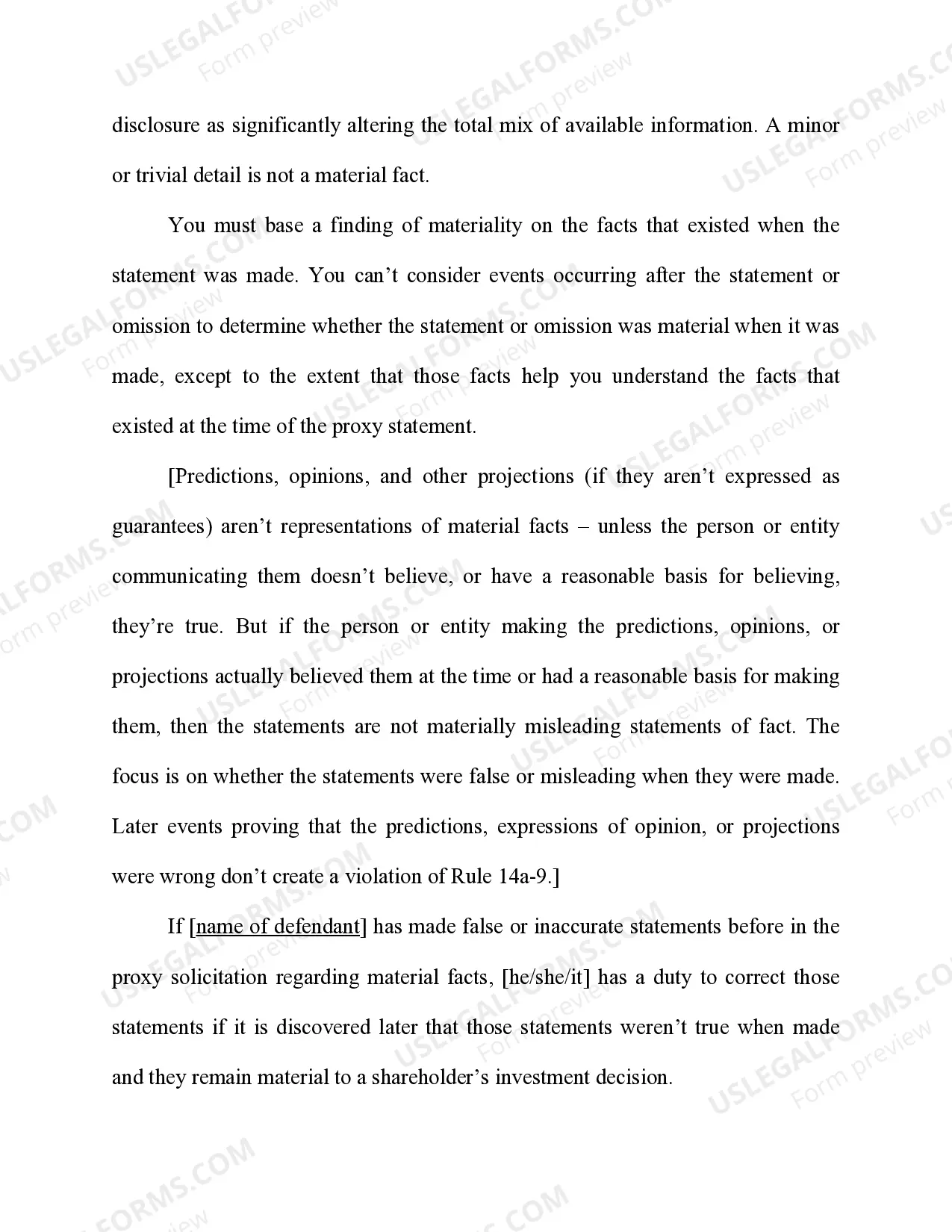
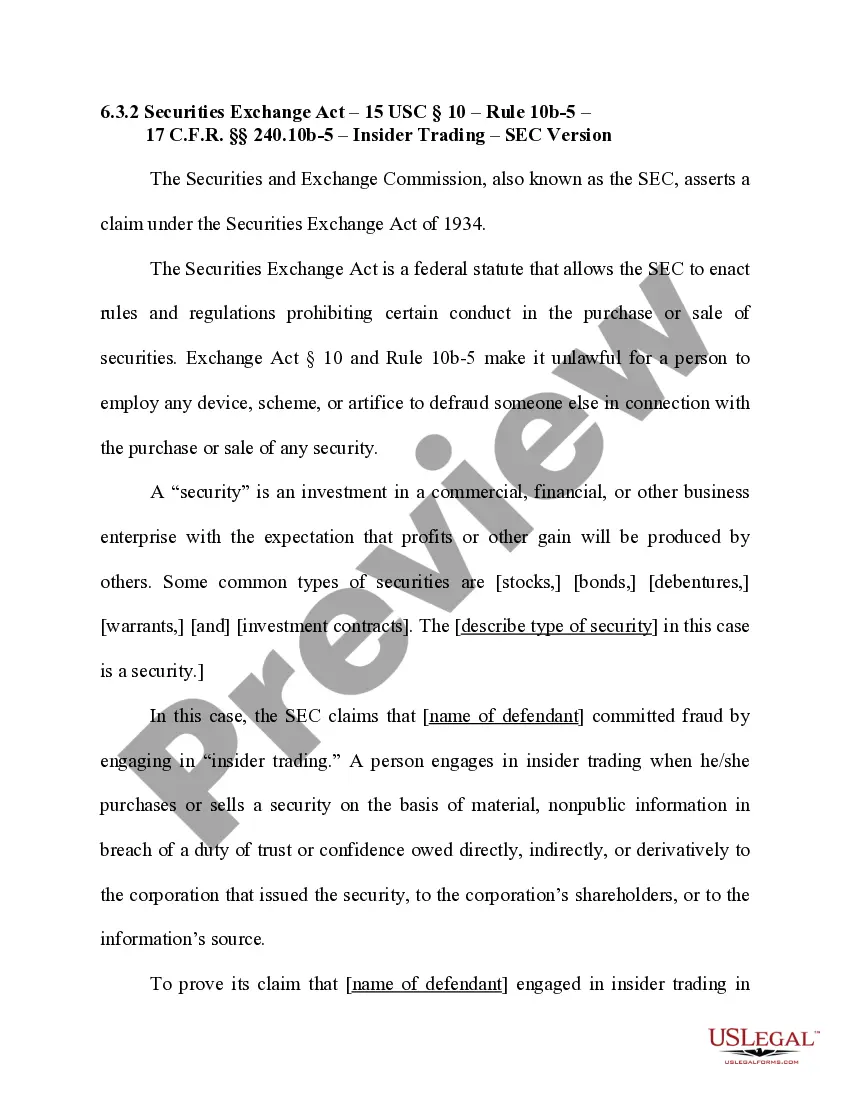
The Securities Exchange Act Sec. 14(a) - Solicitation of Proxies form is a legal document that governs the solicitation of proxies by corporate entities in the United States. This form ensures compliance with federal regulations established by the Securities and Exchange Commission (SEC), particularly Rule 14a-9, which prohibits misleading proxy solicitations. Unlike other securities forms, this specific document addresses the accuracy and completeness of information provided to shareholders during the proxy solicitation process.
Form components explained
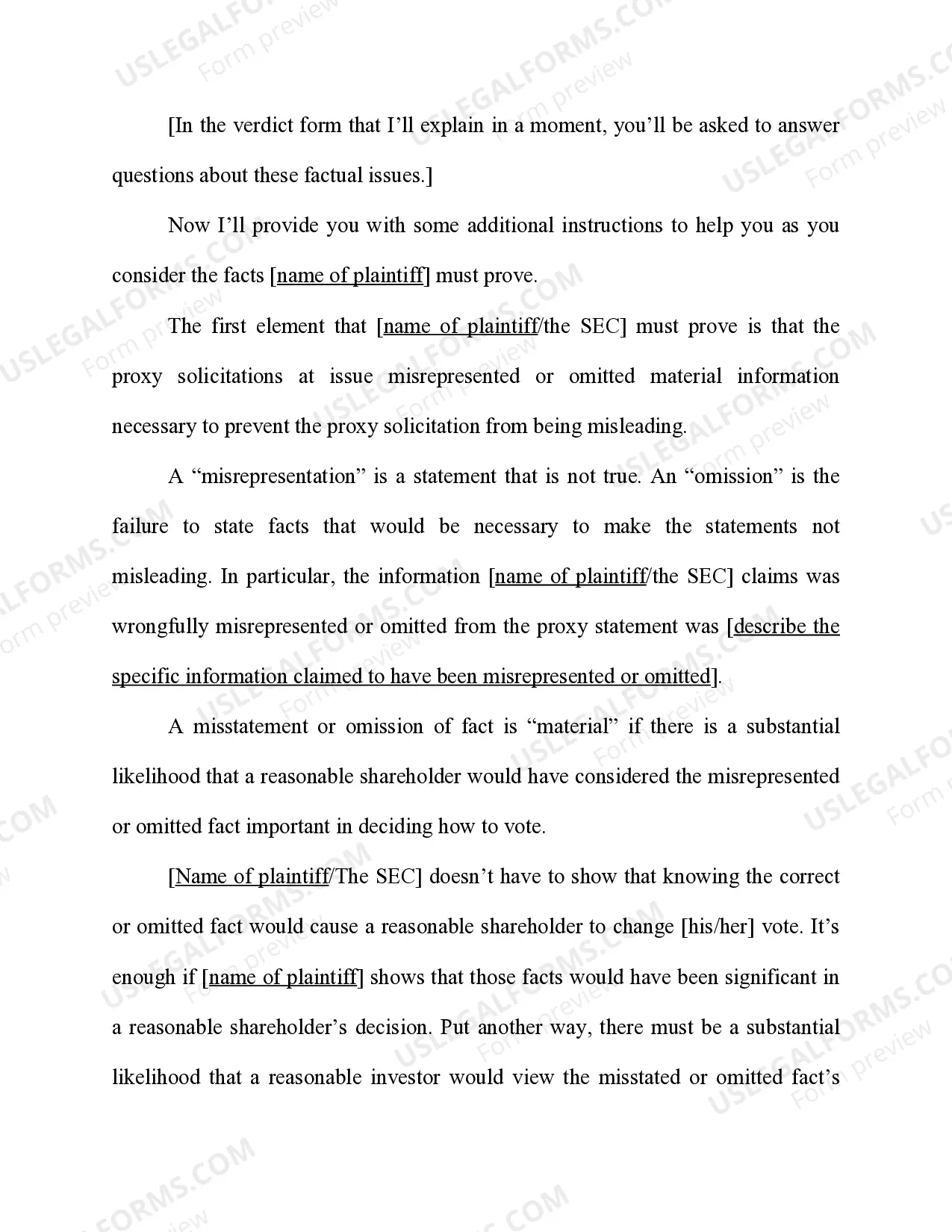
- Detailed definitions of key terms such as "proxy," "material information," and "negligence."
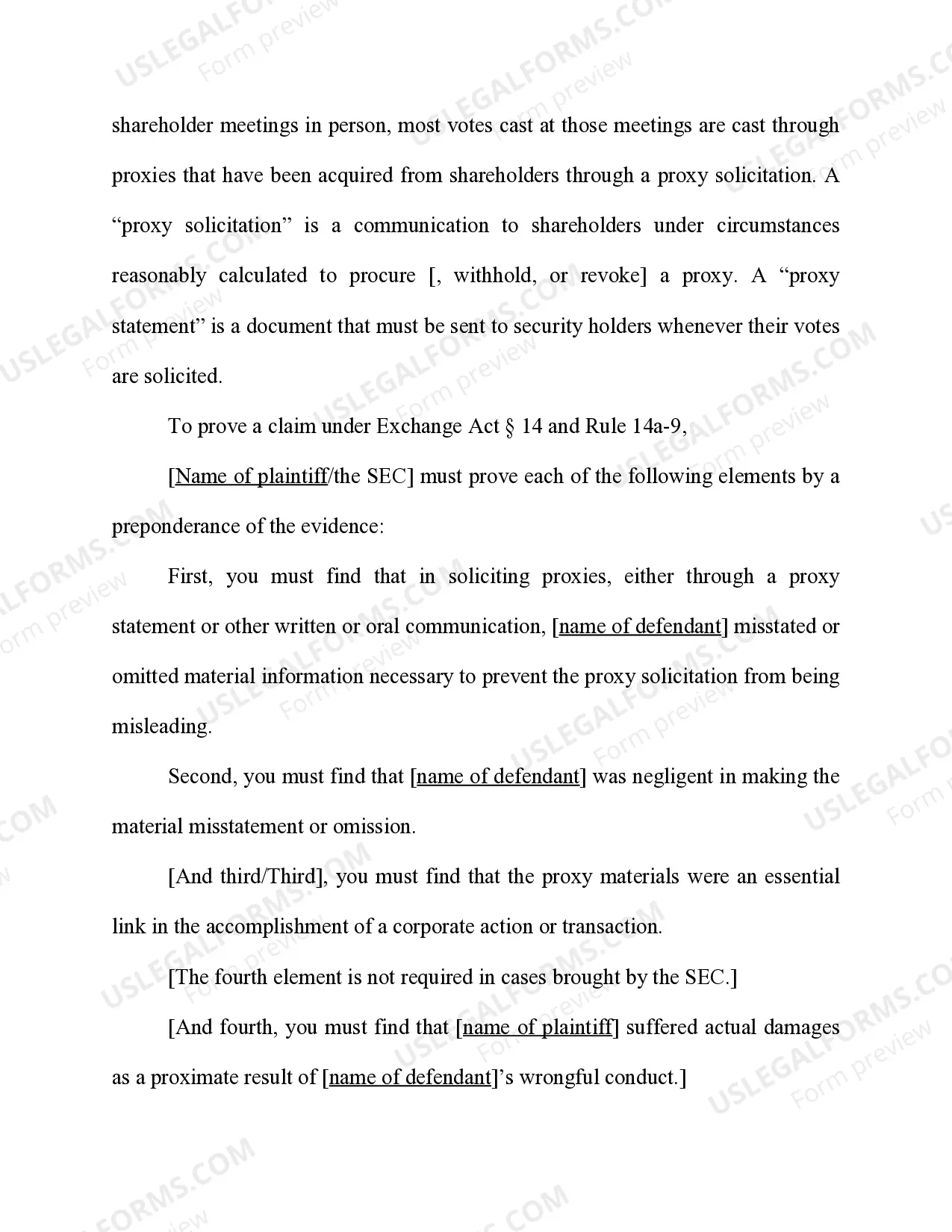
- Criteria for proving a claim under Section 14 and Rule 14a-9.
- Instructions for evaluating misstatements and omissions in proxy solicitors.
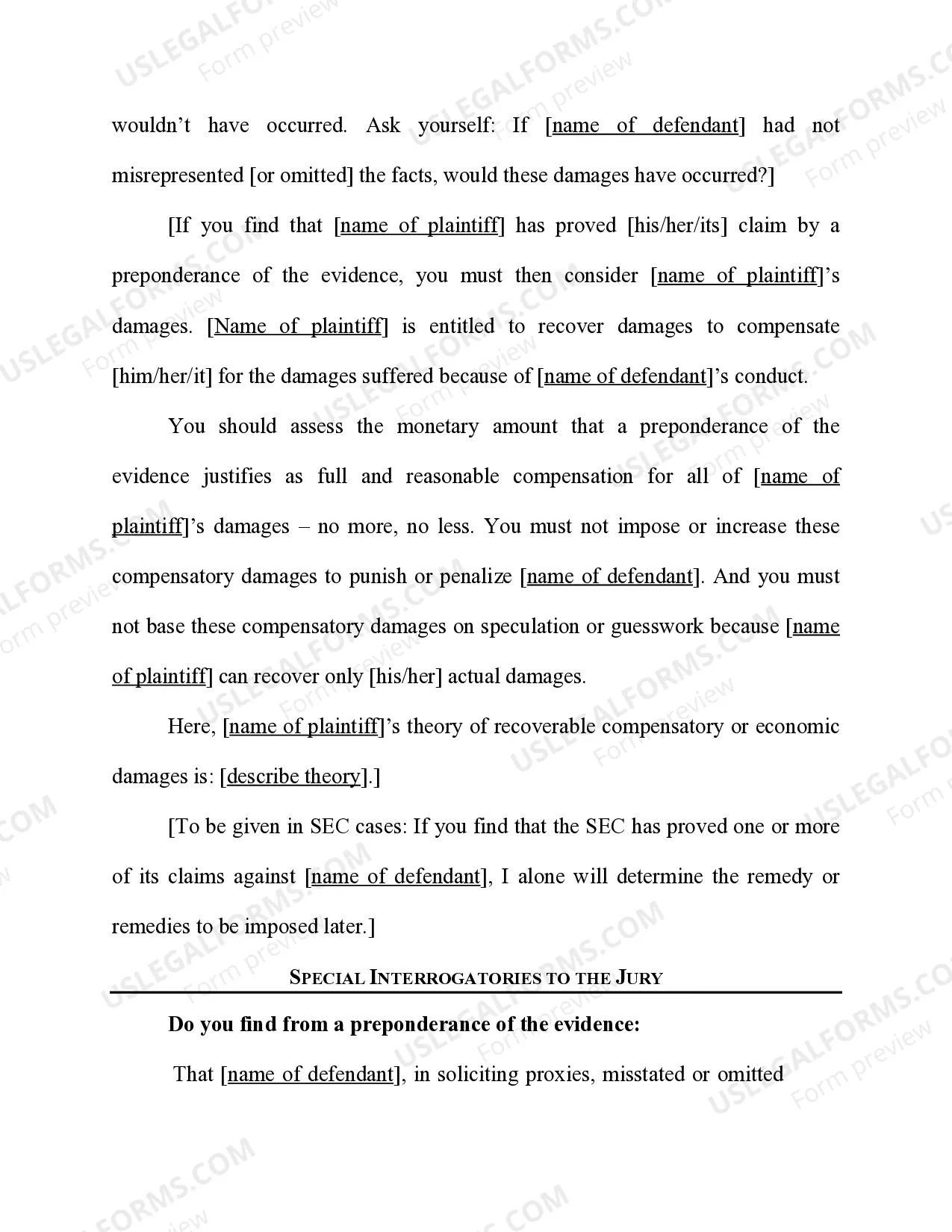
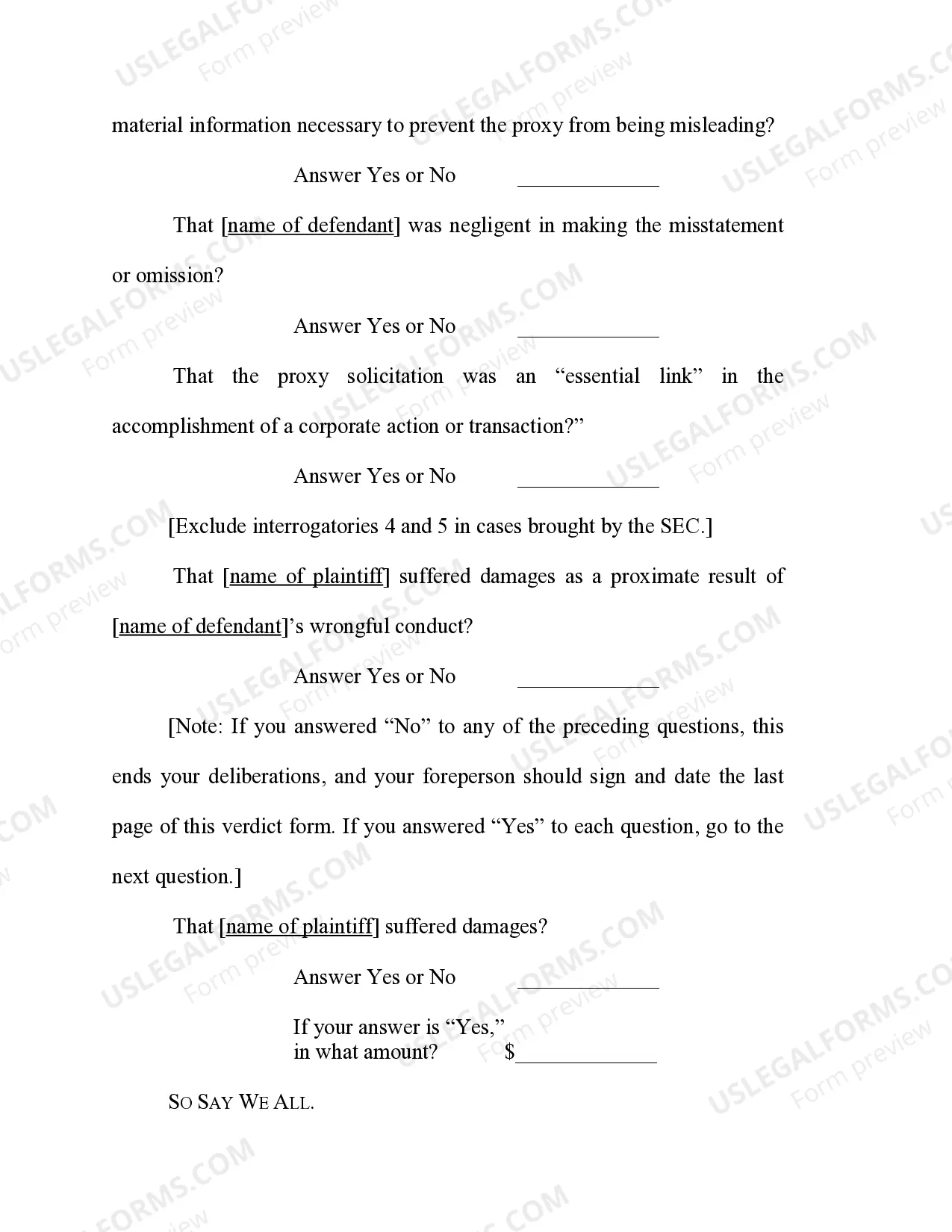
- Special interrogatories for the jury to assess claims based on evidence.
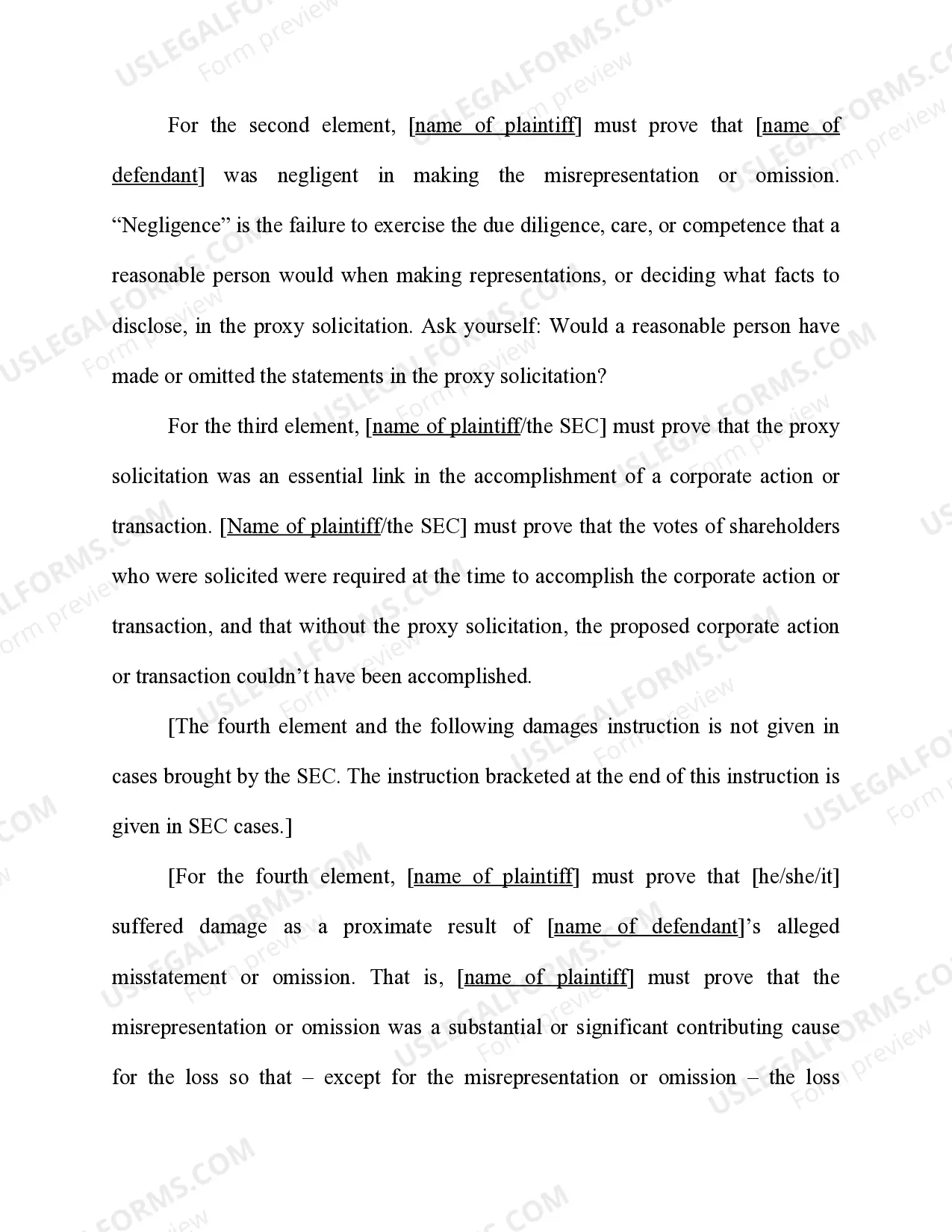
- Elements required to establish negligence in proxy solicitations.
Common use cases
This form is used in situations where a shareholder or the SEC believes that a proxy solicitation has included misleading information or omitted critical facts that could affect investment decisions. It is particularly necessary when there are disputes regarding corporate actions that require votes from shareholders, such as mergers or board elections.
Who this form is for
- Shareholders who suspect they were misled during a proxy solicitation.
- The Securities and Exchange Commission (SEC) in enforcement actions regarding proxy solicitations.
- Corporate entities seeking to understand compliance obligations under federal securities laws.
- Legal professionals representing clients involved in disputes over proxy materials.
Instructions for completing this form
- Identify the parties involved, including the proxy solicitor and the shareholders.
- Clearly state the allegations regarding misstatements or omissions made in the proxy solicitation.
- Provide evidence supporting claims of negligence related to the misrepresentation or omission.
- Document the corporate actions that required shares' votes and how proxy solicitations were essential for these actions.
- Ensure all claims are substantiated with the necessary factual context for each allegation.
Is notarization required?
Notarization is not commonly needed for this form. However, certain documents or local rules may make it necessary. Our notarization service, powered by Notarize, allows you to finalize it securely online anytime, day or night.
Get your form ready online
Our built-in tools help you complete, sign, share, and store your documents in one place.
Make edits, fill in missing information, and update formatting in US Legal Forms—just like you would in MS Word.
Download a copy, print it, send it by email, or mail it via USPS—whatever works best for your next step.
Sign and collect signatures with our SignNow integration. Send to multiple recipients, set reminders, and more. Go Premium to unlock E-Sign.
If this form requires notarization, complete it online through a secure video call—no need to meet a notary in person or wait for an appointment.
We protect your documents and personal data by following strict security and privacy standards.

Make edits, fill in missing information, and update formatting in US Legal Forms—just like you would in MS Word.

Download a copy, print it, send it by email, or mail it via USPS—whatever works best for your next step.

Sign and collect signatures with our SignNow integration. Send to multiple recipients, set reminders, and more. Go Premium to unlock E-Sign.

If this form requires notarization, complete it online through a secure video call—no need to meet a notary in person or wait for an appointment.

We protect your documents and personal data by following strict security and privacy standards.
Common mistakes to avoid
- Failing to accurately define what constitutes "material information."
- Not providing sufficient evidence to support claims of negligence.
- Using vague language that does not clearly outline misrepresentations or omissions.
- Neglecting to link the proxy solicitation to the outcome of corporate actions requiring shareholder votes.
Why complete this form online
- Easy access to required legal documentation without the need for in-person visits.
- Editable templates that allow customization based on specific circumstances.
- Reliable and up-to-date information that aligns with current federal regulations.
- Time-saving process compared to traditional legal procedures for obtaining forms.
Legal use & context
- This form is critical in enforcing compliance with federal securities laws regarding proxy solicitations.
- It is used as a basis for legal proceedings against entities that may have violated securities regulations.
- Understanding the framework of this form assists in protecting shareholder rights during corporate governance actions.
Looking for another form?
Form popularity
FAQ
SEC Form DEF 14A, also known as a "definitive proxy statement," is a required filing when a shareholder vote is required. The Form DEF 14A outlines the list of items up for vote by shareholders, such as the hiring of new directors or other business decisions.
Rule 14a-8 of the Securities Exchange Act of 1934 provides a framework allowing a public company shareholder to request that a proposal be included in the company's proxy statement, to be voted upon at a company's shareholder meeting.
Under new Rule 14a-19, the universal proxy card must include all director nominees presented by management and shareholders for election at the upcoming shareholder meeting.
They ultimately alleged violations of SEC Rule 14a-9, which prohibits any statement in a proxy statement that ?is false or misleading with respect to any material fact, or which omits to state any material fact necessary in order to make the statements therein not false or misleading.? 17 C.F.R. §240.14a-9(a).
Under new Rule 14a-19, the universal proxy card must include all director nominees presented by management and shareholders for election at the upcoming shareholder meeting.
Rule 14a-4(b)(4) mandates that for all director elections (not just contested elections), when state law gives legal effect to a vote cast against a nominee, then the proxy card must include ?against? and ?abstain? voting options in lieu of a ?withhold? option.
SEC Form DEF 14A, which is also known as a "definitive proxy statement," is required under Section 14(a) of the Securities Exchange Act of 1934. This form is filed with the SEC when a definitive proxy statement is given to shareholders and helps the SEC ensure that shareholders' rights are upheld.
The proxy rules require the company to provide certain disclosures in a proxy statement to its shareholders, together with a proxy card in a specified format, when soliciting authority to vote the shareholders' shares.