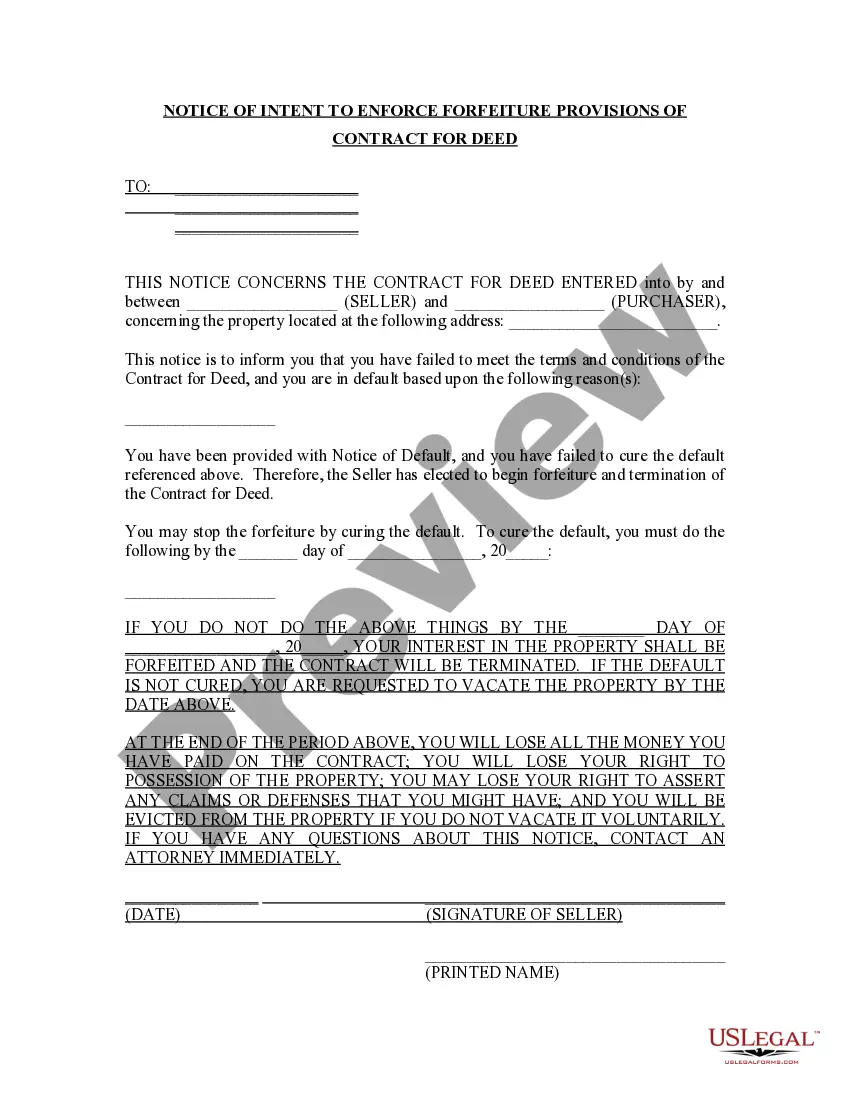
New Mexico Notice of Intent to Enforce Forfeiture Provisions of Contact for Deed
Description
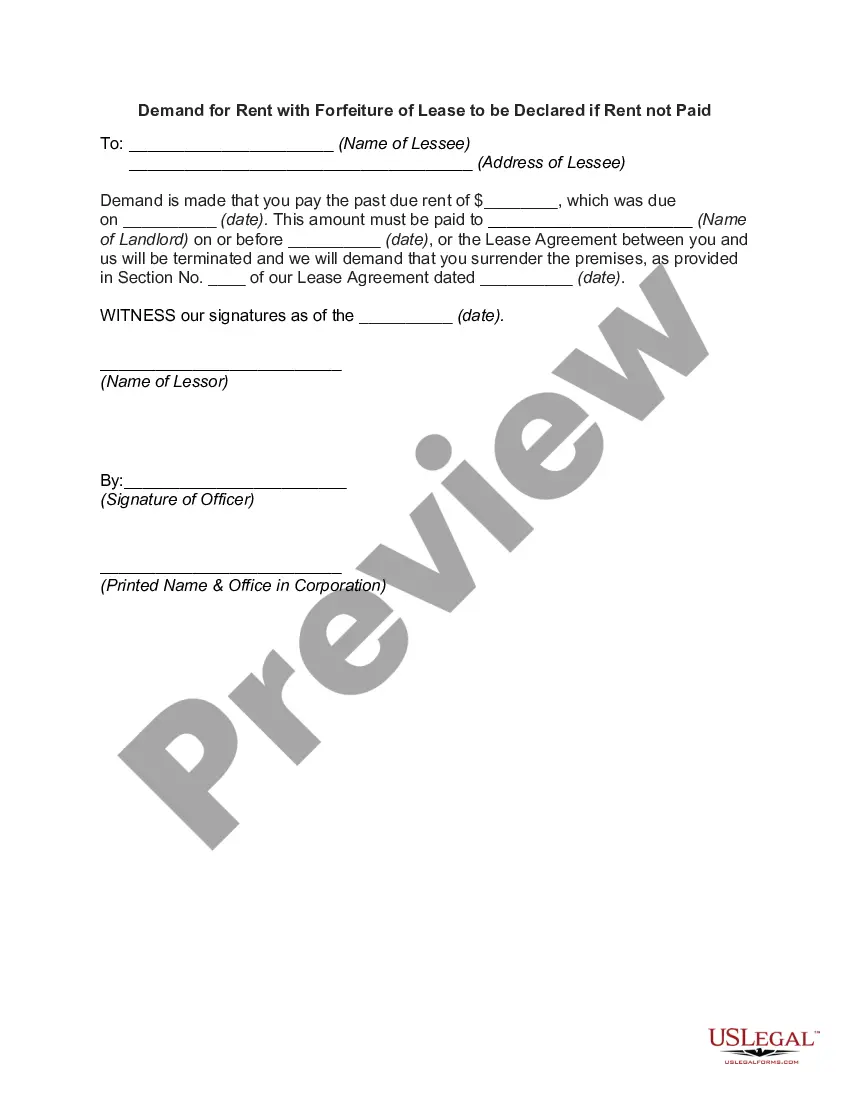
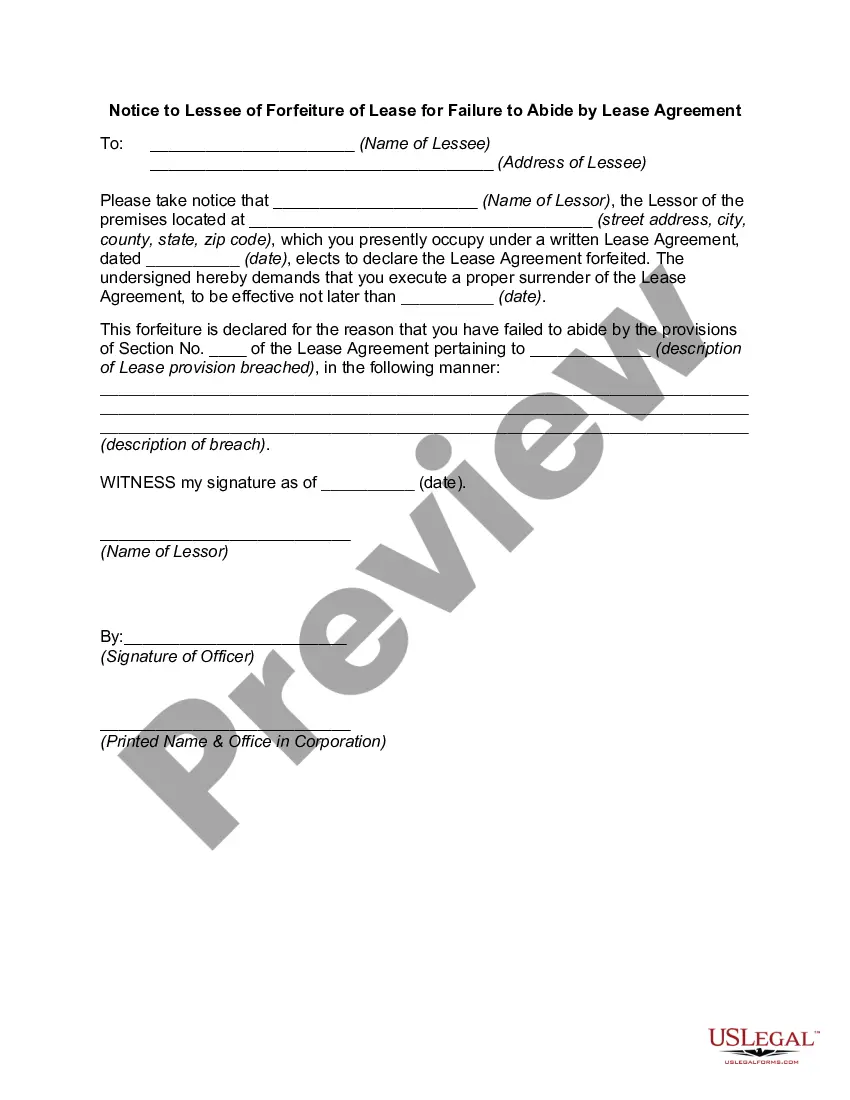


How to fill out New Mexico Notice Of Intent To Enforce Forfeiture Provisions Of Contact For Deed?
Use US Legal Forms to get a printable New Mexico Notice of Intent to Enforce Forfeiture Provisions of Contact for Deed. Our court-admissible forms are drafted and regularly updated by skilled attorneys. Our’s is the most complete Forms library on the internet and offers reasonably priced and accurate samples for consumers and lawyers, and SMBs. The templates are grouped into state-based categories and a number of them might be previewed before being downloaded.
To download samples, users must have a subscription and to log in to their account. Click Download next to any form you need and find it in My Forms.
For people who don’t have a subscription, follow the following guidelines to quickly find and download New Mexico Notice of Intent to Enforce Forfeiture Provisions of Contact for Deed:
- Check to ensure that you have the proper template in relation to the state it is needed in.
- Review the form by looking through the description and using the Preview feature.
- Press Buy Now if it’s the template you want.
- Generate your account and pay via PayPal or by card|credit card.
- Download the template to your device and feel free to reuse it many times.
- Make use of the Search engine if you need to find another document template.
US Legal Forms offers a large number of legal and tax samples and packages for business and personal needs, including New Mexico Notice of Intent to Enforce Forfeiture Provisions of Contact for Deed. Over three million users already have utilized our platform successfully. Select your subscription plan and get high-quality documents in just a few clicks.
Form popularity
FAQ
Contract for Deed Seller Financing. A contract for deed is used by some sellers who finance the sale of their homes. Seller's Ownership Liability. Buyer Default Risk. Seller Performance. Property Liens Could Hinder Purchase.
Should I record the contract? The seller must record the contract or a memorandum of the contract within 10 days of the date of sale. They must do this at the county recorder of deeds where the property is located.
A contract for deed is a legal agreement for the sale of property in which a buyer takes possession and makes payments directly to the seller, but the seller holds the title until the full payment is made.
A disadvantage to the seller is that a contract for deed is frequently characterized by a low down payment and the purchase price is paid in installments instead of one lump sum.The legal fees and time frame for this process will be more extensive than a standard Power of Sale foreclosure.
Usually the contract requires the buyer to make payments over time with interest payable on the unpaid balance. Once a buyer pays all of the payments called for under the contract, the owner transfers to the buyer a deed to the property.
Loss of Service Control. A major disadvantage of contract management is that the organization gives up a considerable amount of control over the services that will be provided to customers. Potential Time Delays. Loss of Business Flexibility. Loss of Product Quality. Compliance and Legal Issues.
A contract for deed is an agreement for buying property without going to a mortgage lender. The buyer agrees to pay the seller monthly payments, and the deed is turned over to the buyer when all payments have been made.
A disadvantage to the seller is that a contract for deed is frequently characterized by a low down payment and the purchase price is paid in installments instead of one lump sum. If a seller needs funds from the sale to buy another property, this would not be a beneficial method of selling real estate.