Notice of proposed sale of property
Overview of this form
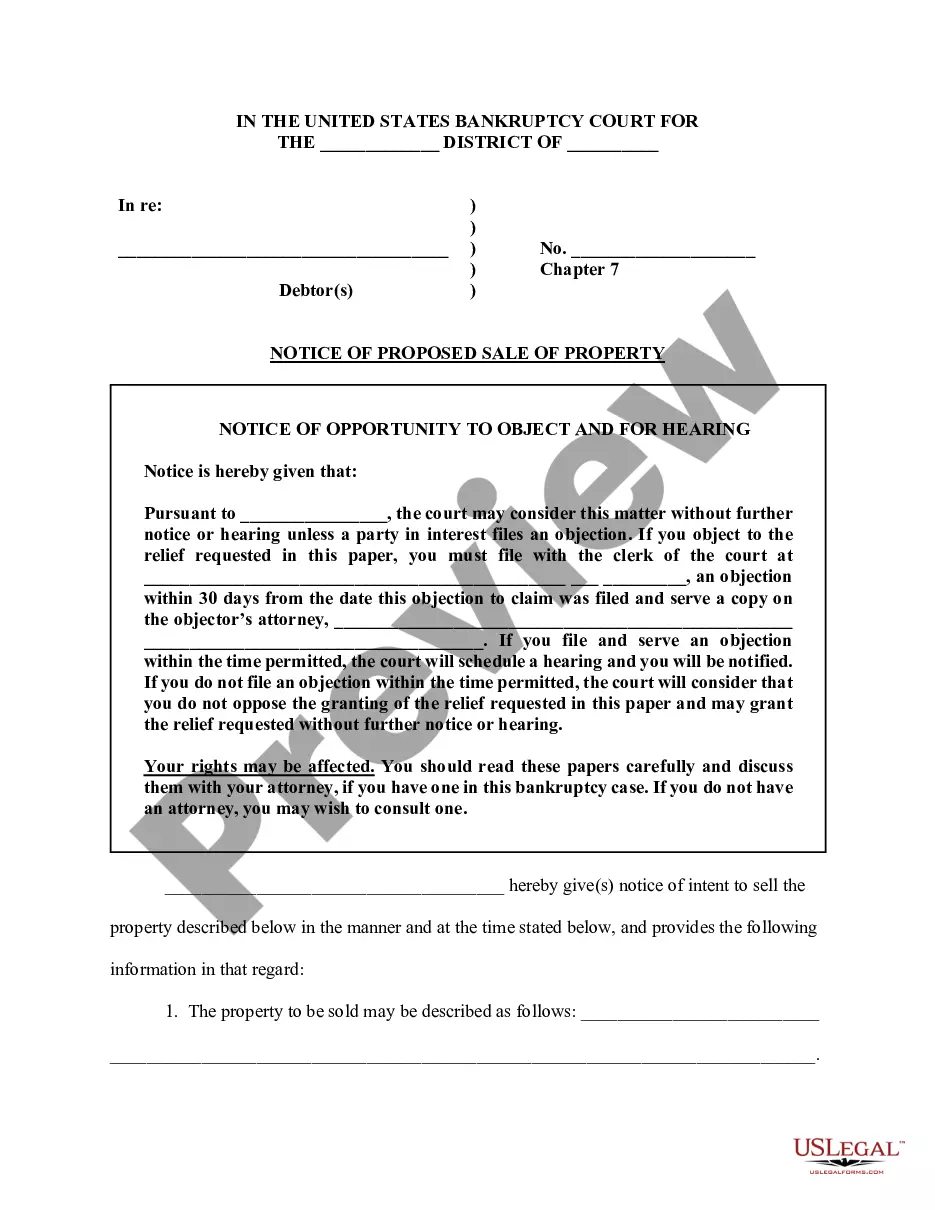
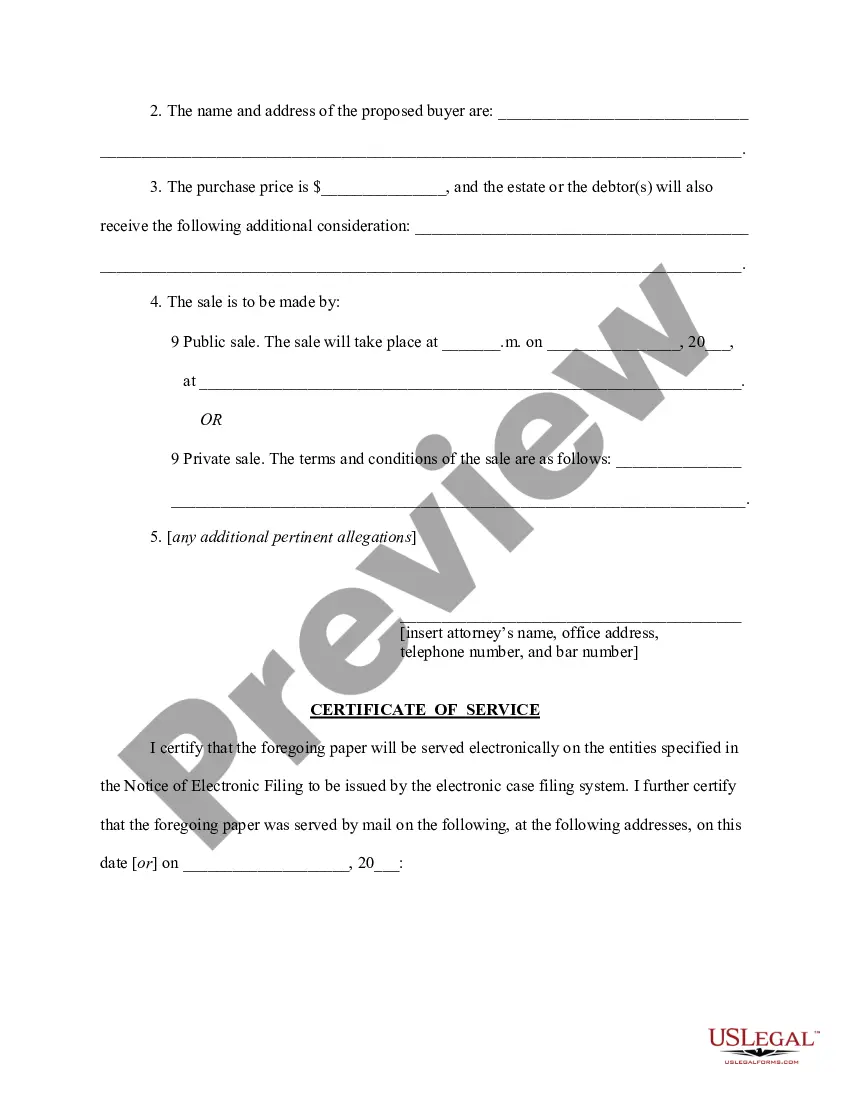
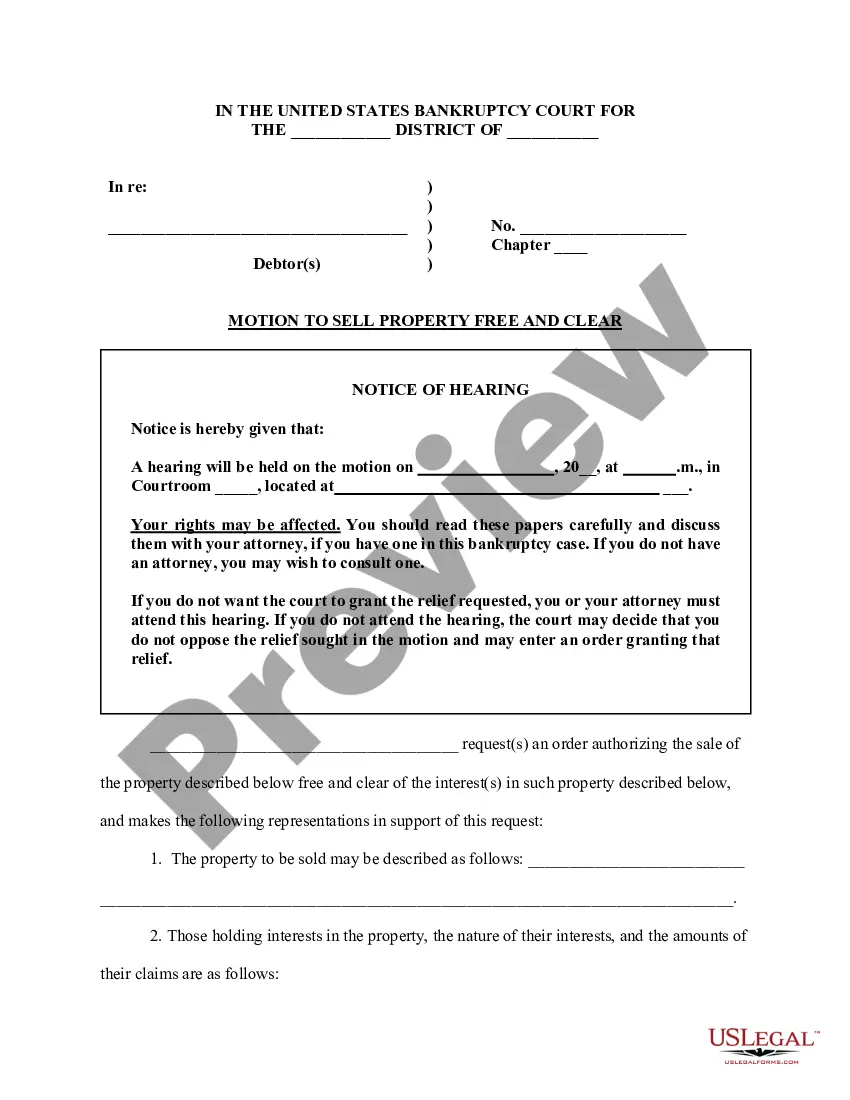
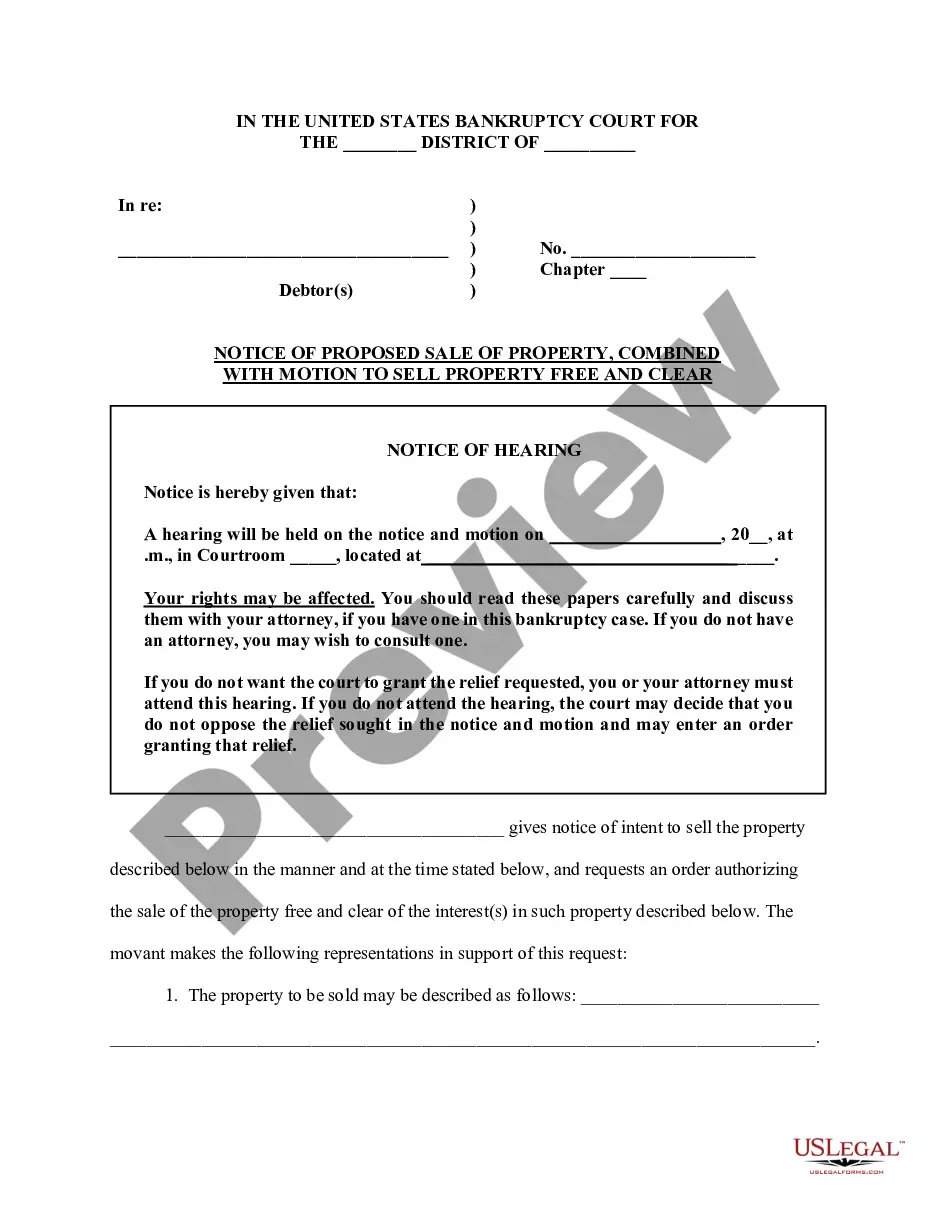
The Notice of Proposed Sale of Property is a legal document used in bankruptcy proceedings to inform interested parties about the intent to sell a debtor's property. This form outlines the proposed sale details, including the property description, sale terms, and buyer information. It differs from similar forms by providing specific notice requirements under bankruptcy law, ensuring transparency and the opportunity for objections from creditors or other parties involved.
Form components explained
- Section for debtor information and case details.
- Notice provisions regarding the opportunity to object to the sale.
- Description of the property to be sold.
- Details about the proposed buyer and sale terms.
- Instructions for filing objections and any additional pertinent allegations.
- Certification of service to relevant parties.
When this form is needed
This form is utilized when a debtor in a bankruptcy case wishes to sell property as part of the estate liquidation process. It is essential when there is a need to formally notify creditors and stakeholders about the sale details, allowing them to voice any objections to the proposed transaction within a specific timeframe.
Who can use this document
- Debtors who are undergoing bankruptcy proceedings.
- Attorneys representing debtors in Chapter 7 bankruptcy cases.
- Creditors seeking to object to property sales.
- Trustees involved in the administration of bankruptcy estates.
How to prepare this document
- Identify the debtor and input case information at the top of the form.
- Clearly describe the property to be sold.
- Provide the name and address of the buyer along with the agreed purchase price.
- Indicate whether the sale is public or private, providing specific details for each option.
- Complete any additional allegations relevant to the sale.
- Ensure all parties involved in the case are properly notified by filing the certification of service section.
Notarization guidance
This form does not typically require notarization to be legally valid. However, some jurisdictions or document types may still require it. US Legal Forms provides secure online notarization powered by Notarize, available 24/7 for added convenience.
Get your form ready online
Our built-in tools help you complete, sign, share, and store your documents in one place.
Make edits, fill in missing information, and update formatting in US Legal Forms—just like you would in MS Word.
Download a copy, print it, send it by email, or mail it via USPS—whatever works best for your next step.
Sign and collect signatures with our SignNow integration. Send to multiple recipients, set reminders, and more. Go Premium to unlock E-Sign.
If this form requires notarization, complete it online through a secure video call—no need to meet a notary in person or wait for an appointment.
We protect your documents and personal data by following strict security and privacy standards.
Make edits, fill in missing information, and update formatting in US Legal Forms—just like you would in MS Word.
Download a copy, print it, send it by email, or mail it via USPS—whatever works best for your next step.
Sign and collect signatures with our SignNow integration. Send to multiple recipients, set reminders, and more. Go Premium to unlock E-Sign.

If this form requires notarization, complete it online through a secure video call—no need to meet a notary in person or wait for an appointment.
We protect your documents and personal data by following strict security and privacy standards.
Mistakes to watch out for
- Failing to complete all required fields or sections accurately.
- Not filing objections within the specified 30-day period.
- Incorrectly describing the property or terms of sale.
- Neglecting to notify all interested parties as required.
Why use this form online
- Convenient access and quick download options available anytime.
- Editability allows users to customize the form for accurate information.
- Reliable guidance ensures compliance with legal standards.
- Supports users in following appropriate procedures and legal requirements.
Looking for another form?
Form popularity
FAQ
Rule 144 at (a)(1) defines an ?affiliate? of an issuing company as a person that directly, or indirectly through one or more intermediaries, controls, or is controlled by, or is under common control with, such issuer.?
Form 144, required under Rule 144, is filed by a person who intends to sell either restricted securities or control securities (i.e., securities held by affiliates. Form 144 is notification to the SEC of this intention to sell and must take place at the time the sell order is placed with the broker-dealer.
Rule 144 provides an exemption and permits the public resale of restricted or control securities if a number of conditions are met, including how long the securities are held, the way in which they are sold, and the amount that can be sold at any one time.
All affiliates are required to file a Form 144, notifying the SEC if the sale of securities within any three-month period exceeds either 5,000 shares or a total dollar amount of $50,000.
Form 144 must be filed with the SEC by an affiliate as a notice of the proposed sale of securities when the amount to be sold under Rule 144 during any three-month period exceeds 5,000 shares or units or has an aggregate sales price in excess of $50,000.
SEC Rule 144A modifies a two-year holding period requirement on privately placed securities to permit qualified institutional buyers to trade. Unregistered shares, also called restricted stock, are securities not registered with the Securities and Exchange Commission.
How long is the Form 144 good for? For an affiliate of an issuing company, each Form 144 is good for three months from the filing date.
Form 144 must be filed with the SEC by an affiliate as a notice of the proposed sale of securities when the amount to be sold under Rule 144 during any three-month period exceeds 5,000 shares or units or has an aggregate sales price in excess of $50,000.
Property owners have 2 years from the date taxes become delinquent (April 1st) before they risk loss of the property. As stated in Florida Statute 197.502, after the 2 year period has elapsed and taxes remain unpaid, the certificate holder may file a tax deed application with the Tax Collector's office.