Securities Exchange Act - 15 USC Sec. 10(b) - Rule 10b-5(a) - 17 C.F.R. Sec. 240.10b-5 - Insider Trading - SEC Version
Overview of this form
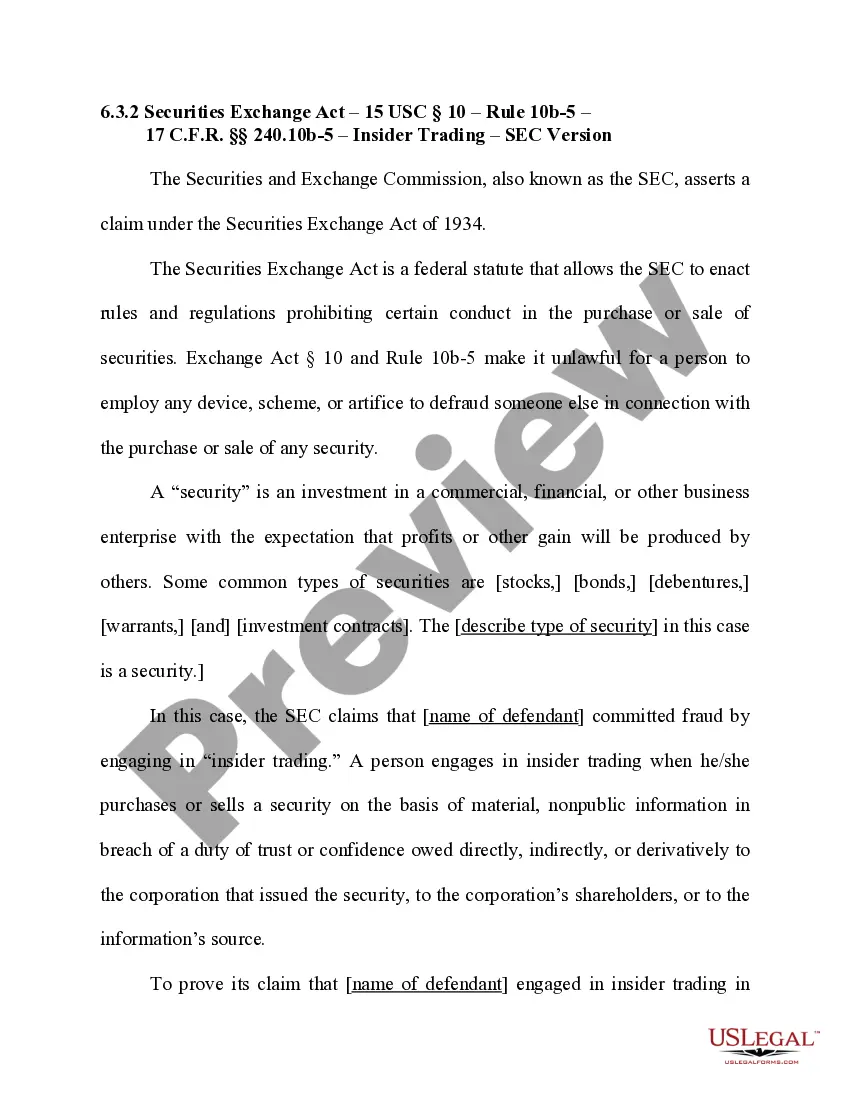
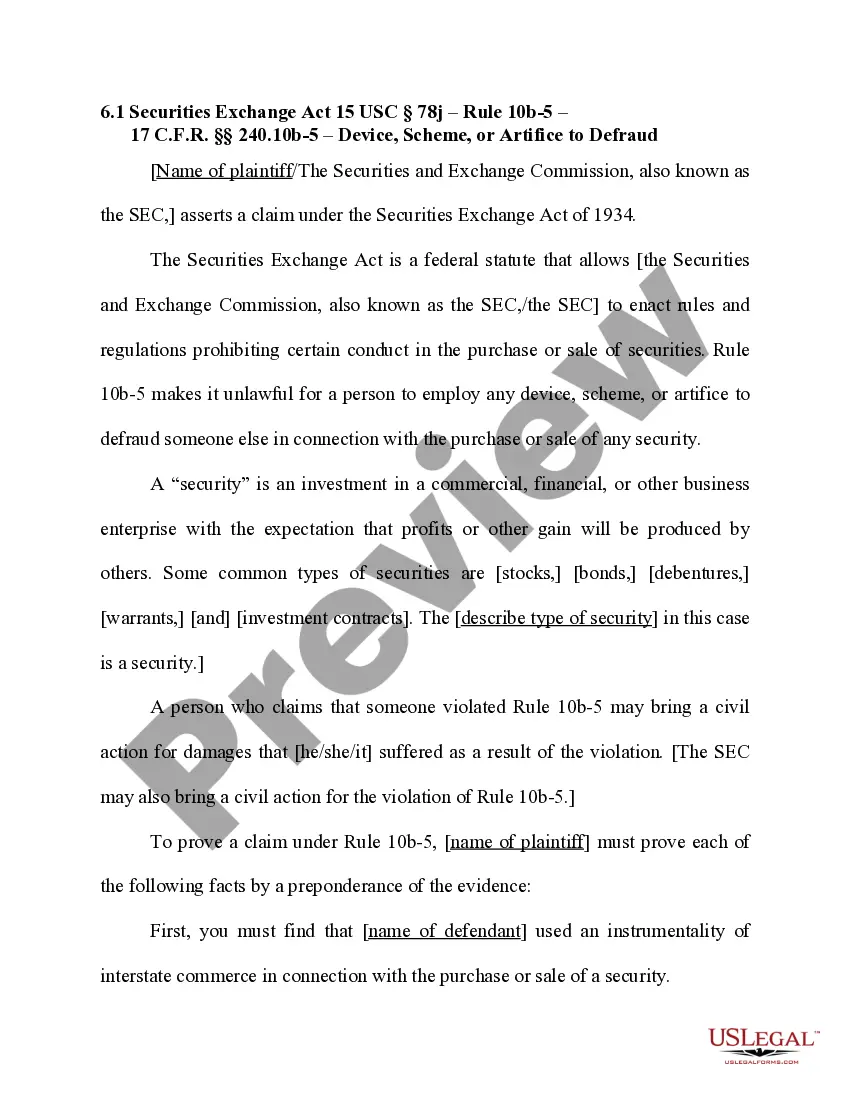
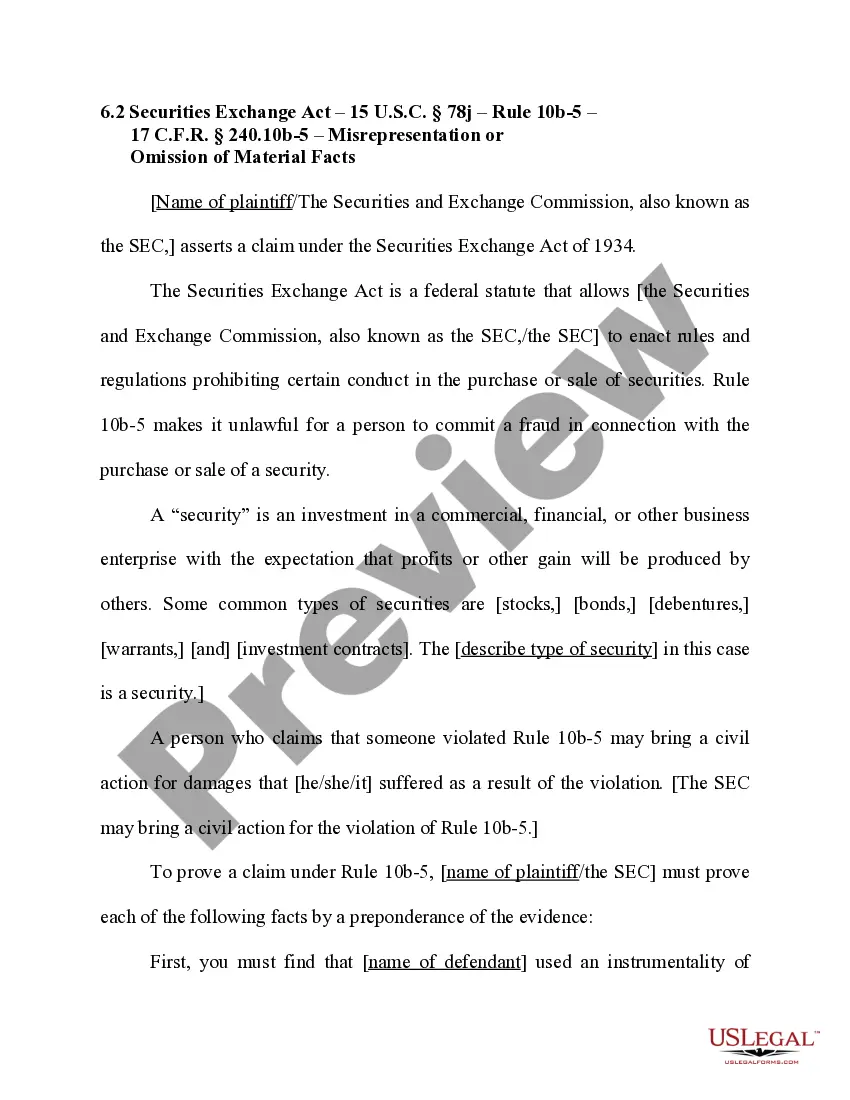
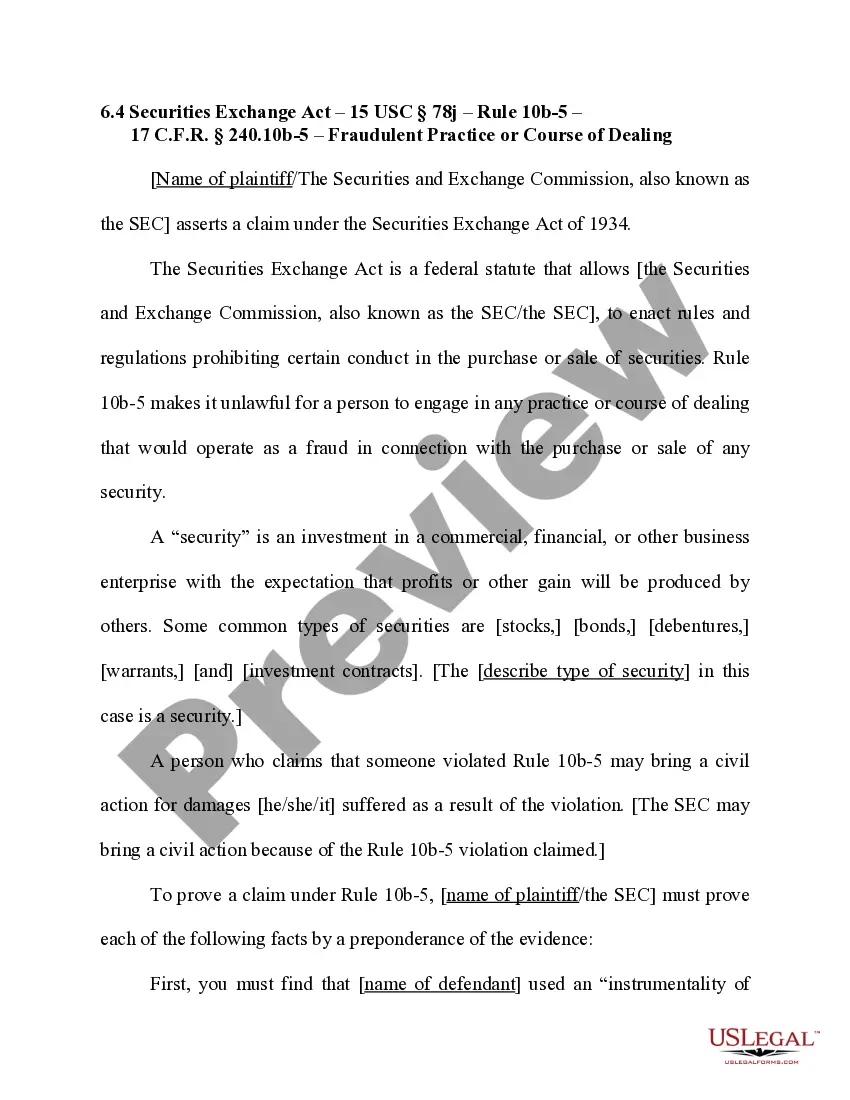
The Securities Exchange Act - Rule 10b-5 - Insider Trading SEC Version is a legal document used in cases of alleged insider trading. This form outlines the specific legal framework under the Securities Exchange Act of 1934 and details the actions deemed unlawful, such as employing deceitful methods during the buying or selling of securities based on nonpublic information. It is designed to ensure transparency and fairness in securities trading, setting it apart from other legal forms related to financial regulations.
Key parts of this document
- Claim assertions from the Securities and Exchange Commission (SEC) regarding insider trading.
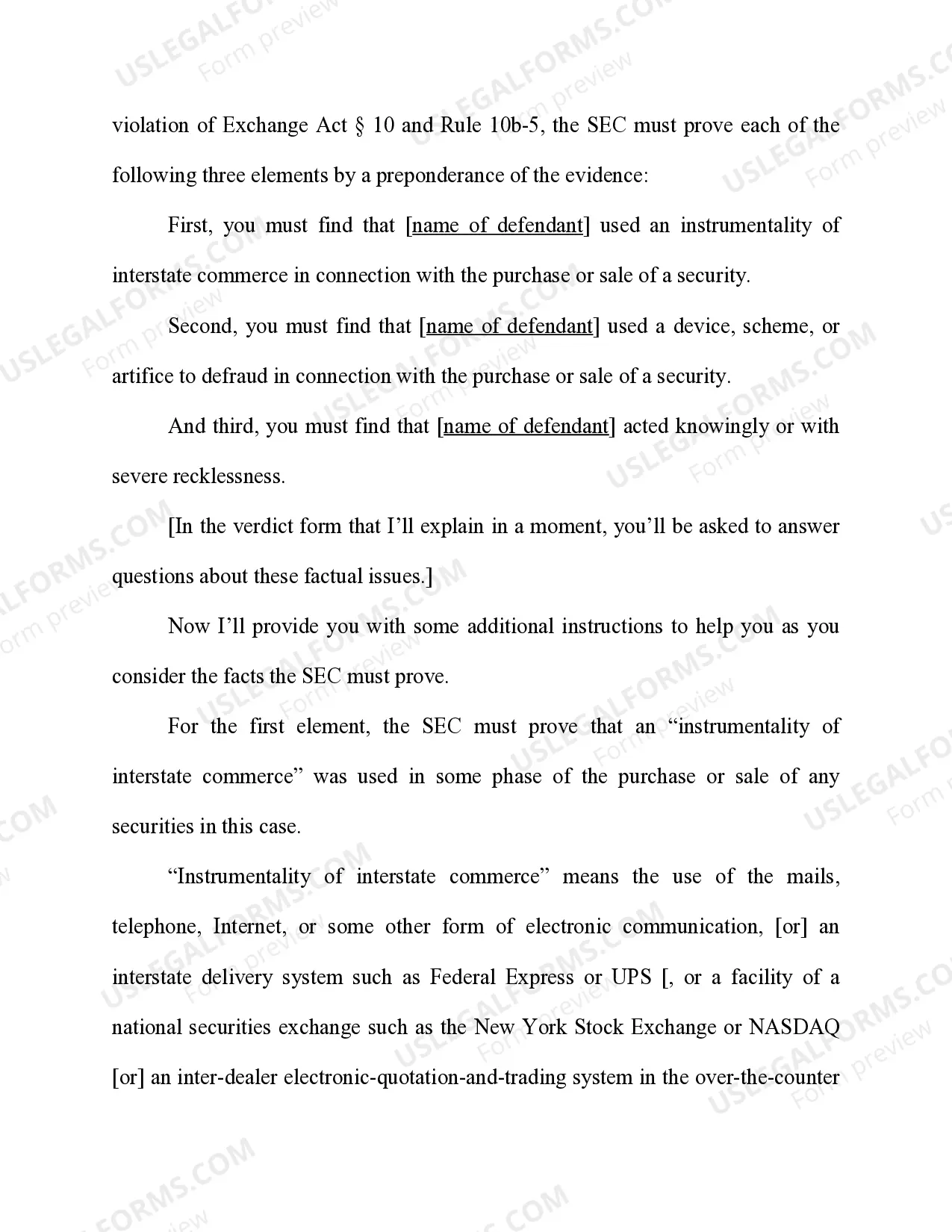
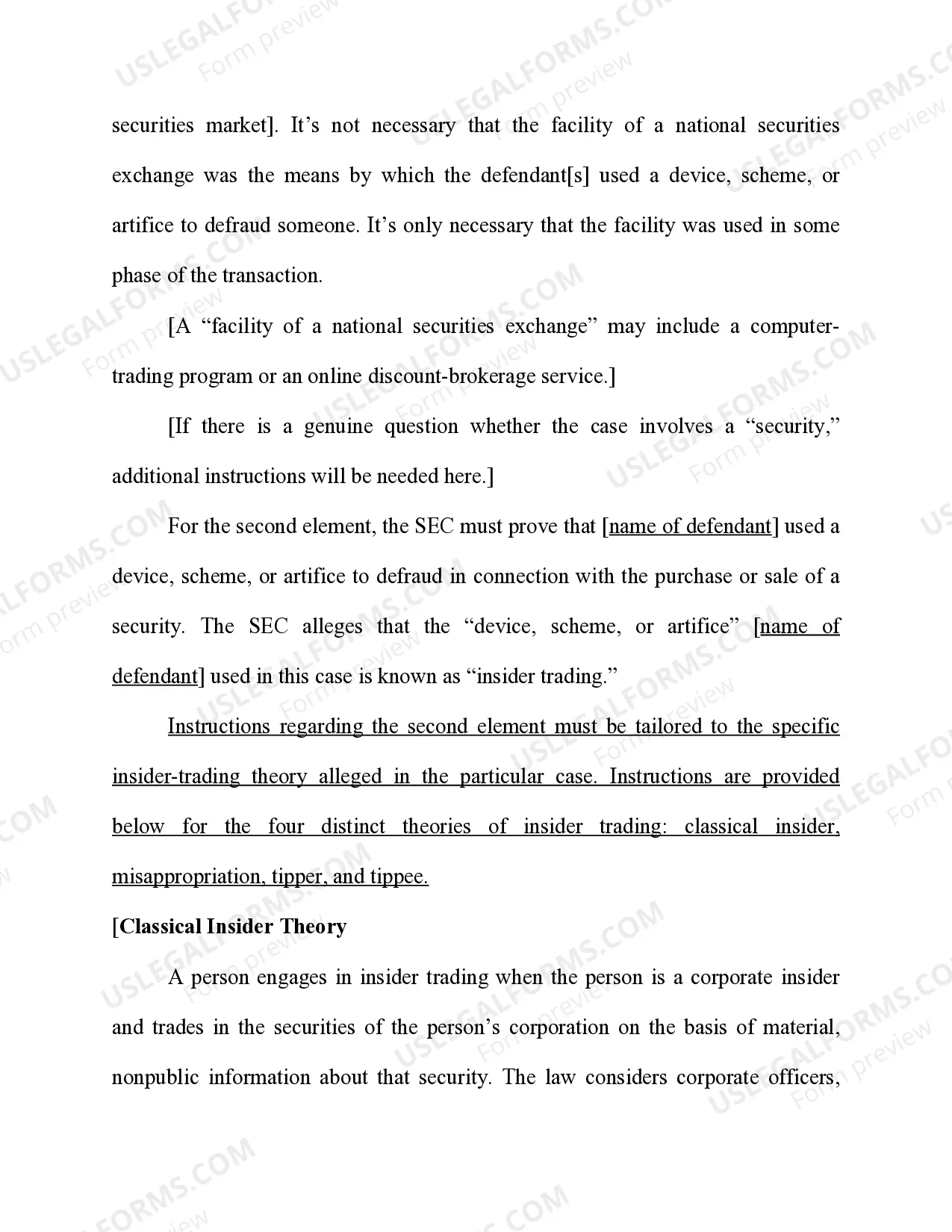
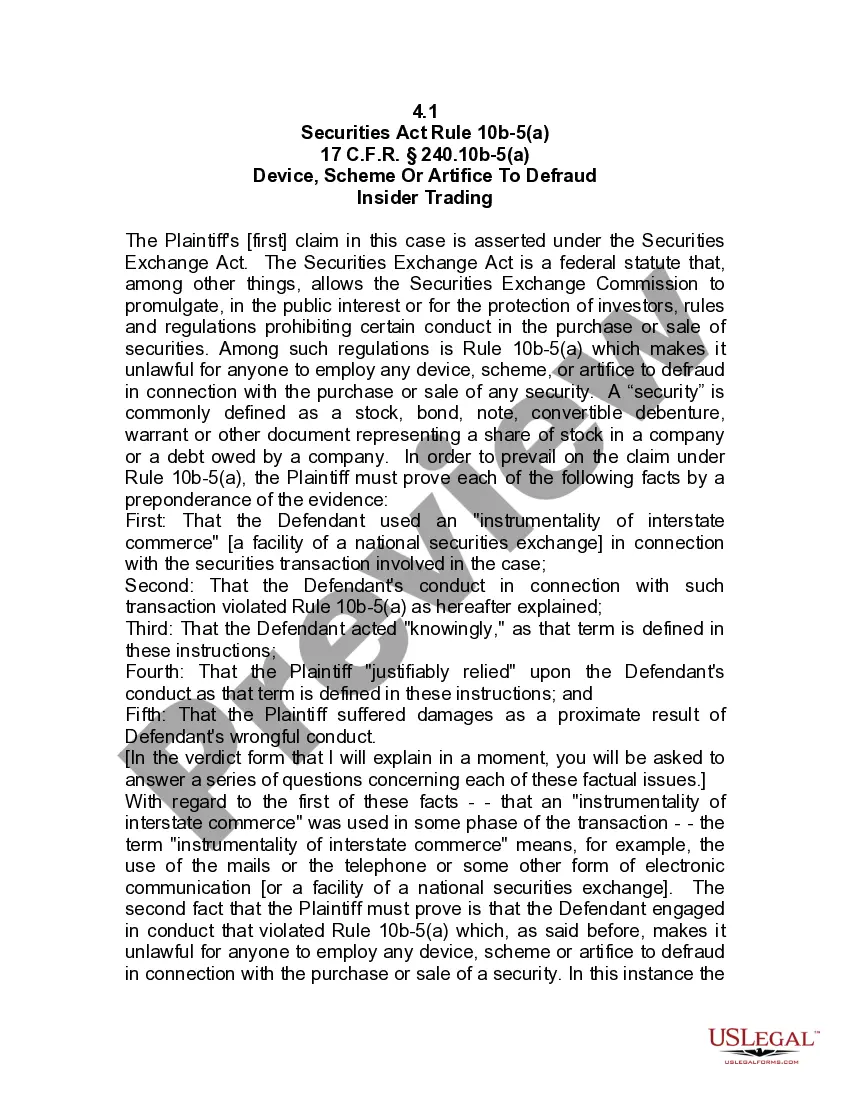
- Elements the SEC must prove to establish a violation of the law, including the use of an instrumentality of interstate commerce.
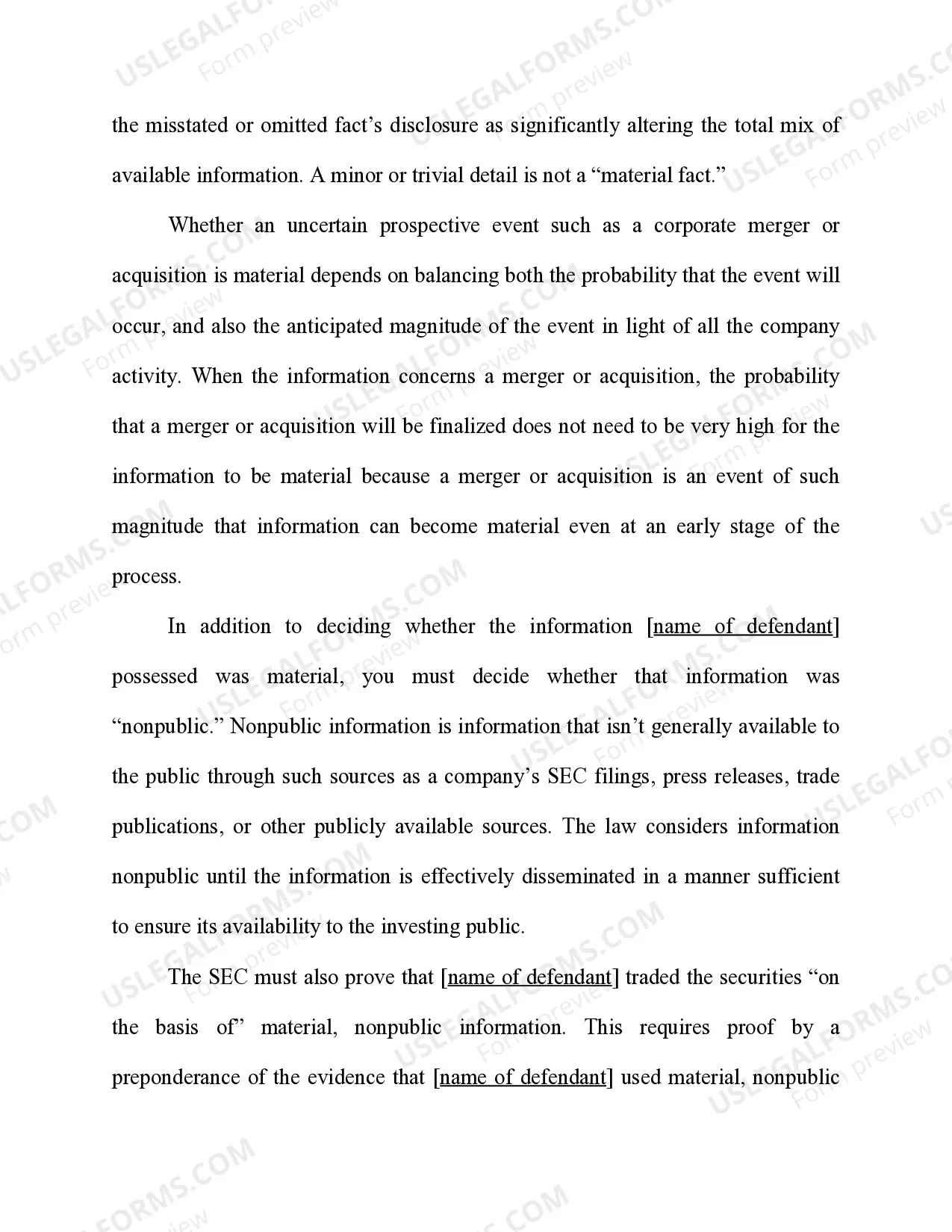
- Definitions of key terms such as "material," "nonpublic," and types of securities involved.
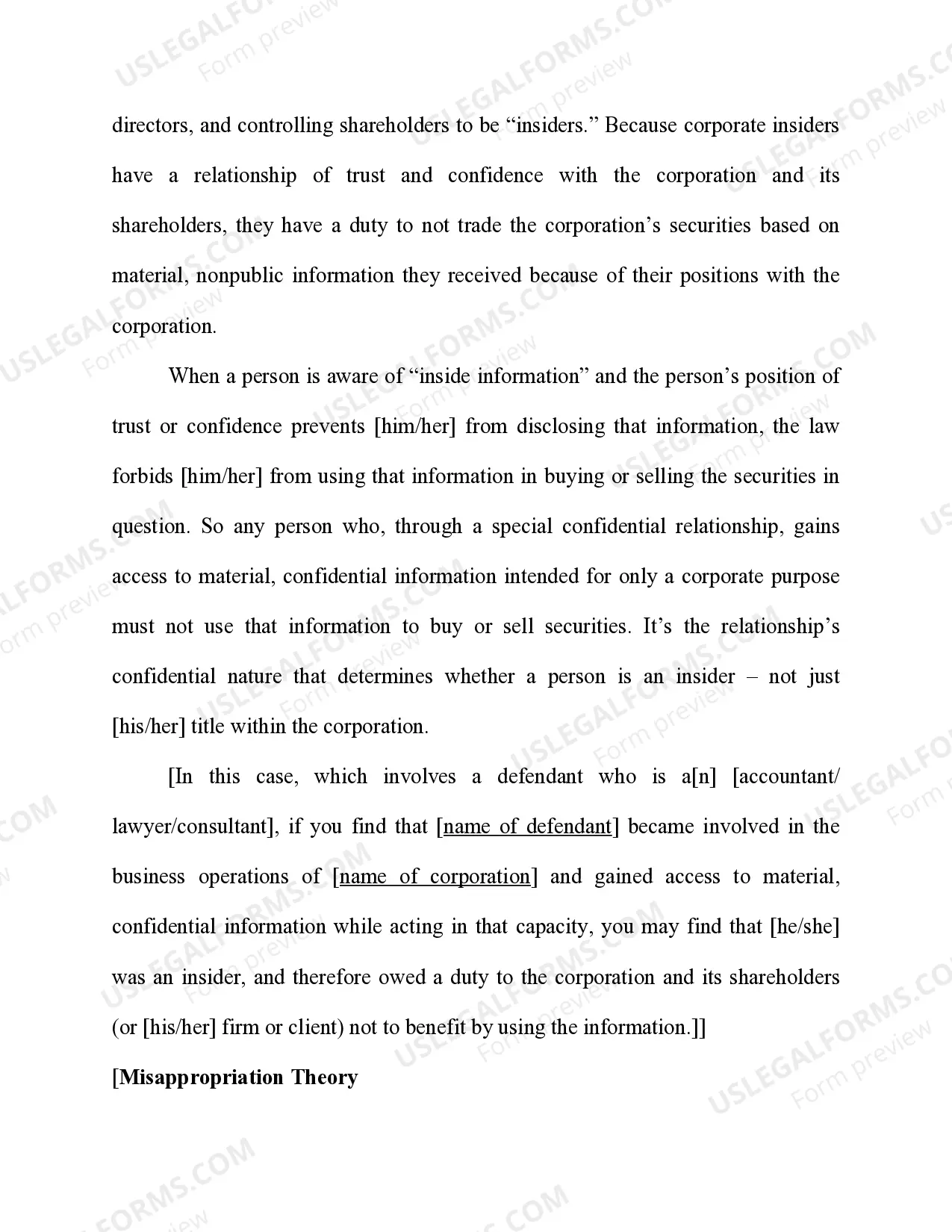
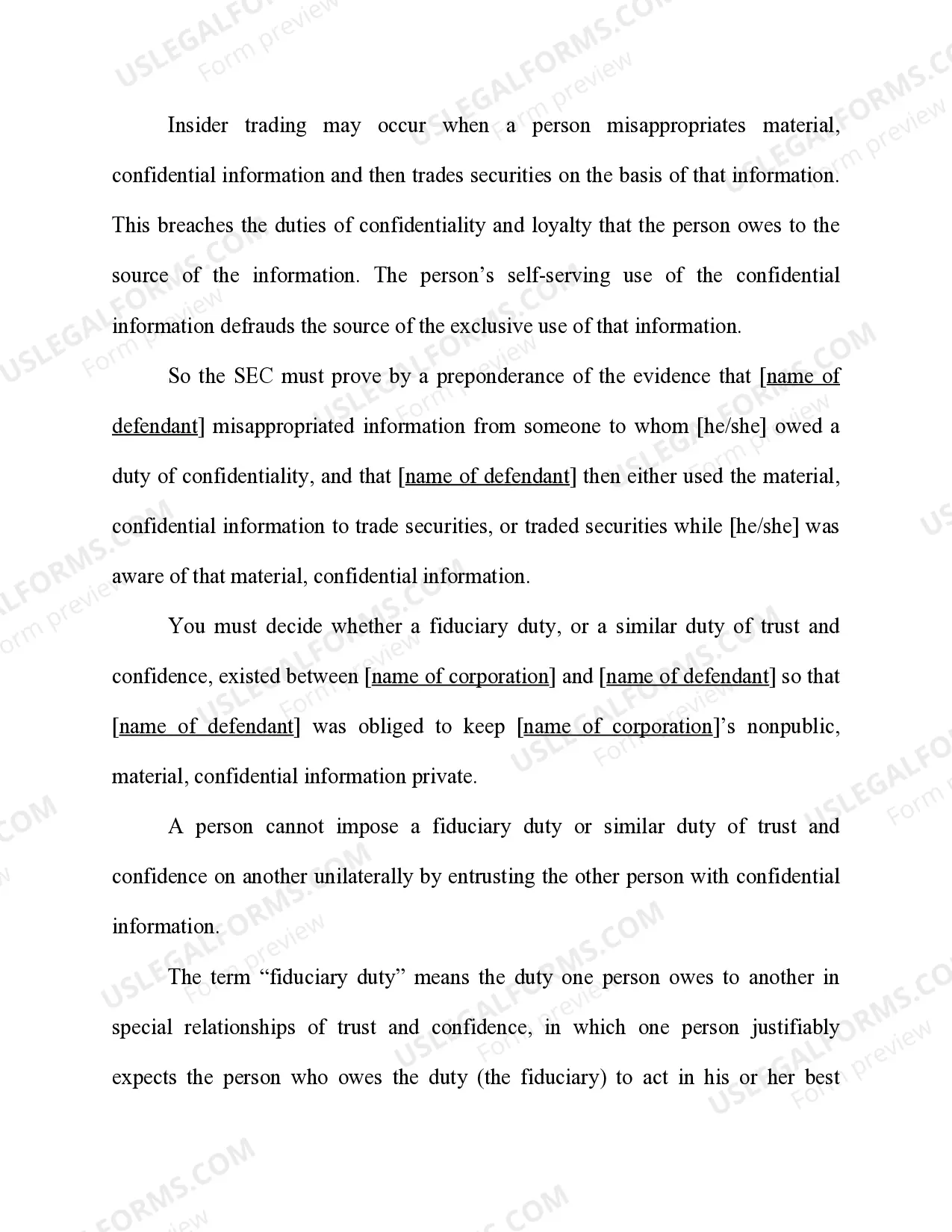
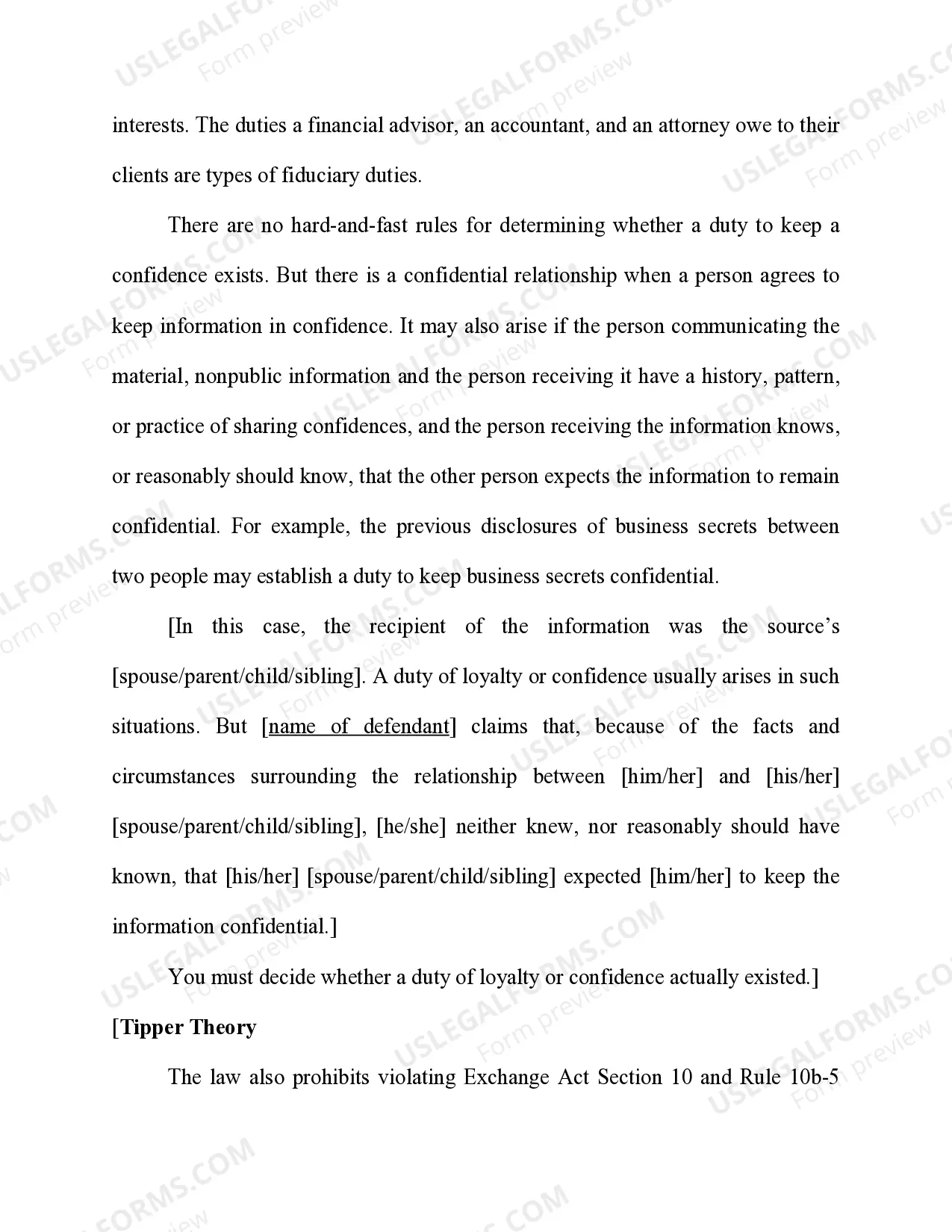
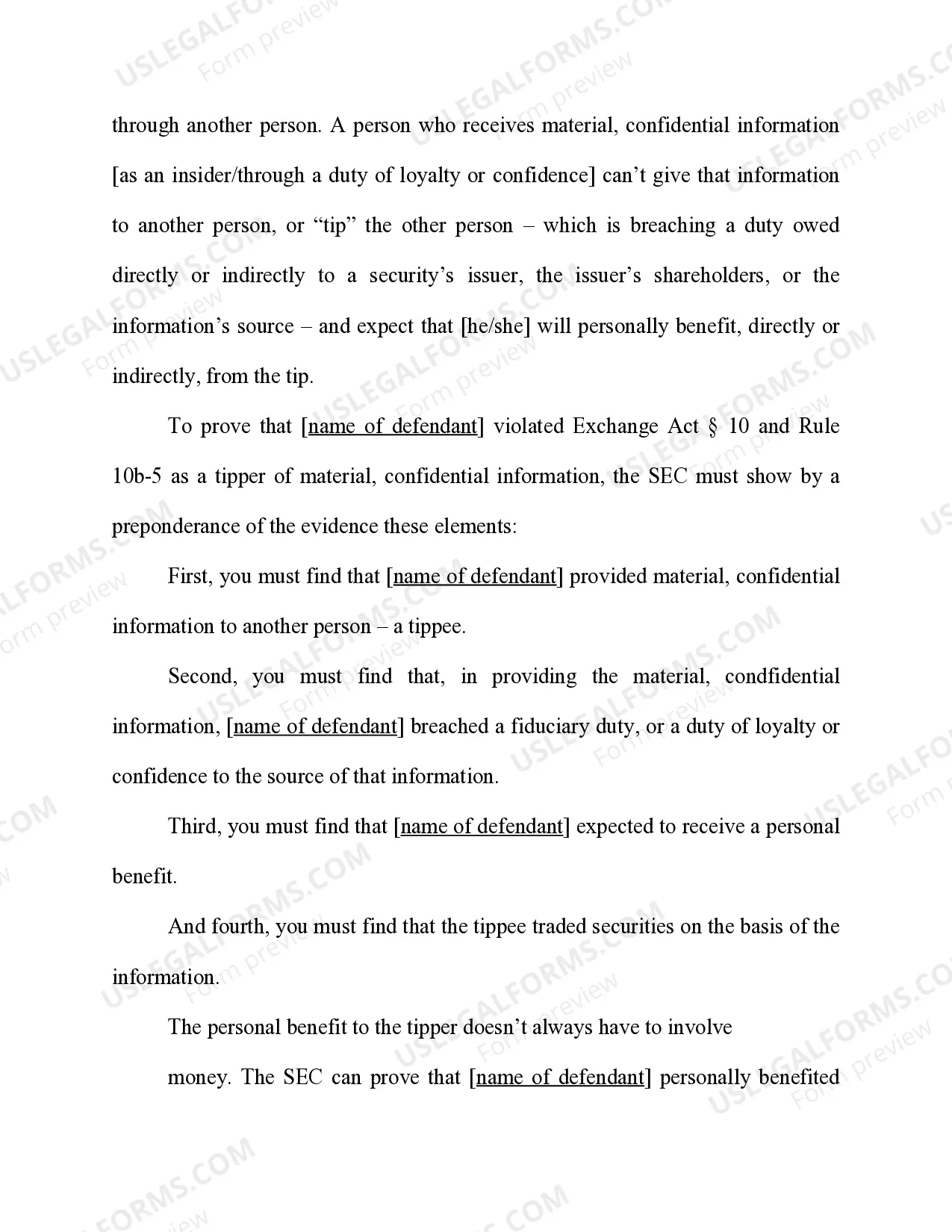
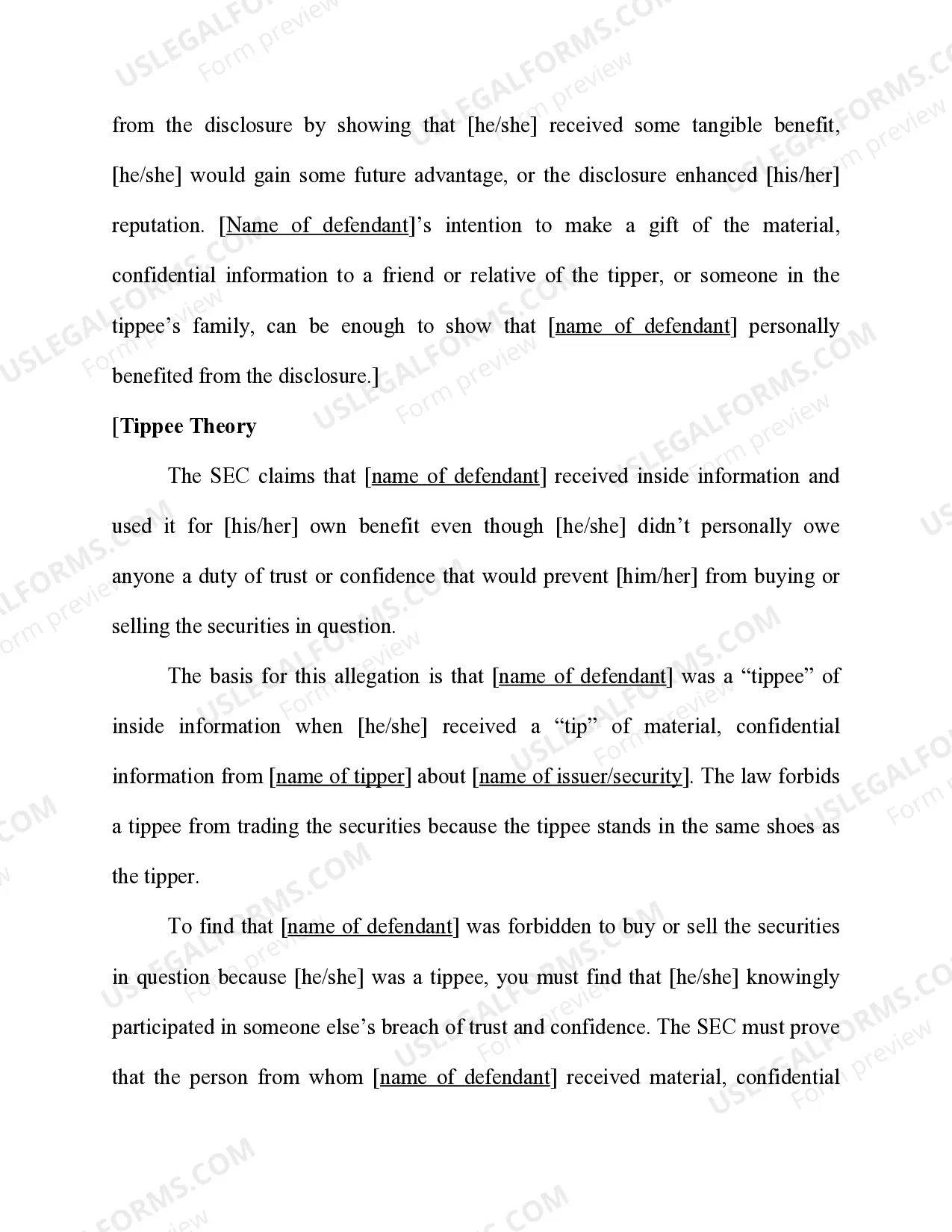
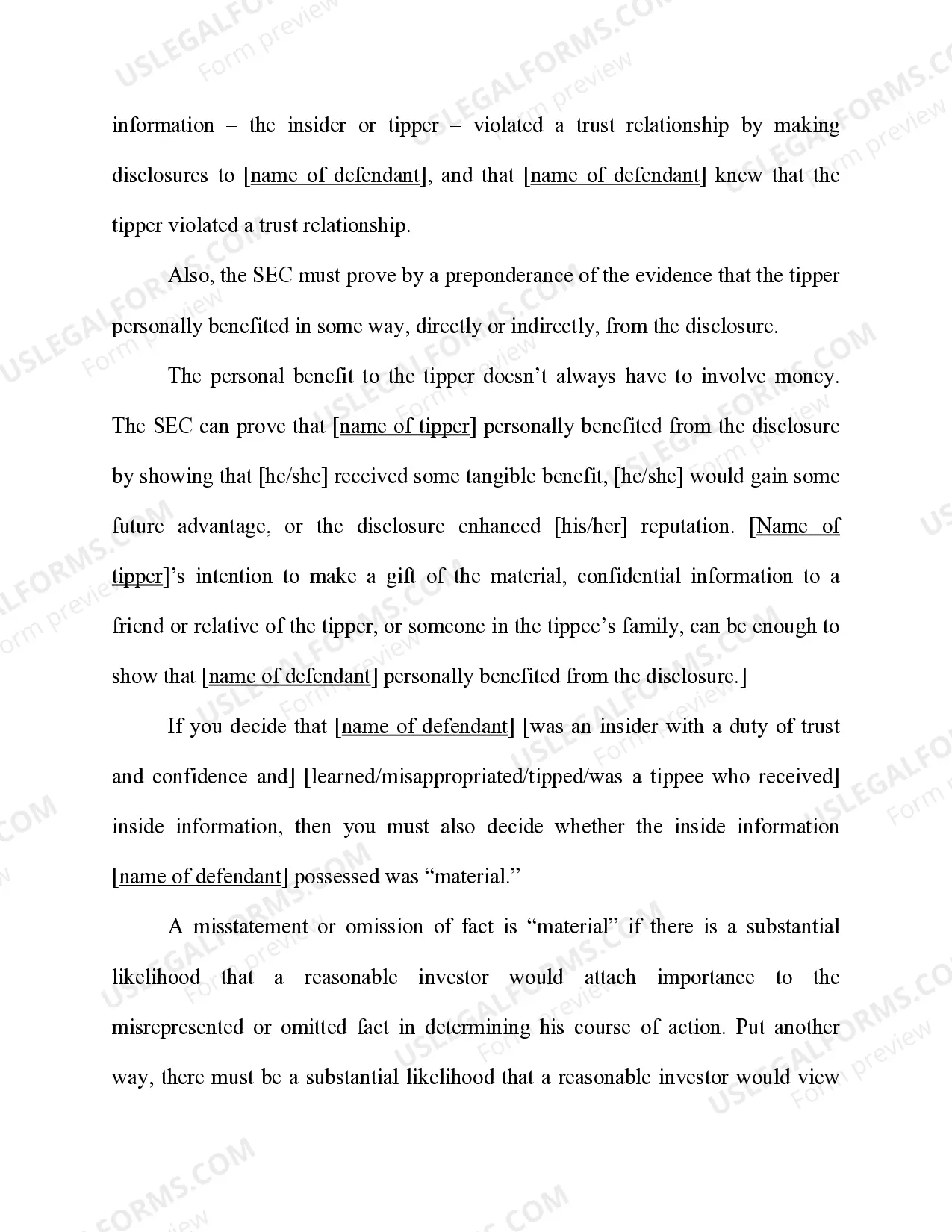
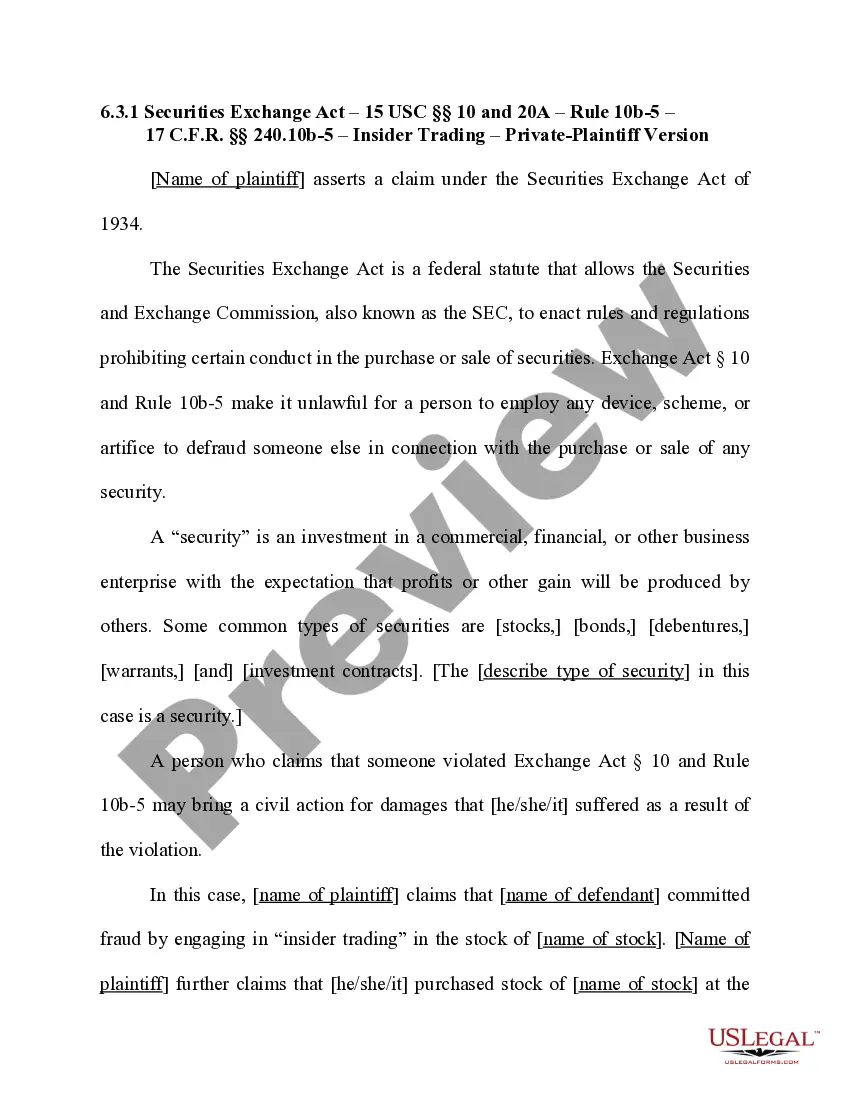
- Various theories of insider trading, including classical insider, misappropriation, tipper, and tippee theories.
- Special interrogatories for the jury related to the allegations and findings about the defendant.

Common use cases
This form is commonly used during legal proceedings related to allegations of insider trading. Legal professionals use it when representing defendants accused of using confidential information unlawfully in trading securities. It is essential for establishing the legal context and requirements necessary for the SEC to prove its case in court.
Who can use this document
- Legal attorneys handling securities fraud cases.
- Corporate compliance officers ensuring adherence to securities laws.
- Individuals or entities accused of insider trading who need to understand the legal allegations against them.
- Investors seeking knowledge about the legal framework governing securities trading.
How to prepare this document
- Identify the defendant involved in the insider trading case.
- Clearly define the type of security that is the subject of the alleged insider trading.
- State the specific actions taken by the defendant that constitute a violation of the SEC's rules.
- Provide evidence or statements supporting claims of nonpublic information being used in securities trading.
- Fill in any special interrogatories as required to clarify the jury's understanding of the case.
Notarization requirements for this form
This form usually doesn’t need to be notarized. However, local laws or specific transactions may require it. Our online notarization service, powered by Notarize, lets you complete it remotely through a secure video session, available 24/7.
Get your form ready online
Our built-in tools help you complete, sign, share, and store your documents in one place.
Make edits, fill in missing information, and update formatting in US Legal Forms—just like you would in MS Word.
Download a copy, print it, send it by email, or mail it via USPS—whatever works best for your next step.
Sign and collect signatures with our SignNow integration. Send to multiple recipients, set reminders, and more. Go Premium to unlock E-Sign.
If this form requires notarization, complete it online through a secure video call—no need to meet a notary in person or wait for an appointment.
We protect your documents and personal data by following strict security and privacy standards.

Make edits, fill in missing information, and update formatting in US Legal Forms—just like you would in MS Word.

Download a copy, print it, send it by email, or mail it via USPS—whatever works best for your next step.

Sign and collect signatures with our SignNow integration. Send to multiple recipients, set reminders, and more. Go Premium to unlock E-Sign.

If this form requires notarization, complete it online through a secure video call—no need to meet a notary in person or wait for an appointment.

We protect your documents and personal data by following strict security and privacy standards.
Common mistakes to avoid
- Failing to provide clear definitions of "material" and "nonpublic" information.
- Neglecting to support allegations with adequate evidence of wrongdoing.
- Overlooking specific elements that must be proven, such as the defendant's use of an instrumentality of interstate commerce.
- Using vague language that does not accurately detail the nature of the alleged insider trading.
Why use this form online
- Convenience of accessing and downloading the form anytime, anywhere.
- Editability allows for quick adjustments or updates as needed.
- Ensured accuracy through templates prepared by licensed attorneys.
- Time-saving, eliminating the need for in-person visits to legal offices.
Legal use & context
- The form is utilized in legal contexts surrounding alleged breaches of securities regulations.
- It is enforceable federally due to its basis in the Securities Exchange Act.
- Important for establishing proper legal proceedings against defendants in insider trading cases.
Looking for another form?

Form popularity
FAQ
SEC Rule 10b-5, states that it is illegal for any person to defraud or deceive someone, including through the misrepresentation of material information, with respect to the sale or purchase of a security.
SEC Rule 10b-5, states that it is illegal for any person to defraud or deceive someone, including through the misrepresentation of material information, with respect to the sale or purchase of a security.
The rule prohibits any act or omission resulting in fraud or deceit in connection with the purchase or sale of any security.
Section 10(b) of the Securities Exchange Act of 1934 (as amended) (Exchange Act), which prohibits fraud in the purchase or sale of securities (15 U.S.C. § 78j(b)). Securities and Exchange Commission (SEC) Rule 10b-5, which contains the general, catch-all, anti-fraud provision of the federal securities laws (17 C.F.R.
§ 240.10b5-1 Trading ?on the basis of? material nonpublic information in insider trading cases. (a) Manipulative or deceptive devices. The ?manipulative or deceptive devices or contrivances? prohibited by Section 10(b) of the Act (15 U.S.C.
One of the major goals of Section 10(b) of the Securities Exchange Act of 1934 and SEC Rule 10b-5 is: to prevent insider trading. In response to problems created by SEC Rule 10b-5, especially concerning companies that issue optimistic financial forecasts, Congress enacted: the Private Securities Litigation Reform Act.
SEA Rule 10b-17 prescribes information that must be included in the notice, including, but not limited to: the title of the security; date of declaration; record date; payment or distribution date; for cash distributions, the amount to be paid per share; for distribution of securities, generally the amount of the
Section 10(b) of the Securities Exchange Act of 1934 (as amended) (Exchange Act), which prohibits fraud in the purchase or sale of securities (15 U.S.C. § 78j(b)). Securities and Exchange Commission (SEC) Rule 10b-5, which contains the general, catch-all, anti-fraud provision of the federal securities laws (17 C.F.R.