Securities Exchange Act 15 USC Sec. 78j(b) - Rule 10b-5(a)
Understanding this form
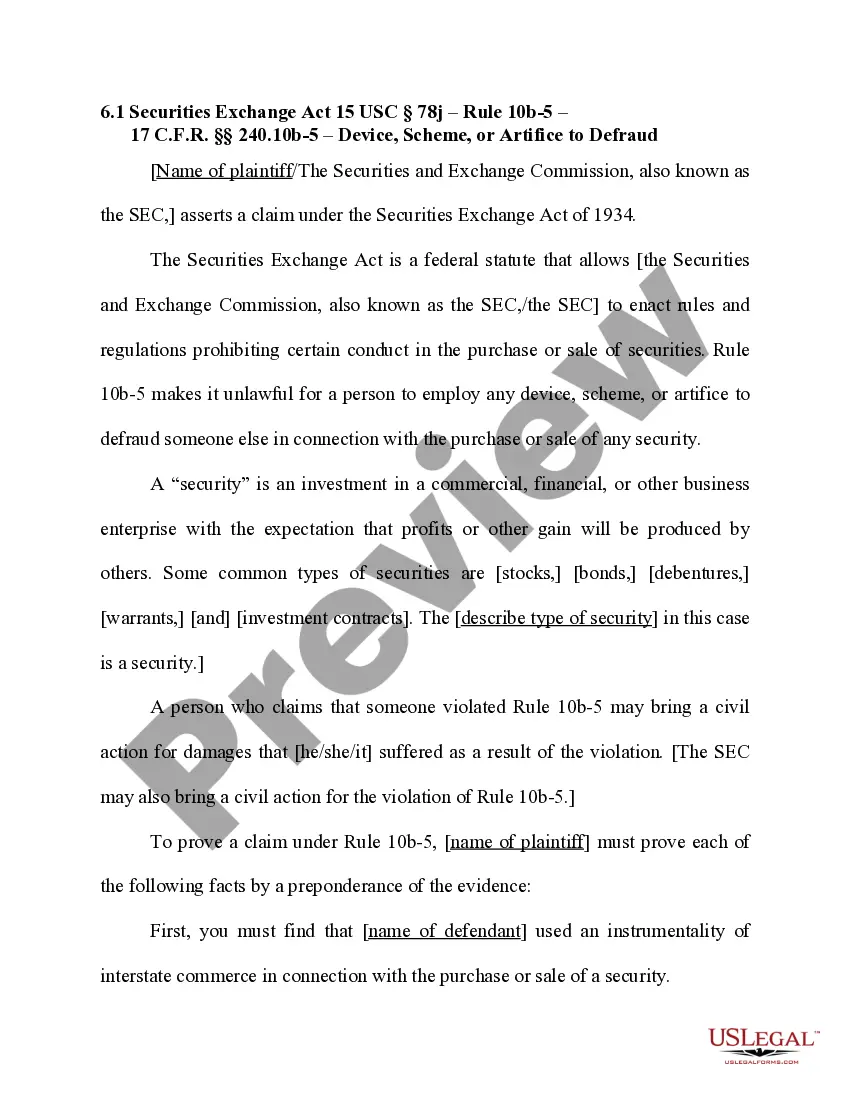
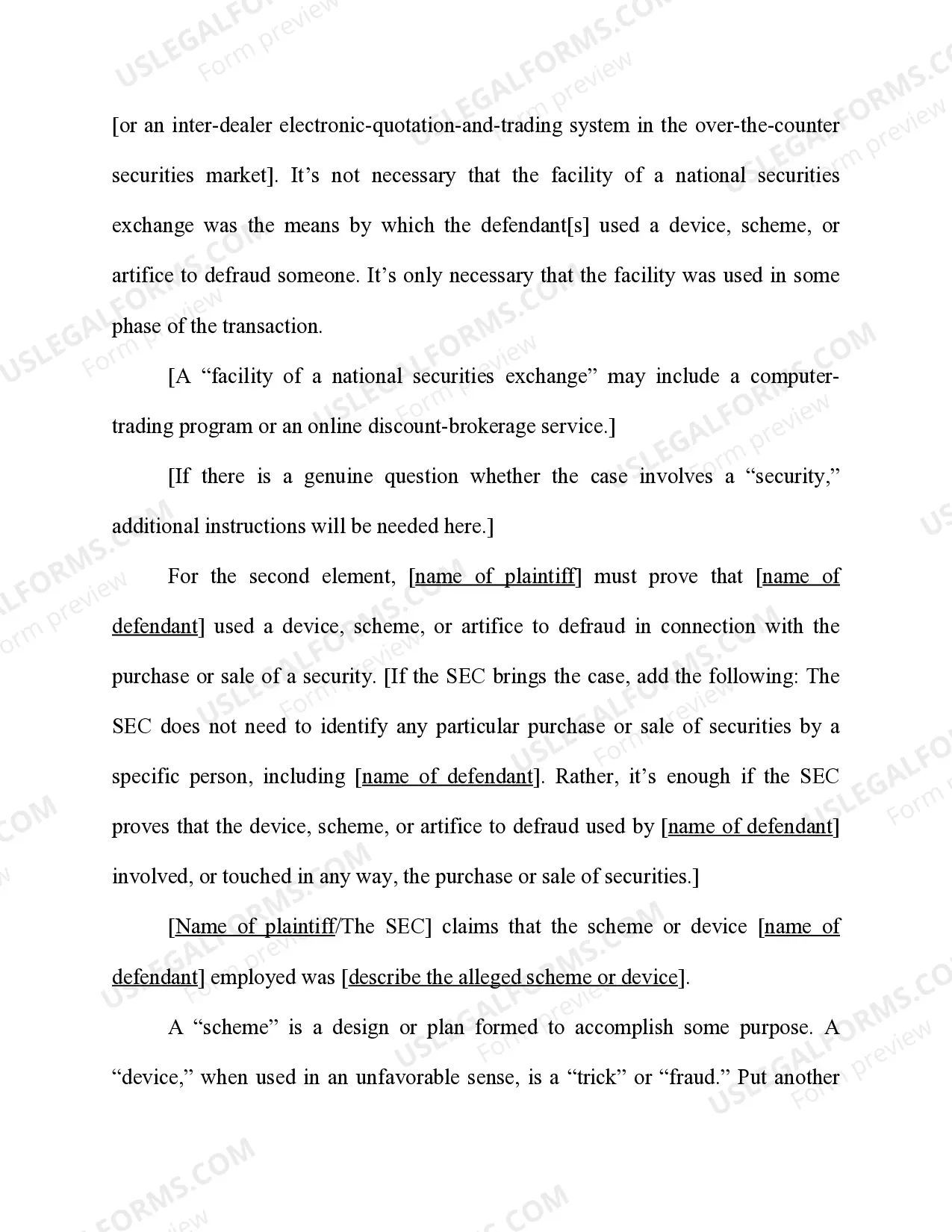
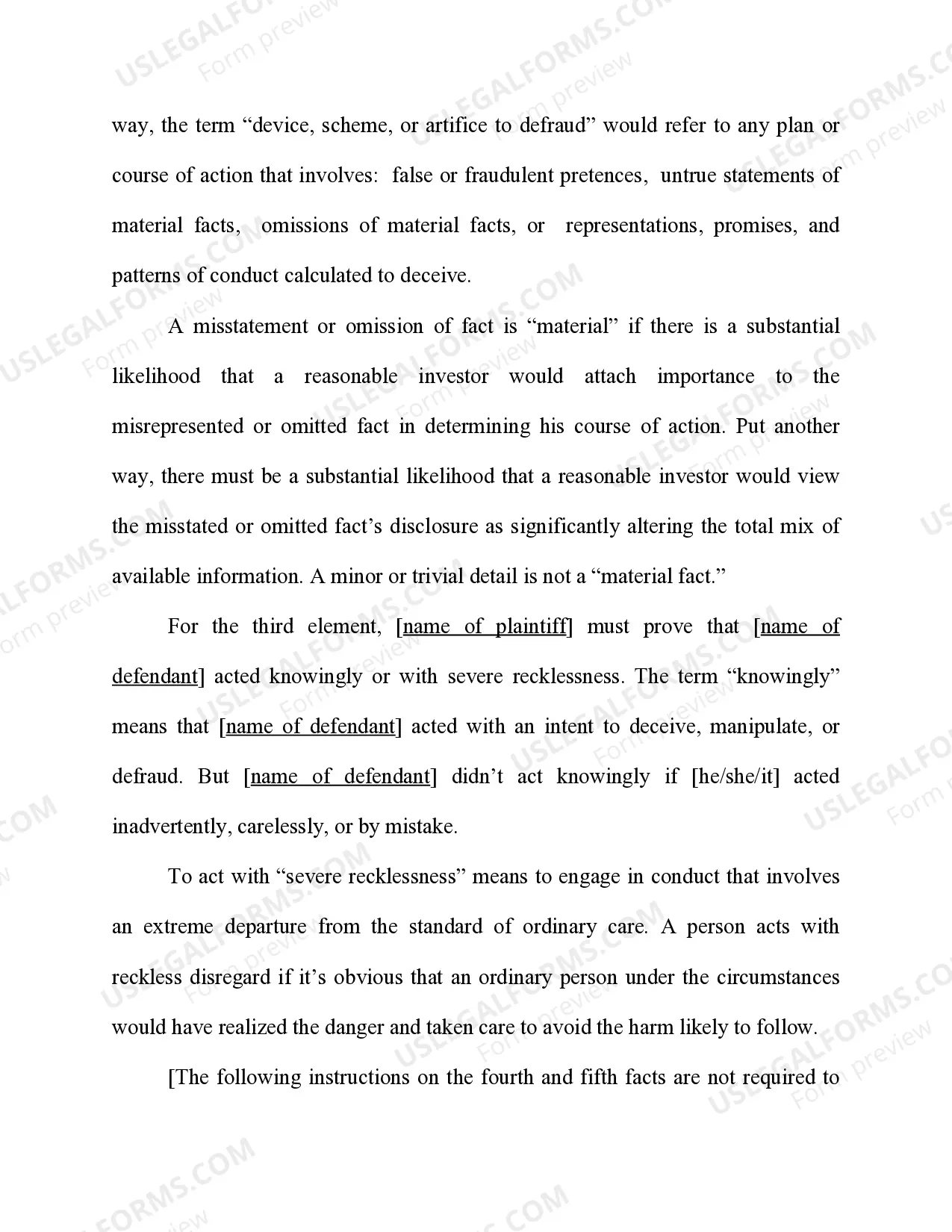
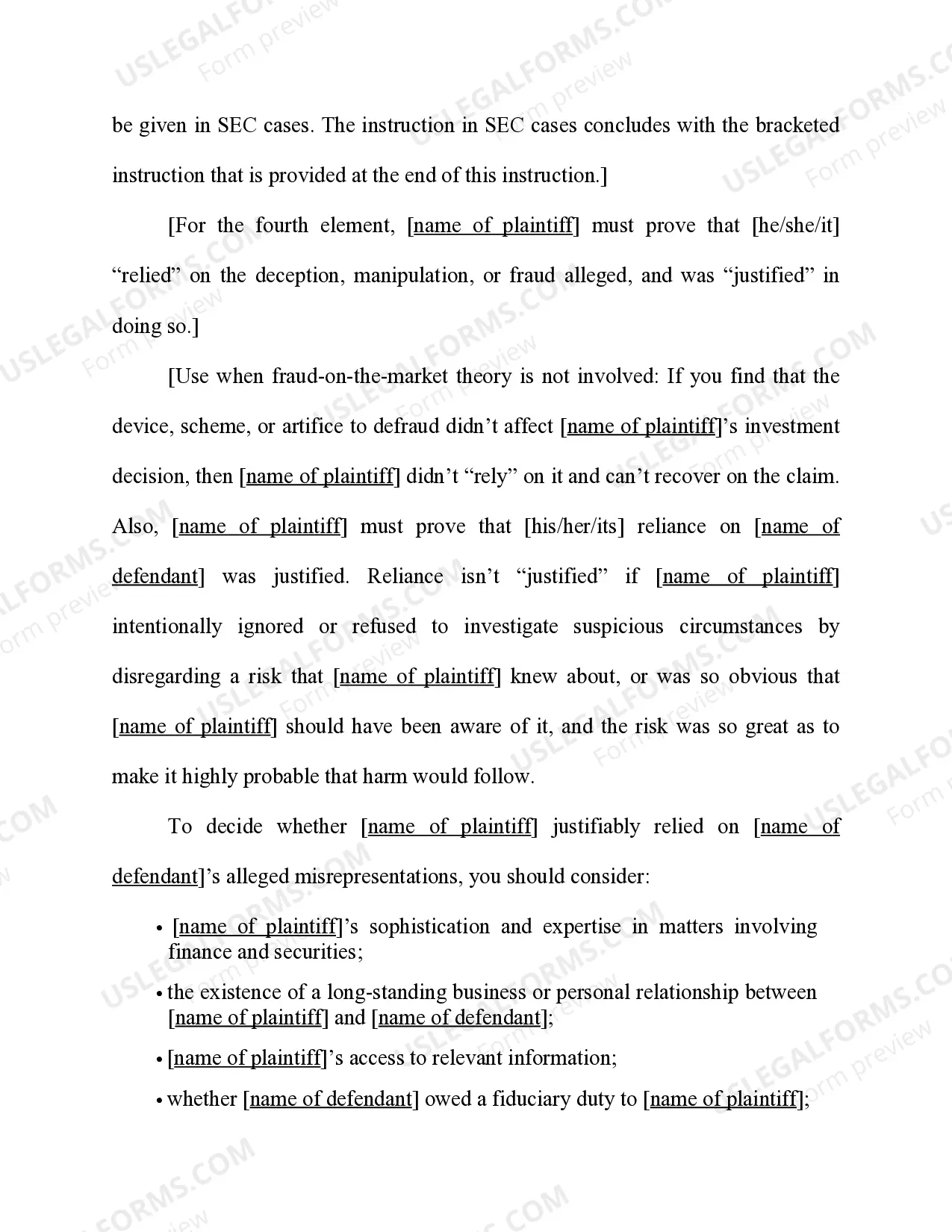
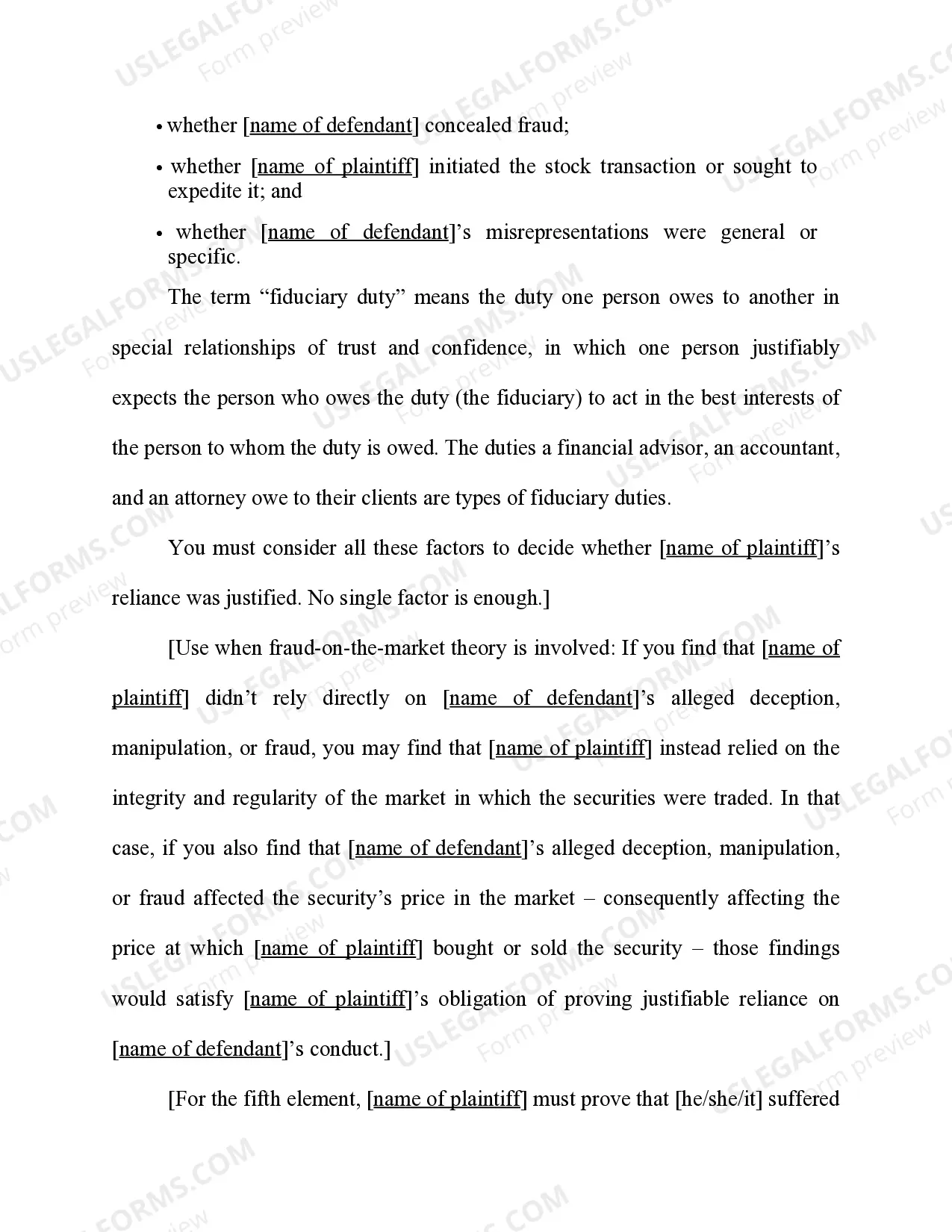
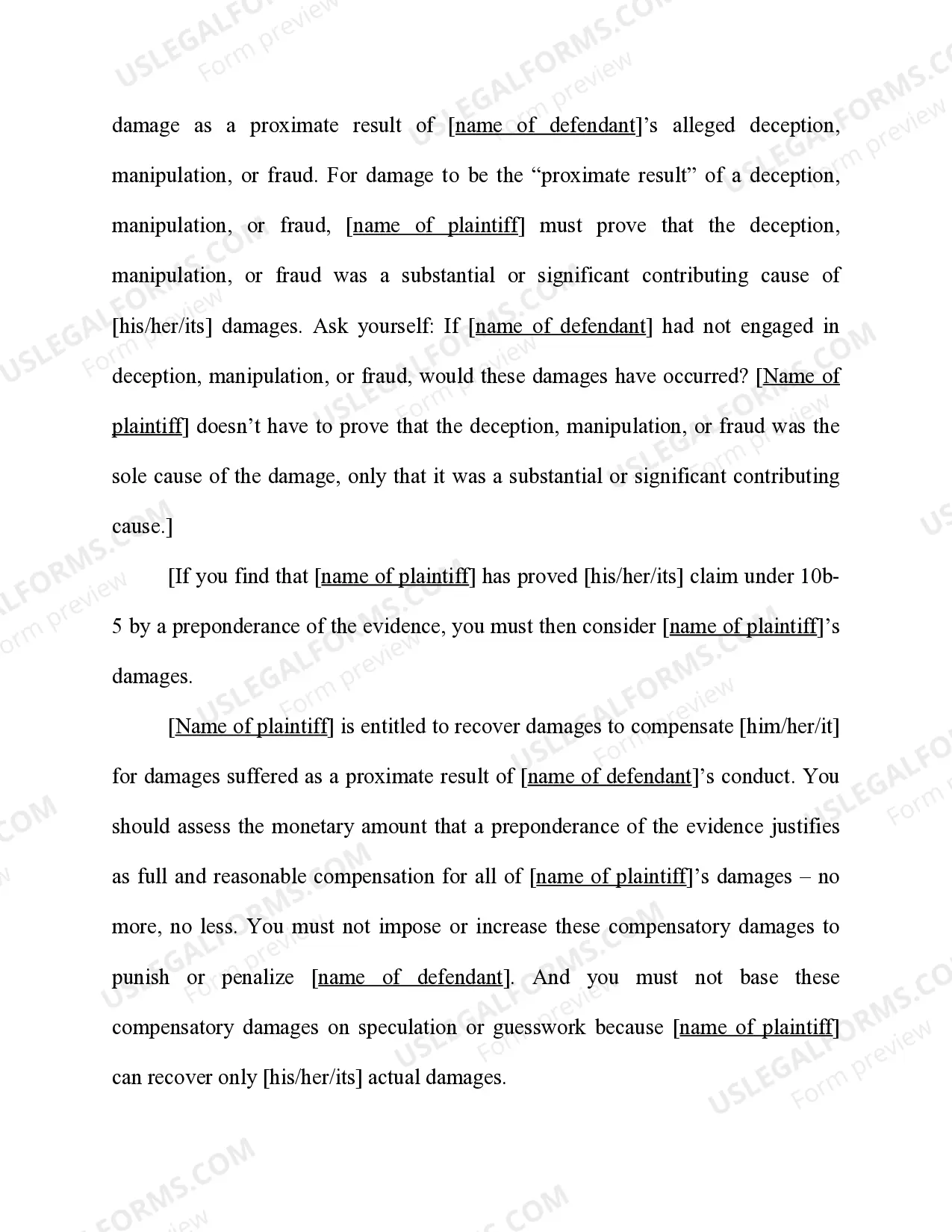
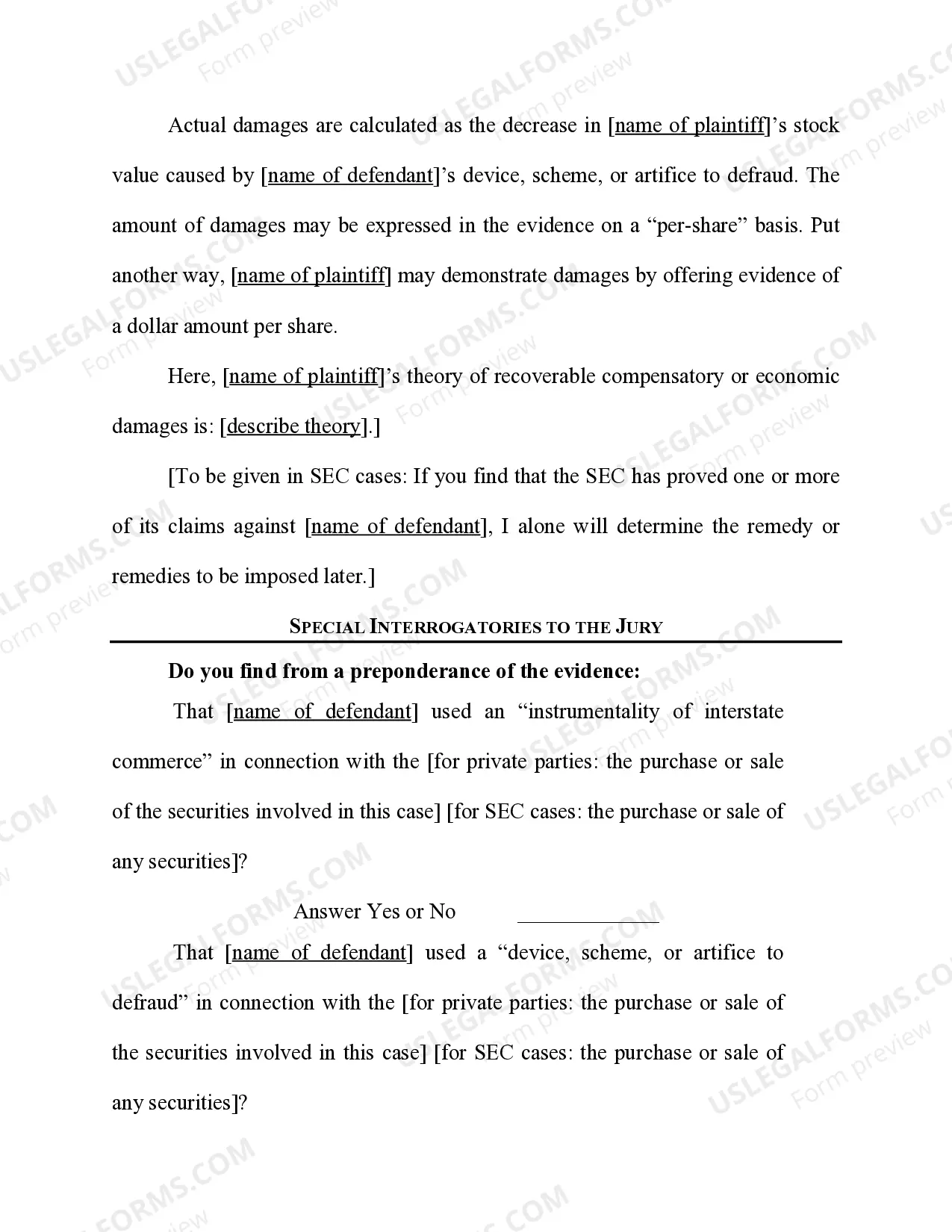
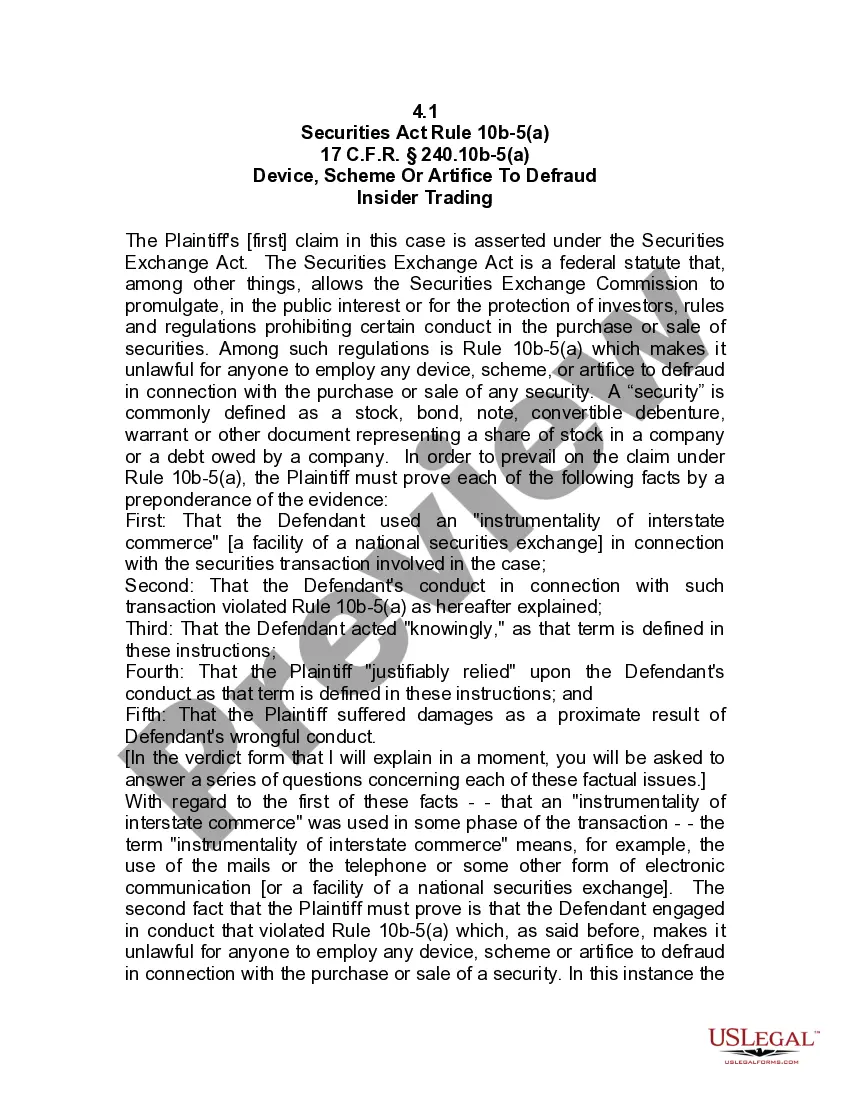
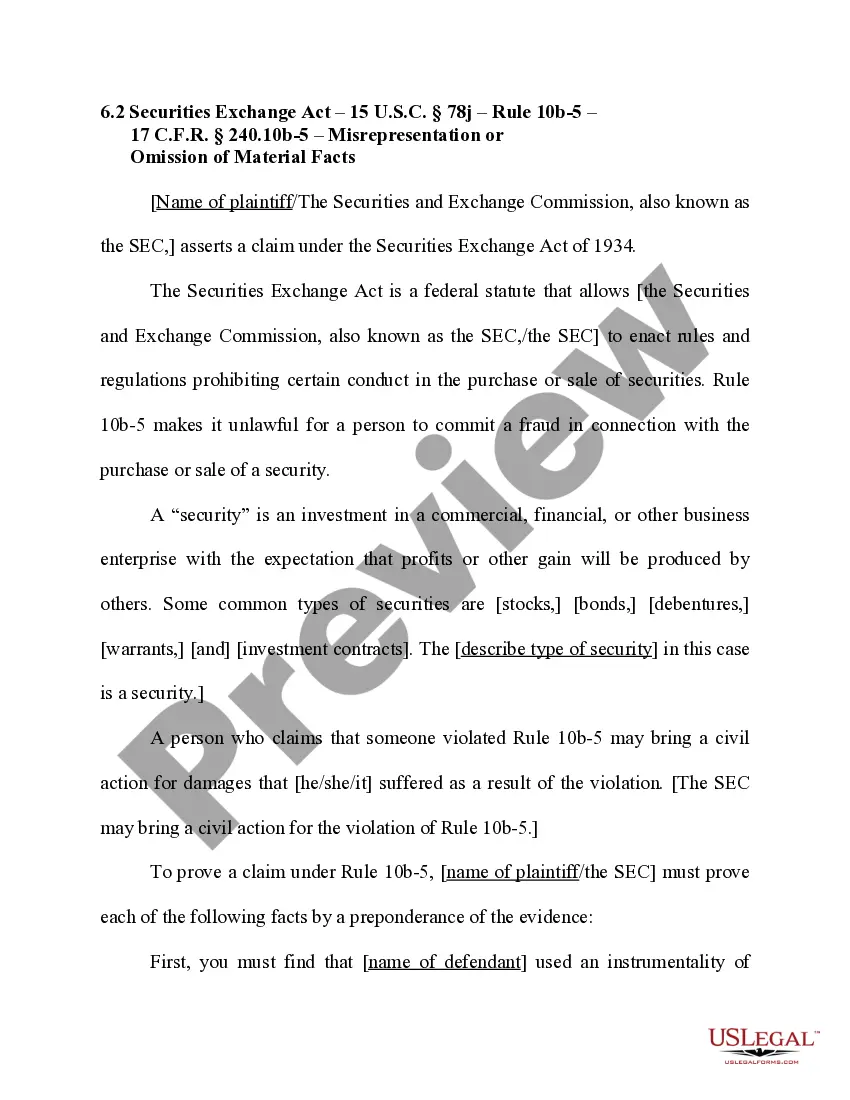
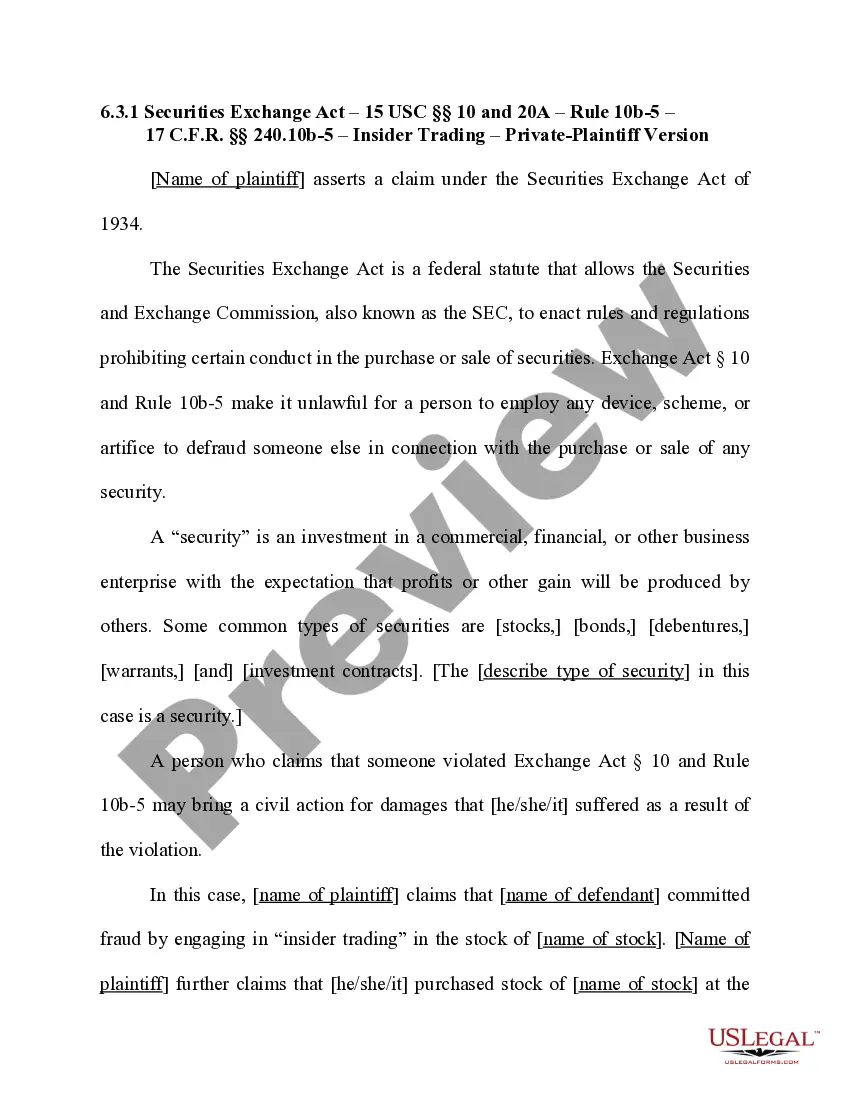
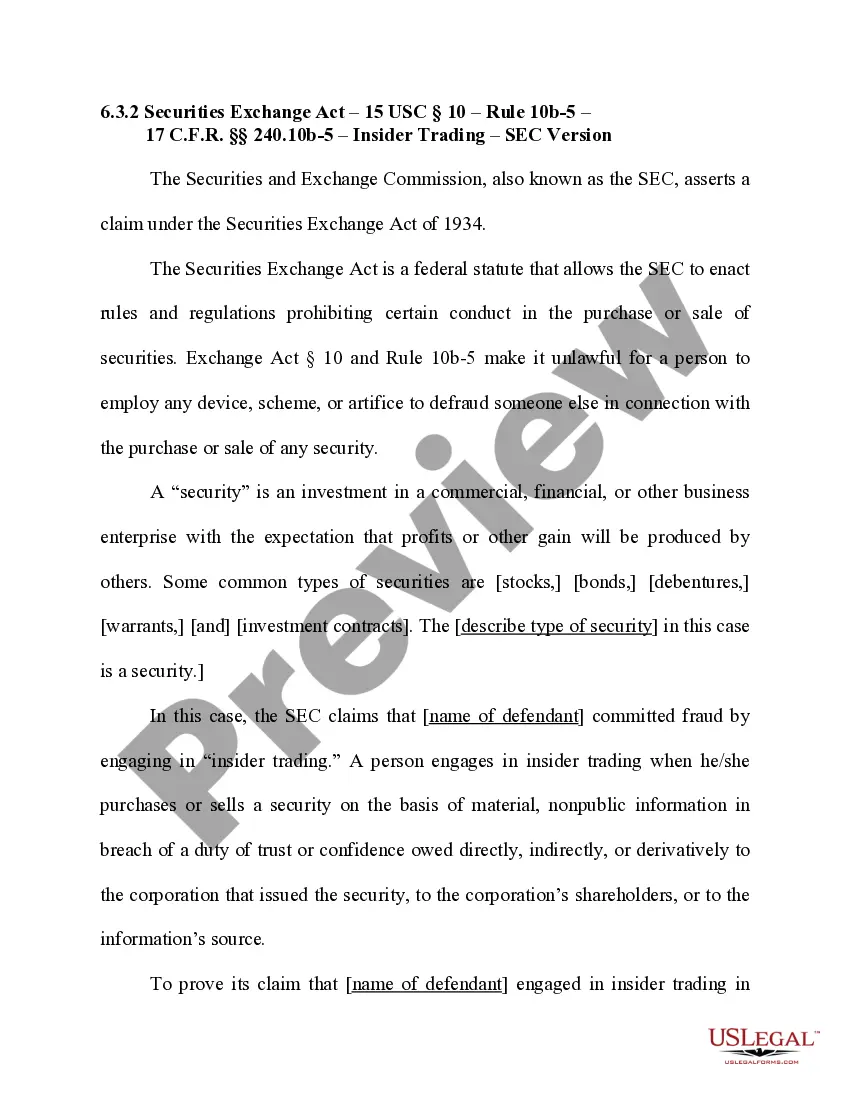
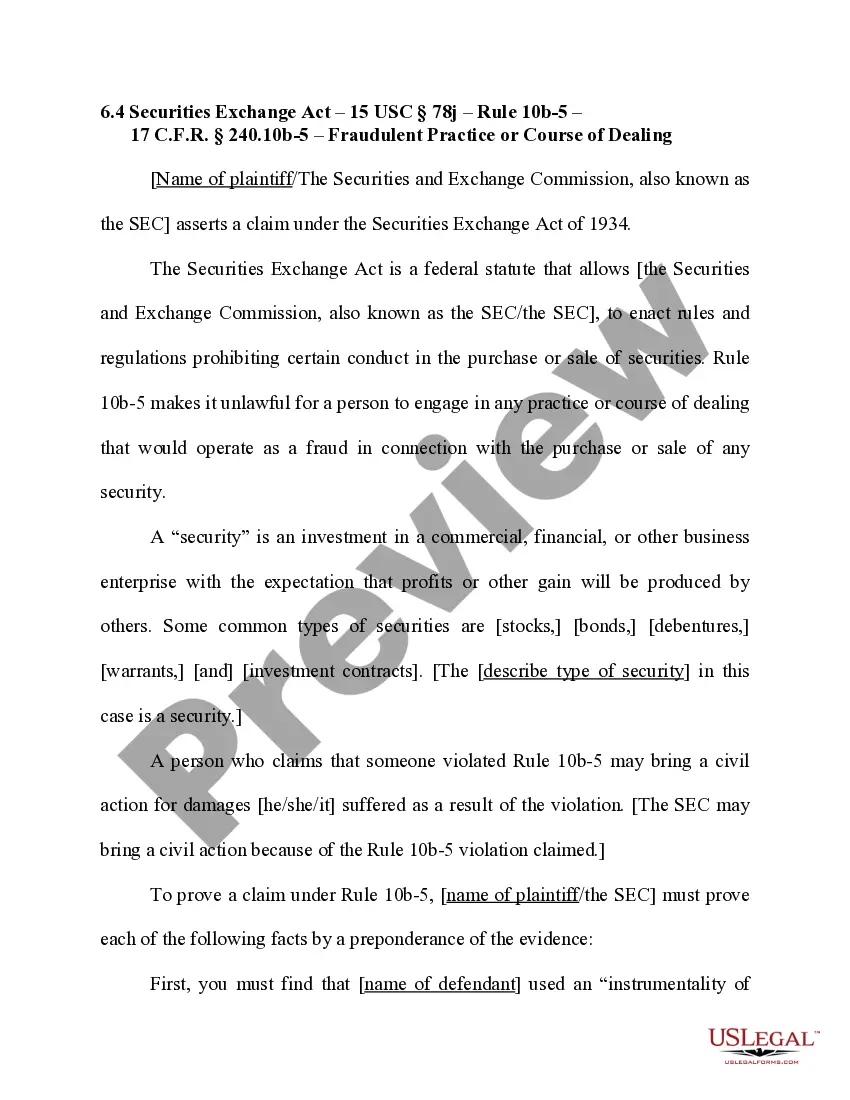
The Securities Exchange Act 15 USC Sec. 78j(b) - Rule 10b-5(a) is a legal form used to assert claims of securities fraud. It provides a framework for civil actions against parties who engage in deceptive practices in the sale or purchase of securities. This form is essential for individuals or entities seeking to prove violations of the Securities Exchange Act, particularly under Rule 10b-5(a), unlike other forms that may focus on different aspects of securities law or regulatory compliance.
Main sections of this form
- Description of the claim under the Securities Exchange Act.
- Definition of a security and examples.
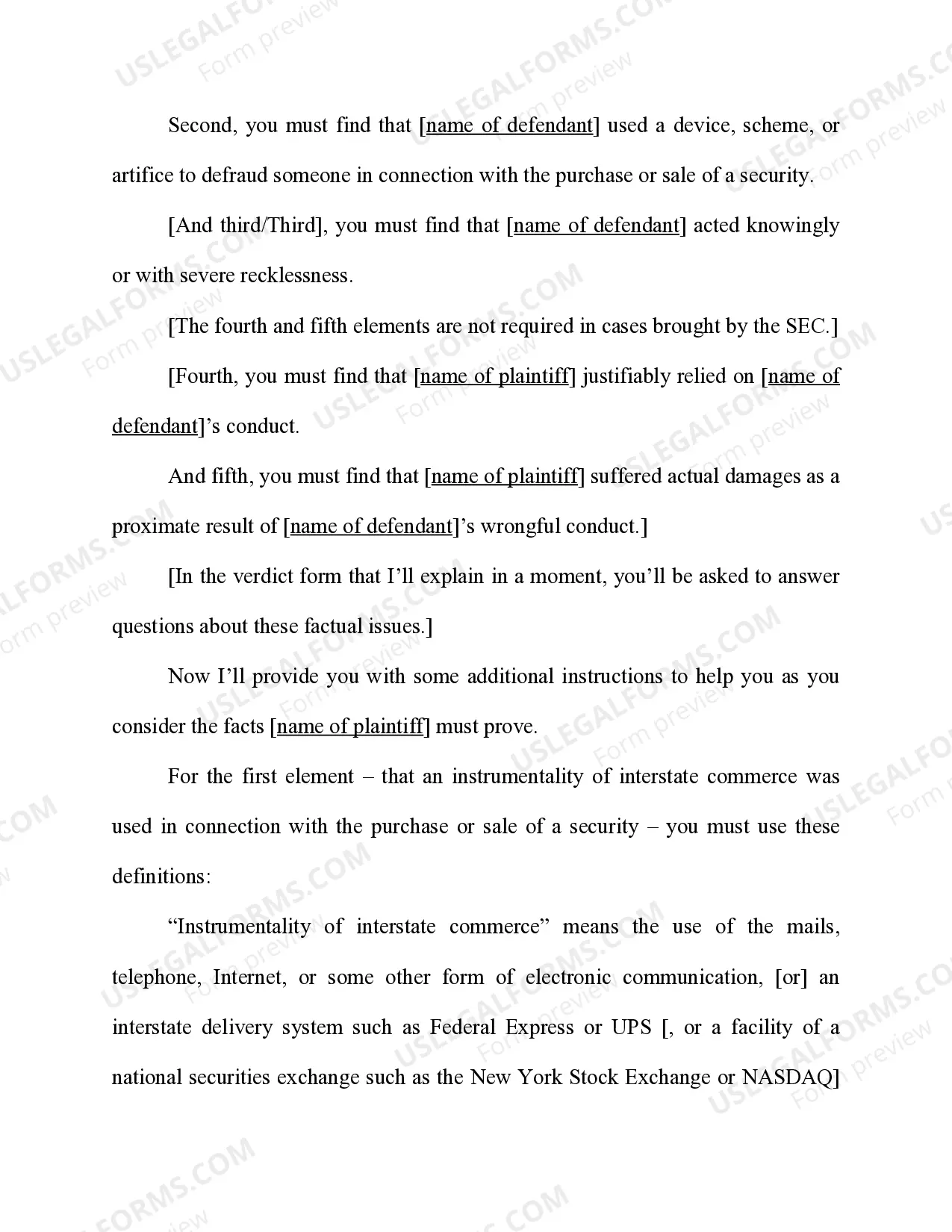
- Elements required to prove a Rule 10b-5 violation.
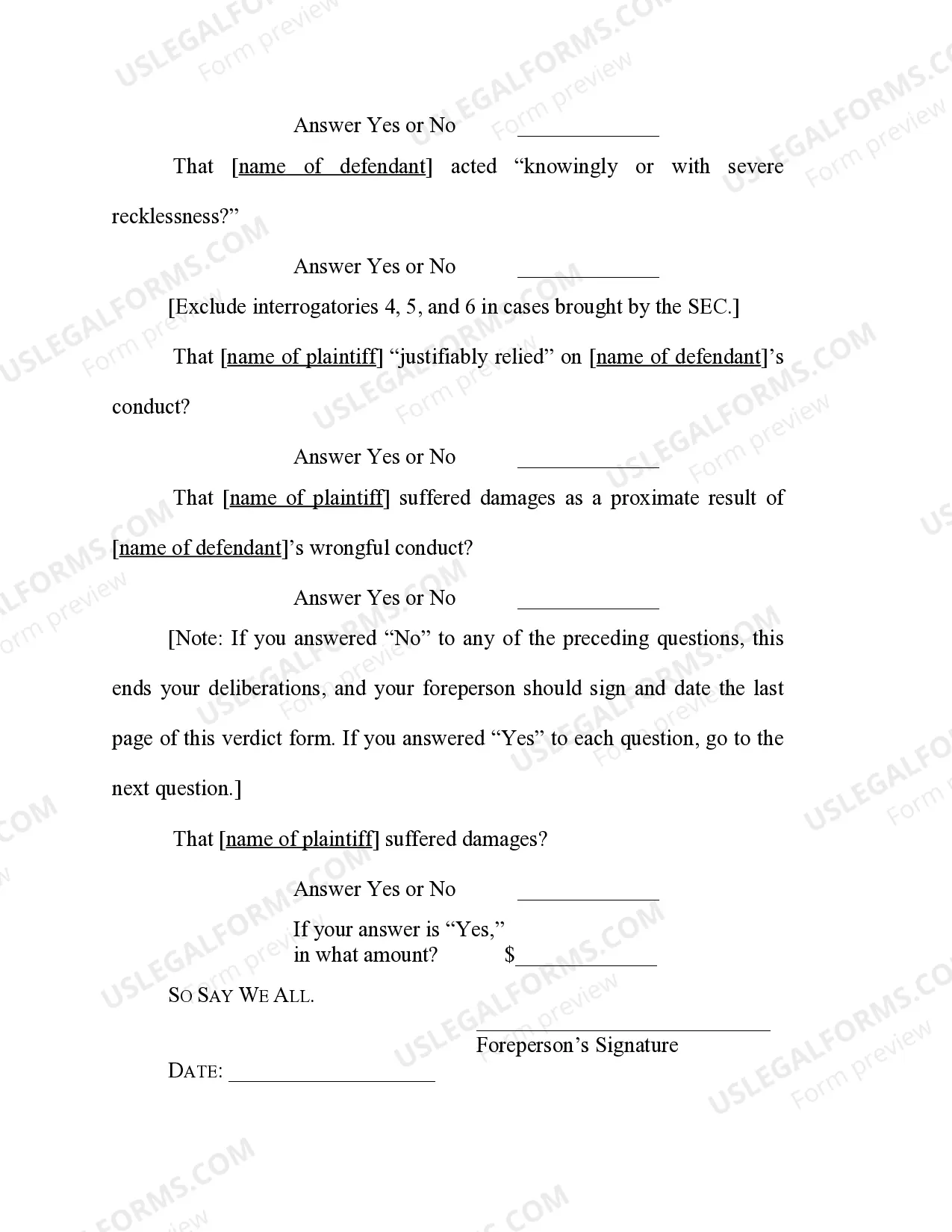
- Special interrogatories for jury consideration.
When this form is needed
This form should be used when an individual or entity believes they have suffered damages due to securities fraud. Scenarios may include instances where an investor suspects that misleading or inaccurate information influenced their investment decisions or where a party has engaged in deceptive acts relating to any securities transactions.
Intended users of this form
- Investors who suspect fraud in securities transactions.
- Legal representatives of individuals or businesses impacted by deceptive practices.
- The Securities and Exchange Commission (SEC) for enforcement actions against violators.
How to prepare this document
- Identify the plaintiff and defendant involved in the securities transaction.
- Clearly describe the security that is the subject of the fraud claim.
- Outline the facts supporting the allegation of a device, scheme, or artifice to defraud.
- Provide evidence or testimony to prove damages caused by the alleged fraud.
- Review special interrogatories to ensure all elements of the claim are addressed.
Is notarization required?
This form usually doesn’t need to be notarized. However, local laws or specific transactions may require it. Our online notarization service, powered by Notarize, lets you complete it remotely through a secure video session, available 24/7.
Get your form ready online
Our built-in tools help you complete, sign, share, and store your documents in one place.
Make edits, fill in missing information, and update formatting in US Legal Forms—just like you would in MS Word.
Download a copy, print it, send it by email, or mail it via USPS—whatever works best for your next step.
Sign and collect signatures with our SignNow integration. Send to multiple recipients, set reminders, and more. Go Premium to unlock E-Sign.
If this form requires notarization, complete it online through a secure video call—no need to meet a notary in person or wait for an appointment.
We protect your documents and personal data by following strict security and privacy standards.

Make edits, fill in missing information, and update formatting in US Legal Forms—just like you would in MS Word.

Download a copy, print it, send it by email, or mail it via USPS—whatever works best for your next step.

Sign and collect signatures with our SignNow integration. Send to multiple recipients, set reminders, and more. Go Premium to unlock E-Sign.

If this form requires notarization, complete it online through a secure video call—no need to meet a notary in person or wait for an appointment.

We protect your documents and personal data by following strict security and privacy standards.
Common mistakes to avoid
- Failing to provide sufficient evidence of the fraudulent act.
- Ignoring jurisdiction-specific requirements that could affect the outcome.
- Not clearly defining the security in question.
Benefits of using this form online
- Convenient access to legal resources at any time.
- Editability allows users to personalize the form for their specific case.
- Reliable templates drafted by licensed attorneys ensure legal compliance.
Legal use & context
- This form is used in federal court to assert claims under the Securities Exchange Act.
- It helps in establishing violations that can lead to civil liabilities.
- Understanding the elements of fraud under Rule 10b-5 is crucial for successful claims.
Looking for another form?
Form popularity
FAQ
SEC Rule 10b-5, states that it is illegal for any person to defraud or deceive someone, including through the misrepresentation of material information, with respect to the sale or purchase of a security.
The term ?municipal securities investment portfolio? means all municipal securities held for investment and not for sale as part of a regular business by a municipal securities dealer or by a person, directly or indirectly, controlling, controlled by, or under common control with a municipal securities dealer.
Any party directly connected to the sale of securities is potentially liable; though there may be limits on the liability of certain professionals, such as auditors, bankers, accountants, etc. Rule 10(b)(5) allows for a cause of action by the SEC as well as private actions.
Section 10(b) of the Exchange Act and Rule 10b-5 prohibit material misrepresentations and misleading omissions in connection with the purchase or sale of securities. To prove a violation of Section 10(b) of the Exchange Act and Rule 10b-5 thereunder, the Commission must prove that the defendants acted with scienter.
Standing. While not explicit in the language, courts have interpreted Rule 10b-5 to create a private civil cause of action and additionally allow the SEC to bring criminal enforcement actions. In order to bring a private right of action under Rule 10b-5, the plaintiff must have standing. In Blue Chip Stamps v.
Elements of the offense. To establish a claim under Rule 10b-5, plaintiffs (including the SEC) must show (i) Manipulation or Deception (through misrepresentation and/or omission); (ii) Materiality; (iii) "In Connection With" the purchase or sale of securities, and (iv) Scienter.
(b) To use or employ, in connection with the purchase or sale of any security registered on a national securities exchange or any security not so registered, any manipulative or deceptive device or contrivance in contravention of such rules and regulations as the Commission may prescribe as necessary or appropriate in
Generally, anyone who has material, non-public information must either disclose that information prior to trading the securities or abstain from trading in the effected or related security. Normally, insiders include officers, directors, and professionals in fiduciary relationships with the firm.