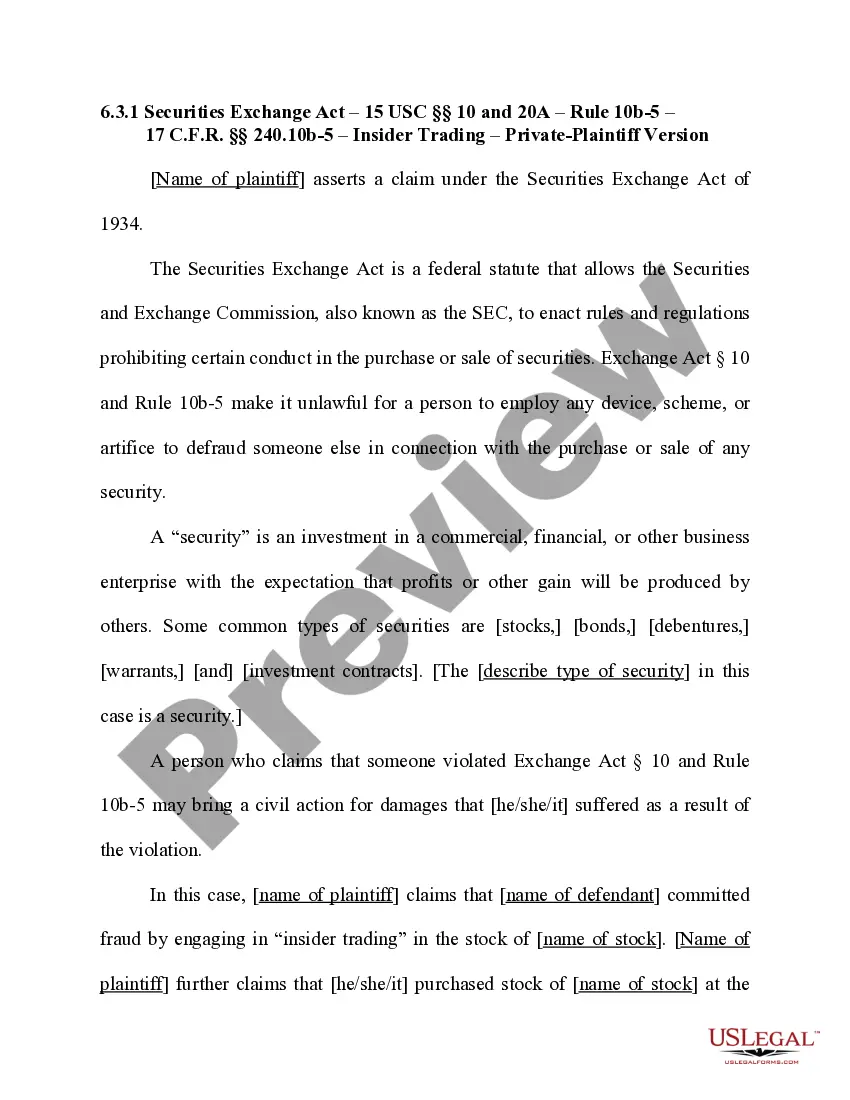
Securities Exchange Act - 15 USC Sec. 10(b) and 20A - Rule 10b-5(a) - 17 C.F.R. Sec. 240.10b-5 - Insider Trading - Private-Plaintiff Version
About this form
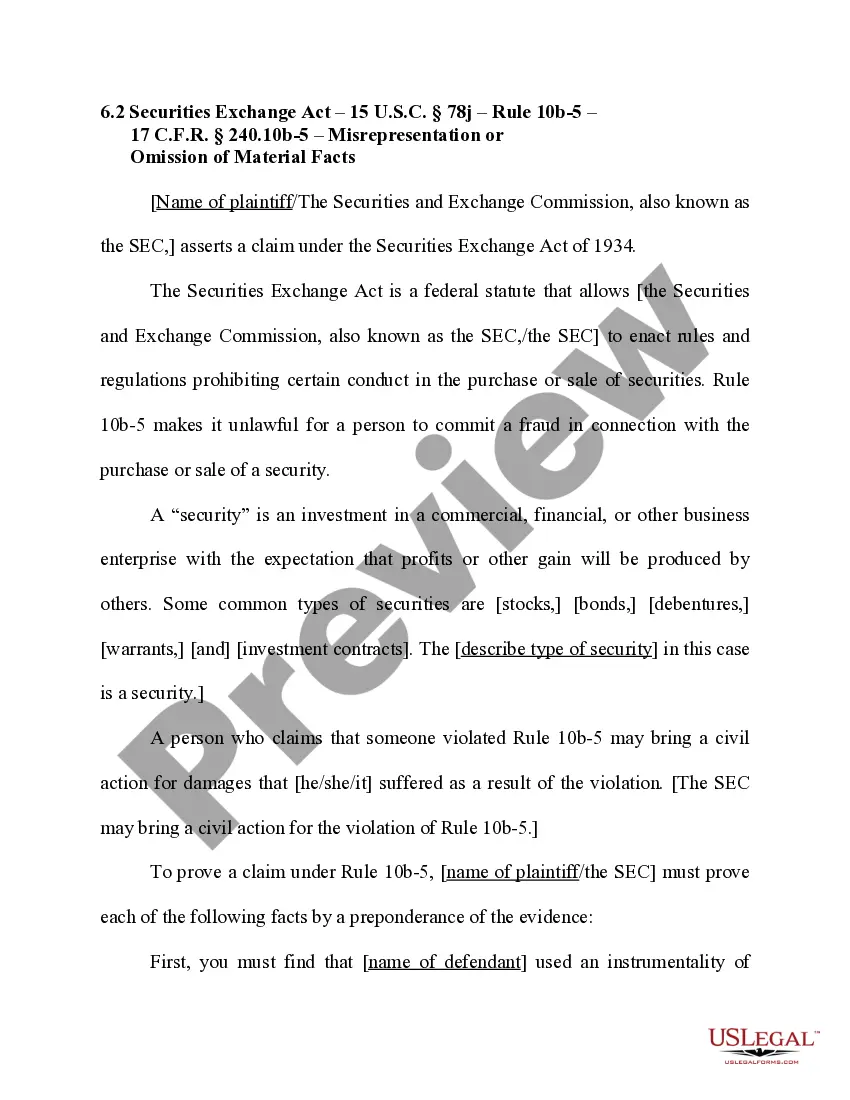
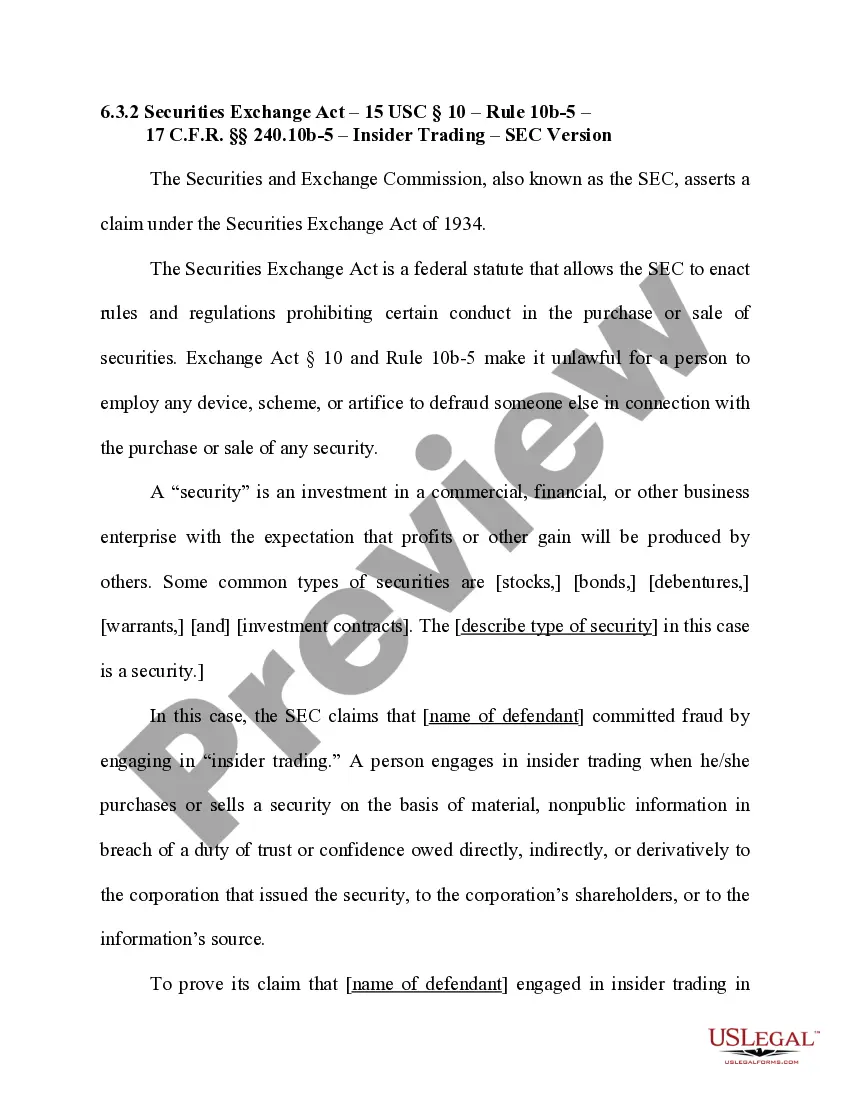
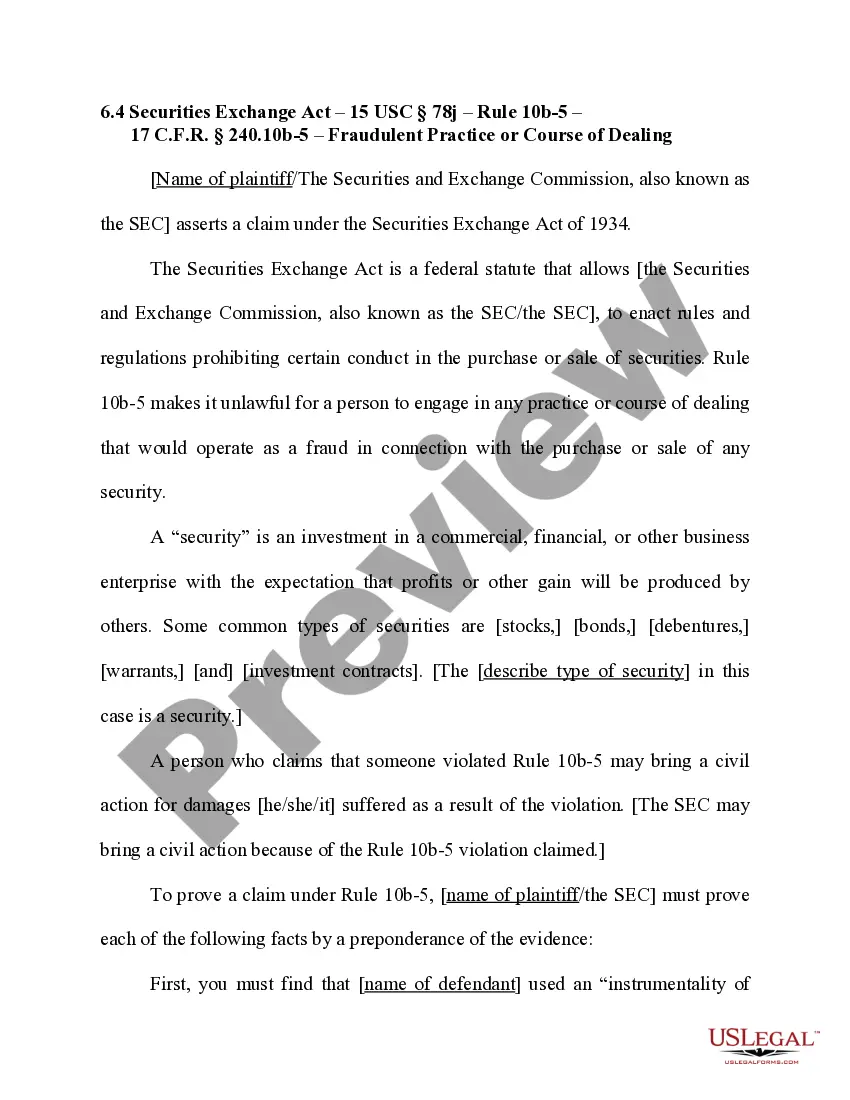
The Securities Exchange Act - 15 USC Sec. 10(b) and 20A - Rule 10b-5(a) is a legal document used to assert claims of insider trading violations against defendants. This form enables private plaintiffs to seek damages from individuals who engage in fraudulent activities in connection with the purchase or sale of securities. Unlike other legal forms, this document specifically caters to instances where a plaintiff alleges that insider trading has impacted their financial interests.
Key parts of this document
- Identification of the plaintiff and defendant involved in the securities transaction.
- Description of the security in question and the alleged fraudulent activities.
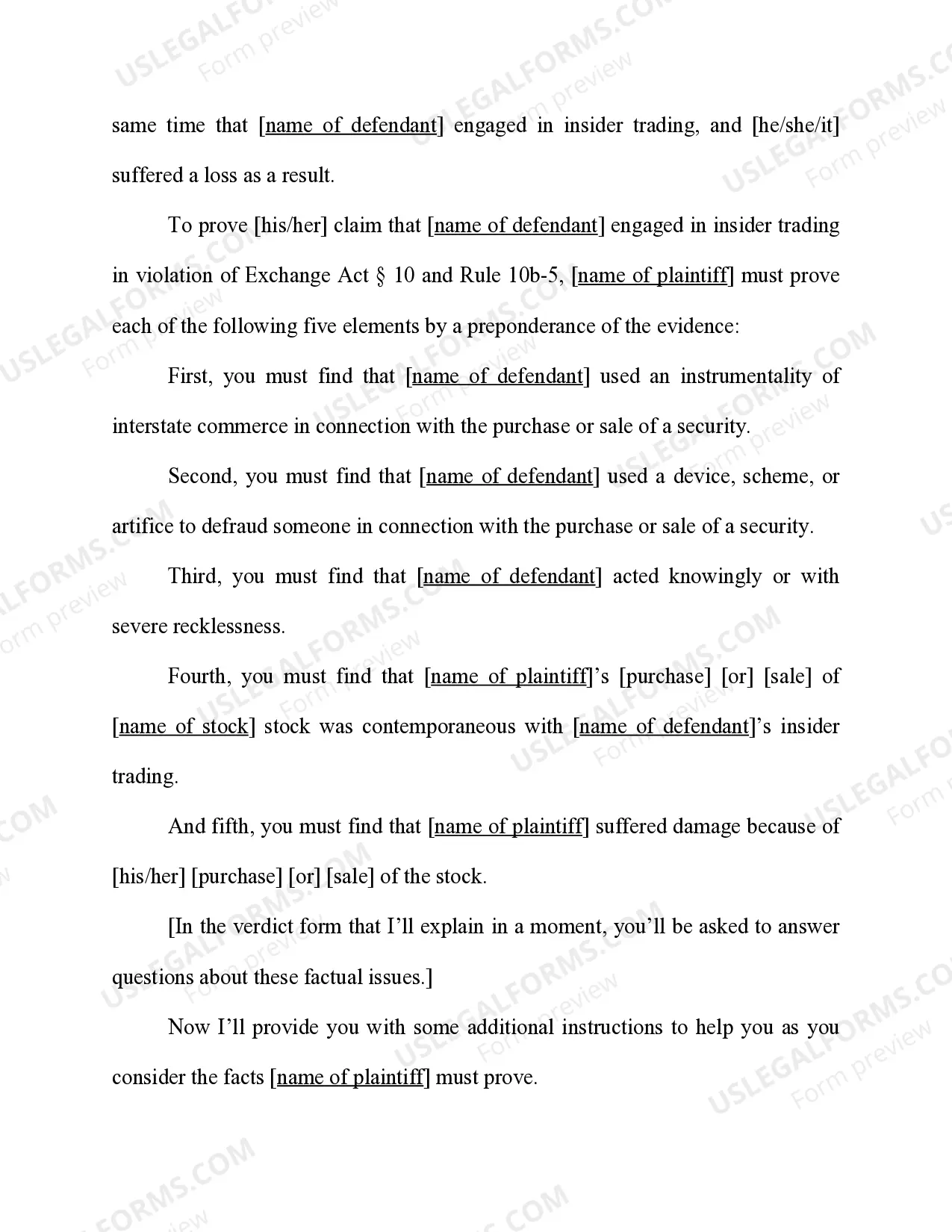
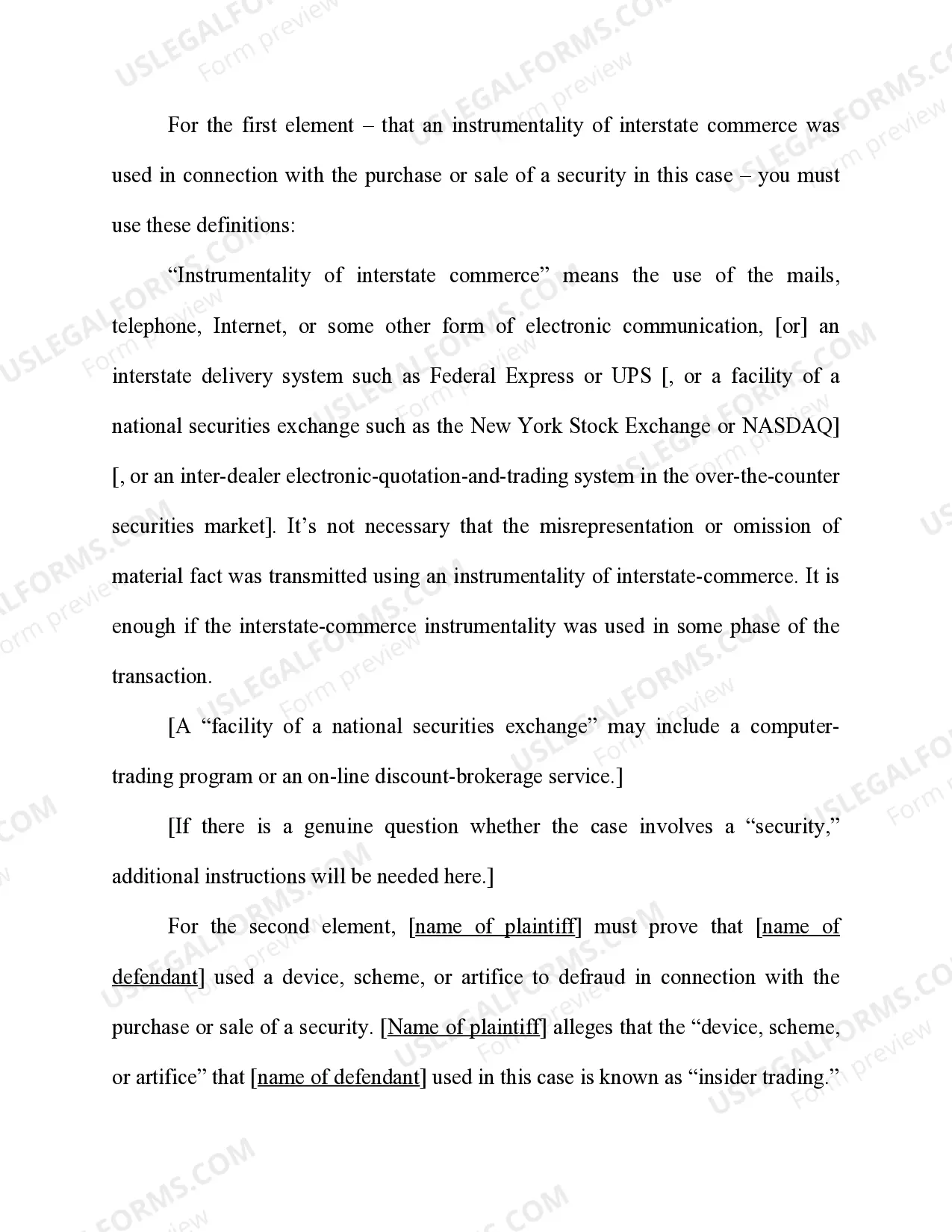
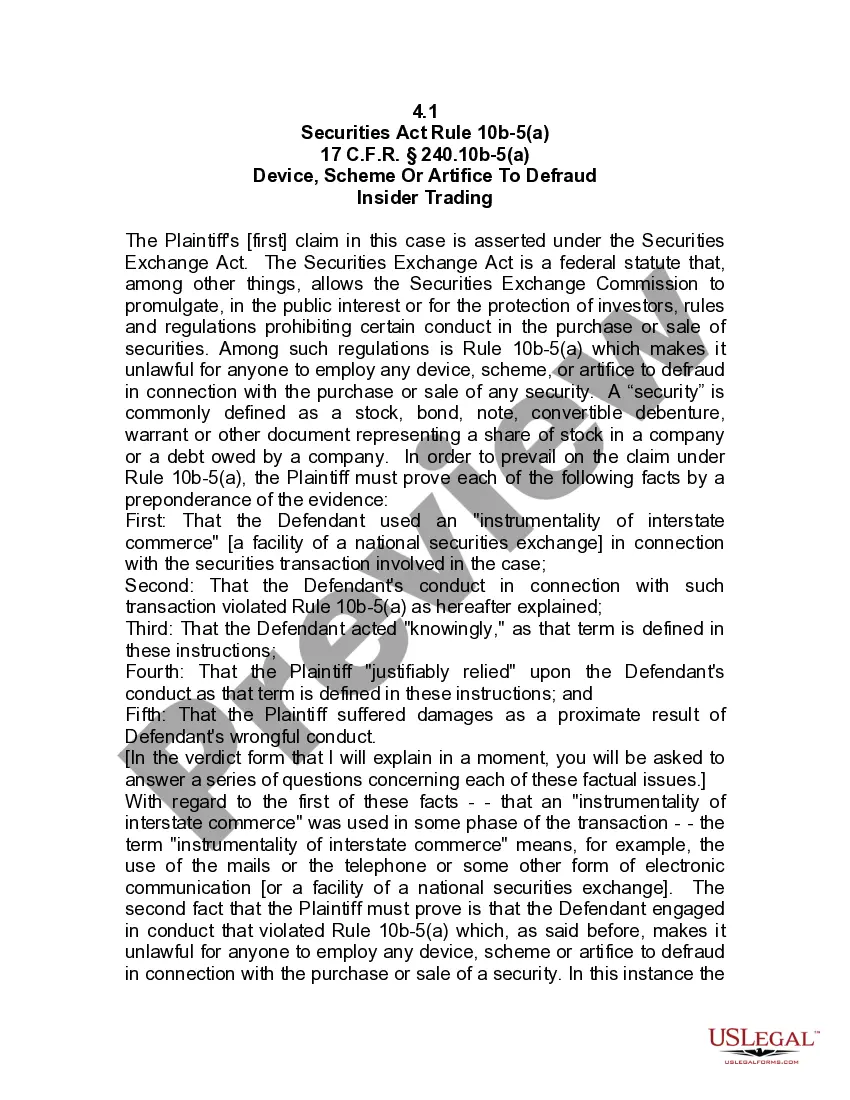
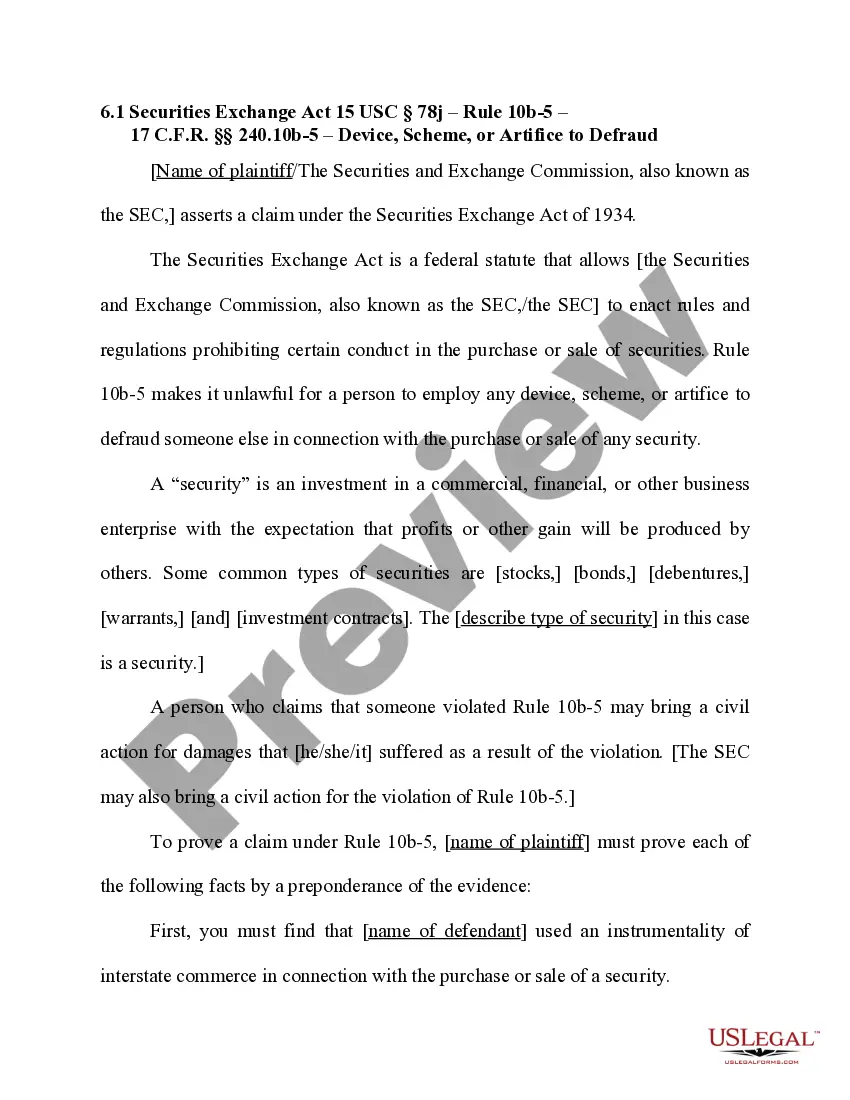
- Specification of the elements required to prove insider trading, including the use of interstate commerce and the act of defrauding.
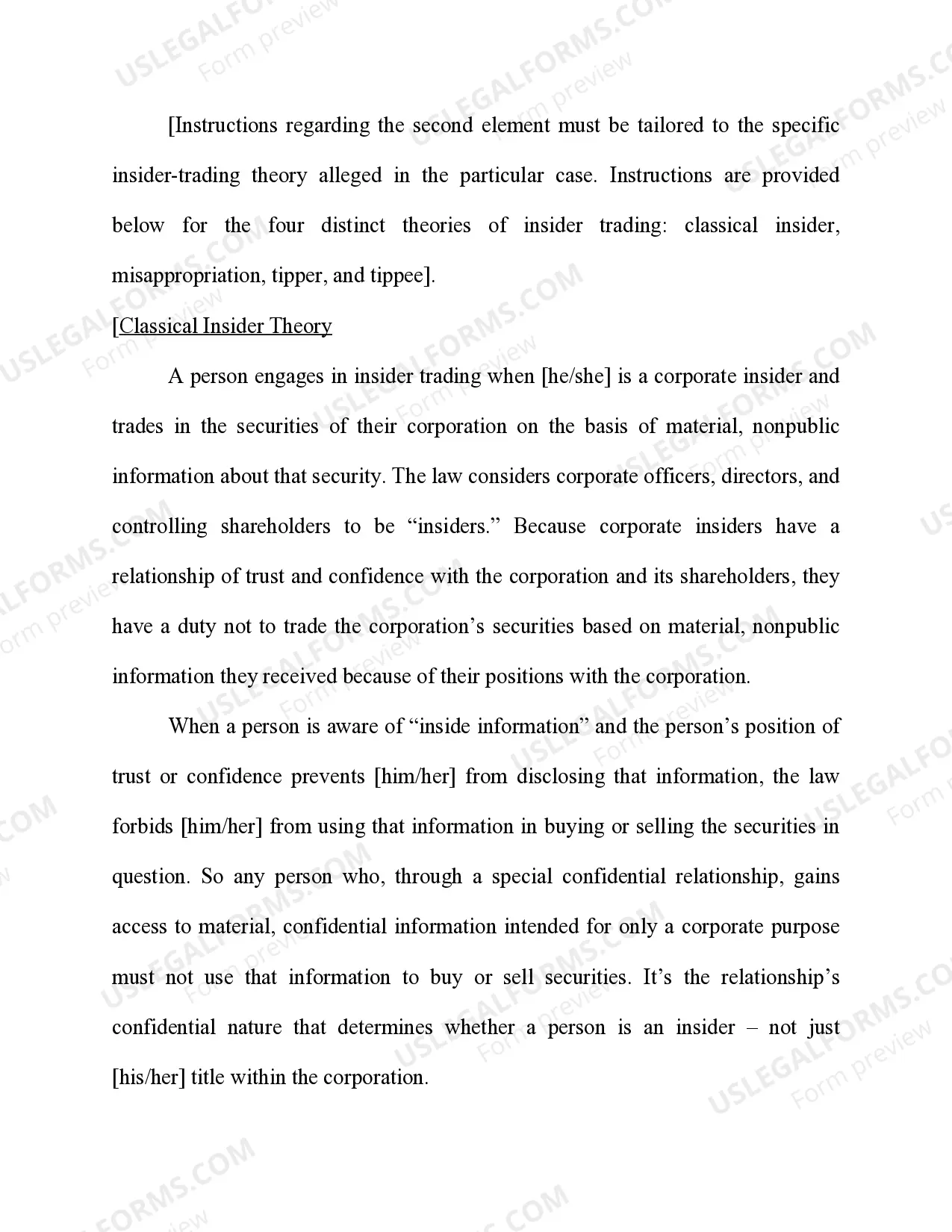
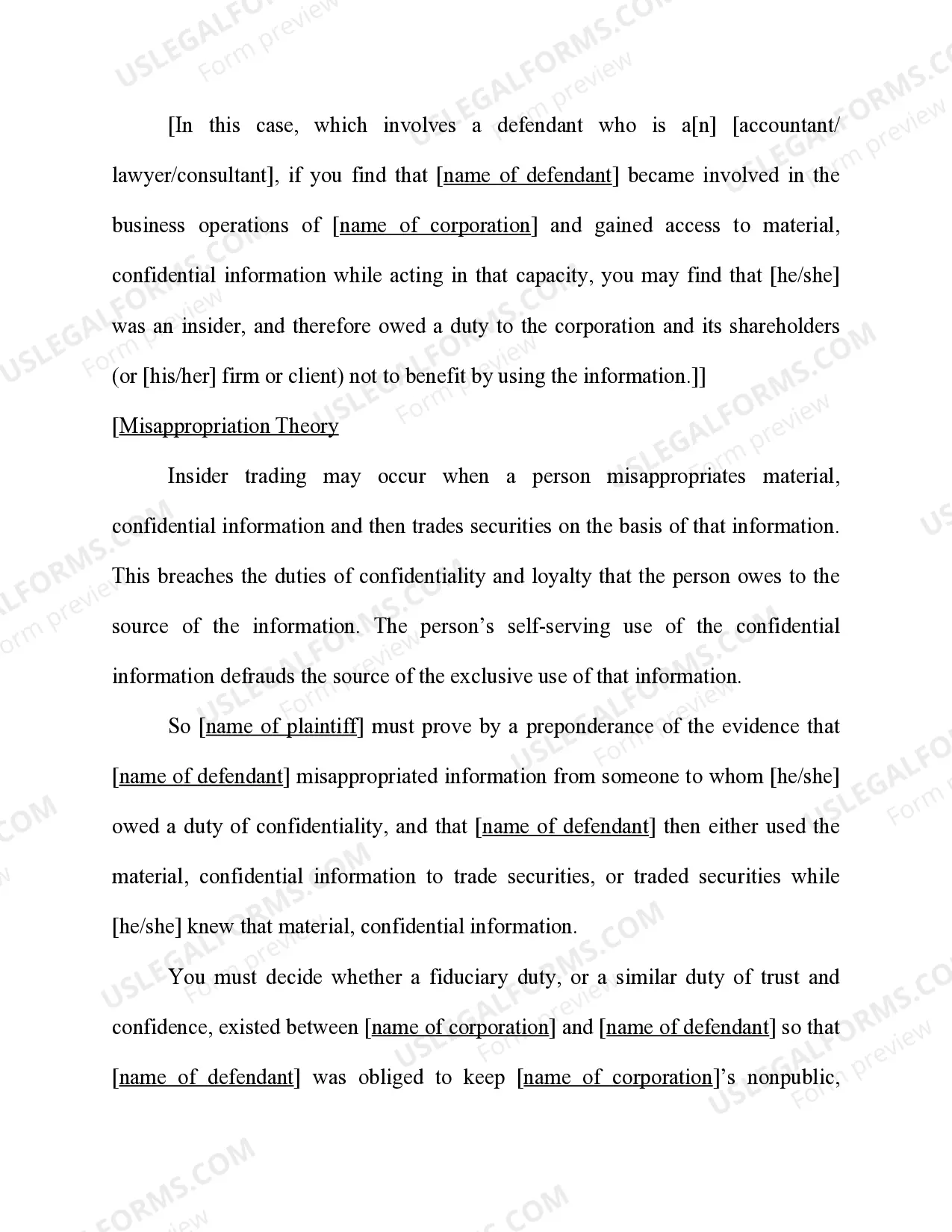
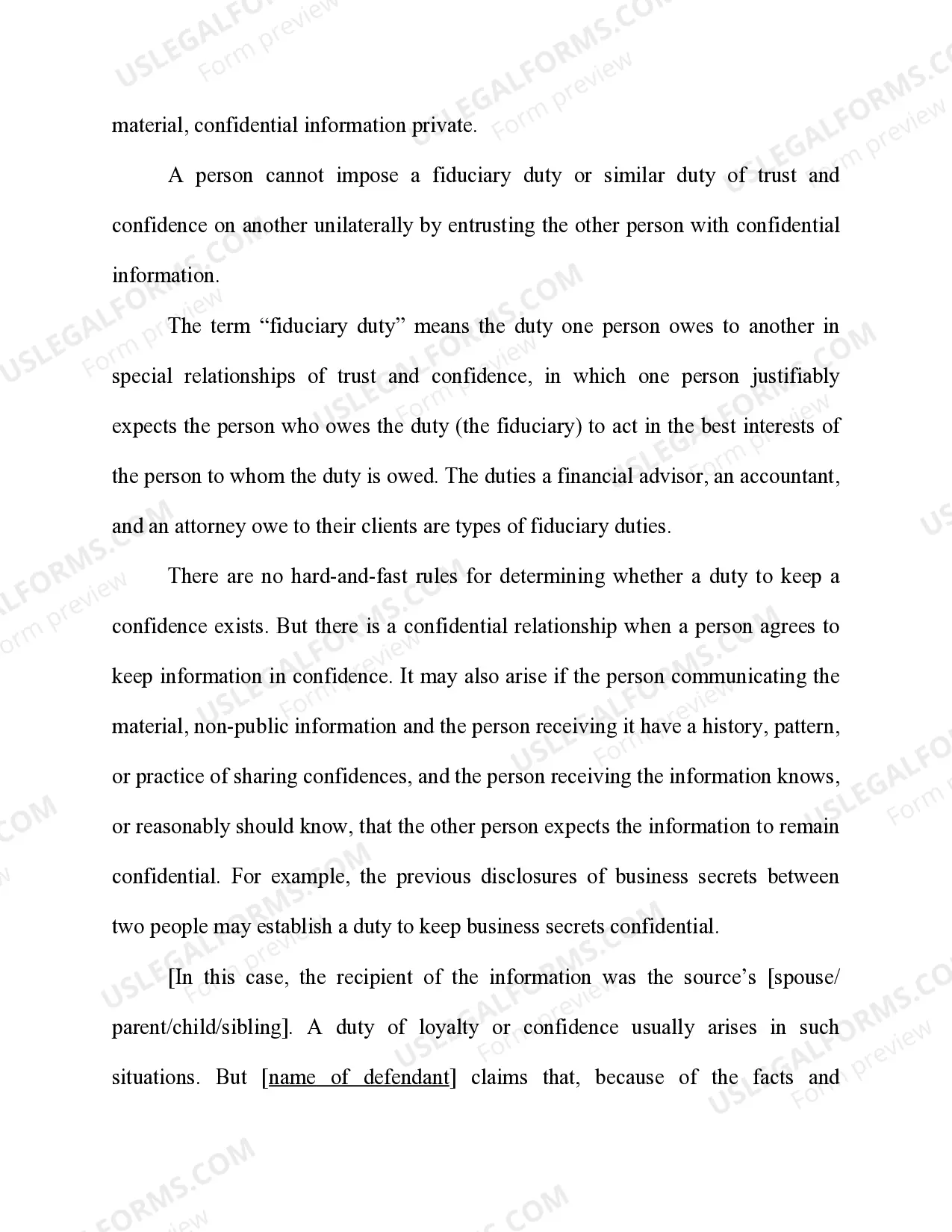
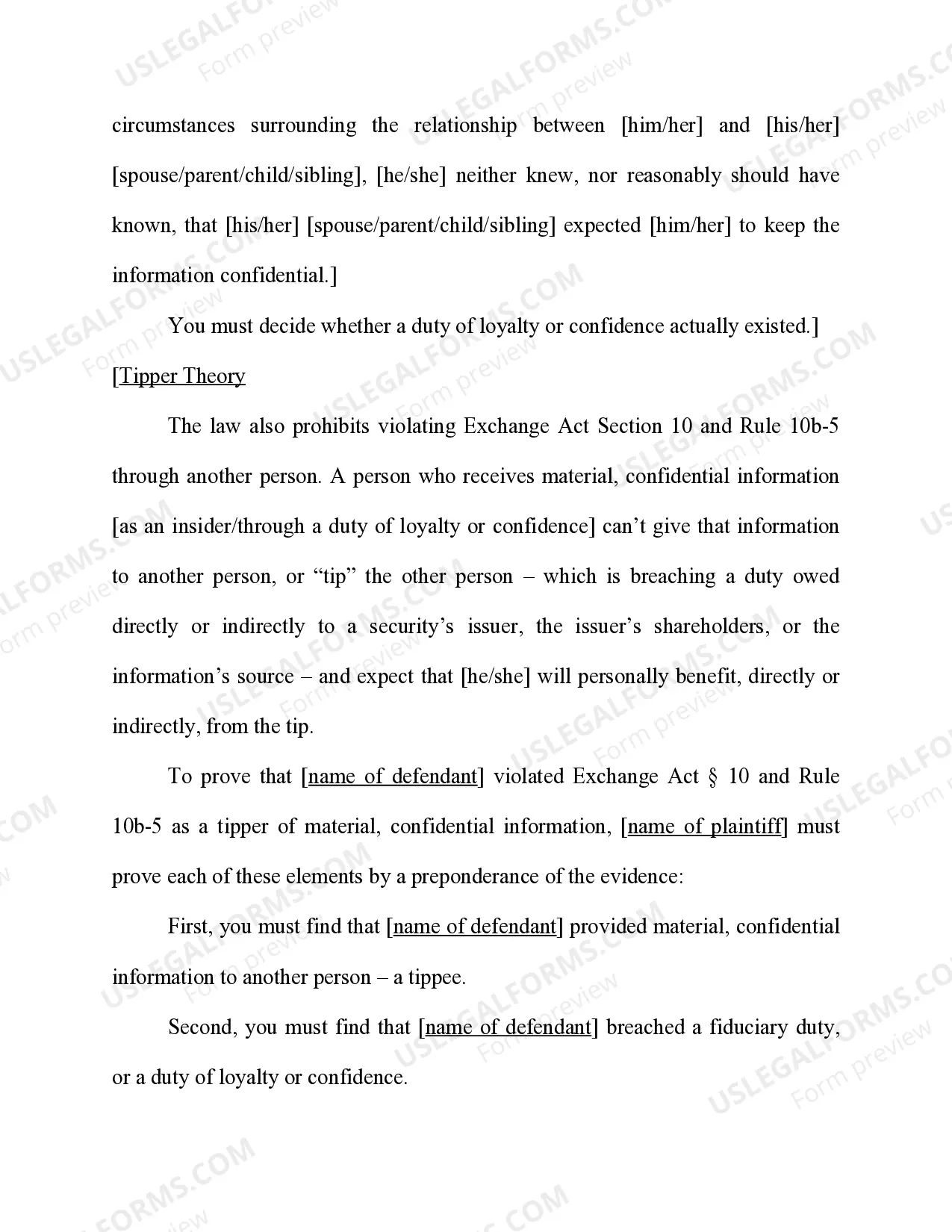
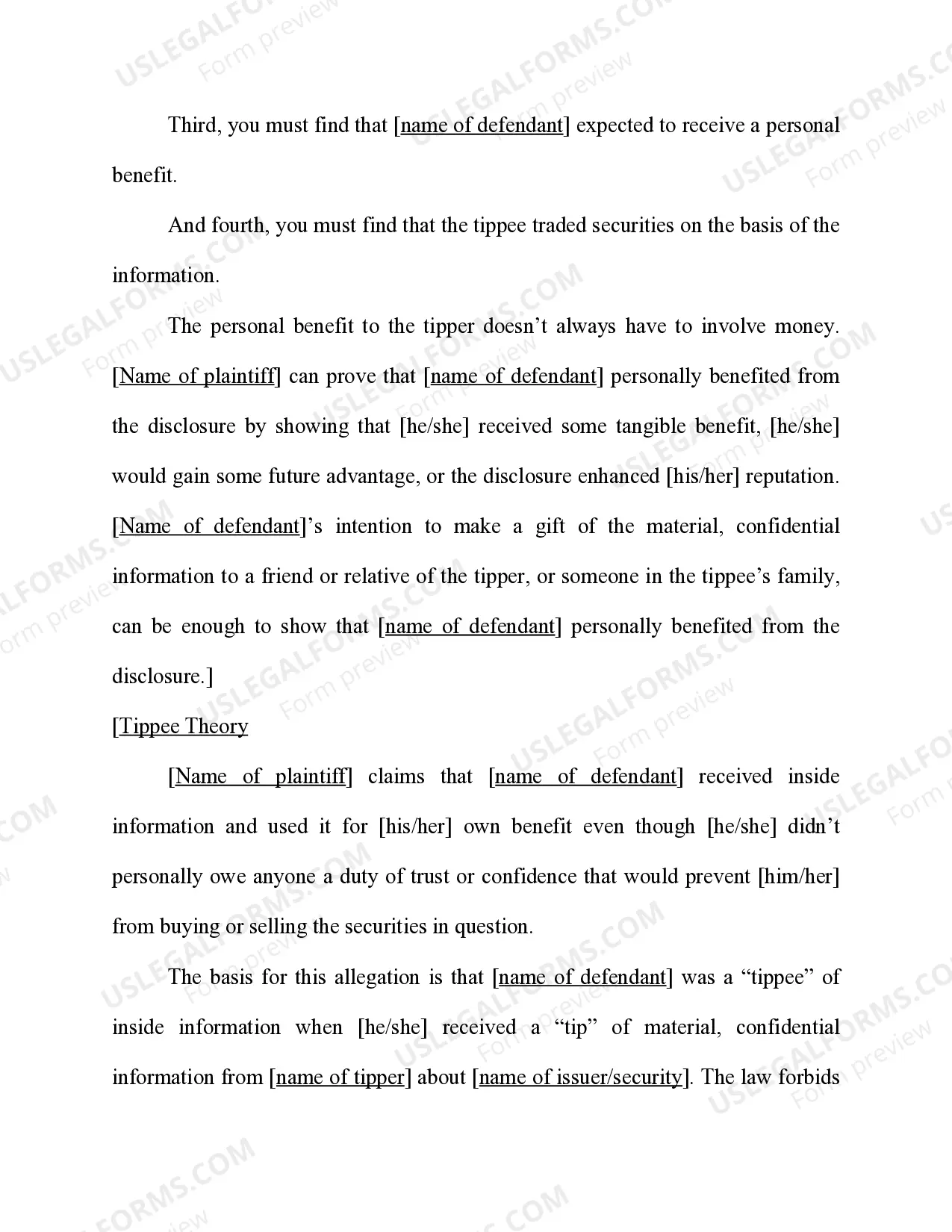
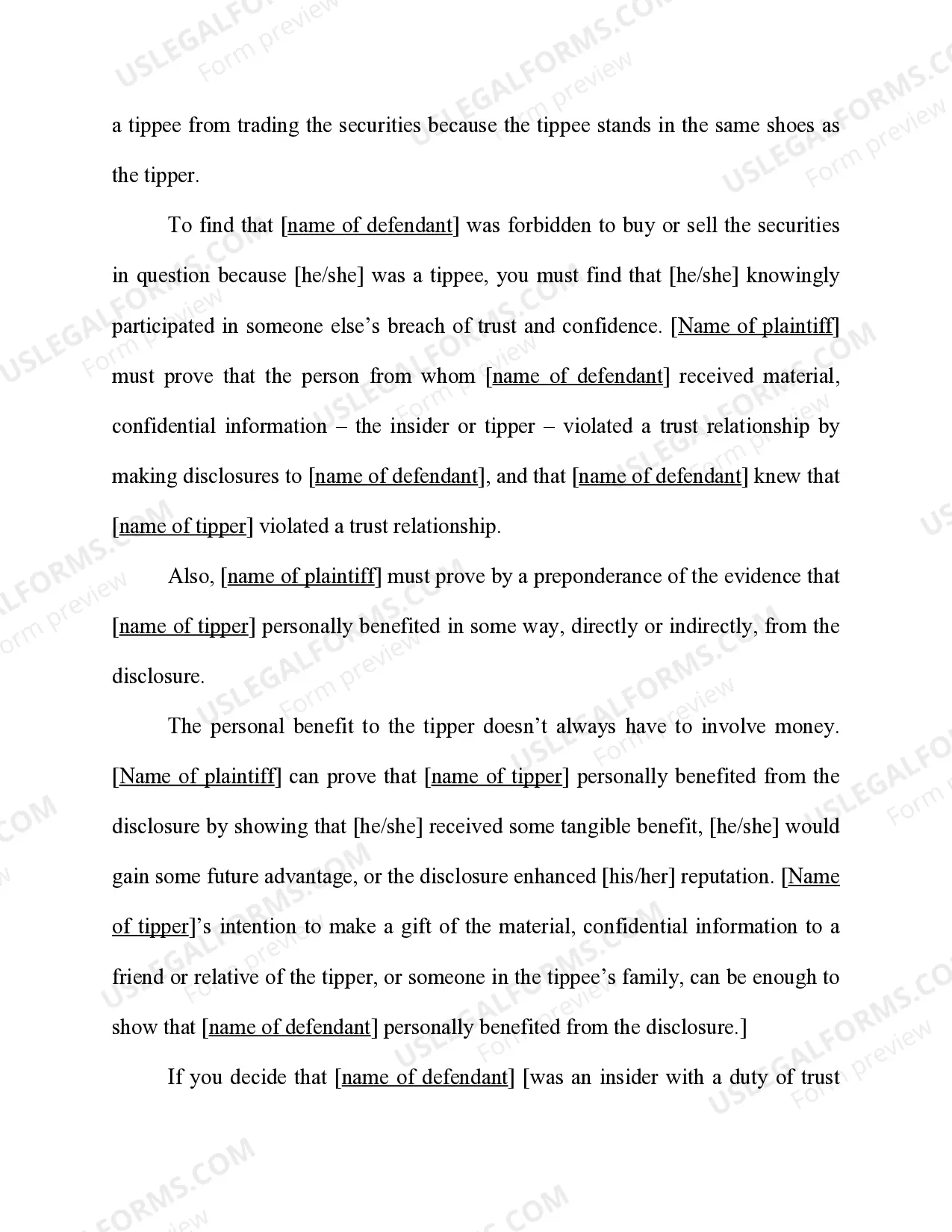
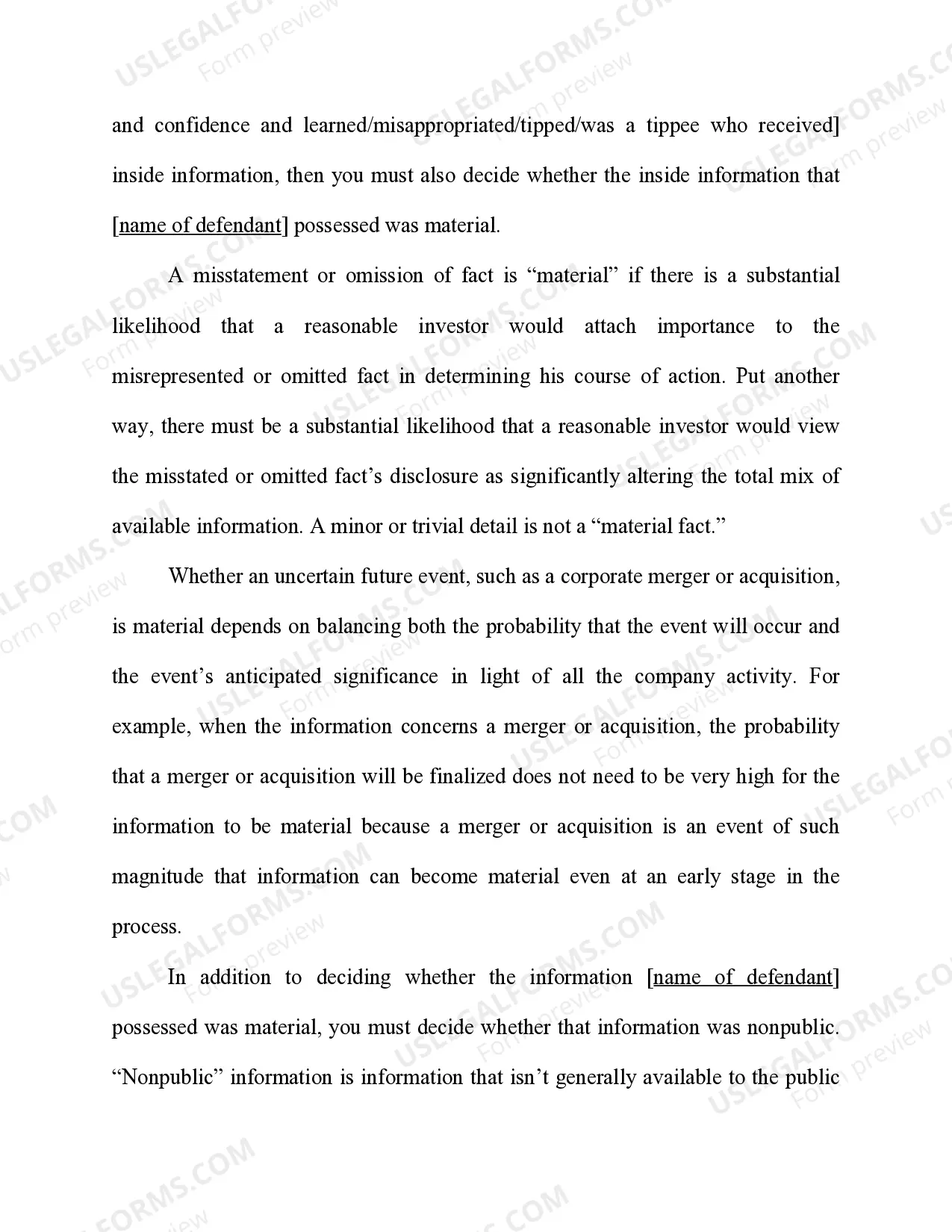
- Guidance on the legal theories relating to insider tradingâclassical insider, misappropriation, tipper, and tippee.
- Standards for establishing damages related to the alleged fraud.

When to use this document
This form should be used when an individual believes they have been adversely affected by insider trading in the securities market. If you purchased or sold securities and suspect that a defendant engaged in fraud or insider trading that harmed you financially, you may need to file a civil action using this form to seek damages.
Intended users of this form
- Individuals or entities who have purchased or sold securities.
- Investors who suspect they have suffered losses due to insider trading activities.
- Legal representatives of plaintiffs seeking to establish claims of securities fraud.
Instructions for completing this form
- Identify the names and contact information of the plaintiff and defendant involved in the case.
- Detail the specific security that is the subject of the claim, including its type and the context of the transaction.
- Clearly articulate the alleged fraudulent actions and how they constitute insider trading.
- Provide evidence or make assertions about how the defendant's actions led to your damages.
- Sign and date the form, ensuring it is filed appropriately with the relevant court.
Is notarization required?
This form does not typically require notarization unless specified by local law.
Get your form ready online
Our built-in tools help you complete, sign, share, and store your documents in one place.
Make edits, fill in missing information, and update formatting in US Legal Forms—just like you would in MS Word.
Download a copy, print it, send it by email, or mail it via USPS—whatever works best for your next step.
Sign and collect signatures with our SignNow integration. Send to multiple recipients, set reminders, and more. Go Premium to unlock E-Sign.
If this form requires notarization, complete it online through a secure video call—no need to meet a notary in person or wait for an appointment.
We protect your documents and personal data by following strict security and privacy standards.

Make edits, fill in missing information, and update formatting in US Legal Forms—just like you would in MS Word.

Download a copy, print it, send it by email, or mail it via USPS—whatever works best for your next step.

Sign and collect signatures with our SignNow integration. Send to multiple recipients, set reminders, and more. Go Premium to unlock E-Sign.

If this form requires notarization, complete it online through a secure video call—no need to meet a notary in person or wait for an appointment.

We protect your documents and personal data by following strict security and privacy standards.
Common mistakes
- Failing to provide sufficient details about the security involved.
- Not articulating the connection between the alleged insider trading and the damages suffered.
- Neglecting to include supporting evidence for claims made in the form.
- Omitting the signatures of all required parties before submission.
Benefits of completing this form online
- Convenient access to legal templates drafted by licensed attorneys.
- Editability allows for personalization to fit specific cases accurately.
- Immediate download ensures quick preparation for filing.
- Guidance on completing the form aids in avoiding common mistakes.
Legal use & context
- The form is specifically tailored for claims under federal law regarding securities fraud.
- It is essential for plaintiffs to establish a clear link between insider trading actions and financial damages.
- While federal law governs insider trading, nuances may arise based on individual state laws.
What to keep in mind
- This form is crucial for individuals seeking to file claims related to insider trading.
- Understanding the key components and elements of proof is essential for successful claims.
- Filing requirements may vary, so consulting local regulations is advisable.
- Common mistakes can hinder the effectiveness of your claim, so careful completion is critical.
Looking for another form?


Form popularity
FAQ
The U.S. Securities and Exchange Commission, or SEC, regulates the offer and sale of all securities, including those offered and sold by private companies.
SEC Rule 10b-5, states that it is illegal for any person to defraud or deceive someone, including through the misrepresentation of material information, with respect to the sale or purchase of a security.
Unlike Section 11, however, Rule 10b-5 applies to both public offerings and private placements.
Rule 10b5-1 allows insiders to sell company stock by setting up a predetermined plan that specifies in advance the share price, amount, and transaction date. The insider selling the stock and the broker carrying out the transaction must certify that they are not aware of any material nonpublic information (MNPI).
SEC Rule 10b-5, states that it is illegal for any person to defraud or deceive someone, including through the misrepresentation of material information, with respect to the sale or purchase of a security.
What is liability under Section 10(b) and Rule 10(b)(5) of the 1934 Act? Section 10(b) prohibits fraud in connection with the purchase and sale of any security. This provision applies whether or not the security is registered under the 34 Act. The SEC adopted Rule 10(b)(5) to implement section 10(b).
Do insider trading laws apply to private companies? The question is whether insider trading laws apply to privately held companies. The answer is yes. The securities laws apply to all securities, not just publicly traded ones.