Missouri Divorce Worksheet and Law Summary for Contested or Uncontested Case of over 25 pages - Ideal Client Interview Form
What is this form?
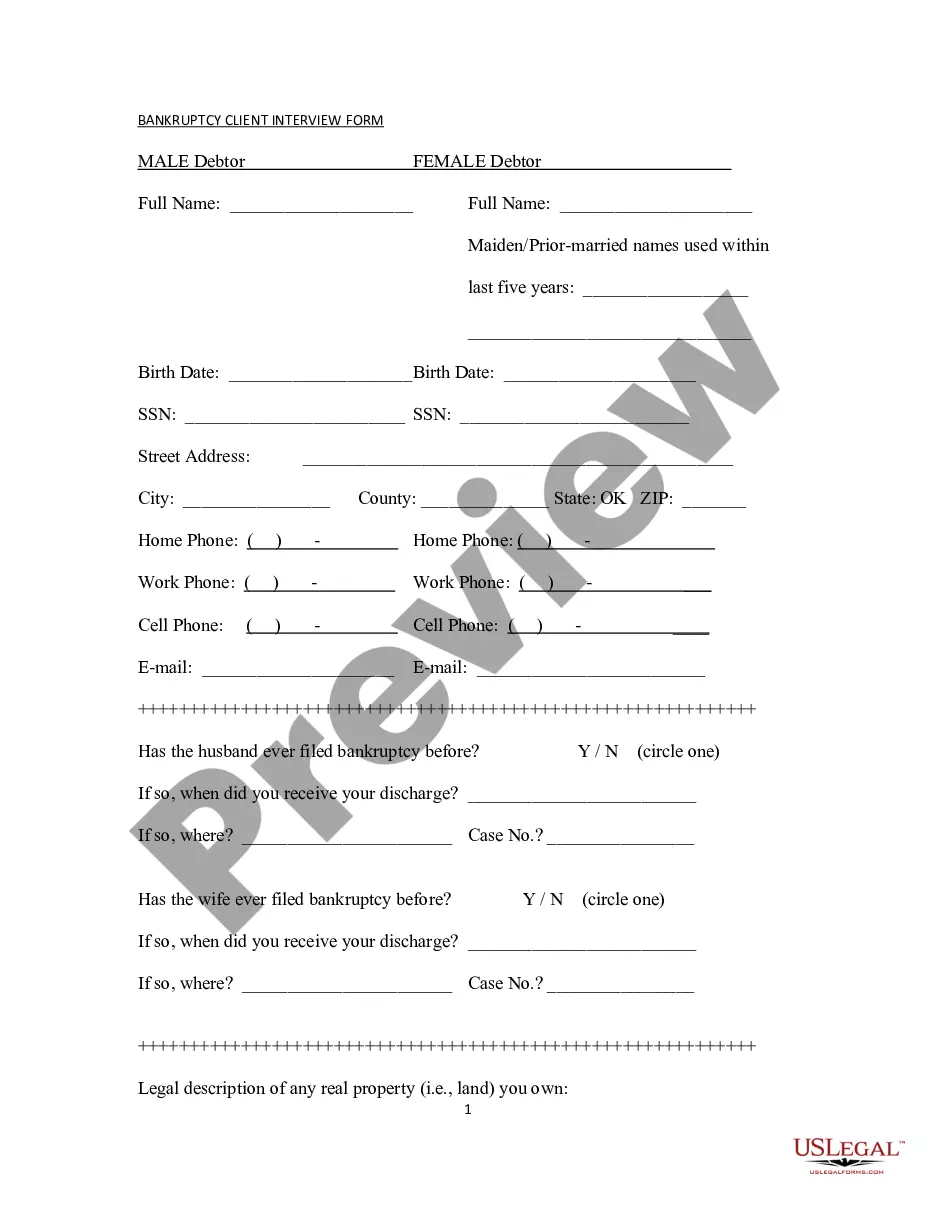
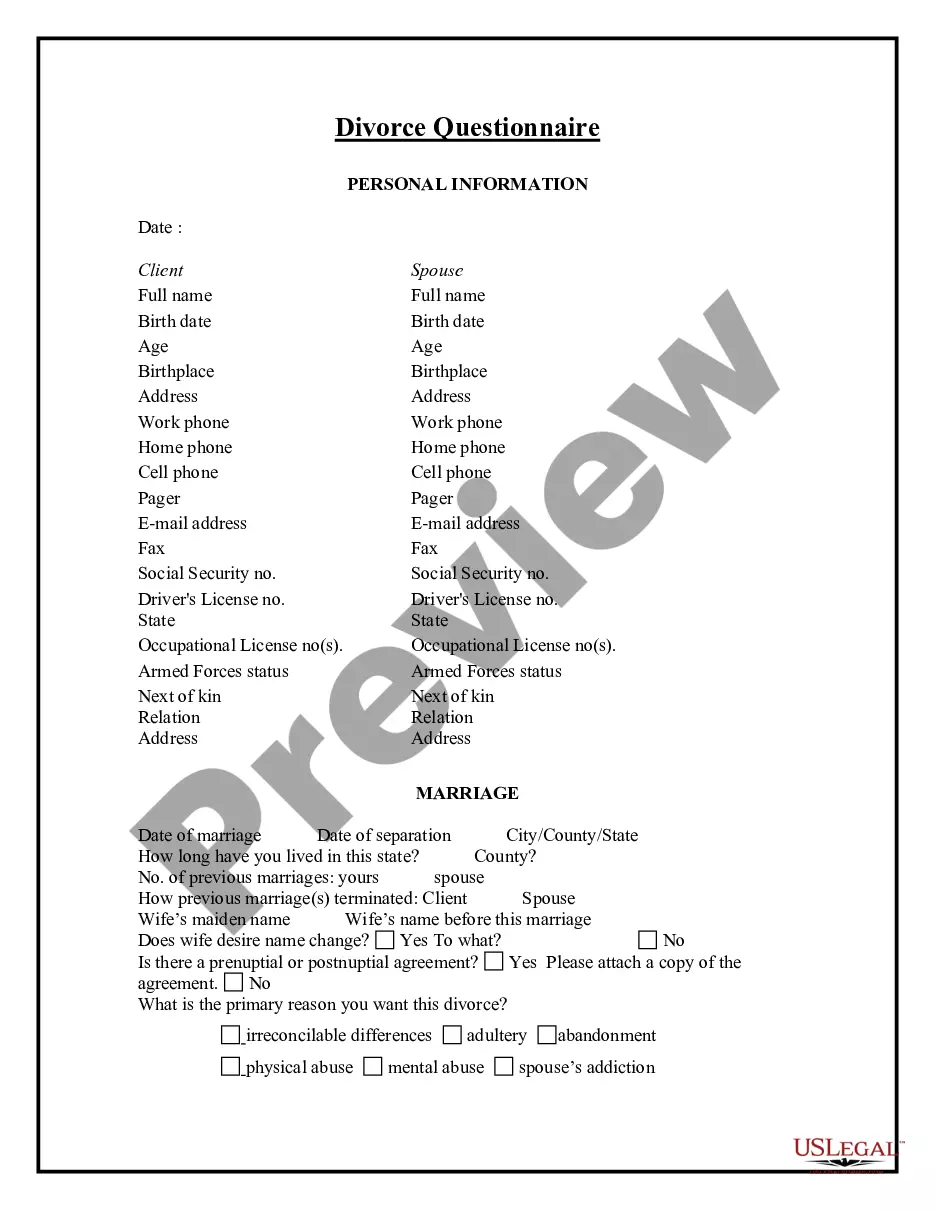
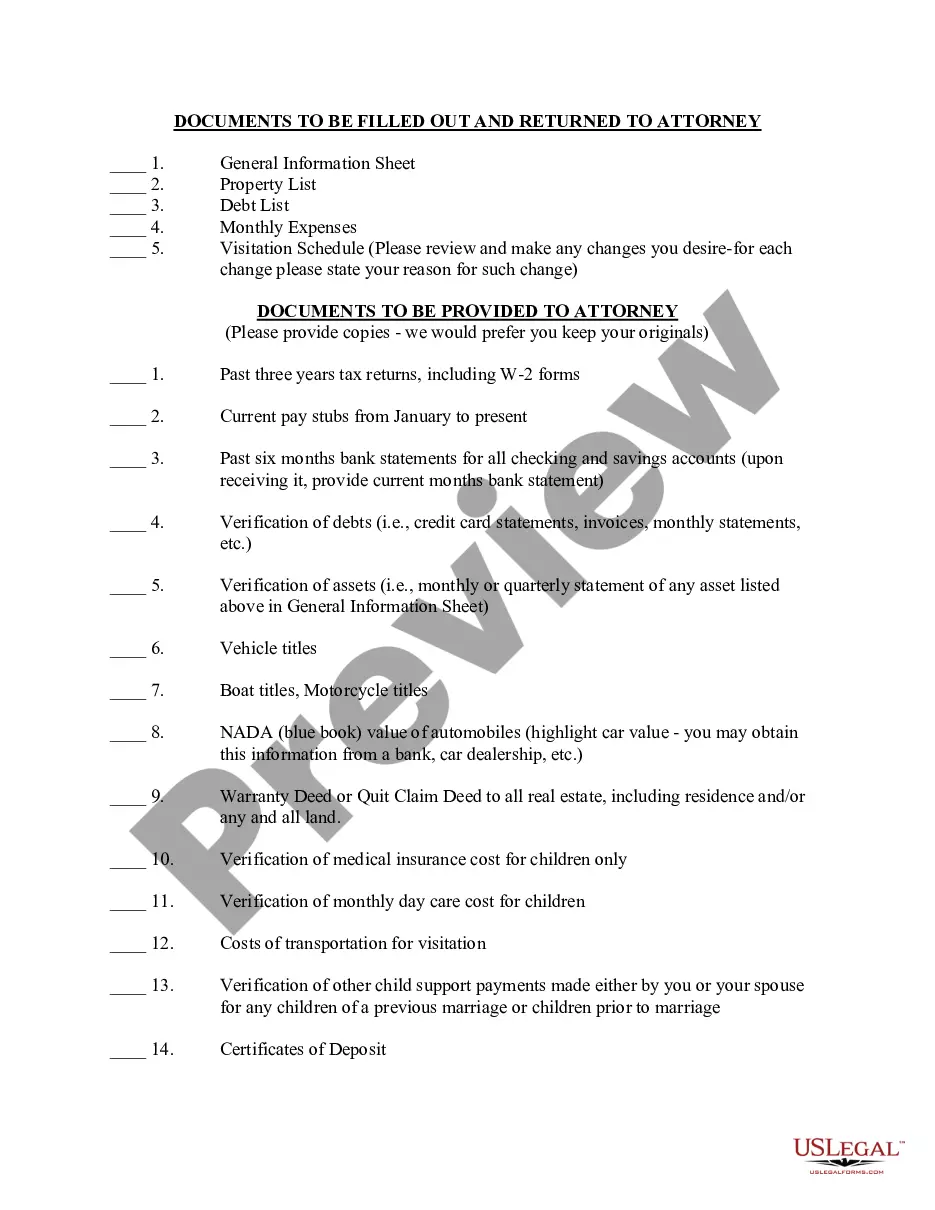
The Divorce Worksheet and Law Summary for Contested or Uncontested Cases is a comprehensive package designed to help individuals navigate the complexities of divorce. It provides essential guidance on vital topics such as visitation, child support, and custody. Unlike other divorce forms, this package includes worksheets and financial forms that facilitate careful consideration and preparation ahead of initial consultations with attorneys or before filing independently.
Form components explained
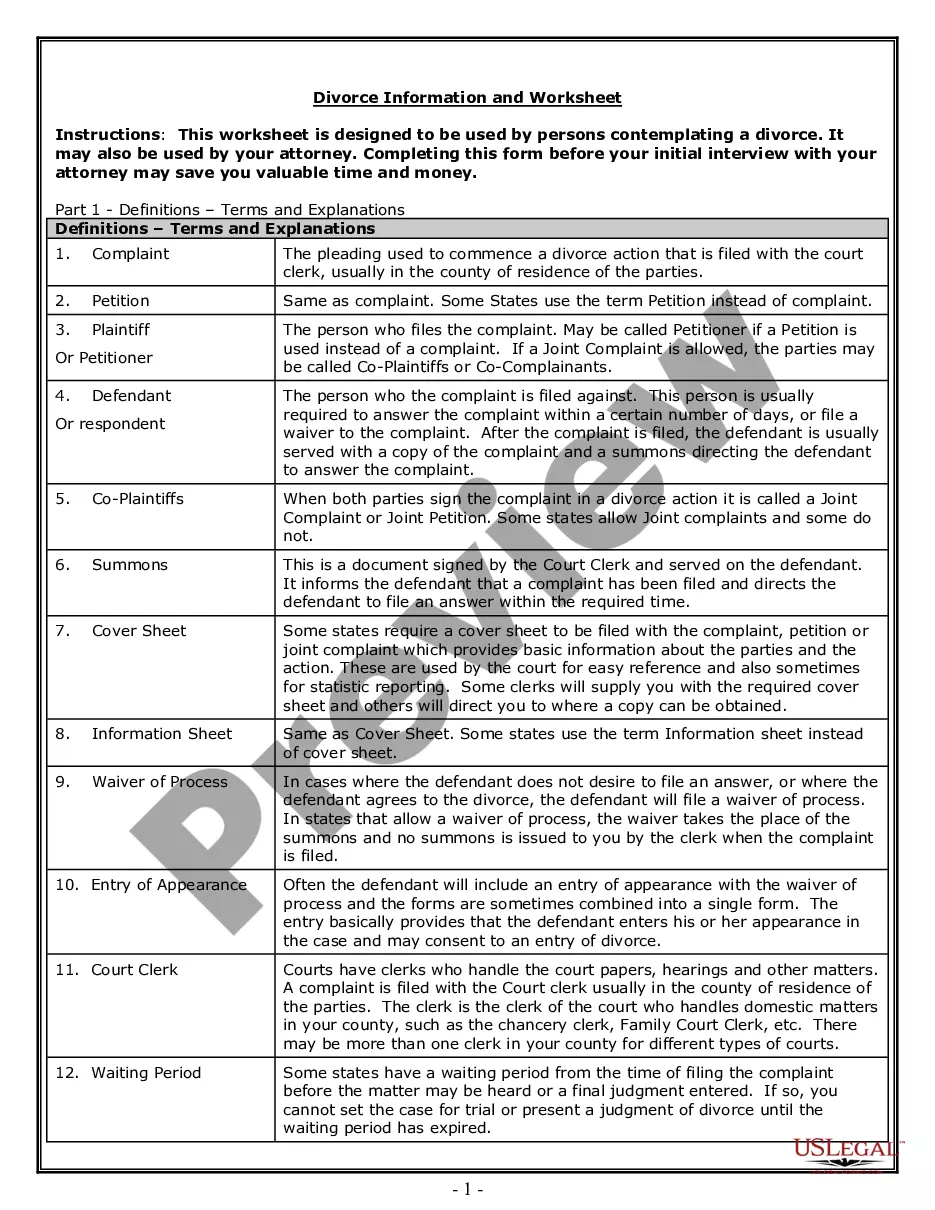
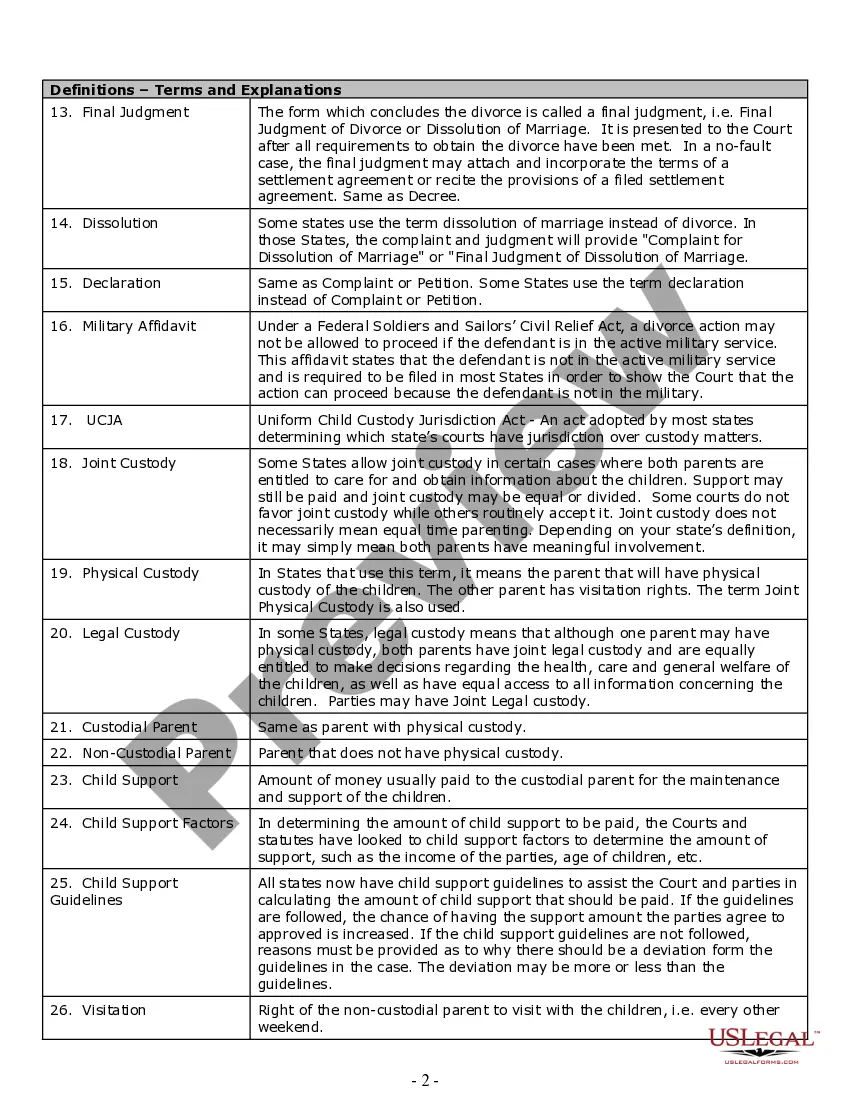
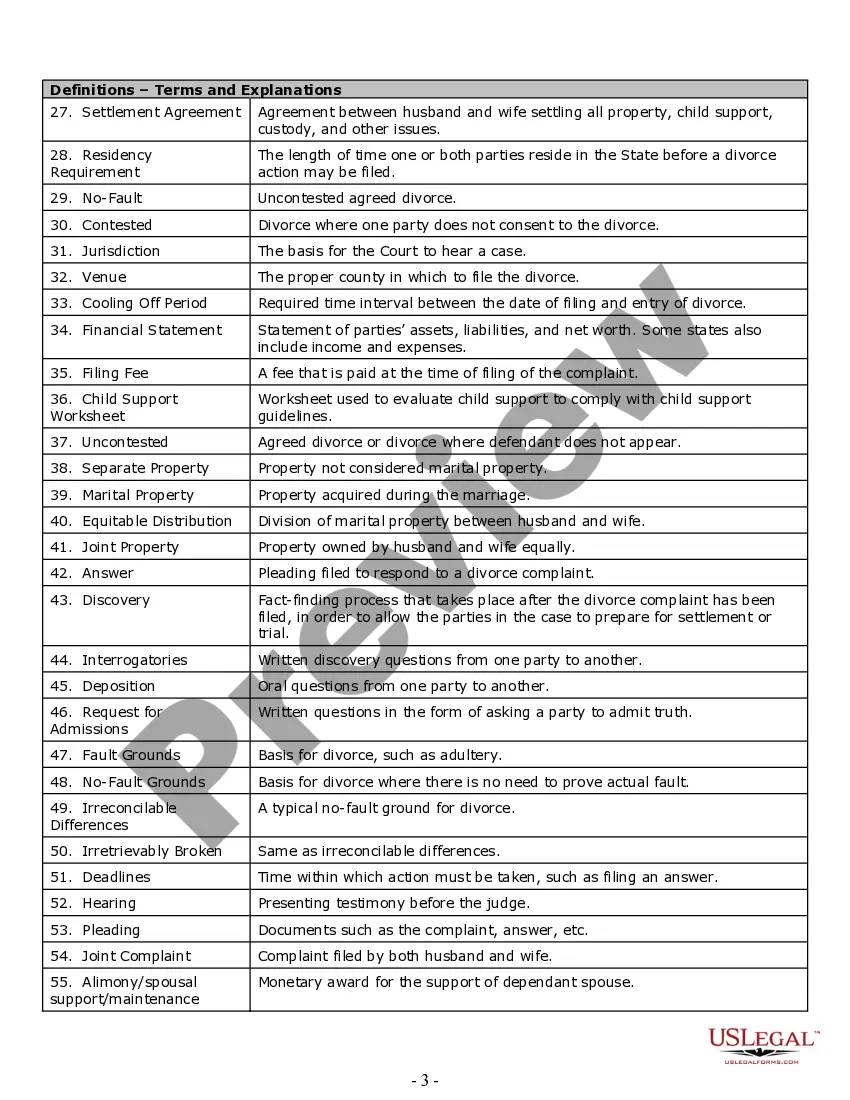
- Definitions of key terms related to divorce and custody
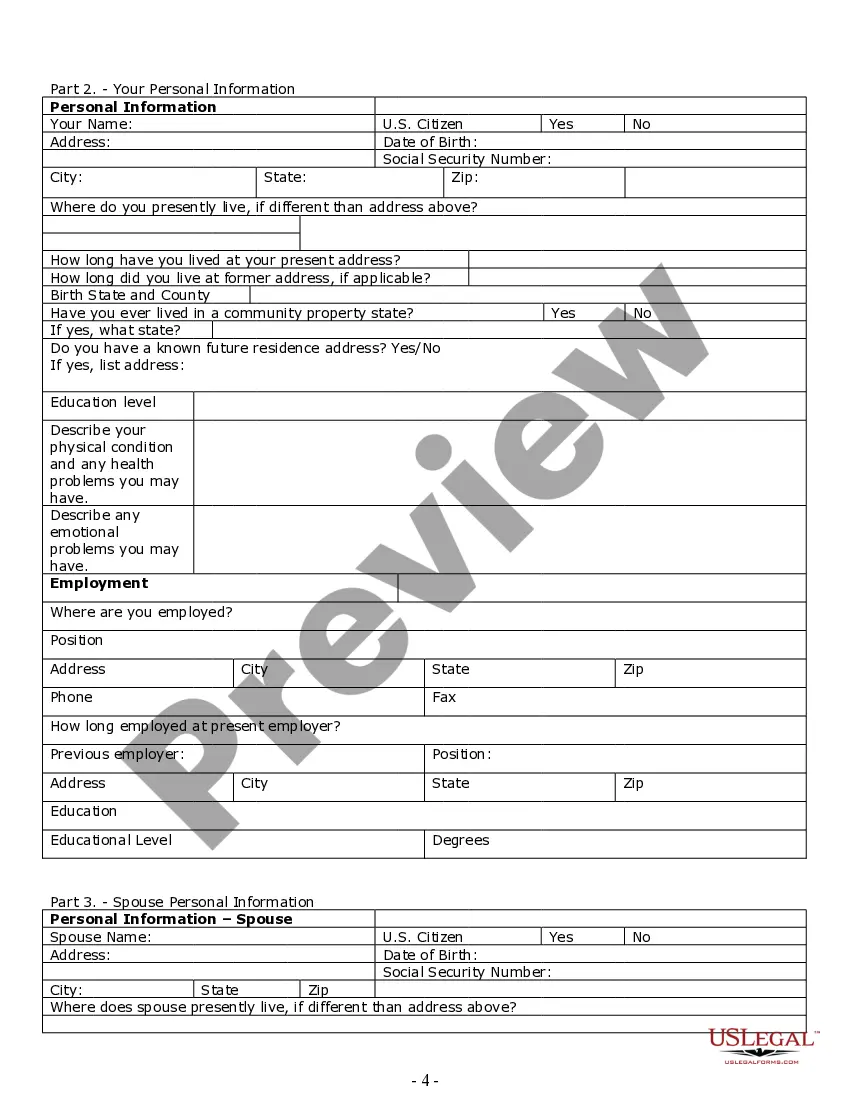
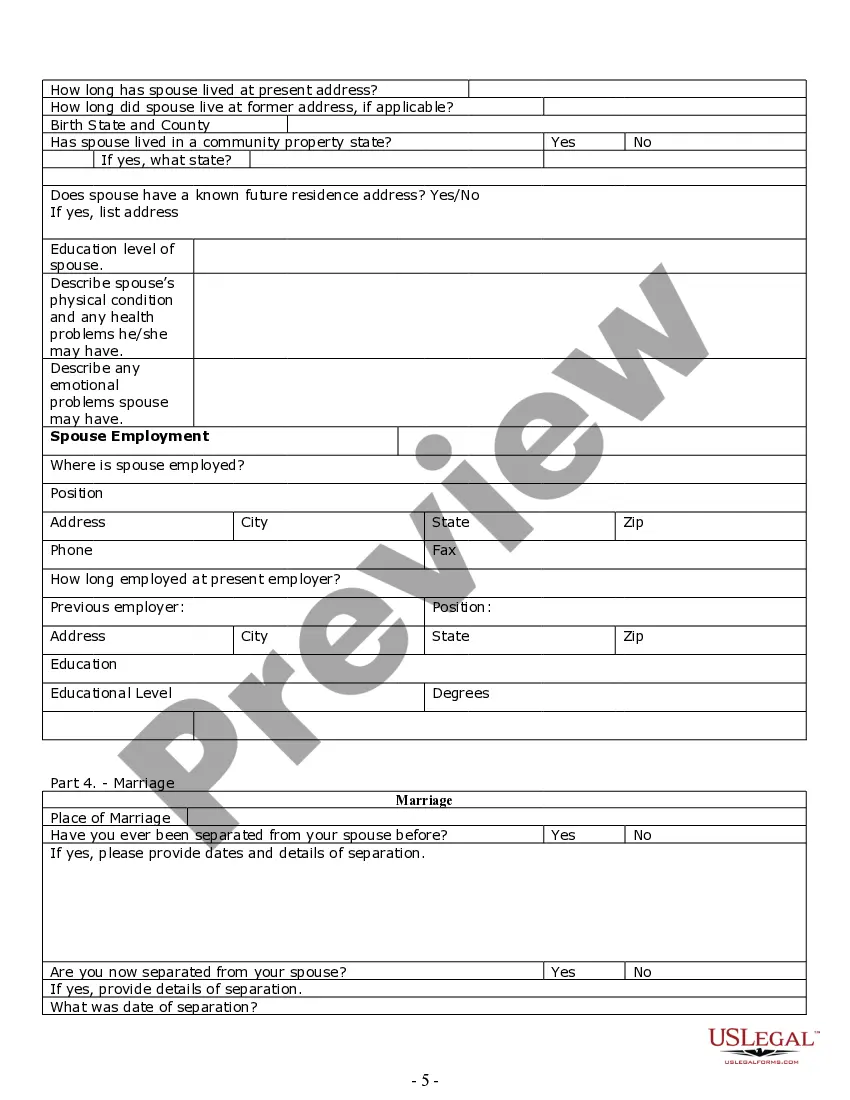
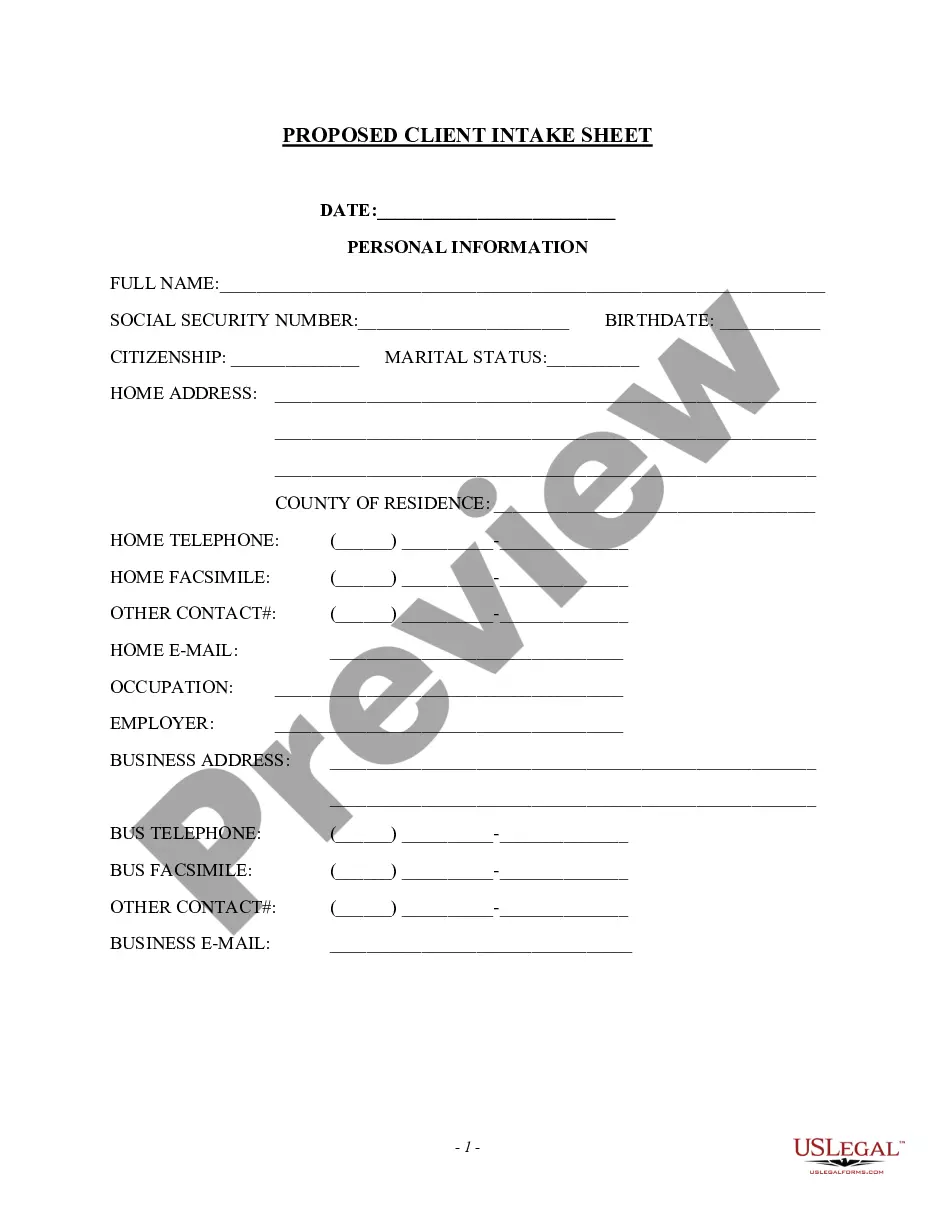
- Personal information sections for both parties
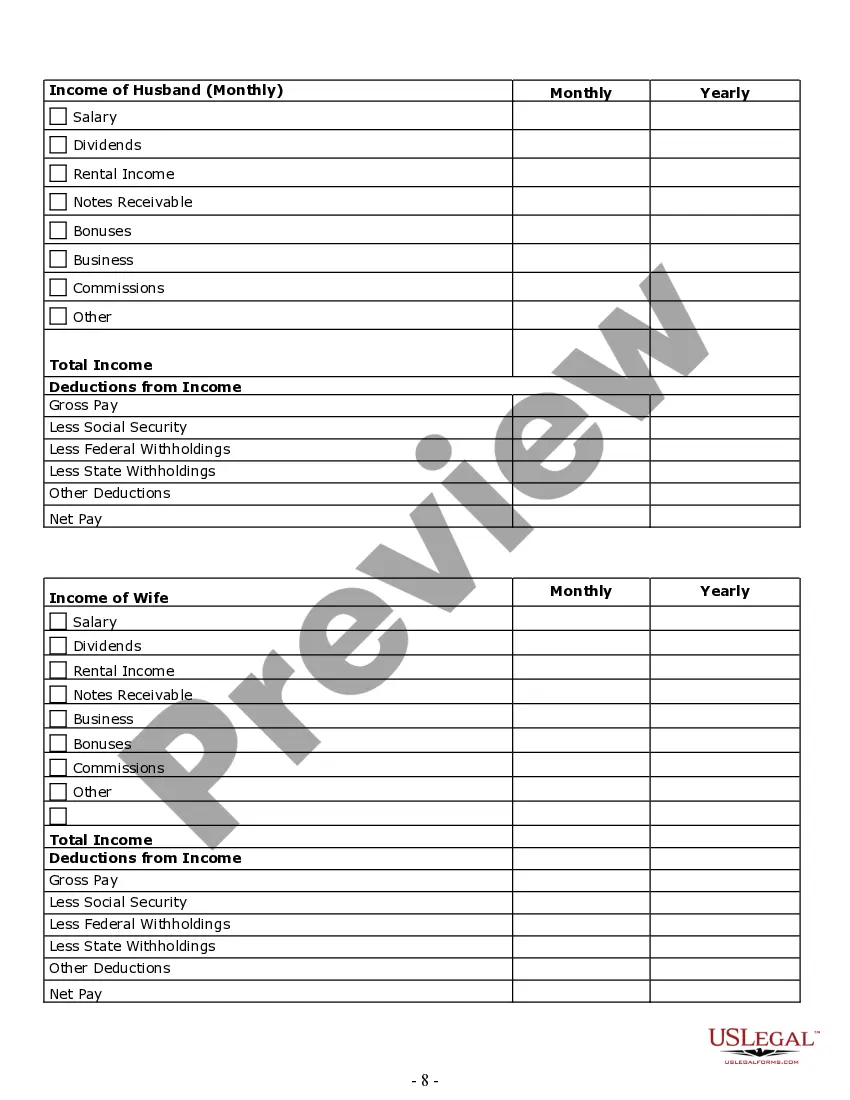
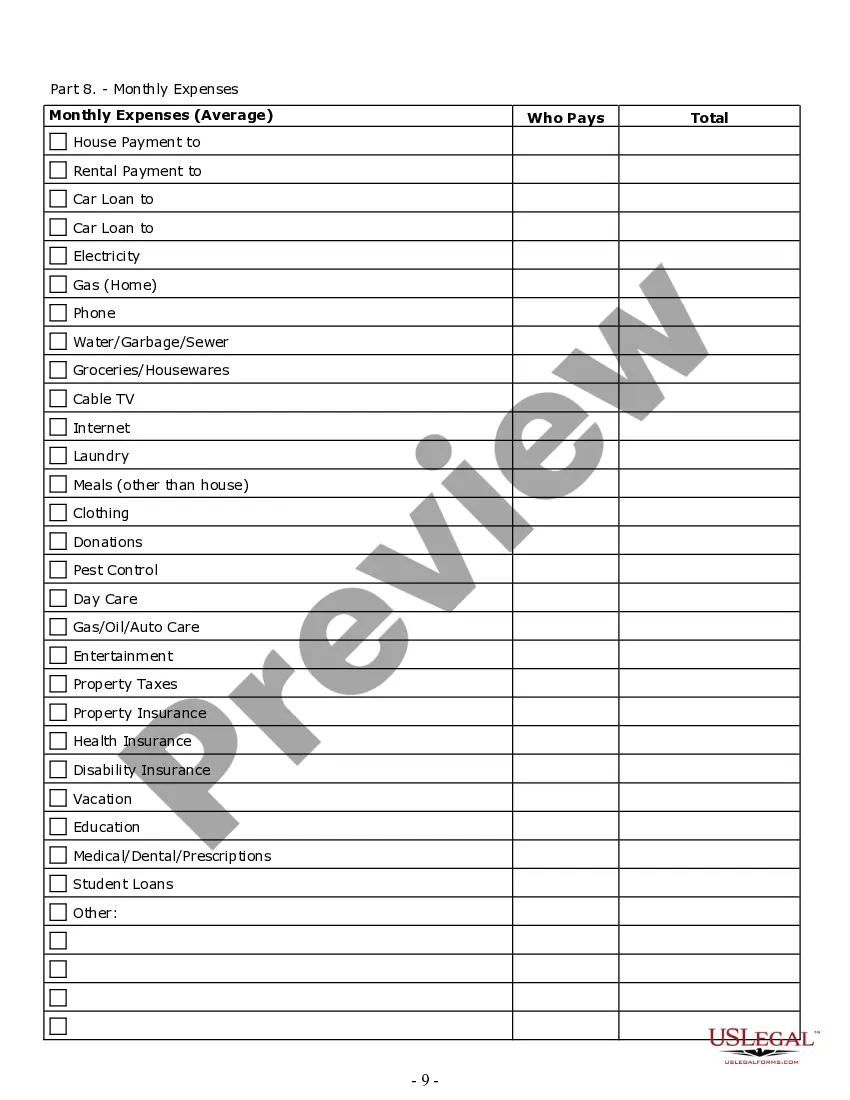
- Financial disclosure forms for income and expenses
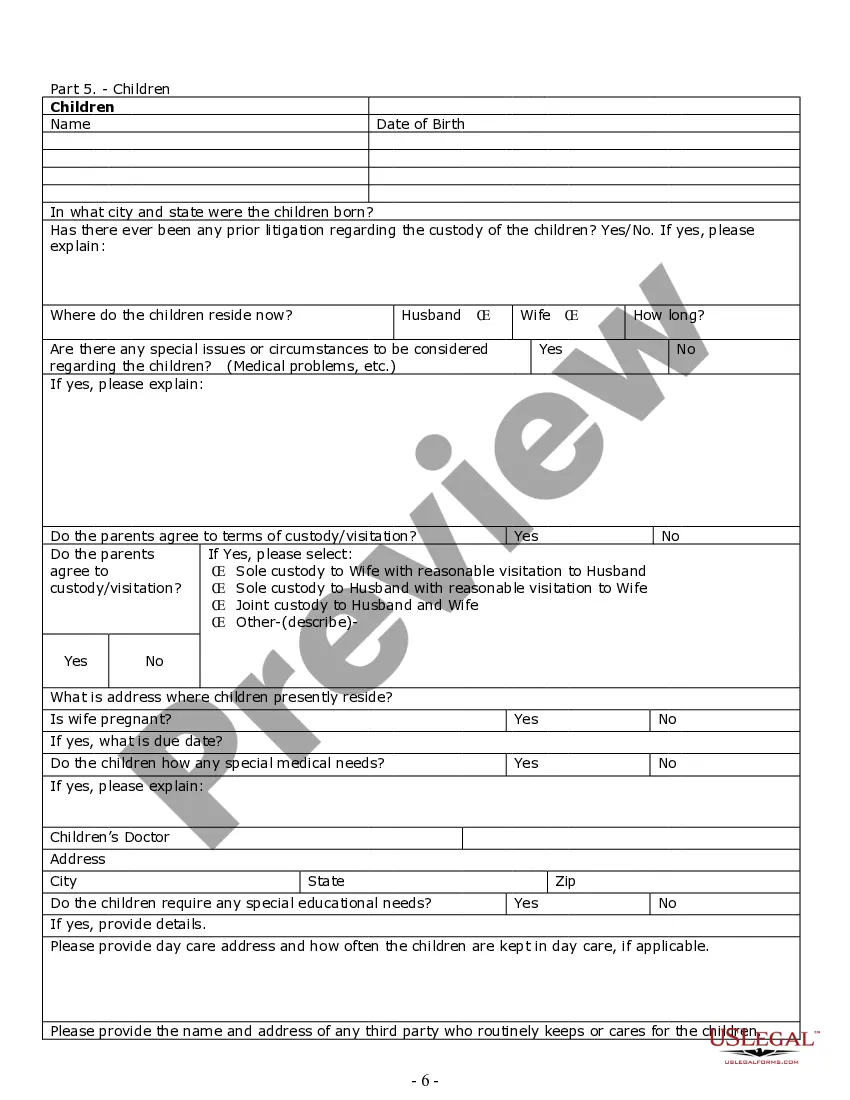
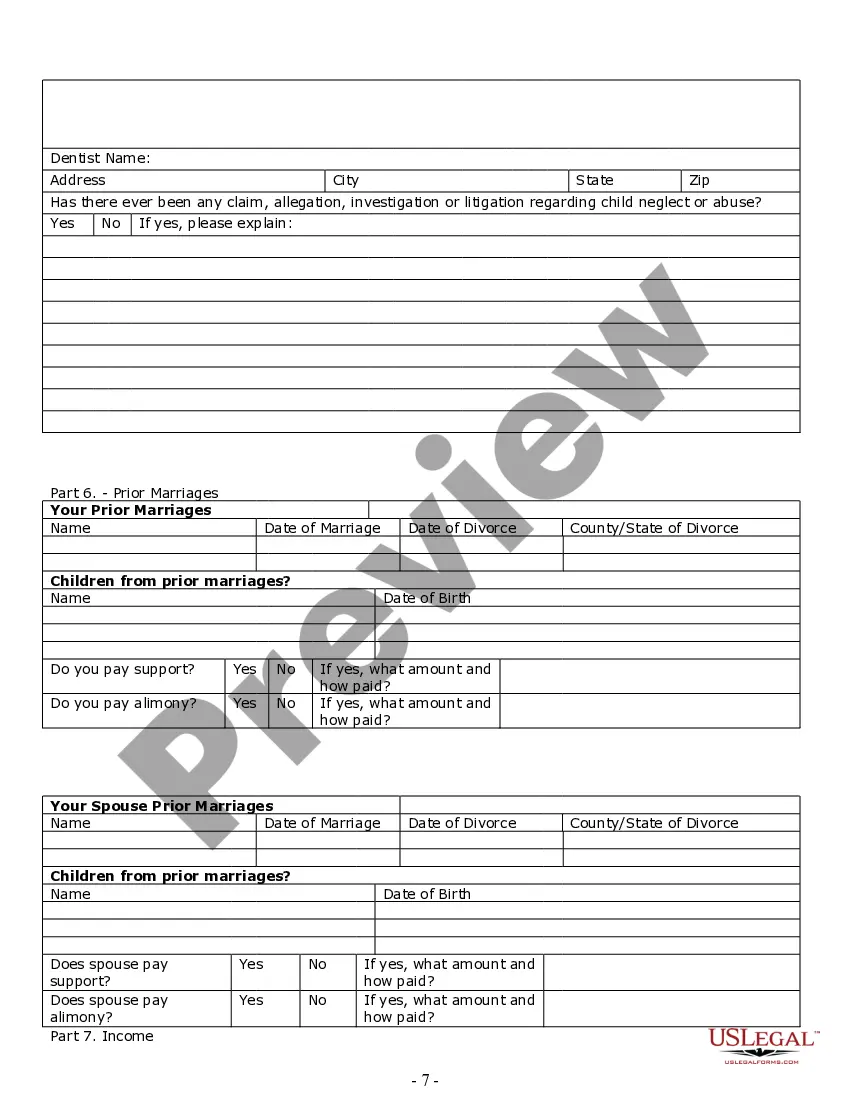
- Detailed information on children involved in the divorce
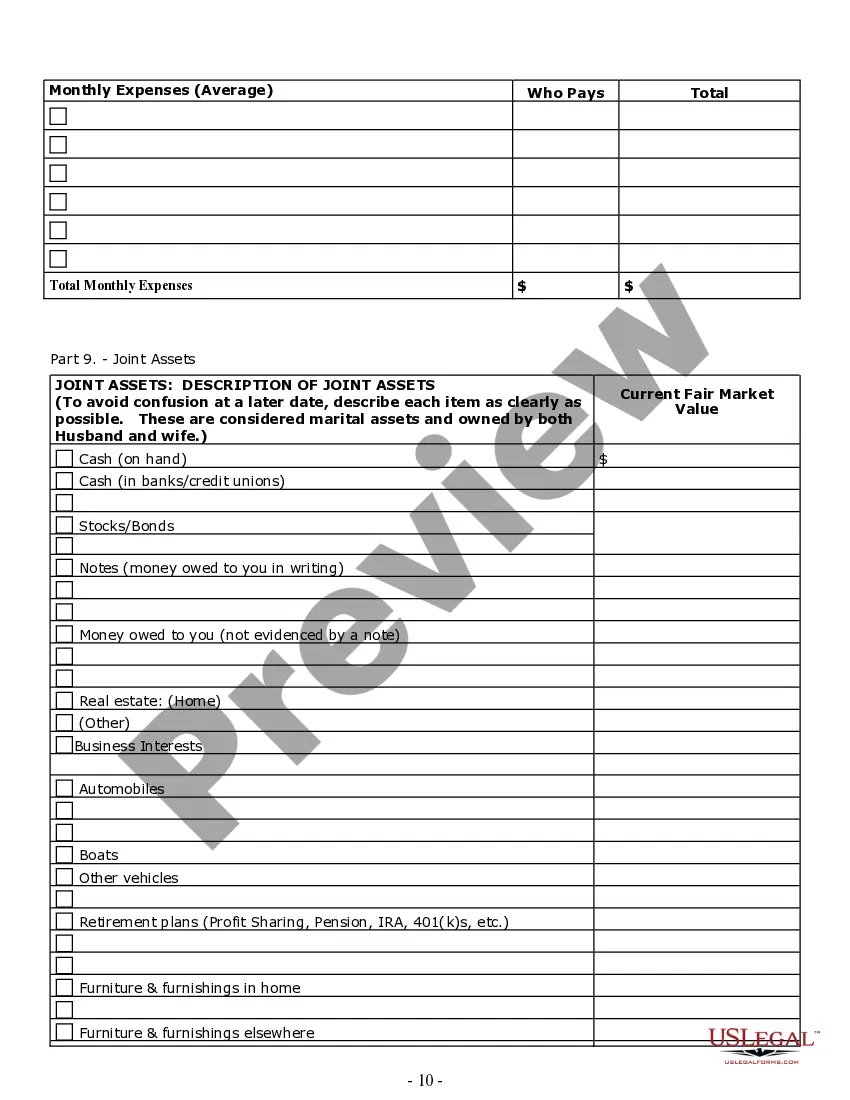
- Asset and liability listings to determine equitable distribution
- Guidance on child support calculation and visitation rights


Situations where this form applies
This form is ideal for individuals considering divorce, whether contested or uncontested. It is beneficial in cases where both parties need to clarify financial responsibilities, custody arrangements, and asset division. Using this form can save time and legal costs by enabling individuals to systematically gather necessary information before meeting with an attorney or filing paperwork in court.
Who this form is for
- Individuals contemplating divorce
- Couples seeking to outline their divorce terms amicably
- Attorneys assisting clients in divorce proceedings
- People wanting to understand their rights and obligations during divorce
Completing this form step by step
- Gather personal information: Collect details about both spouses, including names, addresses, and social security numbers.
- Detail financial information: Fill out income and expense sections to give a complete picture of financial status.
- List all children: Provide information regarding children, including dates of birth, current living arrangements, and any prior custody issues.
- Document assets and liabilities: Clearly outline all marital assets, debts, and any separate property owned by each spouse.
- Review definitions: Familiarize yourself with key terms related to divorce to better understand your rights and obligations.
Is notarization required?
This form does not typically require notarization unless specified by local law. Be sure to check state regulations for any specific requirements regarding notarization of divorce documents.
Get your form ready online
Our built-in tools help you complete, sign, share, and store your documents in one place.
Make edits, fill in missing information, and update formatting in US Legal Forms—just like you would in MS Word.
Download a copy, print it, send it by email, or mail it via USPS—whatever works best for your next step.
Sign and collect signatures with our SignNow integration. Send to multiple recipients, set reminders, and more. Go Premium to unlock E-Sign.
If this form requires notarization, complete it online through a secure video call—no need to meet a notary in person or wait for an appointment.
We protect your documents and personal data by following strict security and privacy standards.

Make edits, fill in missing information, and update formatting in US Legal Forms—just like you would in MS Word.

Download a copy, print it, send it by email, or mail it via USPS—whatever works best for your next step.

Sign and collect signatures with our SignNow integration. Send to multiple recipients, set reminders, and more. Go Premium to unlock E-Sign.

If this form requires notarization, complete it online through a secure video call—no need to meet a notary in person or wait for an appointment.

We protect your documents and personal data by following strict security and privacy standards.
Common mistakes
- Failing to include all financial assets and debts
- Not providing accurate information about custody arrangements
- Overlooking specific state laws that could affect child support calculations
- Neglecting to consider all children involved in the divorce
Why use this form online
- Easy access: Download the form anytime, anywhere.
- Editability: Customize the worksheet to fit your specific situation.
- Time savings: Complete the necessary sections efficiently before meeting with an attorney.
Summary of main points
- The Divorce Worksheet and Law Summary is essential for organizing information necessary for divorce proceedings.
- Completing this form can save time and legal costs during your divorce.
- Understand and define key terms and processes related to your divorce.
- Be diligent in reviewing your state's specific laws regarding divorce.
Looking for another form?

Form popularity
FAQ
Filing for an uncontested divorce in Missouri involves several clear steps. First, you need to complete the necessary forms, including the Missouri Divorce Worksheet and Law Summary for Contested or Uncontested Case of over 25 pages - Ideal Client Interview Form. After gathering all required documents, you will file them with the appropriate court in your county. Finally, ensure that you follow up on your case to confirm that everything is processed smoothly.
The time it takes to finalize an uncontested divorce in Missouri can vary, but it typically ranges from 30 to 90 days. This timeframe depends on the court's schedule and the completeness of your paperwork. By using the Missouri Divorce Worksheet and Law Summary for Contested or Uncontested Case of over 25 pages - Ideal Client Interview Form, you can ensure that your documents are accurate and complete, which may expedite the process.
While an uncontested divorce offers many benefits, there are some disadvantages to consider. One potential issue is that both parties may overlook important legal details, leading to future disputes. Additionally, without proper legal guidance, you might not fully understand your rights and obligations. Using the Missouri Divorce Worksheet and Law Summary for Contested or Uncontested Case of over 25 pages - Ideal Client Interview Form can help mitigate these risks by providing comprehensive insights and ensuring that you address all necessary elements of your case.
In Missouri, an uncontested divorce usually concludes within 30 to 90 days after filing, assuming both parties reach an agreement. The specific timeline may vary based on the court's workload and the complexity of your case. To simplify this journey, consider using the Missouri Divorce Worksheet and Law Summary for Contested or Uncontested Case of over 25 pages - Ideal Client Interview Form, which provides clarity and organization to your divorce proceedings. This tool helps you stay on track and informed throughout the process.
An uncontested divorce in Missouri typically takes around 30 to 90 days from the time you file your paperwork. The duration largely depends on the court's schedule and whether both parties agree on all terms. Utilizing the Missouri Divorce Worksheet and Law Summary for Contested or Uncontested Case of over 25 pages - Ideal Client Interview Form can streamline your process, ensuring you have all necessary documentation in order. This proactive approach helps you avoid unnecessary delays.
For criminal court records, check the Missouri Courts Casenet portal. It is also possible to find criminal court records by visiting Missouri courts where the cases in question were heard. Court clerks also have provisions for providing copies of criminal case documents upon request.
Casenet is an online system designed to make it easier for people to gain access to information regarding court cases. Casenet was a judicial response in Missouri to the need to make the judicial system more public for Missourians. Casenet provides access to court records only in Missouri; not other states.
The State of Missouri Judiciary offers a website called Case.net to provide free public access to case information. Case information available on Case.net comes from the information entered by judicial staff in the court's computer database. Case information is immediately available through the internet.
The State of Missouri Judiciary offers a website called Case.net to provide free public access to case information. Case information available on Case.net comes from the information entered by judicial staff in the court's computer database. Case information is immediately available through the internet.
Case.net is the Missouri Judiciary's case information portal. Missouri Court Operating Rule 2 governs public access to the records of the judicial department.