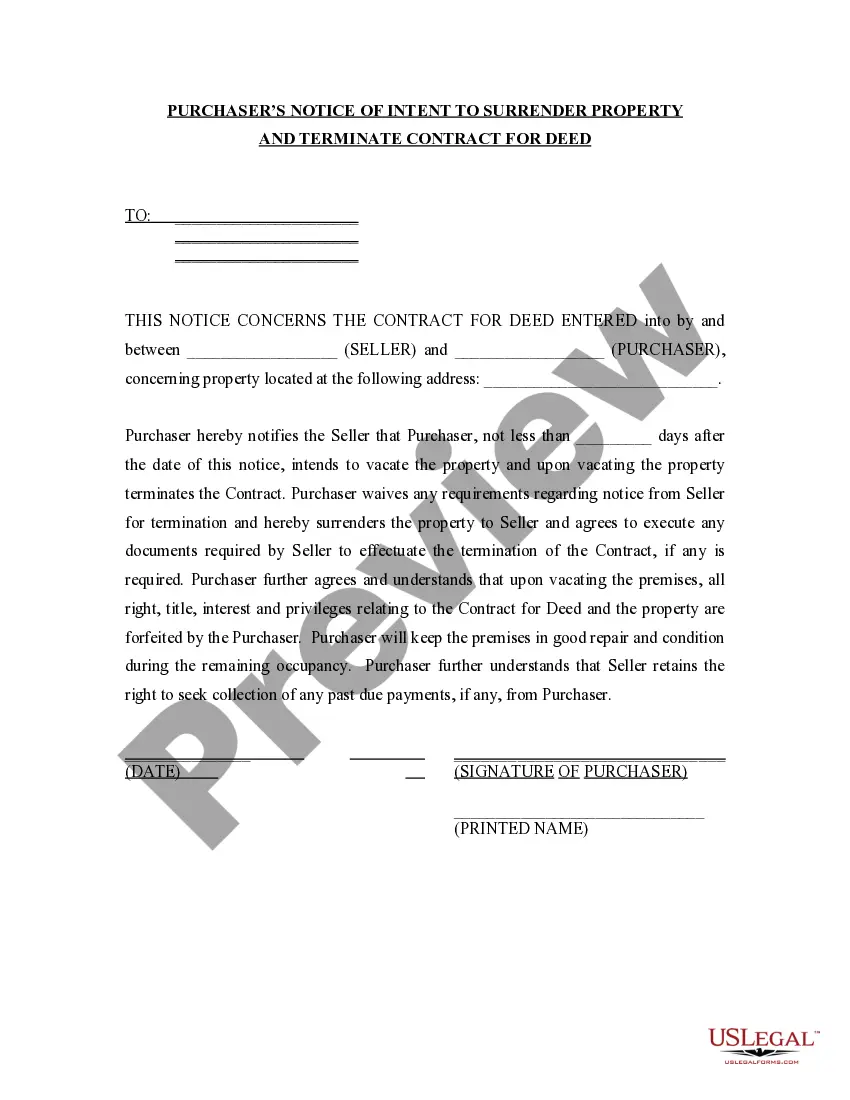
Proposed Client Intake Sheet - General
What this document covers
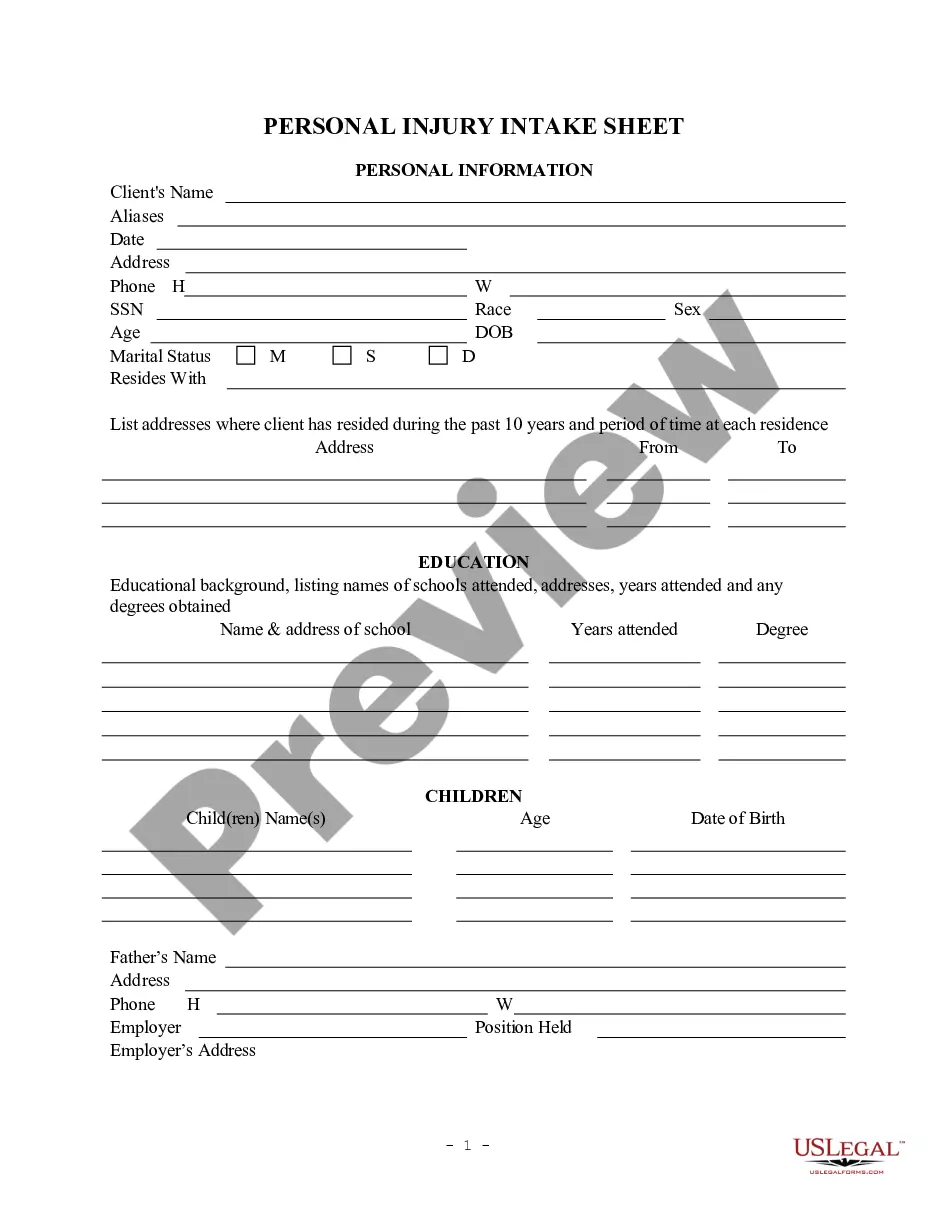
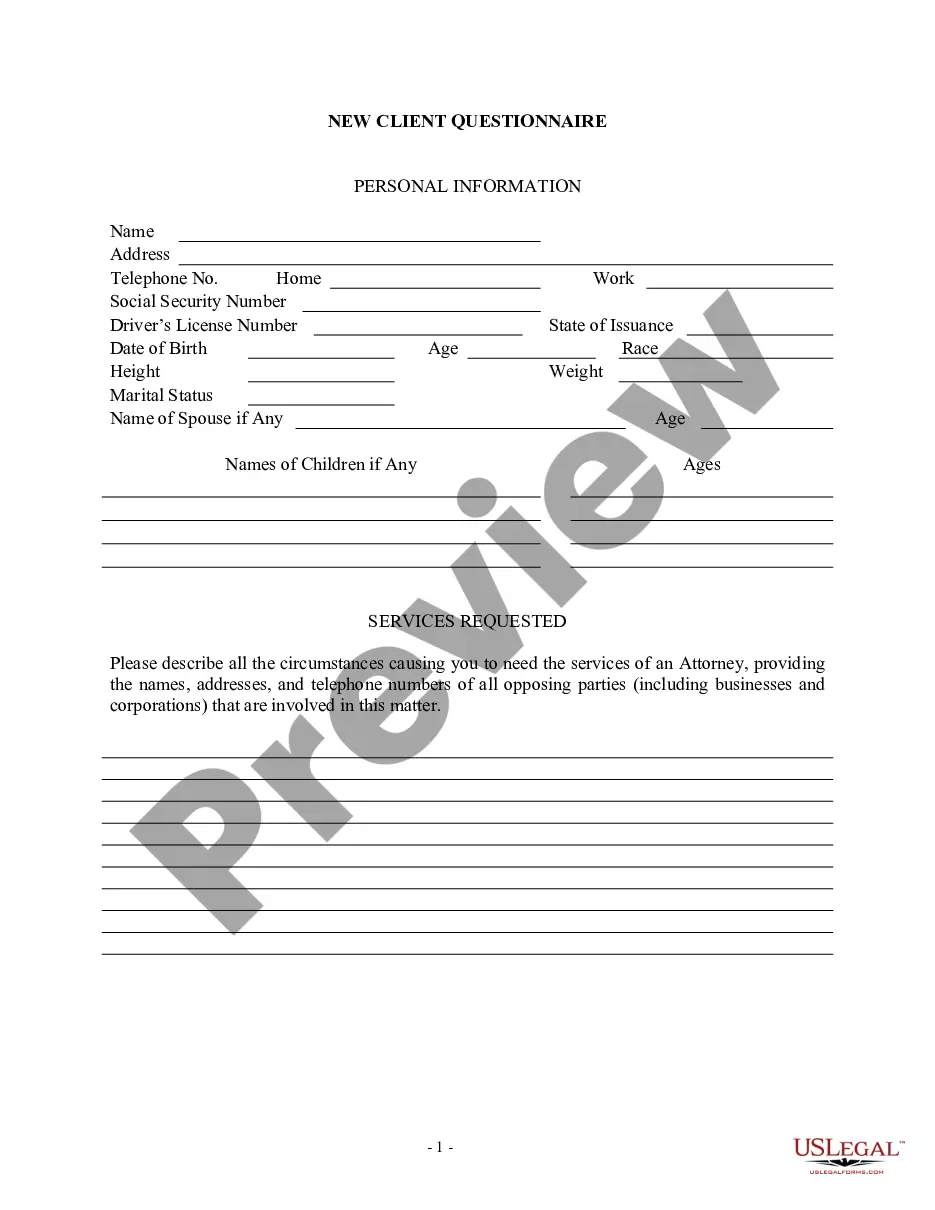
The Proposed Client Intake Sheet - General is a comprehensive document designed to gather essential personal and legal information from potential clients seeking legal assistance. This form helps attorneys understand the context and details of a client's case, ensuring accurate and effective representation. It includes various sections covering personal details, the nature of the legal matter, and any relevant witnesses or other parties involved, making it a vital tool for both clients and legal professionals.
What’s included in this form
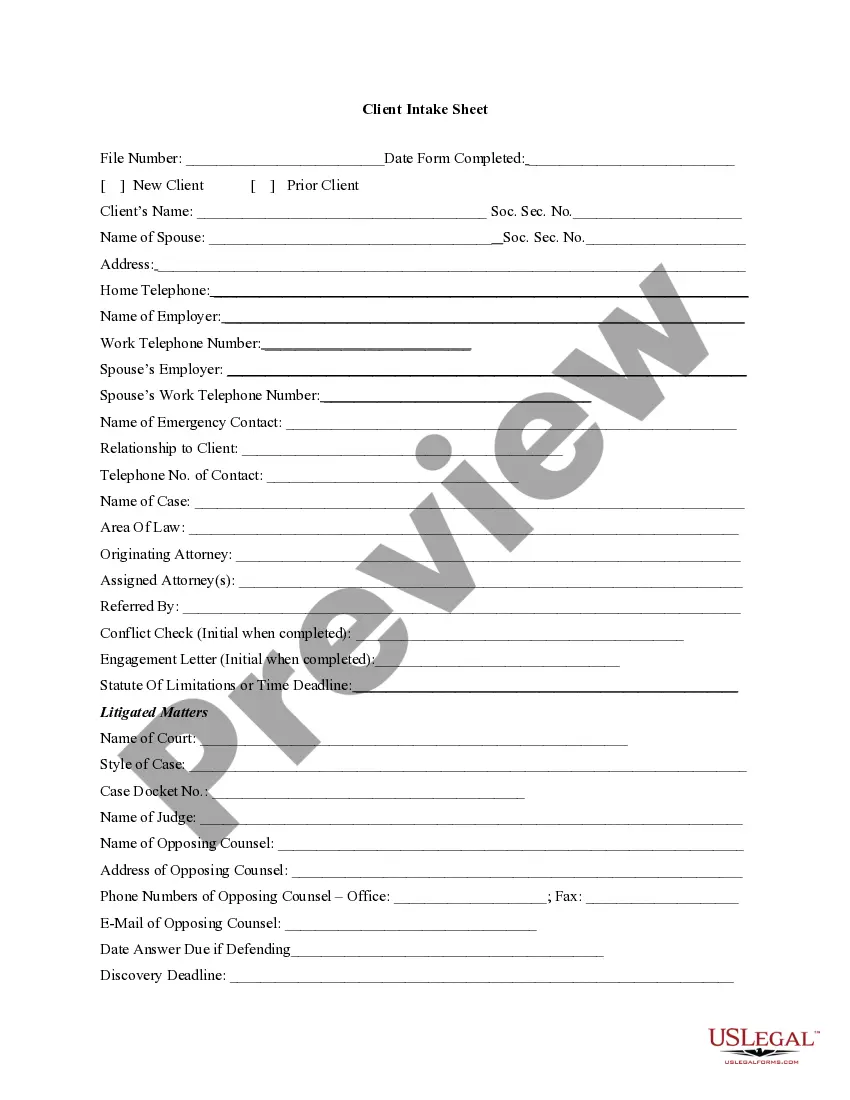
- Date of form completion.
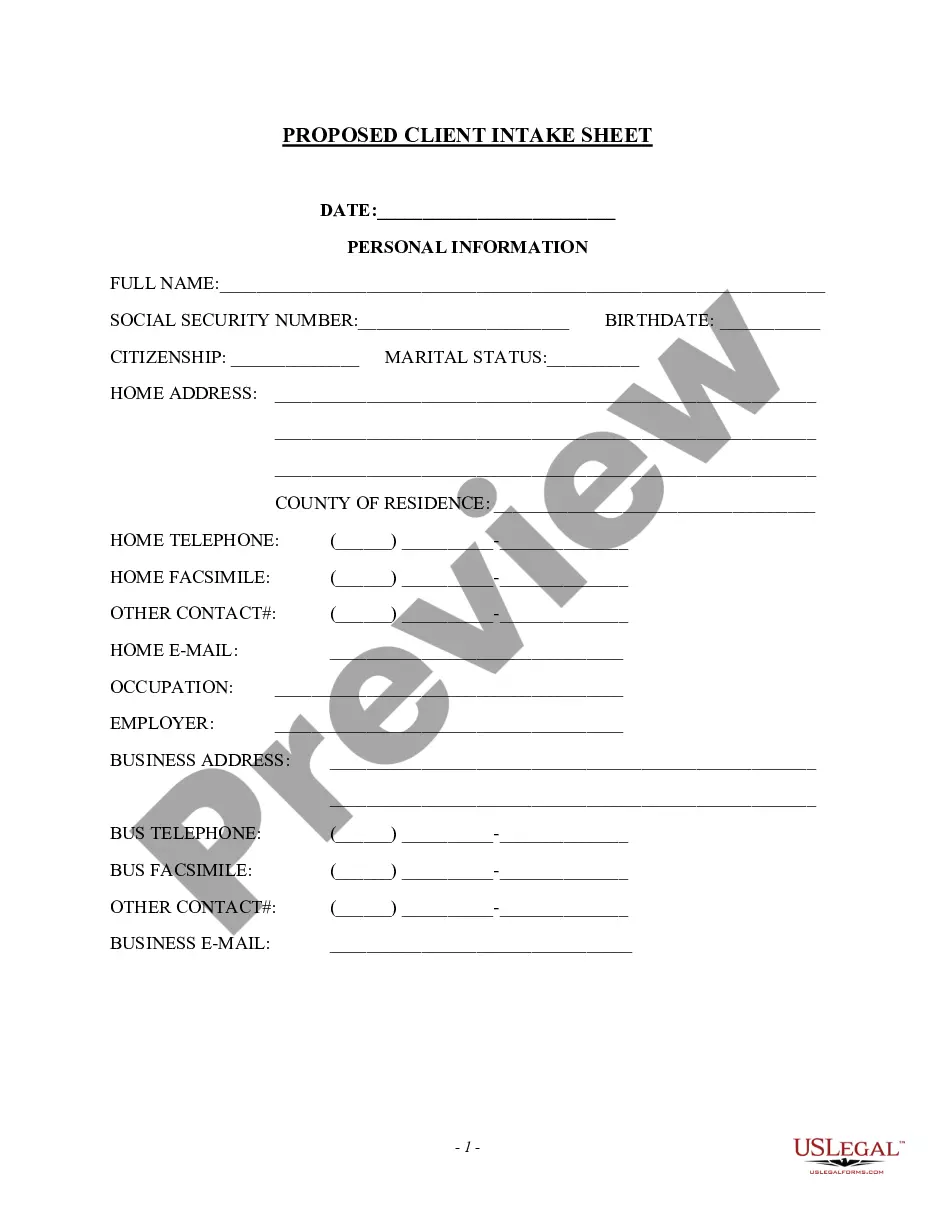
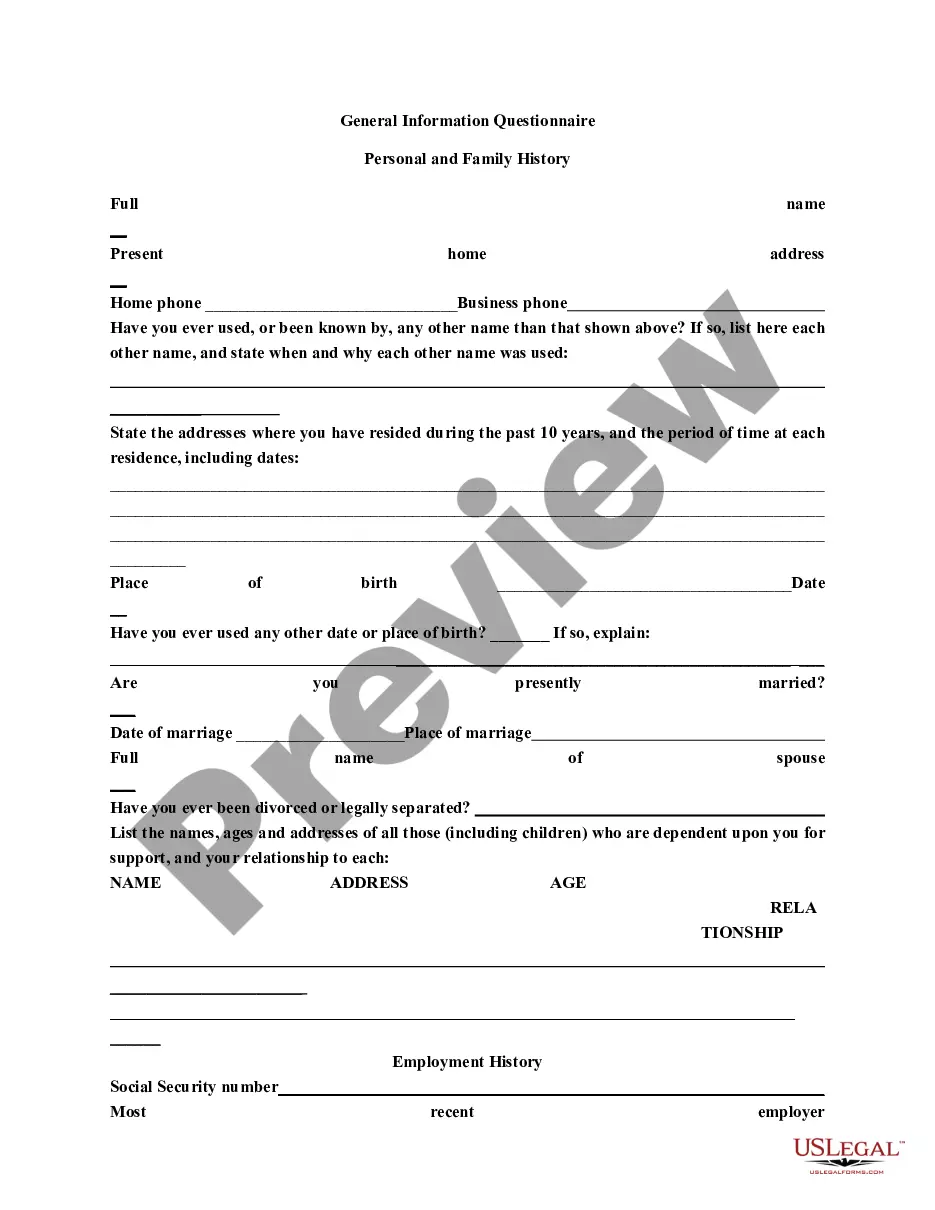
- Personal information, including full name, contact details, and occupation.
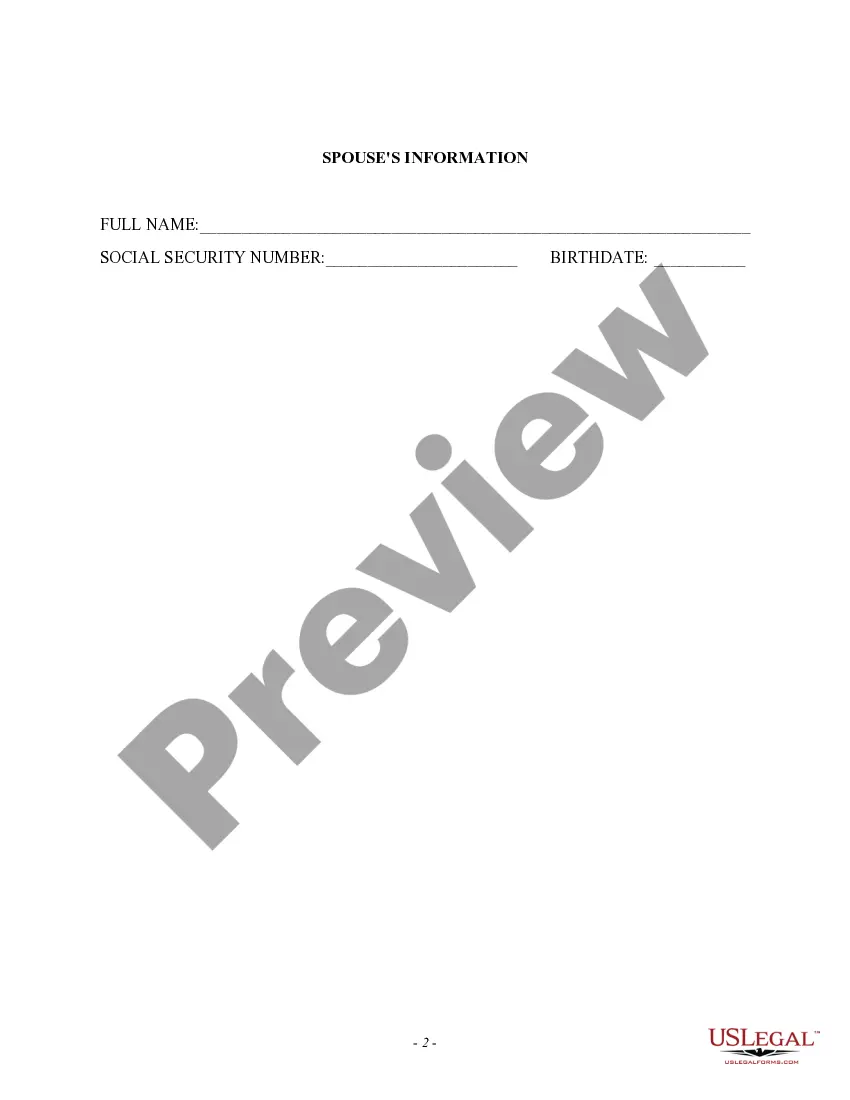
- Spouse's information if applicable.
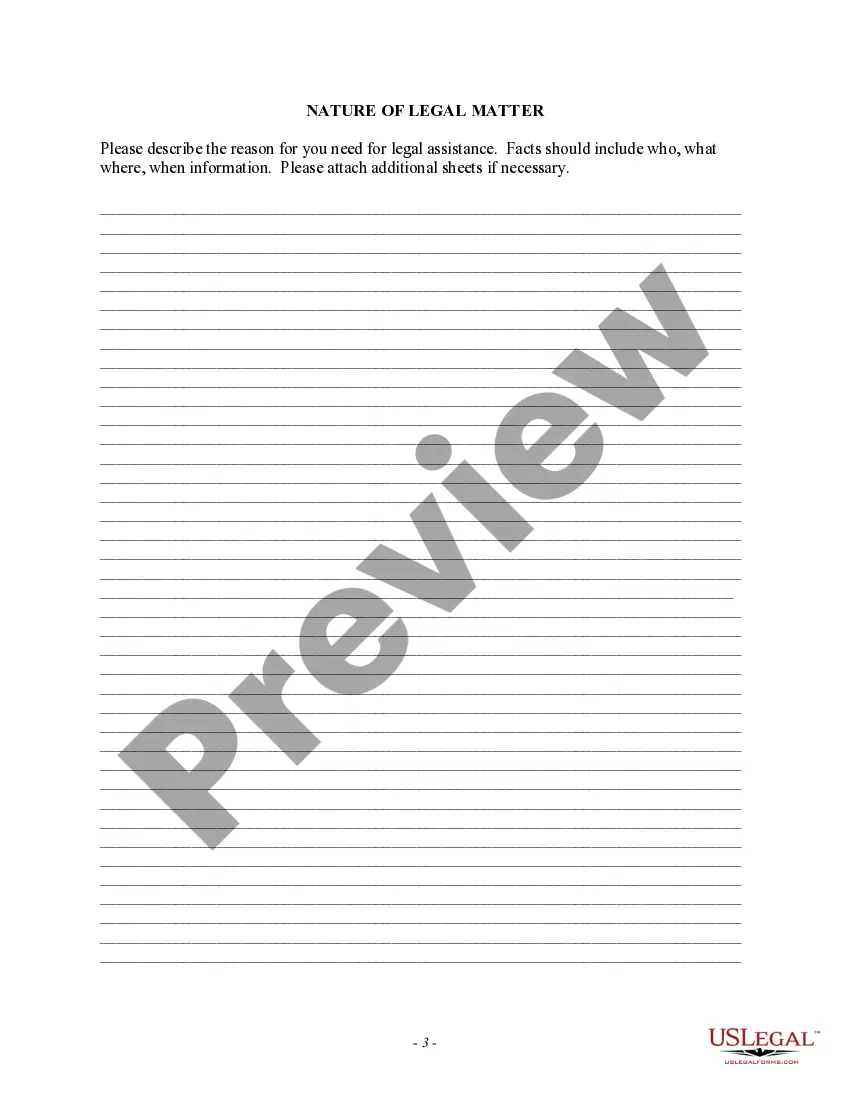
- A detailed description of the nature of the legal matter.
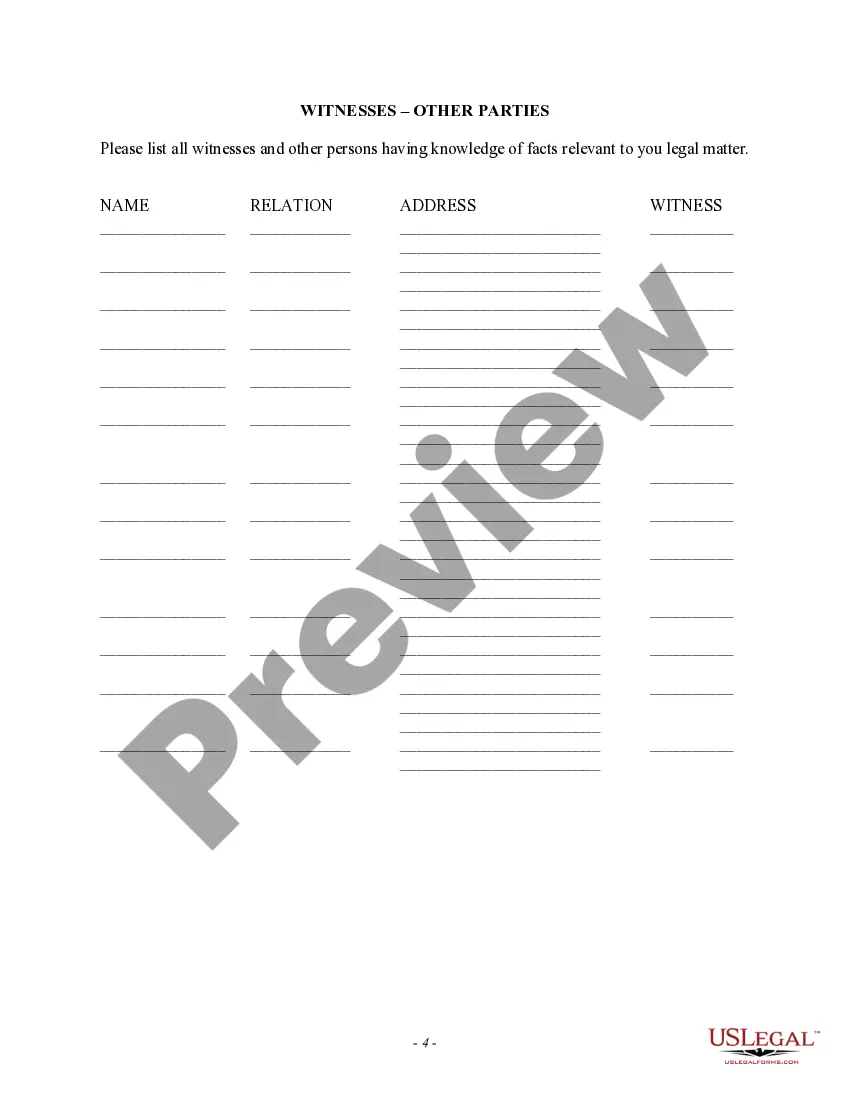
- Sections to list witnesses and other parties involved.
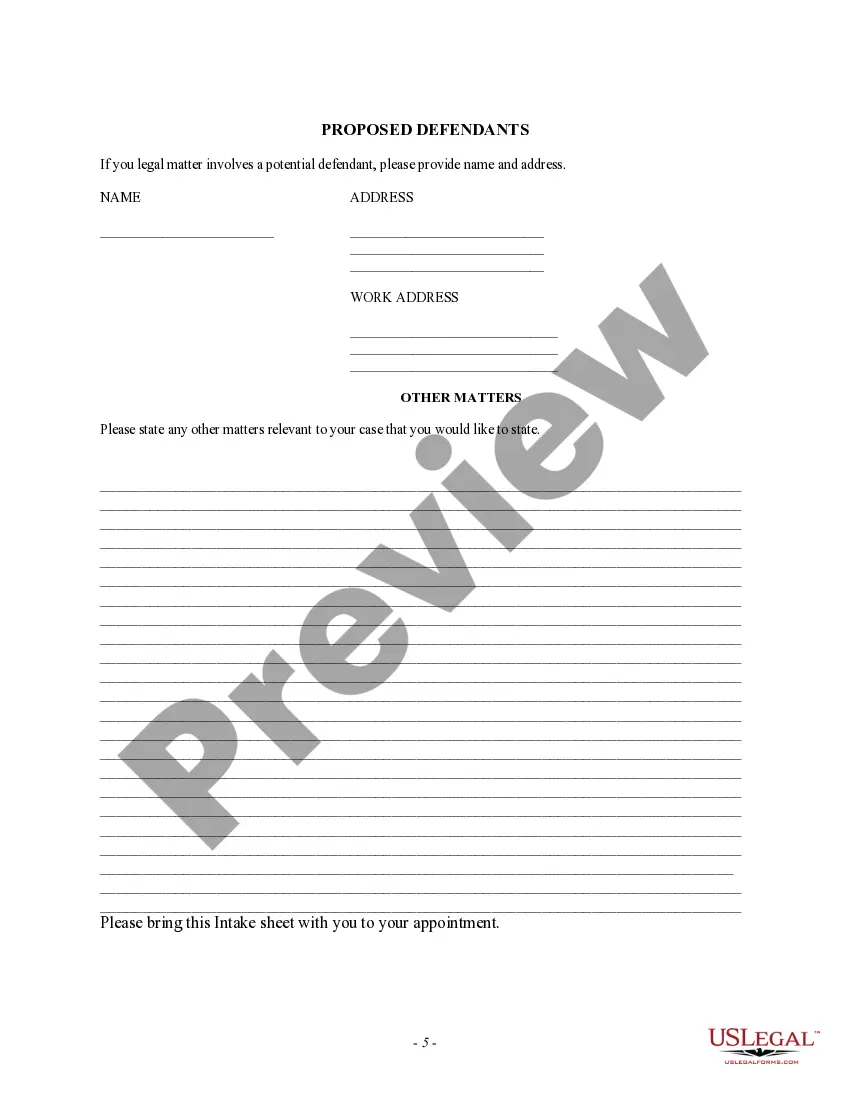
- Proposed defendants if relevant to the case.
- Opportunity to state additional matters relevant to the case.
When this form is needed
This form should be used by clients who are preparing to meet with an attorney for the first time. It is particularly useful when the client needs legal assistance on various matters, including but not limited to family law, criminal defense, contract disputes, and personal injury. By completing the Proposed Client Intake Sheet, clients can ensure they provide their attorney with all necessary information to assess their legal situation effectively.
Who can use this document
- Individuals seeking legal assistance for personal or business matters.
- Clients attending their first consultation with an attorney.
- Those involved in legal matters requiring detailed information for effective representation.
How to complete this form
- Enter the date at the top of the form.
- Fill in your personal information, including your full name, social security number, and contact details.
- Provide information about your spouse if applicable.
- Clearly describe the nature of your legal matter in the provided section, including relevant facts.
- List any witnesses and other parties related to the case in the corresponding sections.
- Bring the completed form with you to your appointment.
Notarization requirements for this form
In most cases, this form does not require notarization. However, some jurisdictions or signing circumstances might. US Legal Forms offers online notarization powered by Notarize, accessible 24/7 for a quick, remote process.
Get your form ready online
Our built-in tools help you complete, sign, share, and store your documents in one place.
Make edits, fill in missing information, and update formatting in US Legal Forms—just like you would in MS Word.
Download a copy, print it, send it by email, or mail it via USPS—whatever works best for your next step.
Sign and collect signatures with our SignNow integration. Send to multiple recipients, set reminders, and more. Go Premium to unlock E-Sign.
If this form requires notarization, complete it online through a secure video call—no need to meet a notary in person or wait for an appointment.
We protect your documents and personal data by following strict security and privacy standards.

Make edits, fill in missing information, and update formatting in US Legal Forms—just like you would in MS Word.

Download a copy, print it, send it by email, or mail it via USPS—whatever works best for your next step.

Sign and collect signatures with our SignNow integration. Send to multiple recipients, set reminders, and more. Go Premium to unlock E-Sign.

If this form requires notarization, complete it online through a secure video call—no need to meet a notary in person or wait for an appointment.

We protect your documents and personal data by following strict security and privacy standards.
Common mistakes to avoid
- Leaving sections blank; ensure all mandatory fields are filled out.
- Providing incomplete descriptions of the legal matter.
- Not including all relevant witnesses or parties involved.
- Failing to update personal information if there have been recent changes.
Why use this form online
- Easy to download and complete at your convenience without needing to visit an office.
- Editable format allows you to save and update information as needed.
- Reliable templates drafted by licensed attorneys ensure legal compliance.
- Supports efficient preparation for attorney appointments, saving time during consultations.
Quick recap
- The Proposed Client Intake Sheet - General is essential for effective legal representation.
- Completing the form accurately helps attorneys understand your legal needs.
- Ensure all sections are filled to provide a comprehensive overview of your situation.
- Bring the completed form to your consultation to facilitate a productive discussion.
Looking for another form?
Form popularity
FAQ
Proposed Client Intake Sheet - General is a comprehensive form used to gather essential personal and legal information from potential clients seeking legal help. It’s intended for first consultations across a range of matters, collecting details such as personal information, a description of the matter, witnesses and other parties, and any defendants or additional matters relevant to the case.
Fill in the date of form completion; your full name, contact details, and occupation; spouse information if applicable; a detailed description of the nature of the legal matter; sections to list witnesses and other parties involved; any proposed defendants; and an opportunity to state additional matters relevant to the case.
Client intake describes the process of gathering essential information from a prospective client so an attorney can assess the case. For this form, it means collecting personal details, a detailed matter description, and any witnesses or other parties involved to prepare for the initial consultation.
This form should be completed before or at the first meeting with the attorney. Include the date, personal details, a clear description of the legal matter, and lists of witnesses, other parties, and any proposed defendants, plus any additional matters the client wants to raise.
Intended for individuals seeking legal assistance for personal or business matters, clients attending their first consultation, and anyone needing detailed information to ensure effective representation.
This general intake sheet covers a broad range of matters and includes sections for witnesses, other parties, and proposed defendants, which a family law-focused form may not address. It is designed for multi-state use and general representation rather than focusing on a single area of law.