New Client Questionnaire
What this document covers
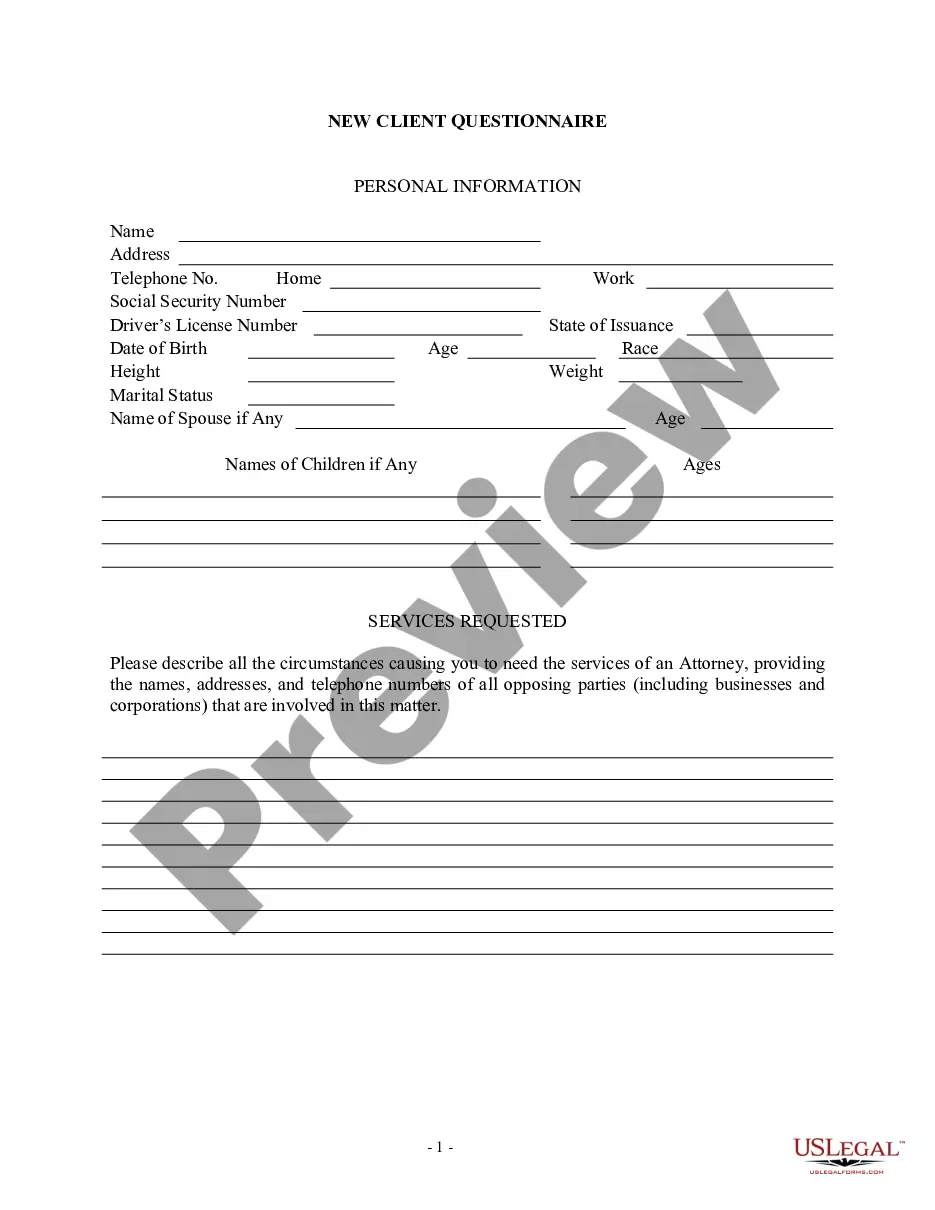
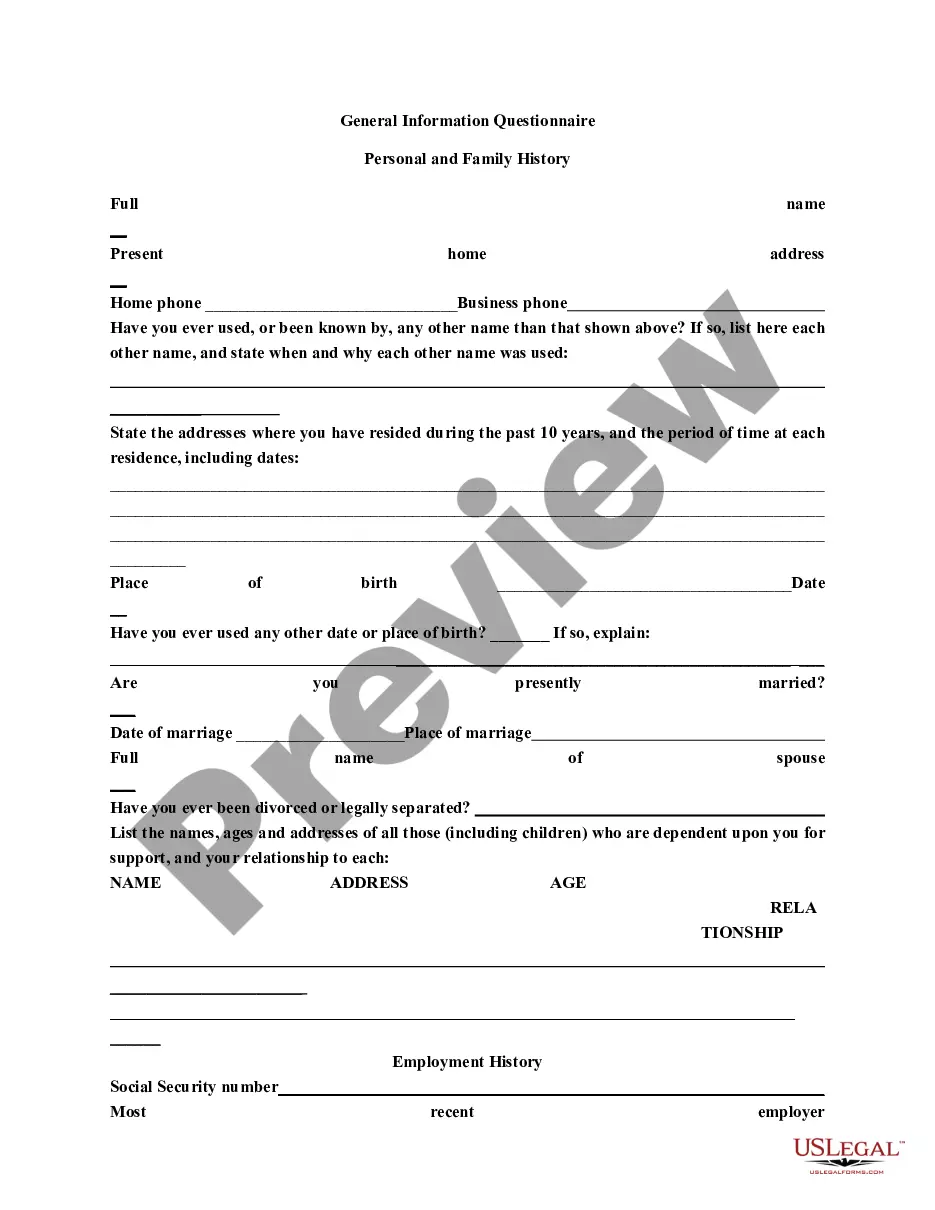
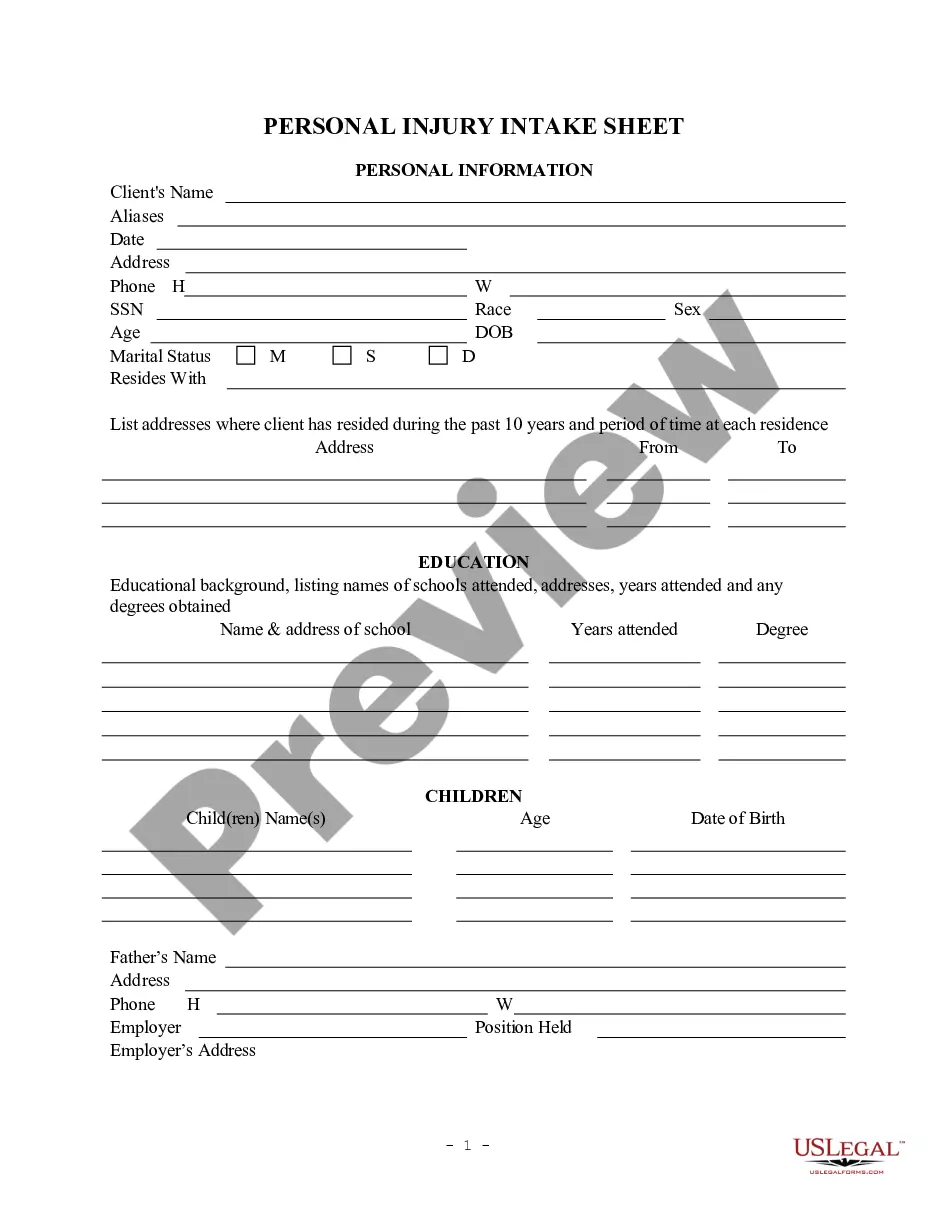
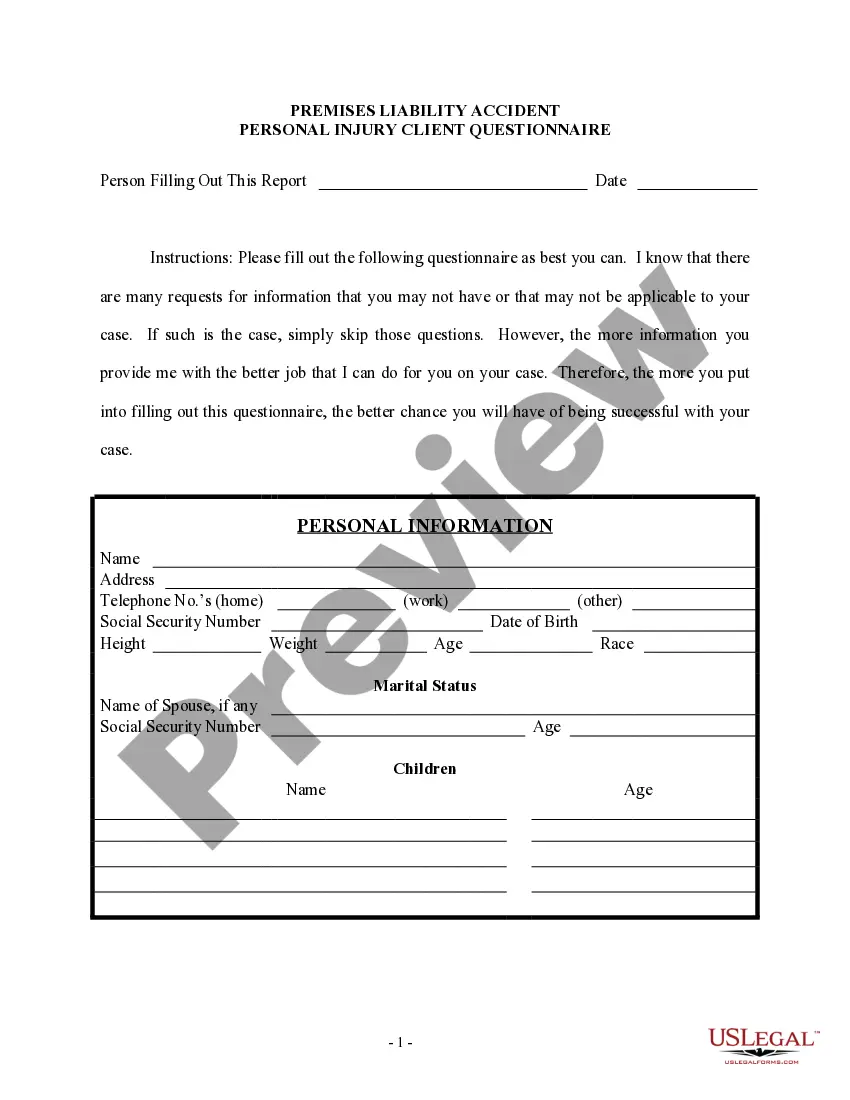
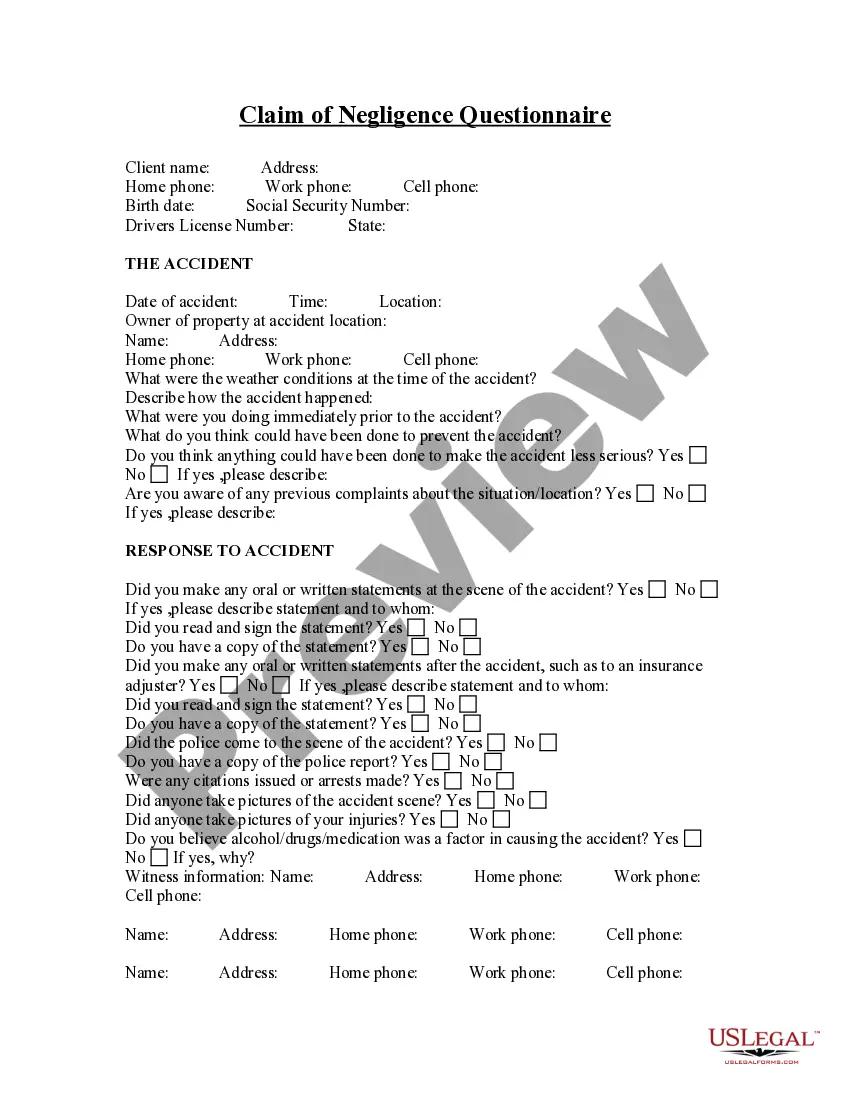
The New Client Questionnaire is a comprehensive form designed to capture essential information about new clients seeking legal representation. This form helps attorneys gather pertinent details about the client's situation, making it easier to understand their claims and the services required. Unlike other legal forms, this questionnaire offers a structured format for clients to provide necessary information upfront, facilitating a more efficient attorney-client relationship.
Key components of this form
- Personal information: Collects basic details about the client, including name, address, and contact information.
- Details of the case: Clients describe circumstances leading to the legal need and provide information on opposing parties.
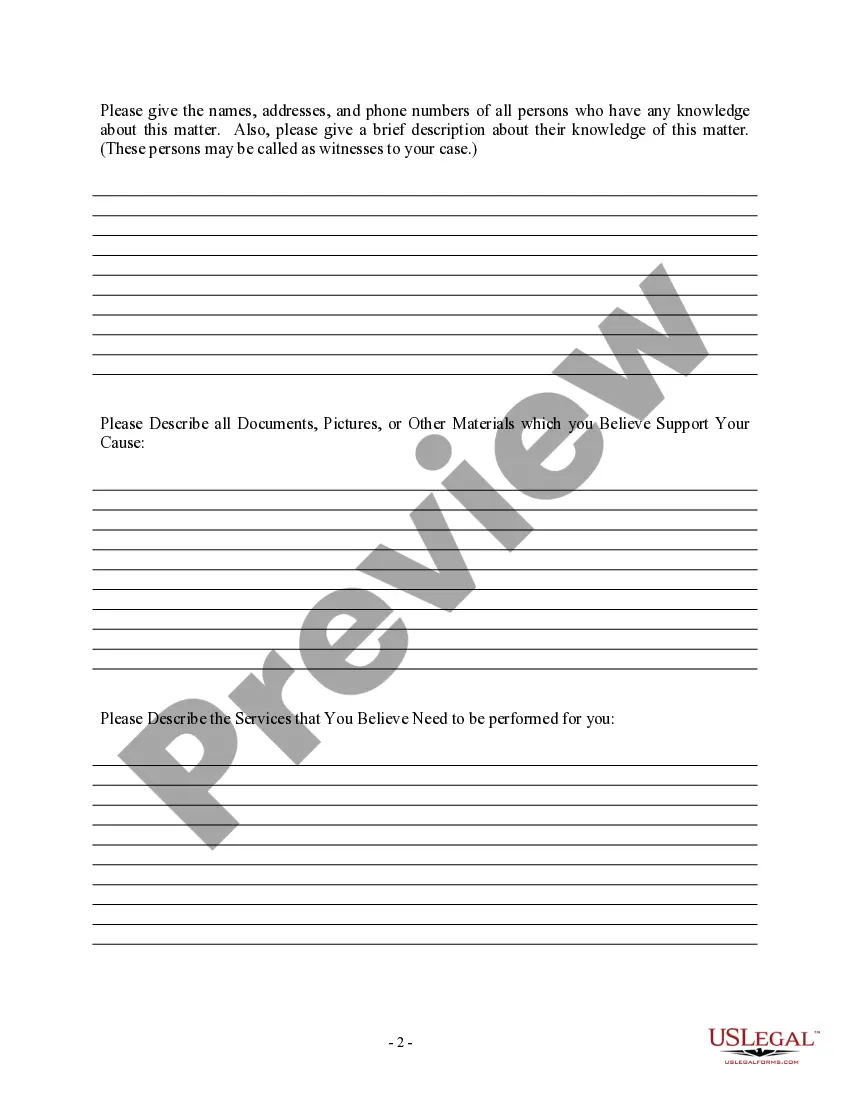
- Witnesses: Clients list individuals who may have knowledge relevant to their case.
- Supporting documents: This section allows clients to mention any materials that support their claims.
- Payment preferences: Clients indicate how they wish to pay for legal services.
- Additional comments: Clients can provide further context or information that may be relevant to their case.

Situations where this form applies
The New Client Questionnaire should be used when an individual seeks legal services for the first time. It is particularly useful in situations where the client has a specific legal issue, such as personal injury, family law matters, or criminal defense. This form aids attorneys in assessing the case's viability and the specific needs of the client before proceeding with legal action.
Who should use this form
- Individuals seeking legal representation for the first time.
- Clients who have a specific legal issue requiring attorney assistance.
- Anyone needing to clearly articulate their case details and payment options to their attorney.
Steps to complete this form
- Provide personal information accurately in the designated fields to establish your identity.
- Describe the circumstances of your case clearly, including relevant dates and events.
- List all opposing parties, including their contact information, to help your attorney prepare for your case.
- Identify any witnesses and detail their knowledge related to your case.
- Outline the documents and evidence you may have to support your claims.
- Indicate your preferred payment method for legal services rendered.
Notarization requirements for this form
This form does not typically require notarization to be legally valid. However, some jurisdictions or document types may still require it. US Legal Forms provides secure online notarization powered by Notarize, available 24/7 for added convenience.
Get your form ready online
Our built-in tools help you complete, sign, share, and store your documents in one place.
Make edits, fill in missing information, and update formatting in US Legal Forms—just like you would in MS Word.
Download a copy, print it, send it by email, or mail it via USPS—whatever works best for your next step.
Sign and collect signatures with our SignNow integration. Send to multiple recipients, set reminders, and more. Go Premium to unlock E-Sign.
If this form requires notarization, complete it online through a secure video call—no need to meet a notary in person or wait for an appointment.
We protect your documents and personal data by following strict security and privacy standards.

Make edits, fill in missing information, and update formatting in US Legal Forms—just like you would in MS Word.

Download a copy, print it, send it by email, or mail it via USPS—whatever works best for your next step.

Sign and collect signatures with our SignNow integration. Send to multiple recipients, set reminders, and more. Go Premium to unlock E-Sign.

If this form requires notarization, complete it online through a secure video call—no need to meet a notary in person or wait for an appointment.

We protect your documents and personal data by following strict security and privacy standards.
Mistakes to watch out for
- Inaccurate or incomplete personal information, which can delay the legal process.
- Failing to describe all relevant facts and details surrounding the case, leading to misrepresentation.
- Leaving out important witnesses or documents that could strengthen the case.
- Selecting payment options that do not align with discussions had with the attorney.
Advantages of online completion
- Convenience: Download and fill out the form anytime from the comfort of your home.
- Editability: Customize the form to reflect all relevant details of your case.
- Reliability: Forms prepared by licensed attorneys ensure legal compliance and accuracy.
Looking for another form?
Form popularity
FAQ
Personal injury laws apply in situations where a defendant's intentional conduct causes harm to another person. Examples of this include assault and battery, and other intentional torts.
Get Medical Treatment. Consult a Personal Injury Lawyer. Lawyer Investigates Claim and Reviews Medical Records. Lawyer Considers Making Demand and Negotiating. The Personal Injury Lawsuit is Filed. The Discovery Phase of a Personal Injury Case. Mediation and Negotiation. Trial.
Personal injury implies any type of injury sustained in accidents. These types of injuries may arise from car accidents, slip and fall accidents, defective products, or wrongful death claims. On the other hand, bodily injury is more limited and may imply injuries sustained by another person, usually in a car accident.
Personal injury refers to any injury that occurred in an accident, including physical, mental, or emotional damage, whereas bodily injury more specifically refers to physical injury to one's body.Bodily injury liability coverage includes payment for any physical injuries that occur in an accident you cause.