General Information Questionnaire
About this form
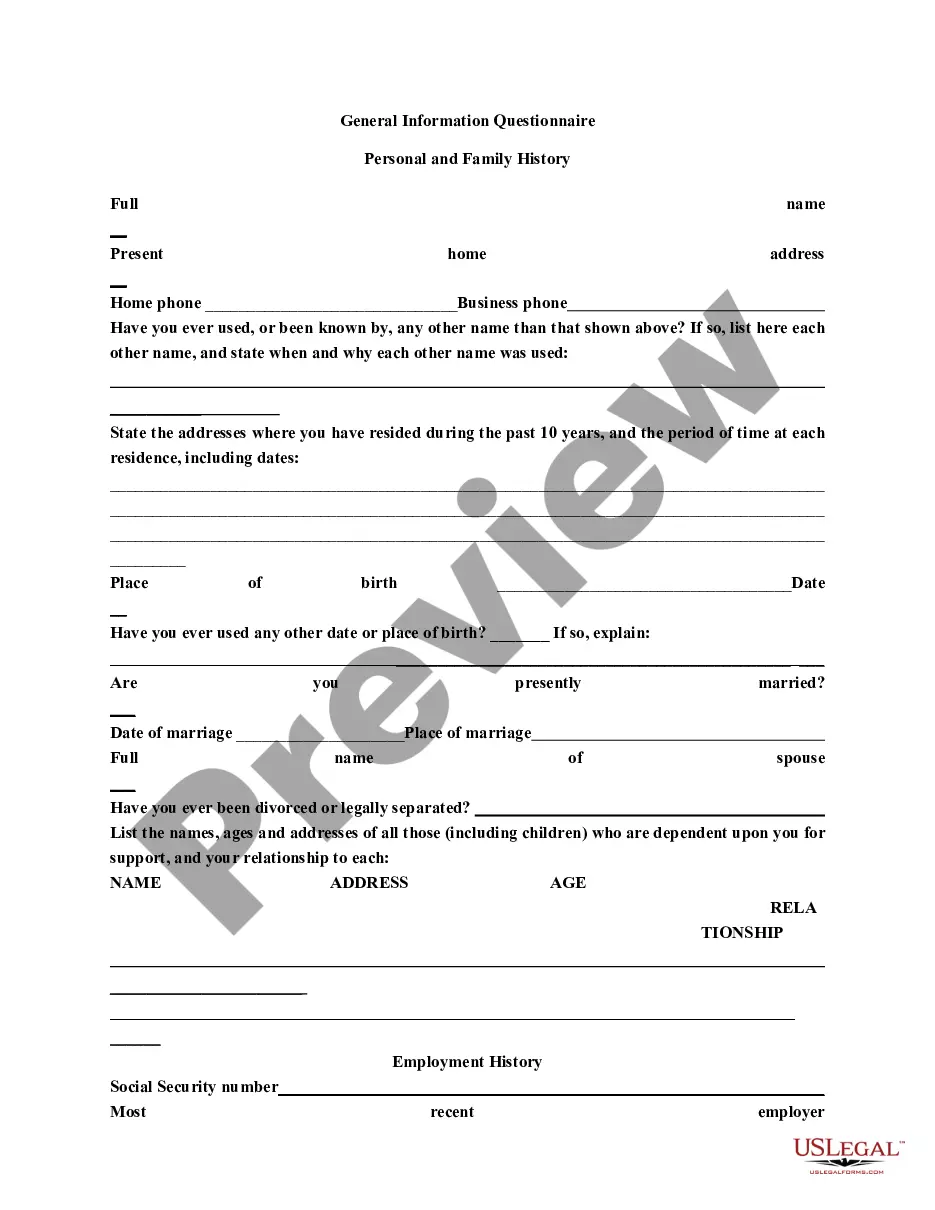
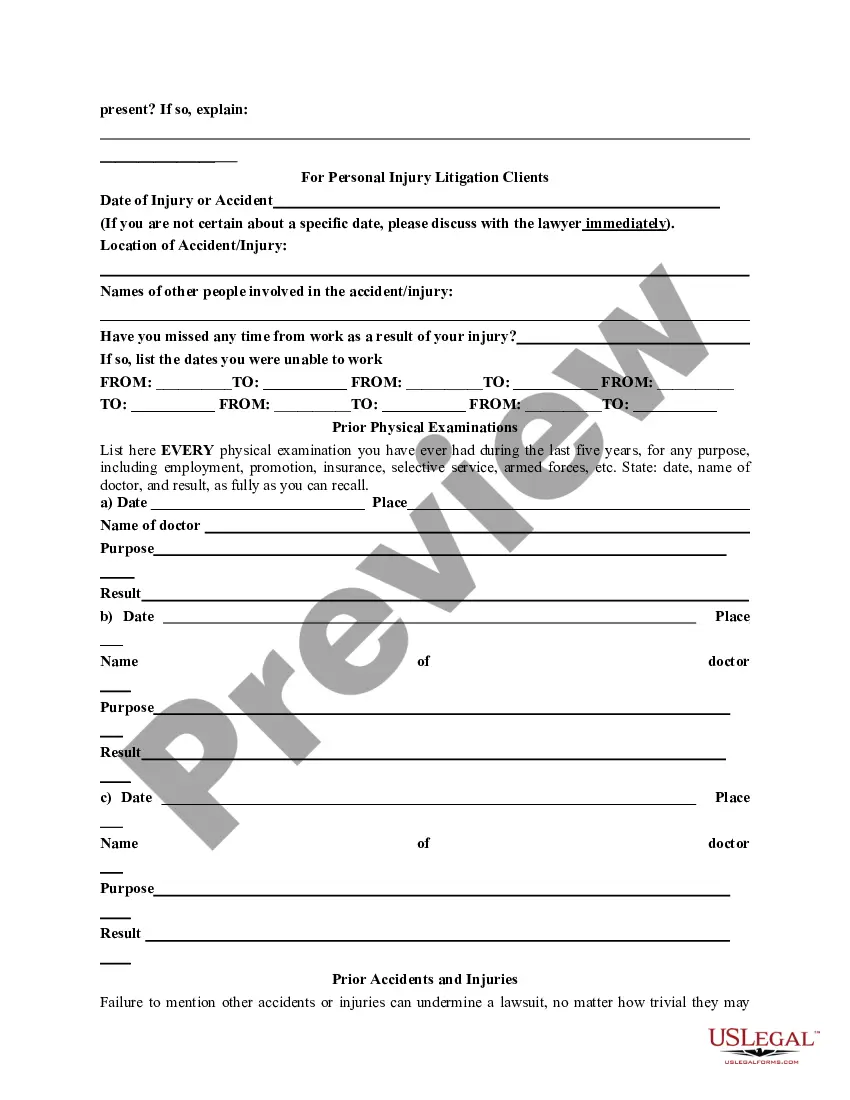
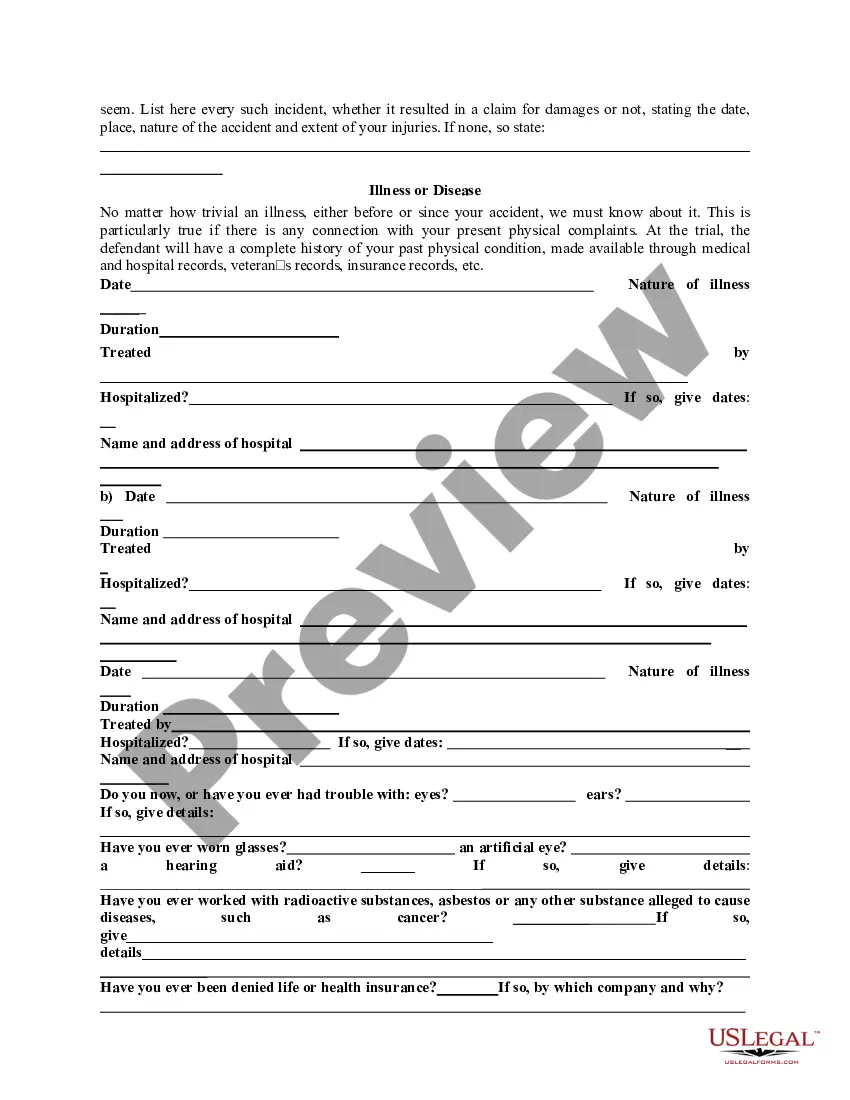
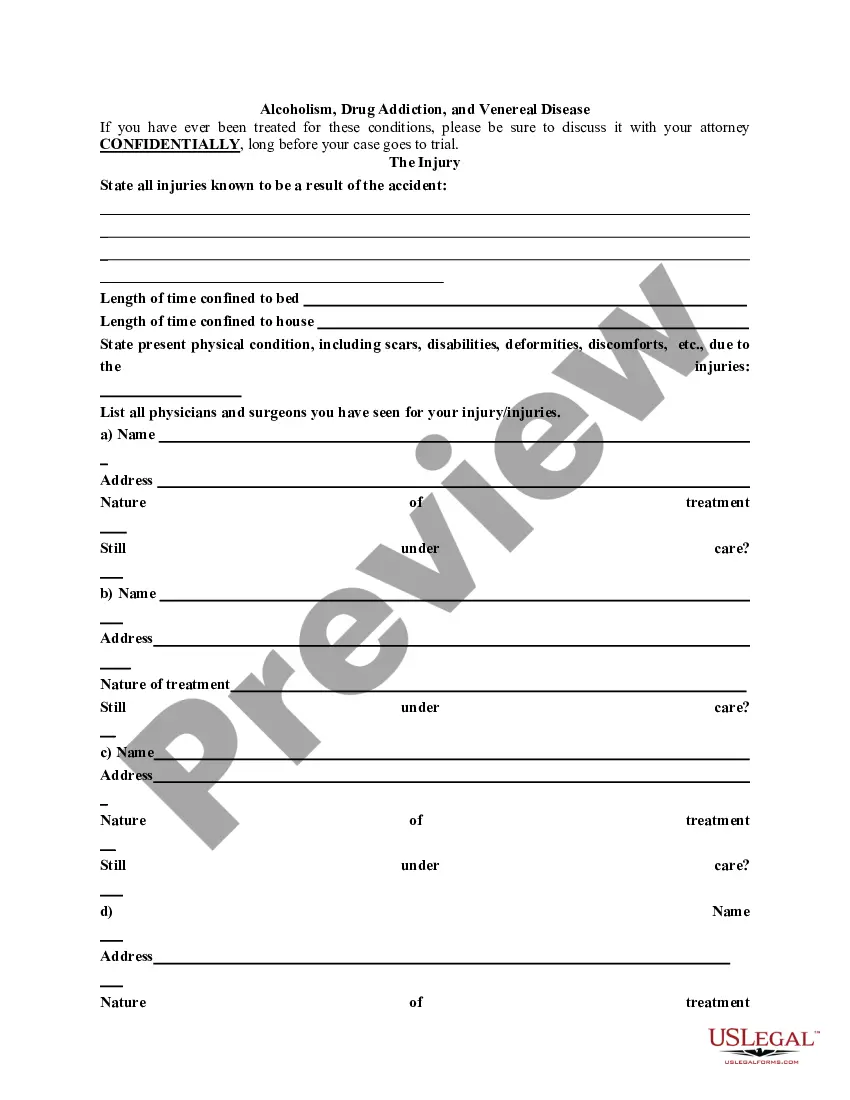
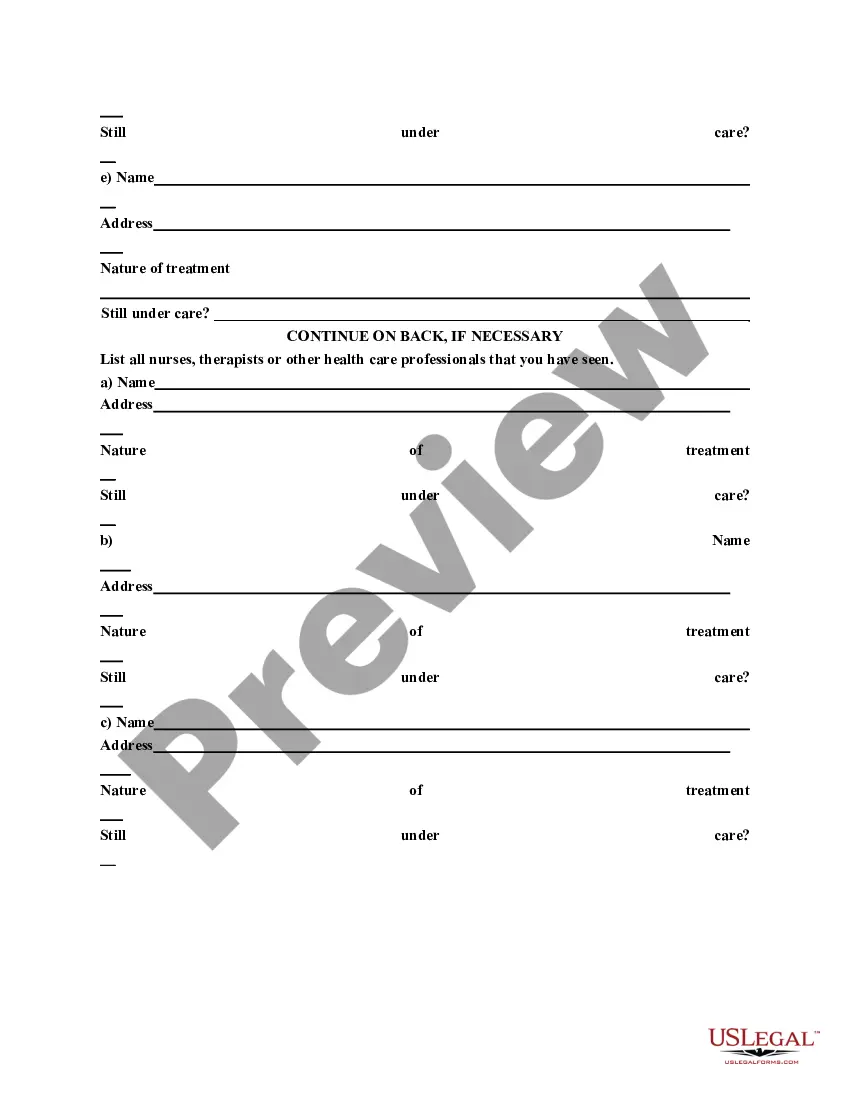
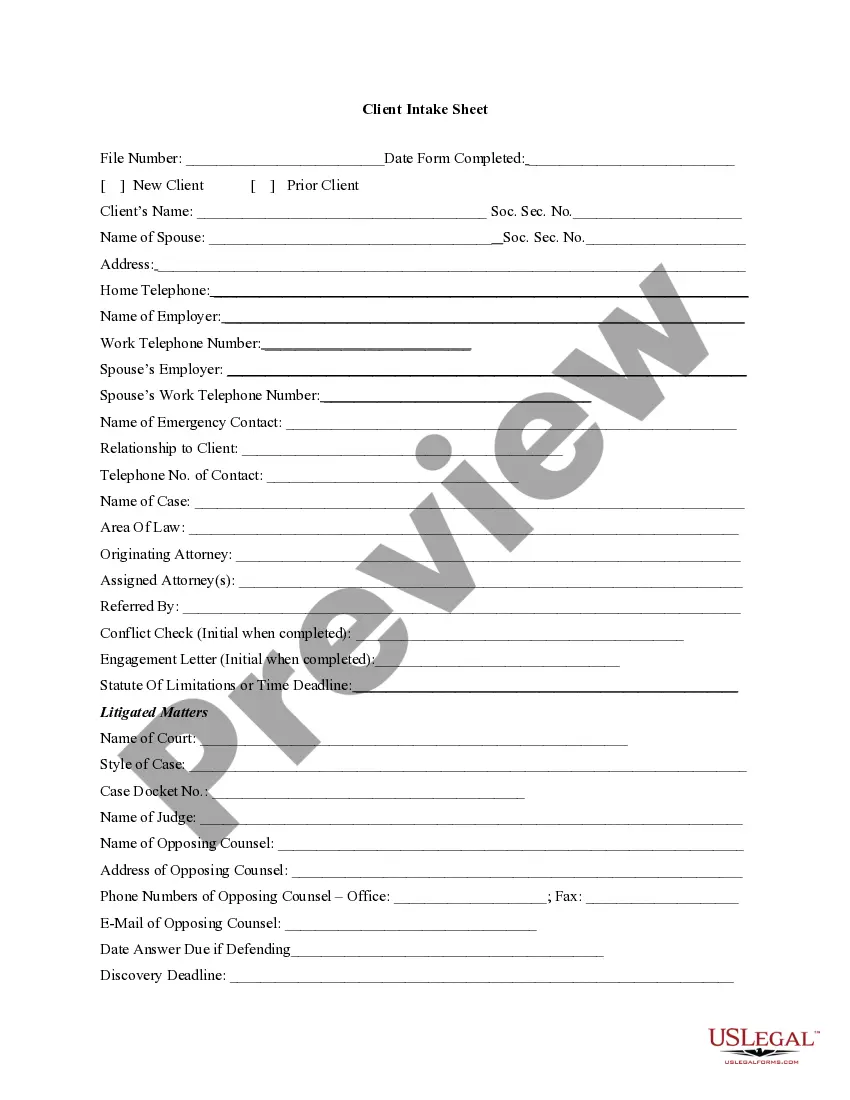
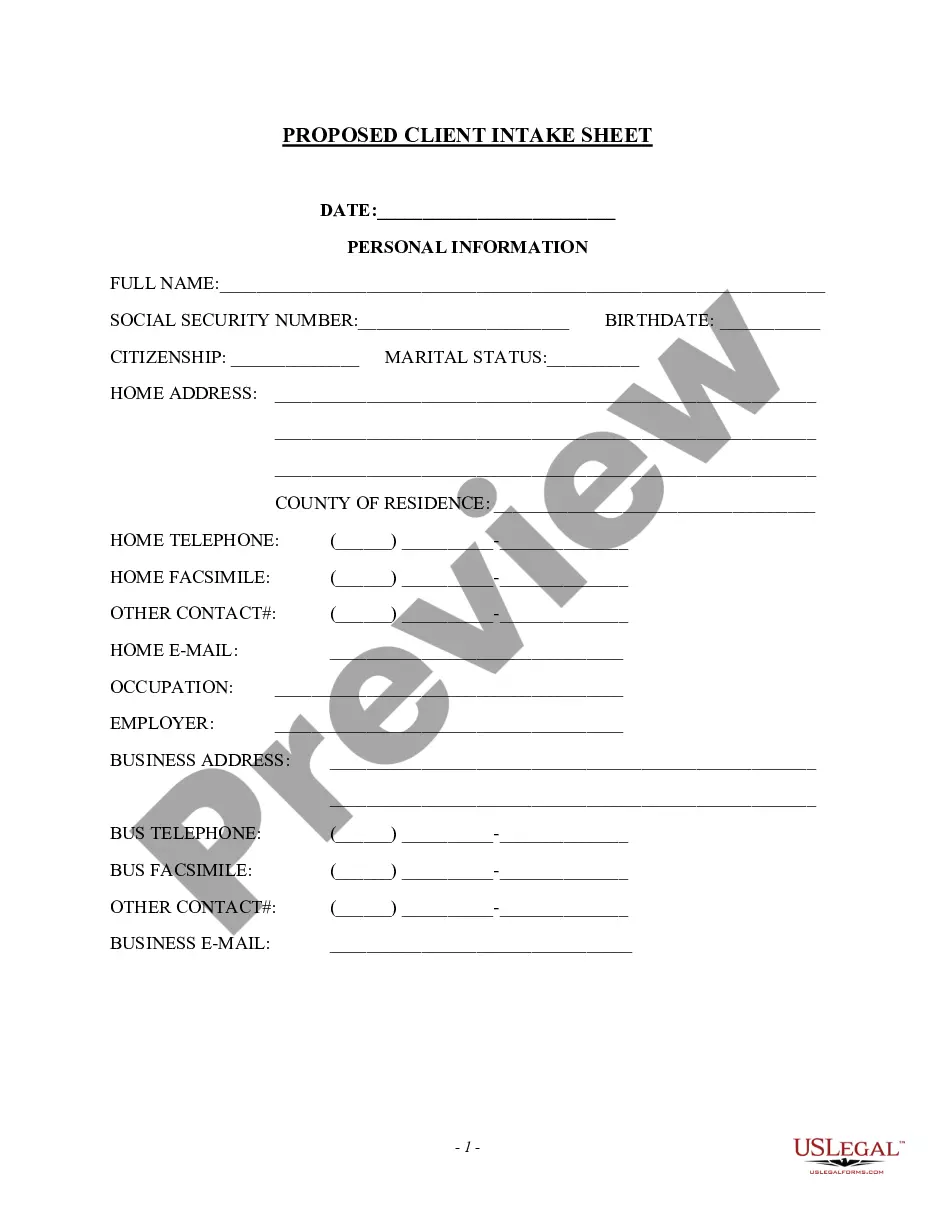
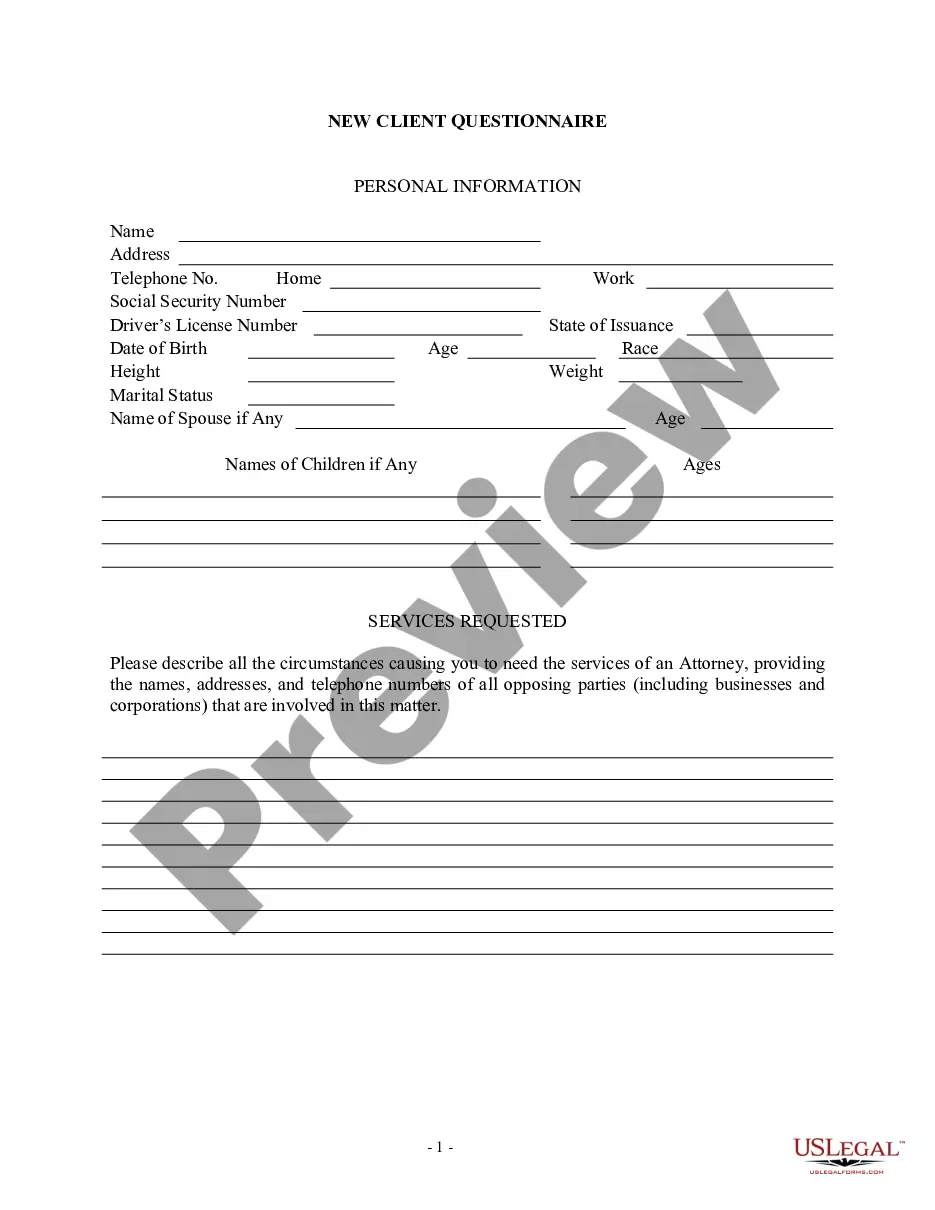
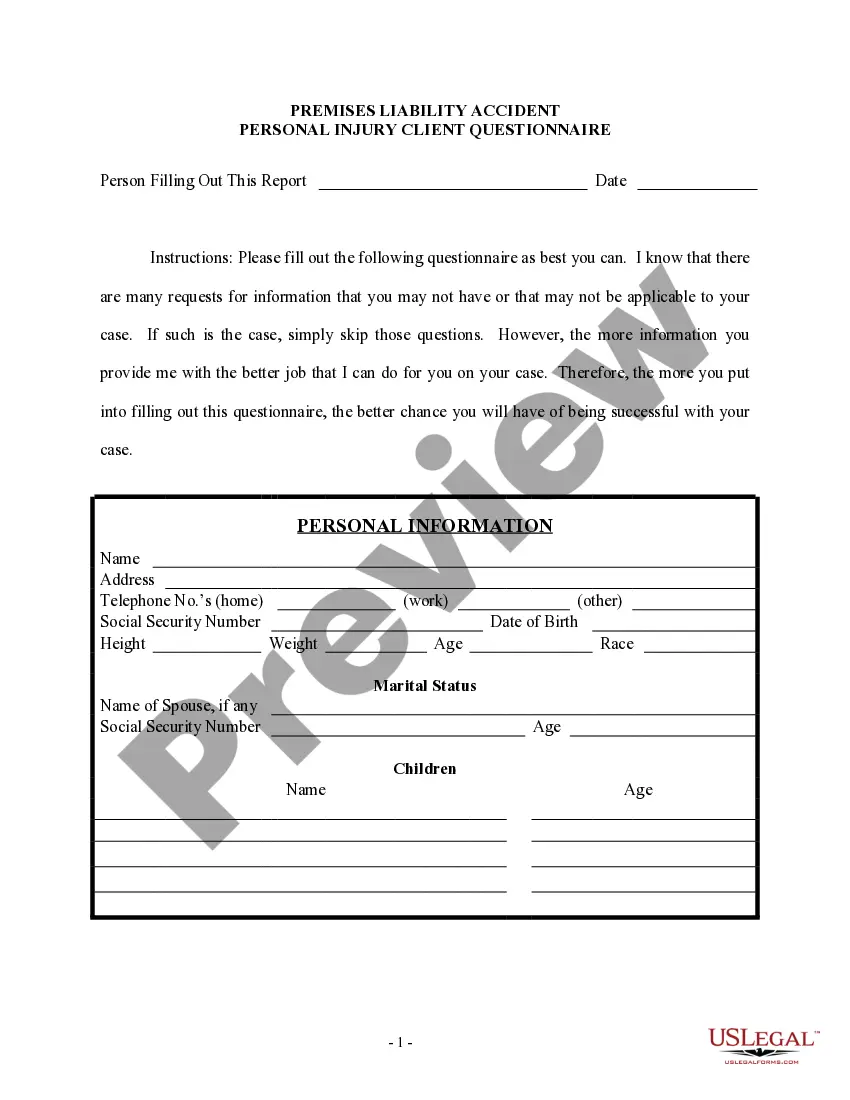
The General Information Questionnaire is a comprehensive document used by attorneys to gather essential information about a client. It serves multiple purposes, including aiding in both civil and criminal representations while providing a specific section for prospective personal injury litigation clients. This form is crucial for ensuring that attorneys have all relevant background details to effectively represent their clients.
Key components of this form
- Personal and family history, including names, addresses, and marital status.
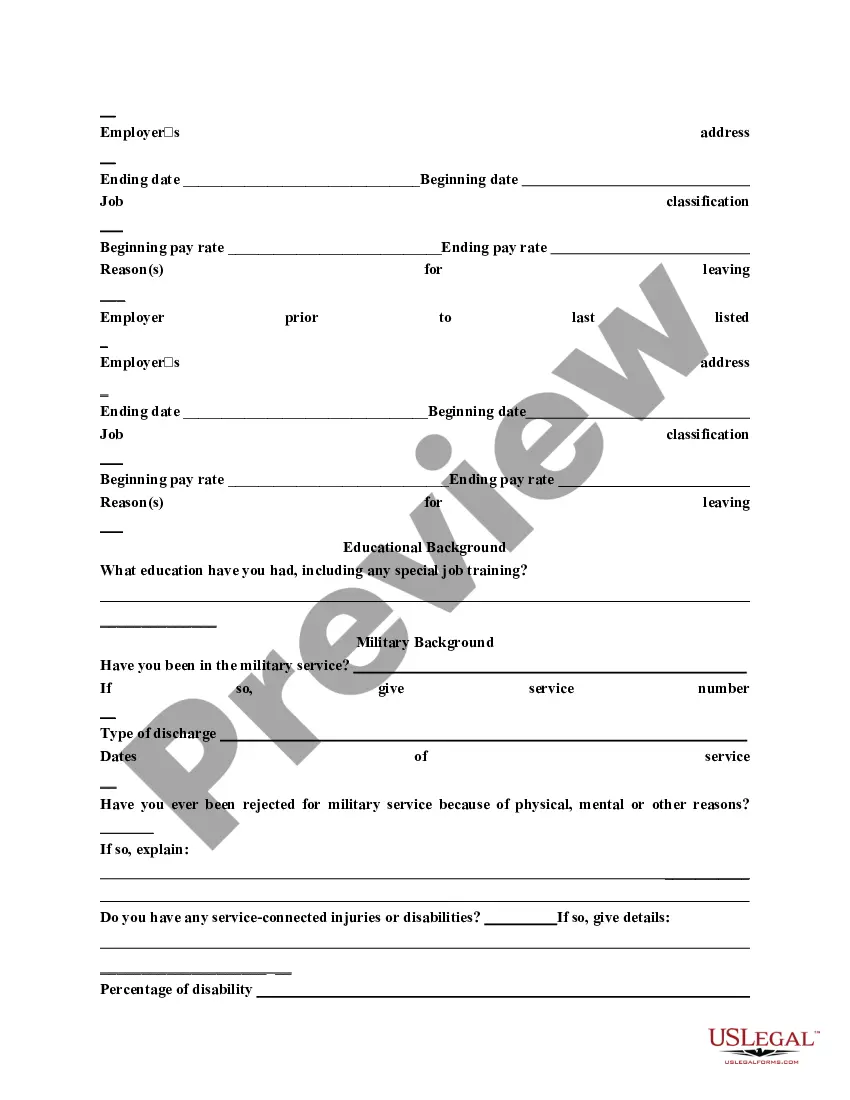
- Employment history, capturing details about previous and current jobs.
- Educational background and military service, if applicable.
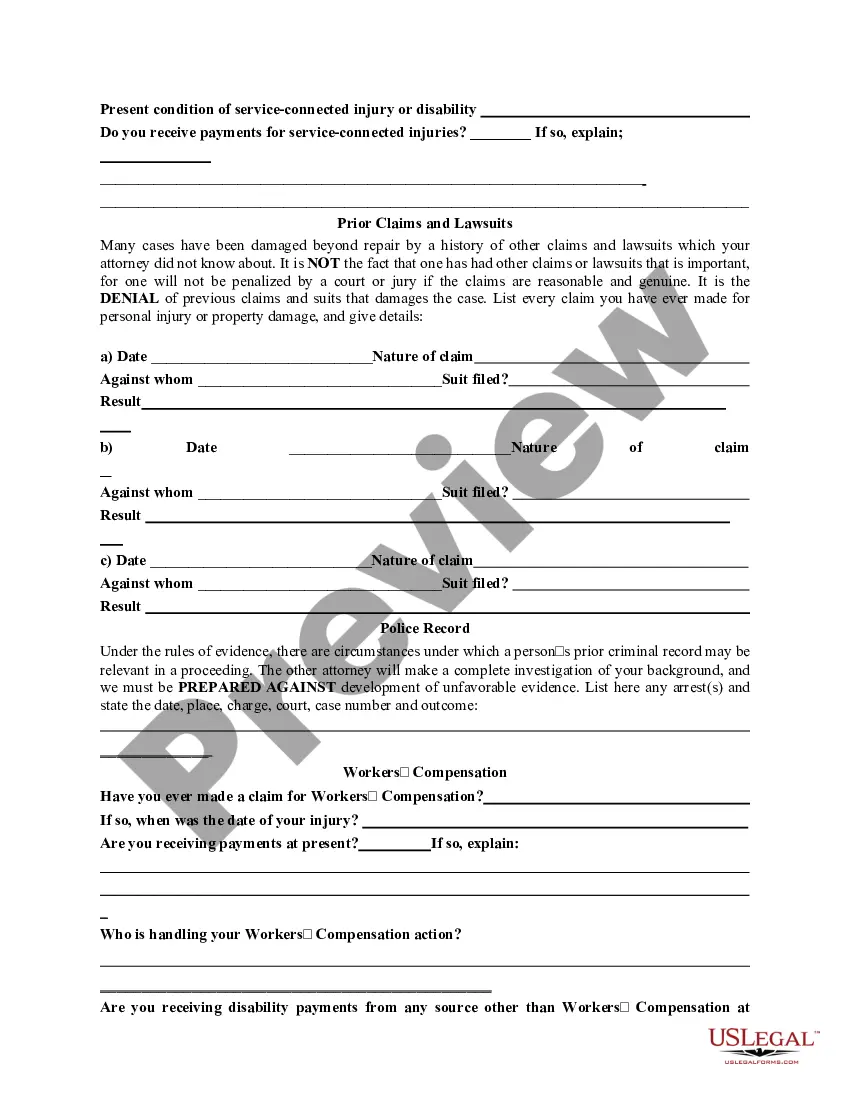
- Prior claims and lawsuits, documenting any past legal issues.
- Medical background, including previous injuries or illnesses related to personal injury claims.
Situations where this form applies
This form is particularly beneficial during the initial stages of an attorney-client relationship. It can be utilized when meeting prospective clients for the first time or when gathering necessary information to prepare for a legal case, especially in personal injury litigation. Attorneys may also send this questionnaire to clients prior to their first meeting to streamline the information-gathering process.
Who should use this form
This form is designed for:
- Attorneys looking to collect vital information from clients.
- Clients seeking to prepare for legal representation in civil or criminal matters.
- Individuals involved in personal injury cases to ensure all relevant history is documented.
Instructions for completing this form
- Start by filling in your personal and family history, including full name and address.
- Provide your complete employment history, including job titles and dates of employment.
- Document any prior claims or lawsuits, detailing the nature and outcomes.
- Include comprehensive medical history, noting any relevant illnesses or injuries.
- Review the completed questionnaire for accuracy before submitting it to your attorney.
Does this document require notarization?
This form usually doesn’t need to be notarized. However, local laws or specific transactions may require it. Our online notarization service, powered by Notarize, lets you complete it remotely through a secure video session, available 24/7.
Get your form ready online
Our built-in tools help you complete, sign, share, and store your documents in one place.
Make edits, fill in missing information, and update formatting in US Legal Forms—just like you would in MS Word.
Download a copy, print it, send it by email, or mail it via USPS—whatever works best for your next step.
Sign and collect signatures with our SignNow integration. Send to multiple recipients, set reminders, and more. Go Premium to unlock E-Sign.
If this form requires notarization, complete it online through a secure video call—no need to meet a notary in person or wait for an appointment.
We protect your documents and personal data by following strict security and privacy standards.

Make edits, fill in missing information, and update formatting in US Legal Forms—just like you would in MS Word.

Download a copy, print it, send it by email, or mail it via USPS—whatever works best for your next step.

Sign and collect signatures with our SignNow integration. Send to multiple recipients, set reminders, and more. Go Premium to unlock E-Sign.

If this form requires notarization, complete it online through a secure video call—no need to meet a notary in person or wait for an appointment.

We protect your documents and personal data by following strict security and privacy standards.
Common mistakes
- Leaving sections blank instead of marking them as not applicable.
- Not providing enough detail in past claims or lawsuits.
- Omitting important medical history that may be relevant to the case.
- Failing to review the document for accuracy before submission.
Why complete this form online
- Convenience of accessing and completing the form at your own pace.
- Editability allows for updates and corrections before final submission.
- Reliability of using attorney-drafted templates designed to meet legal standards.
Legal use & context
The information provided in this questionnaire is critical for preparing a legal case. Failing to disclose certain details may affect the outcome of a case or the attorney's ability to represent you effectively. Therefore, it is crucial to provide truthful and comprehensive information.
Quick recap
- The General Information Questionnaire is essential for legal representation.
- Complete detail about personal history, employment, and medical background is crucial.
- This form is used for initial consultations and builds a foundation for effective client-attorney communication.
Looking for another form?

Form popularity
FAQ
Know your question types. Keep it brief, when possible. Choose a simple visual design. Use a clear research process. Create questions with straightforward, unbiased language. Ensure every question is important. Ask one question at a time. Order your questions logically.
#1: Identify your research aims and the goal of your questionnaire. #2: Define your target respondents. #3: Develop questions. #4: Choose your question type. #5: Design question sequence and overall layout. #6: Run a pilot.
Know your question types. Keep it brief, when possible. Choose a simple visual design. Use a clear research process. Create questions with straightforward, unbiased language. Ensure every question is important. Ask one question at a time. Order your questions logically.
Some examples of a questionnaire are: Customer Satisfaction Questionnaire: This type of research can be used in any situation where there's an interaction between a customer and an organization. For example, you might send a customer satisfaction survey after someone eats at your restaurant.
Filler questions are small talk and circumscribed questions that are used as "icebreakers" between individuals. Questions such as "How are you today?" even if you are not truly interested in the answer. It is a way of filling time and making verbal contact with others, whether they are strangers or not.
Provide instructions. Tell your respondents how the questionnaire should be answered. Use simple language. Limit the possible choices. Arrange it in a logical order. Keep it short. Do a trial run.
Know your question types. Keep it brief, when possible. Choose a simple visual design. Use a clear research process. Create questions with straightforward, unbiased language. Ensure every question is important. Ask one question at a time. Order your questions logically.
Your name or the name of the company or organization you represent. The goal of the survey or what you're trying to find out. How you'll be using the responses to make a difference. If the responses are anonymous, confidential, or tracked.