Affirmative Action Information Form
What this document covers
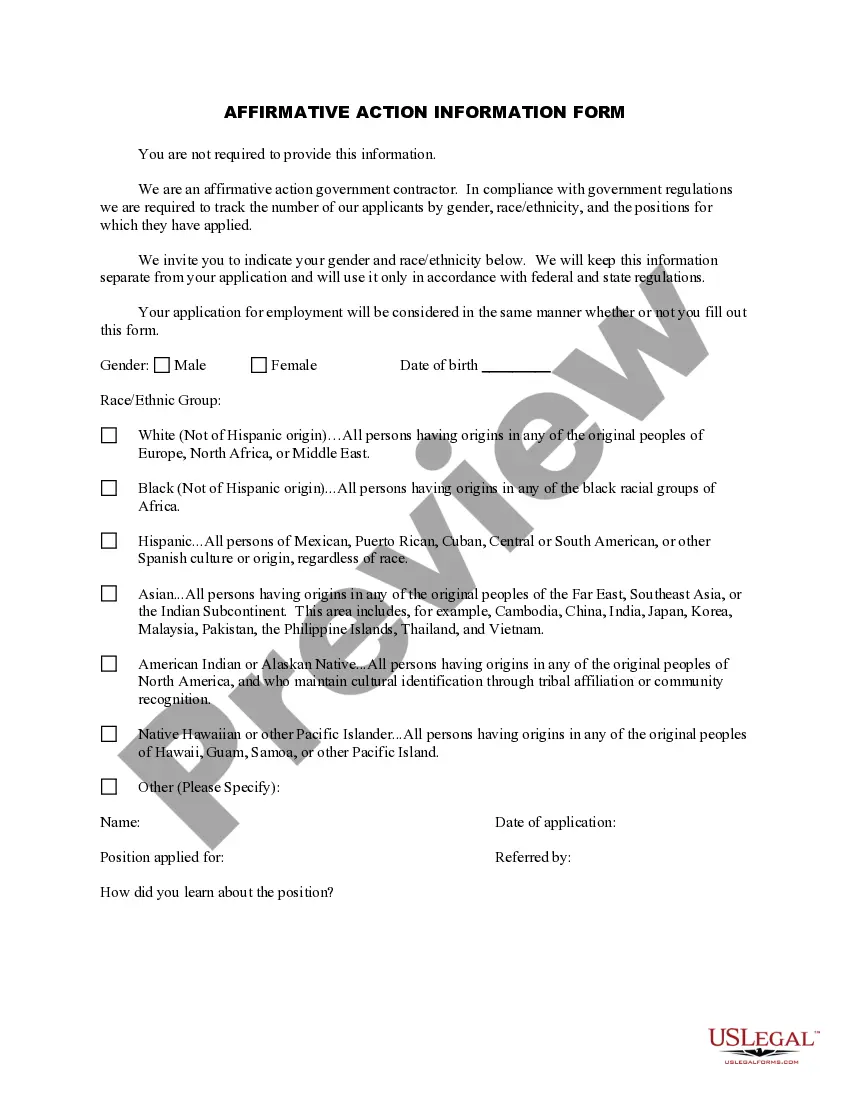
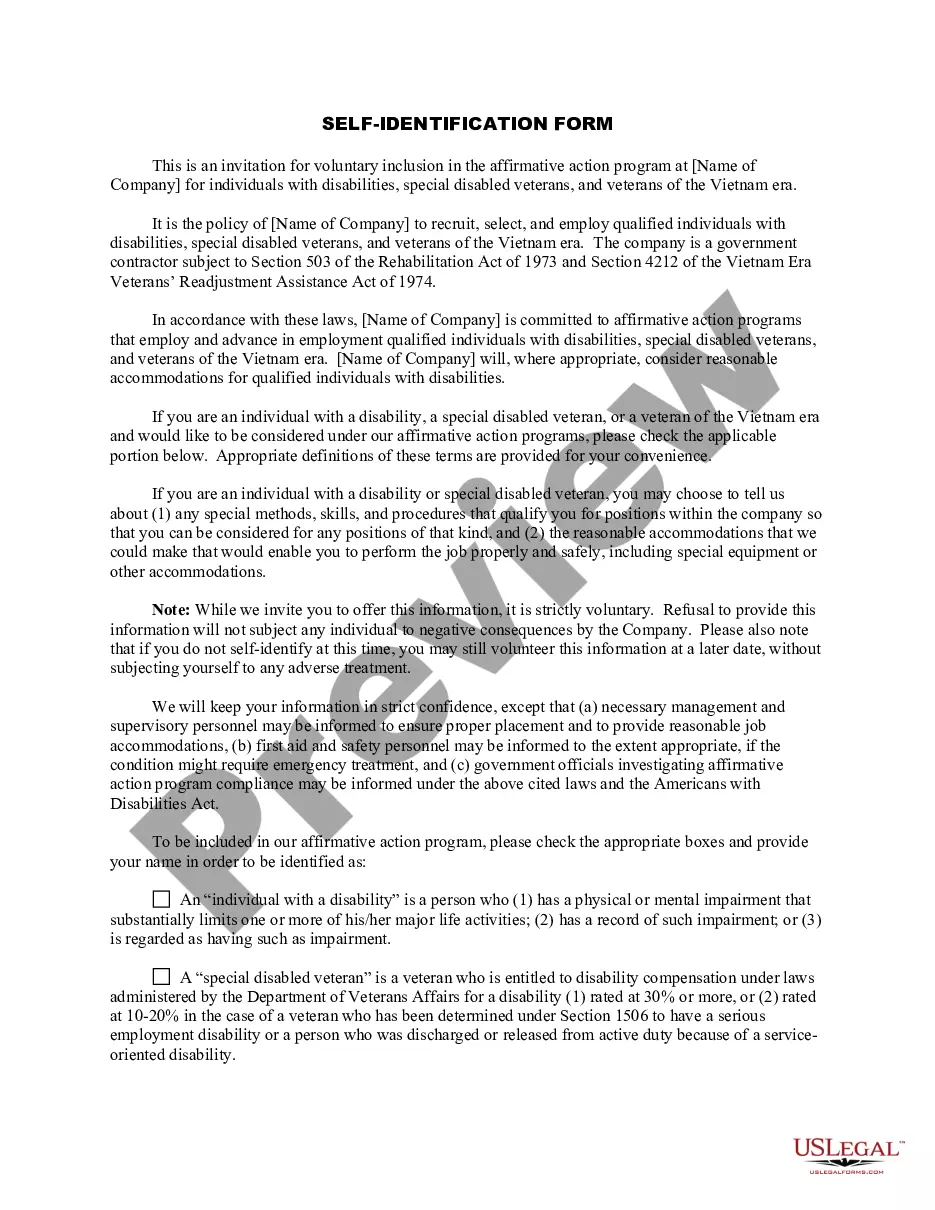
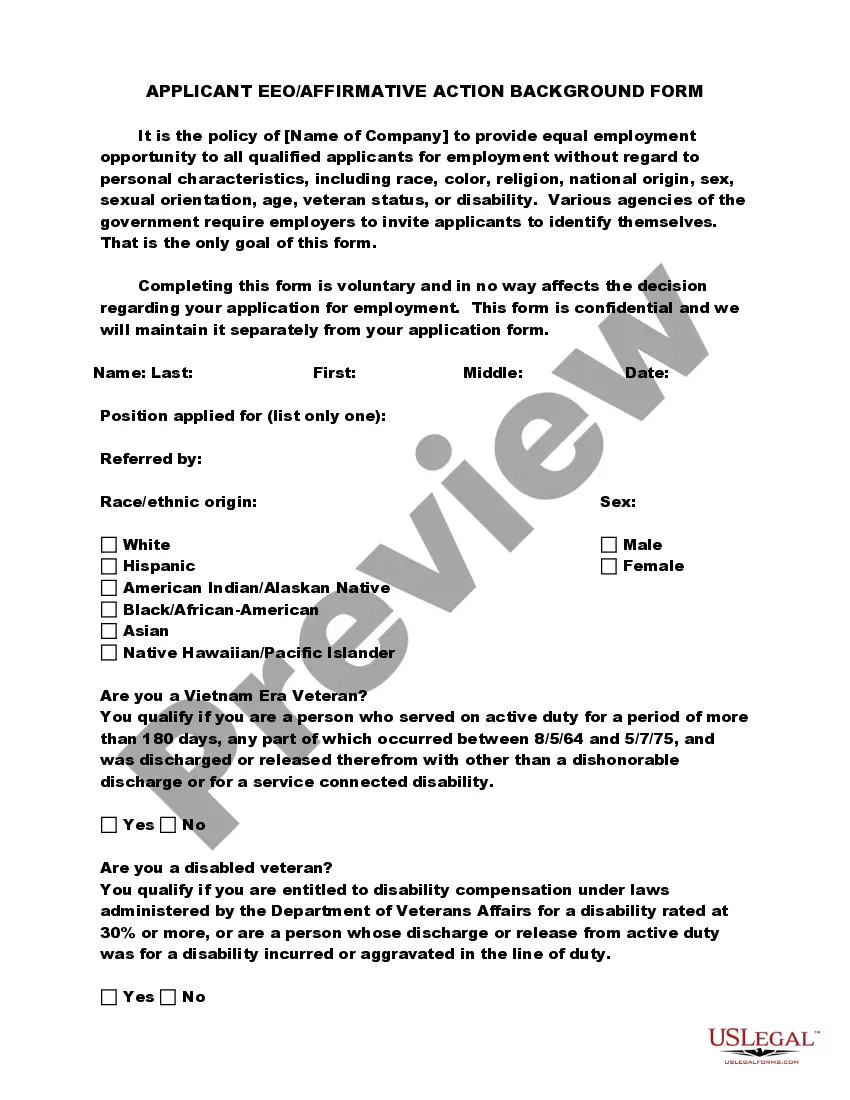
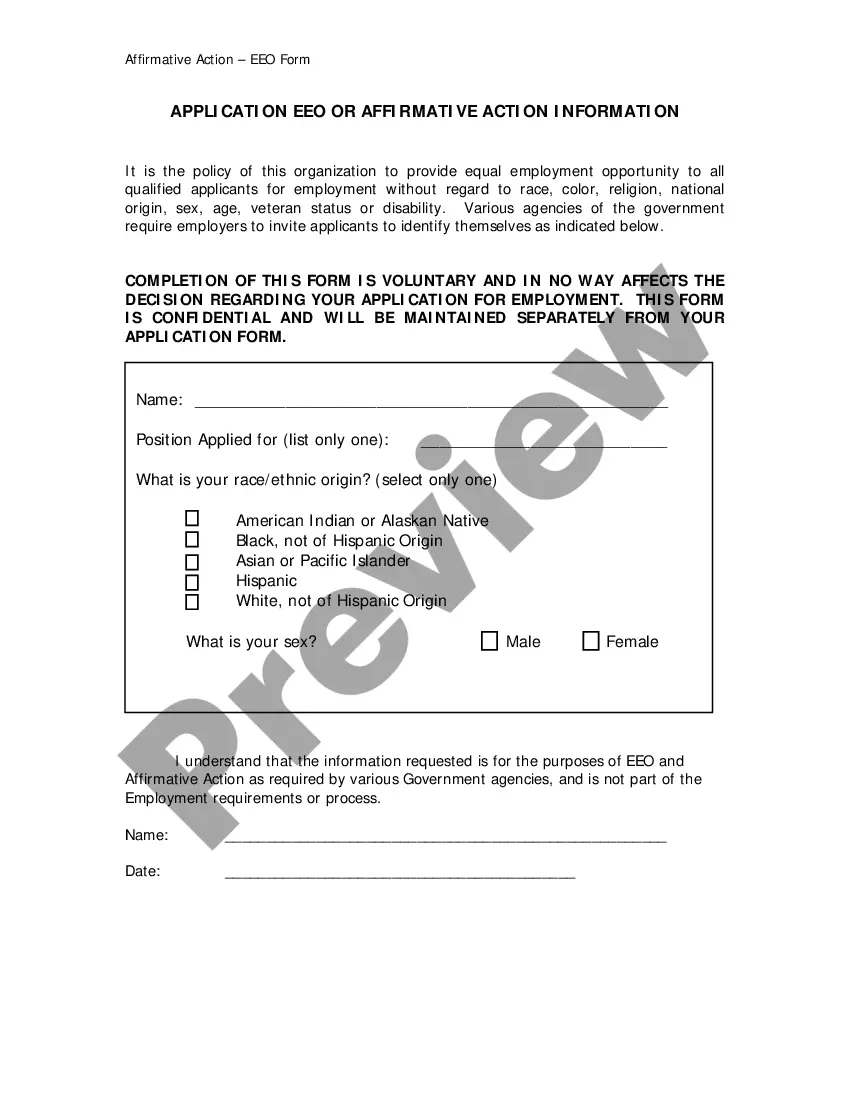
The Affirmative Action Information Form is a document designed to gather voluntary data about applicants' race, national origin, gender, and date of birth. This form is distinctive because it is not mandatory for applicants to complete; however, it aids employers in complying with federal affirmative action regulations. While the information is used for tracking purposes only, providing it can help ensure fair hiring practices in the workplace.
Key parts of this document
- Gender options: Male, Female
- Date of birth field for applicant information
- Race/Ethnic group selections including White, Black, Hispanic, Asian, American Indian or Alaskan Native, and Native Hawaiian or other Pacific Islander
- Instructions indicating that completion of the form is voluntary
- Privacy assurance about the use of information collected
When this form is needed
This form is typically used during the job application process by employers who are government contractors. It is employed to collect data necessary for compliance with affirmative action laws and helps monitor hiring practices over time. Organizations seeking a diverse workforce may also use this form to facilitate their commitment to inclusivity.
Who can use this document
- Employers required to fulfill federal affirmative action requirements
- Job applicants who are invited to disclose gender and ethnicity voluntarily
- Human resources departments needing a framework for collecting demographic data
How to complete this form
- Begin by selecting your gender from the provided options.
- Enter your date of birth in the designated field.
- Choose your race or ethnic group from the list offered.
- Review the form for accuracy before submission.
- Submit the completed form separate from your job application as per the provided instructions.
Does this form need to be notarized?
This form does not typically require notarization unless specified by local law. The information collected does not affect the legal validity of an employment application.
Get your form ready online
Our built-in tools help you complete, sign, share, and store your documents in one place.
Make edits, fill in missing information, and update formatting in US Legal Forms—just like you would in MS Word.
Download a copy, print it, send it by email, or mail it via USPS—whatever works best for your next step.
Sign and collect signatures with our SignNow integration. Send to multiple recipients, set reminders, and more. Go Premium to unlock E-Sign.
If this form requires notarization, complete it online through a secure video call—no need to meet a notary in person or wait for an appointment.
We protect your documents and personal data by following strict security and privacy standards.

Make edits, fill in missing information, and update formatting in US Legal Forms—just like you would in MS Word.

Download a copy, print it, send it by email, or mail it via USPS—whatever works best for your next step.

Sign and collect signatures with our SignNow integration. Send to multiple recipients, set reminders, and more. Go Premium to unlock E-Sign.

If this form requires notarization, complete it online through a secure video call—no need to meet a notary in person or wait for an appointment.

We protect your documents and personal data by following strict security and privacy standards.
Common mistakes to avoid
- Leaving required fields blank, misunderstanding that providing this information is voluntary.
- Misidentifying race/ethnicity due to lack of clarity on definitions.
- Failing to submit the form separate from the job application.
Benefits of using this form online
- Easy access to the form allows applicants to fill it out anytime convenient.
- Secure storage and handling of sensitive demographic information protects applicant privacy.
- Streamlined process for employers to manage and analyze applicant data efficiently.
Legal use & context
The data collected through the Affirmative Action Information Form is used solely for compliance with federal and state regulations and to monitor employment practices. It should be kept confidential and separate from the applicant's resume or job application to avoid any bias in hiring decisions.
Quick recap
- The form is voluntary and ensures compliance with affirmative action laws.
- It collects demographic data that does not influence the hiring decision.
- Available for use by various employers across multiple states.
Looking for another form?
Form popularity
FAQ
For federal contractors and subcontractors, affirmative action must be taken by covered employers to recruit and advance qualified minorities, women, persons with disabilities, and covered veterans. Affirmative actions include training programs, outreach efforts, and other positive steps.
AAP Planning Process and Technology. Good Faith Efforts. Employee Awareness Training. Adverse Impact Analysis.
An Affirmative Action Plan uses statistical analyses to ensure that an employer has created or is creating a workforce that is an authentic reflection of the demographics of their relevant, qualified labor pool by providing specific protected classes; including minorities, veterans, women and people with disabilities;
Step 1: Develop and Post an Equal Opportunity Policy. Step 2: Assign Responsibility for AAP Review and Implementation. Step 3: Develop an Organizational Display. Step 4: Conduct a Workforce Analysis. Step 5: Perform a Job Group Analysis. Step 6: Conduct an Availability Analysis.
The employer is subject to certain governmental recordkeeping and reporting requirements for the administration of civil rights laws and regulations. In order to comply with these laws, the employer invites employees to voluntarily self-identify their race and ethnicity.
The purpose of affirmative action is to establish fair access to employment opportunities to create a workforce that is an accurate reflection of the demographics of the qualified available workforce in the relevant job market.
An affirmative action plan consists of statistical analyses of an employer's utilization (or underutilization) of individuals from certain protected classes such as women, veterans, minorities, and people with disabilities.Affirmative actions include training programs, outreach efforts, and other positive steps.
Overview of Planning Process Assessment of affirmative action needs; 2. Assessment of affirmative action opportunities; 3. Setting priorities and developing strategies; 4. Implementing the program; and 5.