Complaint For Wrongful Interference With Right To Possession For Burial
What is this form?
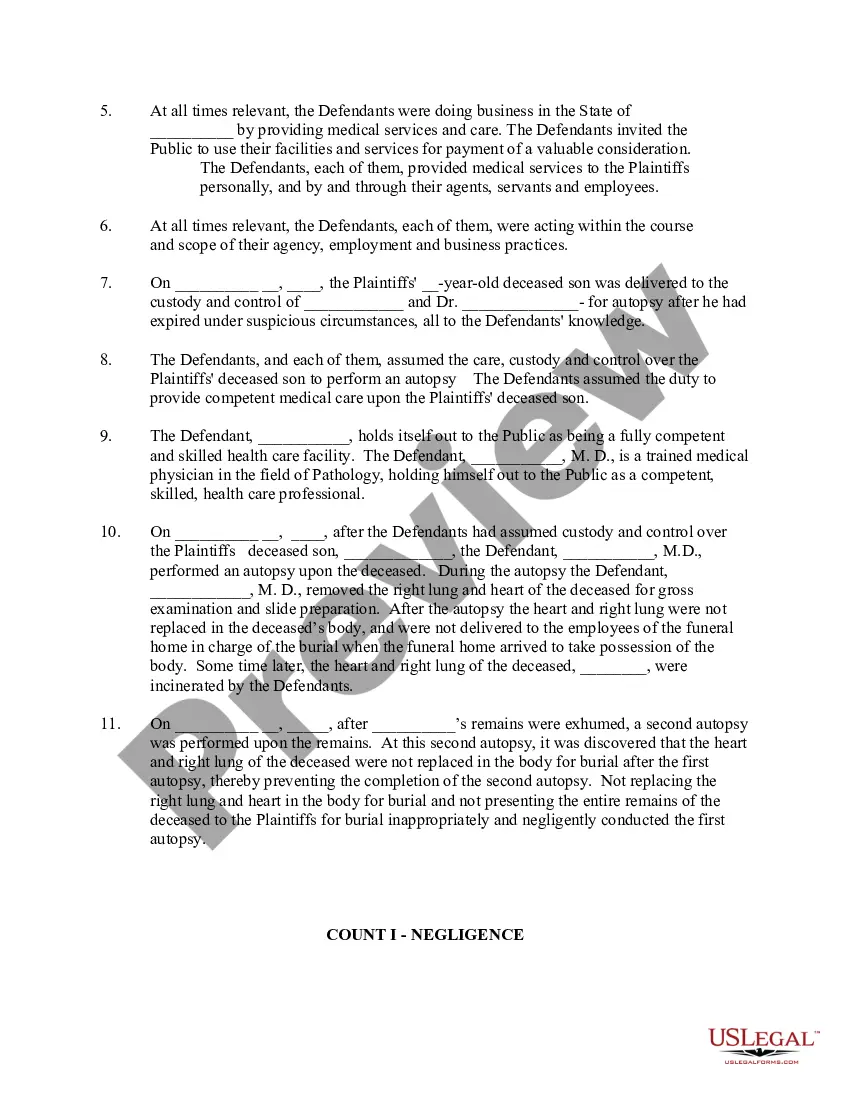
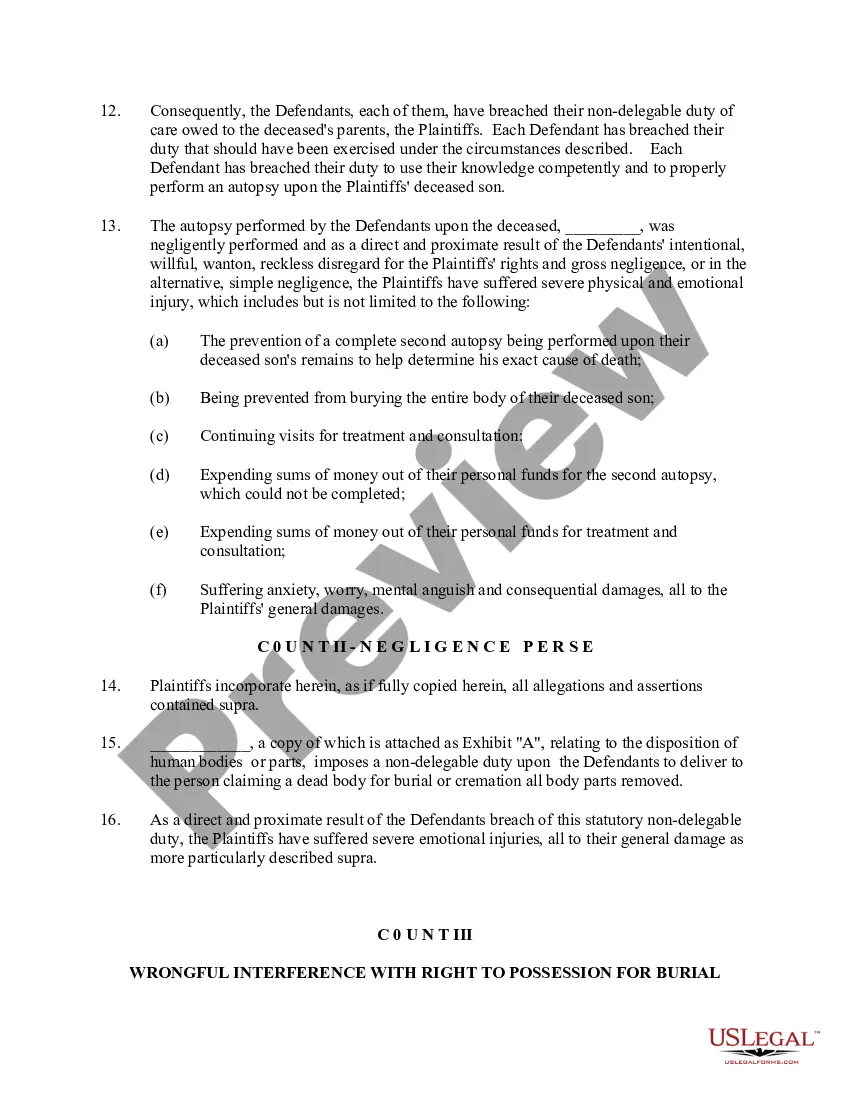
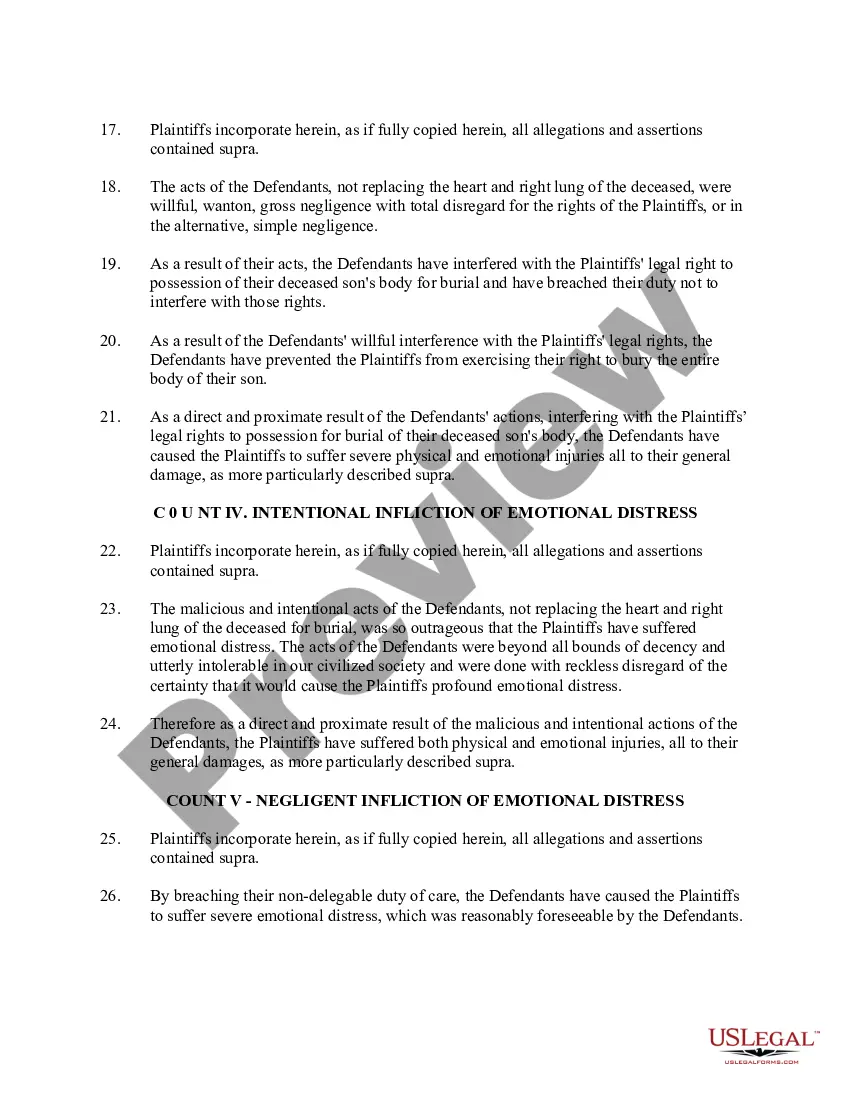
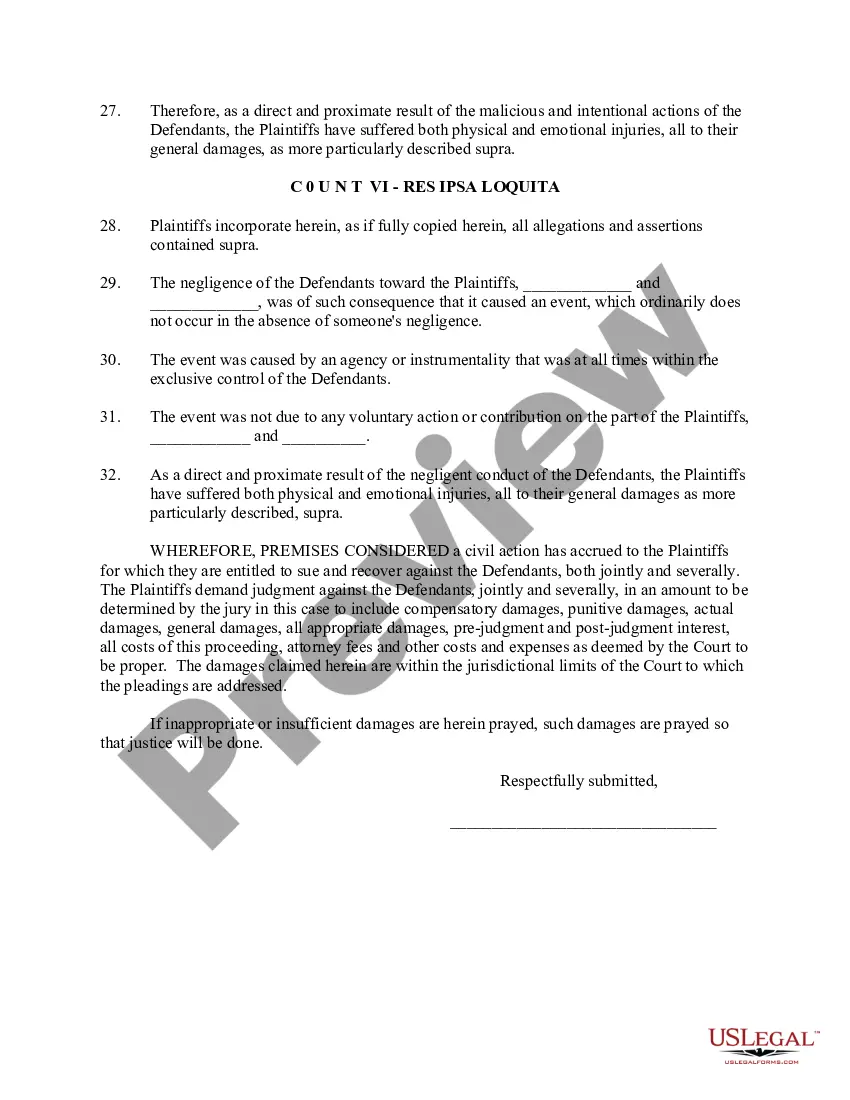
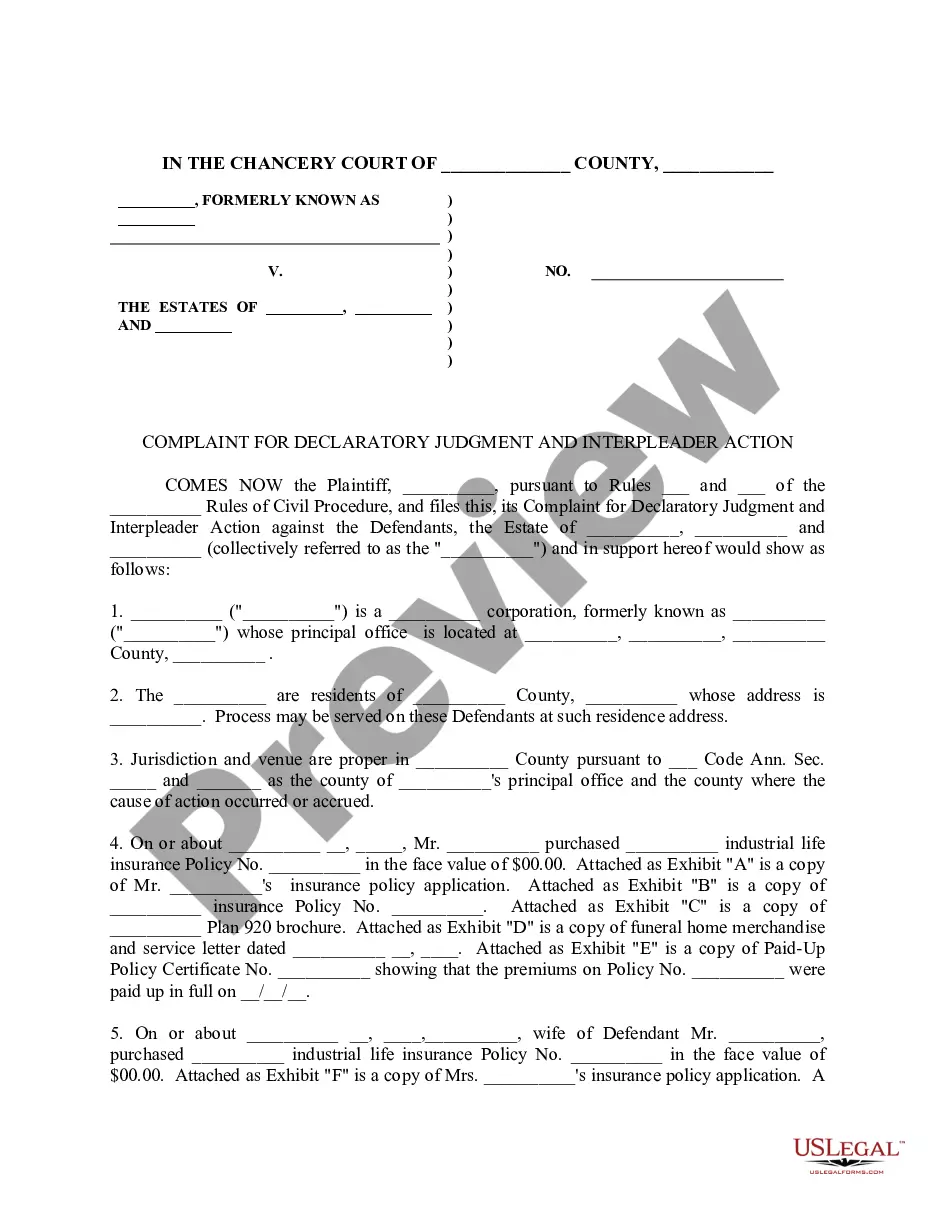
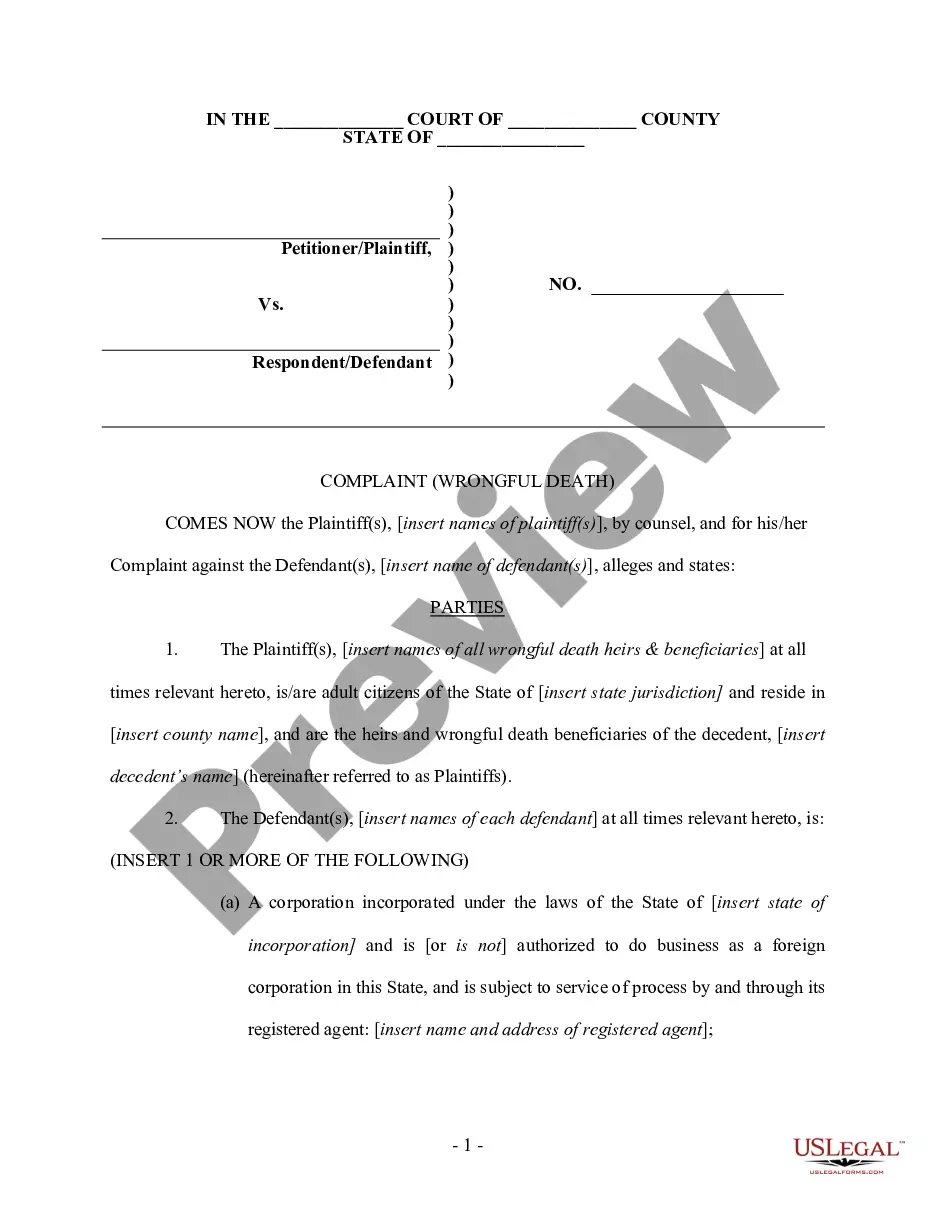
The Complaint for Wrongful Interference with Right To Possession For Burial is a legal document used to initiate a lawsuit. This complaint addresses grievances related to the improper handling of a deceased person's remains, specifically concerning the failure to return body parts after an autopsy. Unlike other complaints, this form specifically focuses on wrongful interference with burial rights, making it crucial for individuals seeking to address such issues with healthcare providers or institutions.
What’s included in this form
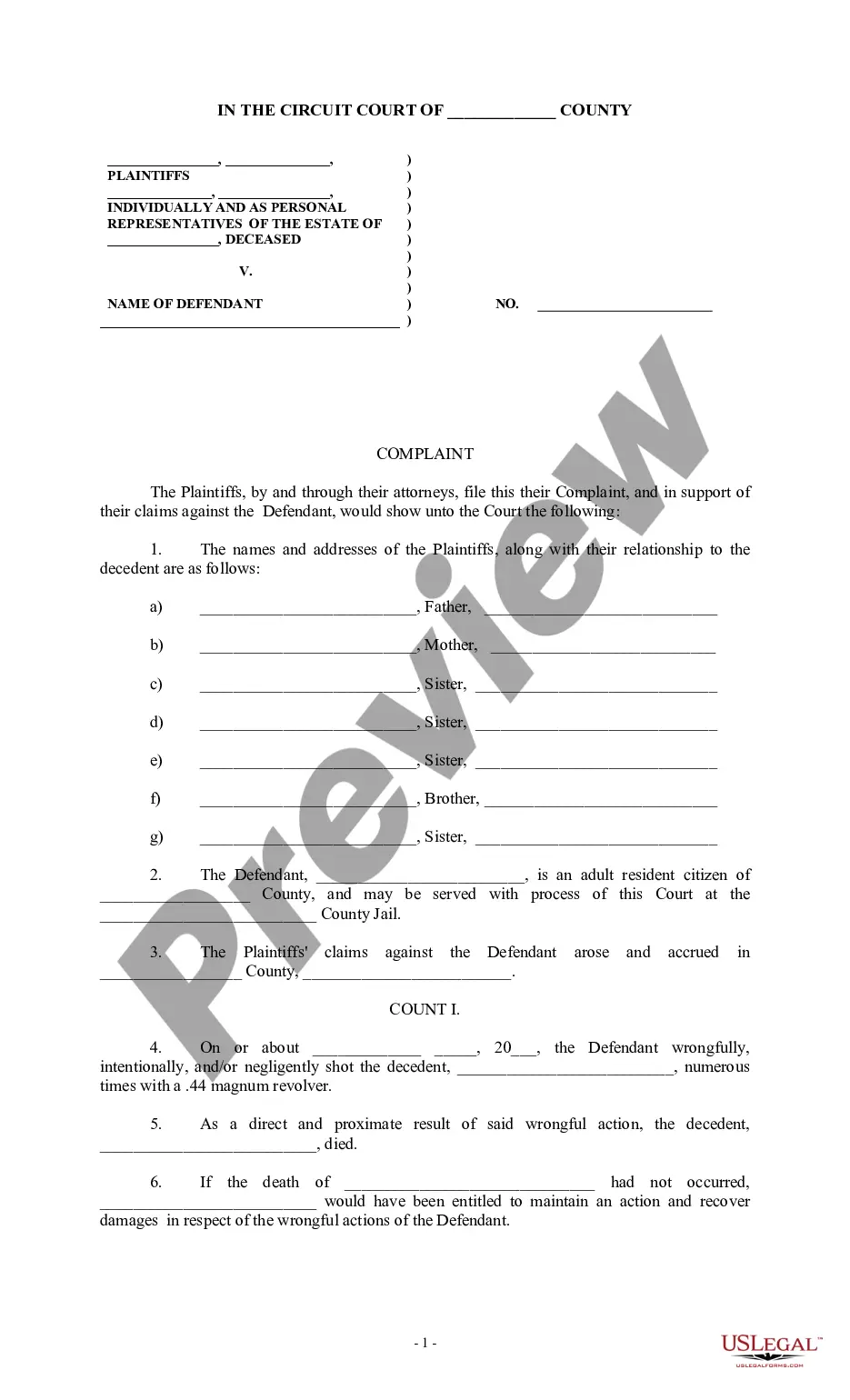
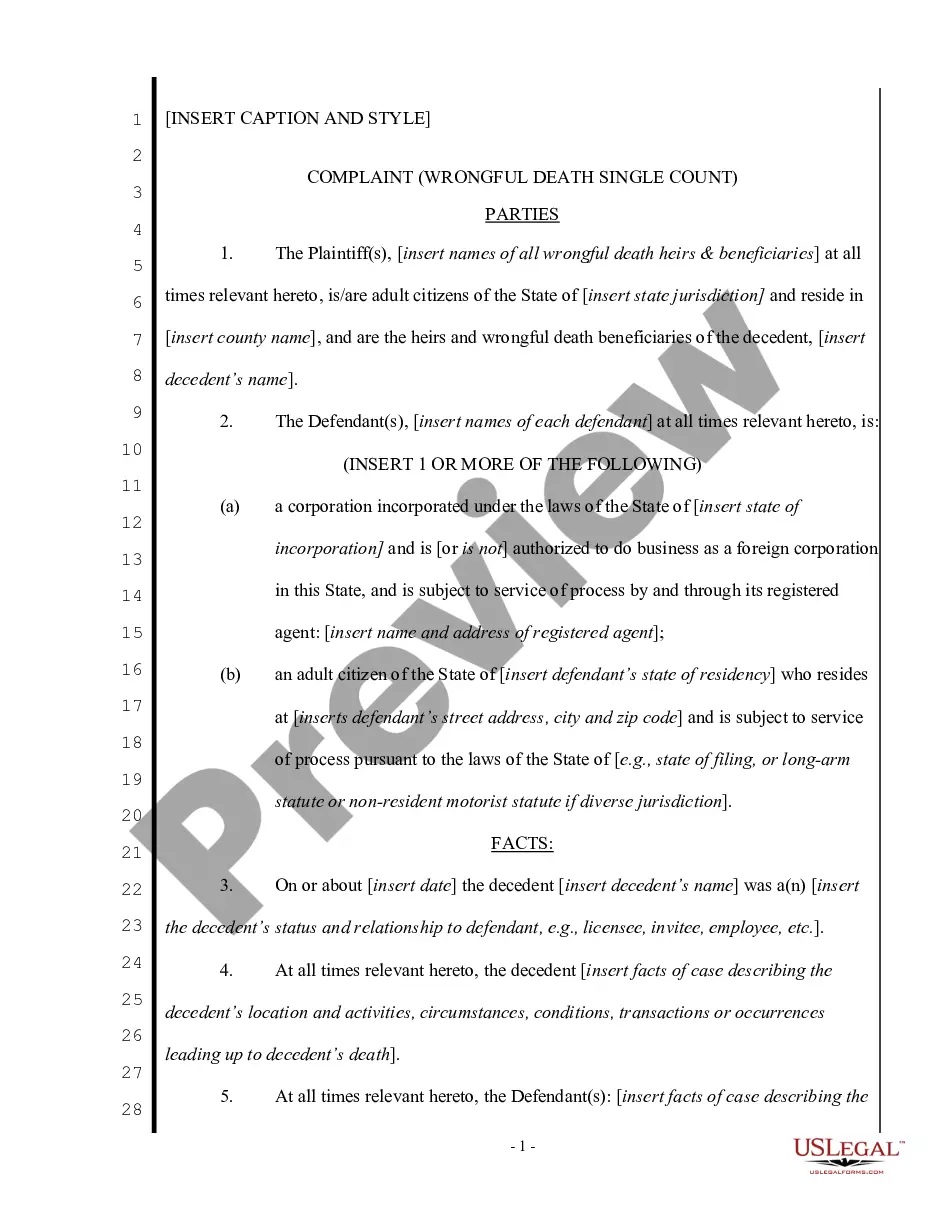
- Introduction of the parties involved in the case.
- Details of the defendants and their responsibilities.
- Factual background surrounding the alleged wrongful acts.
- Claims for negligence and wrongful interference.
- Requests for compensatory and punitive damages.


Situations where this form applies
This form is essential when a plaintiff believes that a healthcare provider or institution has improperly handled the remains of a deceased individual, particularly in cases where body parts were not returned for burial. It may be used to pursue legal action to seek compensation for emotional distress, financial losses, and to assert the legal right to possess the remains for burial.
Who needs this form
- Family members or legal guardians of a deceased individual.
- Individuals seeking legal redress for wrongful interference with burial rights.
- Attorneys representing clients in related cases.
Steps to complete this form
- Identify the plaintiffs and defendants by names and contact information.
- Provide factual details surrounding the autopsy and the handling of the remains.
- Clearly state the claims of negligence and wrongful interference.
- Include specific damages incurred due to the alleged actions of the defendants.
- Sign and date the complaint where indicated.
Notarization requirements for this form
This form does not typically require notarization unless specified by local law. However, itâs always good practice to check with your local jurisdiction for specific requirements.
Get your form ready online
Our built-in tools help you complete, sign, share, and store your documents in one place.
Make edits, fill in missing information, and update formatting in US Legal Forms—just like you would in MS Word.
Download a copy, print it, send it by email, or mail it via USPS—whatever works best for your next step.
Sign and collect signatures with our SignNow integration. Send to multiple recipients, set reminders, and more. Go Premium to unlock E-Sign.
If this form requires notarization, complete it online through a secure video call—no need to meet a notary in person or wait for an appointment.
We protect your documents and personal data by following strict security and privacy standards.

Make edits, fill in missing information, and update formatting in US Legal Forms—just like you would in MS Word.

Download a copy, print it, send it by email, or mail it via USPS—whatever works best for your next step.

Sign and collect signatures with our SignNow integration. Send to multiple recipients, set reminders, and more. Go Premium to unlock E-Sign.

If this form requires notarization, complete it online through a secure video call—no need to meet a notary in person or wait for an appointment.

We protect your documents and personal data by following strict security and privacy standards.
Mistakes to watch out for
- Failing to include all relevant parties in the complaint.
- Inaccurately stating facts surrounding the incident.
- Not adhering to state-specific rules regarding filing procedures.
- Neglecting to specify the amount of damages sought.
Benefits of completing this form online
- Easy download and access to legal forms anytime.
- Editable templates allow you to customize based on your situation.
- Access to forms drafted by licensed attorneys for added reliability.
- Convenient guidance through the form completion process.
Legal use & context
- This complaint serves as a legal basis for pursuing claims against healthcare providers for mishandling remains.
- Successful claims can result in compensatory damages for emotional and financial harm.
- Legal procedures and outcomes may vary by jurisdiction; consultation with an attorney is advised for case-specific advice.
Summary of main points
- The Complaint for Wrongful Interference with Right To Possession For Burial is critical for asserting legal rights related to handling of deceased remains.
- Proper completion and submission of the form can help seek justice for emotional and financial damages.
- Consider legal advice to ensure compliance with state laws and effective use of the form.
Looking for another form?
Form popularity
FAQ
Tortious interference is a common law tort allowing a claim for damages against a defendant who wrongfully interferes with the plaintiff's contractual or business relationships. See also intentional interference with contractual relations.
To prevail on the claim, plaintiff must prove four elements: (1) that a valid contract existed, (2) that defendant had knowledge of the contract, (3) that defendant acted intentionally and improperly, and (4) that plaintiff was injured by the defendant's actions.
The aggrieved party can bring a suit for tortious interference with a contract or business expectancy in many circumstances. If you believe you've been the victim of tortious interference, you should contact an experienced business and commercial lawyer to learn about your options.
Tortious interference is a common law tort allowing a claim for damages against a defendant who wrongfully interferes with the plaintiff's contractual or business relationships. See also intentional interference with contractual relations.
What must a plaintiff show to demonstrate interference with a prospective advantage? Plaintiff had a reasonable expectation of obtaining an economic advantage; Defendant's conduct was independently unlawful; Plaintiff had a definite expectation of obtaining an economic advantage.
It is more difficult to prove interference with business relations than interference with contracts, because of the difficulty in proving the existence of the business relationship. To prove tortious interference with an existing contract, four elements must be proven: The plaintiff had a valid contract.
The requisite elements of tortious interference with contract claim are: (1) the existence of a valid and enforceable contract between plaintiff and another; (2) defendant's awareness of the contractual relationship; (3) defendant's intentional and unjustified inducement of a breach of the contract; (4) a subsequent
The requisite elements of tortious interference with contract claim are: (1) the existence of a valid and enforceable contract between plaintiff and another; (2) defendant's awareness of the contractual relationship; (3) defendant's intentional and unjustified inducement of a breach of the contract; (4) a subsequent