Complaint For Intentional Interference With Attorney-Client Relationship
What is this form?
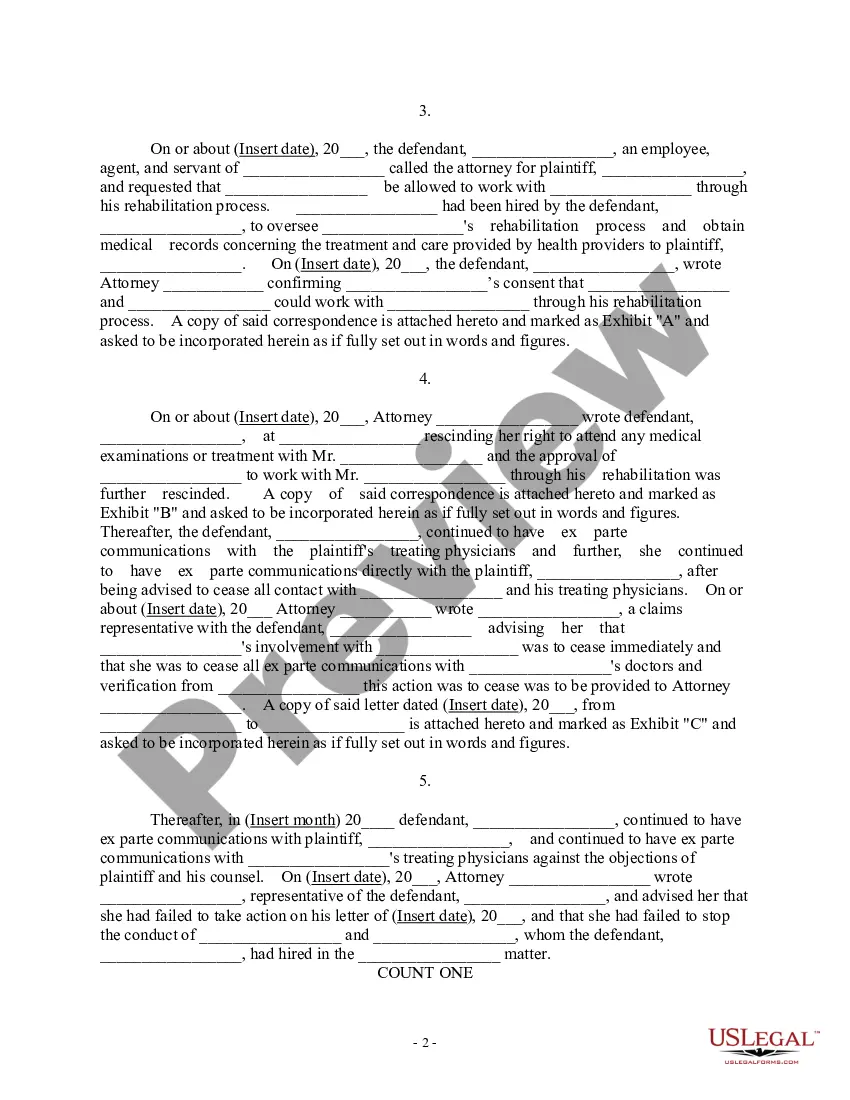
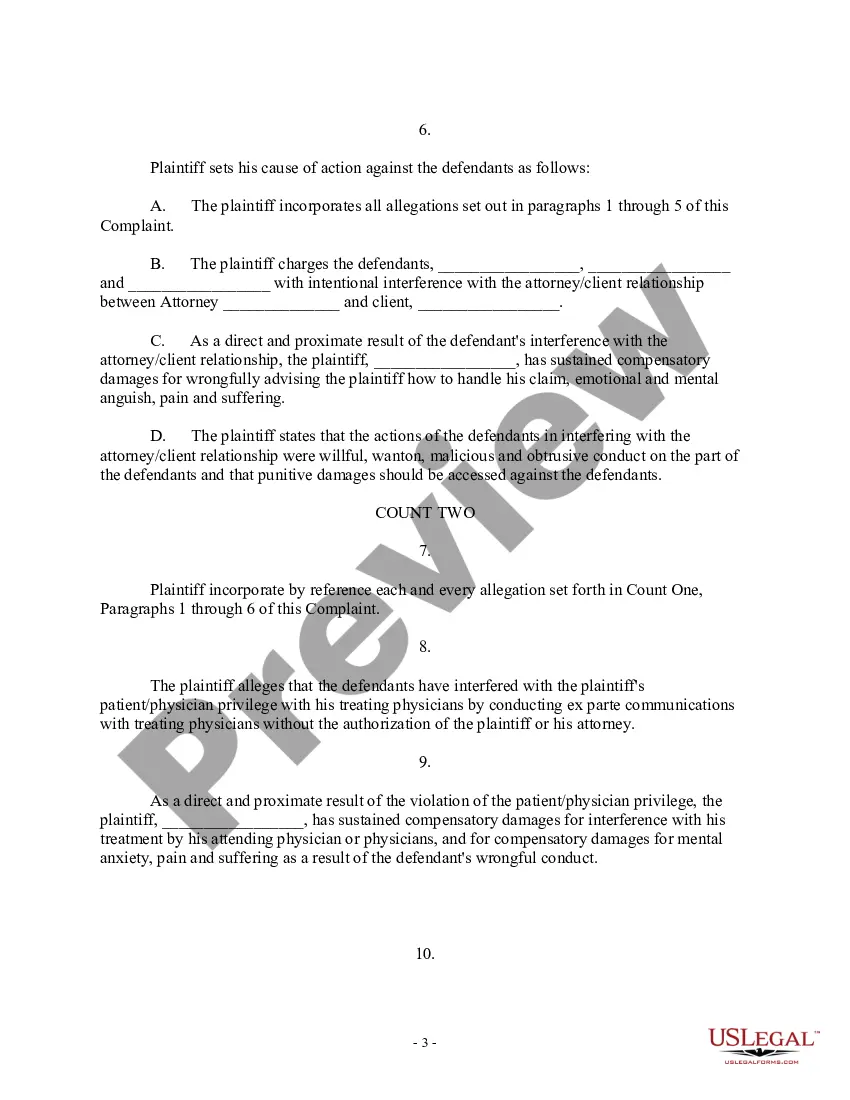
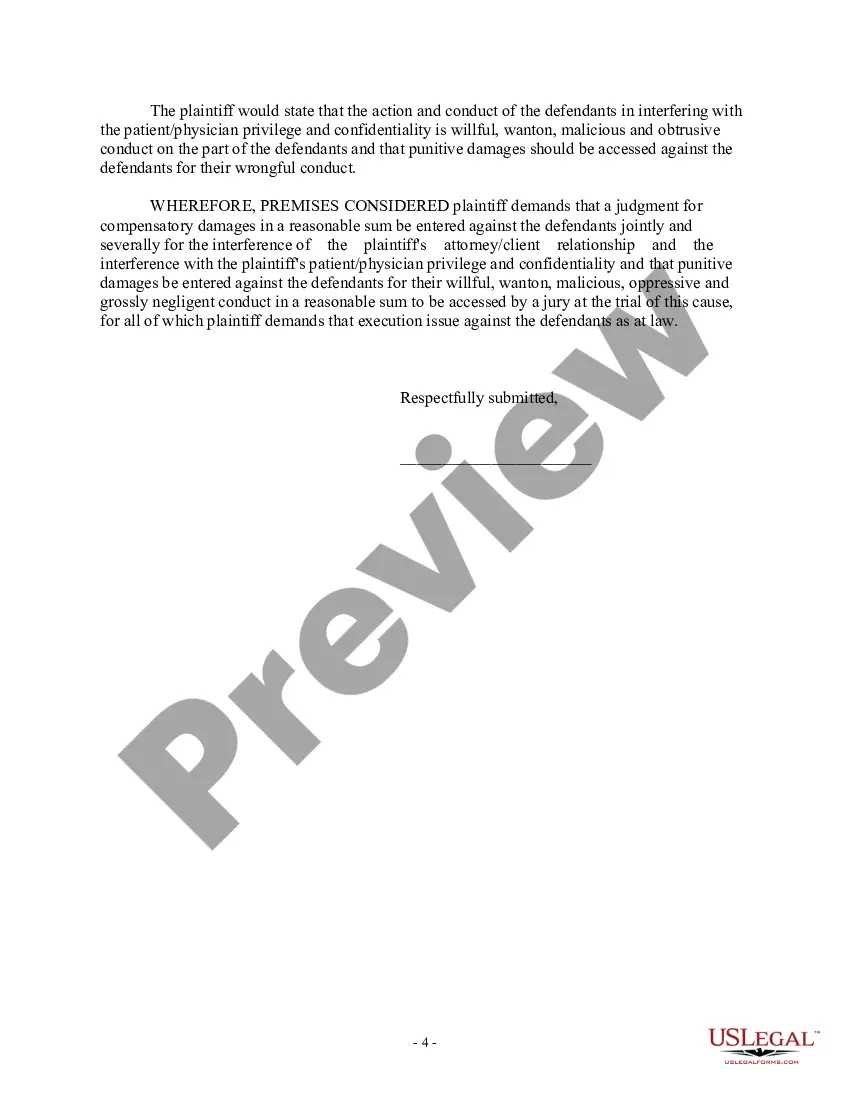
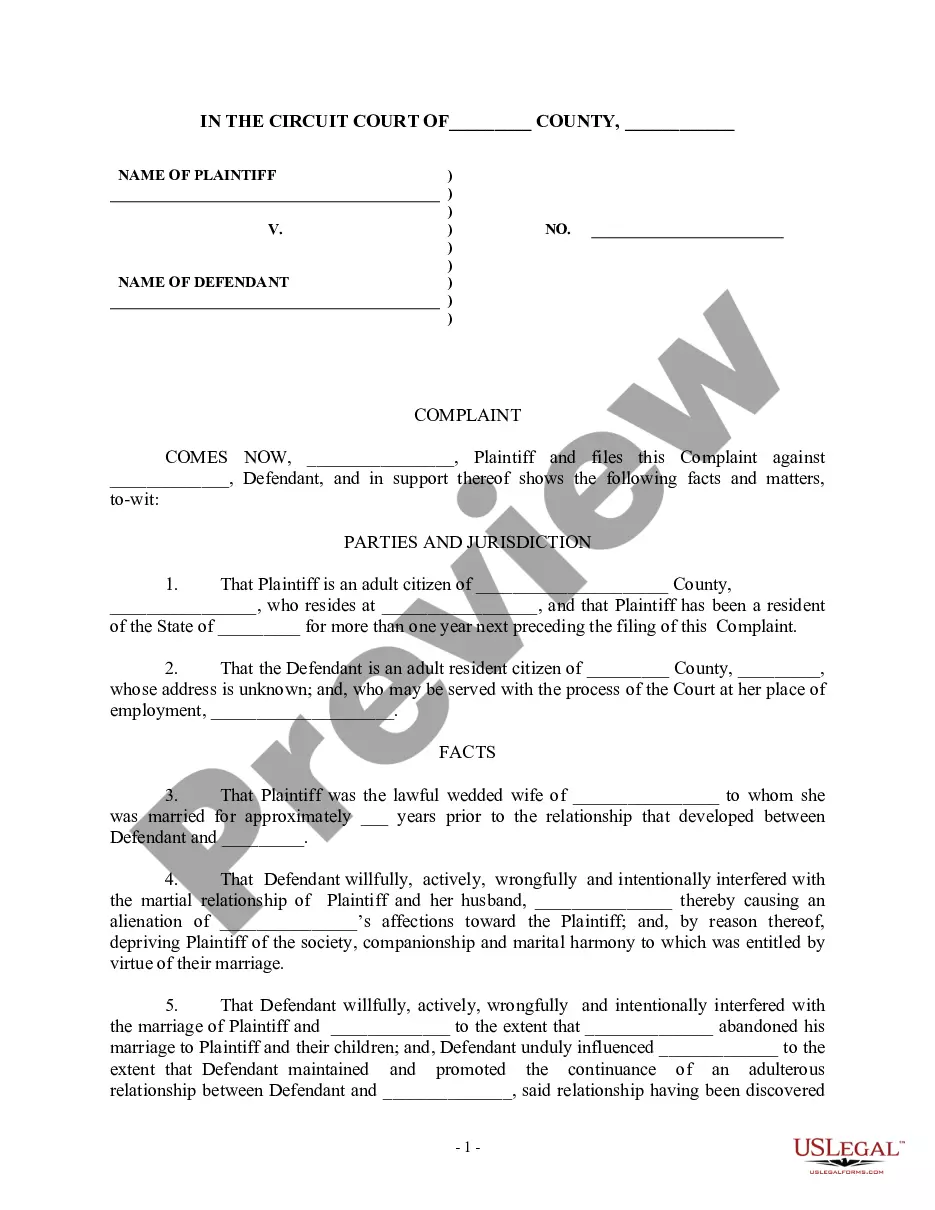
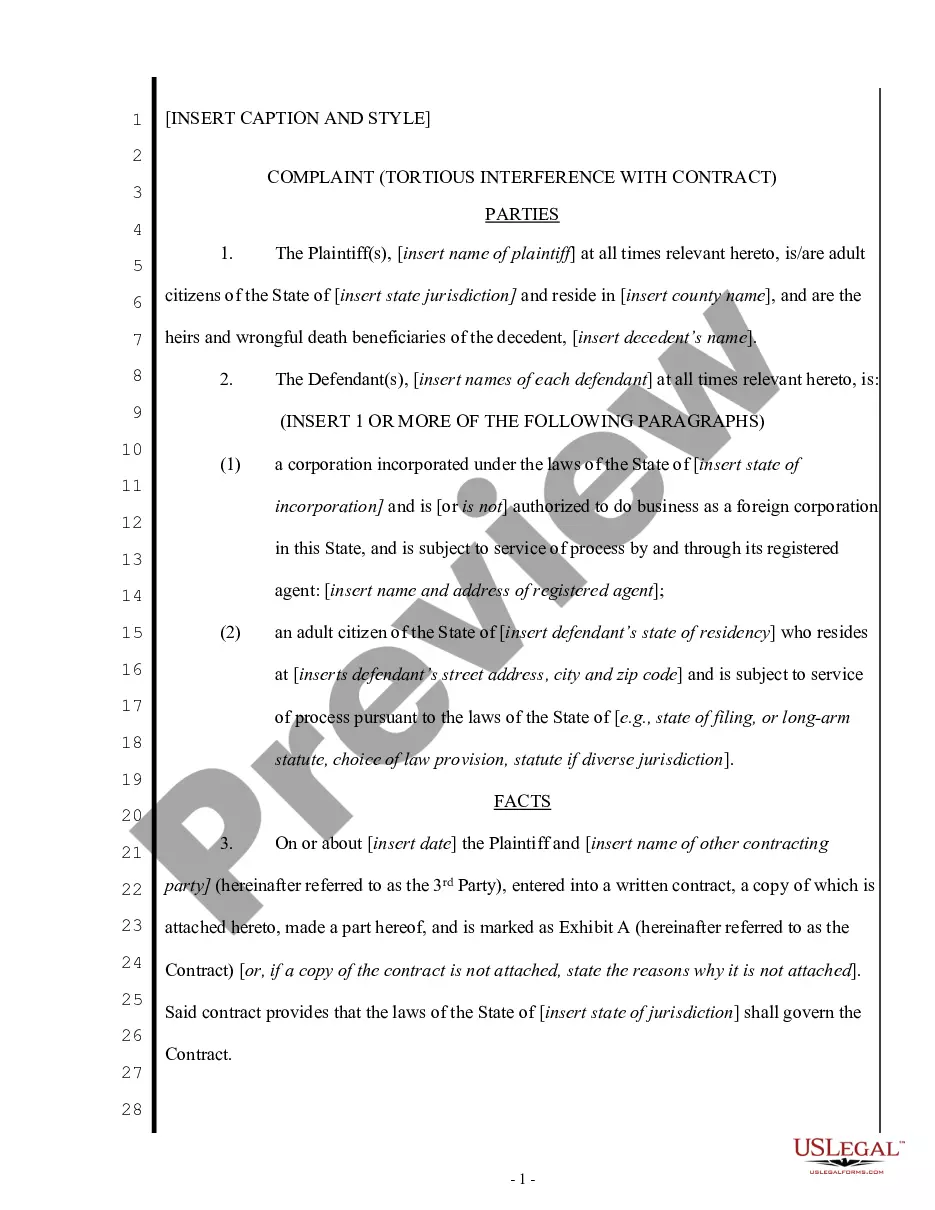
The Complaint for Intentional Interference with Attorney-Client Relationship is a legal document used by a plaintiff to assert that a third party has improperly interfered with the relationship between the client and their attorney. This form allows the plaintiff to seek compensatory and punitive damages for the emotional and financial harm caused by such interference. It is specifically designed for cases where there are claims of willful, malicious actions by the defendants that have affected the attorney-client privilege.
Form components explained
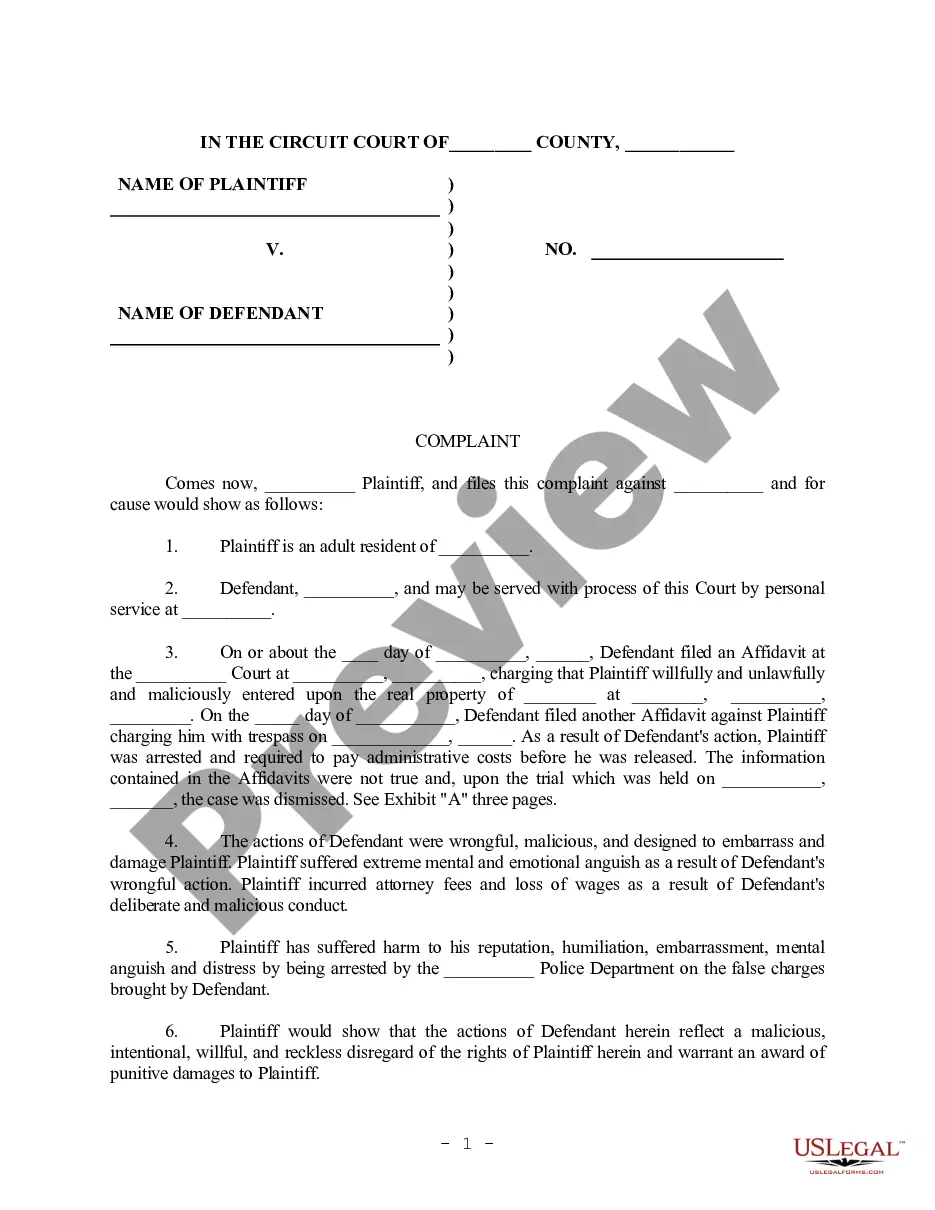
- Identification of the plaintiff and defendants, including their legal status and contact information.
- Details of the incident that led to the interference with the attorney-client relationship.
- Claims for compensatory damages for emotional distress and wrongful advice.
- Assertion of punitive damages due to willful and malicious conduct by the defendants.
- Inclusion of evidence to support the claims, through exhibits attached to the complaint.



Common use cases
This form should be used when a plaintiff believes that a third party has unlawfully intervened in their relationship with their attorney, potentially compromising their case or legal rights. Situations may include a defendant contacting the plaintiff's attorney without permission, wrongfully advising the plaintiff, or engaging in ex parte communications with the plaintiff's medical providers without authorization. Using this complaint allows individuals to seek legal remedies for these grievances in a formal legal setting.
Who should use this form
- Individuals who feel their attorney-client relationship has been wrongfully interfered with.
- Clients who are facing additional emotional distress and complications due to the actions of third parties.
- People seeking legal redress for harm caused by unauthorized communications or advice from others.
- Attorneys representing clients in cases of intentional interference.
Steps to complete this form
- Identify the parties involved by filling in the names and addresses of the plaintiff and defendants.
- Detail the events leading to the interference, including dates and actions taken by each party.
- Incorporate any evidence by referencing attachments such as correspondence and communications.
- Clearly outline the claims for compensatory and punitive damages, including the impact of the defendants' actions.
- Sign and date the form where indicated, and ensure it is filed with the appropriate court.
Notarization requirements for this form
This form does not typically require notarization to be legally valid. However, some jurisdictions or document types may still require it. US Legal Forms provides secure online notarization powered by Notarize, available 24/7 for added convenience.
Get your form ready online
Our built-in tools help you complete, sign, share, and store your documents in one place.
Make edits, fill in missing information, and update formatting in US Legal Forms—just like you would in MS Word.
Download a copy, print it, send it by email, or mail it via USPS—whatever works best for your next step.
Sign and collect signatures with our SignNow integration. Send to multiple recipients, set reminders, and more. Go Premium to unlock E-Sign.
If this form requires notarization, complete it online through a secure video call—no need to meet a notary in person or wait for an appointment.
We protect your documents and personal data by following strict security and privacy standards.

Make edits, fill in missing information, and update formatting in US Legal Forms—just like you would in MS Word.

Download a copy, print it, send it by email, or mail it via USPS—whatever works best for your next step.

Sign and collect signatures with our SignNow integration. Send to multiple recipients, set reminders, and more. Go Premium to unlock E-Sign.

If this form requires notarization, complete it online through a secure video call—no need to meet a notary in person or wait for an appointment.

We protect your documents and personal data by following strict security and privacy standards.
Common mistakes
- Failing to accurately identify all defendants involved in the interference.
- Neglecting to attach relevant exhibits as evidence to support the claims.
- Inconsistencies in the dates or details of the allegations.
- Not signing or dating the form before submission to the court.
Why use this form online
- Easy access to a professionally drafted legal document that fits your situation.
- Improved accuracy with fillable fields to ensure all necessary information is captured.
- Ability to edit and customize the form as needed before submission.
- Convenient download options for immediate use or filing.
Legal use & context
- Understanding the legal basis for claiming intentional interference with an attorney-client relationship.
- Awareness of potential defenses that defendants may raise in response to the complaint.
- Recognizing the importance of the attorney-client privilege and how it can be protected in legal settings.
What to keep in mind
- This form is essential for individuals facing wrongful interference with their attorney-client relationships.
- Proper completion and filing can lead to compensation for emotional and financial damages.
- Careful attention to detail is critical to ensure all allegations and evidences are thoroughly presented.
Looking for another form?
Form popularity
FAQ
Tortious interference, also known as intentional interference with contractual relations, in the common law of torts, occurs when one person intentionally damages someone else's contractual or business relationships with a third party, causing economic harm.
Tortious interference is a common law tort allowing a claim for damages against a defendant who wrongfully interferes with the plaintiff's contractual or business relationships. See also intentional interference with contractual relations.
California courts have held that an attorney-client relationship can only be created by contract. However, the formation of an attorney-client relationship does not require an express contract; such a relationship can be formed implicitly, as evidenced by the intent and conduct of the parties.
The establishment of the attorney-client relationship involves two elements: a person seeks advice or assistance from an attorney; and the attorney appears to give, agrees to give or gives the advice or assistance.
The aggrieved party can bring a suit for tortious interference with a contract or business expectancy in many circumstances. If you believe you've been the victim of tortious interference, you should contact an experienced business and commercial lawyer to learn about your options.
The restatement of torts,2 defines liability under Tortious Interference of a contract as, "One who intentionally and improperly interferes with the performance of a contract (except a contract to marry) between another and a third person by inducing or otherwise causing the third person not to perform the contract is
The elements of a claim for tortious interference with contract are: (1) the existence of a valid contract between the plaintiff and a third party; (2) the defendant's knowledge of the contract; (3) the 'defendant's intentional procurement of the third-party's breach of the contract without justification; (4) actual
To prevail on the claim, plaintiff must prove four elements: (1) that a valid contract existed, (2) that defendant had knowledge of the contract, (3) that defendant acted intentionally and improperly, and (4) that plaintiff was injured by the defendant's actions.
First, you can hire a new attorney and ask the new attorney to contact the former attorney and inform the former attorney of his or her termination. Second, you can write a letter to the attorney informing the attorney that you are terminating the attorney client relationship.