Complaint regarding Intentional Interference with Contract
What is this form?
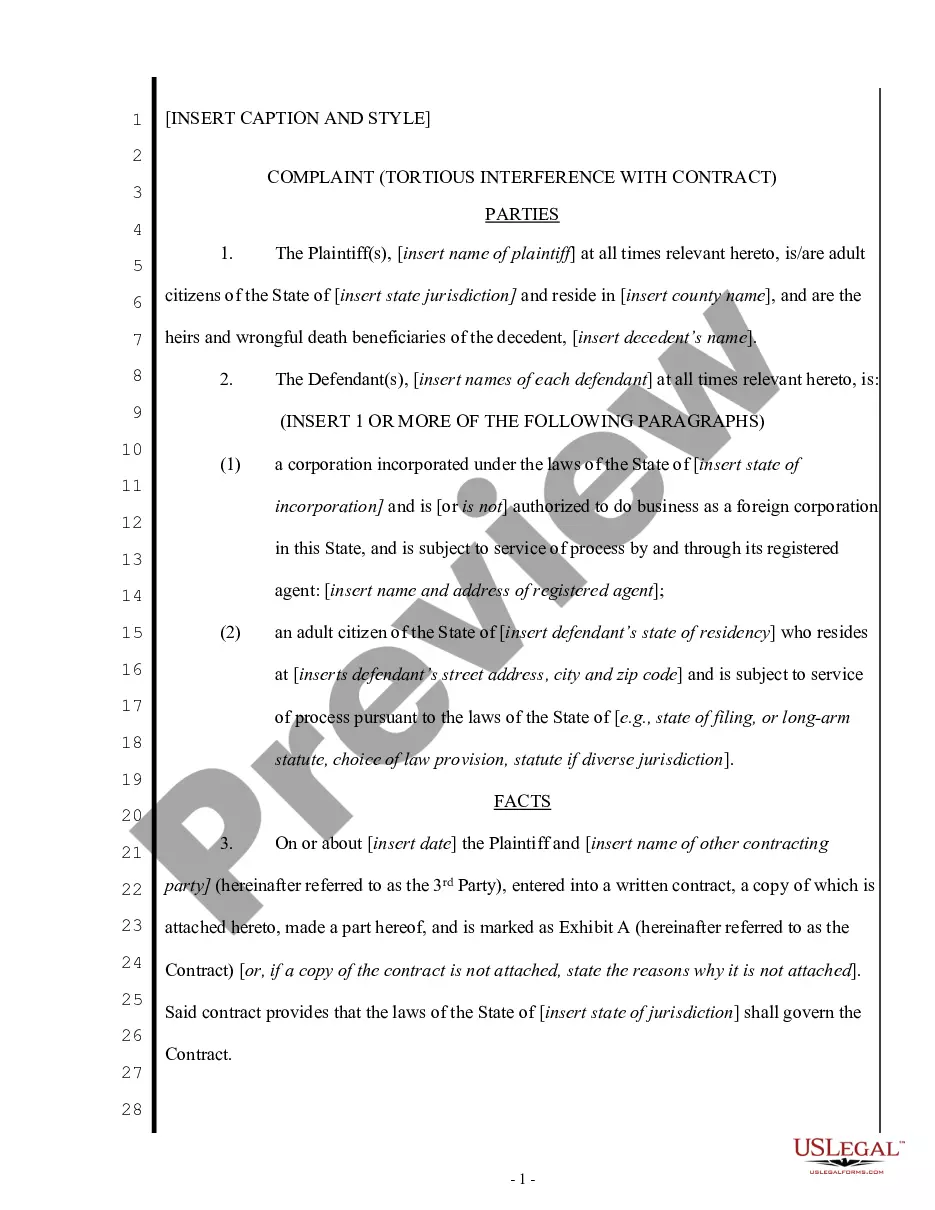
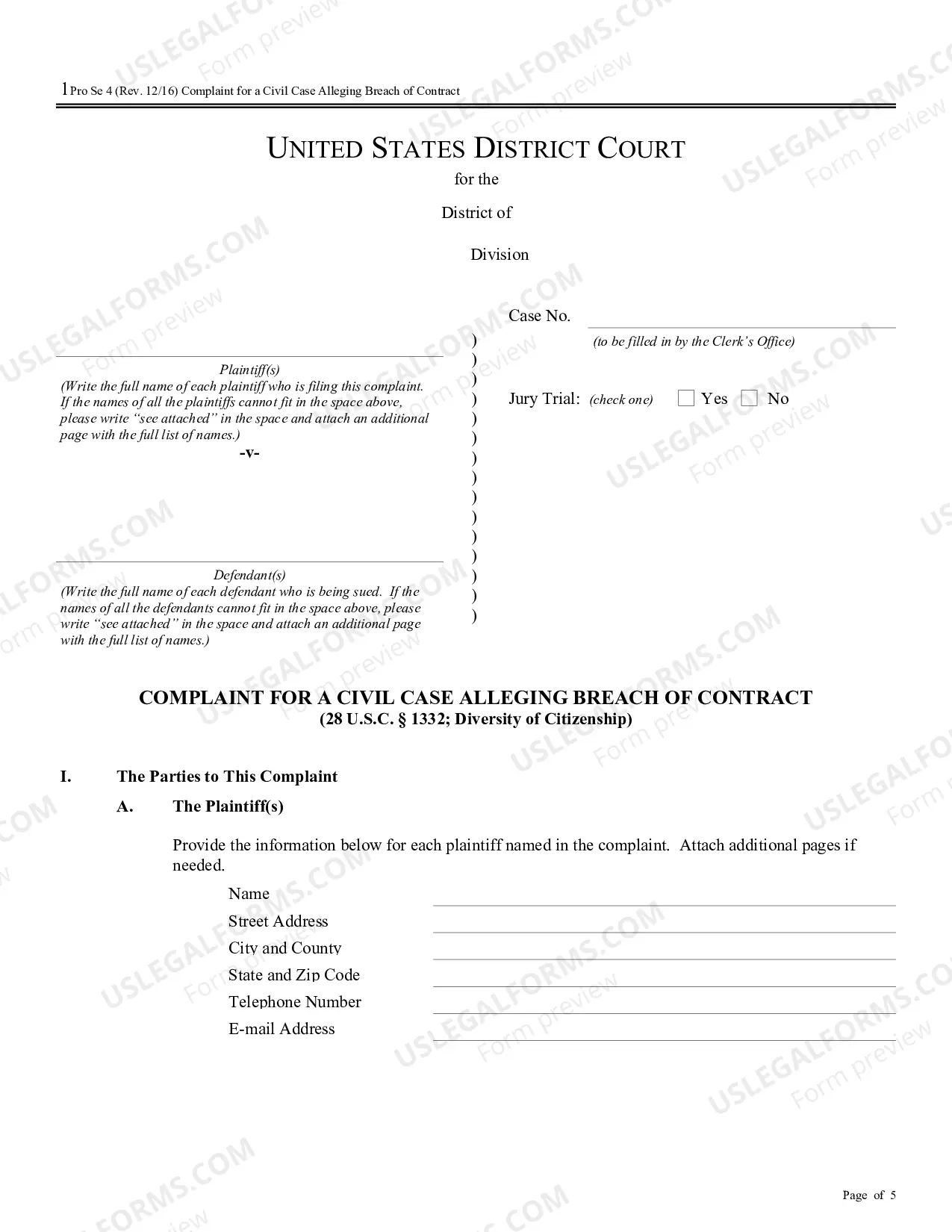
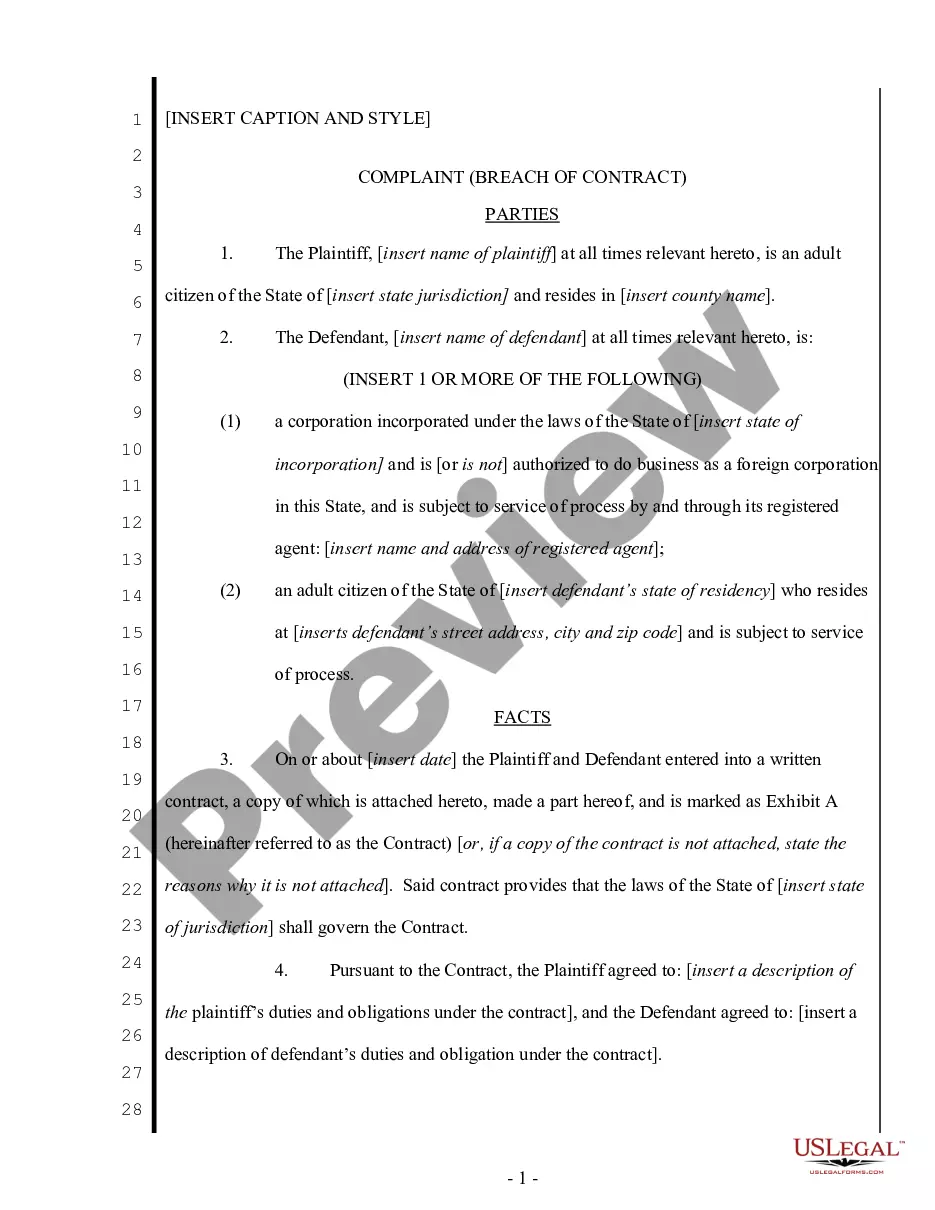
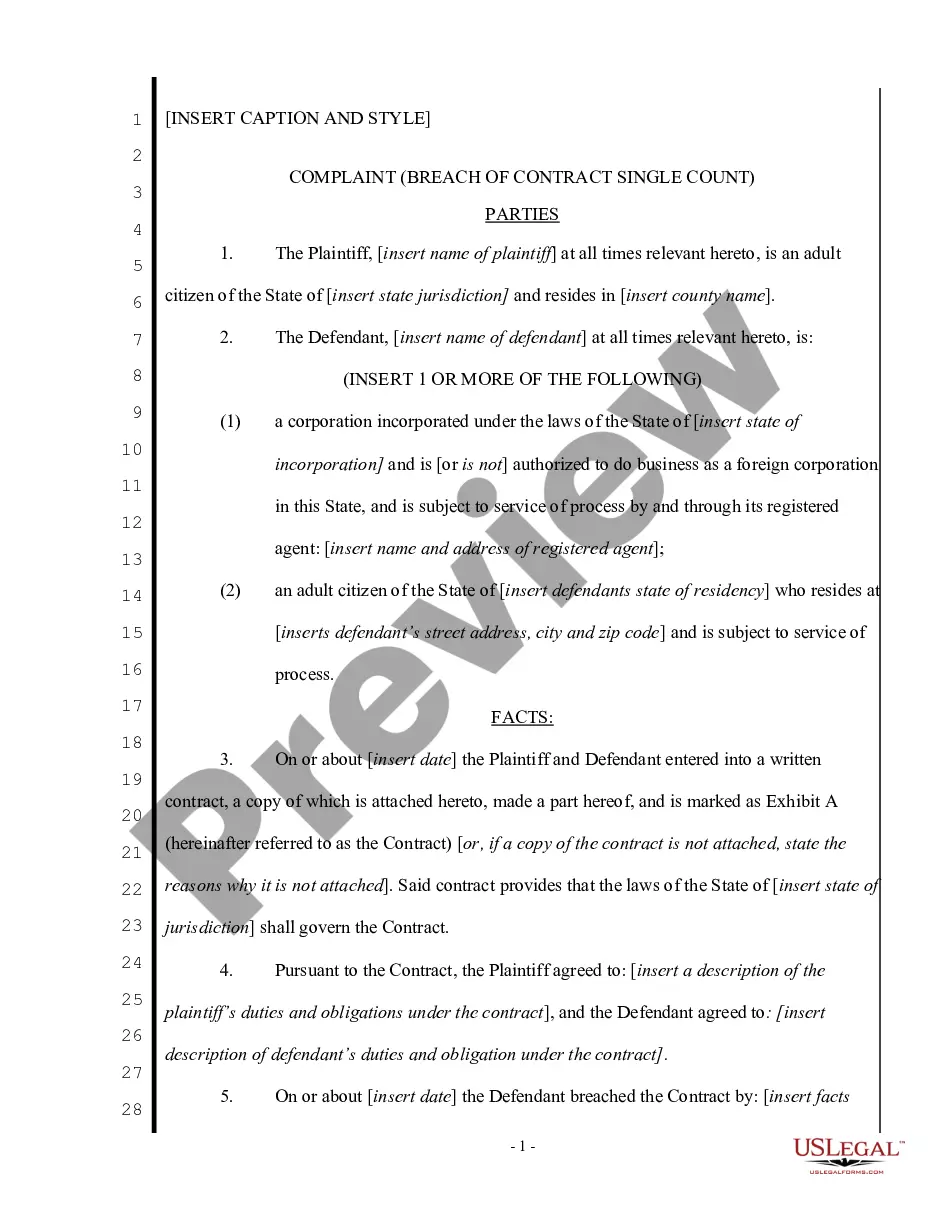
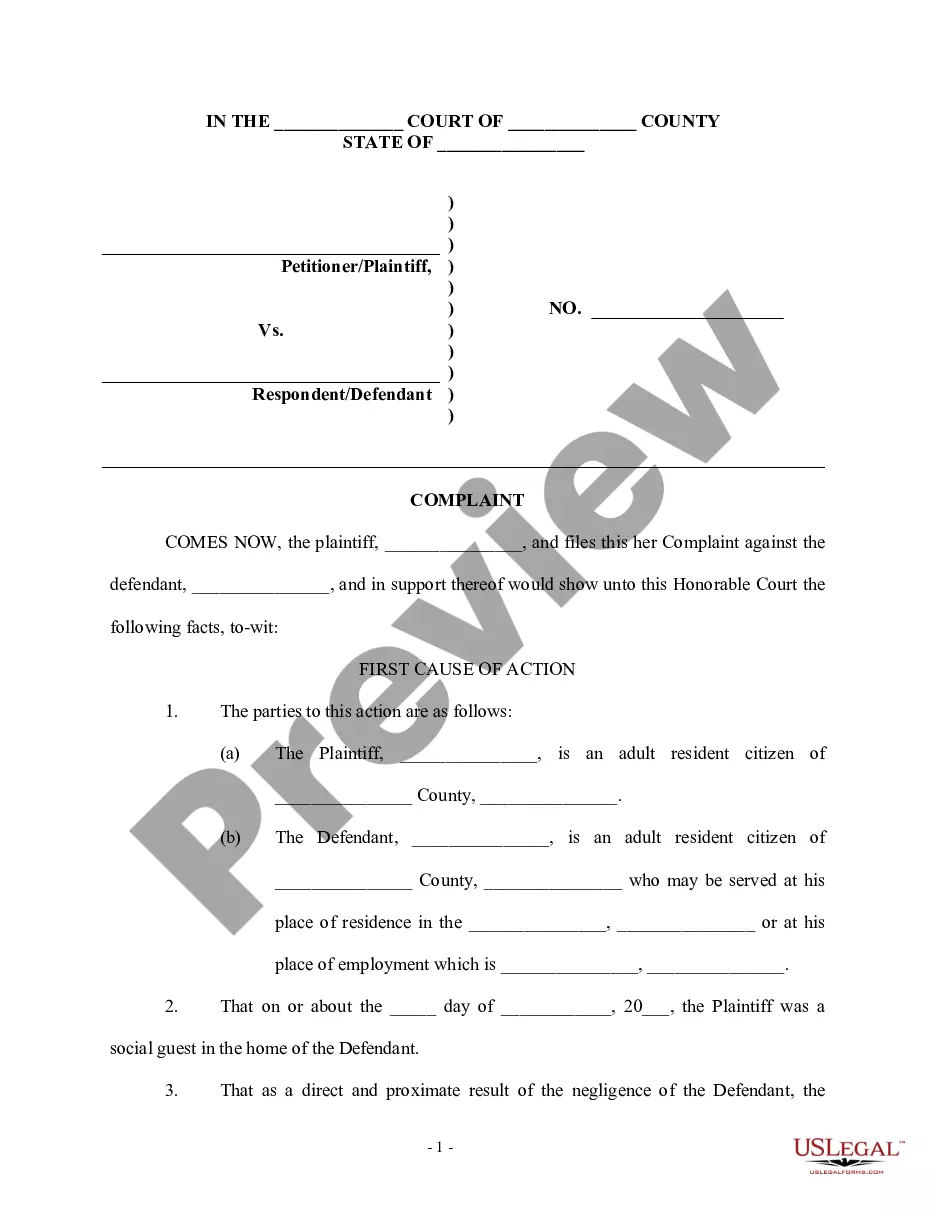
The Complaint regarding Intentional Interference with Contract is a legal document used to initiate a lawsuit against a party that has unlawfully disrupted a contractual relationship. This form allows a plaintiff to claim damages due to the defendant's intentional acts that caused a breach of contract. It is essential for individuals or businesses whose contractual agreements have been negatively impacted by another party's actions. Unlike other forms of complaint, this document specifically addresses the issue of tortious interference with contractual obligations, making it a unique and focused form for such claims.
Key parts of this document
- Identification of the parties involved, including the plaintiff and defendant.
- Delineation of the factual background of the contract and its breach.
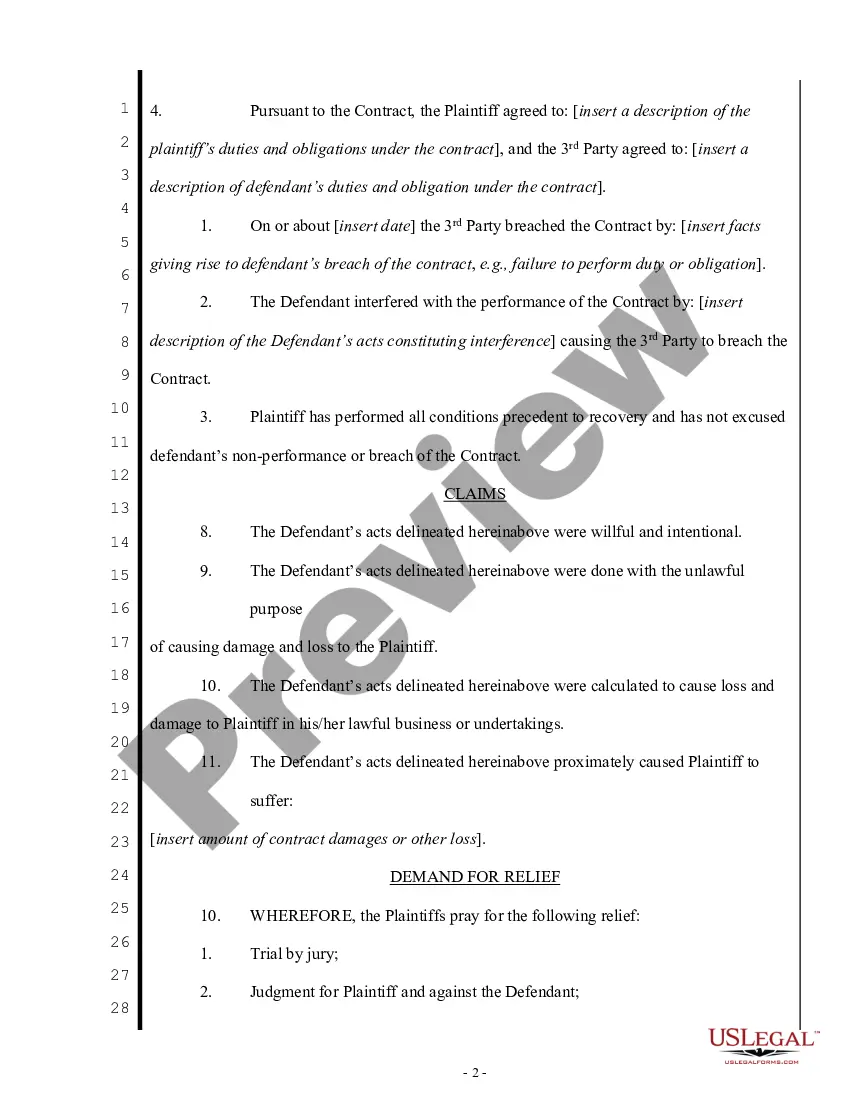
- Clear statements regarding the defendant's acts that constituted interference.
- Claims for damages resulting from the defendant's actions.
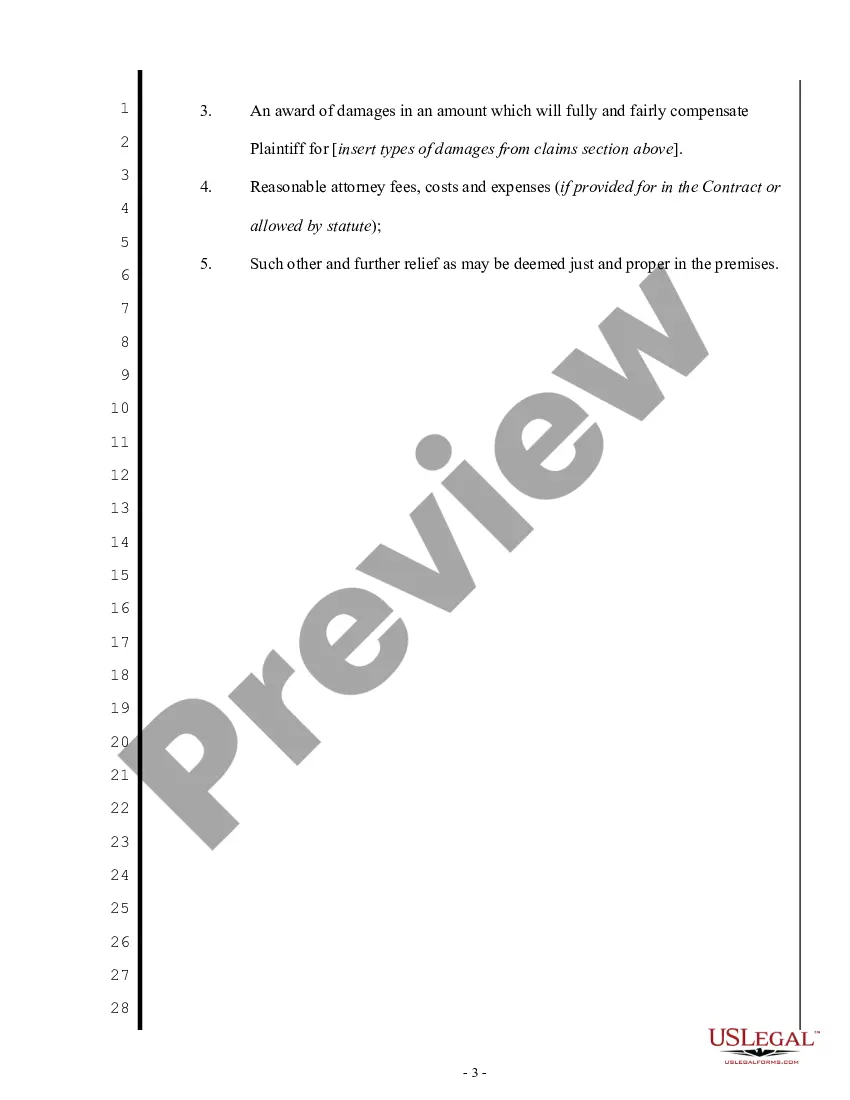
- Formal request for relief, including compensation and attorney fees if applicable.

When to use this document
This form should be used when you believe that another party has intentionally interfered with a contract you are a party to, resulting in a breach that has caused you financial harm. Scenarios include, but are not limited to, situations where a third-party competitor has persuaded your contracting partner to break the agreement, or when an individual has acted in bad faith to disrupt contractual obligations between you and another party.
Who can use this document
- Individuals or businesses who are parties to a contract that has been breached.
- Heirs or beneficiaries of a decedent who need to assert claims against a party interfering with a contract related to the decedent's estate.
- Legal representatives acting on behalf of a plaintiff seeking redress for contract interference.
How to complete this form
- Identify the parties by inserting the plaintiff's and defendant's names and addresses.
- Provide details about the contract, including the date it was entered into and a description of the obligations of both parties.
- State the facts outlining how the contract was breached by the third party.
- Clearly describe the acts of the defendant that led to the interference with the contract.
- Specify the damages incurred as a result of the interference.
- Sign and date the document before filing in the appropriate jurisdiction.
Notarization requirements for this form
In most cases, this form does not require notarization. However, some jurisdictions or signing circumstances might. US Legal Forms offers online notarization powered by Notarize, accessible 24/7 for a quick, remote process.
Get your form ready online
Our built-in tools help you complete, sign, share, and store your documents in one place.
Make edits, fill in missing information, and update formatting in US Legal Forms—just like you would in MS Word.
Download a copy, print it, send it by email, or mail it via USPS—whatever works best for your next step.
Sign and collect signatures with our SignNow integration. Send to multiple recipients, set reminders, and more. Go Premium to unlock E-Sign.
If this form requires notarization, complete it online through a secure video call—no need to meet a notary in person or wait for an appointment.
We protect your documents and personal data by following strict security and privacy standards.

Make edits, fill in missing information, and update formatting in US Legal Forms—just like you would in MS Word.

Download a copy, print it, send it by email, or mail it via USPS—whatever works best for your next step.

Sign and collect signatures with our SignNow integration. Send to multiple recipients, set reminders, and more. Go Premium to unlock E-Sign.

If this form requires notarization, complete it online through a secure video call—no need to meet a notary in person or wait for an appointment.

We protect your documents and personal data by following strict security and privacy standards.
Common mistakes
- Failing to properly identify all parties involved in the contractual relationship.
- Omitting critical details about the contract and its specific terms.
- Not clearly linking the defendant's actions to the breach of contract.
- Providing insufficient evidence of damages suffered due to the interference.
Benefits of using this form online
- Convenience of completing the form from any location at any time.
- Editability allows you to update information as needed
- Access to a reliable template drafted by licensed attorneys ensures legal validity.
Legal use & context
- This form is enforceable in a court of law, provided that it adheres to local procedures and regulations.
- Individuals should ensure they have a solid understanding of both the contract in question and the specific circumstances surrounding the interference.
- Limitations may apply, including statutes of limitations based on jurisdiction or specific contractual terms.
Key takeaways
- The Complaint regarding Intentional Interference with Contract is essential for seeking recourse for contractual breaches due to another's interference.
- Carefully completing each section is crucial to establish your claim effectively.
- Consider state-specific rules when completing and filing your complaint.
Looking for another form?
Form popularity
FAQ
To prevail on the claim, plaintiff must prove four elements: (1) that a valid contract existed, (2) that defendant had knowledge of the contract, (3) that defendant acted intentionally and improperly, and (4) that plaintiff was injured by the defendant's actions.
The requisite elements of tortious interference with contract claim are: (1) the existence of a valid and enforceable contract between plaintiff and another; (2) defendant's awareness of the contractual relationship; (3) defendant's intentional and unjustified inducement of a breach of the contract; (4) a subsequent
Tortious interference, also known as intentional interference with contractual relations, in the common law of torts, occurs when one person intentionally damages someone else's contractual or business relationships with a third party, causing economic harm.
The requisite elements of tortious interference with contract claim are: (1) the existence of a valid and enforceable contract between plaintiff and another; (2) defendant's awareness of the contractual relationship; (3) defendant's intentional and unjustified inducement of a breach of the contract; (4) a subsequent
The aggrieved party can bring a suit for tortious interference with a contract or business expectancy in many circumstances. If you believe you've been the victim of tortious interference, you should contact an experienced business and commercial lawyer to learn about your options.
Tortious interference is a common law tort allowing a claim for damages against a defendant who wrongfully interferes with the plaintiff's contractual or business relationships. See also intentional interference with contractual relations.
To prevail on the claim, plaintiff must prove four elements: (1) that a valid contract existed, (2) that defendant had knowledge of the contract, (3) that defendant acted intentionally and improperly, and (4) that plaintiff was injured by the defendant's actions.
Contract between plaintiff and a third party. defendant knew of contract. defendant improperly induced third party to breach the contract or made the contract impossible. harm to plaintiff.