Sample Letter for Default Entry
Understanding this form
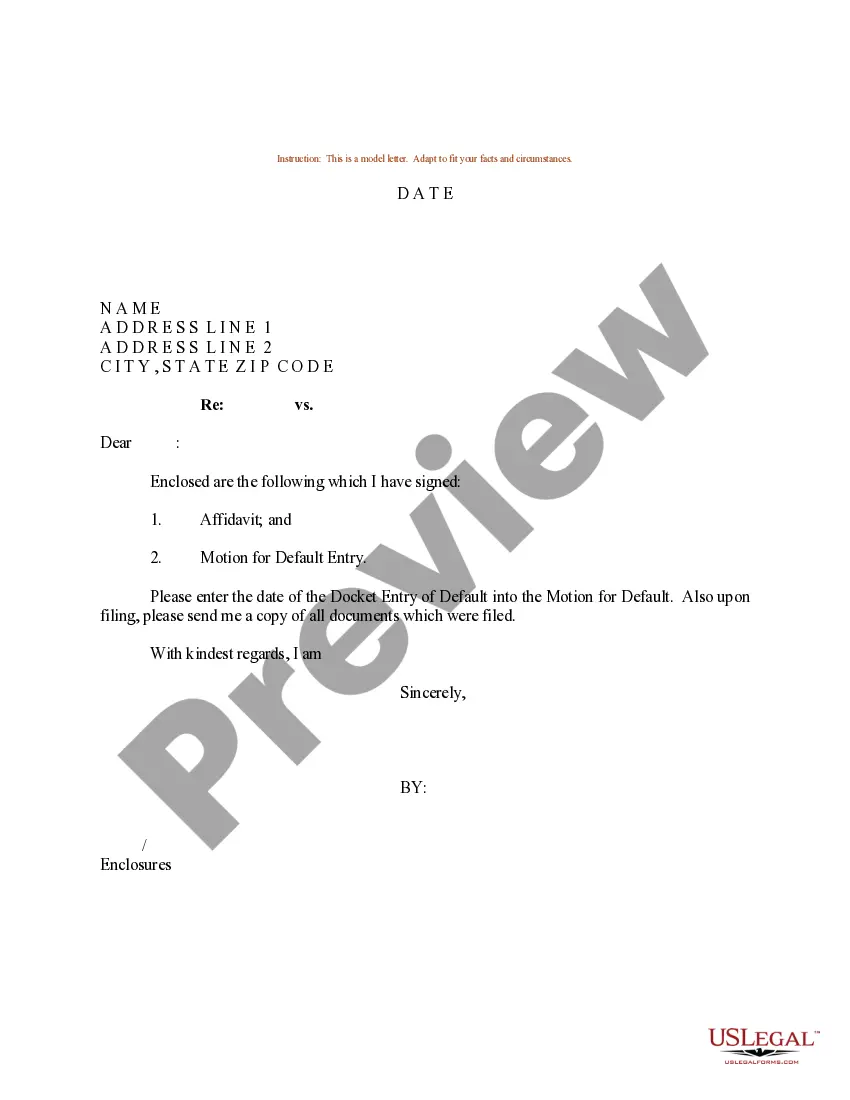
The Sample Letter for Default Entry is a template designed to assist in formally notifying a party about their failure to respond in legal proceedings. This form is beneficial when seeking to obtain a default judgment due to a lack of response and provides a clear, structured way to communicate this intent. Unlike other legal letters, this specific form demonstrates a precise and formal approach tailored for cases where one party is not participating respectfully in the proceedings.
Main sections of this form
- Date of the letter
- Sender's name and address
- Recipient's name and address
- Subject line indicating default entry
- Statement of default and request for judgment

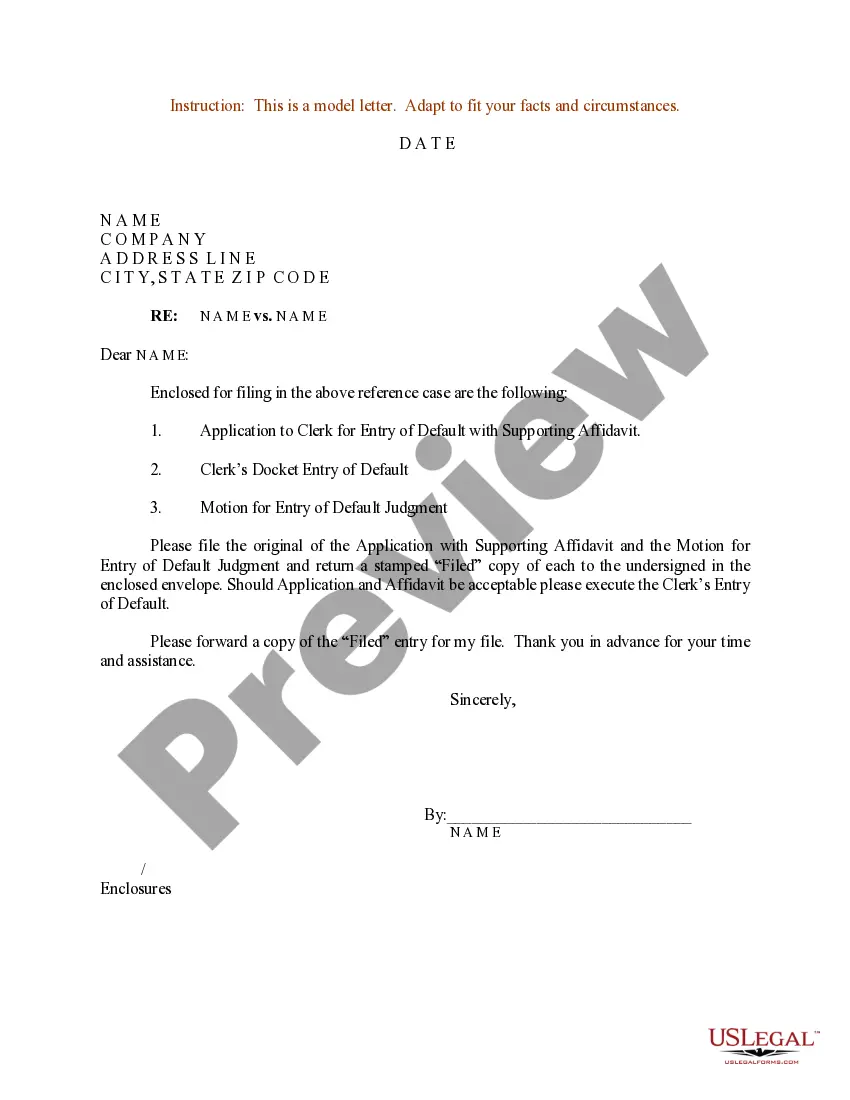
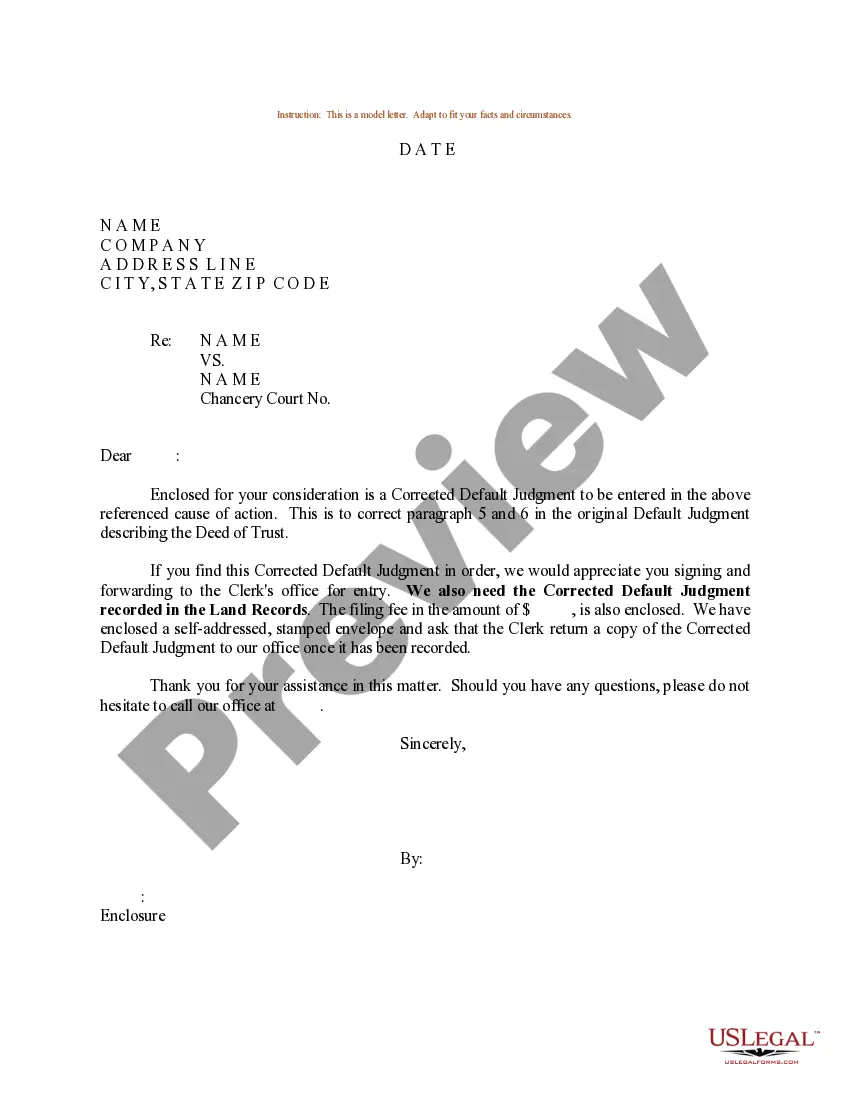
When to use this form
This form should be used when you are involved in a legal dispute, and the other party has failed to respond to your complaint or legal papers within the allotted time. Using this sample letter enables you to formally document this default and proceed with seeking a judgment from the court. It's commonly utilized in civil cases where one party does not engage in the process as required.
Who should use this form
- Individuals pursuing a legal claim against another party
- Defendants in a case where the opposing party has defaulted
- Legal professionals drafting documents for clients
Completing this form step by step
- Input the current date at the top of the letter.
- Fill in your name and address, followed by the recipient's details.
- Clearly state the subject line that indicates the content of the letter.
- Detail the failure of the other party to respond and your request for a default judgment.
- Sign and date the letter appropriately before sending it to the other party and filing it with the court.
Notarization requirements for this form
This form does not typically require notarization to be legally valid. However, some jurisdictions or document types may still require it. US Legal Forms provides secure online notarization powered by Notarize, available 24/7 for added convenience.
Get your form ready online
Our built-in tools help you complete, sign, share, and store your documents in one place.
Make edits, fill in missing information, and update formatting in US Legal Forms—just like you would in MS Word.
Download a copy, print it, send it by email, or mail it via USPS—whatever works best for your next step.
Sign and collect signatures with our SignNow integration. Send to multiple recipients, set reminders, and more. Go Premium to unlock E-Sign.
If this form requires notarization, complete it online through a secure video call—no need to meet a notary in person or wait for an appointment.
We protect your documents and personal data by following strict security and privacy standards.

Make edits, fill in missing information, and update formatting in US Legal Forms—just like you would in MS Word.

Download a copy, print it, send it by email, or mail it via USPS—whatever works best for your next step.

Sign and collect signatures with our SignNow integration. Send to multiple recipients, set reminders, and more. Go Premium to unlock E-Sign.

If this form requires notarization, complete it online through a secure video call—no need to meet a notary in person or wait for an appointment.

We protect your documents and personal data by following strict security and privacy standards.
Common mistakes
- Failing to include the correct date on the letter.
- Not addressing the recipient correctly with their full name and address.
- Omitting key information regarding the reason for the default entry.
- Neglecting to sign the letter before submission.
- Not keeping a copy for your records before sending.
Why complete this form online
- Convenient format that allows for easy editing and customization.
- Access to templates drafted by licensed attorneys ensures reliability.
- Instant download for immediate use in your legal process.
- Ability to prepare the letter from home without needing to visit a law office.
Legal use & context
- The letter serves as a formal notification of a default.
- It may be used as evidence in legal proceedings if further action is required.
- Understanding local laws regarding defaults and notifications is essential for enforceability.
Summary of main points
- The Sample Letter for Default Entry helps notify parties of their failure to meet obligations.
- Essential information such as dates and specific defaults should be clearly outlined.
- Using this form can help document the default, which is crucial for potential legal action.
Looking for another form?
Form popularity
FAQ
A default judgment that does not dispose of all of the claims among all parties is not a final judgment unless the court directs entry of final judgment under Rule 54(b). Until final judgment is entered, Rule 54(b) allows revision of the default judgment at any time.
In California, the entry of default is not automatic. To get the entry of default, the plaintiff must file an application for default judgment with the court clerk. Under certain circumstances, a Code of Civil Procedure section 425.11 statement of damages and a proof of service attached.
Entry of default refers to the process where the person making a claim in a case makes a request before a court of law stating that the party against whom they have made a claim have failed to furnish any meaningful response to the claimant's pleadings within the time allowed for that.
It means that you went more than 30 days after being served with the petition for divorce without responding. As a result, your spouse may seek an entry of default, which is the first step towards having a judgment of divorce granted without... 0 found this answer helpful helpful votes 4 lawyers agree.
A simple default doesn't mean you legally owe a certain amount of money. A default judgment identifies the amount you owe the plaintiff. You don't want this to happen because a default judgment makes you a judgment debtor. Plaintiff may use all sorts of legal procedures to legally take your money and property.
What happens when you get a default notice? Your creditor will ask you to pay the full amount of the debt instead of paying the instalments you first agreed.Your creditor can also take further action after the account has defaulted, including: Passing the debt to a collection agency.
A default notice (sometimes referred to as a default letter or Notice of Default) is a formal letter sent to you by a creditor as a result of payments missed on a credit agreement between yourself and a credit provider.The notice will give you 14 days to pay any amount owed before issuing a default.
The danger of allowing a default judgment against you is once this occurs the debt buyer can garnish your wages and your bank accounts.If you don't submit a written answer to the lawsuit the court can enter a default judgment giving the debt buyer everything they are asking for.