Sample Letter for Settlement Itemization
What is this form?
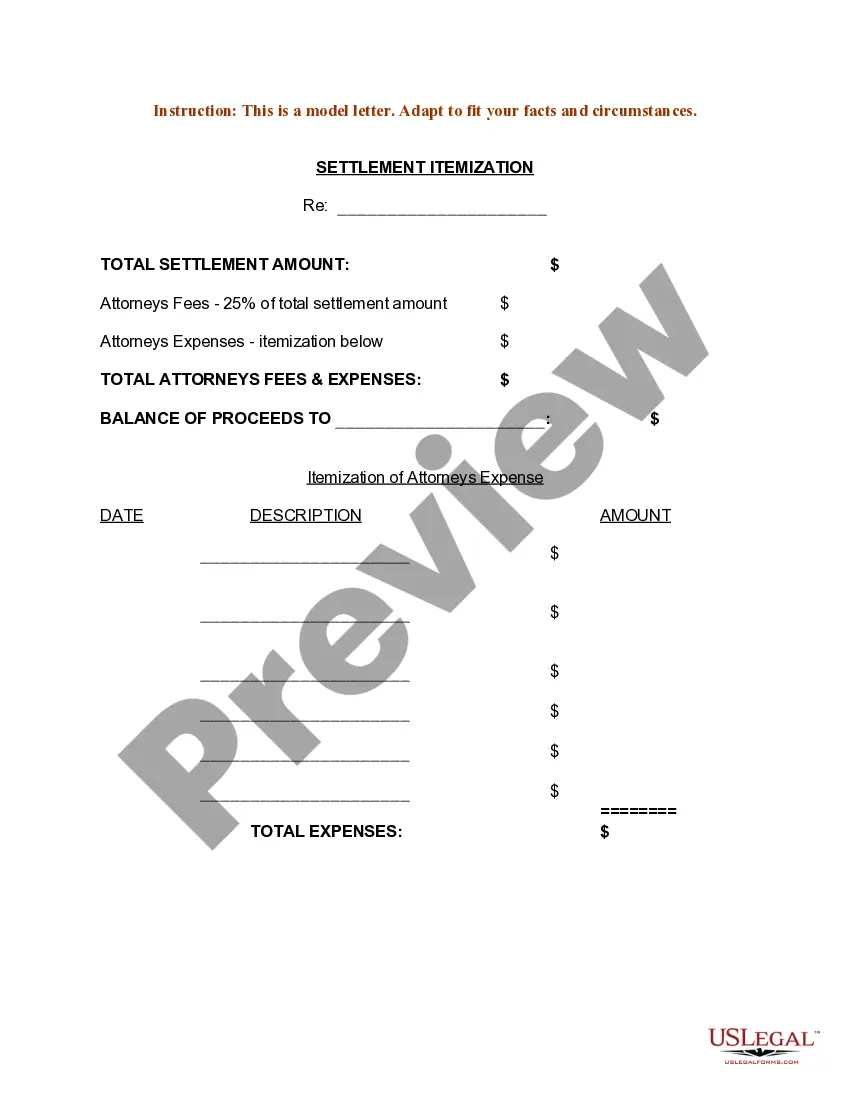
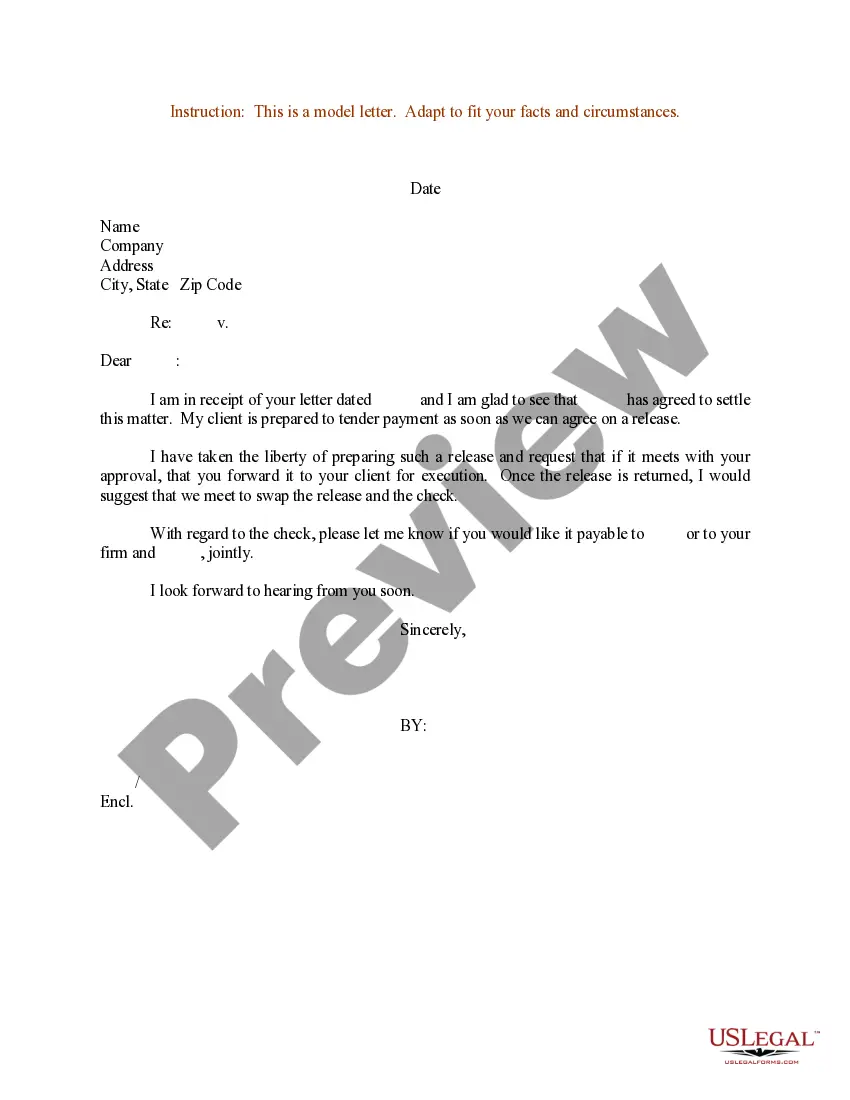
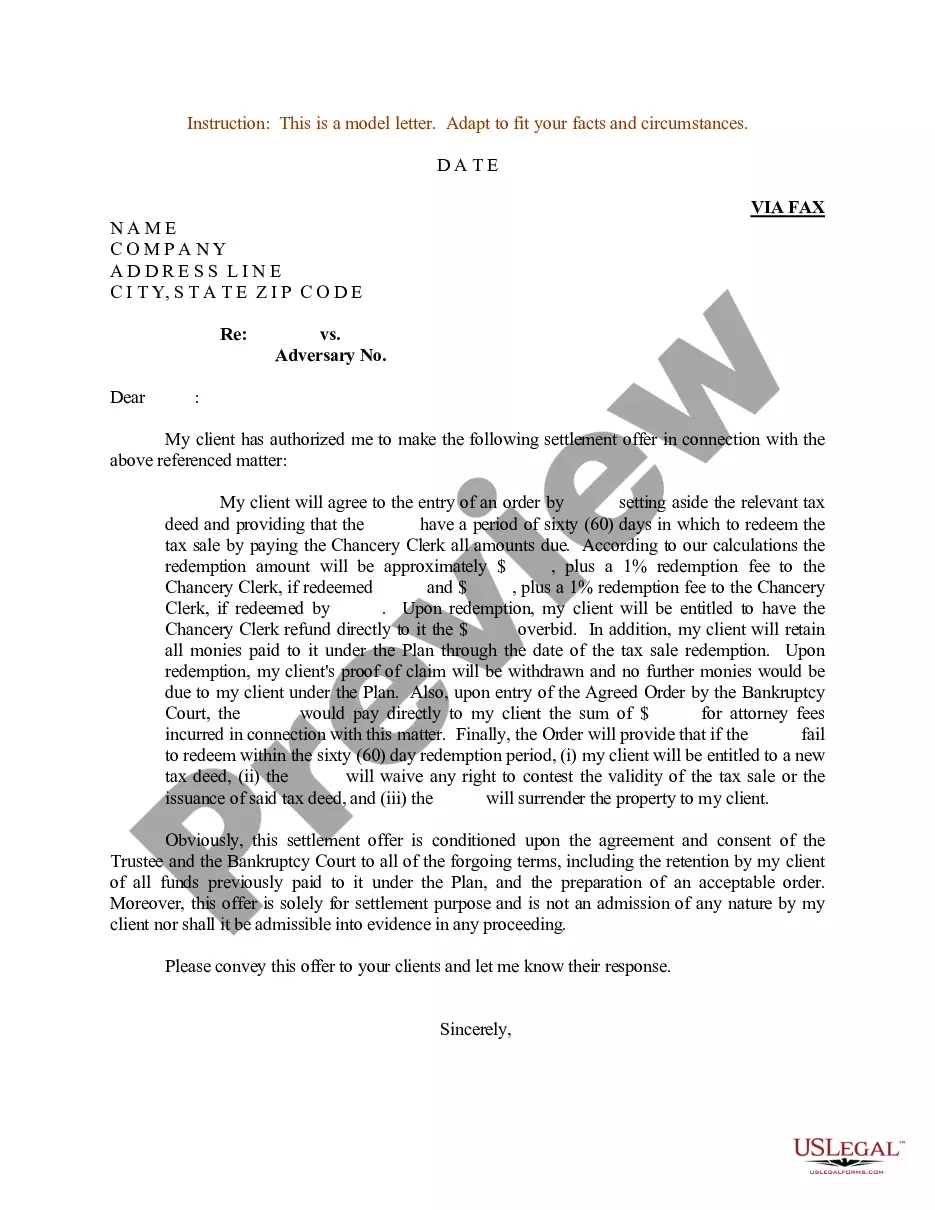
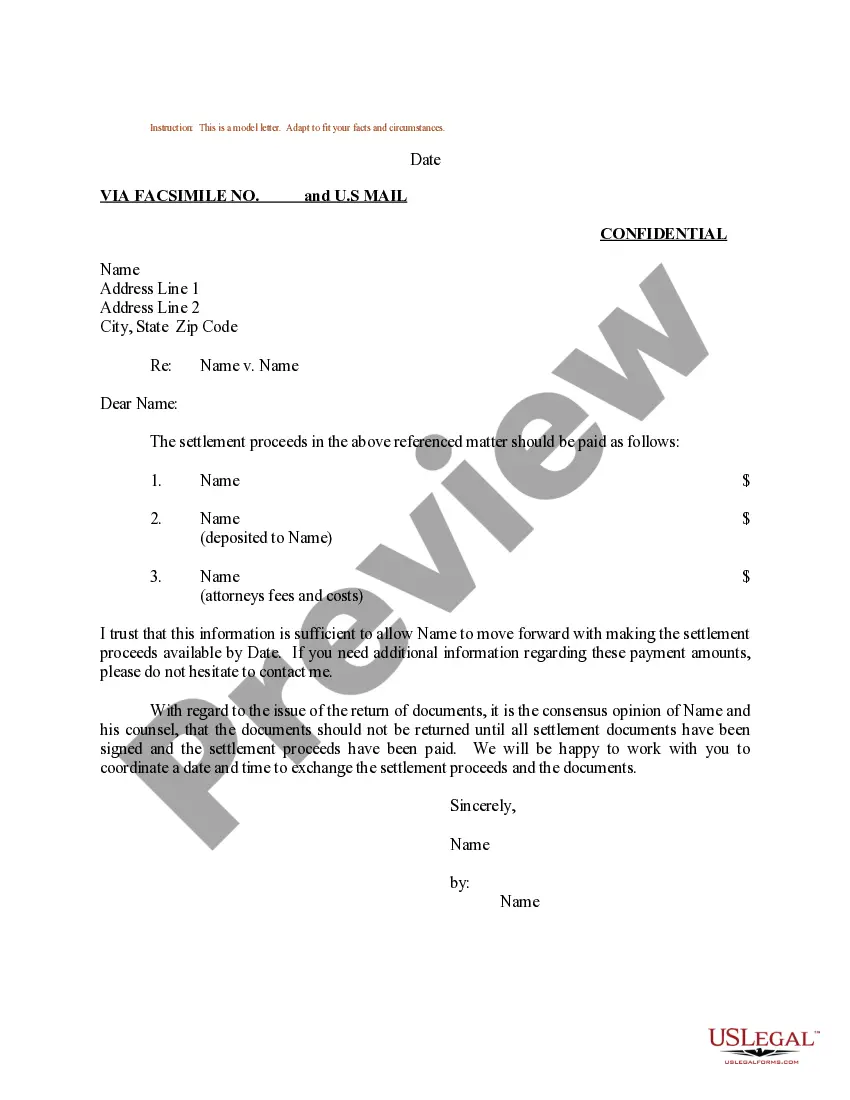
The Sample Letter for Settlement Itemization is a standard document designed to formally present an itemized list of claims to the other party in a settlement negotiation. This form helps to clarify what is being sought in terms of compensation or other agreements, distinguishing it from general settlement letters or agreements by focusing specifically on detailed itemization.
Form components explained
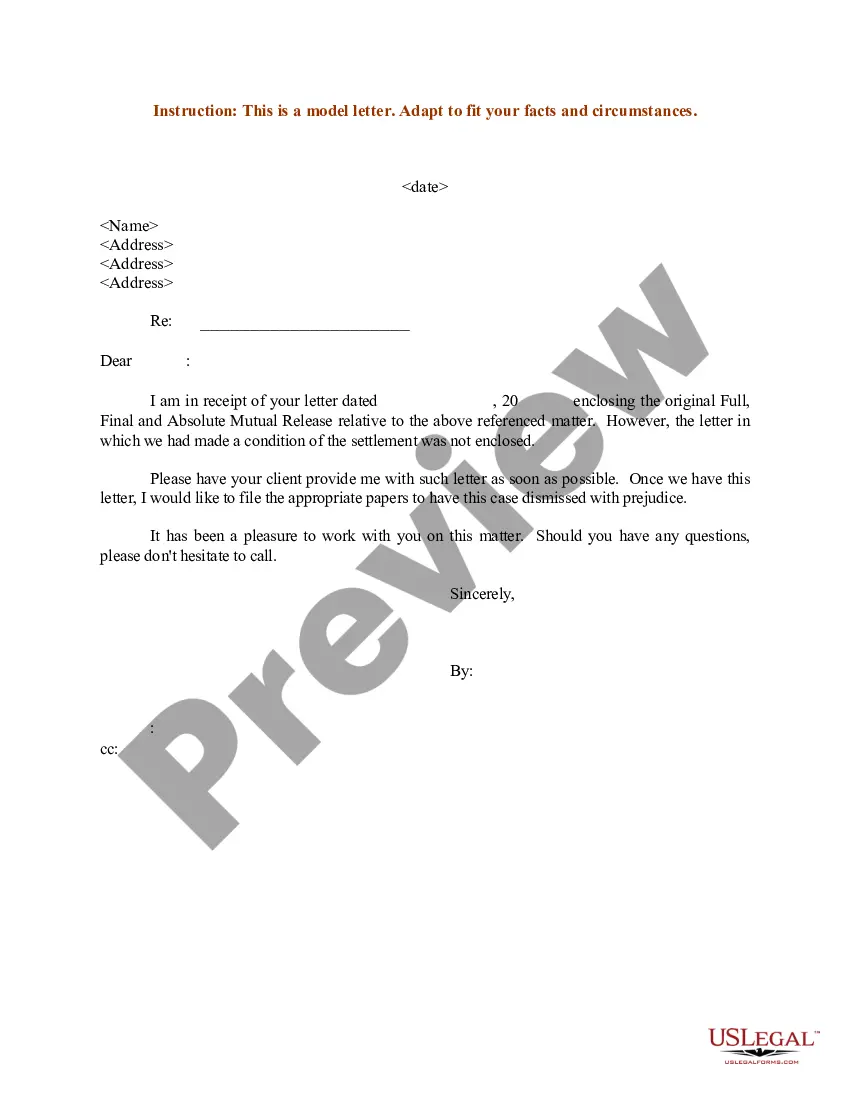
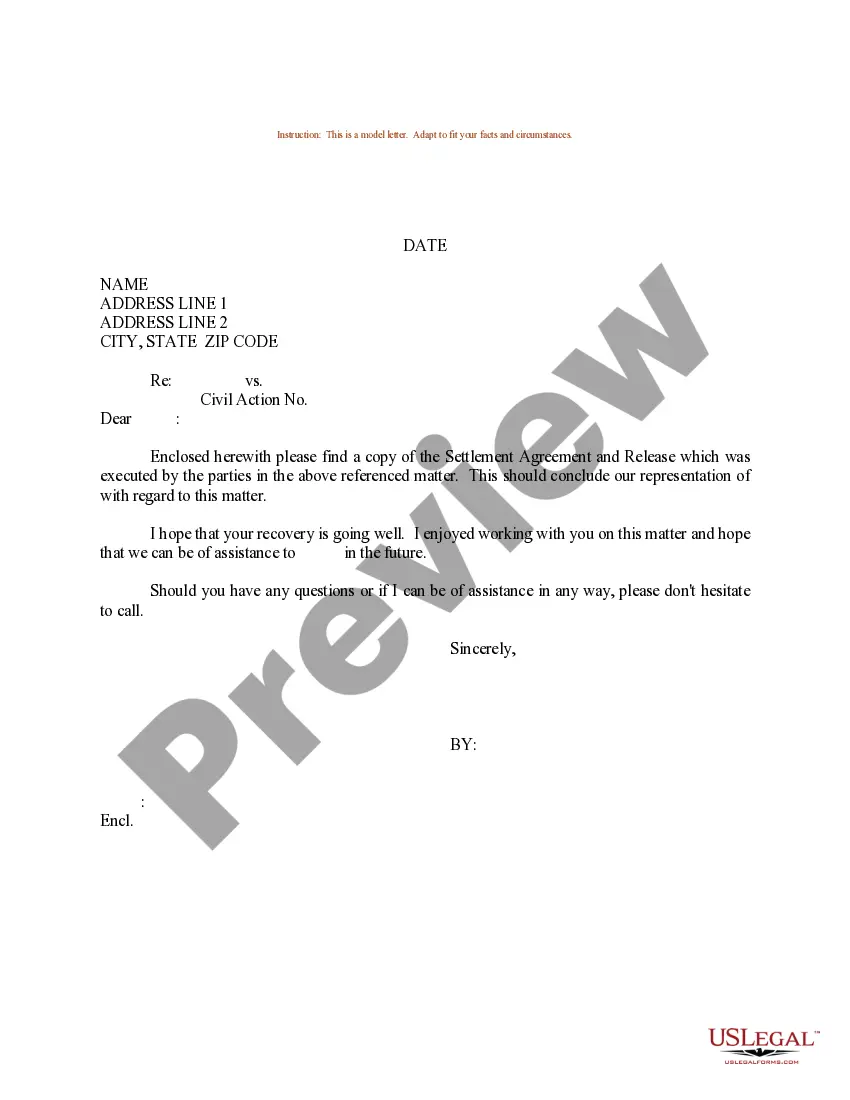
- Sender's information: Details about who is sending the letter.
- Recipient's information: Information about the party receiving the letter.
- Date of the letter: The date when the letter is drafted.
- Itemization section: A detailed list of items, including descriptions and corresponding amounts.
- Conclusion statement: A closing paragraph summarizing the action expected from the recipient.
When to use this document
This form is useful during settlement negotiations when you need to clearly outline your claims and the items associated with them. It is typically used after an incident or dispute when you are pursuing resolution without going to court and require a detailed record to support your case.
Who this form is for
- Individuals involved in a legal dispute seeking settlement.
- Parties negotiating compensation after an incident.
- Legal representatives drafting settlement items for their clients.
Steps to complete this form
- Identify the parties: Enter the sender's and recipient's details at the top of the letter.
- Specify the date: Write the date on which the letter is being sent.
- Detail the itemization: List out all claims, ensuring each item has a clear description and an associated amount.
- Draft the conclusion: Summarize the intent and response you are seeking from the recipient.
- Review the document for accuracy: Ensure all information provided is correct before sending.
Does this form need to be notarized?
In most cases, this form does not require notarization. However, some jurisdictions or signing circumstances might. US Legal Forms offers online notarization powered by Notarize, accessible 24/7 for a quick, remote process.
Get your form ready online
Our built-in tools help you complete, sign, share, and store your documents in one place.
Make edits, fill in missing information, and update formatting in US Legal Forms—just like you would in MS Word.
Download a copy, print it, send it by email, or mail it via USPS—whatever works best for your next step.
Sign and collect signatures with our SignNow integration. Send to multiple recipients, set reminders, and more. Go Premium to unlock E-Sign.
If this form requires notarization, complete it online through a secure video call—no need to meet a notary in person or wait for an appointment.
We protect your documents and personal data by following strict security and privacy standards.

Make edits, fill in missing information, and update formatting in US Legal Forms—just like you would in MS Word.

Download a copy, print it, send it by email, or mail it via USPS—whatever works best for your next step.

Sign and collect signatures with our SignNow integration. Send to multiple recipients, set reminders, and more. Go Premium to unlock E-Sign.

If this form requires notarization, complete it online through a secure video call—no need to meet a notary in person or wait for an appointment.

We protect your documents and personal data by following strict security and privacy standards.
Mistakes to watch out for
- Failing to include all relevant claims in the itemization.
- Using unclear or vague descriptions for items.
- Not providing accurate contact information for the sender or recipient.
- Omitting the date of the letter.
Benefits of using this form online
- Convenience: Download and complete the form at your own pace.
- Editability: Easily modify and customize the form to fit your specific situation.
- Reliability: Form templates are drafted by licensed attorneys to ensure compliance with legal standards.
Main things to remember
- The Sample Letter for Settlement Itemization clearly documents claims during negotiations.
- Ensure all claims are itemized accurately and with enough detail.
- This form can be adapted for use in various states with attention to specific legal requirements.
Looking for another form?
Form popularity
FAQ
Outline The Incident. You will need to start by outlining the details of the accident. Detail Your Injuries. Explain All Of Your Damages. Calculate Your Settlement Demand. Attach Relevant Documents. Get Help From An Attorney.
Insurance Company's Information Make sure to include the name of the insurance company, name of the adjuster/or medical examiner, their title, and the company's address. Intent You must include, FOR SETTLEMENT PURPOSES ONLY before the body of the letter to label the intent.
Have a Specific Settlement Amount in Mind. Do Not Jump at a First Offer. Get the Adjuster to Justify a Low Offer. Emphasize Emotional Points in Your Favor. Wait for a Response. Know When To Engage an Attorney. Put the Settlement in Writing.
Both parties involved in the accident should be identified. The letter should state that the payment is full and final, and that the injured party releases the responsible party from all present and future claims. If applicable, terms and conditions for payment should be mentioned.
Type your letter. Concisely review the main facts. Be polite. Write with your goal in mind. Ask for exactly what you want. Set a deadline. End the letter by stating you will promptly pursue legal remedies if the other party does not meet your demand. Make and keep copies.
Understand the claim. The first step is to carefully review the claim. Layout the terms. Be specific when offering a settlement. Include a tempting payout. The key is to make an appealing offer that still undercuts the original demand. Give a response timeframe.
A summary of the original incident with any factual disputes highlighted. Evidence to support the version of events provided in the Settlement Demand Letter. An outline of any relevant legal standards that apply to the matter. A settlement offer and terms/timeline for acceptance.
Request Your Medical Records. One of the first things you will need to do is request copies of your medical records. Document Your injury. Establish the Extent of Property Damage. Document Your Expenses. Be Organized. Do Not Exaggerate and Do Not Be Greedy. Calculating Pain and Suffering Seek Professional Legal Advice.
It should include your name, address, and a date for the letter. If sending to an insurance company, you would include their name, address, and a line directing the personal injury demand letter to the attention of an adjustor by name and title if one has been assigned to your claim.