Sample Letter for Settlement Agreement and Release
What this document covers
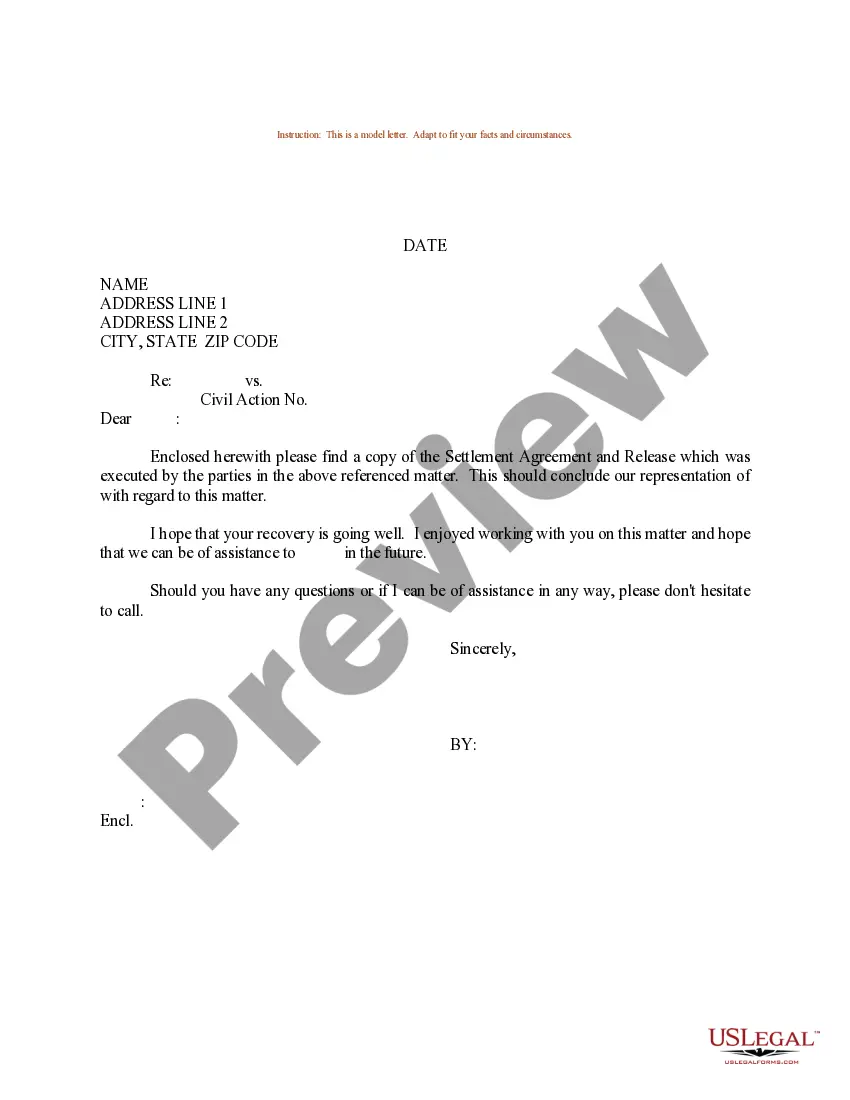
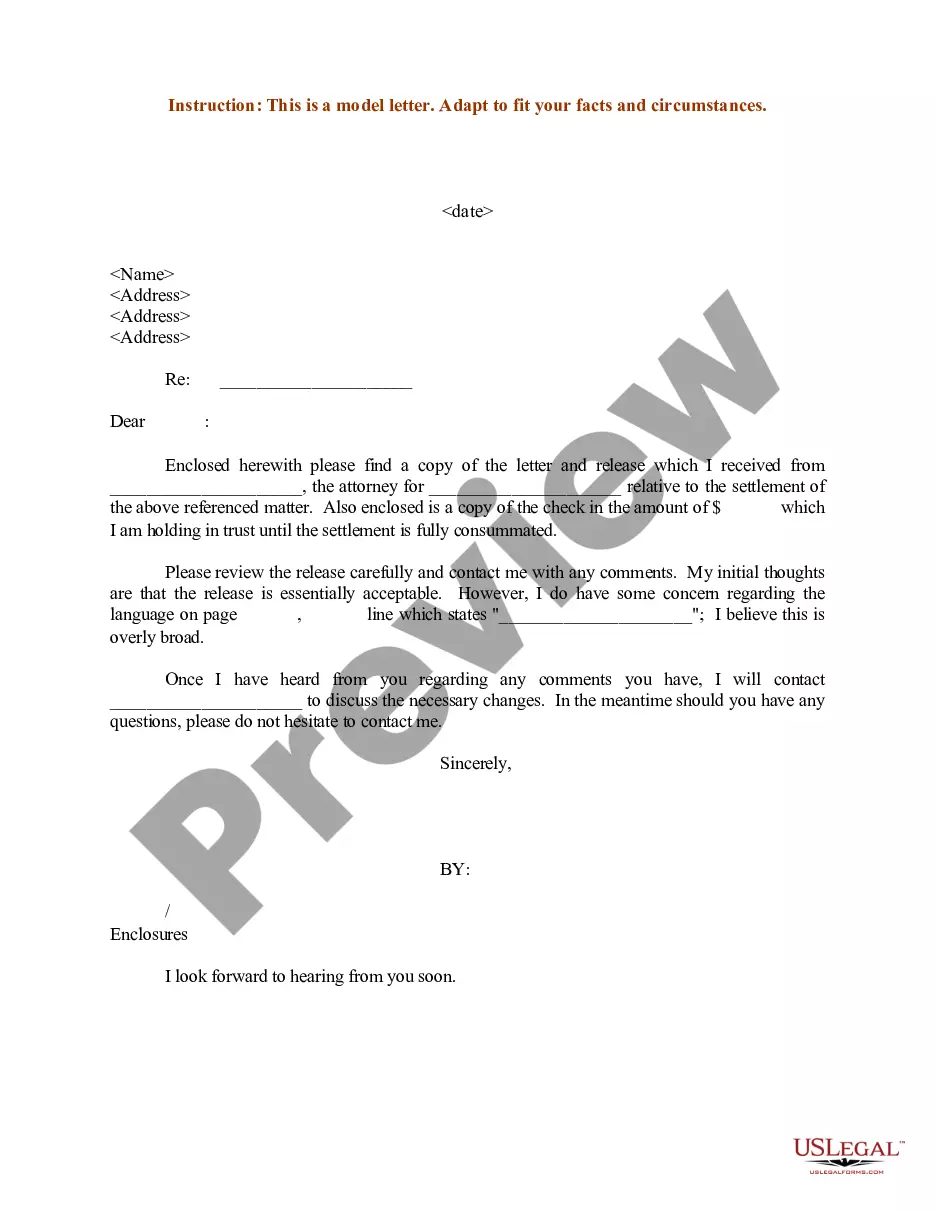
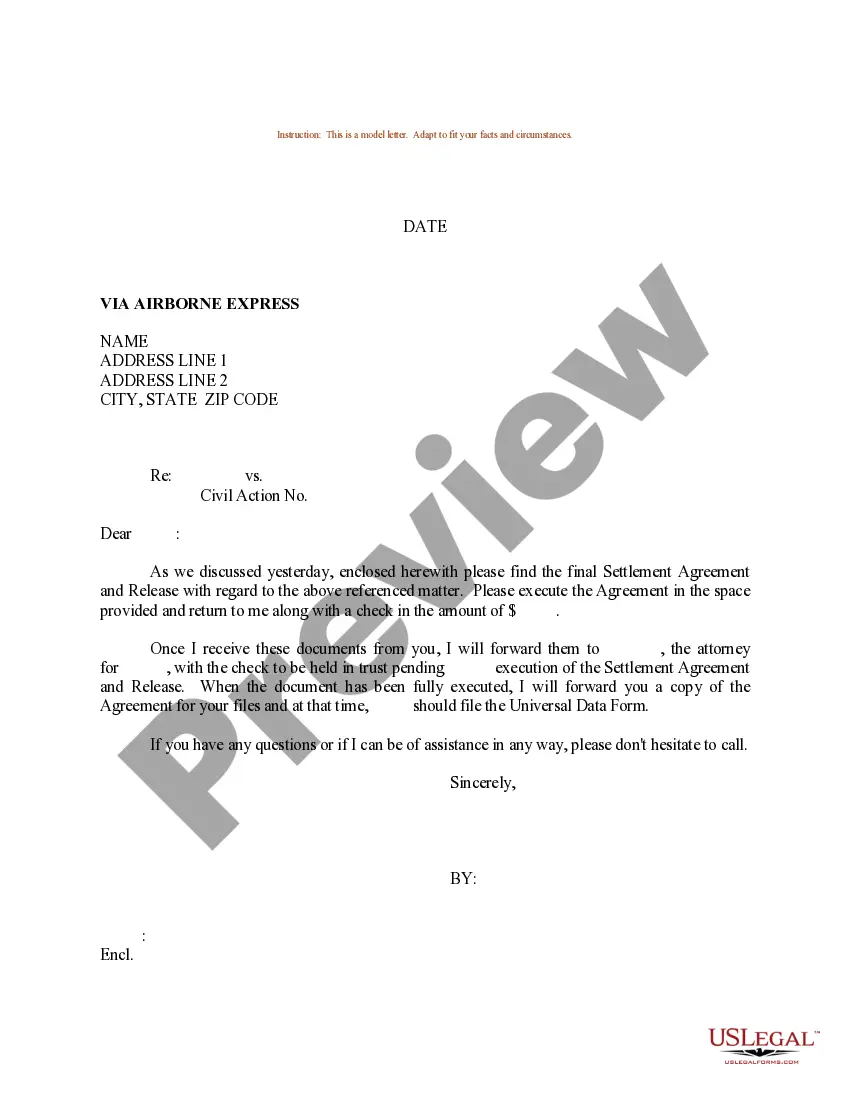
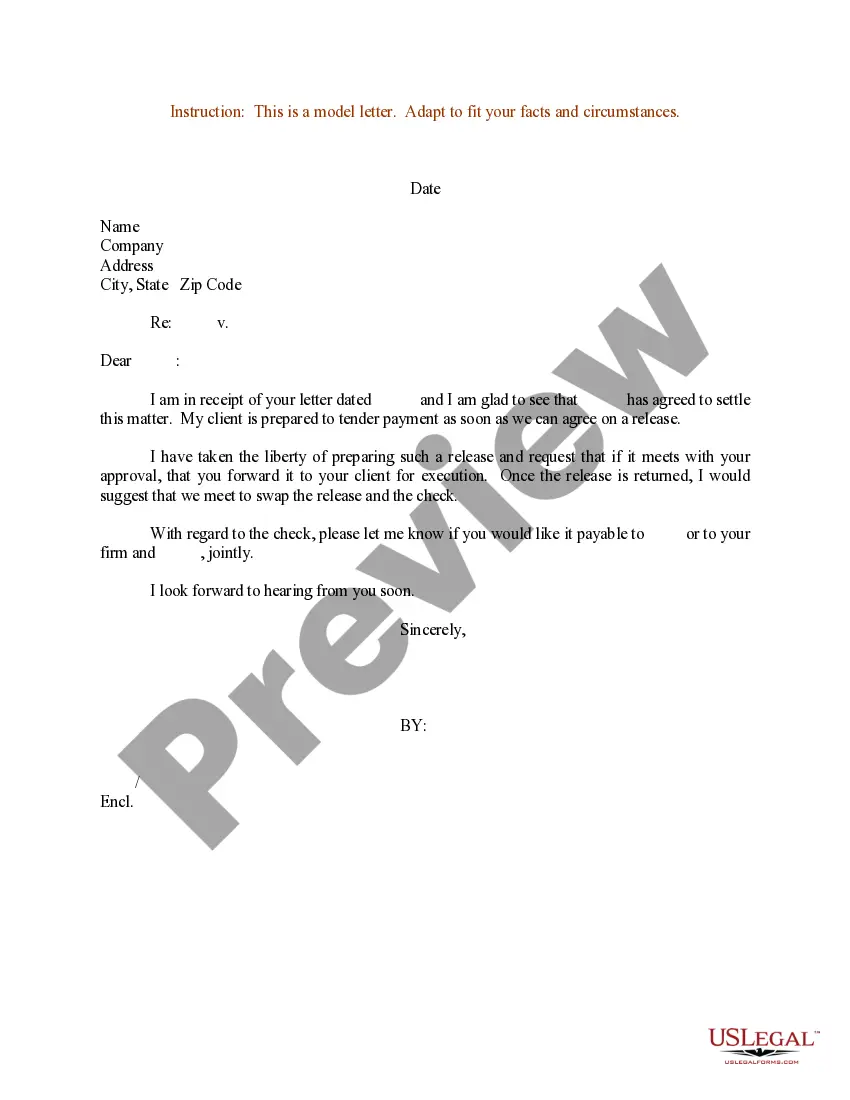
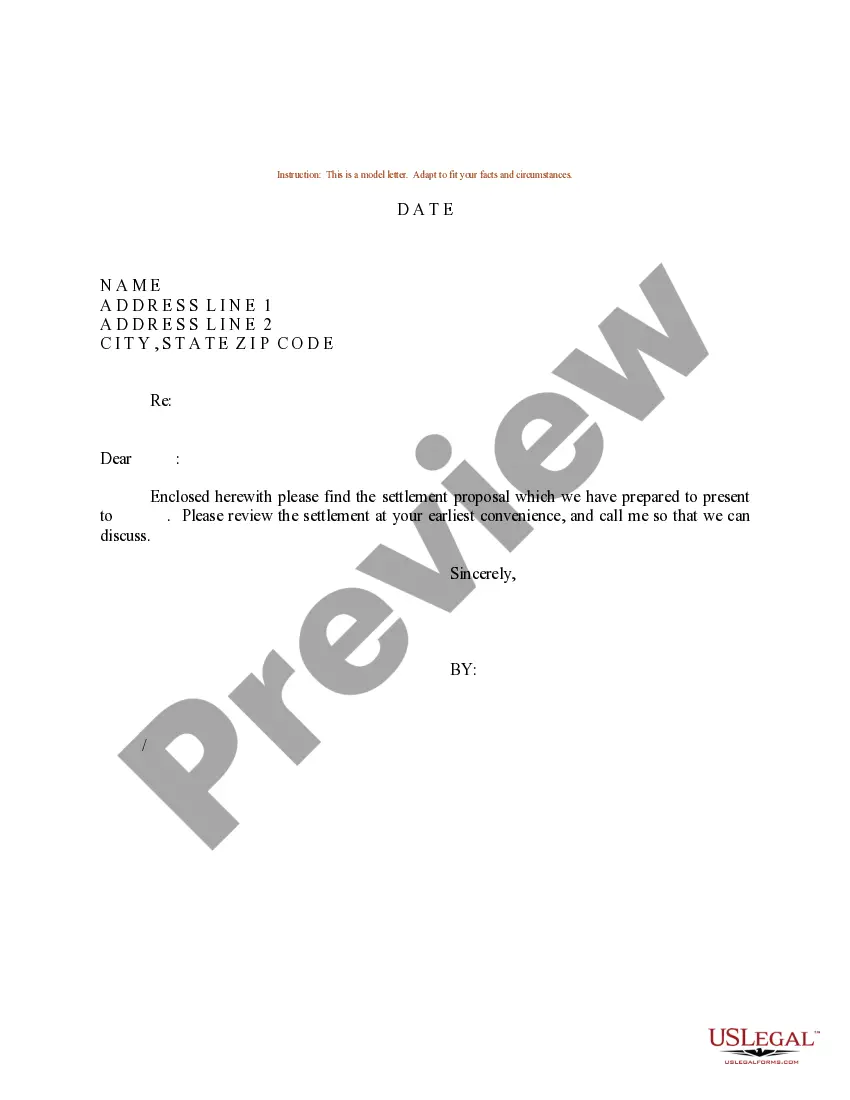
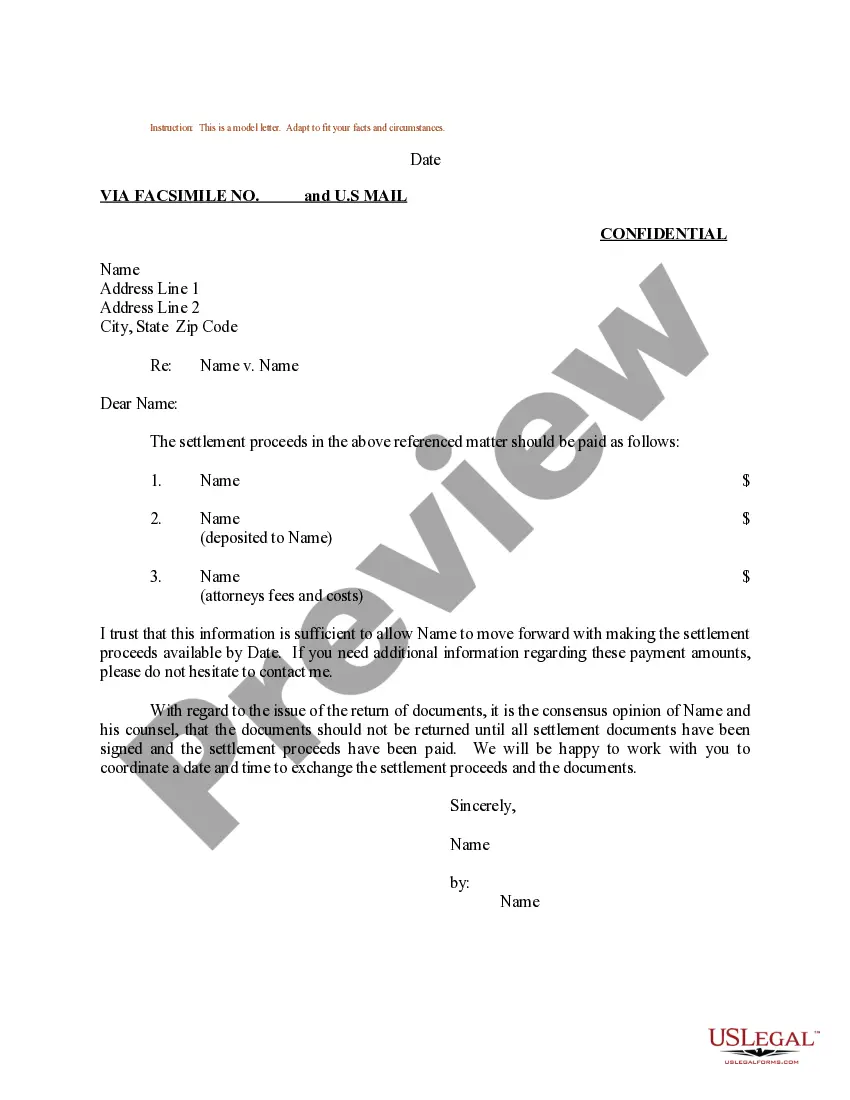
The Sample Letter for Settlement Agreement and Release is a document used to formally communicate the terms of a settlement and the release of claims between parties. This form serves as both a template and a guide for creating a letter that outlines the agreement details and confirms that all parties have settled the matter at hand, which distinguishes it from other forms that may focus solely on contractual language or judicial procedures.
Main sections of this form
- Date of the letter
- Name and address of the recipient
- Details of the settlement agreement
- Release of claims statement
Common use cases
This form is typically used after parties have reached a verbal or tentative agreement on a settlement. It is appropriate to use this letter when you need to document the terms of the settlement for both parties and ensure that all claims related to the matter are released. The form can also act as a formal closing of the dispute, providing clarity and finality.
Intended users of this form
This letter is suitable for:
- Individuals involved in a settlement dispute
- Businesses seeking to formalize a settlement
- Parties desiring a clear record of their agreement
Steps to complete this form
- Fill in the date at the top of the letter
- Enter the name and address of the recipient
- Clearly state the terms of the settlement agreement
- Include a release of claims clause
- Sign and date the letter to finalize your agreement
Does this document require notarization?
Notarization is not commonly needed for this form. However, certain documents or local rules may make it necessary. Our notarization service, powered by Notarize, allows you to finalize it securely online anytime, day or night.
Get your form ready online
Our built-in tools help you complete, sign, share, and store your documents in one place.
Make edits, fill in missing information, and update formatting in US Legal Forms—just like you would in MS Word.
Download a copy, print it, send it by email, or mail it via USPS—whatever works best for your next step.
Sign and collect signatures with our SignNow integration. Send to multiple recipients, set reminders, and more. Go Premium to unlock E-Sign.
If this form requires notarization, complete it online through a secure video call—no need to meet a notary in person or wait for an appointment.
We protect your documents and personal data by following strict security and privacy standards.

Make edits, fill in missing information, and update formatting in US Legal Forms—just like you would in MS Word.

Download a copy, print it, send it by email, or mail it via USPS—whatever works best for your next step.

Sign and collect signatures with our SignNow integration. Send to multiple recipients, set reminders, and more. Go Premium to unlock E-Sign.

If this form requires notarization, complete it online through a secure video call—no need to meet a notary in person or wait for an appointment.

We protect your documents and personal data by following strict security and privacy standards.
Common mistakes to avoid
- Failing to specify all terms of the settlement
- Not including the release of claims language
- Using vague or ambiguous language
- Neglecting to mention all parties involved
Advantages of online completion
- Instant access to a professionally drafted template
- Easy to customize for specific needs
- Convenient download and print options
- Editable format to ensure accuracy
Legal use & context
- A settlement agreement letter serves as a legal document that helps avoid further disputes.
- This form can be enforceable in court if it is well-drafted and executed properly.
- Ensure both parties retain a copy for their records to confirm compliance with the settlement terms.
Quick recap
- The Sample Letter for Settlement Agreement and Release is a structured way to finalize a settlement.
- Clear communication of terms is essential to prevent future disputes.
- Customizing the letter to reflect the specifics of the agreement is crucial for validity.
Looking for another form?
Form popularity
FAQ
The agreement should list the rights, claims, obligations, or interests that will be released in the settlement as well as any claims or obligations that are not part of the settlement.
An offer. This is what one party proposes to do, pay, etc. Acceptance. Valid consideration. Mutual assent. A legal purpose. A settlement agreement must also not be "unconscionable." This means that it cannot be illegal, fraudulent, or criminal.
2714 Retain relevant documents. 2714 Decide whether (and when) to make offer. 2714 Evaluate the reasons for settling. 2714 Assess motivating factors to settle. 2714 Confirm client's ability to settle. 2714 List all covered parties. 2714 List all legal issues to be settled.
Some people wonder if they can save even more by money by writing their own settlement agreement and not seeking the help of a divorce attorney at all. While there is no legal requirement that you have a lawyer draft your settlement agreement, it is certainly a good idea to do so.
A release is an agreement not to sue; it waives your right to sue and company and "releases" your employer from legal liability for claims you may have against it. A release may be as broad or as narrow as the parties agree to make it.
You need to have your written agreement notarized. Make sure, when you sign the agreement, that you understand everything you are agreeing to. This type of agreement is often called a marital settlement agreement or MSA.
Research the law in order to determine how much your settlement agreement is reasonably worth. Use any personal connections that you have with management to negotiate your deal. Think about instructing specialist employment solicitors to advise you.
Lawyers call an agreement to settle a dispute a "release," because in exchange for some act (often the payment of money), one person gives up (or releases) his or her claim against another.