Affidavit by Corporate Officer before a Notary Public
About this form
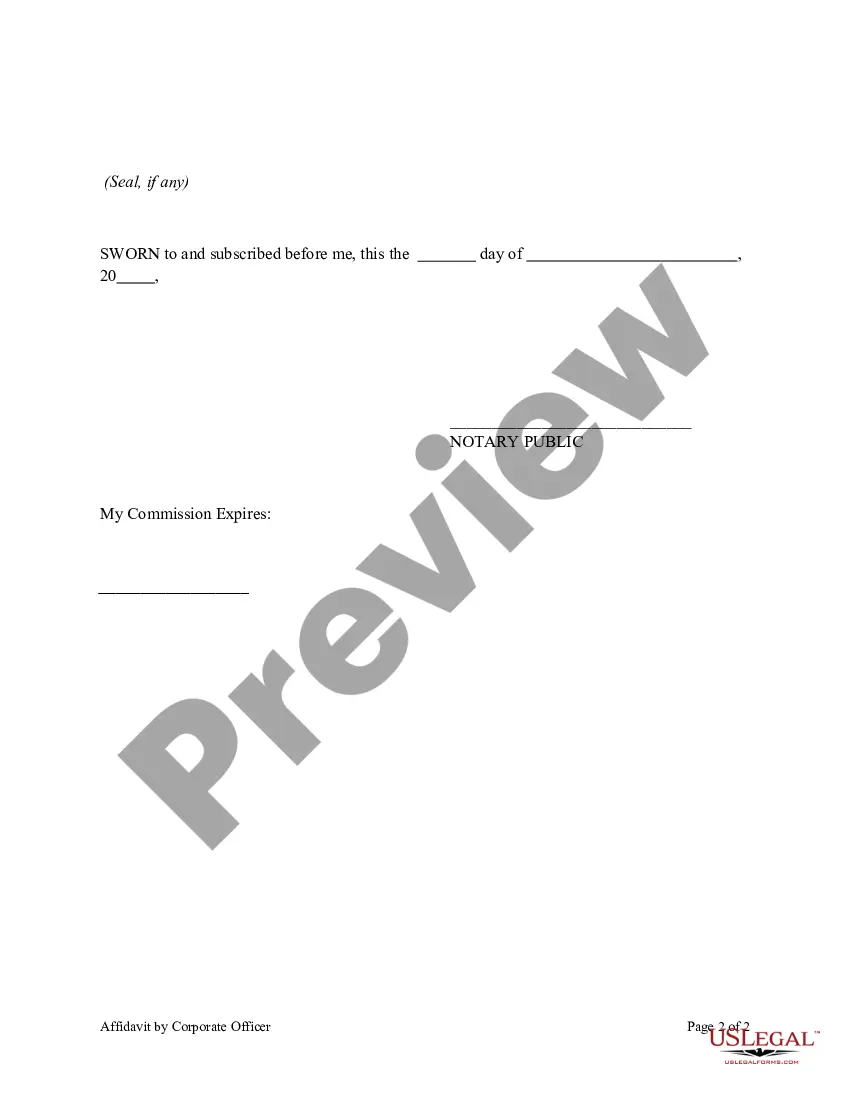
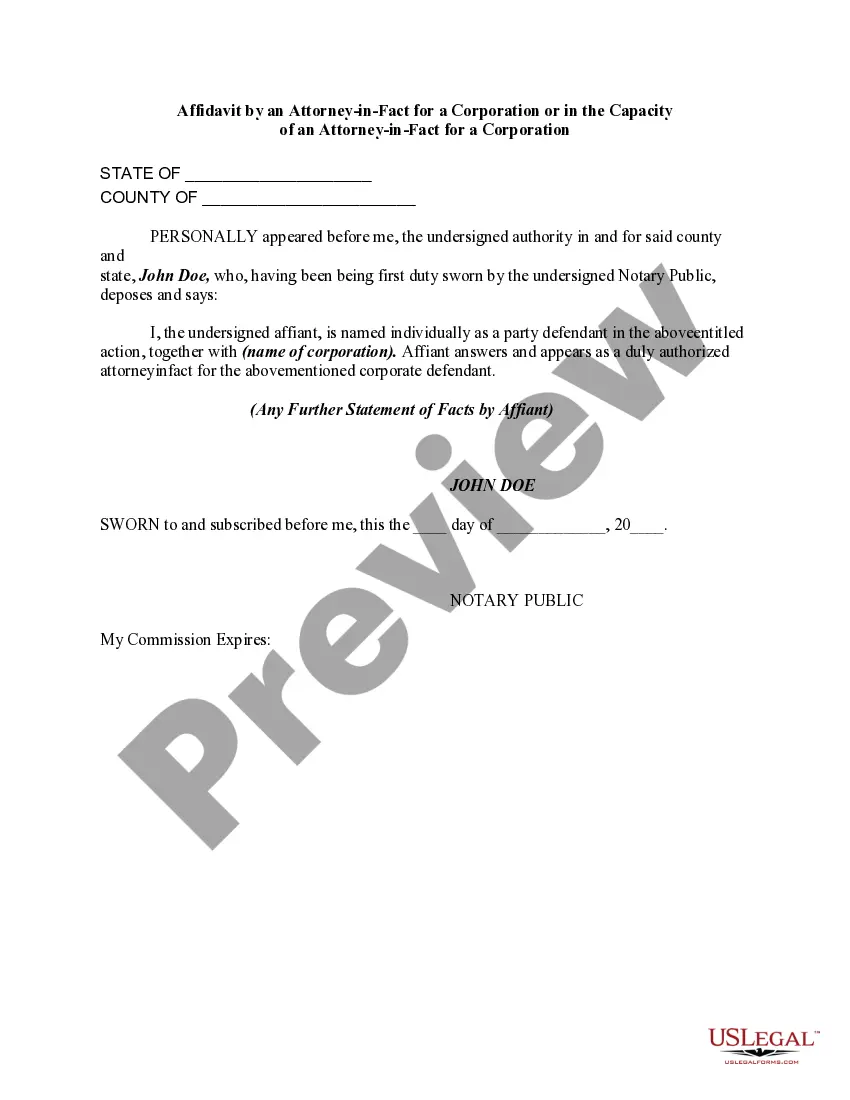
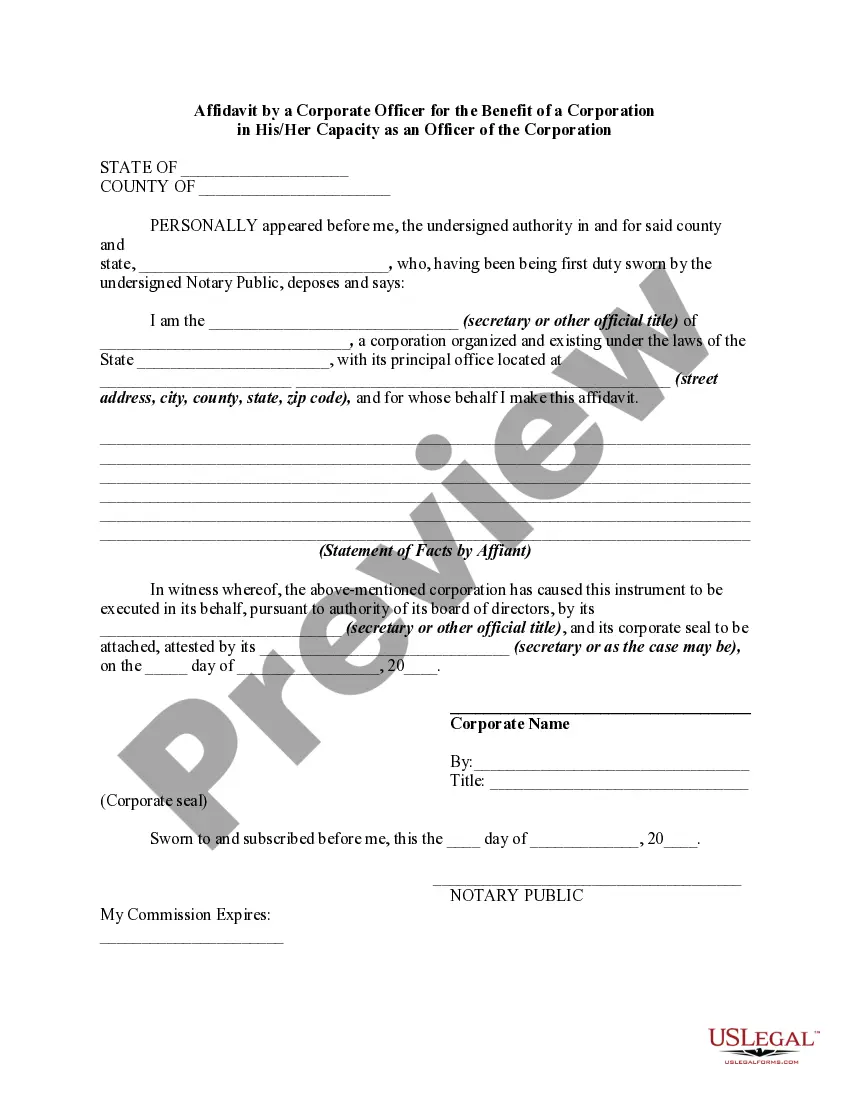
The Affidavit by Corporate Officer before a Notary Public is a legal document in which a corporate officer declares facts under oath. This form is essential for affirming the truth of statements made regarding the corporation's operations or decisions. Unlike other affidavits, this document specifically addresses corporate matters and must be executed in front of a notary public to ensure its legitimacy.
Form components explained
- Identification of the corporate officer making the affidavit.
- Specific statements of fact that need to be affirmed.
- A declaration that the information is true to the best of the affiant's knowledge.
- Space for the notary public to acknowledge the signature and administer the oath.
- Date of signing and place of notarization.

Situations where this form applies
This affidavit is typically used in situations where a corporate officer needs to provide a sworn statement for legal or official purposes, such as confirming corporate resolutions, verifying the authority to act on behalf of the corporation, or supporting claims in legal disputes. It may be required when dealing with financial institutions, government agencies, or during litigation.
Who should use this form
The following individuals should consider using this form:
- Corporate officers, such as presidents, vice presidents, or secretaries.
- Legal representatives of the corporation.
- Individuals involved in corporate transactions requiring proof of authority or facts.
- Anyone seeking to affirm statements made regarding corporate activities in legal settings.
How to prepare this document
- Identify the corporate officer who will be making the affidavit.
- Clearly state the facts that need to be affirmed.
- Sign the document in front of a notary public.
- Ensure the notary public completes their section, acknowledging your signature and administering the oath.
- Include the date and location of the notarization.
Notarization guidance
Yes, this form must be notarized to be legally valid. The notarization process ensures that the affidavit is executed properly and adds a layer of authenticity. US Legal Forms offers integrated online notarization, allowing you to securely complete the notarization process via a video call at your convenience, without needing to travel.
Get your form ready online
Our built-in tools help you complete, sign, share, and store your documents in one place.
Make edits, fill in missing information, and update formatting in US Legal Forms—just like you would in MS Word.
Download a copy, print it, send it by email, or mail it via USPS—whatever works best for your next step.
Sign and collect signatures with our SignNow integration. Send to multiple recipients, set reminders, and more. Go Premium to unlock E-Sign.
If this form requires notarization, complete it online through a secure video call—no need to meet a notary in person or wait for an appointment.
We protect your documents and personal data by following strict security and privacy standards.

Make edits, fill in missing information, and update formatting in US Legal Forms—just like you would in MS Word.

Download a copy, print it, send it by email, or mail it via USPS—whatever works best for your next step.

Sign and collect signatures with our SignNow integration. Send to multiple recipients, set reminders, and more. Go Premium to unlock E-Sign.

If this form requires notarization, complete it online through a secure video call—no need to meet a notary in person or wait for an appointment.

We protect your documents and personal data by following strict security and privacy standards.
Avoid these common issues
- Failing to have the affidavit signed in front of a notary public.
- Leaving out crucial information or facts that need to be affirmed.
- Not including the date or location of notarization.
- Using ambiguous language that may lead to misinterpretation.
Benefits of completing this form online
- Convenient access to customizable affidavit templates.
- Easy download and printing options.
- Templates drafted by licensed attorneys to ensure legal accuracy.
- Time-saving process that avoids scheduling in-person legal meetings.
Looking for another form?

Form popularity
FAQ
In most states, the fact that a document is handwritten does not preclude it from being notarized. However, the document must have an appropriate notarial certificate. If there is not already a certificate written on the document, the notary must add it.
Use an appropriate heading. You can write the letter in any format you choose but make certain to mention an appropriate heading. Insert a case caption. Add the address. Give details about the affiant. Include your name. Leave a space for the signature of the notary public.
Most affidavits look similar to this sample affidavit in format and most require the same steps to make them fully legal. You'll sign the document in front of a notary public, who will then sign his or her name, attesting that you knew what you were signing and that he or she witnessed the signature.
When you see (here insert the name and character of the officer) next to a blank as shown below, it means you should insert Your name, Notary Public in the blank.
For an acknowledgment, the signer must always: Be positively identified by the Notary. The Notary must always identify the signer for an acknowledgement; whether the signer personally knows the Notary, presents an ID document, or is identified by a credible witness depends on the circumstances.
Getting a letter notarized involves taking it to a public notary and then signing it in front of them so they can validate your signature. The transaction is logged, sealed or stamped, and signed by the notary. Your letter is officially notarized after it's sealed and signed.
Unlike jurats, an acknowledgment does not need to be signed in the presence of a notary. However, the affiant does need to swear or affirm that they signed under their own free will.
Step 1: Require Personal Appearance. Step 2: Check Over The Document. Step 3: Carefully Identify The Signer. Step 4: Record Your Journal Entry. Step 5: Complete The Notarial Certificate. A Last Note: Never Give Advice.